
|
Review by Camden Ferrell  Regardless of one’s opinion of the movie, nobody can deny that Adrien Beau’s debut feature, The Vourdalak, is anything less than an ambitious swing. Adapting a 19th century Aleksei Tolstoy novella, this is a vampire story that even predates Bram Stoker’s Dracula. This visually intriguing tale had its premiere last year at the Venice Film Festival. While the movie’s boasts gorgeous visuals, costumes, and production design, it isn’t always enough to compensate for the meandering pace and less than cohesive vision. Marquis Jacques Antoine is an emissary of the King of France, and he finds himself stranded in the countryside after a robbery. He searches for refuge with a peculiar family who behave oddly as they await the return of the patriarch, Gorcha. What starts out as a simple tale of a man seeking shelter quickly devolves into a tense and puzzling vampire story. This is a rather interesting and culturally rich story that has the promise of exploring multiple genres while also getting a chance to adapt a seminal vampire story. Written by Beau and Hadrien Bouvier, the movie’s writing is more or less passable. Expositional dialogue feels engaging enough, but the lore can sometimes be so intensive that it can stall the momentum of the movie. Even though it follows narrative beats closely, it sometimes feels like a story that might not be the best fit for a feature length film. As a result, scenes feel drawn out and overly long, and this can undermine the eeriness and tension the movie builds throughout.  The performances are decent but nothing remarkable. The movie is led by Kacey Mottet Klein as Jacques Antoine. Despite the meandering pace of the movie, he does a decent job of trying to infuse the movie with energy with his performance. It’s an interesting outsider role, and he’s able to play into this dynamic well. The rest of the ensemble plays well enough into the absurdity and creepiness of the premise. Ariane Labed, Yorgos Lanthimos’ strange actress of choice, has the most interesting role in the film as Sdenka. It’s an enigmatic role, but she also contributes heavily to the overall vibe of the movie. It’s nothing groundbreaking, but it is paramount to the movie’s success.
While the writing and overall execution leaves something to be desired, this movie excels in all of its technical departments. Shot on Super 16mm film, this movie feels like an homage to older horror movies from a purely visual standpoint. In addition to this, the costumes and sets are all superb and there’s some puppet work in this movie that is this film’s highlight. The Vourdalak has some impressive craft on display, but it doesn’t always work from a narrative standpoint. It’s an ambitious story to adapt for one’s feature debut, but it felt a little directionless at times. Fans of horror and especially fans of vampires should definitely give this a shot since this seems like a movie where mileage will vary greatly from person to person. The Vourdalak is in theaters June 28. Rating: 3/5
0 Comments
Review by Camden Ferrell  For years, Annie Baker has been a name associated with her acclaimed work as a playwright, even winning a Pulitzer Prize in 2014 for The Flick. Her debut feature film as a writer and director had its premiere at the 2023 Telluride Film Festival. Janet Planet is a grounded yet often profound coming-of-age story that translates her sensibilities to screen well while serving as a showcase for her talented cast. In the early 90’s, Janet is an acupuncturist who is spending the summer in rural Massachusetts alongside her daughter Lacy. Throughout the summer, Janet brings three different people into their lives: her boyfriend, a friend, and the leader of a local theater group. Lacy spends the summer interacting with these individuals as she vies for her mother’s attention and as she explores childhood and her own imagination. This is a story that is right up Baker’s wheelhouse as a writer, and it’s the perfect backdrop for the kind of everyday stories she became successful telling. Baker’s script is superb and the best part of the movie. Her style of dialogue translates very well as a feature film, and it’s toeing a subtle line from start to finish. It is grounded enough to remain realistic and immersive, but it’s meticulously crafted enough to engage audiences and encourage thought and reflection. The movie never feels like it’s filler, and it never feels overwritten. It’s a delicate balance that Baker perfectly demonstrates in her film debut, and it’s hard to leave this movie not being utterly impressed with the themes and ideas she explores so naturally.  In addition to the writing, the movie boasts two stellar performances from Julianne Nicholson and Zoe Ziegler as Janet and Lacy, respectively. Their chemistry is stellar from the start. Nicholson captures an alluring and earthly aura that is imperative in defining her character and the relationships with the people in her life. Ziegler plays off of Nicholson in such an impressive manner for a young actress. She handles the material well and understands Baker’s sense of pacing that helps capture the process of growing up in such a unique way.
I think it’s disingenuous to call this a coming-of-age movie despite that being what it is. However, I don’t want to group it with other movies in that genre because this one doesn’t feel like it belongs with them. It’s an extremely subtle look at childhood, the borderline codependent attachments we form with our parents, and the slow and stumbly disillusionment with them. One of the only critiques I can make of the movie is that Baker’s use of her signature pregnant pauses can sometimes be too gratuitous for its own good, but those pauses are otherwise imperative to how this movie operates that you forgive the times it overstays its welcome. Janet Planet is a quiet and tender movie about a mother and daughter, their bond, and the forces and people at work in their lives one summer. Baker has showed that the medium of film is one that she can also conquer, and I sincerely hope we see a lot more from her going forward. Smartly written and wonderfully acted, this is a movie worth checking out. Janet Planet is in theaters June 21. Rating: 4/5 I USED TO BE FUNNY -- Rachel Sennott is Powerful as a Stand-Up Comedian Grappling with PTSD6/6/2024 Review by Camden Ferrell  Ally Pankiw is no stranger to the director’s chair, previously working on Black Mirror and The Great. Her debut feature, I Used to Be Funny, had its premiere at the 2023 SXSW Film Festival and is set for theatrical release this week. This is a dark dramedy that can sometimes have trouble juggling its tones and themes but is heavily redeemed by a standout lead performance and strong emotional maturity. Sam is an aspiring stand-up comic who battles with her daily struggles with PTSD. Emotions and memories come to the surface as she debates whether or not to join in the search for a missing girl, a teenager who she used to nanny. Pankiw bounces between past and present in this emotional journey that is equal parts unique and heartbreakingly universal. Pankiw immediately demonstrates a natural ability to write realistic dialogue. She writes conversations that gently toe the line between realism and cinematic. It doesn’t feel improvised but still also doesn’t feel heavily scripted and monitored. It’s a simple yet effective way for her to establish her characters and their personalities and sorrows. However, one of the flaws is that amidst her great dialogue, there seems to be the occasional scene that just doesn’t flow as well as other scenes and ruins the mojo she had been building up.  The most remarkable aspect of this movie is its lead performance. This movie almost lives and dies by its lead. Rachel Sennott has been one of the biggest up and coming actresses in recent years, and this is another great film under her belt. Despite the heavy thematic material and intense scenes, she still manages to have an undeniably lively energy throughout the movie. She is able to jump between painful drama and natural comedy in a way that I think few actresses could pull off as well as her. If you needed anymore reason to see how Sennott is something special, this is it.
One thing about this movie that I truly admire is its maturity. Pankiw takes themes of trauma and recovery and truly makes it her own. She has a firm grasp on the realities of these difficult issues, and she shapes it in a way that is expressive yet not exploitative in the slightest. This isn’t a tale of revenge or screeching catharsis; it’s a mature story about healing and the recovery of what one loses in the wake of trauma. Even when the movie has a hard time juggling its comedy and drama due to the stark contrast in scenes, Pankiw’s vision makes up for it more times than not. I Used to Be Funny is yet another showcase for the extremely talented Rachel Sennott, but it’s also an emotional feature debut for Ally Pankiw. Despite the flaws it has, this movie has made me incredibly excited to see what Pankiw does next, and it does establish her as a unique and strong voice in the indie movie scene. I Used to Be Funny is in theaters June 7. Rating: 3.5/5 Review by Camden Ferrell  Tony Goldwyn may be a guy whose face is more known than his name, lending his acting talents in supporting roles in many movies like Oppenheimer and King Richard. However, he is also an accomplished director of film and TV, and his fifth feature film, Ezra, hits theaters soon. His most recent movie had its premiere at the 2023 Toronto International Film Festival. While there’s nothing glaringly wrong with this family drama, it finds itself treading familiar waters to mixed effect. Max is a stand-up comedian who is trying to raise his autistic son Ezra alongside his ex-wife. As Ezra’s behavior incites discussion about his future, Max and Ezra go on a road-trip together. All this happens as Max deals with his own personal demons and family history. It’s an earnest story about love and family that had potential for profound thematic exploration despite its familiar narrative. Written by Tony Spiridakis, this movie hits all the beats you’d expect it to. It has the typical family drama elements you’d expect from this type of movie, and it plays out almost exactly as you’d expect. It has all of the character archetypes that have been done countless times in the past. This familiarity isn’t inherently wrong, but the movie fails to make the most of these familiar parts, and it leaves the movie feeling like a lesser version of something you’ve seen before.  The acting is one of the stronger parts of this movie. Bobby Cannavale is a naturally charismatic actor, and this movie is no different. He plays the hot-headed Max probably better than anyone could. He has a natural charm and energy that keep the movie chugging along when everything else is lacking. This movie also introduces William A. Fitzgerald as Ezra. He plays the character with agency and doesn’t feel like he’s playing second fiddle to his more experienced costars. While he’s not a scene-stealer, he definitely has a notable and independent presence in the movie. The rest of the cast is full of plenty of familiar names like Robert De Niro, Rose Byrne, and Whoopi Goldberg to name a few, and they all exist anywhere on the spectrum of passable to “just doing this for the paycheck”.
This movie deals with the realities of being a parent to a child with autism. When it comes to discussing how realistic and sensitive the movie approaches this topic, I may not be the best person to assess that. However, it’s hard to deny that its heart is in the right place most of the time. It has some good moments of drama and is far less exploitative than other movies about autism, but at the same time, the mileage for this might vary by viewer. Ezra is a predictable yet earnest family drama that some audiences might truly resonate with. What it lacks in originality, it makes up for in good intentions. Cannavale is a great lead, and the movie doesn’t overstay its welcome. It’ll likely be forgotten about in due time, but it doesn’t mean it’s not worth watching at least once. Ezra is in theaters May 31. Rating: 3/5 Review by Camden Ferrell  Marin Alsop is an icon in the world of conducting, becoming the first woman to be appointed to lead a major American orchestra when she earned the music director job with the Baltimore Symphony in 2005. When Todd Field’s 2022 film Tár was released, it provided representation and attention for women conductors everywhere. However, Alsop (who was name-dropped in the film) found this rare spotlight on women conductors was not conducive to positively promoting women in that position. Maggie Contreras’ debut documentary, Maestra, finally gives Alsop and several other subjects the chance to shine a positive light on woman conductors and the passion they collectively share for their craft. In this documentary, we see the personal and professional journeys of five women as they participate in “La Maestra" the only competition for female orchestra conductors. Through this process, we get a deep dive into the subjects’ home life and professional life, erasing the barrier that would otherwise exist between spectator and artist. There’s little to fault in the structure of the movie as it allows the audience to connect and grow attached to the film’s subjects while also highlighting a contest that should be more well known than it currently is. While the premise provides a strong foundation for the movie, the execution is extremely conventional. The mileage of this execution will vary by viewer. Some people might enjoy the familiar pacing and beats that many similar documentaries have while others might wish such overachieving women get a film treatment that matches their ambition. Regardless, it’s hard to deny that this documentary plays it as safely as possible in the structure of its narrative. This allows things to be cohesive but at the expense of its ingenuity and artistry.  The movie does succeed in finding subjects who are equally interesting and distinct in their own rights. It’s great to avoid showing women conductors as a monolith of personalities, and Contreras’ really selected a variety of women to ensure the movie celebrates people from all walks of life. It never feels like moments are repetitive, and this is due to the charisma and unique characteristics of the film’s subjects.
When it comes to the actual coemption aspect of the documentary, this movie does a good job at showing what’s necessary for its story, but it is one of the aspects that feels like it could have been fleshed out more. I think a more thorough glimpse into the technical aspects of conducting would have tied the film together in a more rewarding and satisfying manner. Regardless, the bits of the competition that are shown are riveting and truly highlight the passion that exudes with every wave of their baton. Maestra is too conventional for its own good at times but does a great job at being a piece of media to positively showcase women conductors and hopefully inspire future generations to follow their dreams. It works more on an informational level than it does artistically. It might feel too safe and familiar to keep audiences thoroughly engaged, but it also is a competently crafted story that will give viewers a much-needed insight into this profession and its subjects. Maestra is in theaters May 24. Rating: 3.5/5 Review by Camden Ferrell 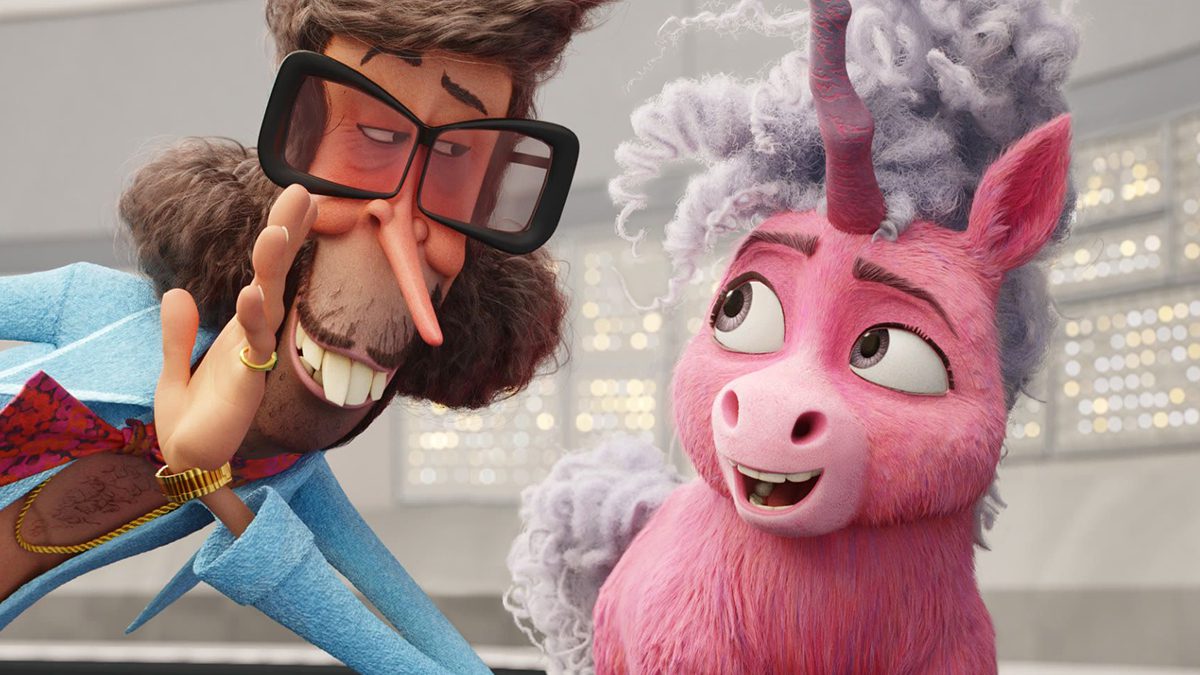 Coming hot off of an Oscar nomination for his short film, Ninety-Five Senses, Jared Hess has teamed up with co-director Lynn Wang on his first ever animated feature, Thelma the Unicorn. This is Hess’ first narrative feature since 2016’s Masterminds. Unfortunately, this film fails on almost every possible level, delivering a predictable and cheaply made story that squanders the talents and idiosyncrasies of its writer/director and well-known cast. Thelma is a pony with big aspirations to become a musical sensation with her friends. Despite their best efforts, they can’t seem to catch a break with people constantly dismissing them and never giving them a shot. After a fateful encounter with some paint and sparkles, Thelma finds herself looking exactly like a unicorn. This sparks a chain of events that pushes Thelma into the global spotlight and finding the fame she so desperately craved. However, she soon learns this is more than she bargained for. It’s a very basic story of pitfalls of fame that you’ve likely seen a million times before, and this movie doesn’t tread any new ground in that regard. This movie was written by Jared and Jerusha Hess, but one would have a difficult time deducing that based on the final product. For better or worse, they’re a very idiosyncratic and quirky duo, but their signature style and charm are entirely absent from their most recent effort. It feels like another lazy children’s movie that could have been AI generated as opposed to an eccentric yet original script that they’re known for. This is the same duo that made one of the most iconically original movies of the early 2000’s, and it’s a shame that this is the quality of output they’re putting out now. This is even more disappointing considering they both wrote and directed such a brilliant short film just last year.  From an acting perspective, there’s not much to talk about. Brittany Howard (of Alabama Shakes fame) leads the film as Thelma. Her singing is obviously phenomenal, but everything else is so ordinary that it’s hard to say it’s particularly good or bad as a voice performance. The film is supported by names like Will Forte, Jon Heder, and Jemaine Clement, and while they’re all hugely entertaining and talented people in their own rights, I felt nothing hearing their recognizable voices. Not to say that they phoned it in, but the movie lacks the personality you’d expect from the cast it acquired.
Even as far as children’s entertainment goes, this movie feels like a nothing burger at best. At worst, it’s another overstimulating, eerily animated, and completely forgettable movie for all ages. Every single scene follows the same beats we’ve been seeing forever, and it doesn’t do anything interesting with its premise, so the entire experience is disappointing and unpleasant. It might be something to mindlessly throw on for the youngest of children if necessary, but it doesn’t have much else to offer. Thelma the Unicorn may have a talented singer in the lead role. It may have a well-known director and writing duo who always put out some original and quirky films regardless of quality. Unfortunately, this is not enough to make this movie sing the way it wants to. It’s a bland and formulaic story that is at times miserable to watch. It has absolutely nothing original to say and even at its most barebones level, it’s not entertaining. Thelma the Unicorn is on Netflix May 17. Rating: 1/5 Review by Camden Ferrell 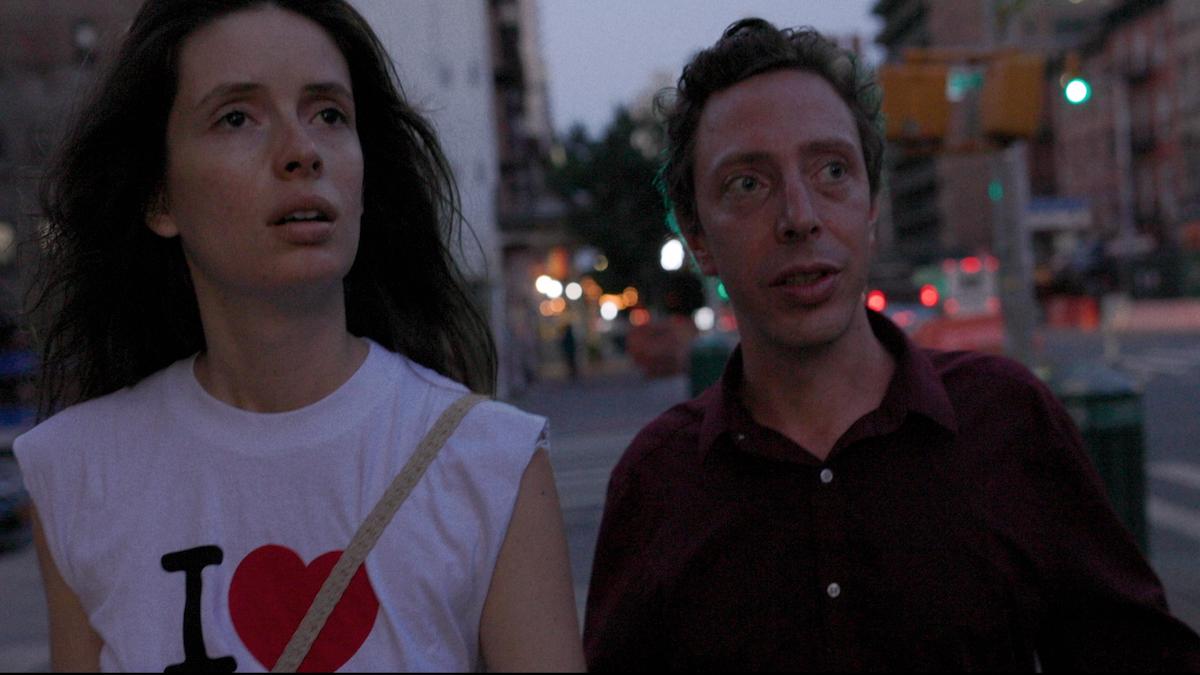 What do you get when you cross Before Sunrise with an insomniac and troubled New Yorker lead? You get Pratfall, writer/director Alex Andre’s feature debut that premiered at the 2023 Brooklyn Film Festival. A perfect example of the power of low-budget filmmaking, Andre paints a portrait of New York through the eyes of his lead characters in an engaging and simple manner even if it can sometimes lose its way on its journey. Eli is an unsettled man in New York grappling with his own complicated problems both internal and external. His life has become filled with insomnia, conversations with himself, and interacting with the rest of the city. One day, he crosses paths with Joelle, a French tourist. Together, they go on an odyssey through New York City where Eli paints a picture of the city with his embellished words as Joelle joins along for the ride. This story of two people crossing paths for a memorable night of conversation and exploration has been done before, but it also doesn’t make it any less compelling as a premise. At times, it’s hard to distinguish whether dialogue is scripted or improvised, which is a testament to Andre’s ability to write such naturally flowing dialogue. It never feels forced or unnaturally philosophical, a trait that most movies of this kind are guilty of for better or worse. Sometimes the dialogue meanders more than it should, but this also contributes to the heightened realism of the film, so it’s not necessarily a net negative. There are some narrative beats that definitely feel out of place throughout the movie and take the audience out of the small-scale connection it is so good at achieving from the start. 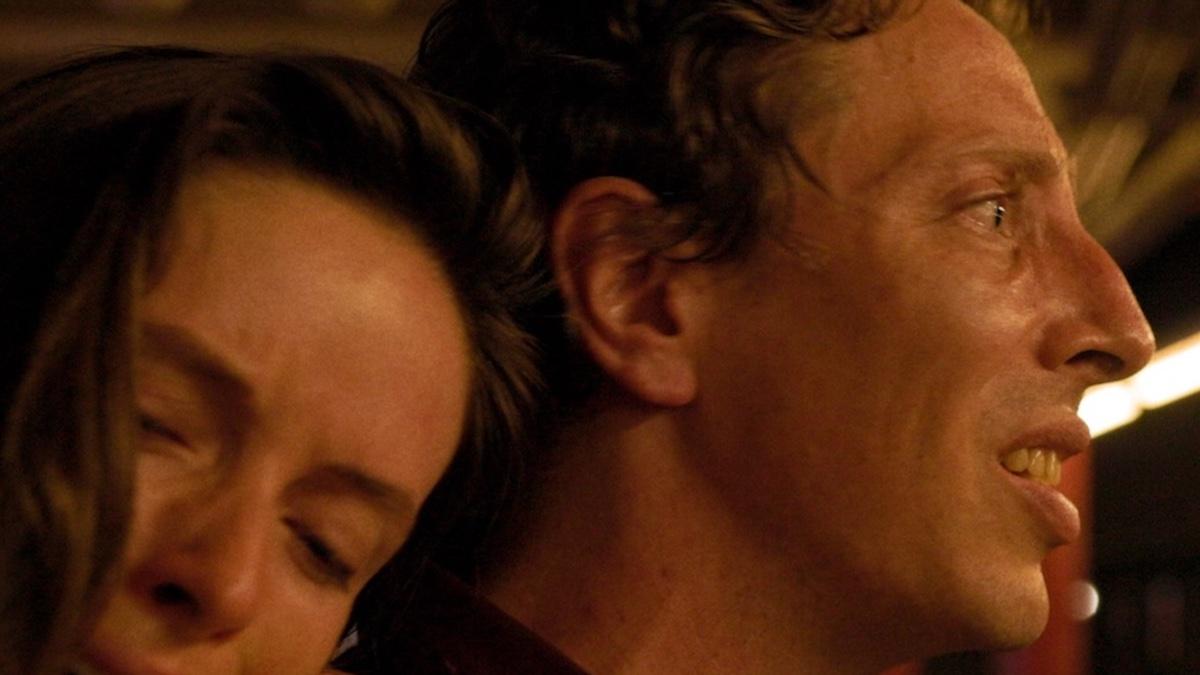 This movie is led by Joshua Burge and Chloé Groussard as Eli and Joelle. Burge takes on the lion’s share of the dialogue and does well with it, conveying the more subtle troubling aspects of Eli without becoming a caricature. It’s a unique character to play especially as a lead, but Burge is able to handle the character well enough to be distinct without undermining the realistic nature of the film. While Groussard is given less dialogue, she plays perfectly off of Burge. Her naïve optimism of New York’s urban landscape works very well with her character, and she really gives the character more personality and agency than she would have otherwise gotten. It really does feel like Eli is a part of Joelle’s story by the end, not the other way around, and this is mostly due to how Groussard carries herself as a character.
One of the aspects I admire most about this film is how it is so effective without breaking the bank. Andre shot this movie himself (on what feels like a low budget camera), and it practically uses handheld, wide-angle shots exclusively, and it’s a perfect fit for the type of story he’s trying to tell. It’s like a combination of Terrence Malick’s signature contemporary look and the more frantic and free-flowing feel of the Dogme 95 and mumblecore movements of filmmaking. Andre’s debut is impressive, and I’ll definitely be citing it as a prime example of how to make a movie regardless of budget or other limitations. Pratfall is a gem of a film. It’s not perfect, and it has some odd moments that detract from its desired effect. However, this film has so much to praise, and it all falls under the umbrella of Andre’s vision on an utterly impressive debut feature. Not without its flaws, this is a sweet and simple story that audiences will connect with in one way or another if they let it. Pratfall is in theaters and on VOD April 26. Rating: 4/5 TURTLES ALL THE WAY DOWN -- Isabela Merced Shines in Another Less Than Perfect John Green Adaptation4/20/2024 Review by Camden Ferrell 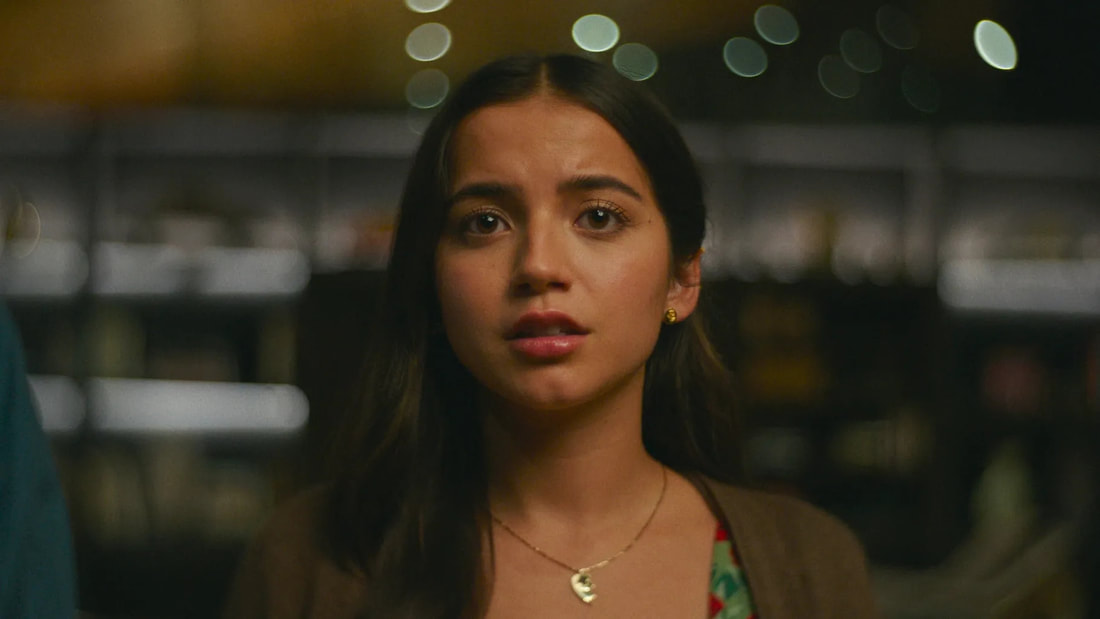 After writing The Fault in Our Stars, which sold 23 million copies and was adapted into a hugely successful movie, young adult author John Green followed this up with his next novel Turtles All the Way Down in 2017. This adaptation is being helmed by director Hannah Marks and written by the duo behind movies like Love, Simon and I Want You Back among several television credits. This teen movie features a stellar lead performance and interesting creative choices that can often elevate it past the common pitfalls of the young adult genre. Aza is a high school girl struggling with severe OCD that causes issues with living in her daily life. Alongside her best friend Daisy, Aza finds herself trying to navigate friendship, love, and happiness all while dealing with her mental health. This coincides with Aza reconnecting with her childhood crush after his billionaire father goes missing. This is a simple story of adolescence that tries to tell a familiar story through the eyes of a protagonist we may not be used to seeing in media. There’s not much that stands out about the premise of the movie, it does have room to uniquely explore the main character’s mental health issues. Elizabeth Berger and Isaac Aptaker have proven to be strong writers of romantic comedy, and that comedic touch is present in this film as well. Some of the jokes may be forced, but the characters do have their own distinct personality that comes out through their interactions. I’d say the biggest problem is when they try and pivot to the more serious aspects of this story. When the movie goes into dramatic territory, it can be hit or miss. Some moments feel emotional, earned, and warranted while others can feel clunky. This typically seems to be the problem when adapting John Green’s source material. He occasionally makes great observations about adolescence, but in digging beneath the surface, he can often come off as pretentious and unnatural at times. This is a characteristic that is present throughout the movie and somewhat sticks out. In trying to be a more thought-provoking young adult film, it sometimes backfires as it makes big swings at many central themes and doesn’t always hit. 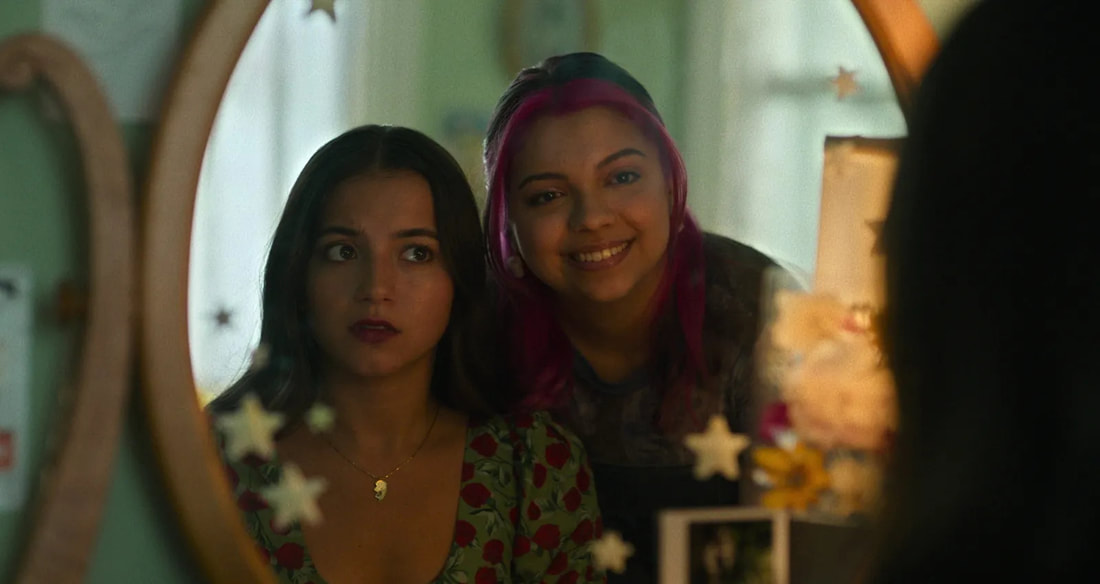 The most impressive part of this movie is the leading performance from Isabela Merced who plays Aza. She is one of the more interesting teen protagonists I’ve seen in the last few years, and Merced is able to take on that burden wonderfully. Her moments of stress, indifference, and paranoia come across clearly, and she definitely fits nicely in both the comedic and serious moments of the movie. Cree (formerly known as Cree Cicchino) co-stars alongside Merced as Daisy. Her character isn’t nearly as three-dimensional, but she still brings plenty of life and personality to the role. It’s a nice contrast to Aza, and she brings a naturally vibrant and effortless energy to the role that is exciting to watch. For such young actresses, both Merced and Cree have demonstrated great talent that shines even when the material isn’t the best.
In my experience, I have always been a bigger fan of Hannah Marks as a writer as opposed to a director, but this is probably the best she has ever been as a director. There are some interesting creative choices that she makes regarding how to best recreate the feeling of Aza’s mental illness for the audience, and it’s quite interesting. Like the script, she can occasionally struggle in her attempt to transcend typical young adult fare. While it’s refreshing to see writers and directors make earnest attempts to make young adult stories more mature, it just doesn’t always work out. Regardless, there are plenty of moments where Marks’ direction and vision shine and should be commended. Turtles All the Way Down has some great moments supported by its talented cast and entertaining writers. It doesn’t always land, and it still has the John Green brand of Tumblr-esque quotes that probably work better on a younger audience. Despite its flaws, this movie is more entertaining than not and feels mostly unique in the young adult genre and should be commended for its exploration of teenage mental health. Turtles All the Way Down is streaming on Max on May 2. Rating: 3.5/5 Review by Camden Ferrell 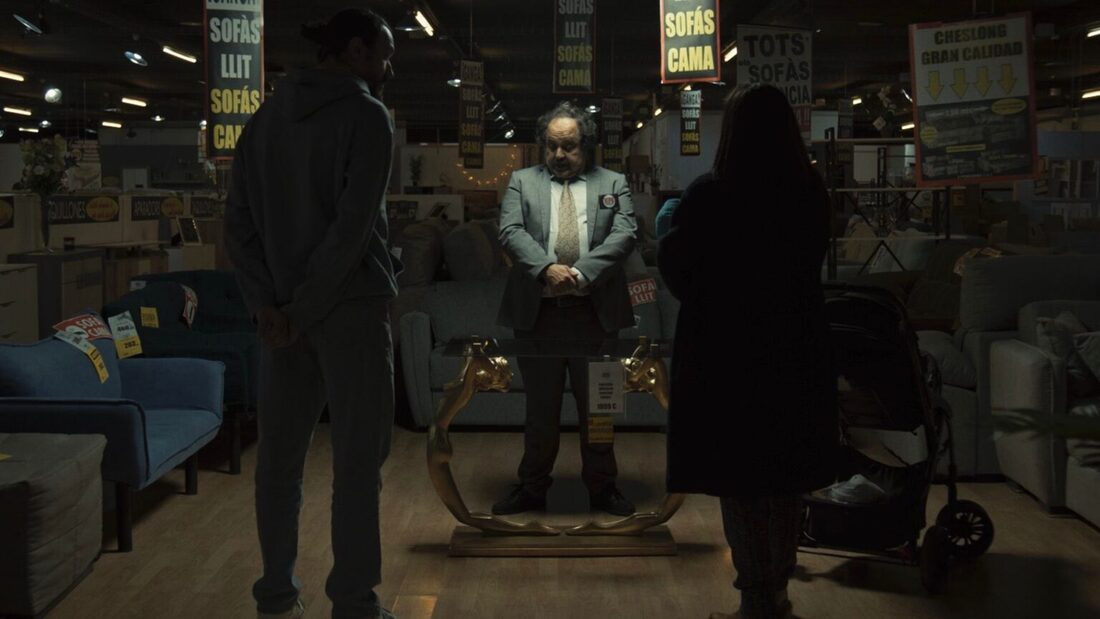 Making a purchase you later regret is a universal experience. However, one can only hope that the events of The Coffee Table, which transpire after such a purchase, are as far from universal as possible. This is the second feature length film from director Caye Casas and has been played at multiple festivals since its premiere in November 2022. This horror movie is an anxiety-inducing experience that keeps you engaged from start to finish. Jesus and Maria are new parents who are dealing with the struggles of marriage and parenthood. One day, in an attempt to make their place look nicer, the couple goes furniture shopping. On this trip, Jesus finds a tacky coffee table that he buys despite Maria’s hatred of it. Soon, this purchase becomes the biggest mistake of this couple’s lives, and it changes their world forever. It’s a purposefully vague premise just because saying anything more might ruin one’s experience watching this movie. Suffice it to say, there’s an entire can of worms awaiting viewers who choose to embark on this experience. Written by Casas and Cristina Borobia, this movie is mostly dialogue driven after its opening act, and it works on multiple levels. It’s strong conversational dialogue, but it also doesn’t undermine or overpower the underlying feeling of dread and anxiety that plague the movie. The writers reveal their hand incredibly early in the movie but manage to still maintain engagement and intrigue until its final moments. 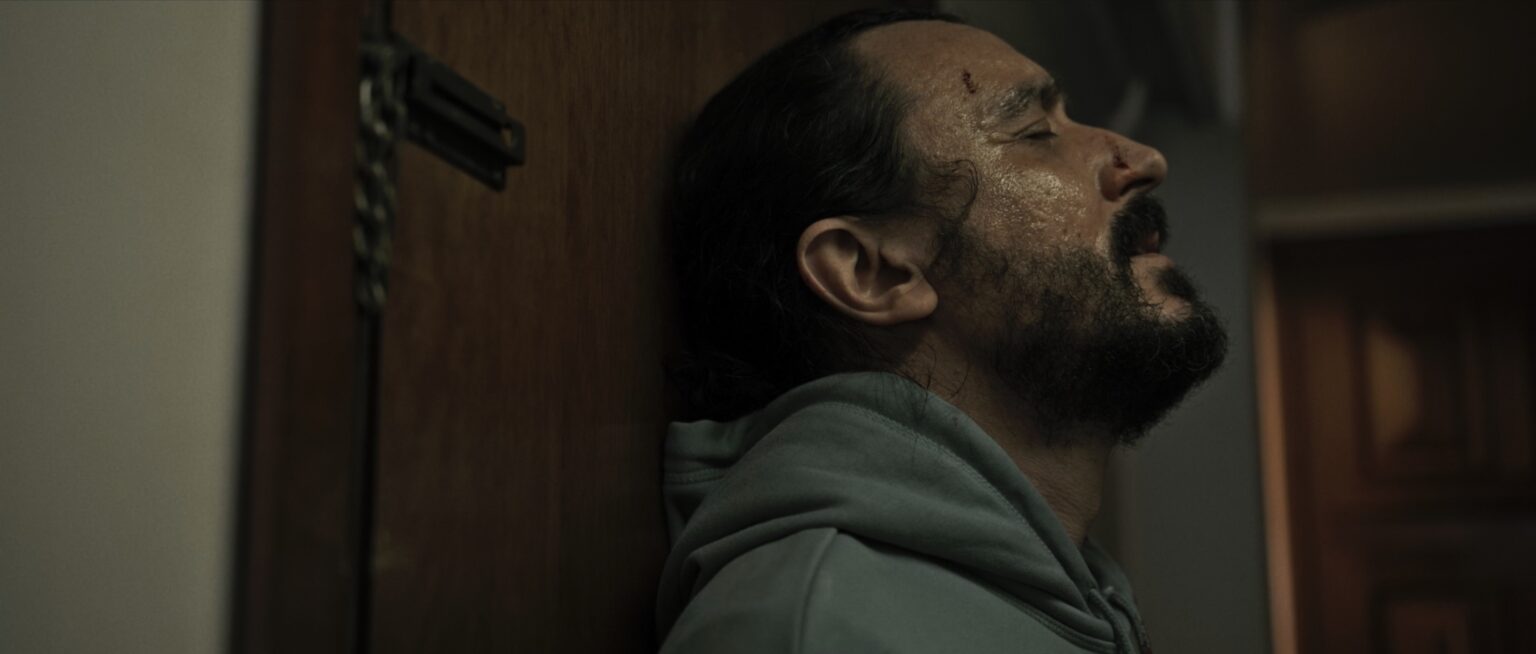 The performances are another strong aspect of this movie. Led by David Pareja and Estefanía de los Santos as Jesus and Maria, they both bring a lot to the table. They have strong chemistry as disenchanted lovers combined with the stress of being new parents. Pareja especially gets a lot to work with throughout the movie, and he is the driving force of the anxiety that defines the film. They work well with the conversational dialogue and the conflicts big and small that they find themselves faced with.
This is such a difficult movie to talk about just because of how important it is for the viewer to go into it blind. While the movie still works even with crucial details revealed, I think shock factor plays an important part in the perception of the film. Regardless, it’s hard to find a horror movie more disturbing than this, and it does so while keeping making most graphic imagery implied or minimal. It’s no small feat, and it’s one that requires prowess from all departments. The only main flaw is that sometimes it feels like it’s aiming for pitch black comedy, and this doesn’t always land because of how straight the execution is. It’s a subtly confusing juggling of genres that is noticeable but doesn’t take away from how impressive the movie is as a whole. The Coffee Table is a unique movie that is distressing, disturbing, and dreadful in all the right ways. It’s tragic and tense, and its brief runtime never gives the audience a chance to breathe. It’s an impressive calling card for Casas as a director, and this movie will likely find a strong niche in the horror community. There are some small tonal problems, but it’s not enough to detract from how darkly entertaining the final product is. The Coffee Table is in theaters April 19. Rating: 4/5 Review by Camden Ferrell 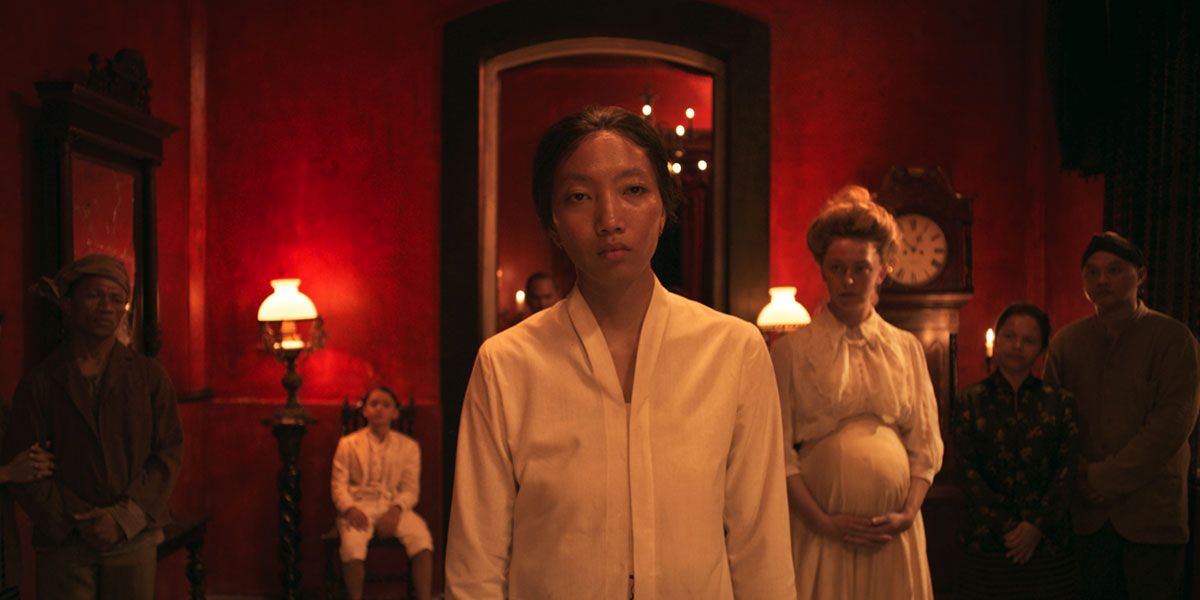 Not to be confused with the Johnny Knoxville movie coming out later this year, Sweet Dreams is a Dutch production that played at the 2023 Toronto International Film Festival. This serves as the sophomore feature for writer and director Ena Sendijarevic. The movie boasts some breathtaking and creative cinematography and while it has some entertaining moments and interactions, it doesn’t make the most effective use of its satirical nature. Jan is the Dutch owner of a sugar plantation in Indonesia. One day, he suddenly dies, and his son and his pregnant wife come to the island to inherit the empire. However, things are complicated by numerous events including the fact that Jan bequeathed his plantation to his illegitimate son he fathered with his housemaid Siti. This is a cleverly unique premise that perfectly sets up the power dynamics of colonialism that the film aims to explore. From a writing standpoint, Sendijarevic has a clear thesis from the start, and the interactions of the many characters support this. Its themes are clear, but sometimes it feels like the plot doesn’t progress at a pace that is the most conducive to furthering her ideas. However, on a purely surface level, this script has some great moments of comedy and borderline quirky absurdism that might remind people of other specific films (which I won’t name here), but she still manages to make it feel distinctly her own. 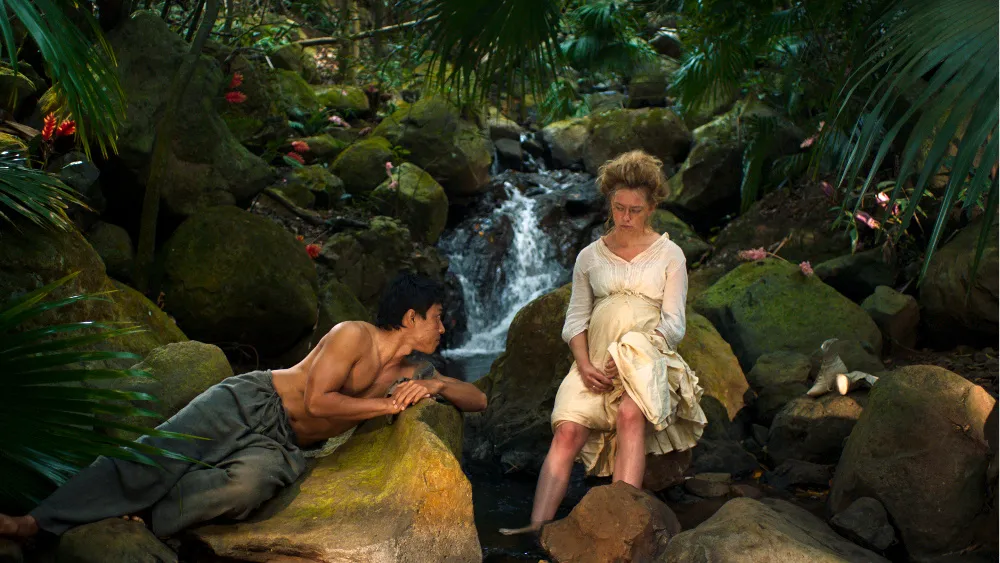 The performances in this movie are mostly strong. Renée Soutendijk plays Agethe, Jan’s widow and as a seasoned actress, she definitely brings the character to life even when the material isn’t always the best for her particular character. Hayati Azis is also quite strong and subdued in her role as Siti, a complex character that she plays very well while understanding the ethos of the film. However, Florian Myjer, who plays Jan’s son Cornelis, is quite hilarious in most of his scenes. It teeters on being overly animated, but he’s able to reel it in just enough for the kind of movie this is.
While the movie succeeds on multiple fronts, it also feels like it doesn’t fully live up to its potential. The themes are so rich and ripe for satire, and while it certainly has a lot to say, I can’t say it gets the most mileage out of its runtime. There are moments that seem to meander too much which kill its momentum and cause the satire to suffer as a result. These issues aren’t too prevalent thankfully, and the movie still has a lot of surface beauty that gives it plenty of merit. Its cinematography is impressive and vibrant, and it elevates the impact of the movie as a whole. Sweet Dreams is a smart satire with strong performances and great imagery. It tackles themes of colonialism and the resulting issues of it, and even though it could have been richer, it is still a strong film that is confident in its message. Sweet Dreams is in theaters April 12. Rating: 3.5/5 |