
|
Review by Sean Boelman

Spider-Man: Into the Spider-Verse was lightning in a bottle, taking a cult favorite version of the beloved superhero to the animated medium in a way we had never seen before. Spider-Man: Across the Spider-Verse takes much bigger swings than its predecessor, but also ends up being far inferior by falling victim to many of the traps live-action comic book movies have suffered from in recent years.
The film follows Miles Morales as he goes on his next adventure, correcting the aftermath of the reactor incident that has the potential to wreak havoc on the entire multiverse of Spider-People. The scale in this one is definitely bigger than the first, but in that approach, it also loses much of the intimate quality that made its predecessor so special. While the first movie was relatively lean when it comes to comic book movies, with a runtime well under two hours excluding credits, this sequel is the first part of a two-parter, and runs two hours and twenty minutes by itself. There’s a lot of story to tell and a lot of world-building to do — and the whole thing unfortunately ends up taking itself too seriously. Ultimately, the biggest disappointment of the film is that it gets far too caught up in its capeshit — something which the first movie delicately managed to avoid. Sure, you expect there to be easter eggs and cameos in a movie like this; but it feels like this turned into a spectacle filled with moments that could have a flashing “APPLAUSE” sign — similar to Doctor Strange in the Multiverse of Madness. In other words, this film has become the exact thing it was designed to deconstruct. 
Because the movie is constantly throwing different versions of Spider-Man at us, it can be easy to lose sight of the film’s emotional core. And it’s a shame — because this aspect of the story is truly excellent. There’s some really powerful stuff that deconstructs the “with great power comes great responsibility” mythos of the Spider-Man property, but it’s buried beneath layers upon layers of fanservice.
Much of the praise in the voice cast is going to go to Oscar Isaac for his performance as Miguel O’Hara/Spider-Man 2099, but he is far from the shining star of the cast. Hailee Steinfeld is probably the biggest standout here, taking her performance to the next level. Luna Lauren Vélez and Brian Tyree Henry are simply extraordinary as Miles’s parents. And in terms of new additions, Shea Whigham is a welcome emotional behemoth, and Jason Schwartzman and Daniel Kaluuya are both very fun. The visual style in the movie, much like its predecessor, is ambitious to a fault. There are definitely some very ambitious swings here, as Across the Spider-Verse dives even harder into the multiverse concept, giving us animation with a variety of approaches. While you have to admire what the film is trying to do, the frames often end up being overly busy and creating a sense of visual overload. Although some viewers may appreciate this, others could find it overwhelming. Spider-Man: Across the Spider-Verse is definitely a disappointment. While you have to admire the things that it was going for, its more ambitious elements blow up in its face and create a comic book movie that — narratively, at least — is frustratingly par for the course. Hopefully, this was just the set-up to a conclusion of the trilogy that knocks it out of the park. Spider-Man: Across the Spider-Verse hits theaters on June 2. Rating: 2.5/5
0 Comments
Reviewed by Jonathan Berk 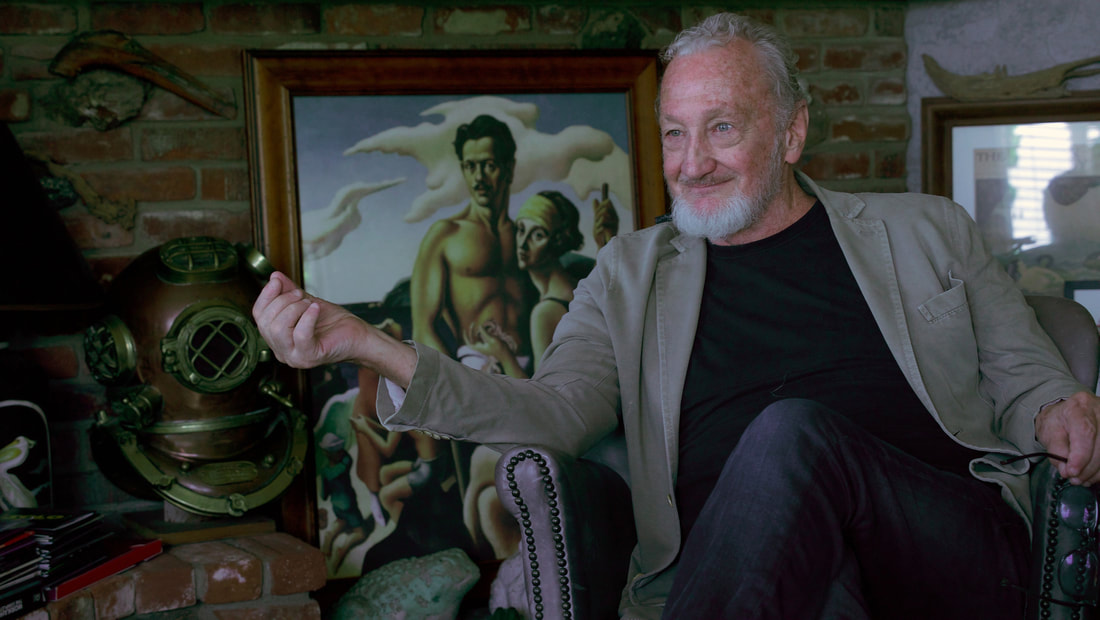 Gary Smart and Christopher Griffiths have directed a marvelous love letter to Robert Englund and the horror genre in their new documentary, Hollywood Dreams & Nightmares: The Robert Englund Story. Of course, movie fans will know Robert Englund’s most iconic character — Freddy Krueger — but some may not know him outside of that horror franchise. This documentary showcases the talent Englund possesses — as well as the man he was when the cameras were off — and will likely lead fans of Krueger to be cemented as fans of the man himself. Much like his legendary horror icon largely overshadows the actor's career, the movie opens with the knifed hand sitting in a chair lit in red. This is a wise framing device, as it is necessary for the film to begin with the elephant in the room before backing up to how Englund gets that role, and what happens afterward. The focus here lies more in the professional life of Englund, as his love of acting starts young. It is clear early in the talking head interviews that Englund loves the craft of acting and is grateful for the career he’s had. There are tons of actors, directors, and writers who speak about their experiences with Englund, which make the man feel as large as his iconic character. Included in these interviews are Kane Hodder, Tony Todd, Lin Shaye, Heather Langenkamp, Eli Roth, Lance Henriksen, Adam Green, Corey Taylor, and his wife, Nancy Englund. Each adds something to the actor's legacy, which ultimately makes him feel like the horror genre’s Mr. Rogers. The stories imply that he was a constant professional and always willing to give himself to the movie, no matter how big or small. These stories become all the more believable every time the movie cuts back to Englund’s interviews. He has a charm that pulls the audience in, as he lulls you into a trance with his voice. 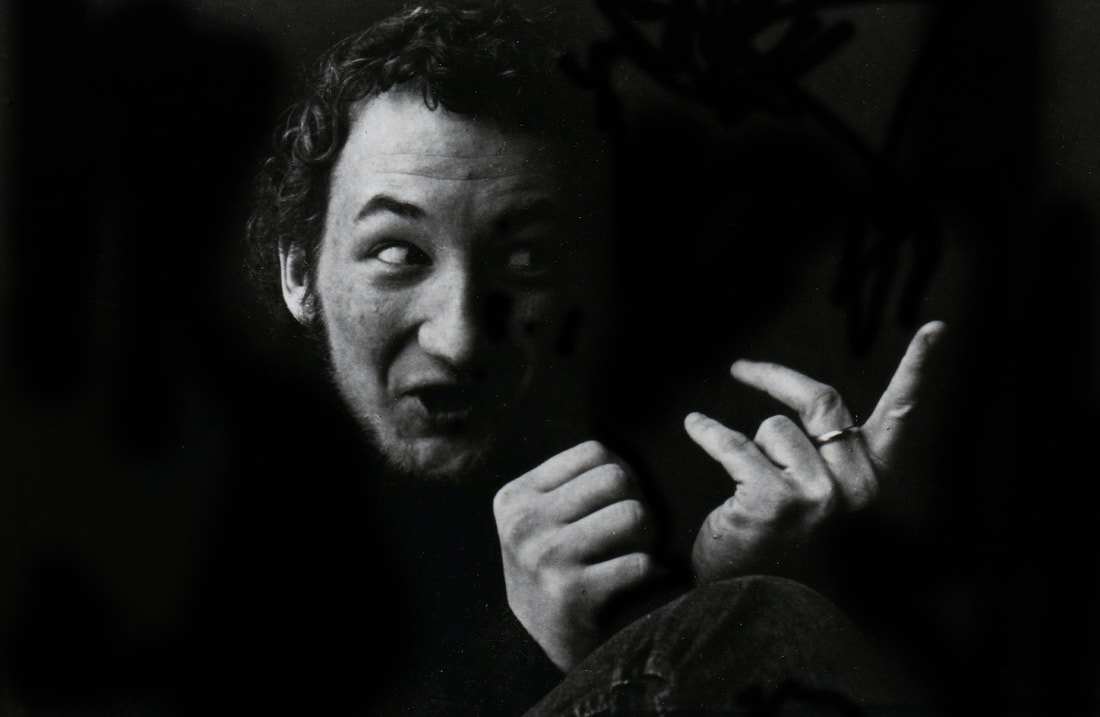 To illustrate the content of the interviews, the film mostly uses footage from the movies being discussed, mixed with photos or behind-the-scenes footage. There is a cool early sequence that uses a mix of reenactments, photographs, and cartoonish drawings to illustrate his early love of performance. It was a little disappointing that this style isn’t used more, as it was engaging visual storytelling. While the traditional documentary archival footage is great here, the modern, more innovative recreations allow for more creativity in the storytelling.
The last section of the film is arguably the strongest. It ends on a sheer sentimental note and ultimately signs this love letter as “thank you for all you’ve given us,” while Englund expresses gratitude for the world he loved. This, coupled with a reevaluation of “typecasting” as a negative thing — and the actors embracing their fans — eventually led to a shedding of a few tears on my part. Hollywood Dreams & Nightmares: The Robert Englund Story is a great documentary that is informative, while clearly wearing its admiration on its sleeve. Hollywood Dreams & Nightmares: The Robert Englund Story will be available on Screambox and VOD on June 6. Rating: 4.5/5 Review by Tatiana Miranda  Season 3 of Netflix's I Think You Should Leave with Tim Robinson is full of the series's usual unhinged skits and surprising guest appearances. Some of this season's guest stars include Jason Schwartzman, Fred Armisen, Will Forte, Beck Bennett, Patti Harrison, and up-and-comer Ayo Edebiri. Jason Schwartzman's skit particularly stands out as he is one of the few guest stars without a comedy-centric background. Still, his skit from episode 5 is incredibly entertaining, although it feels like he is just a prop to contrast Tim Robinson's wildly outlandish character. In fact, several of the show's guest stars don't seem to be properly utilized — as is the case with Ayo Edebiri's role as a game show host in episode 2. I Think You Should Leave has garnered many fans, and a variety of skits have evolved into online memes, but with the third season, one can't help but notice that Robinson has a hard time straying away from his usual character in these skits. He often ends up playing some kind of eccentric guy that sets the skit's humor into motion. And don't get me wrong, he excels at this. The show's absurdist humor is perfect for the Gen Z audience it has accumulated. But after three seasons of the same kind of skits, where Robinson either freaks out in public or acts weird at a party, it starts to feel repetitive and loses its unique style.  Some stand-out skits of Season 3 include one where Robinson gets booted off a The Bachelorette-style show due to his obsession with the pool zipline and another where he goes on a first date with a bad haircut. Another great one is when Robinson attempts to start a pay-it-forward chain so that he can get a large meal paid off. The thing that helps these skits succeed is that they feel a bit more topical than some of the other skits. With the dating show skit, it plays with the recent obsession with shows like The Bachelorette and Love Island.
Meanwhile, some of his other skits that fall flat, such as one that features a game show robot costume with technical issues, only find their humor in how bizarre the scenario is. This season also has issues with variety in terms of setting. Two of the skits showcase a game show gone wrong, several involve weird actions at office parties, and another two skits deal with Robinson recounting a bad date he had. Many of the skits are unmemorable, and the guest performances are not as entertaining as in past seasons. Overall, Season 3 of I Think You Should Leave has some highlights, yet it is not a fantastic addition to this sketch comedy show. Season 3 of I Think You Should Leave With Tim Robinson premiers on Netflix on May 30th. All six episodes reviewed. Rating: 2/5 Review by Joseph Fayed  Julia Louis-Dreyfus. Credit: Jeong Park Every human needs a support system in their lives. We all need financial, physical, or emotional assistance in one way or another, and having the same group of those who provide us that support is crucial. You Hurt My Feelings tells a story of how a white lie can disrupt that and cause us to rethink everything we believed. Beth (Julia Louis-Dreyfus) has just finished writing her latest novel. She and her husband Don, a therapist, have a falling out over Don revealing that he has never really liked any of her work. Both Beth and Don seem to be struggling in their careers. The two begin to doubt themselves, much to the chagrin of their son Elliot. Meanwhile, Beth's sister Sarah notices parallels of her and her husband's lives with Beth and Don's. On paper, Beth and Don seemingly have everything. The script makes subtle notes of their interactions and how they have covered up every aspect of themselves to everyone else. Deep down, both of them are miserable. Still, there tends to be a charming tone to this couple. Mixed in with dry humor all across the film, the two are written as realizing both are equally at fault for how they acted. The white lie Don told Beth is equivalent to a 93-minute argument. It's well paced enough that its simple premise focuses on how and why Beth and Don have been living a lie both professionally and personally. 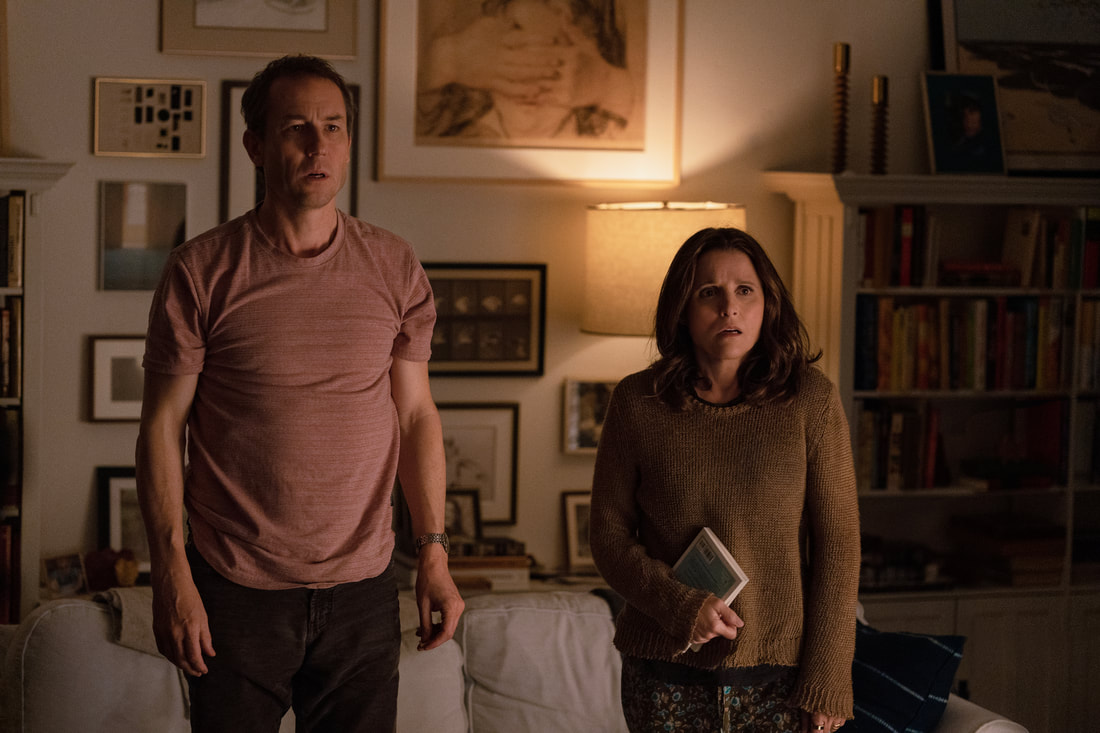 (L-R) Tobias Menzies, Julia Louis-Dreyfus. Credit: Jeong Park The film also does a good job at showing how self-doubt increases even without discovering your partner hasn't been honest with you. Sarah and her husband Mark are the more hilarious counterparts to Beth and Don. Sarah has grown sick of her career as an interior designer. Mark is a struggling actor whose career has been full of highs and lows. They are framed as comedic filler, as neither of them can catch a break. Elliot, Beth and Don's son who wants to become a playwright, feels the most out of place. He feels shoehorned into a film that otherwise naturally reveals the pitfalls of telling someone how good they are when they really aren't. However, he doesn't fall down the rabbit hole of the young son who resents his parents for how they supposedly wronged him growing up, so that was refreshing to see.
You Hurt My Feelings tackles a nuanced subject in a prolonged narrative, and it works. The cast has great chemistry that holds together every scene. The dialogue is pretty funny at times, and the script's unconventional approach of making fun of something we've all been guilty of before sets this above other comedy-dramas about upper middle class white women for upper middle class white women. Good to know they finally have an A24 film to worship. You Hurt My Feelings hits theaters on May 26. Rating: 3.5/5 Review by Cole Groth 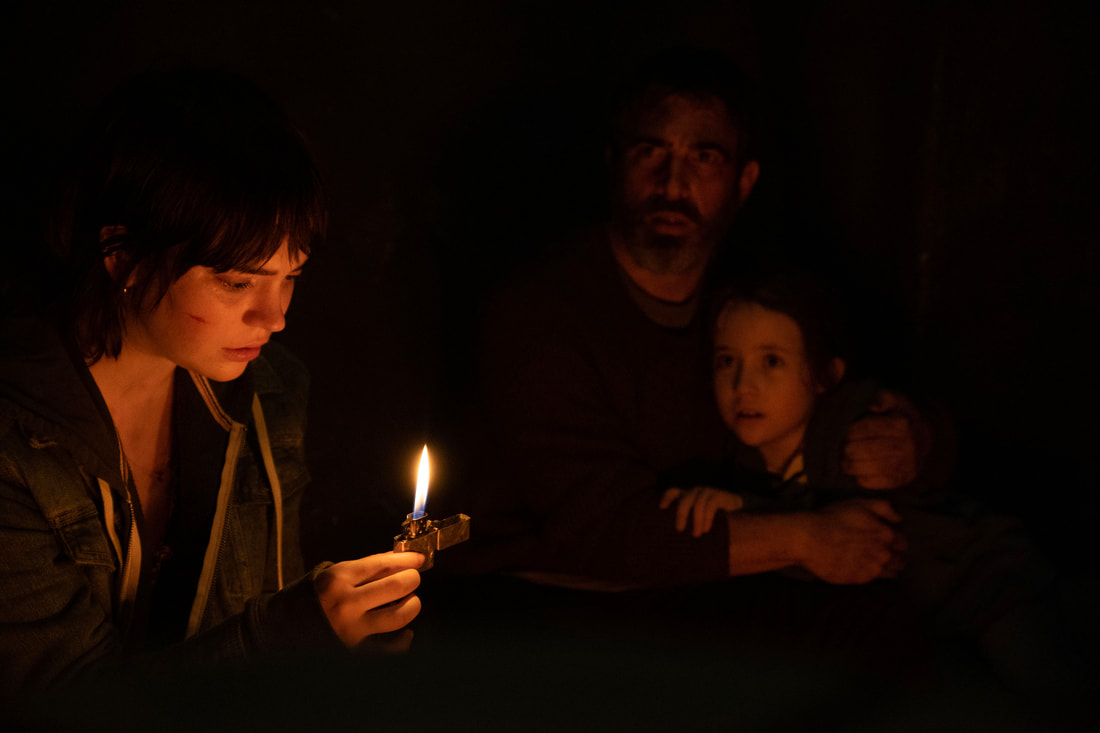 (L-R): Sophie Thatcher as Sadie Harper, Chris Messina as Will Harper, and Vivien Lyra Blair as Sawyer Harper in 20th Century Studios' THE BOOGEYMAN. Photo by Patti Perret. © 2023 20th Century Studios. All Rights Reserved. The Boogeyman is simply remarkable. Not since A Quiet Place has a PG-13 horror movie managed to be as terrifying, emotional, and powerful as Rob Savage’s first big-budget directorial effort. Like Savage’s previous efforts — Host and DASHCAM -- The Boogeyman makes efficient work of a short runtime to make a horror film that’s relentlessly terrifying and satisfyingly quick. With a terrific leading performance from Sophie Thatcher, some fantastic drama, and an all-time monster, this is a movie that demands to be seen in a crowded theater on a big screen. Based on a short story from none other than Steven King and a script from Scott Beck, Bryan Woods (the two writers of A Quiet Place), and Mark Heyman, The Boogeyman tells the story of the Harper family. High school student Sadie (Sophie Thatcher) and her younger sister Sawyer (Vivien Lyra Blair) are reeling from the tragic passing of their mother. Their therapist father, Will (Chris Messina), isn’t doing much better, and everything gets a whole lot worse after a man brings a malevolent force into the lives of the Harpers, a demon that feeds on their suffering and is hunting them down. Before anything about the story is analyzed, praise must be given to this cast. Sophia Thatcher is phenomenal and will no doubt have a successful career once this reaches a broader audience. Vivien Lyra Blair is an incredibly talented child actress, bringing the energy of a little kid with the emotional maturity of a seasoned actor. Chris Messina has already established himself as an excellent actor, but his performance here is one of the best of his career. If you’re looking for scares, The Boogeyman delivers on all accounts. It’s full of intense set pieces that will have you on the edge of your seat and never lets up after its first scare. Almost every scene ends with some sort of terrifying moment, and while jumpscares are typically annoying, Savage’s direction makes them feel earned. The actual Boogeyman itself is a stellar monster, with its design standing out as one of the best in horror history. Instead of showing the whole monster, we only see it lurking in the shadows, forcing our minds to imagine a threat that's probably much more terrifying than what would've happened if we saw all of it.  Plenty of horror movies explore grief, but this film does it exceptionally well. Every character acts like a normal person, and it’s refreshing to watch a paranormal horror film where every character isn’t an obnoxious skeptic. The family dynamic here will surely resonate with audiences because it adds so much depth to the story. Will is a particularly likable character because of how ready he is to help his daughters out. He’s also going through a painful period in his life, and it’s nice that we see how he struggles with his wife’s death while ensuring his daughters are doing well. It’s a touching story from start to finish that makes each scare even more effective.
Eli Born’s cinematography is perfect. Every shot is thoughtfully composed and creatively designed to make you feel squeamish. Patrick Jonsson’s fantastic score supports the beautiful cinematography, seamlessly blending the emotional highs and lows of the Harpers' family drama with the tense scares. From a production standpoint, this is one of the most competent horror films, and it seems like it was made on a budget of much more than the $42 million that was used. Initially scheduled for release on Hulu, this was pushed to a theatrical release after positive test screenings. While the screening I attended didn’t have a large audience, which surely would’ve made it even better, seeing it on an enormous screen in a pitch-black theater made the experience all the better. Hopefully, Disney will learn the right lesson from this and send even more films to theaters because seeing this on a small screen wouldn’t have been nearly as impactful. There’s a sense of theatricality that makes this film much better than its parts. If you’re a die-hard horror fan, you will love The Boogeyman. If you don’t love scary movies, you might enjoy The Boogeyman even more. It’s a perfect blend of horror and drama that’s as satisfying to watch as terrifying. Good horror movies have a visceral energy that makes you incredibly uncomfortable, and the disquiet this film makes you feel is thanks to a phenomenal story that will resonate with audiences of all kinds. See this with as many people as possible because horror movies this great are so infrequent, and this will hopefully be the start of a horror renaissance. The Boogeyman releases in theaters on June 2. Rating: 4.5/5 Review by Cole Groth  With only moderate critical praise and an unfortunately timed release at the beginning of the COVID-19 pandemic, 2020’s Becky receiving a sequel is certainly a surprise. With more laughs, gore, and an even shorter runtime than its predecessor, fans of the original will adore The Wrath of Becky, but for those who didn’t like the original, this one won’t win over many new fans. The Wrath of Becky picks up several years after Becky. Since the titular heroine (Lulu Wilson) killed a gang of Nazis in revenge for the killing of her father, she’s been placed in multiple foster homes but escapes every time to live in the wilderness with an older woman (Denise Burse). Her life is interrupted after a group of dickish alt-right shitheads break into her house and wreak havoc, forcing her to resort to the bloody revenge she took in the previous film. Lulu Wilson’s performance as Becky is undermined by a somewhat unbearable script. She’s menacing, funny, and awe-inspiring as a young spirit with a knack for hunting. She’s perfectly opposed by incredibly annoying performances from Seann William Scott, Michael Sirow, and Aaron Dalla Willa as the pricks she has to kill. You will despise their characters by the film’s end, a testament to their excellent acting ability. 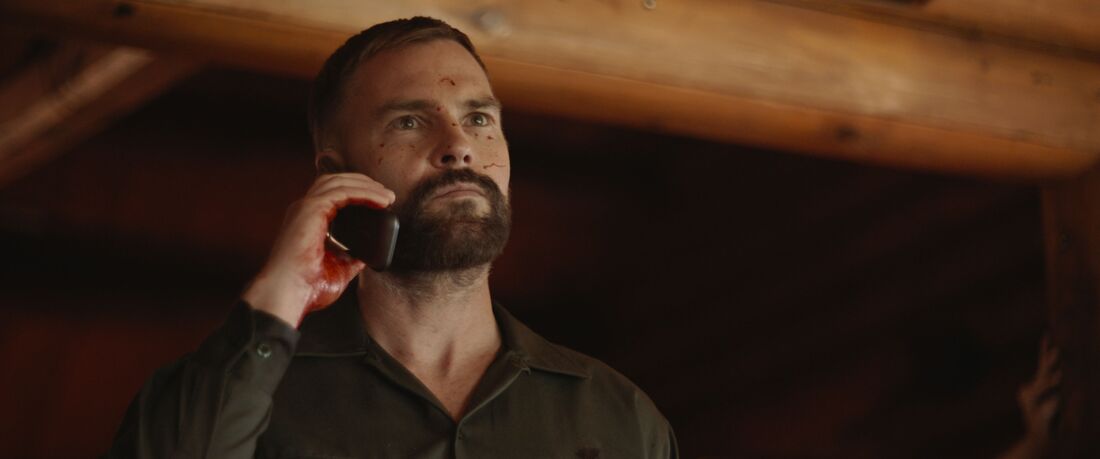 As mentioned before, the biggest weakness of the film is the screenplay. Every character is unlikable — even our protagonist being a grating presence in an already frustrating film. She operates with a bothersome teenage angst that’s annoyingly unrealistic and has an eye-rolling amount of edge. The bad guys this time around are so irredeemable that it seems like their dialogue was written by a very smug writer who wanted to live out a fantasy of killing a bunch of neo-Nazis. That's not to say that the fantasy is a bad thing — it just limits the characters to caricatures.
Where the script is lacking, the production department makes up for it with some killer gore. The deaths are more shocking than last time and are a fun combination between Home Alone and Saw. The intense fun of Becky hunting down the villains is rewarded with glorious action. Fans of horror will have much more fun with the sequel because of how much grander it is than the previous installment, and the kills are much better. While plenty of other, much better, films could’ve received sequels, it’s nice to know that even smaller projects can get started on a franchise. If this is as successful as the ending wants it to be, we might be watching the beginning of a Becky franchise. The Wrath of Becky is a bit of a failure as a screenplay but isn’t a bad way to kill 83 minutes. Revenge fantasies like this operate on their satisfying conclusions, and though it’s a messy adventure, Becky racks up a few great kills in a somewhat overindulgent yet entertaining film. The Wrath of Becky releases in theaters on May 26. Rating: 3/5
Review by Sean Boelman

A few actors and actresses have become such Cannes mainstays that their name being attached to a project is often enough to make it one of the highest-profile titles of the festival. Benedetta star Virginie Efira’s newest vehicle All to Play For is premiering in the Un Certain Regard section of this year’s Cannes, and Efira manages to breathe life into the otherwise uneven picture.
The film follows a family who, after an accident while the mother is not home, finds themselves torn apart when the child is taken away by protective services and placed in a foster home. This is a premise that feels like it is going to be an exaggerated melodrama, but the approach it takes is much more grounded — if not remotely quiet. With a runtime of over an hour and fifty minutes, the movie manages to get its point across relatively early and spends most of the rest of its length reiterating itself. Although what we see is often nothing short of devastating, it also feels like overkill. It’s clear that the film wants us to know that this is an important issue — it’s just a tad on the aggressive side. There are certainly some interesting questions asked by the movie, particularly when it comes to parenting and what exactly makes a good parent. Unfortunately, as many of us will know, the answer is far from black-and-white. Still, the film seems much more preoccupied with pointing fingers than providing an actual solution. 
Virginie Efira plays the lead role in the movie, and as is usually the case with everything she does, she manages to elevate the material. The role is complex — equal parts frustrating and compelling — but Efira manages to capture all the nuance of the character in an utterly heartbreaking and captivating way.
Perhaps the most frustrating thing about All to Play For — and it is an issue that tends to plague films with these themes — is that it fails to give an adequate voice to the people who matter most in this situation: the children. This story is, first and foremost, about the mother and the pain she suffers. The movie would have been much more effective had it taken a moment to stop and truly dive into what the kids are feeling. The film is very simplistic in its approach, with an emphasis on the performances over technicality. Delphine Deloget’s narrative feature debut is unflashy by design, and this grounded, realism-based approach works well in making the message resonate more deeply and avoid the pitfalls of melodrama. All to Play For makes its point, and if that is the only metric for success, it knocks it out of the park. Unfortunately, the movie otherwise ends up feeling a bit heavy-handed and overlong. Still, Efira’s performance saves it and makes it worth the watch. All to Play For is screening at the 2023 Cannes Film Festival in the Un Certain Regard section. Rating: 3/5
Review by Sean Boelman

Arnold Schwarzenegger as Luke Brunner in episode 101 of Fubar. Credit: Christos Kalohoridis/Netflix © 2023.
FUBAR has been teased as action movie star Arnold Schwarzenegger’s “long-awaited” first role in television. Although no one was likely clamoring for this before it was made, those who met its announcement with excitement should temper their expectations, as it’s a lame, only occasionally enjoyable outing that doesn’t take advantage of its stars’ talent.
The show follows a CIA operative who, on the eve of his retirement, discovers that his daughter has secretly been an operative herself and requires his help on what may end up being one of his biggest missions yet. It’s a mix of action-comedy and family comedy, and while this should be a formula for fun, it ends up being shockingly unpleasant. Early on in the series, there are some writing decisions made that range from questionable to downright baffling. Of the more head-scratching variety are lines like one that seems to casually assert Schwarzenegger is a decade younger than he actually is. On the more annoying end are countless puns related to iconic quotes from the action star, like numerous shoehorned-in exclamations of “CHOPPA!” If FUBAR were a two-hour feature length film, it would have likely been pretty enjoyable. Unfortunately, at eight episodes — most of which are pushing an hour in length each — the story stretches itself thin very quickly. The international espionage plot is simply too basic and formulaic, and it can’t sustain such a bloated length. 
(L to R) Monica Barbaro as Emma Brunner, Arnold Schwarzenegger as Luke Brunner in episode 103 of Fubar. Credit: Christos Kalohoridis/Netflix © 2023.
Schwarzenegger is absolutely eating up his role, which is part of what makes it so confusing that the series otherwise feels uninspired. Even when the one-liners he is being asked to deliver are completely cringe-worthy, the Governator brings 100% authenticity to the role and manages to get a laugh most of the time.
As for the rest of the ensemble, they end up being almost as enjoyable as the A-lister lead. Milan Carter is the biggest breakout as the man in the chair to Schwarzenegger’s superspy, but Fortune Feimster and Travis Van Winkle also have some funny moments as sidekicks. Gabriel Luna also gives an enjoyable villainous turn as the (admittedly generic) international arms dealer. Only Monica Barbaro and Jay Baruchel feel completely underused, although Barbaro does have pretty great chemistry with Schwarzenegger. While one would hope that the series offers Schwarzenegger plenty of action sequences harkening back to his good ol’ days of the height of his career, there’s really only one or two of these in the entire series. He’s gotten old — there’s no way around that — but an unnecessarily CGI-filled spectacle like this is *not* the way to prove that he’s still got it. Ultimately, Schwarzenegger has remained a cultural icon for many years at this point — there’s absolutely no reason that he should have to resort to lame nostalgia bait like this chasing relevancy that he (however unexpectedly) still has. There has certainly been worse content on Netflix than FUBAR, but what makes it disappointing is how fun it could (and should) have been. FUBAR is now streaming on Netflix. Rating: 2.5/5 Review by Dan Skip Allen  Sebastian Maniscalco as Sebastian and Robert De Niro as Salvo in About My Father. Photo Credit: Dan Anderson/Lionsgate. Sebastian Maniscalco may not be a household name, but he is a renowned stand-up comedian from Chicago. He released 6 stand-up specials, and he's had a few supporting roles in films such as Martin Scorsese's The Irishman as Joe Gallo and Peter Farrelly's Green Book. About My Father is the semi-autobiographical story of a hilarious moment in his life, where he introduces his father to his in-laws to interesting results. Maniscalco wrote the screenplay with Austen Earl. It's a story he's clearly passionate about. It's somewhat of a fish-out-of-water tale. This man and his father have lived different lives than his wife (played by Leslie Bibb) and her eccentric family. To get his father's approval to marry her, he must bring him to their nice ritzy house in Virginia. His cheap and old ways clash with their posh, rich ways. Maniscalco and fledgling director Laura Terruso worked well together to craft his story into something relatable for audiences of all backgrounds. The various parental figures in the movie represent two different sides of the same coin in a way. You have one group that lets their children do what they want and support them, while another parent is staunch and stricter with his son regarding finances and how to handle himself. These two opposing sides of this group of people create a fun dichotomy throughout the film. Robert De Niro is known for his serious roles in The Godfather Part II, Taxi Driver, Raging Bull, and Goodfellas, but in the late ‘90s, he started branching out into more comedic roles. He starred in such films as Analyze This and Analyze That, as well as the Meet the Parents franchise. He has transitioned nicely into these comedic roles because he tends to play the straight man, while everybody else does the comedic stuff around him. He made the occasional ad lib, though, which can be beneficial to some scenes, and proves a particularly useful skill here.  Sebastian Maniscalco as Sebastian and Robert De Niro as Salvo in About My Father. Photo Credit: Dan Anderson/Lionsgate. Maniscalco and De Niro are a good father-son team in this movie. They have good chemistry with one another. That being said, it sometimes seems they are on an island by themselves. The rest of the cast, from Leslie Bibb to David Rasche, and even Kim Cattrall, are always one step behind them. In one scene, for instance, the family is taking a Christmas card photo, and both Maniscalco and De Niro go for it during this scene, wearing outlandish costumes to get the cheap laugh. When the others do or say stuff, it's not as funny. I just didn't buy them as these characters apart from an occasional laugh.
The main thing about this film I liked also works against it, and that's the fact that we've seen this story done to death before. I like this sort of story, but couldn't these guys and gals come up with something original? Sure, there is a montage showing the backstory of where these people come from, which was narrated by Maniscalco himself. And the narration was enjoyable to listen to during the entire film, but the rest was a cookie-cutter story the audience had seen before. About My Father has some moments that had me laughing out loud and other bits that didn't land with me or others watching the movie. Maniscalco and De Niro had great chemistry that I'm sure they developed over working on The Irishman and this film. I loved their characters’ relationship in this movie. I felt some of the humor fell flat, though, and those two were on an island by themselves at the time. Still, all said and done, this was a mostly enjoyable in-laws comedy. It'll be good counter-programming for people who want something different this Memorial Day weekend. About My Father hits theaters on May 26. Rating: 3/5 Reviewed by Jonathan Berk  The worst thing that happened to director Ric Roman Waugh’s new film Kandahar is that it comes a month after Guy Ritchie’s The Covenant. Both films feature a soldier who feels a sense of obligation to help get their translator out of Afghanistan. While that’s a bit of an oversimplification, the two films coming out so close together is clearly a result of America’s withdrawal from Afghanistan and the immediate return of the Taliban’s rise to power. Even more particular is the treatment of the many enlisted translators, and the promises made to them, and how many were left to fend for themselves. The difference is that Ritchie’s film tells its story better and has much more compelling action. However, Kandahar isn’t bad, but noticeably lacking by comparison. Kandahar focuses — which is giving the film too much credit, as it is a little convoluted — on Tom Harris (Gerard Butler), an undercover CIA agent, who finds himself the target of pretty much everybody from the Iranian government to the Taliban, ISIS, and ISI after his cover is blown. Tom had recently been given a new mission and a new translator, played by Navid Negahban, who had previously escaped Afghanistan and returned with a mission of his own. However, both must give up their current goals in order to try to flee to an extraction point in Kandahar…or die trying. There are several moments in the film that feel extremely clunky. David Mamet mentions in his book On Directing Film that Hollywood has a fixation on backstory. We are told early on that Tom is about to leave to see his daughter graduate. Has he been a good dad or a good husband? Nope. Will he do the right thing and leave right away to make sure he makes it on time? Or will he take another mission that’ll inevitably put a ticking clock in the story? This blatant attempt to flesh out the character feels cliché and unnecessary. A soldier doing his job is now in jeopardy, which is enough of a situation to make the audience want him to get out safely. The way this information is delivered slows the momentum of the story down and doesn’t pay off or add much to the film. 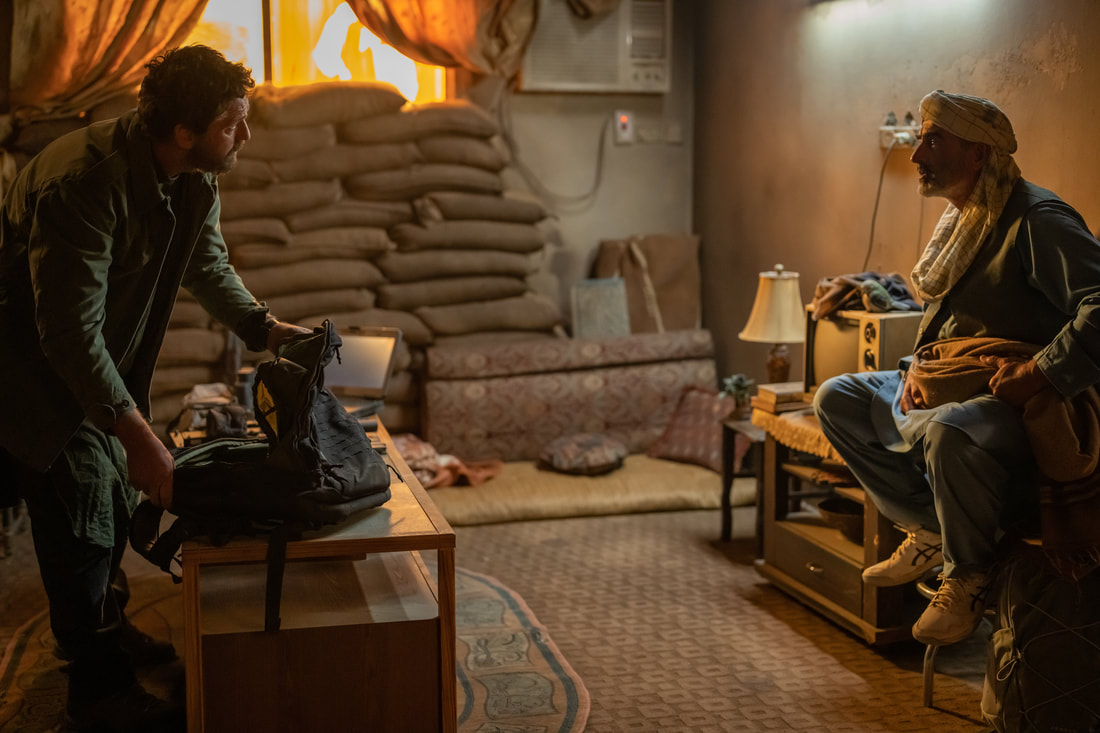 Then there are all the various story lines and characters. There is the journalist investigating something in Iran that leads to Tom’s cover being blown. Each member of the various organizations invested in catching Tom for one reason or another, Tom’s handler in Afghanistan and the suits back home, plus the second main character of the translator, all attempt to grapple for time on screen and stakes. The impact is uneven and complicated for the audience to understand why we spend so much time with all these various players who do nothing more than complicate things for the sake of complication.
It may sound like Kandahar isn’t a good movie, but that wouldn’t be accurate. There are some decent action set pieces — including a car chase with night vision goggles — that will definitely get invested audiences gripping their armrests. The two lead performances are solid, and you can’t help but worry for their safety. This movie finds its rhythm when it’s just Butler and Negahban trying to escape from terrifying situations. Even some of their clunky exposition dumps are tolerable, because the two feel committed. These moments are only weaker because The Covenant’s similar moments feel more impactful. Kandahar is in theaters on May 26. Rating: 3/5 |