
|
Review by Camden Ferrell
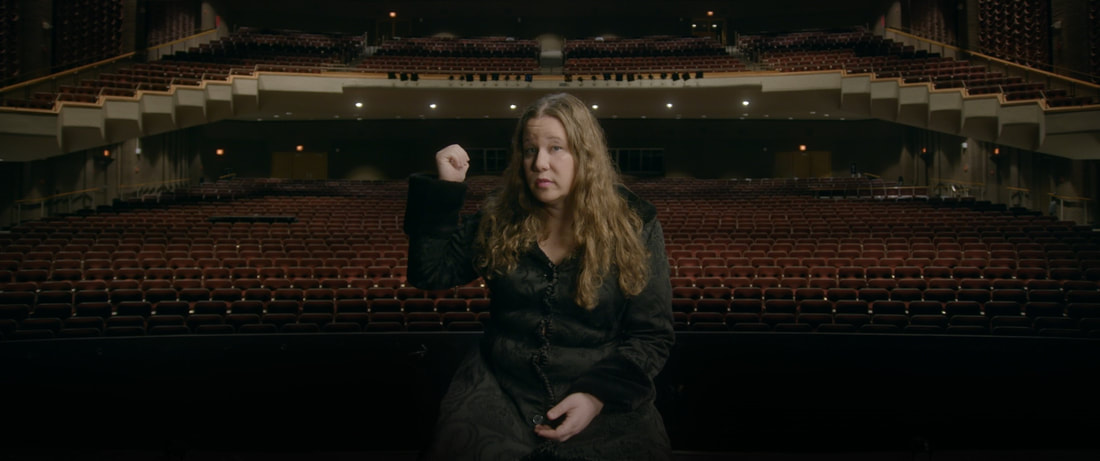
Don Giovanni is one of the most famous operas ever written, and up until recently, the principal role has never been professionally performed by a transgender woman. This is where the story of James Kicklighter’s new documentary, The Sound of Identity, begins. Even though it’s an interesting subject, the movie doesn’t give adequate exploration to the themes and implications of its story.
Lucia Lucas is a renowned opera singer, and she is at a turning point in her career as she prepares to play the lead in Don Giovanni. Through her own testimony, we learn about the process of playing this character and learn insight into her transition and career. She’s an interesting subject that had a lot of promise for a compelling documentary. From the start, the film seems to lack personality. It superficially captures the events depicted, and there isn’t much style in the way its filmed. This leads to many key scenes feeling dull and uninspired despite how interesting the subject is. Lucas is very interesting, and she imparts some really great insight into her transition and her life. These moments with Lucas are where the film succeeds the most. She has a plethora of interesting experiences that serve as a good foundation for the film, but it unfortunately irresponsibly squanders this potential. 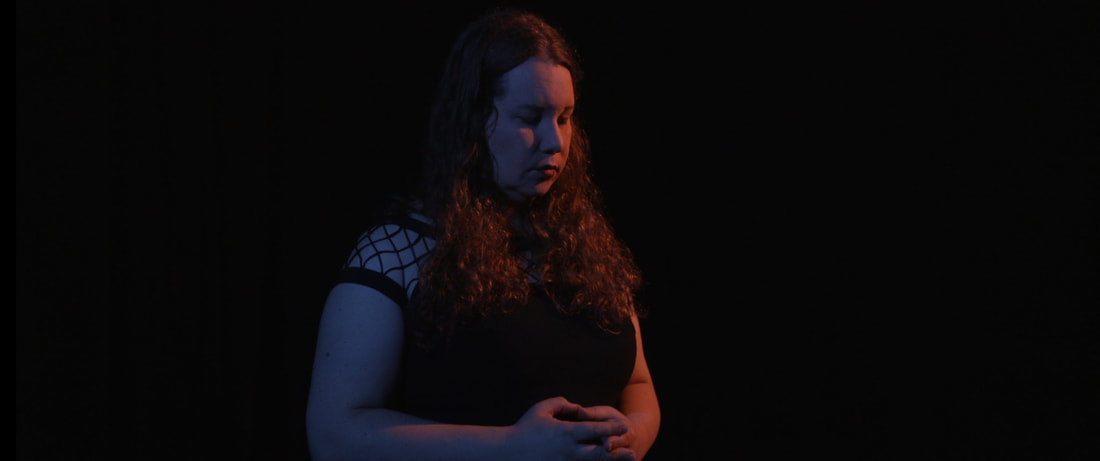
In addition to the historic occasion, the film does explore the state of the opera world and the significance of Don Giovanni. It’s interesting, but it distracts a lot from Lucas’ story that should have taken precedent. Regardless, it does also highlight some of the beauty found in the opera and its importance to the art world.
Watching the collaboration between Lucas and her mentor, Tobias Picker, is quite enjoyable and sweet. There’s a fair amount of screen time for this, but it’s an aspect that I wish was more developed as it was rather interesting. Despite the film’s flaws, it’s an inspiring story of a fantastic opera singer. Lucas has a beautiful voice, and she breaks boundaries in the opera world with charm and grace. Her magnificent story is muddled in this documentary, and it isn’t given the exploration it warrants, but it’s still enjoyable throughout. The Sound of Identity can suffer from a bland and safe execution, but it benefits from its captivating subject and historical significance. There are some touching moments and interesting testimonials, but it ultimately lacks a cinematic personality to match the personality of its subject. The Sound of Identity is available on VOD June 1. Rating: 3/5
0 Comments
Review by Dan Skip Allen
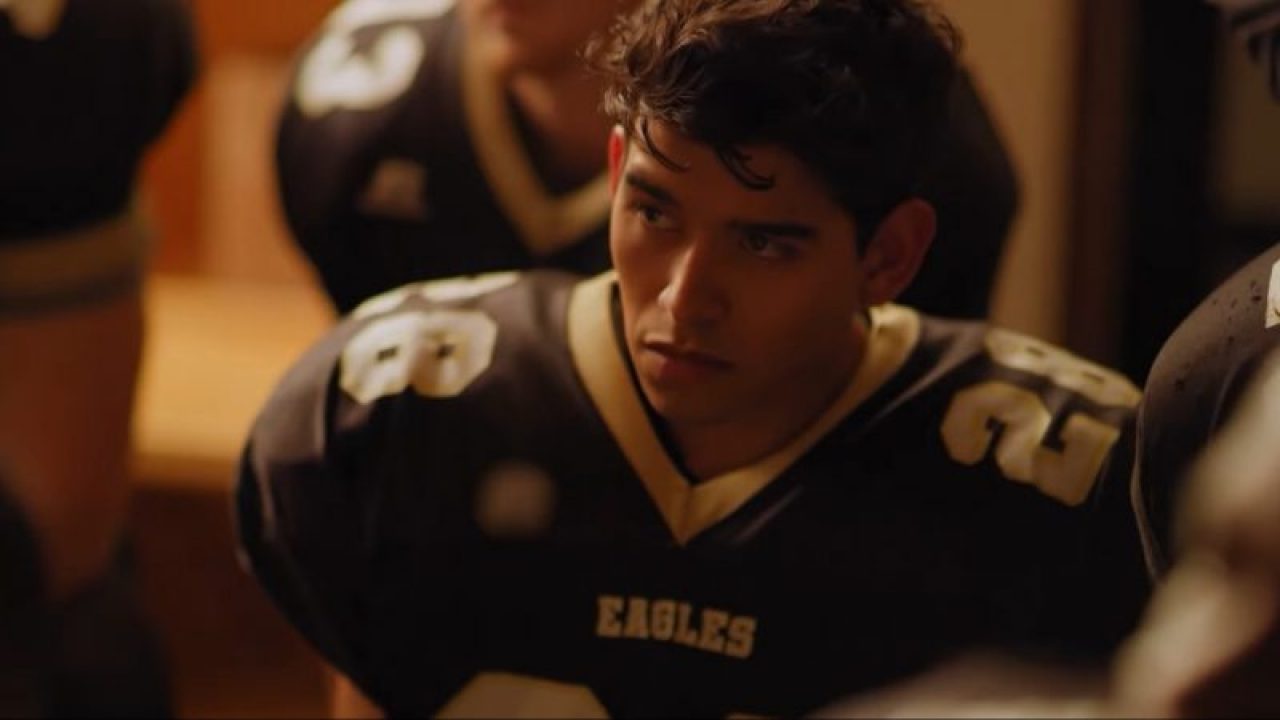
There have been a lot of football movies that have come down the pipe in the last fifty or so years. A lot of them have been pretty straightforward. They just put obstacles in the way of the players, coaches, and team in the film. Sometimes they are comedies such as The Replacements or The Waterboy, but mostly they are dramatic fare such as Friday Night Lights or Remember the Titans. Every once in a while, a Christian football movie gets released as well. Under the Stadium Lights is a mixed bag. It has a lot of dramatic moments, but mainly has a religious message to it.
The film focuses on the Abilene High School Eagles, a team that was considered the best in their division until they lost in the first round of the playoffs. They have to reevaluate who they are and what they're playing for. They have a mantra of "Who's your brother's keeper?" It's a creed that each one of these players has to embrace. It's not easy because most of these players have tough lives off of the field and away from school. As the creed suggests, though, they are not alone. In sports films, the hook has to get the audience invested in the characters and story. The Christian angle can be that for sports films. They have an inspiring story using a religious message to move the film forward. Under the Stadium Lights is in the vein of other Christian films with its message, but it does things a little differently than normal. That's what sets it apart from all those other Christian sports films 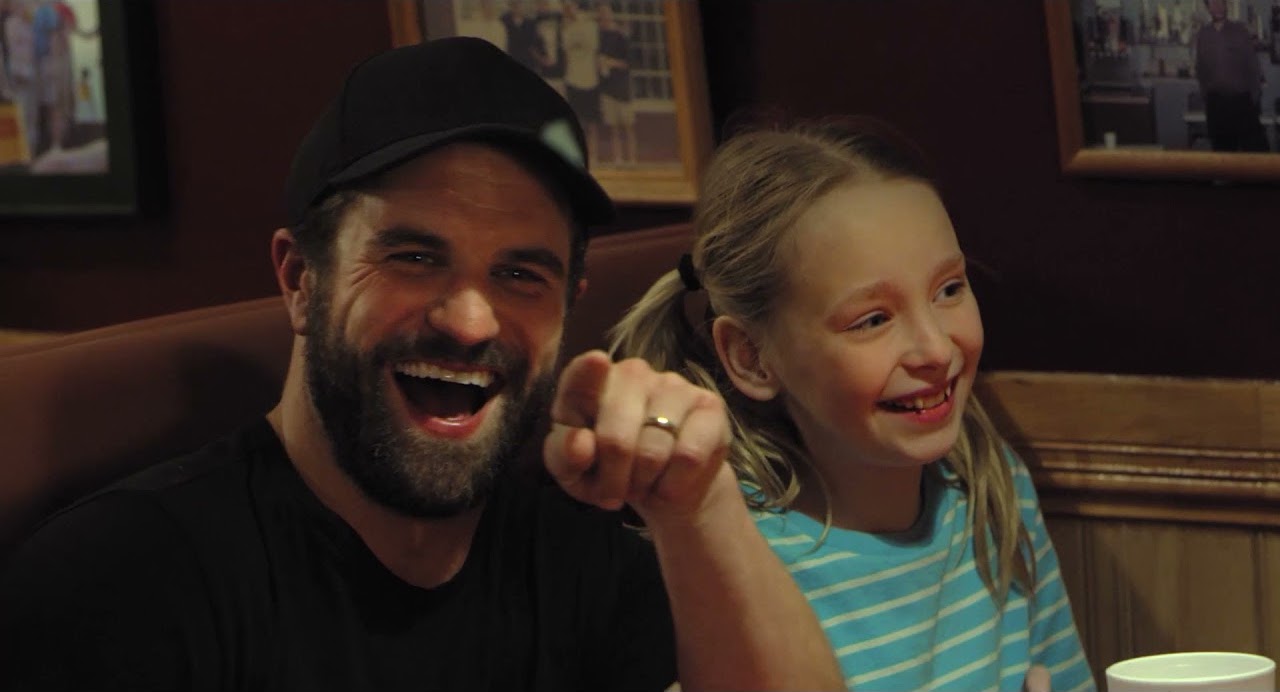
The football in the film is never staged like a regular film. With the actors playing their roles as players, coaches, announcers, teachers, or parents, all the actual football scenes and games are taken from archival footage from games that were previously recorded during the season the film takes place in. That's very different than many other football films. Even though this film had a big-name star in Laurence Fishburne, it is pretty much stacked with relative nobodies except the coach, played by Glenn Morshower, a veteran character actor, and ex-NFL player and Hall of Famer Eddie George.
The budget couldn't be that big with not being able to film the football scenes or getting bigger named actors to play the characters in the film. It's a blessing because this allows for the filmmaker Todd Randall to focus more on the story and the message set out in the book Brother's Keeper by Al Pickett and Chad Mitchell. Milo Gibson plays Chad Gibson in the film and Abigail Hawk plays his wife. He is the main focus of the message that the film is trying to talk about. The book Brother's Keeper is a nice thing to use for the script to tell this inspirational story. The lead Gibson's belief in faith, family, and football propelled this team, school, and town forward. The unique style of using archival footage to do the football scenes was ingenious. That helped focus more on the characters and their story. Todd Randall used every cent of the budget to his advantage. Under the Stadium Lights hits theaters and VOD on June 4. Rating: 3.5/5
Review by Sean Boelman
Julianne Moore in “Lisey’s Story,” premiering June 4 on Apple TV+.
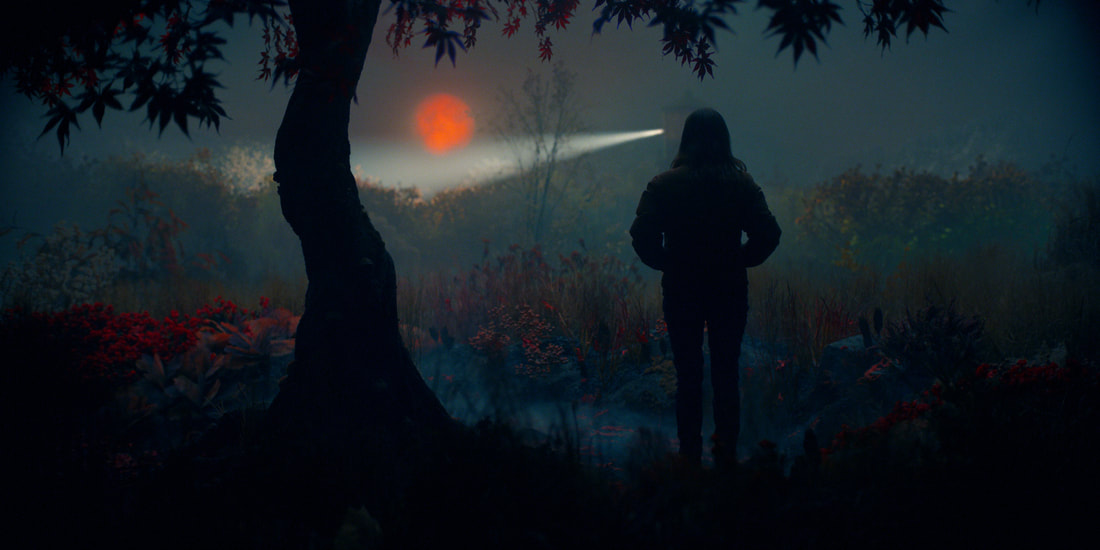
Stephen King has long stated that Lisey’s Story is one of his favorite novels that he has written, largely due to its personal nature, so it makes sense that he did the screen adaptation himself. However, despite the winning combination of King, director Pablo Larraín (Jackie), and actress Julianne Moore, this exhibits all of the author’s worst tendencies unrestrained.
The series follows the widow of a famous author who confronts the past of her marriage when she is targeted by a dangerous stalker obsessed with her husband’s work. On paper, it sounds like a relatively standard thriller, but in reality it’s biggest issue is that it is anything but, with too many tones and genres clashing with each other. King’s writing of this series is very all-over-the-place, and it seems like it’s the results of nobody telling him no. There is the core thriller storyline, but also portions that feel like melodrama, psychological horror, supernatural horror, and even fantasy drama. There are definitely some moments in which they come together nicely, but for the most part, it’s inconsistent and scattered. The other issue with King’s scripting is that it is paced like a novel. There are a lot of flowery details that could have been omitted in bringing it to a serial format, shortening it from eight episodes into six (or perhaps even a single feature-length film). King ultimately gets too lost in weaving through these timelines and worlds for it to be super entertaining. 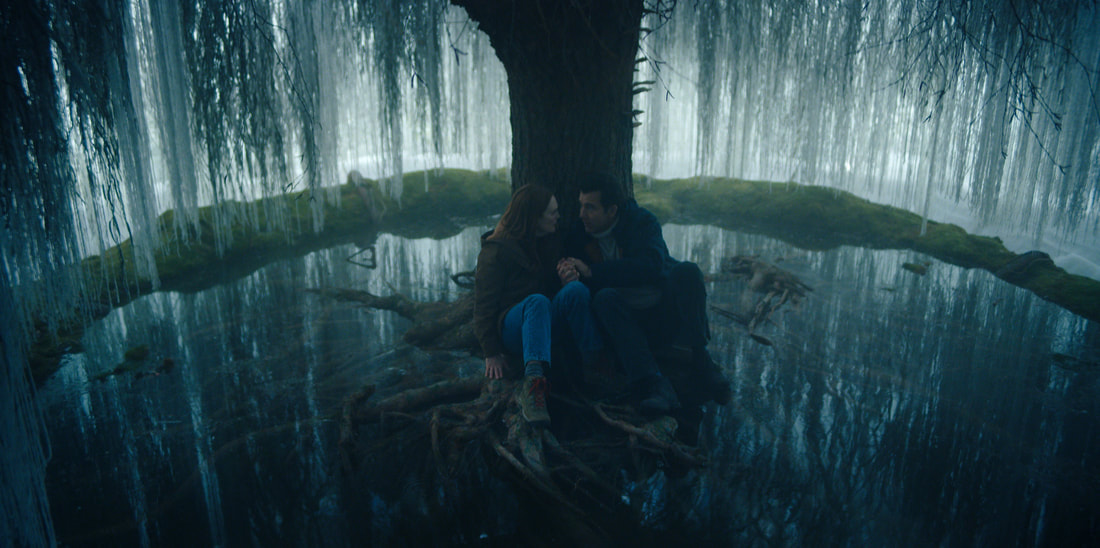
Julianne Moore and Clive Owens in “Lisey’s Story,” premiering June 4 on Apple TV+.
There is also a frustrating amount of ambiguity in the character development. Although the eponymous protagonist has a compelling arc, all of the supporting characters have questionable motivations and roles in the story. And since the mystery element of the story is the least compelling of them all, this lack of depth is just frustrating.
Julianne Moore is one of the few things that allows this series to function. While it isn’t among her best work, she still brings a lot of emotion to the role that will invest the character in the story. On the other hand, nearly everyone in the supporting cast, including Dane DeHaan, Clive Owen, Jennifer Jason Leigh, and Joan Allen, is over-the-top. Larraín’s visual prowess also makes this series a lot more interesting than it would otherwise be. A lot of Larraín’s work in the past has stood out because of the way in which it adds a dash of color and surrealism to a realistic world, so it was certainly interesting to get the chance to see him work on something far less grounded from the start. Lisey’s Story has a lot of great talent involved, and they manage to keep the series going at a passable rate. There is no denying that King is an amazing novelist, but it can be argued that his writing style when unchecked is more suited to the page than the screen. Lisey’s Story streams on Apple TV+ beginning June 4, with new episodes released subsequent Fridays. All eight episodes reviewed. Rating: 3/5
Review by Sean Boelman
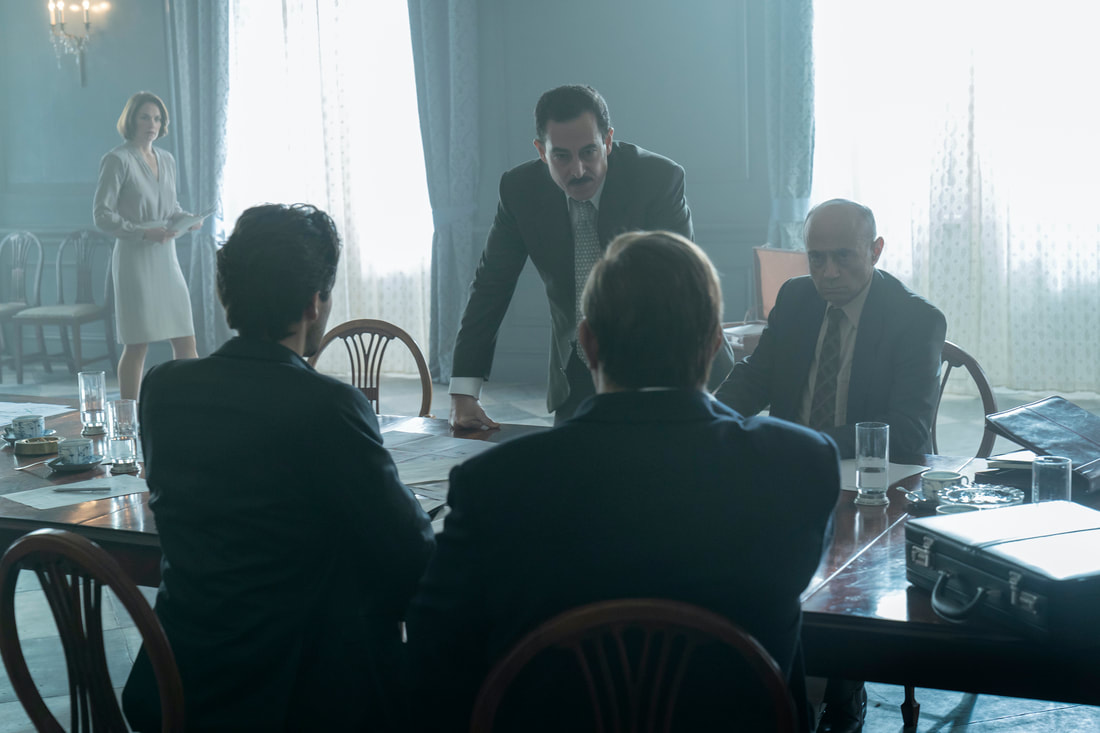
Photograph by Larry D. Horricks/HBO.
If there has ever been a film that is a victim of unfortunate timing more than anything else, it is HBO’s Oslo, which comes out as the Israel-Palestine conflict is escalating again. A solid acting showcase for its ensemble, but disappointingly toothless when it comes to its politics, this is a prestige project that will definitely fall flat.
Adapted by J.T. Rogers from his own stageplay, the movie follows the mediators who facilitated the Oslo Peace Accords between Israel and the Palestinian Liberation Organization. This is undeniably an important moment in history, but the way in which Rogers presents it — a blend of boardroom drama and melodrama — isn’t as riveting as it should be. Rogers should be praised for the very extensive approach he takes to dramatizing these events, but it all becomes a bit overwhelming after lasting for nearly two hours. Rogers’s dialgoue is pretty sharp, but it’s also consistently very dense, occasionally to the point of making a viewer feel like they need an encyclopedia to understand the dynamics. The message of the film seems to be one of peace and cooperation, coming together to compromise and find a solution that is mutually beneficial to both sides of a disagreement. However, the movie comes across as painfully centrist in execution, unwilling to take a stance on the mistakes made by either party. 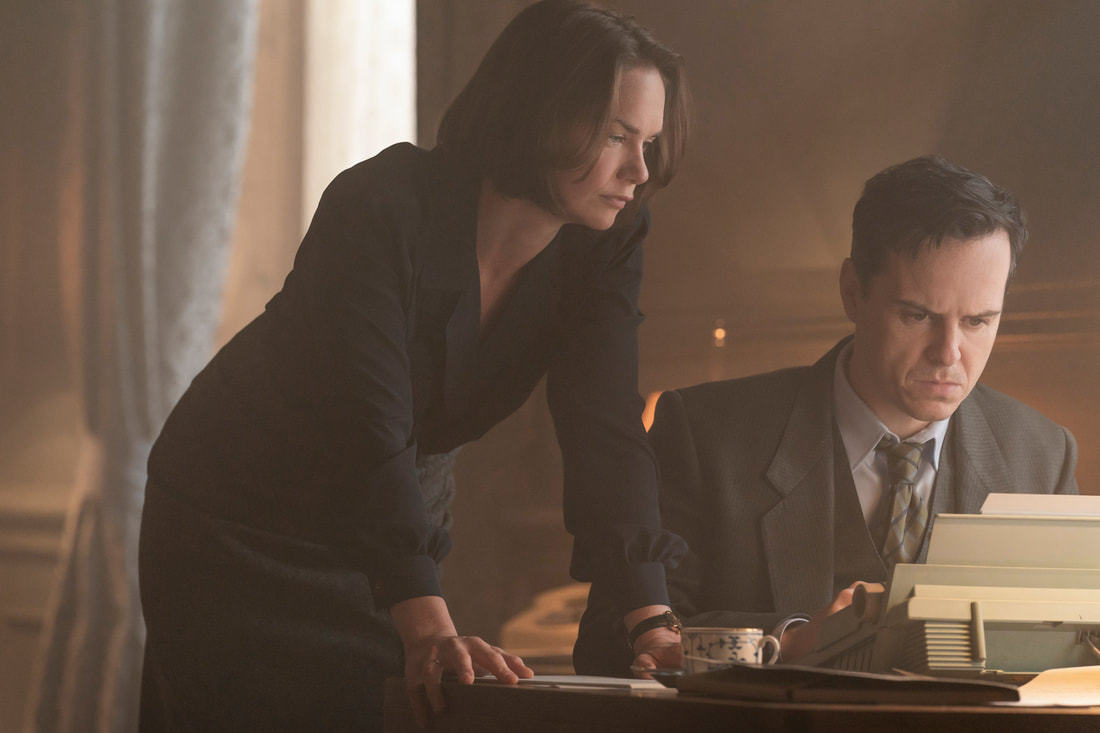
Photograph by Larry D. Horricks/HBO.
And in trying to be as neutral as possible, Rogers tells the story from the perspective of two Norwegian diplomats. This adds a marriage subplot into the film that is entirely unnecessary and only bloats the runtime further, but more frustratingly, results in neither the Israeli nor Palestinian characters feeling fleshed out.
The two lead actors in the movie, Ruth Wilson and Andrew Scott, both do a very solid job in their roles. Wilson, in particular, impresses as the impassioned but ethically staunch half of the duo, delivering her dialogue (which is among the best in the script) brilliantly. There are also some strong supporting players, but none has a substantial enough role to really stand out. Director Bartlett Sher (who also directed the stage version) doesn’t do a whole lot to make this particularly cinematic, with a very stagey style. An emphasis is placed on the blocking and dialogue which are enough to keep the audience invested in a captive environment, but not so much if they are watching on a screen from home. Oslo tells a really interesting story, but not always in the most interesting way. Even though the writing and performances are solid, a lack of energy in the direction will prevent it from connecting with viewers. Oslo debuts on HBO on May 29 at 8pm ET/PT. Rating: 3/5
Review by Sean Boelman

(L-R) Leyna Bloom as Wye and Fionn Whitehead as Paul in the drama PORT AUTHORITY, a Momentum Pictures release. Photo courtesy of Momentum Pictures.
One would hope that society had progressed past the need for films that preach acceptance to cis straight (and usually white) men, but we still get a seemingly numerous amount year after year. Port Authority is yet another movie that means well, but ultimately serves an audience that already understands its message.
The film follows a 20-year-old from a small town in the Midwest who arrives in New York City and falls in love with a trans woman, opening his eyes to the LGBTQ community in a way that he had never known before. For a premise that had the potential to be really atrocious, writer-director Danielle Lessovitz handles it in a surprisingly tasteful way, even if it does pander a bit too often. Lessovitz’s movie shows the most potential as an exploration of kiki ball culture, but more often than not, the scene serves as little more than a backdrop for the melodramatic plot. That said, there is other media which has explored the queer community more effectively than this in the past, making this an inessential addition to the canon of LGBTQ cinema. Perhaps most frustrating is the fact that Lessovitz relies on the tired trope of a cis straight protagonist discovering themselves as a result of their interaction with a queer character. It’s the LGBTQ equivalent of the “Magical Negro” archetype, and it’s about time that we stop telling these stories through this lens. 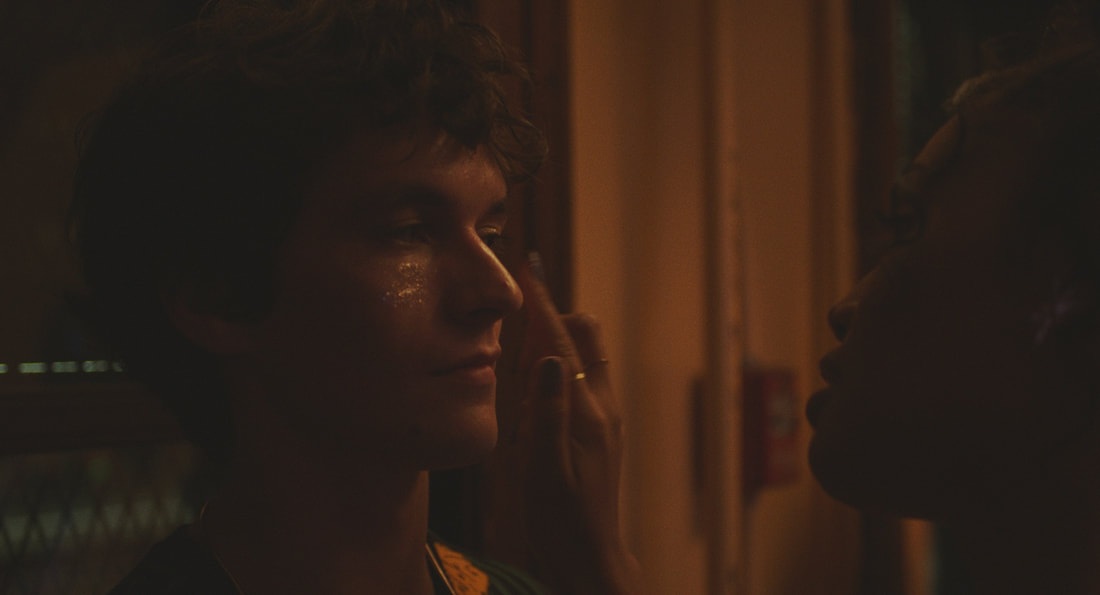
(L-R) Fionn Whitehead as Paul and Leyna Bloom as Wye in the drama PORT AUTHORITY, a Momentum Pictures release. Photo courtesy of Momentum Pictures.
Additionally, it’s frustrating that the trans character in the film has so little development. The dominant arc is the cis male protagonist’s, and even the romance is told from his perspective. As a result, anything that the movie has resembling authenticity goes out the window in favor of a contrived love story.
Fionn Whitehead tries his best to give a solid performance, but likely due to issues with the script and character, he too often feels like he is whining. On the other hand, trans actress Leyna Bloom gives an exceptional turn, nearly stealing the show from her male co-star even though she is held back by the writing. The film is also very strong in a technical sense, implying that Lessovitz is much stronger as a writer than a director. The ballroom scenes, while not as bountiful in number as one would hope, are an absolute highlight, giving the movie a much-needed dose of added energy that helps it stand out despite the cheesiness. Port Authority is a well-shot but unimpressively-written drama with a very basic approach to its themes. It definitely could have been a lot worse than it is, but that doesn’t change the fact that there are better films that do the same thing. Port Authority is now in theaters and hits VOD on June 1. Rating: 3/5
Review by Sean Boelman
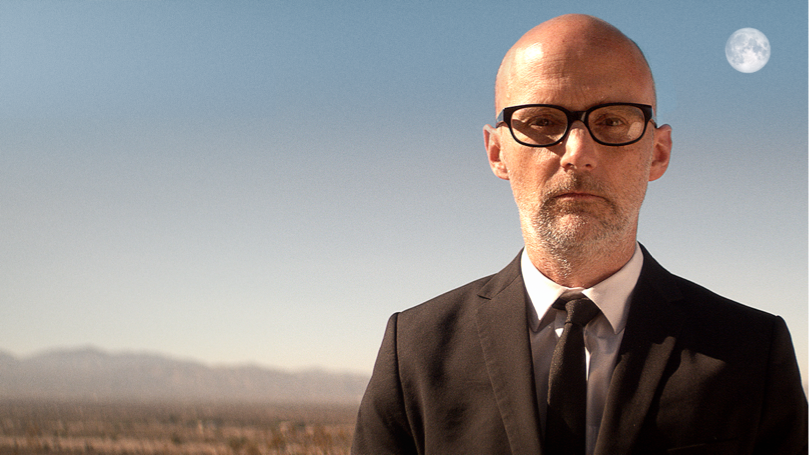
Richard Melville Hall, better known as Moby, is perhaps the single most influential electronic musician in history, so it is absolutely shocking that there aren’t more feature-length documentaries about him. Filmmaker Rob Gordon Bralver hopes to remedy this with Moby Doc, a portrait of the musician that is equal parts fun, touching, and timely.
The movie tells the story of electronic musician Moby as he fights various circumstances in his life to become one of the most influential electronic musicians of all time. The film does hit a lot of the beats of the musician biographical documentary, albeit in a way that is fittingly quirky given the personality and work of the subject. Obviously, this movie caters primarily to an audience who is already familiar with Moby’s work and has an appreciation for his style. However, even those who are uninitiated will find themselves impressed by the man thanks to a combination of footage showing his great accomplishments and interviews from his peers hailing him for the master he is. That said, one of the film’s weaknesses is that Moby is such an interesting person that it is nearly impossible to explore every aspect of his life in ninety minutes. As a result, some portions of the movie feel shallow. Moby has simply done so much great stuff that they couldn’t choose what to focus on. 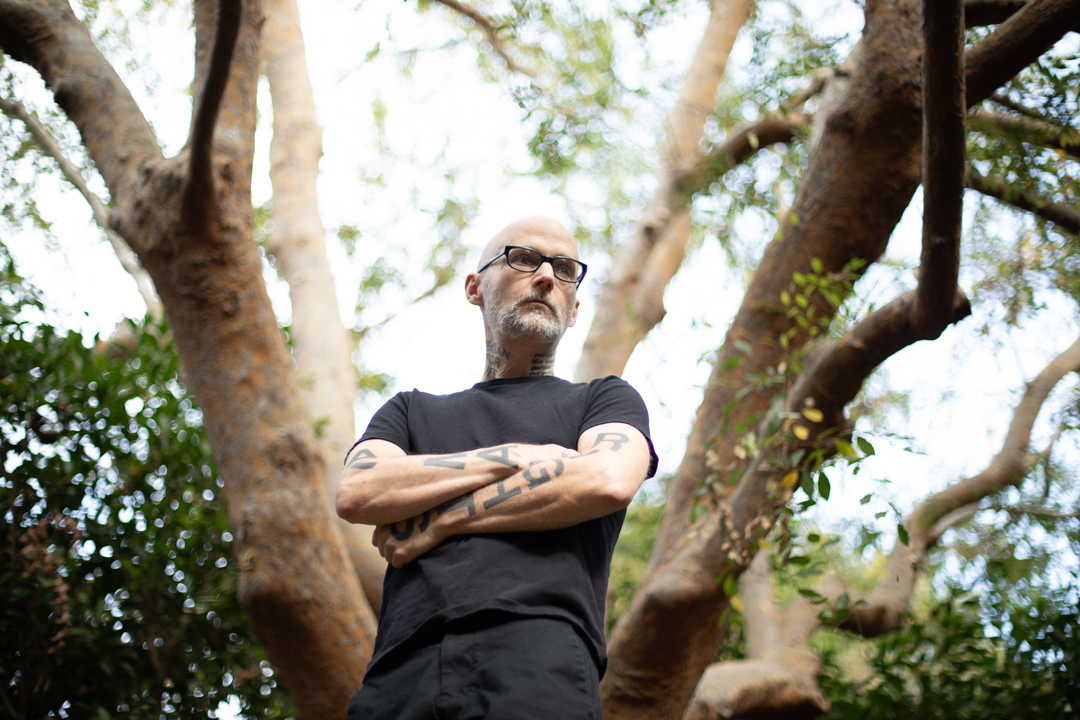
If there is one thing missing from the film, it is an in-depth evaluation of Moby’s discography. While it’s clear that Bralver was more interested in making a documentary about Moby as a person rather than him as a musician, it would have been nice to hear some more behind-the-scenes stories about what went into some of Moby’s greatest hits.
Still, there is more to this documentary than just the music. Moby has always been very active as an animal rights activist, and that passion extends into this movie. There are multiple segments which follow him supporting various causes, many of which are important things that need to be discussed and can very much use his platform. It is on a technical level that the film impresses the most. As a musician, Moby is known for his experimentation, so it is only fitting that this documentary about him equally plays around with conventions. There is a level of both beauty and energy to the documentary that goes a long way in making the movie work. Moby Doc does a great job of representing the eponymous musician for the genius and activist that he is. Fans will be delighted by it as a lovely biography, but it can also serve as a great introduction for those who aren’t already familiar with his work. Moby Doc hits theaters and VOD on May 28. Rating: 4/5
Review by Dan Skip Allen
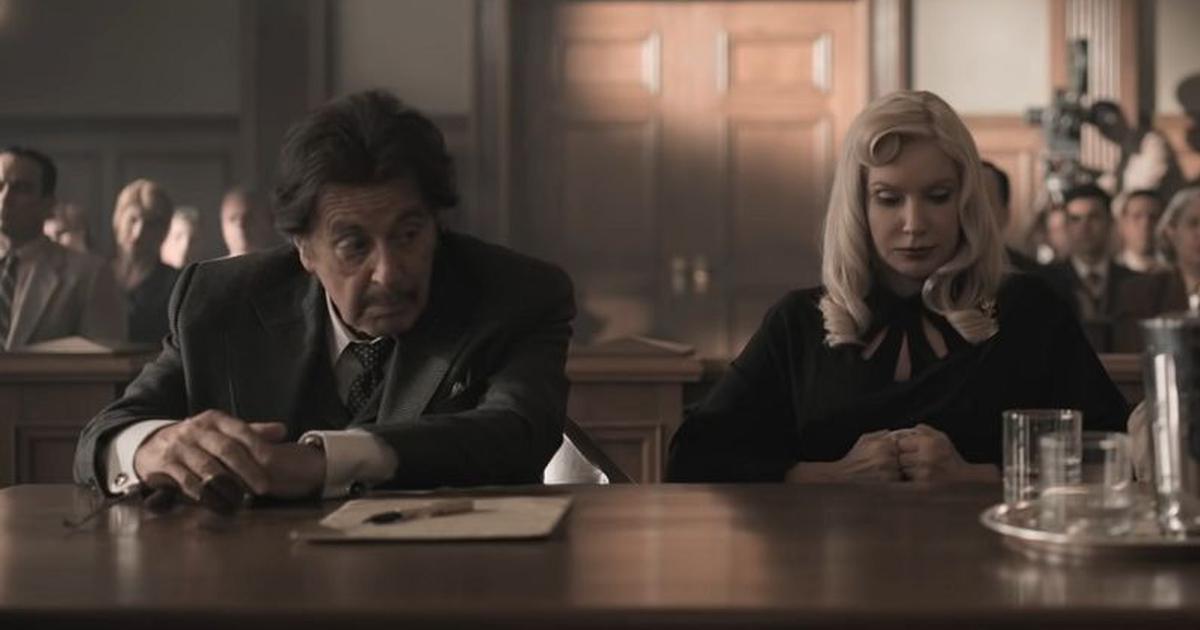
There are a lot of stories surrounding WWII that people don't know about until they get made into movies. The story of Mildred Gillars, also known as Axis Sally, is one of those. It is an interesting story but whether or not it deserved a movie is questionable, especially with the way it was filmed by the filmmakers.
Meadow Williams plays Axis Sally/Mildred Gillars, a Broadway singer who is approached to be the voice of the Axis soldiers in WWII. At the end of the war, she gets arrested by American soldiers and brought to the United States to stand trial for war crimes against the USA. An older experienced lawyer, James Laughlin (Al Pacino), decided to defend her because no one else will. He struggles to find an angle to come from where he can get the jury to have sympathy for her. Trying to defend war criminals isn't easy even for an experienced lawyer such as Pacino's character. He enlists the help of a new young upstart lawyer, Billy Owen, played by Swen Temmel. He brings new ideas to the defense even though Pacino's character balks at them sometimes. The propaganda Axis Sally spews is pretty outrageous. She is hated and liked by American soldiers at the same time. What would you say though if Joseph Gobbels was watching you at all times and threatening your life? That's the main question of the trial. This cast was surprisingly very good from Mitch Pileggi as the lawyer for the people or Geller's husband Carsten Norgaard. Also a couple of newcomers Lala Kent and Jasper Polish as members of each legal team. Also, Sewell Whitney as the judge was very good as well. This cast was surprisingly very good for such a film as this. Everybody served their roles perfectly in the film. 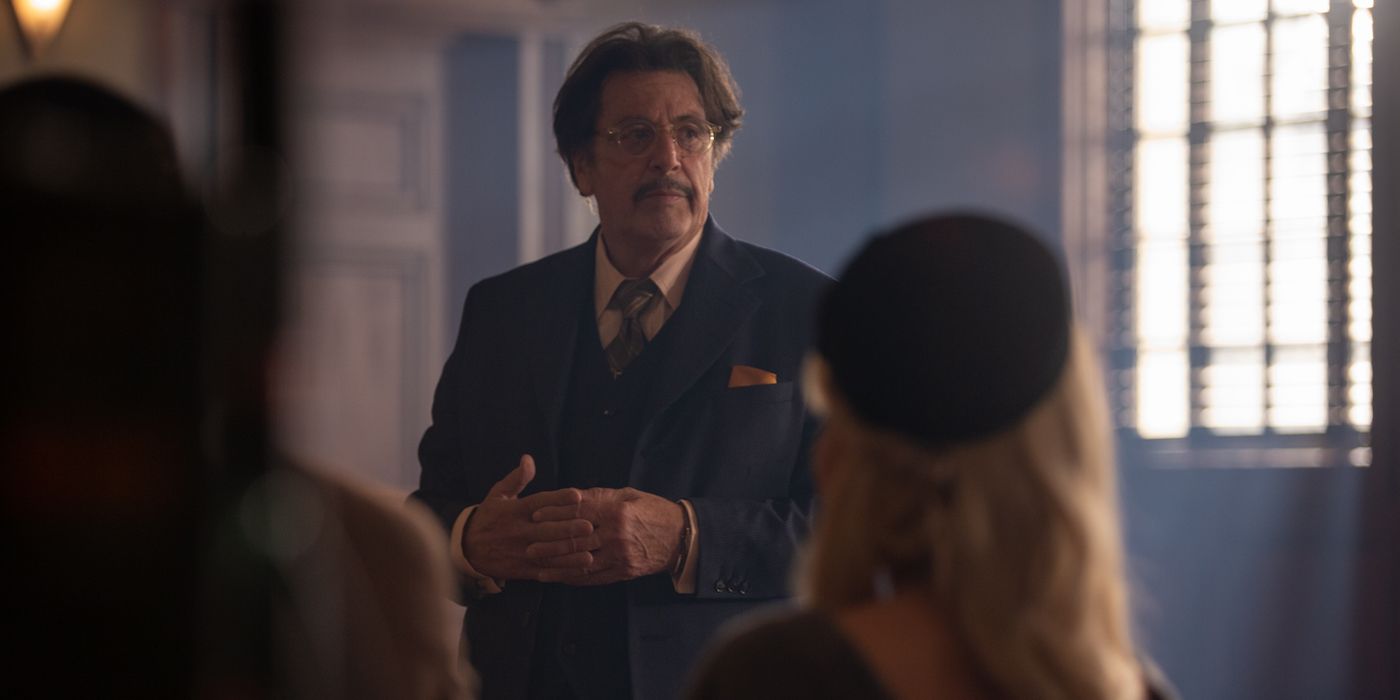
The filmmaking style of this film left something to be desired. Filmed in Puerto Rico, this was a stand-in for Washington D.C. in the 1940s. The color palette of the film seemed a little bit off to me. It didn't have the best cinematography either. The brightness of some scenes threw off the feel of the film. Instead of using lights, they used natural lighting and it didn't work. The scenes on the radio station were black and white but that didn't seem to look good either. This film just didn't have a good look all the way around.
The story by Vance Owen and others based on his book was pretty good. Using the star power of Pacino as the defense lawyer was a great idea. He brings all his gravitas to the role which makes it stand out. He has his moments to shine but gives space for the others to do their thing as well. Thomas Kretschmann as Goebbels was pretty sinister in that role. I think anybody would be afraid of him. The plot had some twists and turns in it as well. That was good to not make it a straightforward story of this woman's trial. American Traitor: The Trial of Axis Sally was an enjoyable film for the most part. The plot and story were serviceable as well as the cast. Obviously, Al Pacino was the standout in this film. Otherwise, this film probably would have gone unnoticed by most people. The look of the film was the real problem. Whether in color or black and white, the aesthetic was wrong. American Traitor: The Trial of Axis Sally hits theaters and VOD on May 28. Rating: 3/5
Review by Dan Skip Allen
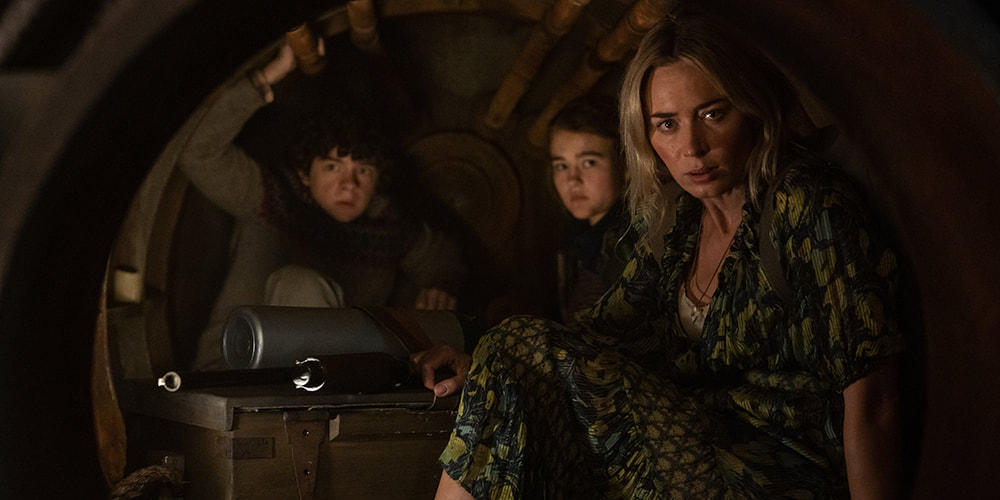
L-R: Marcus (Noah Jupe), Regan (Millicent Simmonds), and Evelyn (Emily Blunt) brave the unknown in "A Quiet Place Part II." Photo Credit: Jonny Cournoyer.
A Quiet Place was such a breath of fresh air in the horror genre three years ago. It announced John Krasinski as a director that we needed to watch in the future. When the sequel was announced right off the bat after the success of the first one, the anticipation was palpable. We waited with bated breath. Just when it was supposed to come out last year, the pandemic shut everything down including movie theaters. However, the wait was worth it because A Quiet Place Part II might be as good, if not better than the original.
We pick up right after the original film with Emily Blunt and her three children, the baby, the son played by Noah Jupe (The Undoing), and her deaf daughter played by Millicent Simmonds. After seeing the flames in the distance, they decide to venture out from the farm that is burning up and try to see who might be out there that can be of help to them. They run into an old family friend played by Cillian Murphy, but he has his own issues to deal with. He doesn't want anything to do with them. A Quiet Place Part II doubles down on all of the things that made the first one so good. It uses silence to tell a great story that keeps people engaged throughout. It uses the technology that was created in the first film to great length. It established new characters and builds out the world Krasinski created so perfectly in the first film. It takes what we already know and expounds upon it with great vim and vigor. This film was the perfect follow-up to the original in so many ways. It was a perfect sequel. Krasinski and the crew do a phenomenal job of crafting so many amazing shots with the camera. Shots come from all over the place. It's an embarrassment of riches how many great shots there are. This film also has some of the best editing in any film I've ever seen. This world has got a great overall visual look to it. It looks real and lived in. 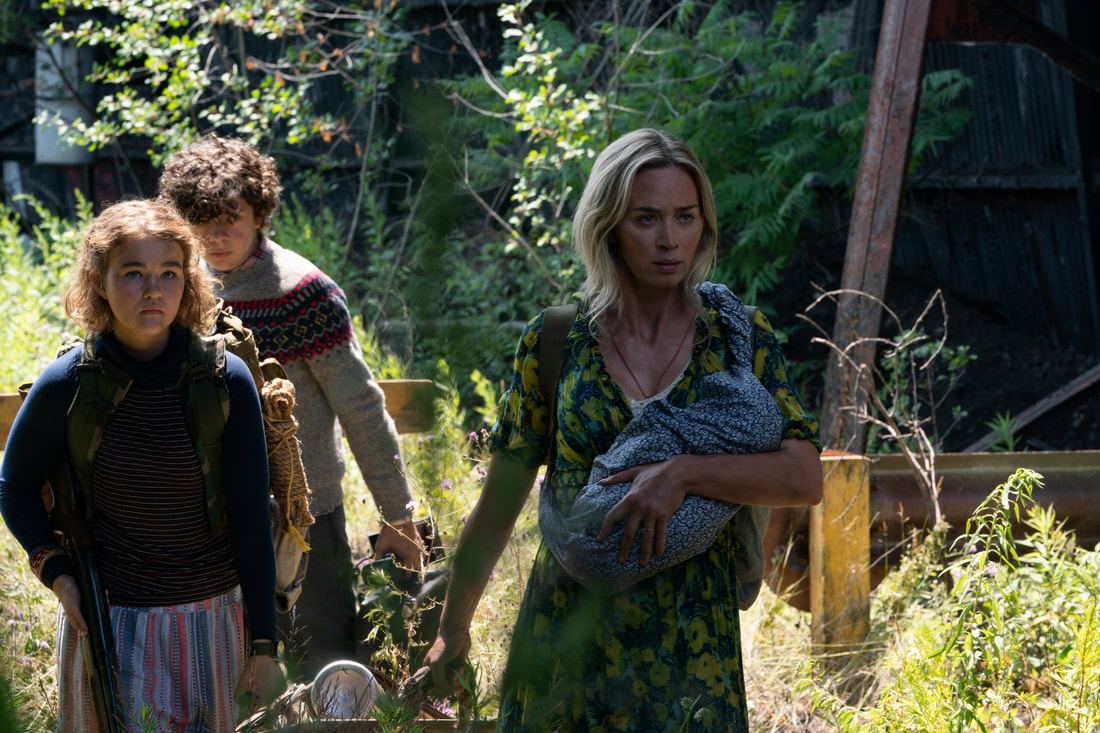
L-R: Regan (Millicent Simmonds), Marcus (Noah Jupe) and Evelyn (Emily Blunt) brave the unknown in "A Quiet Place Part II.” Photo Credit: Jonny Cournoyer.
Krasinski got great performances from himself, his wife, Emily Blunt, and the children in the first film, but Cillian Murphy and Millicent Simmonds do awards-worthy work in this film. This might be the work of Murphy's career as this man who has lost everything and has nothing to live for until his friend's family comes strolling along. Simmonds using sign language again can communicate so much while doing so little. She is so expressive in this role once again. And her character has too much to prove after the death of her father in the first film.
As a horror film, A Quiet Place Part II picks up right where the original left off as well. The while knuckle scares the first film left viewers with were hard-pressed to follow, yet Krasinski did just that. There so many scenes that had jump stares that were so effective in getting the vibe and feel of this sequel so right. A Quiet Place Part II is an all-around great film that does what it set out to do. It will bring people back into theaters and scare the hell out of them. With great visuals, camera work, cinematography, and great performances from everybody involved, especially Cillian Murphy and Millicent Simmonds. The editing might be some of the best yet, creating a unique split scene environment I have never seen before. Horror fans and film aficionados alike are going to love this film as much as I did! I'm sure of it. It's a perfect film and sequel. A Quiet Place Part II hits theaters on May 28. Rating: 5/5
Review by Sean Boelman
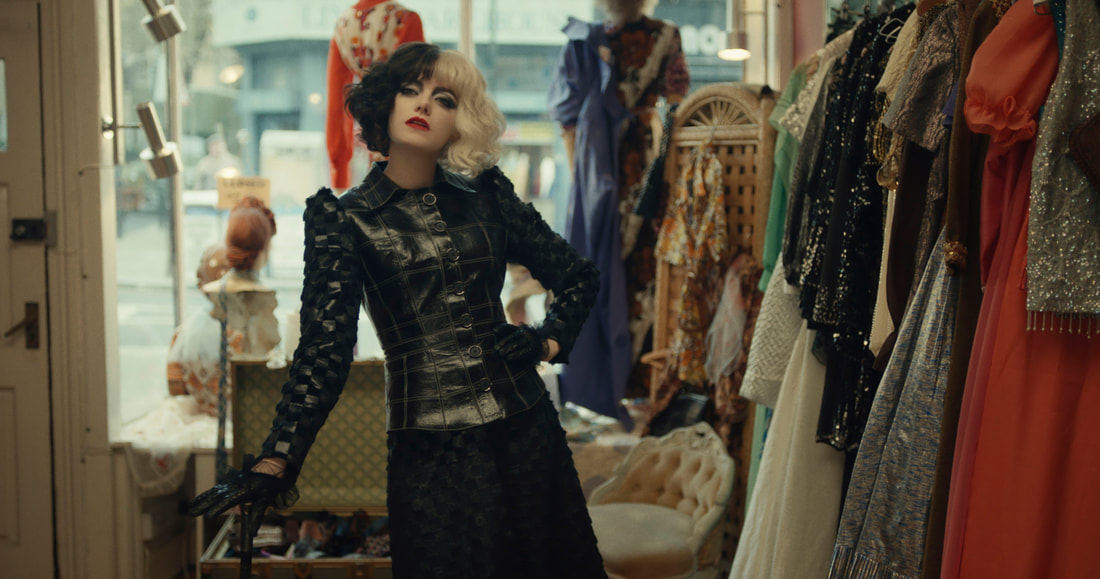
No matter how nostalgic and fun, a majority of the live-action reimaginings of classic Disney properties have felt more like products than actual films (the notable exception being the 2016 version of Pete’s Dragon). However, in recruiting director Craig Gillespie (I, Tonya) along with writers Dana Fox (Isn’t It Romantic) and Tony McNamara (The Favourite) for Cruella, the studio has finally managed to crack the formula, creating something legitimately unique and genuinely entertaining.
The movie tells an origin story for 101 Dalmatians villain Cruella de Vil, following her as a young mover-and-shaker in the London fashion scene. Like a Disney version of The Devil Wears Prada with a bit of a punk edge to it, the film may not exactly be original, but it also feels like it isn’t afraid to do its own thing, unlike so many blockbusters that come out today. Admittedly, the pacing of the movie is somewhat imperfect. There are a few too many times in which the story pivots and turns back, with each third of the film having a very distinct feel to it. Still, the overall tone of the movie is pretty consistently fun, with a much-welcome emphasis on the camp factor that allows it to tick. In making Cruella de Vil into an anti-hero, the writers missed an opportunity to turn this into a morally grey tale of good versus evil. Instead, the themes of the film are some of the commonplace Disney ones, like devotion to family. It isn’t shallow, but it also doesn’t take full advantage of the premise. 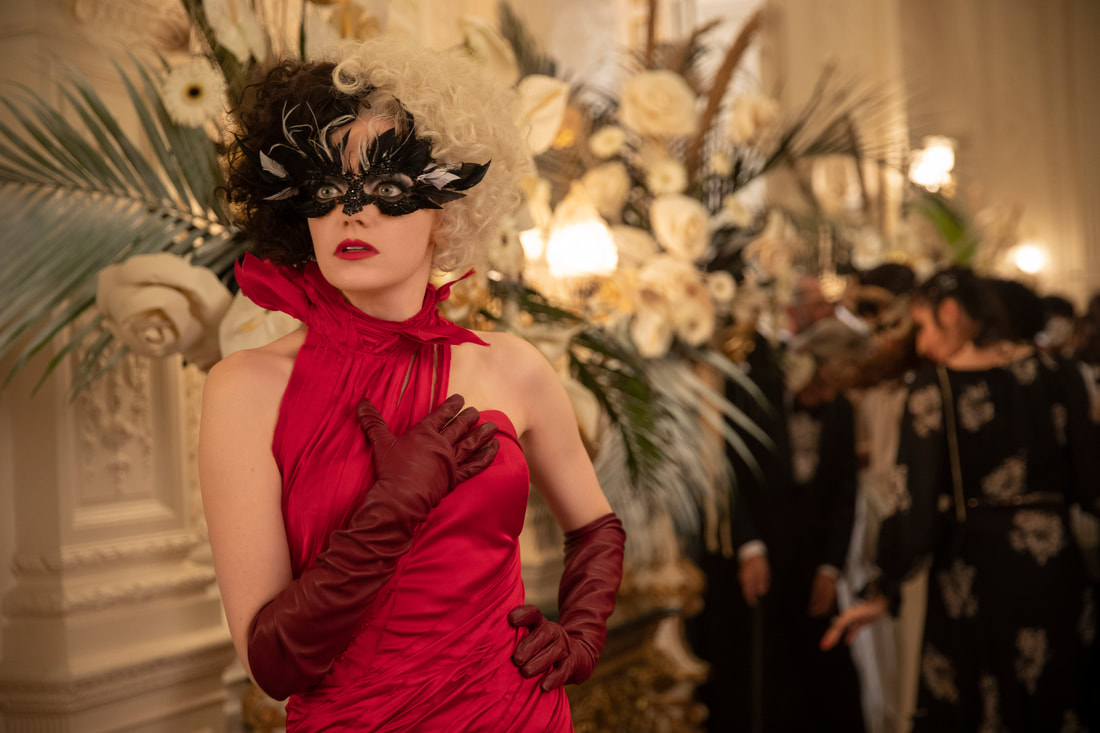
The most effective part of the script is the character development. Beyond Cruella de Vil being a phenomenally fun character to watch, everyone else in the story is just as cool. The antagonist is ridiculously over-the-top, but in a way that works for a 101 Dalmatians prequel. And the two sidekicks are also very well-done.
Although the ensemble as a whole is great, this really comes down to a battle between Emma Stone and Emma Thompson. Both of them are giving their best, bringing these characters to life in a gloriously showy way. Paul Walter Hauser, Joel Fry, Mark Strong, and Kayvan Novak are all good in the supporting cast, but rightfully bow down to the immense power of the two lead performers. The other thing that makes this stand out from other Disney reimaginings is that it has a great sense of style. Of course, for a fashion movie, anything less would be disappointing, but Gillespie and crew bring a visual style to the movie that is exaggerated in all the right ways. The soundtrack is great too, containing some of the best choices in years. Cruella managed to do something that a lot of Disney live-action films aren’t able to do, and that is to feel like it was driven by a genuine creative vision. Hopefully the studio continues to make more of these projects led by the talent involved rather than the IP. Cruella hits theaters and Disney+ via Premier Access on May 28. Rating: 5/5
Review by Camden Ferrell
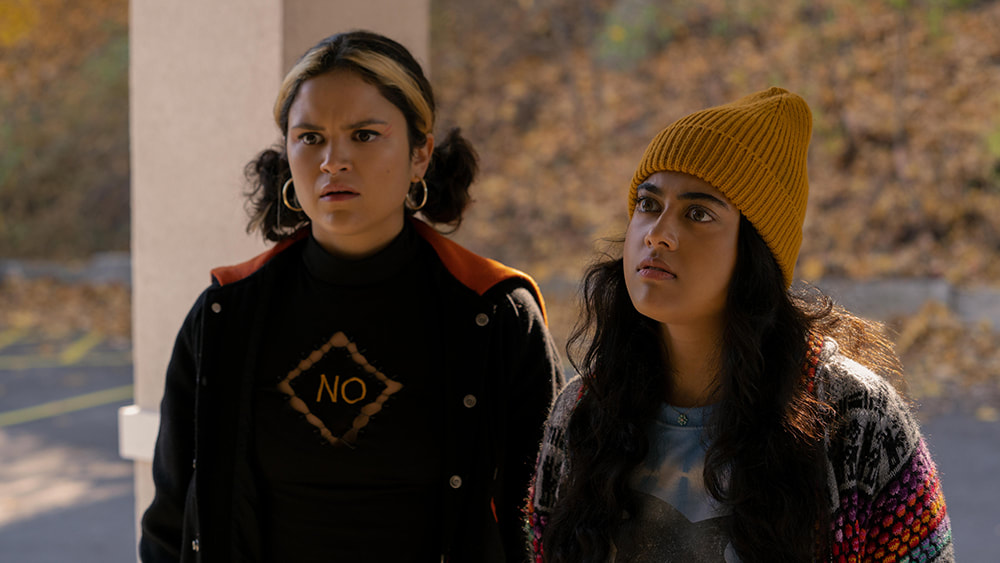
Films such as 2019’s Booksmart and 2020’s Unpregnant have shown that this is the time for thoughtful women-led teen comedies. The directorial debut of actress Natalie Morales, Plan B, looks to continue this trend. Featuring some star-making performances, this movie is a funny and raunchy road trip film that tells a relevant story.
Sunny is a smart and straight-arrow high schooler who decides to throw a party when her mom is away. At the party, she has an awkward first sexual experience that could have potentially left her pregnant. With her best friend, Lupe, she must quickly track down a Plan B pill in a conservative area of Midwest South Dakota. This premise doesn’t do anything too original, but it is a fun and relatable premise with a lot of great opportunities for comedy. Written by Joshua Levy and Prathiksha Srinivasan, the script is fast-paced and quite witty. It does a great job of exaggerating the vulgarity of high school life without turning it into a caricature of itself. There are some lines that don’t fit in, and there are a little too many pop culture references, but it remarkably captures the awkwardness of high school and first sexual experiences. One of the most memorable aspects of this film is its performances. Kuhoo Verma leads the film as Sunny, and she brings a lot of charm and heart to the film. Her performance subverts stereotypes of her character, and she develops into an awkwardly over the top character who we love to root for. Victoria Moroles plays Lupe, and she has great chemistry with Verma while also being unfathomably witty and charismatic on her own. Both of these women give star-making performances and deserve a lot of recognition for bringing these characters to life. 
Even though the execution doesn’t feel particularly special, Natalie Morales is confident in her candid portrayal of adolescence in this film. It gets surprisingly raunchy and graphic at times, and Morales fearlessly approaches these scenes, and it does wonders for the movie’s enjoyability. There are still some pacing problems, and the final act of the film does fall flat at times though. Regardless, it’s a promising directorial debut for an already talented actress.
I think this is yet another film that is very sex-positive in its approach to its story, and it’s great to see movies strip away the stigma around sex. It is very honest in exploring teenage sexuality without ever coming close to exploiting it, and it’s a delicate balance that allows the movie to be simultaneously funny and relatable. As mentioned before this movie has its problems with pacing and some misfires in dialogue, but it ultimately packs an emotional punch and features some utterly wacky scenarios on the road. It skirts the line between believable and chaotic, and it’s all the better for it. Plan B is a road-trip comedy that teenagers and adults will enjoy and relate to. The two main actresses deliver some great breakout performances, and it’s a fun film that is equal parts raunchy and relevant. Plan B is available on Hulu May 28. Rating: 3.5/5 |