
|
Review by Sean Boelman
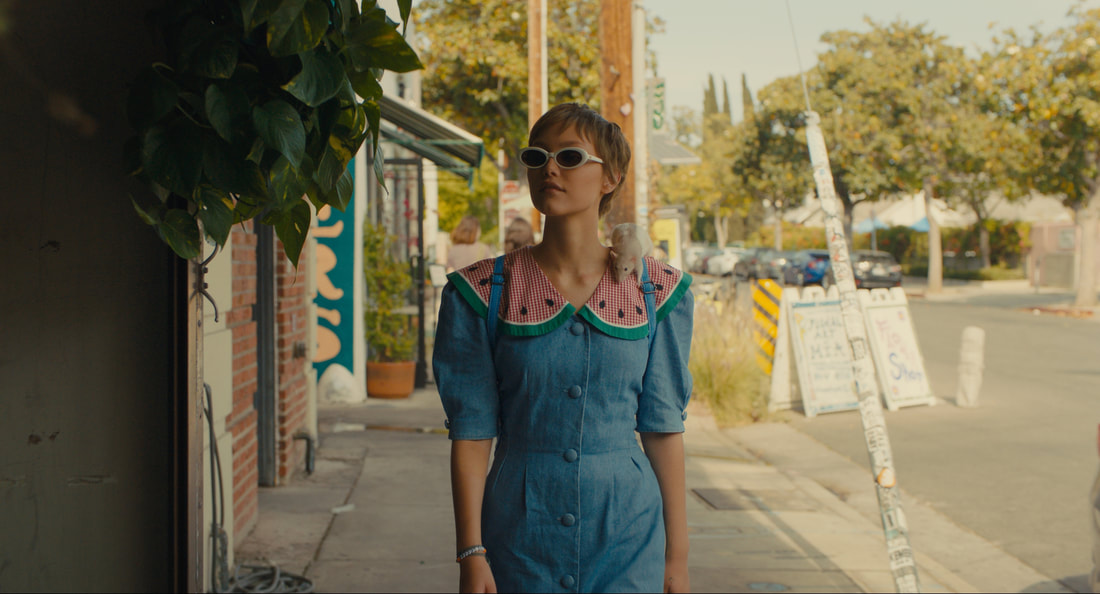
Grace VanderWaal as Stargirl Caraway in Disney's live-action HOLLYWOOD STARGIRL, exclusively on Disney+. Photo courtesy of Disney Enterprises, Inc. © 2022 Disney Enterprises, Inc. All Rights Reserved.
The first Stargirl was an underwhelming adaptation of a young adult book, with too many cringe-worthy moments to recommend it. While it’s unlikely that many were clamoring for a sequel, Hollywood Stargirl is one of the most pleasant surprises of the year, an improvement over its predecessor in almost every imaginable way.
The film picks up after the last movie, when Stargirl has moved to California with her mom where she meets new friends and discovers a life of music and full of dreams. It’s a fairly standard “[character] Goes to [destination]” type of sequel where we watch the character see the sights of the city and become enamored with all it has to offer. Admittedly, the film explores many of the same themes that any movie set in the City of Angels approaches, but it does it in a way that is so wholesome and lovable that it’s hard not to appreciate it. It’s a reminder of the power that optimism and following your dreams can have, which is something we always need as a society. The character development in this entry is significantly better than it was in the first. Whereas Stargirl was essentially a Manic Pixie Dream Girl in the first movie, serving to inspire the male protagonist, she is the protagonist here. She gets a much more interesting arc here that feels fully developed and independent. 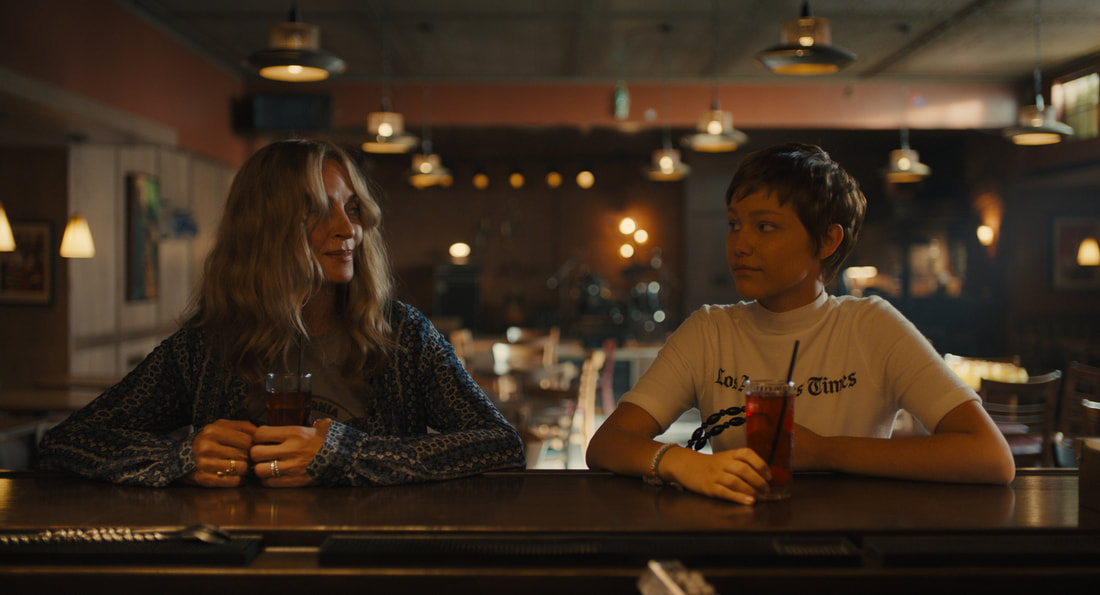
(L-R): Uma Thurman as Roxanne Martel and Grace VanderWaal as Stargirl Caraway in Disney's live-action HOLLYWOOD STARGIRL, exclusively on Disney+. Photo courtesy of Disney Enterprises, Inc. © 2022 Disney Enterprises, Inc. All Rights Reserved.
Even though the story may be a bit generic, this really feels like the natural progression for the character. We finally get to see her in action as the dreamer that she is, rather than just a person who is more outspokenly optimistic than everyone else around her. It’s a very different path for the character that still stays true to the character’s essence.
As with the first film, this really takes advantage of Grace VanderWaal’s singing talents with a soundtrack composed of some great jukebox hits. It’s a movie that is unabashedly nostalgic for a certain era, but not in a way that feels overly retro. And this creates an overall wholesome, lovely feel. The supporting characters here are also much more memorable. The friends that Stargirl makes along the way are charming and lovable, albeit a bit on the archetypal side. And Uma Thurman’s mentor character in this film is pitch-perfect for her, allowing the storied actress to give what is her best performance in almost two decades. Hollywood Stargirl is one of the best new Disney+ movies in recent memory, taking a concept that wasn’t rife with potential and making something intriguing out of it. It may not be unconventional, but it’s charming beyond belief, and sometimes that’s all that’s required. Hollywood Stargirl streams on Disney+ beginning June 3. Rating: 4.5/5
0 Comments
Review by Sean Boelman
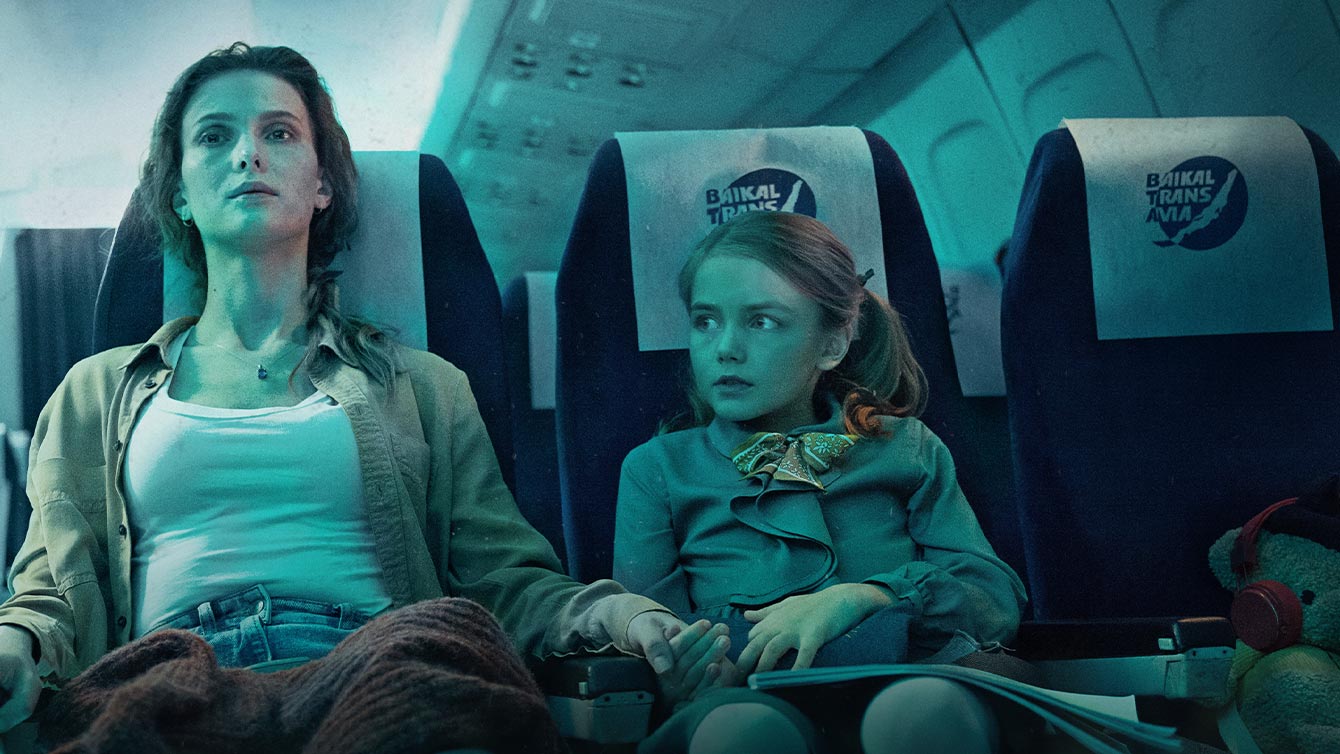
One of the biggest sins that a film can make is to deliver a trailer that is substantially more interesting than anything the actual movie has to offer. The Russian film Row 19 is much less effective than its marketing materials, failing to take advantage of an intriguing concept to make anything more than a subpar horror flick.
The film follows a woman with a young daughter who is trapped on a plane in the middle of a turbulent storm, beginning to lose her grip on reality and bringing up substantial trauma from her childhood. It’s one of those horror movies that presents itself purposefully ambiguous because its goal is to catch the audience off-guard. There is some decent suspense throughout, but the twist is so ridiculous that it almost completely ruins the effect of anything that came before it. At under an hour and twenty minutes in length, you’d think that it would move by pretty quickly, but it really drags between its three or four images that are genuinely disturbing. Some of the best parts of the film are those which explore the protagonist’s trauma, but the things that writer James Rabb has to say about the theme are the exact same thing that so many other movies have said before. The short runtime and narrative structure prevent it from going into a satisfying depth in this regard. 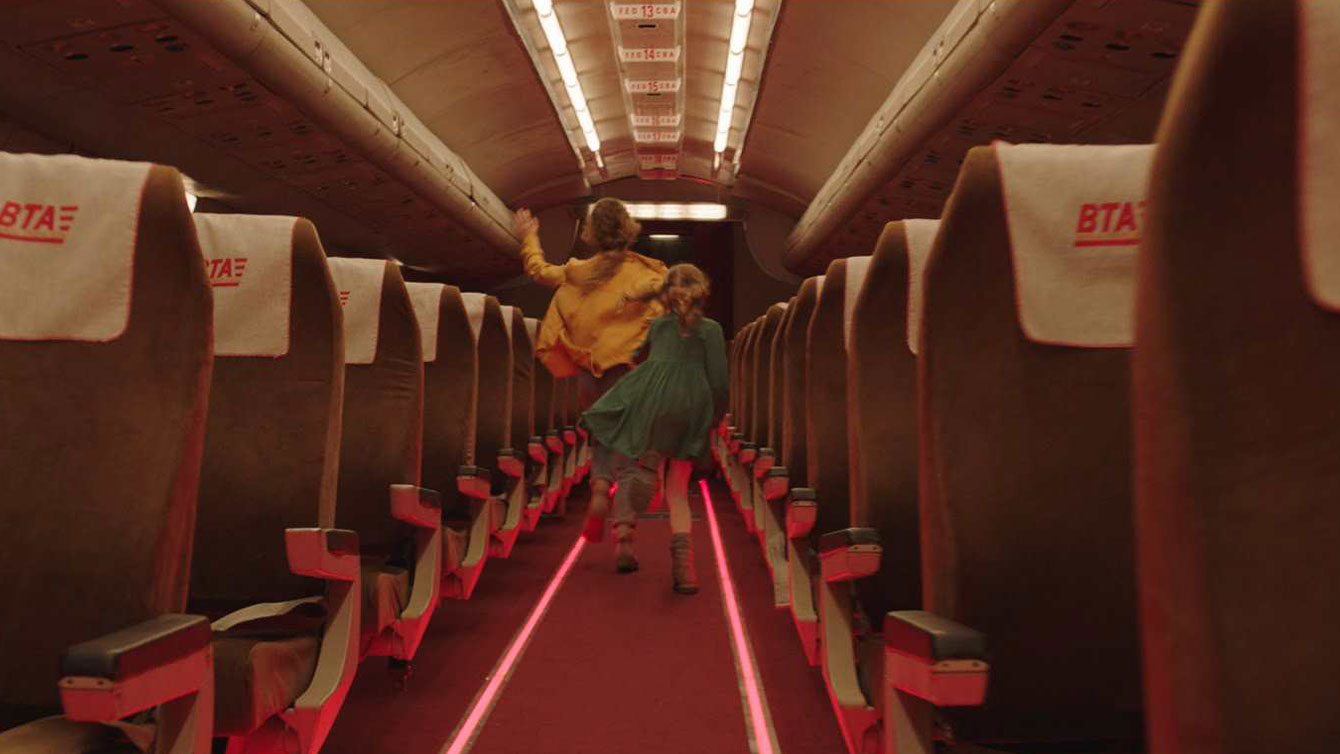
The character development is also uneven. The protagonist is likable enough, but even her development is rather shallow. And all of the supporting characters are extremely bland and unmemorable. You’d think that they would at least make something compelling out of the other passengers on the plane, but they’re all highly archetypal.
Svetlana Ivanova’s performance is the only thing that keeps this thing running. Even in the most ridiculous moments of the plot, she manages to keep everything feeling grounded and emotional. It’s nice that she manages not to make anything feel phoned in despite the script being woefully underdeveloped. For a genre picture that is largely confined, the movie looks a lot better than expected. There are some CGI moments that aren’t the best, but to hold it to a higher standard would be unfair for a project like this. The film does its job to create a few brief disturbing images that will freak out viewers but have a fleeting impact. Row 19 is a less-than-stellar genre picture, although there are a few moments here that make it watchable. It’s a concept that has a lot of potential but none of its themes are explored in a particularly meaningful way. Row 19 is now available on VOD. Rating: 2.5/5 LITTLE NICHOLAS — HAPPY AS CAN BE -- A Charmingly Quaint Blend of Adaptation and Biography5/27/2022
Review by Sean Boelman
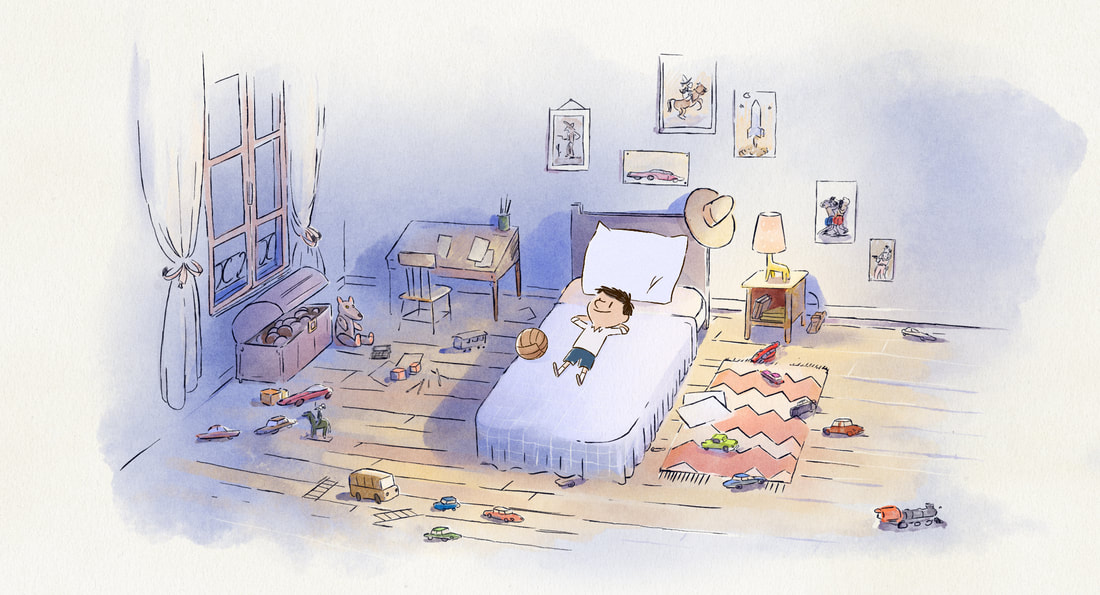
Le Petit Nicolas is an iconic character of French children’s literature, and so it is only fitting that a biopic about its creators would be equally playful. Little Nicholas — Happy As Can Be is a unique blend of adaptation and biography, this is an adorable animated film, even if it probably won’t appeal to younger audiences.
The movie follows a children’s book author and illustrator who come together and form a partnership that ends up bringing to life Little Nicholas, a mischievous young lad who gets into all sorts of endearingly humorous antics. This meta-like narrative is an intriguing one, even if it isn’t as deeply explored as one would hope. Those portions of the film which follow the literary character are anecdotal in nature, jumping between various vignettes. As a representation of what the children’s book series stood for, this is perfect, because it’s a series of wild, amusing hijinks. There is a lighthearted, airy nature to the entire affair. On the other hand, the movie fails to make the biopic aspect of the story as compelling as it had the potential to be. It’s mostly standard biography material, following an artist who is struggling to make ends meet before he has a sudden burst of inspiration and creates his masterpiece, in this case, a character. 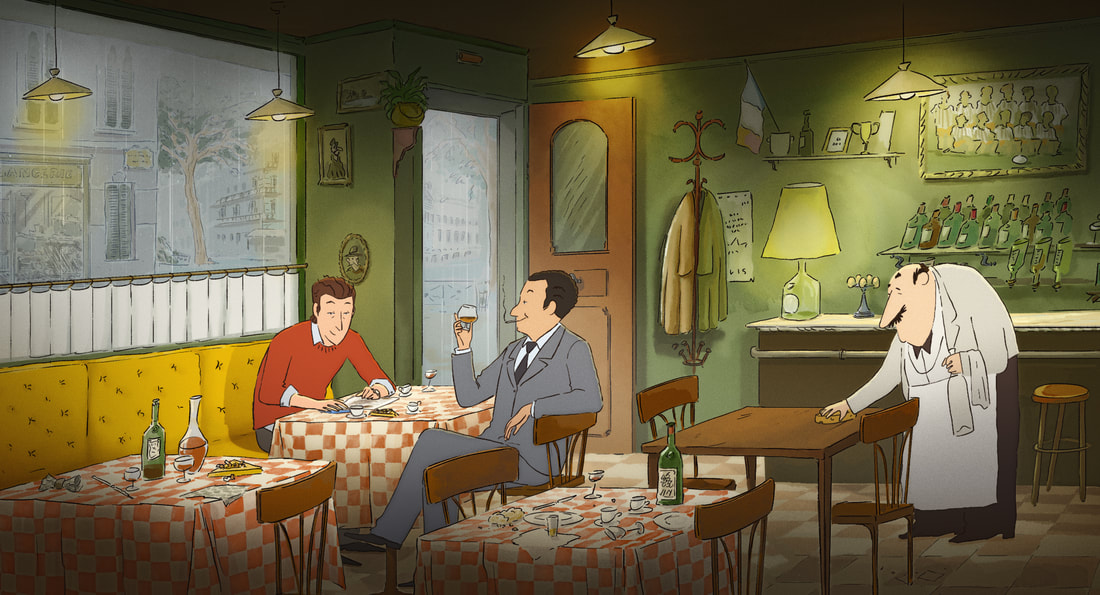
Although the film should be praised for its attempts at doing something ambitious with the relationship between the author and his creation, it doesn’t ever amount to as much as it could have. When Little Nicholas leaps off the page, it should be magical, but the result feels a bit overly sentimental.
That said, the animation of the movie is certainly very good, done in the visual style of children’s book illustrations. It’s a playful, simplistic approach, but it’s perfect for what this film is aiming to do. Especially during the vignette sections, it gives the movie a particular energy that will make you nostalgic for your childhood. The humor of the film is very goofy and wholesome and will get some chuckles. Filmmakers Amandine Fredon and Benjamin Massoubre obviously have a huge respect for the history of Le Petit Nicolas, and it shows in the end product. However, it still feels like this is made more for people who grew up on these books than younger generations who could discover the magic of the character. Little Nicholas — Happy As Can Be is a cute little animated movie with a lot of great individual elements, even if they don’t all come together as well as one would hope. It’s definitely worth checking out if you have nostalgia for the character. Little Nicholas — Happy As Can Be debuted at the 2022 Cannes Film Festival. Review by Cole Groth 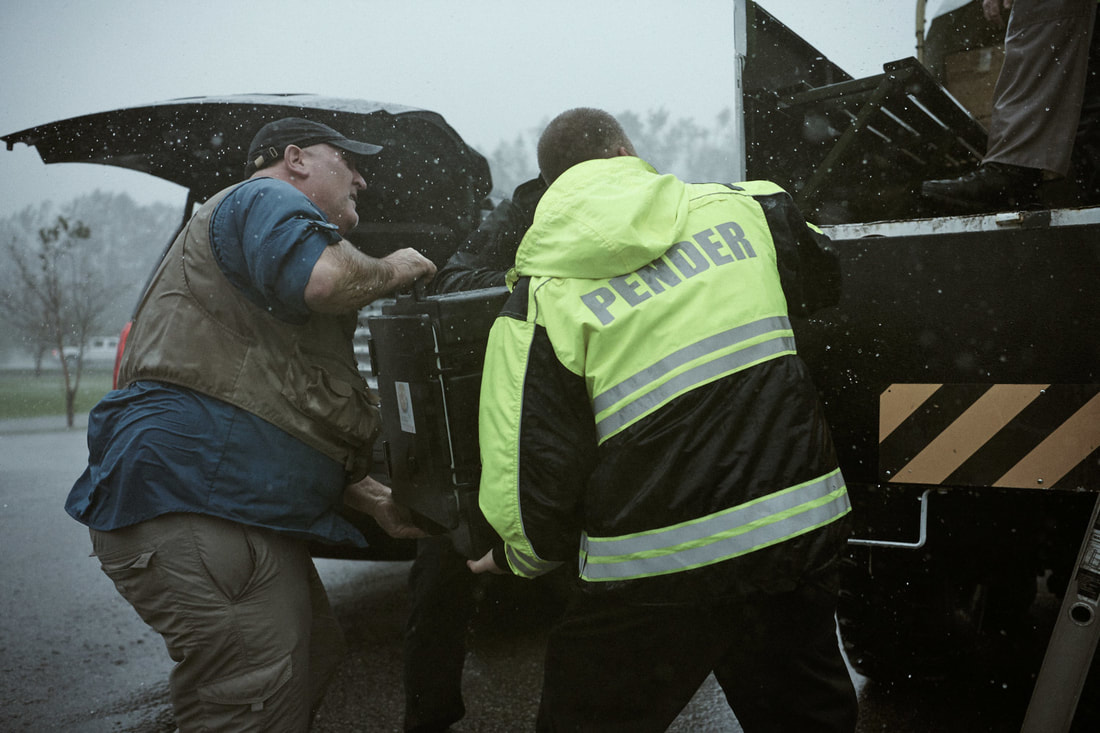 Immediately opening on the aftermath of Hurricane Florence, which caused $17 Billion in damage to Wilmington, North Carolina, We Feed People presents us with José Andrés, a larger-than-life celebrity chef-or rather, cook, as he prefers to be called — with a single goal in mind: feeding everybody and anybody who needs food. It's an admirable goal, and his love for cooking shines through every moment in this documentary. In the rather well-paced 90-minute runtime, we see how he helped out in many crises, including the COVID-19 response in both the Navajo Nation and New York City and the issues he faced along the way. Due to the stature of José Andrés, it's important for Howard to take some time to develop his background. After moving to America when he was 21, Andrés quickly rose to fame and power as a chef, often credited with bringing Spanish tapas, or small plates (which is ironic considering the scale of the meals he serves as a humanitarian chef), into the light as a popular dining option. After scaling up considerably and leading many restaurants throughout the United States, Andrés formed the World Central Kitchen, an NGO which provides food to people in need. In the last 12 years, we've seen many natural disasters destroy countries like Haiti, the Dominican Republic, and Cuba. At each of these tragic events, World Central Kitchen and José Andrés have been on the scene. Andrés' love for food and helping others is characteristic of him, emphasized through interviews given by his wife and daughters. When taking time to focus on Andrés instead of his humanitarian efforts, Howard paints the image of a man who feels brutally honest. He cares most deeply about helping other people but doesn't try to hide his emotions or otherwise create a facade of who he is. Multiple times throughout the film, Andrés is captured in moments of frustration, which help in showing that he's just an ordinary person. In the modern cooking world, it's impossible to see figures like Gordon Ramsay or Martha Stewart as very down to Earth people, but Andrés stands out as a man with his blemishes on full display. His dedication to his family underlines why Andrés is so willing to help whoever needs it. There are frequent points where he's a bit of an awkward presence on camera, and while that contributes to the overall tonally inconsistent feel to the film, it at least makes him seem more natural.  On a technical level, We Feed People isn't very special. Taking lots of iPhone footage or clips from Twitter, Ron Howard is able to lead us through the story of the harrowing disasters that we see, but it's not quite engaging enough to feel completely satisfying. However, one of the biggest issues with this documentary is a general lack of personality. Seeing that this was directed by Ron Howard is rather confusing because there aren't any directorial choices that stand out. Howard has clearly shown interest in the struggles of humanity, emphasized most apparently in 2020's Hillbilly Elegy, so his rather by-the-books approach to Andrés' story is surprising. One of the moments that does have personality later is when, after Andrés yells at one of his workers, one of the women receiving aid starts demanding an apology from him. It's an uncomfortable point in the documentary, and it's hard to pinpoint exactly what the point of the scene was. Andrés apologizes profusely, ending the scene on an unpleasant note. There aren't many moments like this, but they still stick out like a sore thumb in an otherwise smooth journey.
With those issues aside, it's hard not to fall in love with Andrés's pure ambition for helping others. At every moment he can, Andrés is figuring out how he can best help the people who need assistance while also making the food taste as good as possible and creating as little waste as he can. He's innovative, enigmatic, and a caring man who deserves his place in the spotlight. We Feed People is able to effectively show how, even though our seemingly more frequent moments of disruption, humanity is able to persevere. We Feed People is available on Disney+ now. Rating: 3.5/5
Review by Tatiana Miranda
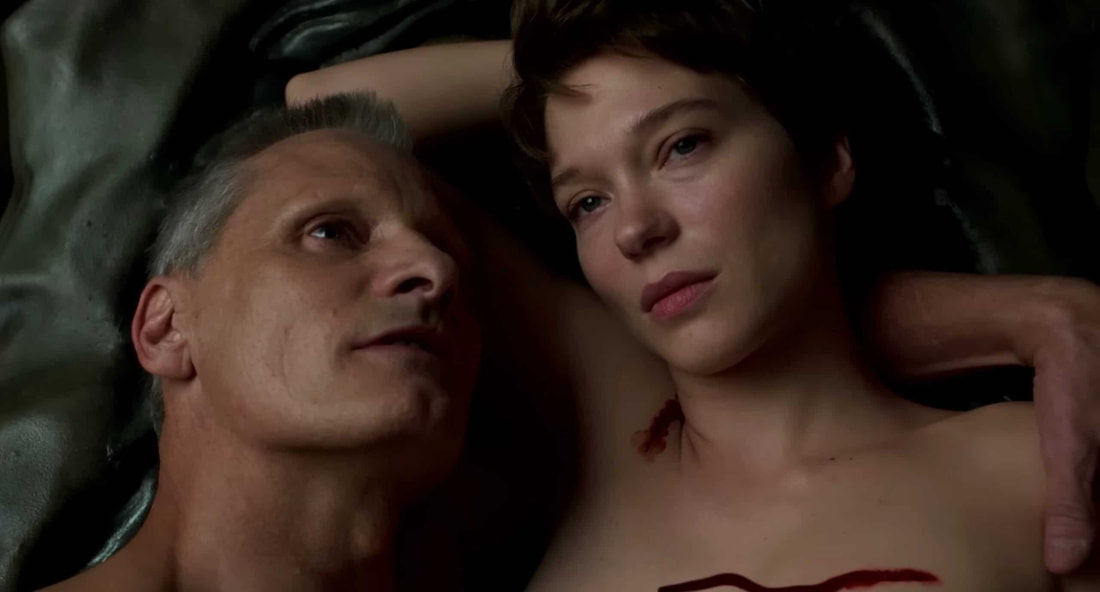
A mixture of bloody metaphorical sex scenes and surreal body modifications as art, David Cronenberg’s new film Crimes of the Future explores the bounds of human evolution and how we view our bodies. Loosely based on Cronenberg’s hour-long 1970 film of the same name, Crimes of the Future takes place in the not-too-distant future in a decrepit landscape filled with abnormal humans as they begin to evolve, now devoid of pain and growing seemingly useless organs. Viggo Mortensen plays the central character, Saul Tenser, a performance artist with a penchant for growing and removing organs within him. As his body faces faults regarding the growth of these organs, he starts to unravel the truth of the evolutionary process that is occurring within him.
Crimes of the Future’s plot is loose at best, as Cronenberg’s film prefers metaphor to structure. In fact, metaphors and conceptual scenes are the heart of the movie, especially since nothing is as it seems. During one scene, Kristen Stewart’s character Timlin notes that “Surgery is the new sex” after viewing Saul and his artistic partner Caprice performing an extremely erotic surgery. While this is seemingly true, with sex intertwined closely with bodily mutilation, it is among a vast list of concepts that Cronenberg attempts to portray in this movie. Along with the idea of surgery being a form of sex, the idea of the development of new organs as a form of artwork and surgery becoming performance art is also central to the actions of both Caprice and Saul. Although there is certainly an overabundance of conceptual scenes and metaphors, it pairs well with the aspects of body horror Cronenberg uses. While surgical scenes are bound to make audience members squeamish, they are undercut with explanation and an understanding of the character’s decidedly painless reactions. Even more compelling than the genre of body horror, Crimes of the Future is a semi-sci-fi/detective thriller as Saul meets with different characters in an attempt to rebel against the government and come to terms with his own changing body. 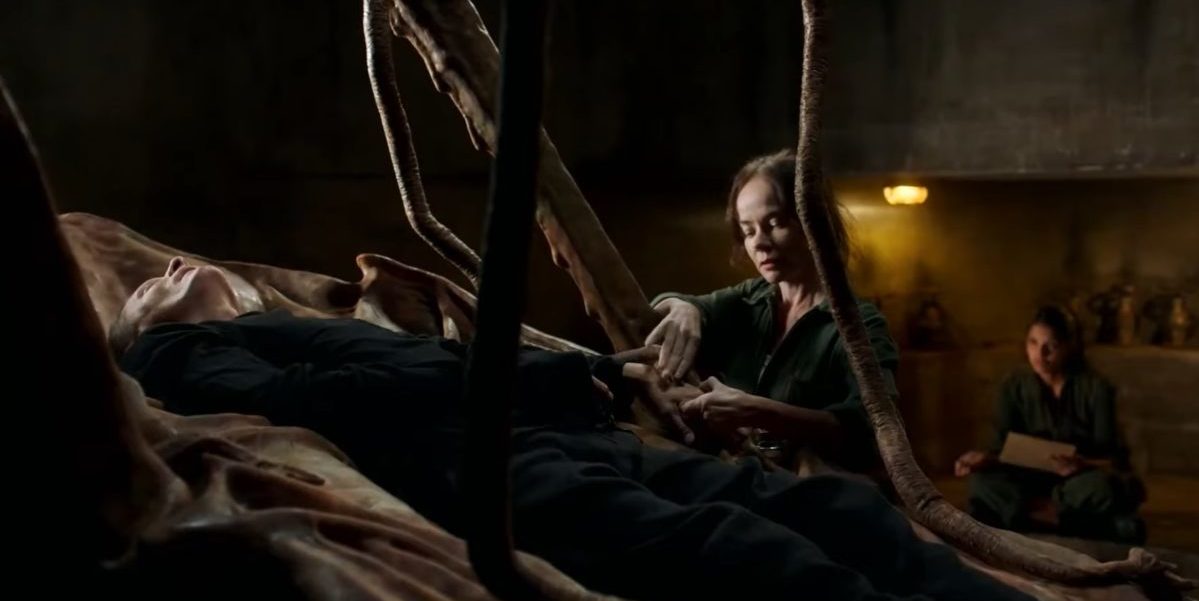
While Crimes of the Future is gritty and contemplative, it isn’t above itself, as the characters’ dialogue constantly pokes fun at the absurdity of it all. Saul chuckles to himself and tells Caprice to make sure not to spill as she performs a sexual act on his open wound. Side characters such as bureaucratic coworkers Timlin and Wippet are intense in their love and appreciation for Saul and Caprice’s artwork, almost to the point of insanity in an attempt to come into their world. Concepts in Cronenberg’s world-building, such as the Inner Beauty Contest, which Saul enters, realize the performative way humans view bodily functions in a humorous albeit depressing way.
Crimes of the Future is far from a perfect film, as it is less a movie and more a nearly two-hour-long visual metaphor regarding the fate of humanity. Although its concepts are intriguing and linger long after the credits roll, it isn’t entirely sure what point it is trying to make, much less which genre it aligns itself with. In the end, though, Crimes of the Future gives the audience some sort of relief as Saul finally allows evolution to run its course. Crimes of the Future releases in theaters on June 3. Rating: 3/5 Review by Camden Ferrell 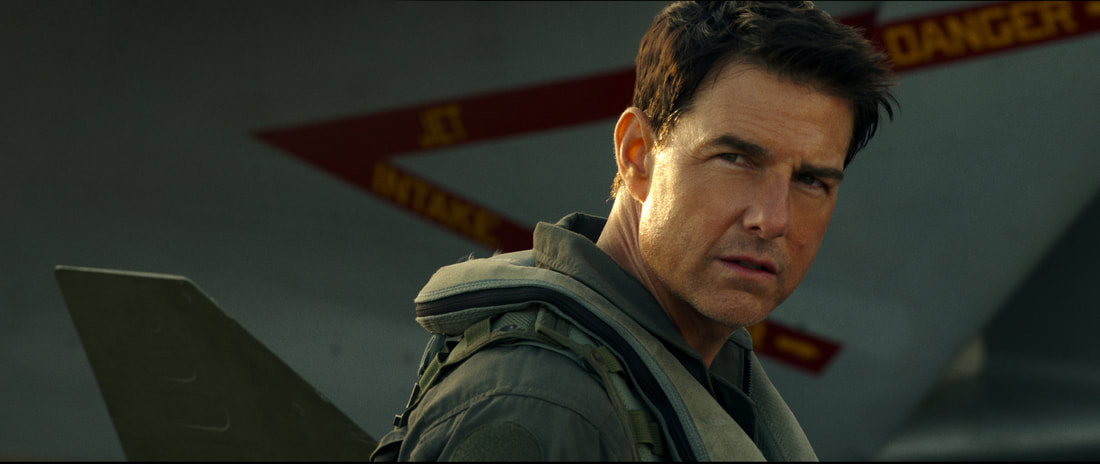 For better or worse, 1986’s Top Gun is one of the decade’s defining films. Upon its release the amount of people joining the Navy to be Naval Aviators skyrocketed as did the sale of aviator sunglasses and bomber jackets. Now, over thirty years later, the sequel we never knew we needed, Top Gun: Maverick, is coming to theaters. This long-awaited film is a brilliant technical and cinematic marvel that will put the original to shame all while gracefully concluding the story of America’s favorite hot shot pilot. After multiple decades of service as a Navy aviator, Pete “Maverick” Mitchell finds himself as an instructor for a group of Top Gun graduates as they prepare for a perilous mission. Here, he must confront his past and his future while helping a new generation forge their path in the Navy. This is a premise that perfectly sets up the continued development of its protagonist while providing a set-up for some high-stakes, enjoyable action. Tom Cruise returns the iconic role as if no time has passed at all. He stills maintains all the charisma of Maverick, and he interacts quite well with the rest of the cast. The movie features newcomers to the series in Miles Teller, Glenn Powell, and Monica Barbaro among others. Teller and Powell stand out the most and fit perfectly in the series as Naval aviators alongside Cruise and the rest of the cast.  This sequel improves upon the original in every way imaginable. It is written better, and it actually has a strong emotional core that carries the movie on more than one level throughout. It also feels like the stakes are much higher and palpable than the original. In addition to this, Joseph Kosinski directs this movie very well. He is able to create scenes that are exhilarating and mesmerizingly captivating. There is so much energy and emotion in the way that this movie is executed that it’s hard not to love.
Obviously, when people see this movie, they’re going to want to see some great action in the air. I’m happy to say this movie delivers on that in surprising ways. The sequences in the air are absolutely phenomenal and will keep you on the edge of your seat. The shots from inside the cockpit are fantastic and demand to be seen on the biggest screen possible. This is a technical marvel and one of the finest examples of blockbuster filmmaking this century, and you’re going to want to be in an environment that fully immerses you into all of the excitement. Top Gun: Maverick is a sequel done right, and with any luck will be more iconic than its predecessor. Kosinski directs a masterful popcorn flick that audiences of all ages will love. This is a movie that’s made for the big screen and will remind audiences why theaters remain and important part of cinema today. Top Gun: Maverick is in theaters May 27. Rating: 4.5/5
Review by Sean Boelman

Some thrillers hit the ground running, and others quietly creep under your skin in a way that makes it all the more impactful when it finally sinks its teeth in. The latter is the case with Alexandru Belc’s Metronom, a taut and powerful Romanian film that premiered in the Un Certain Regard section at this year’s Cannes Film Festival.
Set in Romania in 1972, the movie follows a young couple who spend their last days together before one of them leaves the country permanently. And while this may sound like just another Romeo & Juliet-type story about two star-crossed lovers, there is far more to Belc’s story than it initially lets on. While the first half of the film plays like a hangout movie — and one with great vibes, at that — the second half is among the most excruciatingly intense you will experience in any movie this year. The film will easily have you on the edge of your seat with anxiety, wondering if the characters are going to make it out of this situation or not, because no one is safe. Part of what makes the movie so effective is that it gives you this sense of security early on. It’s a bunch of people having fun and dancing, and it gives you the time necessary to get attached to these characters and their personalities and get wrapped up in everything that they care about, no matter how trivial. 
But all along there is this threat in the background looming — the one that will tear apart our lover protagonists — and for anyone aware of the social context of the setting (or the title), it will be clear what is to come. And once it does finally hit, it is absolutely devastating, shaking you to your core.
The acting all-around is stellar, but it is Mara Bugarin and Vlad Ivanov who stand out the most. Bugarin is fantastic as the heroine, not quite as politically extreme as some of the other characters who are here to give the film its message but still in firm opposition to what is wrong. On the other hand, Ivanov is menacing as the duplicitous oppressor. What Belc has to say here about freedom of speech is fascinating, especially in the context of what is going on in Europe (and the world as a whole) right now. It’s terrifying to think that there are still places where this is happening half a century later, but Belc issues an urgent call-to-action about the importance of this freedom. Alexandru Belc’s Metronom is one of the most impactful movies of the year so far — starting as a charming hangout film before evolving into something much more complex and harrowing. As it continues to tour the festival circuit, make sure to seek this one out, because it is not a movie you will soon forget. Metronom debuted at the 2022 Cannes Film Festival in the Un Certain Regard section. Rating: 4.5/5
Review by Sean Boelman
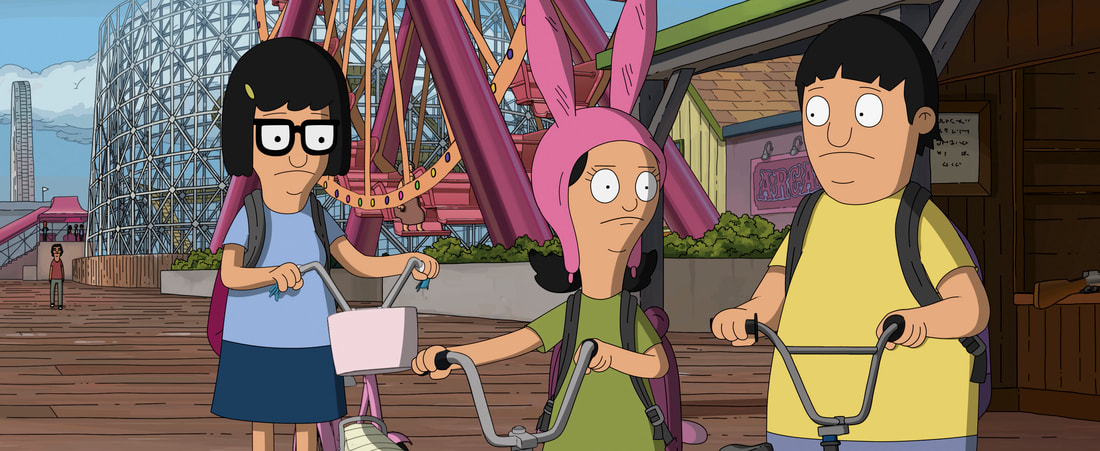
(L-R): Tina Belcher (voiced by Dan Mintz), Louise Belcher (voiced by Kristen Schaal), and Gene Belcher (voiced by Eugene Mirman) in 20th Century Studios' THE BOB'S BURGERS MOVIE. Photo courtesy of 20th Century Studios. © 2022 20th Century Studios. All Rights Reserved.
Jumping from the small screen to the big screen is something that many television shows have attempted to do in the past to inconsistent results. The Bob’s Burgers Movie makes the most out of the more cinematic feature-length medium while maintaining the spirit of what makes the show so great, making this one of the best animated movies of the decade so far.
The film follows the Belchers as they attempt to solve a mystery that will save their restaurant after a sinkhole opens up right in front of it. Like the best episodes of the show, this features a larger-than-life story (and at an even bigger scale) while still emphasizing the familial aspects that fans have come to love. The laughs in this movie come very frequently, especially for fans of the series. There are several callbacks here that are going to have those who regularly watch the show rolling in laughter. Still, that doesn’t mean that the film is a fans-only affair — there’s plenty of goofy humor here that is sure to have anyone chuckling, and it is clearly a labor of love for the filmmakers who put a great deal into making this excellent for both regulars and newcomers. Of course, one thing that this feature-length format allowed the movie to do was go wild with the musical aspect. Some of the fan-favorite episodes of the show are the two-part musical season finales, and this film takes it even further. There are four songs in the movie that, beyond being hilarious comedy songs, are also just great songs in general. 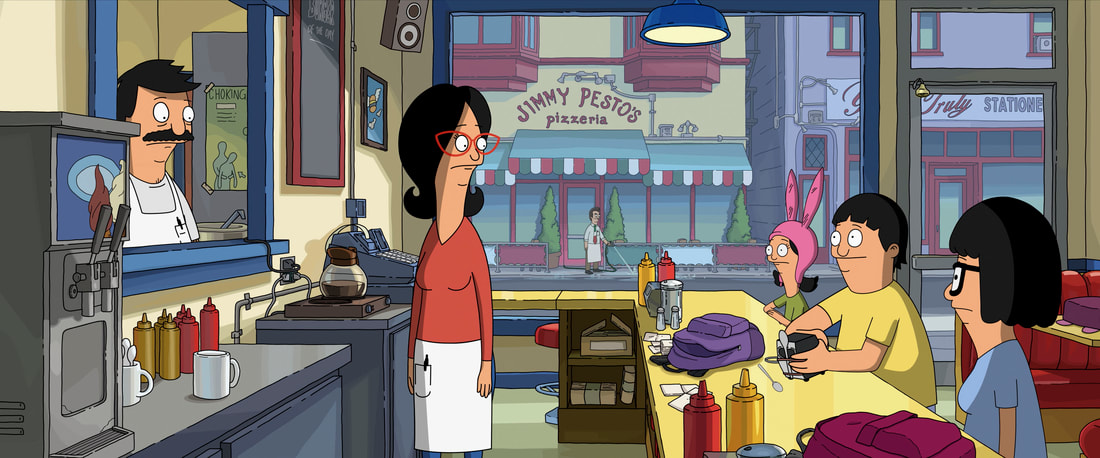
(L-R): Bob Belcher (voiced by H. Jon Benjamin), Linda Belcher (voiced by John Roberts), Louise Belcher (voiced by Kristen Schaal), Gene Belcher (voiced by Eugene Mirman), and Tina Belcher (voiced by Dan Mintz) in 20th Century Studios' THE BOB'S BURGERS MOVIE. Photo courtesy of 20th Century Studios. © 2022 20th Century Studios. All Rights Reserved.
Perhaps surprisingly, Bob’s arc in this film isn’t the focus. He’s really the comedic side character in this one, who is doing the wacky antics. Tina and Gene also have some amusing subplots that mirror a lot of what they have been going through in the past few seasons, only with a bit of a bigger scale since the budget allows it.
Louise really takes the driver’s seat here, being both the main character of the plot and the emotional core of the movie. She has a lot more growth in this film than she has in most of the recent episodes — perhaps because the creators knew this was coming and would shift her character so significantly — but it’s a fantastic treat for fans. Having a feature-length movie’s budget rather than that of a single television episode really allows the film to go much bigger with its animation style. The contrast is much deeper and the backgrounds are much richer and more detailed. The filmmakers really made the most of their budget instead of just making a longer episode of the show. The Bob’s Burgers Movie both fits wonderfully within the context of the show and stands out as an excellent animated movie in its own right. It’s basically Stand by Me if it were made by a bunch of musical theater kids, which is something that was perfect for this fan of the series. The Bob’s Burgers Movie hits theaters on May 27. Rating: 5/5
Review by Sean Boelman

Bowen Yang, Tomas Matos, Matt Rogers, Torian Miller, Joel Kim Booster and Margaret Cho in the film FIRE ISLAND. Photo by Jeong Park. Courtesy of Searchlight Pictures. © 2022 20th Century Studios. All Rights Reserved.
There aren’t very many queer films that come out of the studio filmmaking system, so the fact that Fire Island exists in the first place is a miracle in and of itself. But even beyond its cultural significance in the filmmaking world, this romantic comedy is fantastic in its own right, one of the funniest, most poignant LGBTQ movies in quite a while.
The film follows a group of friends who take a vacation at the legendary gay destination the Fire Island Pines, getting entangled in various romantic trappings along the way. Inspired by Jane Austen’s beloved novel Pride and Prejudice, Joel Kim Booster’s script takes familiar tropes of romantic comedies and puts an even more intelligent, earnest spin on them. One of the best things about Kim Booster’s script is the way in which it blends widely accessible sex comedy with very specific queer humor. There are bits in this movie that are designed specifically to make the LGBTQ community laugh, and it’s great that this type of representation and jokes are being made on a massive platform such as this. However, this isn’t just some frilly comedy. Like Austen’s iconic romance, this film has its finger on exactly what is happening in the world of modern romance. The movie addresses a lot of the issues that the LGBTQ community is facing right now in a way that is extremely honest and insightful. 
Bowen Yang, Tomas Matos, Matt Rogers, Torian Miller, Joel Kim Booster and Margaret Cho in the film FIRE ISLAND. Photo by Jeong Park. Courtesy of Searchlight Pictures. © 2022 20th Century Studios. All Rights Reserved.
Much of the film’s success is owed to the dynamic that exists between the main group of friends, and it is absolutely fantastic. With an ensemble movie like this, one normally expects there to be at least one person who is left in the dust, but we really get to admire and love all of these characters equally.
Kim Booster takes the lead in the script he wrote, and SNL’s Bowen Yang gets the other main role. Both are fantastic and each have the commanding screen presence it takes to lead a romantic comedy like this. Matt Rogers, Tomas Matos, and Torian Miller round out the group charmingly well. Everyone who watches this film is going to have a favorite character — and all of them will have their share of fans. However, perhaps the single biggest standout in the cast is Conrad Ricamora, who plays this story’s Mr. Darcy. It’s one of the most fascinating characters in all of literary history, and he does an exceptional job of bringing his own spin to it. His chemistry with Kim Booster is pitch-perfect too, capturing the unique dynamic between the two. Fire Island is a fantastic reimagining of a literary classic for the modern age. Joel Kim Booster’s script is one of the smartest in any romantic comedy in recent years, much less a queer romantic comedy, making this a movie not to miss. Fire Island streams on Hulu beginning June 3. Rating: 4.5/5 Volume 1
Review by Tatiana Miranda
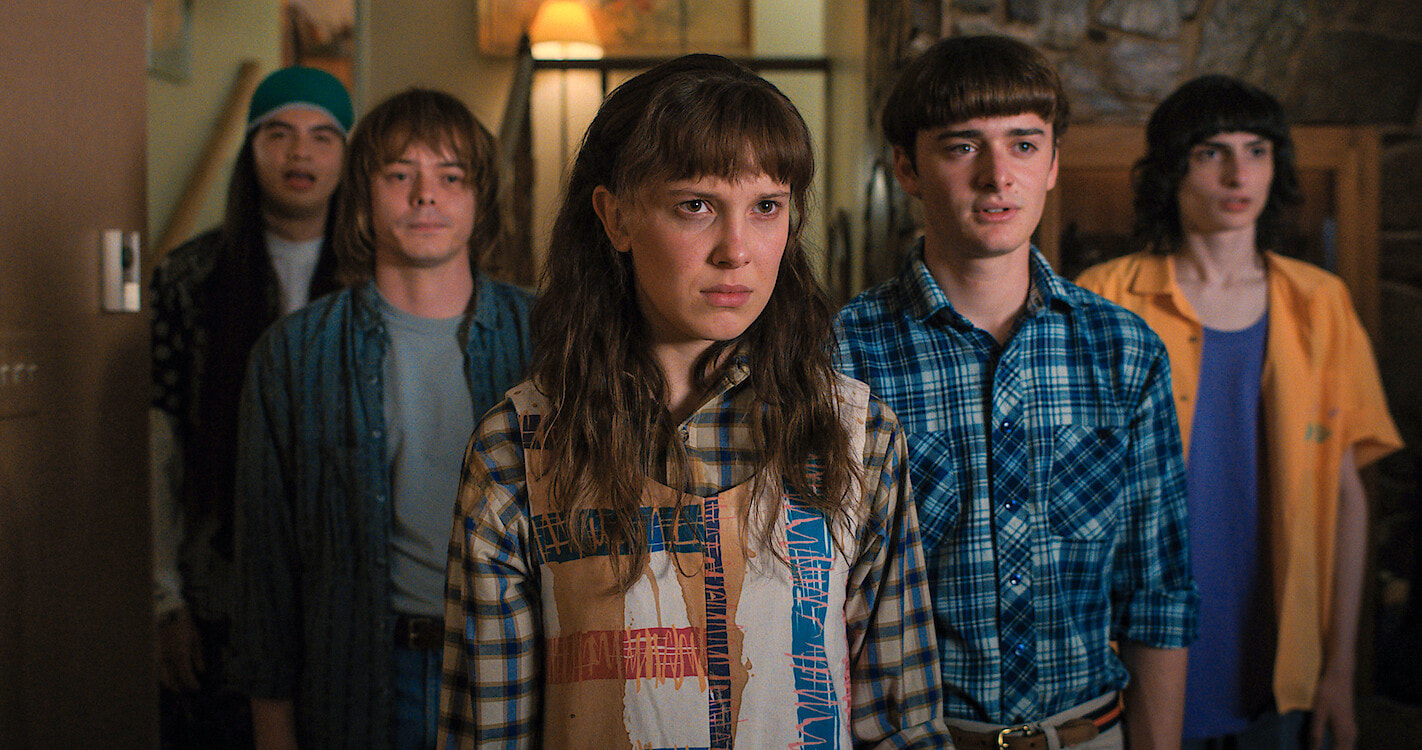
Stranger Things finally returns three years later with its fourth season, split into two parts. Season four begins six months after the events of season three, with the leading characters now split up between Lenora Hills, California, and the familiar Hawkins, Indiana. The new setting comes with new characters and trials for those who reside there, but the main danger comes from Hawkins, as it often does.
Unlike its past seasons, season four of Stranger Things explores a horror genre separate from its sci-fi roots. The new season hones in on popular supernatural horror of the time, such as A Nightmare on Elm Street. Gruesome character deaths are reminiscent of Freddy Krueger's torment, and there's even a spooky boiler room scene. This new nightmarish style of horror is very different compared to the sci-fi feeling that Stranger Things fans are familiar with. While it still has elements of sci-fi, the presence of haunted houses and possible demonic possessions move the show into a new era of frights. The new changes to Stranger Things don't stop at the genre-bending, but it also continues to develop with the presence of new characters. One new character, Eddie Munson, is one of the most notable new faces. A clever representation of the weird kid trope and alternative subcultures of the eighties, Eddie is the Dungeon Master of Mike, Dustin, and Lucas's Dungeons & Dragons group. While his personality closely resembles Steve's goofy but tough older brother vibe, it's clear that he is not the story's hero but instead just a pawn to keep it going. Although that's not to say his scenes with Steve, Robin, and Nancy aren't extremely enjoyable to watch. 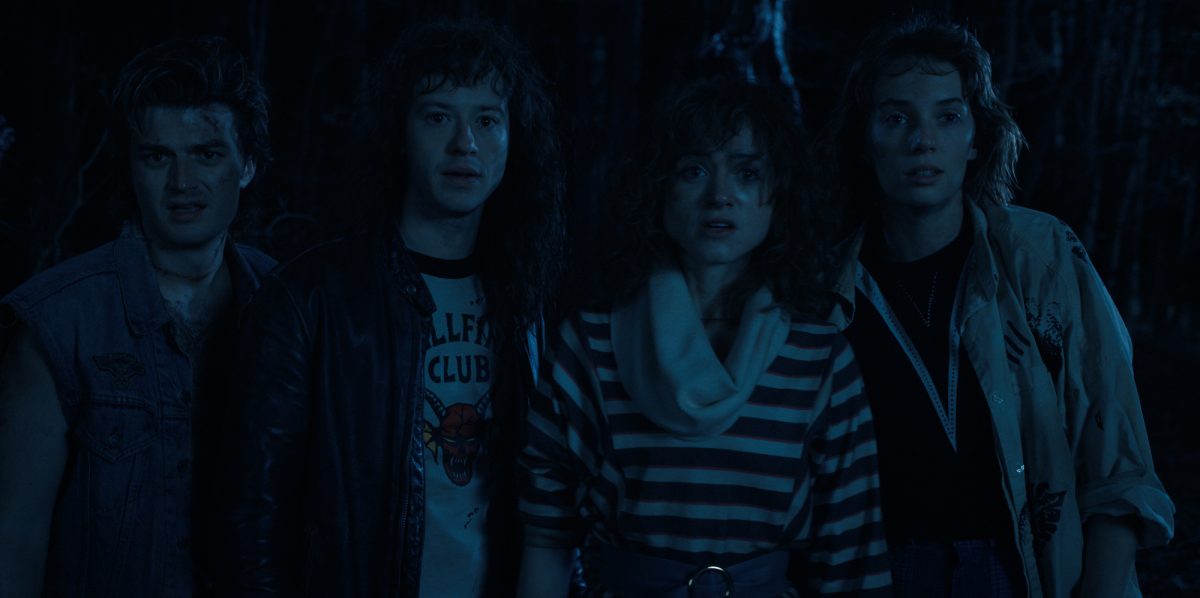
Even more so than in the last seasons, the jumble of locations and storylines tends to get confusing and messy as the episodes go on. Where season three managed to get the hang of balancing out all the different groups, season four spreads itself thin, which makes sense why it is ultimately divided into two parts. Season four also marks the return of the same Russia plotline from season three, which takes up more of the season than it should as it is easily one of the most uninteresting parts of the entire series.
Volume one of season four of Stranger Things does as much as it can in its six episodes. Beyond bringing old friends and lovers together, it also establishes new bonds and growth for certain fan-favorite characters. For example, El's story goes beyond just her struggles in her new home in California since she also starts to come to terms with her past and what it's like to live without her powers. Max also particularly steals the show as she deals with losing her brother, Billy. This season's high school-centered subplots are utilized well by putting the characters in new predicaments outside of the supernatural, which makes the show's character-building even better than it already is. Volume one of Stranger Things season four begins streaming on Netflix on May 27th. All six episodes of volume one reviewed. Rating: 4/5 |