
|
Review by Joseph Fayed 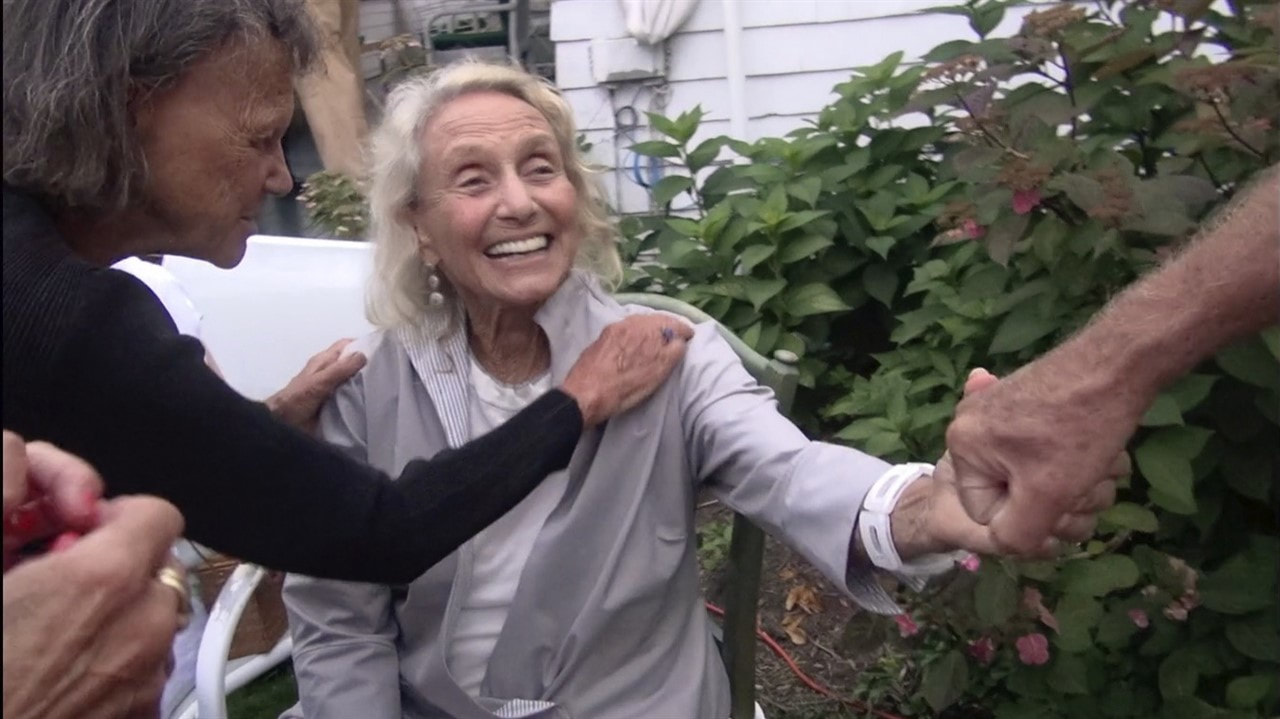 Rose Styron, now 95 years old, has lived through it all. More accurately, she has been a living witness to so much history, as she gleefully recounts her life in the documentary In the Company of Rose. Rose Styron has been everywhere and met everyone, but those intriguing moments Rose reflects on are few too little. Director James Lapine, mostly known for his contributions to the theatre, meets with Rose Styron over a series of several summers on Martha's Vineyard. Across the span of that time, the documentary pieces together Rose's life, from her childhood to her career with Amnesty International. But a significant portion of the feature has Rose explaining the decades she spent married to her husband, author William Styron. Rose has an energy that draws people towards her, and the relationships she has formed prove that. Covering 95 years in an 85-minute runtime is nearly impossible. James Lapine tries his best to cover the most crucial parts of Rose's life, without any noticeable gaps. Rose recounts her life in much detail when asked various questions by James Lapine, and without the interference of interviews with those who may have influenced her. James Lapine lets Rose take center stage in narrating the events of her life. So many documentaries feel trapped through archive footage, and when the subject is a living person, that could be especially troublesome. The intimate approach Lapine takes here provides more context than your average documentary, consisting of voiceovers and family albums.  The two highlights of the documentary are Rose's work with Amnesty International and William's battle with depression. They deserved lengthier standalone segments. Rose's observations from her career battling injustices across the world to the mental decline of her husband are rich with insight from someone who was mostly overshadowed during her life. Two blocks of the documentary discuss her husband's novels, and the most interesting parts were Rose thoroughly explaining why and how they were written. Rose in conversation gives the most important context authors could provide when discussing their works. In contrast, so little of Rose's own published materials are given attention.
Rose Styron is a storyteller. She is by trade, whether it's poetry or in addressing human rights. Ironically titled In the Company of Rose, Rose single-handedly makes this documentary better than any family member or friend if they were interviewed could have done. The intimate approach requires nothing to be done to dramatize Rose's life story. James Lapine was fortunate enough to cross paths with his documentary subject in Martha's Vineyard, and if I visit someday, I sure hope I get to meet Rose too. In the Company of Rose is now in theaters and on VOD. Rating: 4/5
0 Comments
Review by Sean Boelman
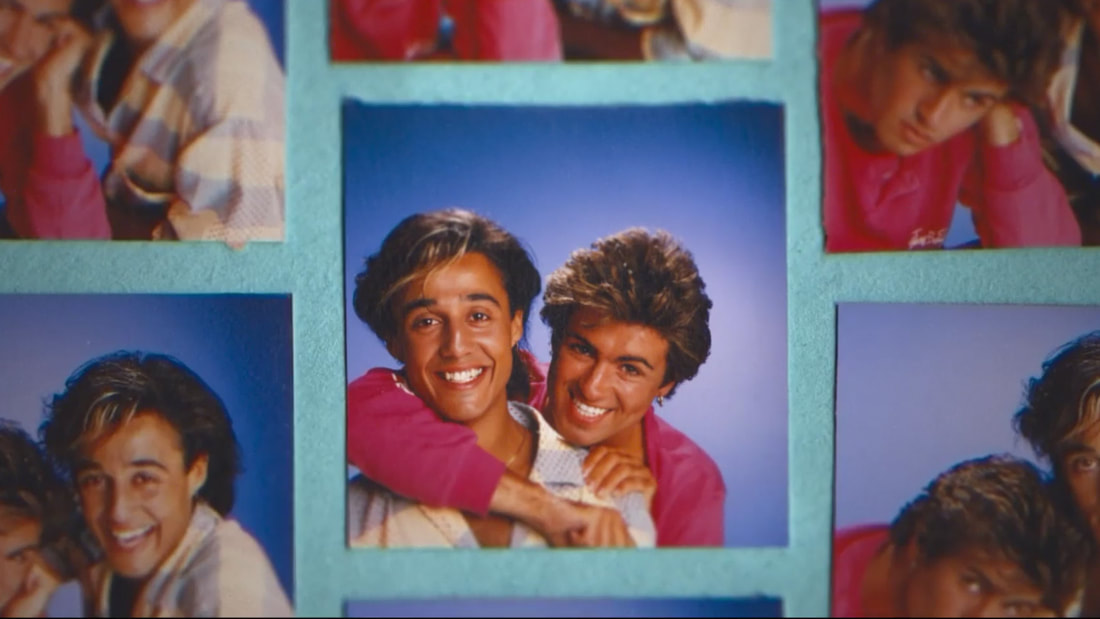
Andrew Ridgeley and George Michael in Wham! Credit: Courtesy of Netflix © 2023.
Ask anyone on the street, and they likely know the musical duo Wham!, who is behind some of the biggest hits in pop music — from “Last Christmas” to “Wake Me Up Before You Go Go” and more. Wham! is an extraordinarily fun music documentary, but its sleek approach and narrow focus has the unintentional effect of being slightly disrespectful to parts of its lead singer’s legacy.
The film tells the story of the legendary pop duo Wham! — George Michael and Andrew Ridgeley — as they went from being a couple of best friends in the 1970s to being one of the biggest musical acts in the world. Although it does often feel like a “greatest hits” type of documentary, it does a good job of finding a satisfying balance between nostalgia and substance. The documentary does a really good job of exploring the friendship between Michael and Ridgeley, and how their relationship evolved due to factors including the spotlight, growing older, Michael’s sexuality, and more. And given that the movie completely eschews talking head interviews, it feels quite personal. Filmmaker Chris Smith presents the film almost entirely through archive materials, performance footage, and music videos, and he manages to infuse the movie with an undeniable level of kineticism. Smith has a rare gift for creating documentaries that feel like they are transporting their viewer back in time to witness cultural events live. 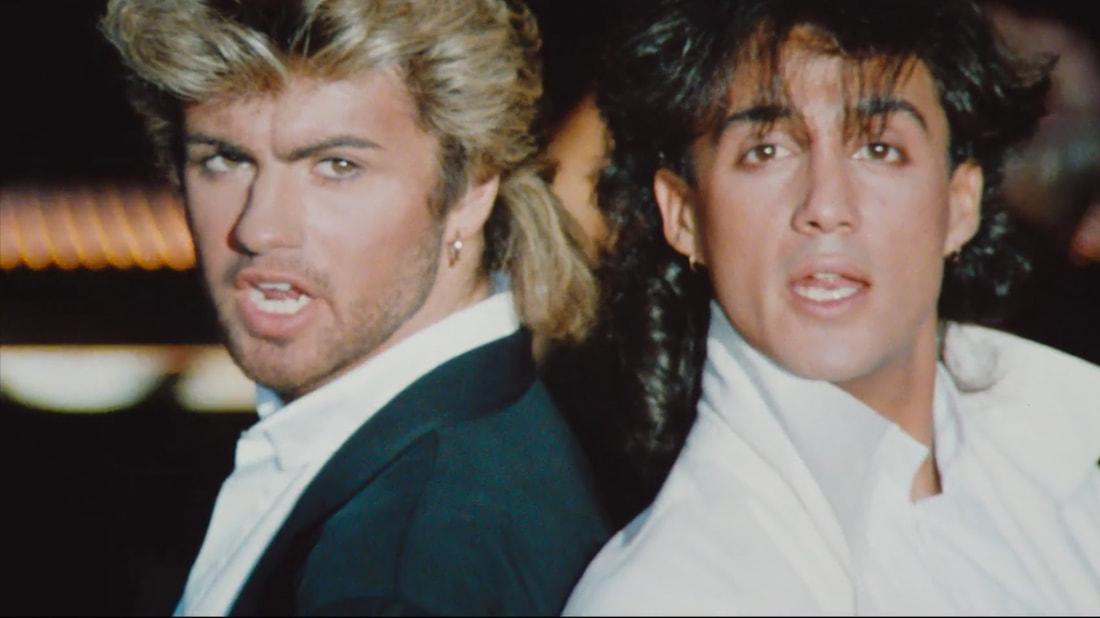
George Michael and Andrew Ridgeley in Wham! Credit: Courtesy of Netflix © 2023.
This electric pacing also contributes to an infectious feeling of fun that allows the film’s 90-ish minute runtime to breeze by. Although fans of the group likely won’t learn anything they don’t know about the iconic musicians, the movie serves as a wonderful reminder of why the duo became such an important cultural keystone in the first place.
However, the narrative device of the documentary is a bit of a double-edged sword in that it also feels somewhat manipulative. By having Michael and Ridgeley “narrate” the story through audio interviews, and stopping well before Michael’s passing, the film would almost have viewers believe that Michael is still alive unless they watch to the *very end* of the credits to see the “in loving memory” tribute to Michael. Indeed, with a few exceptions — like “Careless Whisper” — the movie focuses almost exclusively on Michael and Ridgeley’s career as a duo. Not only does this leave out Michael’s prolific career as a solo recording artist, but also his work as an activist for HIV/AIDS awareness. Although the portions of the film which deal with Michael’s identity crisis and coming out as a gay man are effective, it feels like the later portion of his life is a glaring omission. Wham! is an entertaining dive into the history of the iconic musical act, but there’s something that will rub viewers the wrong way about its presentation. For a movie that is so committed to honoring the legacy of these legendary musicians, it’s surprising to see them ignore such an important part of it, but it’s entertaining nonetheless. Wham! hits Netflix on July 5. Rating: 3.5/5 Review by Dan Skip Allen 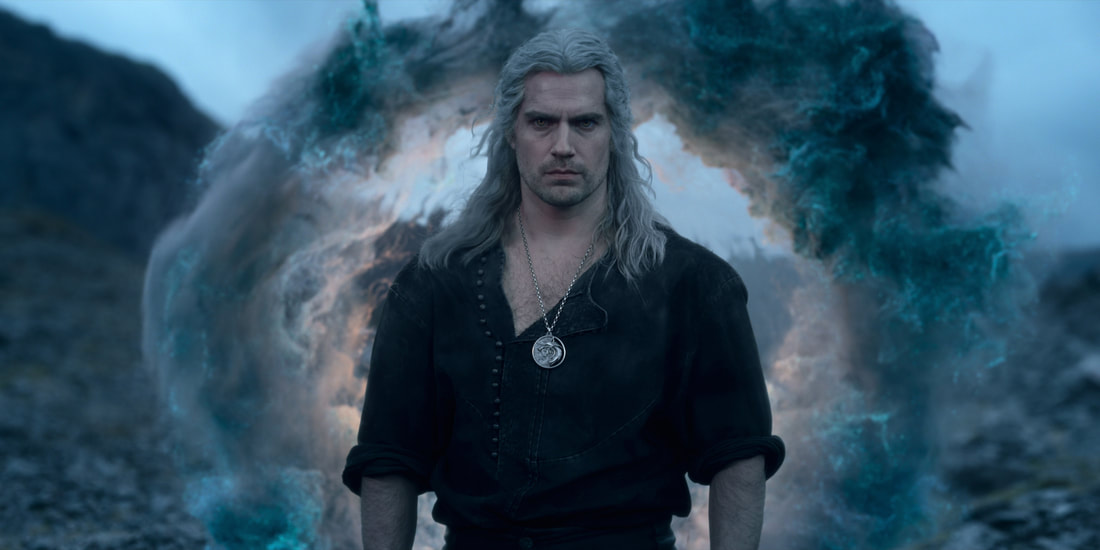 Netflix has had a few popular shows for young audiences, such as Cobra Kai, Stranger Things, and The Witcher. The Witcher is based on a video game and book series. The show represents those two separate mediums nicely; but also stands on its own as an entirely different thing unto its own. Henry Cavill, as Geralt of Rivia, the title character, is quite the draw, however, that will only last for this third season. He's gone after this season, so season three has to deliver. As we pick up season three of The Witcher, the three main characters — Geralt (Henry Cavill), Yennefer (Anya Chalotta), and Ciri (Freya Allen) — are on a journey through some random woods. The purpose of their journey is to keep Ciri safe. There are plenty of people trying to capture her and return her to her place or use her for nefarious reasons. Using a bit of sneakiness involving the bard Jaskier (Joey Batey), they figure out that a member of the Brotherhood is trying to take over the North. The Witcher has always had a way of being entertaining. It's a show with some good genre sensibilities. One of those is the monsters the characters fight. This season has three nasty monsters Cavill's character has to fight. The creators are good at coming up with interesting and creepy-looking creatures for the world. One of the things about The Witcher that has improved from Season 1 to 3 is the production value/design. It seemed a bit amateurish in season one, and now it seems Netflix has spent some money on this show. The look of it is much better. The sets don't look cheap. It seems like people have taken more pride in this series and put more effort into making it look better. Now, it'll never look as good as Game of Thrones, but it's better than it has been. 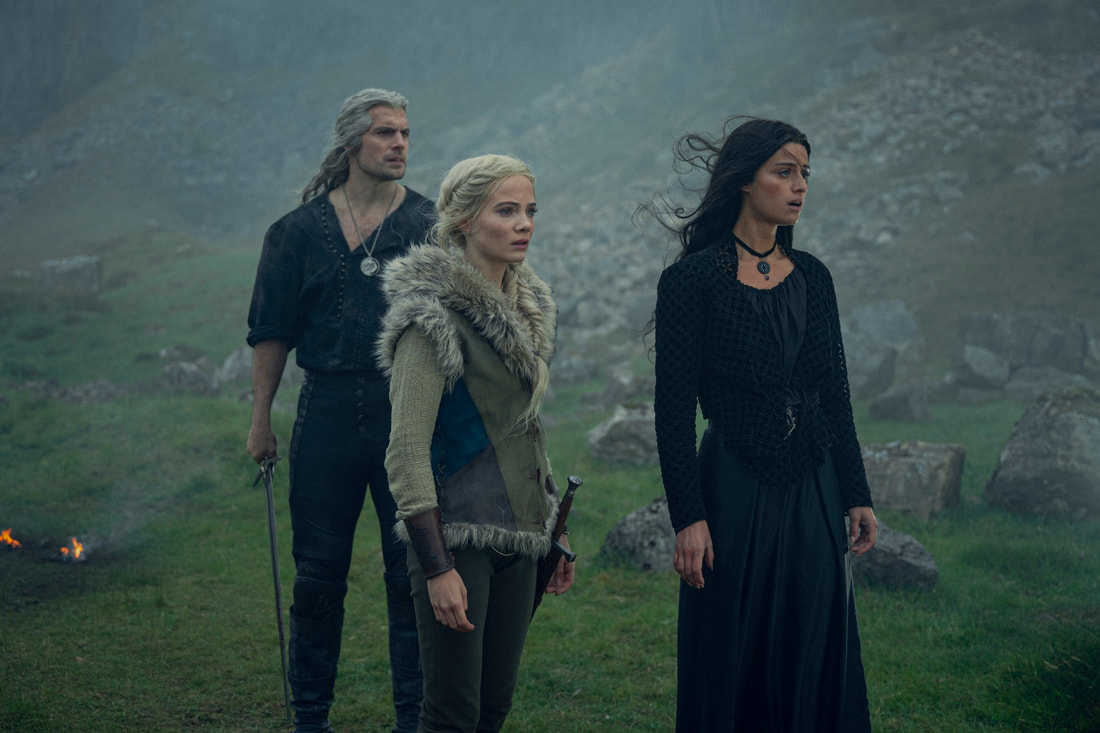 Photo Credit: Susie Allnutt. Another season this season is better than the previous ones is the writing. The scripts by Lauren Schmidt Hissrich and many others have been better than previous seasons. They have a more nuanced feel, where multiple characters have separate arcs, but also fit into an overall storyline for the entire season. Split into two halves, the first five episodes of season two do a great job of setting up the second batch of episodes.
The best episode of this batch of episodes is the fifth episode. It features a ball where all the main players except two are in play. They literally have a dance around this big ballroom where they are trying to manipulate and gain favor from Cavill's character. The games they play in this episode show how much the direction and writing have improved from season one to three. The various moving around and switching partners made for interesting television. This was a good change from all the fantasy stuff the show is known for. There are just so many different hands on this season that it has me excited for the second half. Various subplots and character arcs make me intrigued by what's in the future of the show. The three main actors have come a long way from season one of The Witcher. Henry Cavill, which was the main draw going into this series, is now part of a true ensemble of actors who bring their best to the table. Add in better production design, creatures, and writing, and you have a good first part of season three of The Witcher. The Witcher is now streaming on Netflix. Five out of eight episodes reviewed. Rating: 3.5/5
Review by Sean Boelman
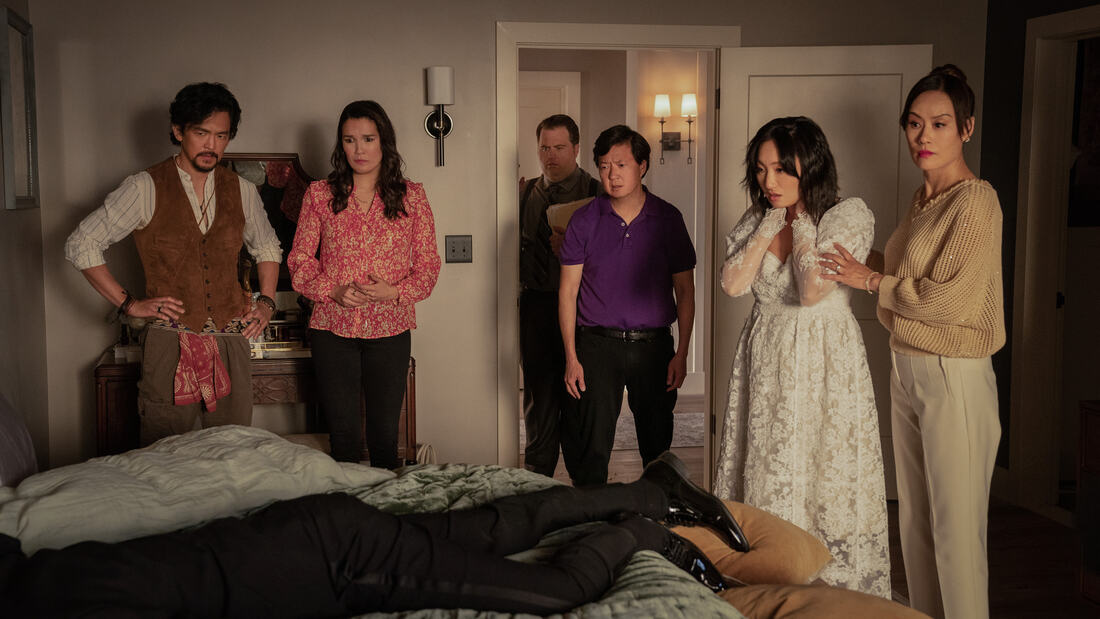
Episode 1. Zach Woods, John Cho, Zoë Chao, Paul Walter Hauser, Ken Jeong, Poppy Liu and Vivian Wu in "The Afterparty," premiering July 12, 2023 on Apple TV+.
The Afterparty was a fan-favorite with its first season, a great blend of mystery and comedy that kept viewers guessing while laughing the whole time. Season two of The Afterparty is another strong entry in the mystery-comedy series — with some aspects that improve upon its predecessor and others that stay at a consistent level.
The show follows last season’s protagonists, Aniq (Sam Richardson) and Zoe (Zoë Chao), as they find themselves caught up in another crime scene, having to investigate a murder at a family wedding. Apart from the contrivances associated with these characters getting involved in another murder, it’s another wacky, fun adventure. This time around, the show leans even more heavily into its style, each episode having a distinct stylistic approach. The only repeat — at least in the nine episodes screened for press — is the romantic comedy style for Richardson’s returning character. Other styles added to the mix include film noir, steamy erotic thriller, heist movie, and more. The cast — while not necessarily a step up from the first season’s — contains plenty more recognizable A-listers. The best new addition is Jack Whitehall, whose performance is probably the funniest of the bunch. Paul Walter Hauser is also funny, but too often feels like the butt of the joke. John Cho gets some funny moments too, as does Ken Jeong, but they don’t shine as much as Whitehall. 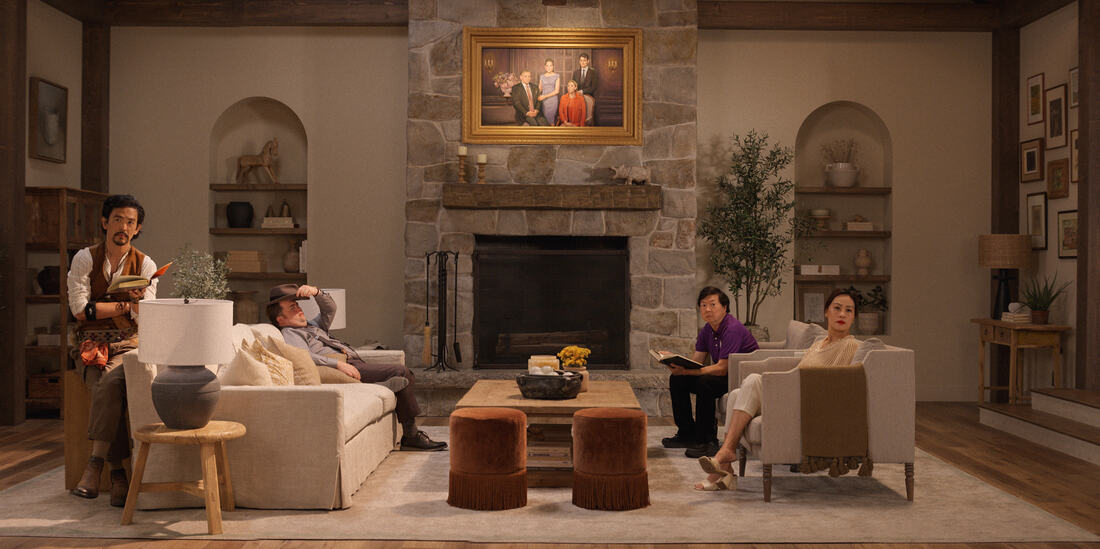
Episode 4. John Cho, Paul Walter Hauser, Ken Jeong and Vivian Wu in "The Afterparty," premiering July 12, 2023 on Apple TV+.
That said, the fundamental flaw of this season is that — beyond the returning characters — there’s really no one for the audience to root for. The closest character to character to being likable is Hauser’s oaf, who is lovable at times, but he also makes some really creepy decisions that aren’t entirely support-worthy.
Even with the returning characters, their emotional connection to the story feels weak. Although Aniq and Zoe’s relationship lingers over the entire conflict, it feels like an afterthought. And the arc for Detective Daner (Tiffany Haddish), while often hilarious — particularly during her solo episode — feels shoehorned in as an excuse to bring Haddish back. However, what this season excels at most is creating a truly unpredictable mystery. Through the ninth episode, it’s nearly impossible to predict who the killer is, with the first season having been much easier to create theories. Very few whodunnits are able to be as utterly stumping as this, so that is an impressive feat. The Afterparty delivers another entertaining — and arguably more tightly-written mystery — even if the list of suspects isn’t as compelling as it was the first time around. It’s a “more of the same” type of second season, rather than a “bigger and better” one, but fans will hardly complain about that. The Afterparty streams on Apple TV+ beginning July 12. Nine out of ten episodes reviewed. Rating: 4.5/5 Review by Camden Ferrell  The world of movies can be a great escape from the troubles of real life, or it can be a stressful reminder of how anxiety-ridden and embarrassing life can be. The feature directorial debut of Michelle Savill is clearly the latter. Millie Lies Low is a brand new cringe-inducing comedy that had its premiere in 2021 before playing at other festivals such as the 2022 SXSW Film Festival. Even though it could have done more to amp up its stakes and stressfulness, this movie is still a social nightmare of a movie that is carried by a confidently unconfident lead performance from Ana Scotney. Millie is a grad student from New Zealand who has landed a prestigious internship in NYC. On the plan to the U.S., she has a panic attack and gets off the plane. Unable to get a flight back, she is stuck back at home while the people in her life think she is off to bigger and better things. Unable to own up to the embarrassment and shame of what happened, she hides in plain sight, using social media to try and convince the world she is living and thriving in the Big Apple. This is a simple premise with the possibility of social humiliation lurking at every corner which allows the audience to feel on edge for most of it. Written by Savill and Eli Kent, the script mostly succeeds in crafting awkward scenarios. While its dialogue is solid, it doesn’t stand out in any way. It’s a simple story, but the writing makes the most of it, finding new situations and lies that Millie must navigate through albeit not always successfully. Underneath the surface of social anxiety, the movie does have a genuine message about mental health and the effect it has on many aspects of one’s life. It isn’t addressed in the most natural or subtle way, but it was interesting to see the more serious side of the film’s premise explored. 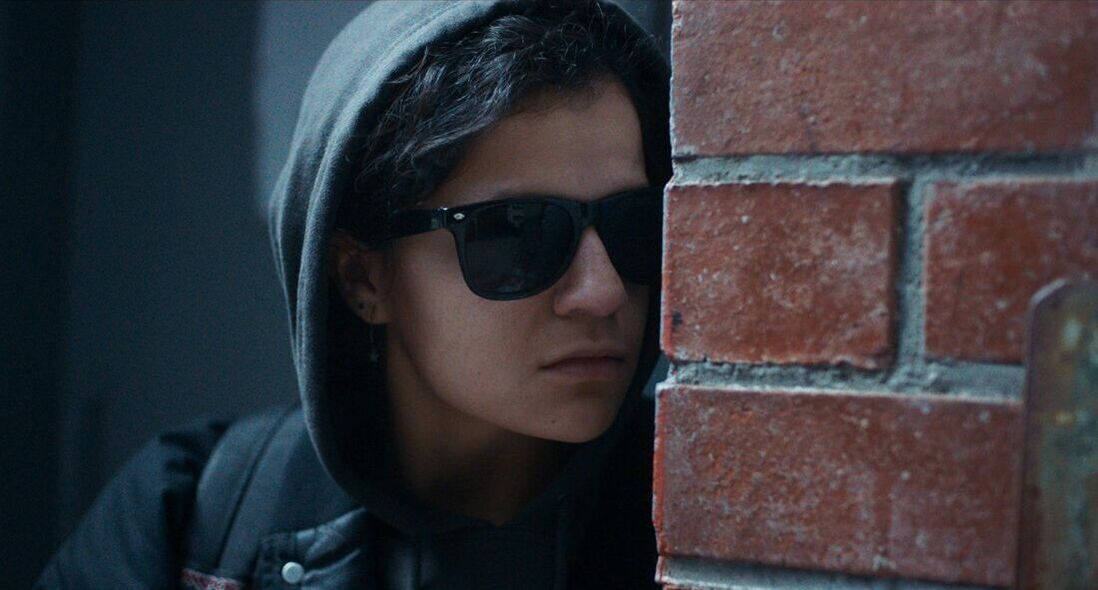 Millie is played by the talented Ana Scotney whose prior film roles are rather limited. Despite this, she carries the movie excellently. As far as I’m concerned, this movie is mostly a one-woman show, and Scotney handles it like a veteran. She has a great way of bringing the audience into her shoes as she encounters every hardship on her quest to lie about her NYC life. It’s hard to watch at moments due to how embarrassing and awkward some moments are, but she plays these moments very well. She knows when to play up the lighter side of the film, and she knows when to remain grounded.
While there’s a lot to admire about a film of this caliber, it’s far from perfect. Despite a relatively short length, the movie can feel a bit too slow on occasion. There are some great moments throughout the movie that just don’t have the strongest connecting threads. These shortcomings can sometimes undermine the great social tension and cringe that had been built up by those aforementioned moments. Millie Lies Low is a great showcase for Scotney as a lead actor, and it shows massive potential for the directorial career of Savill. Not great, but definitely cringe-inducing, this is a movie that should be watched with discretion for those with social anxiety. It might not be continuously engaging, but it is a rather visceral experience. Millie Lies Low is in theaters June 30. Rating: 3.5/5 Review by Sean Boelman  Xiaopeng Tian’s animated fantasy adventure Deep Sea has taken the festival circuit by storm, with strong showings at Berlinale, Tribeca, and Annecy — among others. Although Deep Sea occasionally suffers from feeling a bit uninventive in a narrative sense, its visuals are stunning and certainly among the year’s best. The film follows a young girl who finds herself on a fantastic journey to an underwater restaurant on the submerged wreckage of a once-glorious vessel, where she befriends the waitstaff along with the eccentric chef with a hidden heart of gold. If that plot sounds familiar, it’s because it’s eerily similar to the story of the Miyazaki classic Spirited Away. The formulaic nature of the film works both for and against it. Xiaopeng is able to capture much of the same folklore-esque magic that made Miyazaki’s film work so well, but the fact that it follows the formula so closely does cause the film to lose interest every once in a while. Still, with a 100ish minute runtime before credits, the visuals and atmosphere do enough heavy lifting to keep the viewer enthralled. Xiaopeng attempts to do a lot with the film’s themes, some of which work really well while others don’t. The portions of the film exploring the protagonist’s grief over her long lost mother feel somewhat underdeveloped. However, it’s understandable why they are included — as they are essential for the greater message of survival that is much more poignant. 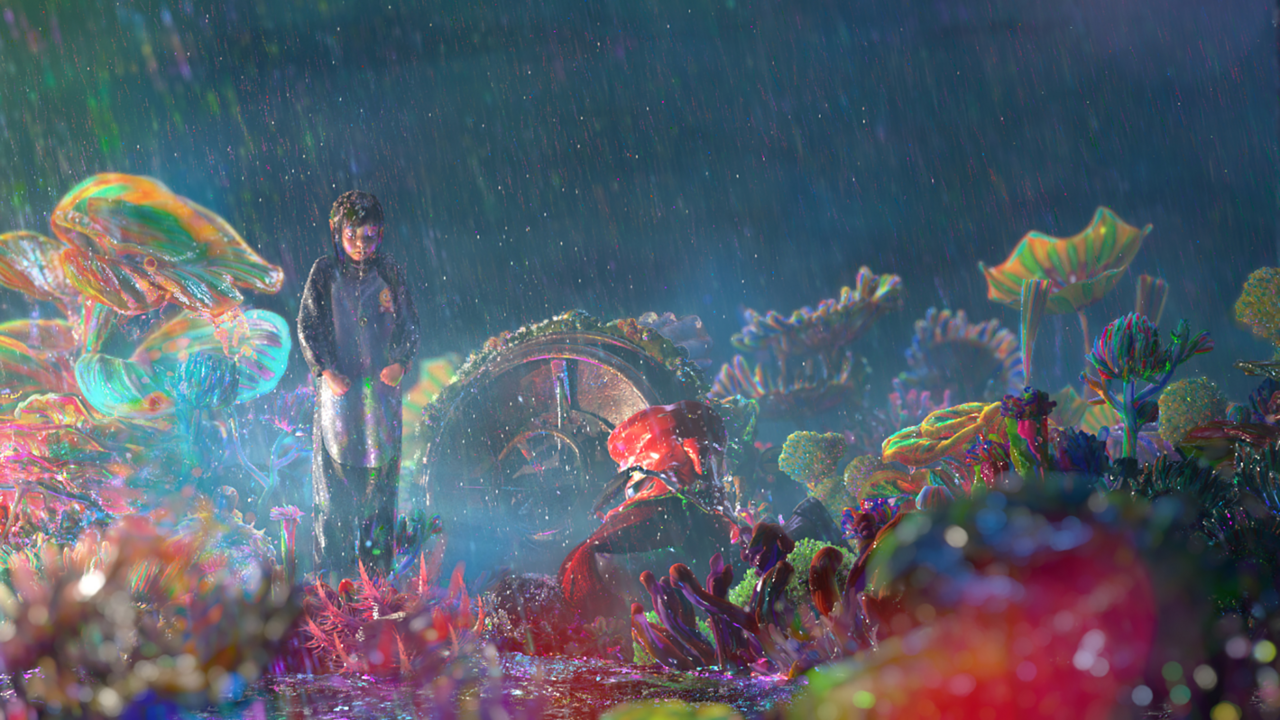 Audiences will obviously immediately resonate with the protagonist, whose arc is undeniably moving. The supporting characters don’t fare as well because they’re all rather archetypal — if they even have arcs at all. The chef character has the most development of any of the supporting characters, but even his growth is predictable and derivative.
The character design in the film is pretty fascinating because it’s very mixed in style. It’s a combination of photorealistic animation for the human characters with a more cutesy style for the anthropomorphic characters. The level of emotion they get out of some of the characters, including one amorphous blob, is often stunning. However, the part of the animation that is most impressive is the backgrounds, which are lusciously animated in the style of classical Chinese brush art. They’re gorgeous to look at, allowing the film to be thoroughly immersive, even when the world-building of the narrative isn’t as rich as one would hope. Deep Sea is hardly the most original animated film in a narrative sense, but the gorgeous animation and its ability to effectively hit its emotional beats make it worth watching. Xiaopeng Tian is certainly a talent to watch in the international animation space. Deep Sea screens at the 2023 Tribeca Festival, which runs June 7-18 in NYC and June 19 through July 2 online. Rating: 3.5/5 TOM CLANCY'S JACK RYAN (Season 4) -- The Fourth Season of the Clancy Show Might Be Its Best6/28/2023 Review by Dan Skip Allen  Jack Ryan, one of Tom Clancy's most popular characters, has had his share of days in the sun. Four actors have played this iconic character in five films, up until Amazon got the rights to Clancy's library of characters and stories. It didn't take long before they started their series for the titular character Jack Ryan. The show has gotten to its fourth season, starring John Krasinski as Jack Ryan. This season is different, but in a way, it's still the same as previous seasons. Tom Clancy’s Jack Ryan has been a show that has spanned the globe in its three previous seasons. The character has dealt with political intrigue here in the states, various forms of drug trafficking and corruption in South America, and prevented WWIII involving the Russians. This season, the show goes to Myanmar, Mexico, Switzerland, Croatia, Nigeria, and here in Langley, Virginia, DC, and California. All these places play into this season's main storyline. One of the things that makes Jack Ryan a good show is that the creators Carlton Cuse and Graham Rowlan have assembled a great team of writers that keep these seasons very authentic to the world we live in. Books are one thing, but setting the series in these far-flung places makes the story represent a broader context of reality. Last season was very grounded, and I wish there were more action sequences. However, this season, despite all its locations and characters, lacks the action I've come to get used to in this show. The series connects the dots on previous seasons with recurring characters and collateral damage regarding what happened. It doesn't skimp on the main story this season, though, and that's a good thing. Fans of the show and books have come to know this series as one with a lot of gravitas. They have to believe this stuff can happen in real life, whether we want it to or not. It's got a realistic story everybody can get behind. 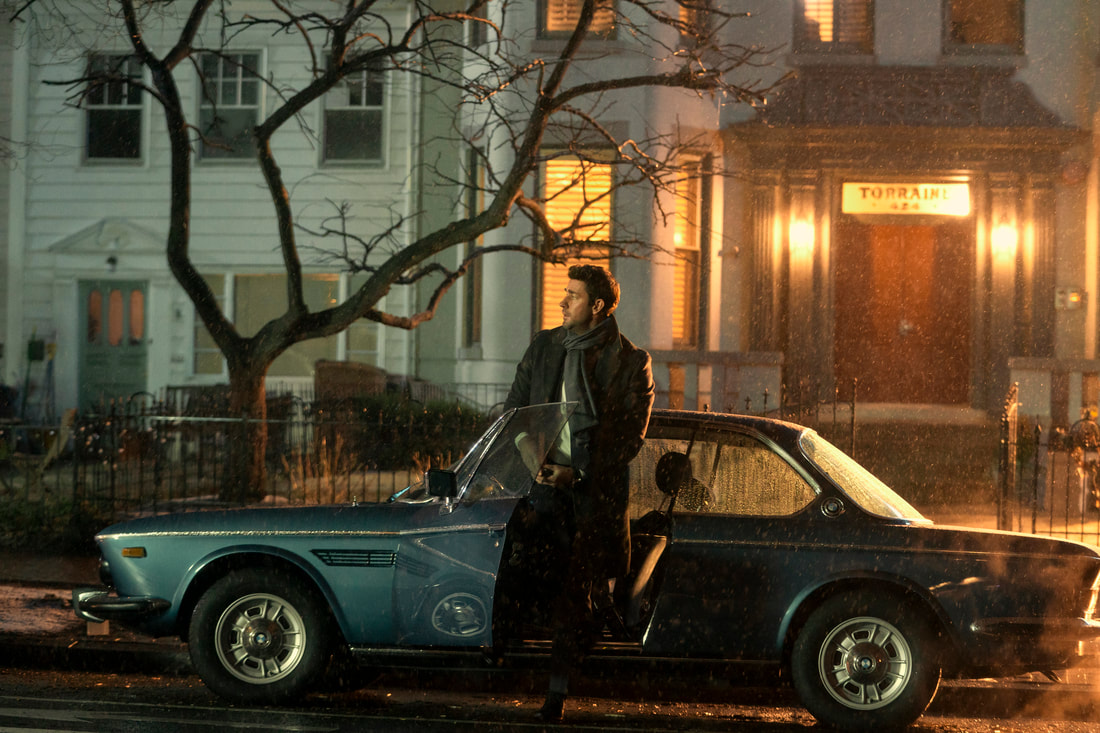 Shows involving spy games have many MacGuffins and jargon regarding things that are said and or used within the context of the story. Places like the Marketplace, W.H.O. Conferences, and even the planet Pluto are used as code names for special operations. Fictional corporations also come into play. And the ever-present Senate Hearings dealing with corruption in the CIA and assassinations of foreign dignitaries are also used. These are all small pieces of an overlying story, which makes the show feel very real. Jack Ryan has always felt very real and not procedural. That makes it more enjoyable for me.
When a show like this deals with realistic things like kidnapping, that's when things get real in the true sense of the word. The creators, writers, and directors have to put the title character in a sense of danger, where he has to make life-and-death decisions regarding his loved one, as do other characters in the show. This season has to go to places that make everyone watching believe in it, and I for one believe in everything I am watching. It's one of the most realistic series I've seen in recent memory. Jack Ryan Season 4 has many twists and turns. It takes what the creators have given it regarding past seasons and runs with it. It doesn't get bogged down in needless things. Everything viewers see in the series is there for a reason. Nothing is wasted, from an amazing cast to little story beats that have to get paid off from previous seasons. The creators, writers, and directors don't waste a minute of screen time on frivolous things that bog the story down. There is so much going on in this season, but none of it is something we wouldn't believe because of how it's all set up from the very first episode. Amazon has a winner on its hand once again with the fourth season of Jack Ryan. It is a bit bittersweet, because it is the last season as well. Jack Ryan streams on Prime Video beginning June 30. All six episodes reviewed. Rating: 4/5
Review by Sean Boelman
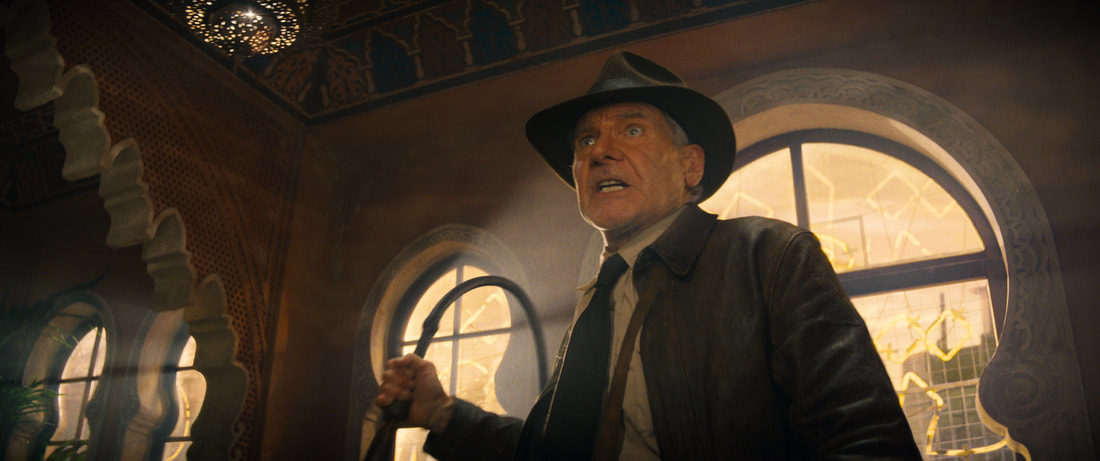
Indiana Jones (Harrison Ford) in Lucasfilm's IJ5. ©2022 Lucasfilm Ltd. & TM. All Rights Reserved.
For one of the most beloved action franchises of all time, the Indiana Jones series has been met with a surprisingly mixed reception outside of the first entry. Unfortunately, the fifth (and presumably final) entry Indiana Jones and the Dial of Destiny doesn’t buck that trend. It isn’t a terrible film, but rather a merely average action flick — disappointing considering the pedigree of talent and IP involved.
The film follows Indiana Jones as he sets out on an adventure to recover an artifact that has the potential to change the course of history. Although this series is known for putting our protagonist on outlandish adventures chasing magical artifacts, Dial of Destiny takes “outlandish” to a whole new level — yet manages to feel frustratingly dull nevertheless. The biggest mistake of the film is its bloated length, as the script lacks the momentum to sustain more than two and a half hours of runtime. The opening scene offers “context” to the story but is really just a derivative train action sequence that has been done better in other films before. Indeed, viewers will spend much of the film wondering where they have seen these action sequences done more effectively. Although Mangold’s direction is hardly incompetent, it’s shockingly dull — too caught up in nostalgia to give audiences anything legitimately exciting. It doesn’t help that the action sequences aren’t particularly impressive. Of course, some of their lack of luster can be attributed to the fact that Ford is more than 80 years old at this point, and he can’t do what he used to. However, it’s much less easy to forgive much of the film feeling like a CGI monstrosity when so much of what made the original so beloved were its impressive set pieces and stunts. 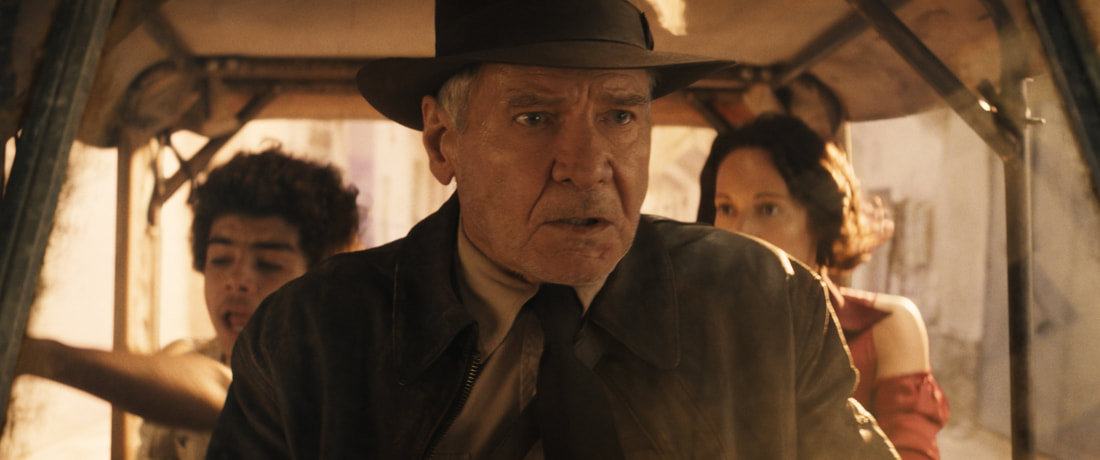
(L-R): Teddy (Ethann Isidore), Indiana Jones (Harrison Ford) and Helena (Phoebe Waller-Bridge) in Lucasfilm's INDIANA JONES AND THE DIAL OF DESTINY. ©2023 Lucasfilm Ltd. & TM. All Rights Reserved.
There are certainly glimpses here and there of moments that have the magic of the Indy we all know and love — like a scene in which the aging archaeologist/adventurer commandeers a horse and rides it through the NYC streets and subway — but these moments are either brief or have been revealed by the trailer. And the final act is just an uninspired mess, not even in a way that can be enjoyed for its camp.
While none of the new additions to the cast is as egregious as Crystal Skull’s attempts to pass on the torch to Shia LaBeouf, they aren’t particularly memorable either. Phoebe Waller-Bridge is charming enough to be passable, but the character is so thinly written she just ends up being a forgettable sidekick. Antonio Banderas is utterly wasted. And as the villain, Mads Mikkelsen is surprisingly not very menacing — which is unusual for the talented actor. Only Boyd Holbrook shines, giving a hammy performance that allows for some of the film’s few fun moments. That said, Harrison Ford is as great as ever in his leading role. Despite his age, he still brings the same level of swagger to the action sequences and charisma to his wisecracks, but also brings a great deal of emotion to the film regarding his arc of growing older. It never feels like “one last hurrah” for Ford as the character, but Ford is nonetheless having a great time getting to revisit the role. While Crystal Skull was at least enjoyable for its sheer ridiculousness, Indiana Jones and the Dial of Destiny lacks the enjoyability factor that got this series through its many ups and downs. In trying to recapture the glory of the once-beloved series, Mangold has unfortunately all but ensured that the series goes out on a whimper. Indiana Jones and the Dial of Destiny hits theaters on June 30. Rating: 2.5/5 RUBY GILLMAN, TEENAGE KRAKEN -- Dreamworks Flounders With a Frustratingly Annoying New Film6/26/2023 Review by Cole Groth 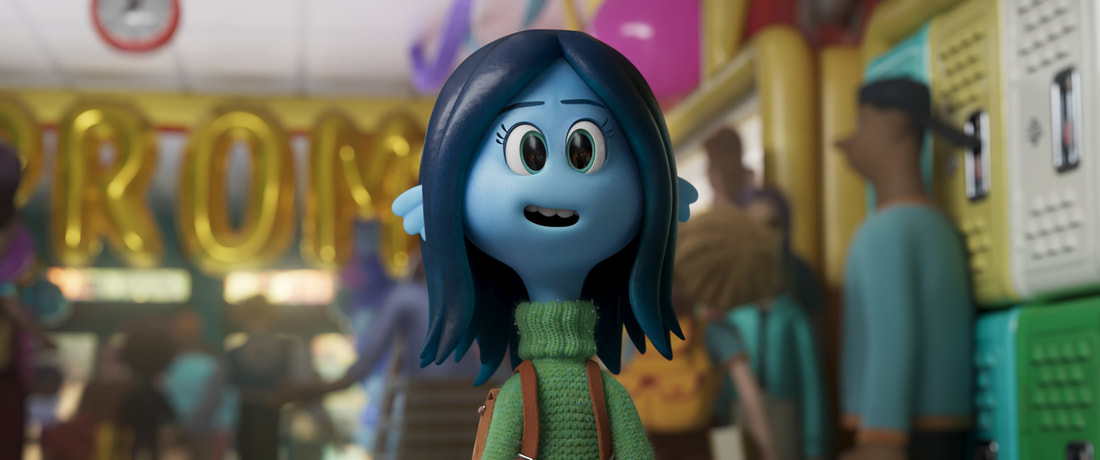 Ruby Gillman (Lana Condor) in DreamWorks Animation’s Ruby Gillman, Teenage Kraken, directed by Kirk DeMicco. Ruby Gillman, Teenage Kraken is one of those films bound to fail. There’s virtually no buzz for the latest Dreamworks film, and while Warner Bros. and Disney struggle at the box office with The Flash and Elemental, Universal seems eager to group up with them. Business isn’t everything, but it’s hard to feel bad for a film failing when it’s as annoying as this. While families with low expectations will find a fun way to spend 91 minutes, anybody expecting something on the level of Puss in Boots: The Last Wish will be sorely disappointed as Dreamworks misses the mark. Ruby Gillman, Teenage Kraken tells the story of Ruby Gillman (Lana Condor), a teenage Kraken. While Ruby tries to live her life as an ordinary girl, she holds a dark secret: she’s secretly a Kraken with the ability to transform into a “giant Kraken” (“giant” is repeated many times throughout the film for no real reason). Her blueness and slimy appearance as a sea creature are conveniently explained early on in the film — her family is Canadian. Imagine Turning Red if the animation was worse, the characters more annoying, and the story more derivative. After befriending a mermaid, Ruby begins to go against her family’s wishes as she forges her own destiny. What follows is a journey of self-discovery, sea exploration, and coming-of-age hijinks. This story has been played out many times before, and while this doesn’t miss any of the regular beats, it doesn’t add much, either. The conflict between Ruby and her mother is a generically manufactured conflict that isn’t written well enough to fit. Ruby makes so many stupid decisions throughout this, and while it can be explained away as her being a fifteen-year-old, that’s not a good enough excuse. Since voice actors can’t get work in major animated movies anymore, we’ve got an extensive lineup of celebrities working on this project. Lana Condor kills it as Ruby. She brings the awkward energy of her character to life and never feels as annoying as she could be. Her type of character is overplayed in animated movies, but Condor gives a solid performance and shows prowess as a voice actress. Toni Collette is an unbelievably talented actress whose skills translate easily to her performance as Agatha, Ruby’s mom. Jane Fonda plays Ruby’s grandmother and has a great dynamic between Condor and Collette. Annie Murphy is decent as a mermaid with unrealized intentions but isn’t written well, making her voice-acting skills mute. Sam Richardson and Will Forte play obnoxious characters but are funny enough to deserve praise. Colman Domingo and Jaboukie Young-White leave something to be desired in their performances but do a decent job otherwise. 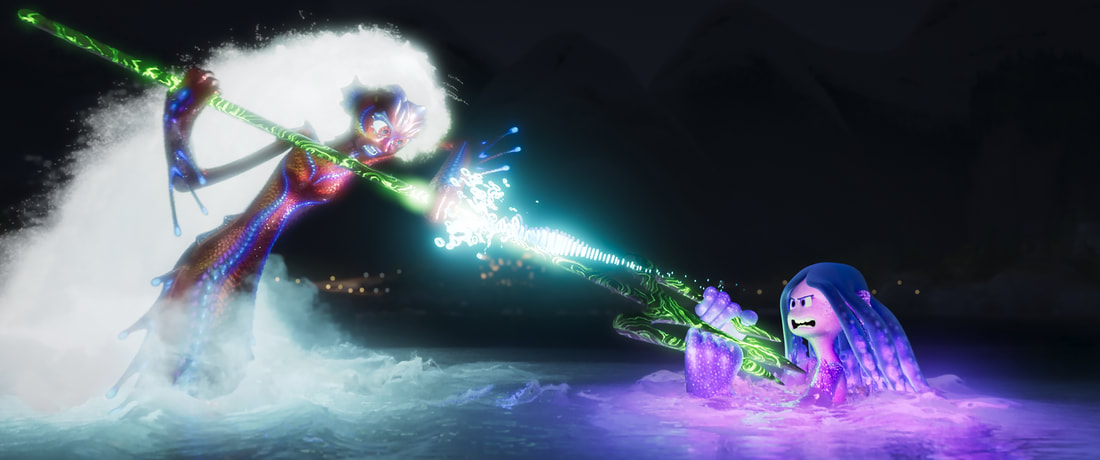 (from left) Chelsea Van Der Zee (Annie Murphy) and Ruby Gillman (Lana Condor) in DreamWorks Animation’s Ruby Gillman, Teenage Kraken, directed by Kirk DeMicco. While Condor, Collette, and Fonda do a particularly good job, most of it goes to waste through the black hole of talent that is Liza Koshy. Koshy plays the role of Margot, Ruby’s best friend. Margot fills the space as the generic representation for Dreamworks, who has a throwaway line about being a lesbian, which can easily be cut for foreign markets to maintain whatever box office potential this could have. As a 15-year-old girl, Margot is simply unbelievable, spewing lines of dialogue that sound nothing like a teenager. It’s unhelpful that Koshy gives the most ear-grating performance in an animated movie of all time. It is genuinely Razzie-worthy how annoyingly unbearable she is to listen to. Whoever stupidly believed that Koshy would be the best fit should be fired.
While not annoying as Koshy’s performance, the character design is not much better. Ruby and the rest of her Kraken family are adorably animated and have the fluidity needed to stand out in the crowd. As it comes to the human characters, this falls flat. There’s not an appealing face to look at in the sea of people. It’s all reminiscent of the ugly design of characters in Kroger commercials: weird blob structure, bad proportions, and terrible hair. It’s disappointing because they knocked it out of the park with the main characters, so why does everybody else have to look awful? One of the more egregious studio decisions behind this is the excessive use of licensed music. Plenty of scenes could’ve been enhanced through the use of Stephanie Economous’s score. Instead, 30-second snippets of pop music fill nearly every gap. Many of these songs don’t fit, and most of them interrupt the mood. Universal seems to have a big problem with this, with The Super Mario Bros. Movie having a solid score undermined by an atrocious overuse of pop music. While Ruby Gillman, Teenage Kraken hits the comfortable notes of this type of animated family comedy, it’s a shame that this couldn’t be better. Dreamworks has tried something original and interesting, but bad behind-the-scenes decisions and an annoying tone bog it down. It’s painfully generic, and although kids will enjoy this, is it too much to ask for kids’ entertainment to be better? There’s not much substance for adults beyond a somewhat visually exciting action/adventure. Before this movie, Dreamworks played their new logo, which highlights the countless iconic characters they’ve created. Unfortunately, Ruby Gillman feels destined to fade into the darkness, as this mediocre entry for the studio won’t leave much of an impression. Ruby Gillman, Teenage Kraken releases in theaters starting June 30. Rating: 2/5
Review by Sean Boelman
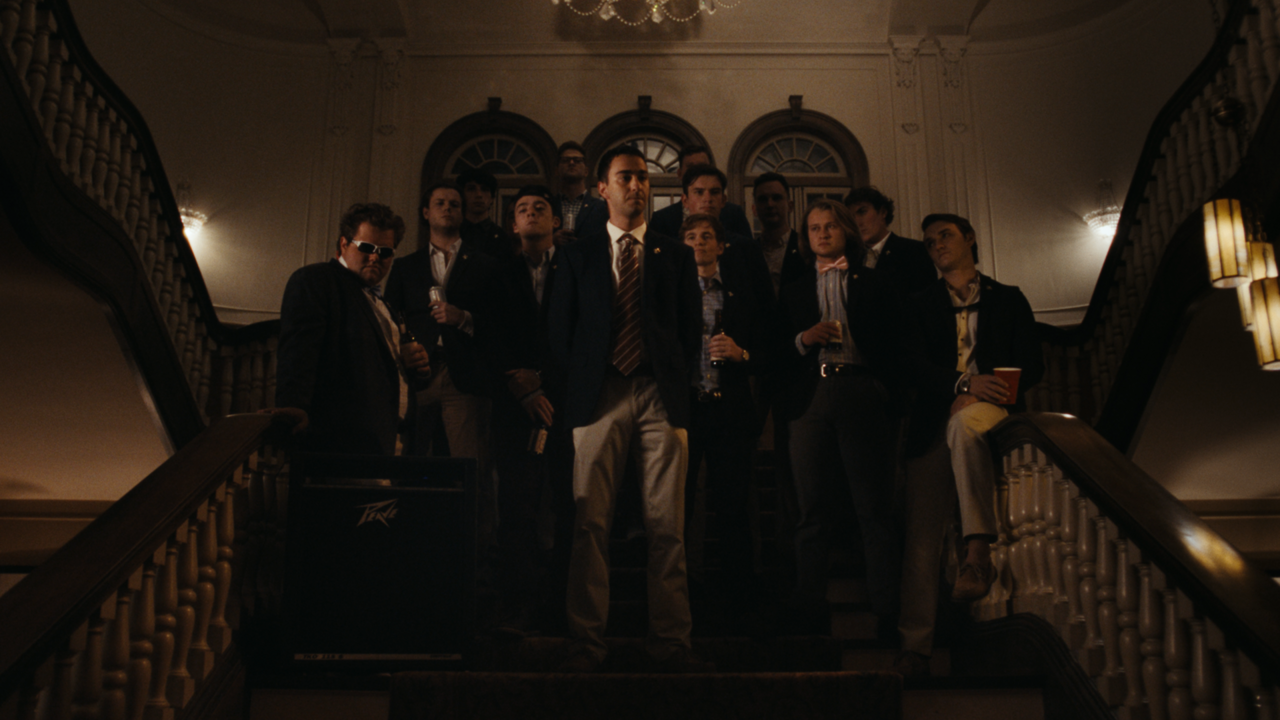
Sometimes, feature debuts benefit from a star-studded cast that elevates an otherwise just passable script into something noteworthy. The Line is an effective feature debut from young filmmaker Ethan Berger, and while its commentary might be somewhat surface-level, the filmmaking on display is undeniably effective and unsettling.
The film follows the members of a fraternity as their organization is rocked by their increasingly dangerous practices and “traditions.” Although the story of the movie is very straightforward, and deals with a topic we have seen addressed in film many times before, Berger’s approach creates a lean 100-minute thriller. Although the movie clearly seeks to expose the very real epidemic of hazing, it exists to do little more than disturb. The film’s stance is certainly condemning, and it will leave viewers feeling angry, but the writers fail to dig deep into the solutions — or even causes — of this problem. There are several moments that feel like the argument being made is simply “boys will be boys,” with little attention paid to the other factors that caused hazing to become such a prevalent issue. Still, Berger along with co-writers Zack Purdo and Alex Russek manage to create an atmosphere that is consistently engaging and unsettling. It’s not quite a horror film, but there are certainly some sequences in the movie that share techniques with the genre, and the result will have viewers on the edge of their seats. Berger’s directorial style is very accomplished for a first-time filmmaker. The film doesn’t go overly violent with its depictions of hazing, and yet, despite its lack of graphic imagery, it manages to be thoroughly affecting. A lot is left to the mind, and as usual, that can be more unsettling than what we see. The movie also offers some interesting characterization. One would normally expect the protagonist of a film with this story to be a freshman being hazed, but Austin Abrams’s character who fills this archetype is only a supporting character. Instead, the protagonist is the conflicted president-to-be of the fraternity, played by Alex Wolff. Wolff’s performance, while playing very much to his usual type, is absolutely devastating. The arc he has — from dislikable arrogance to sympathetic concern — is effective thanks to Wolff’s nuance. Other big names in the supporting cast — Lewis Pullman (Top Gun: Maverick), Halle Bailey (The Little Mermaid), Angus Cloud (Euphoria), and John Malkovich — aren’t fully utilized. The Line might not be a deep exploration of its themes, but it is an effective and unsettling thriller. Thanks to consistently strong performances and sharp pacing, Berger’s film stands out as one of the most exciting debuts of this year’s festival. The Line screened at the 2023 Tribeca Festival, which ran June 7-18 in NYC and June 19 through July 2 online. Rating: 4/5 |