
|
Review by Sean Boelman
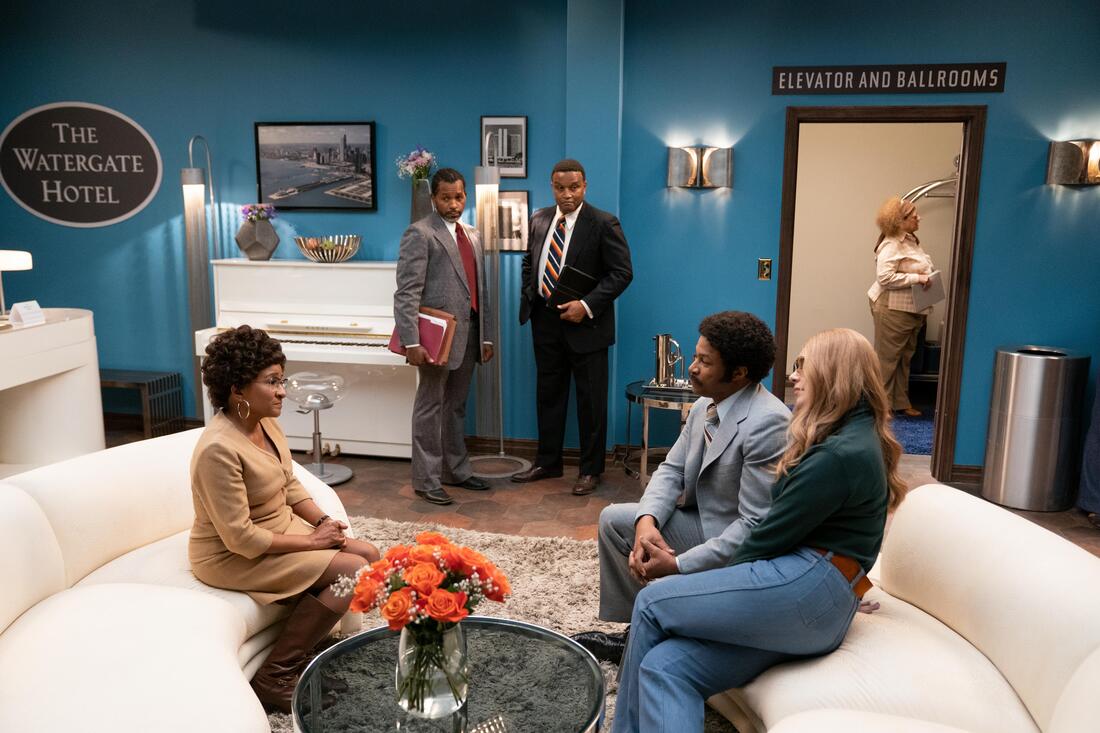
Photo by Tyler Golden/Hulu.
Mel Brooks’s History of the World: Part I was never intended to have a sequel, but over forty years later, we are getting more historical comedy skits from the mind of one of the greatest living comedic geniuses. Although mileage may vary with History of the World: Part II, there’s plenty of gut-busting laughs to be found, even if a few of its skits don’t turn out quite as well as one would hope.
Like its film predecessor, this series presents skits that offer an alternative perspective on history through the hilarious and idiosyncratic lens of the legendary Mel Brooks. The series format is certainly conducive to Brooks’s skit comedy like this, even if it does lead to some moderately long stretches that don’t have quite enough laughs. The ensemble of the series is absolutely star-studded with some of the greatest comedians working today. Some of the actors who have several roles across different skits include Ike Barinholtz and Nick Kroll, and they are both excellent. However, many of the guest stars can steal the show, including Ronny Chieng, Johnny Knoxville, and Jay Ellis. Ultimately, some of the skits do fall flat in the series — more so than usual for Brooks. However, when the segments are good, they are *extremely* good in a way that only Brooks’s work could be. The first episode is the weakest of the show, as it is largely the set-up for the recurring skits, but once it finds its rhythm, it becomes extremely effective. 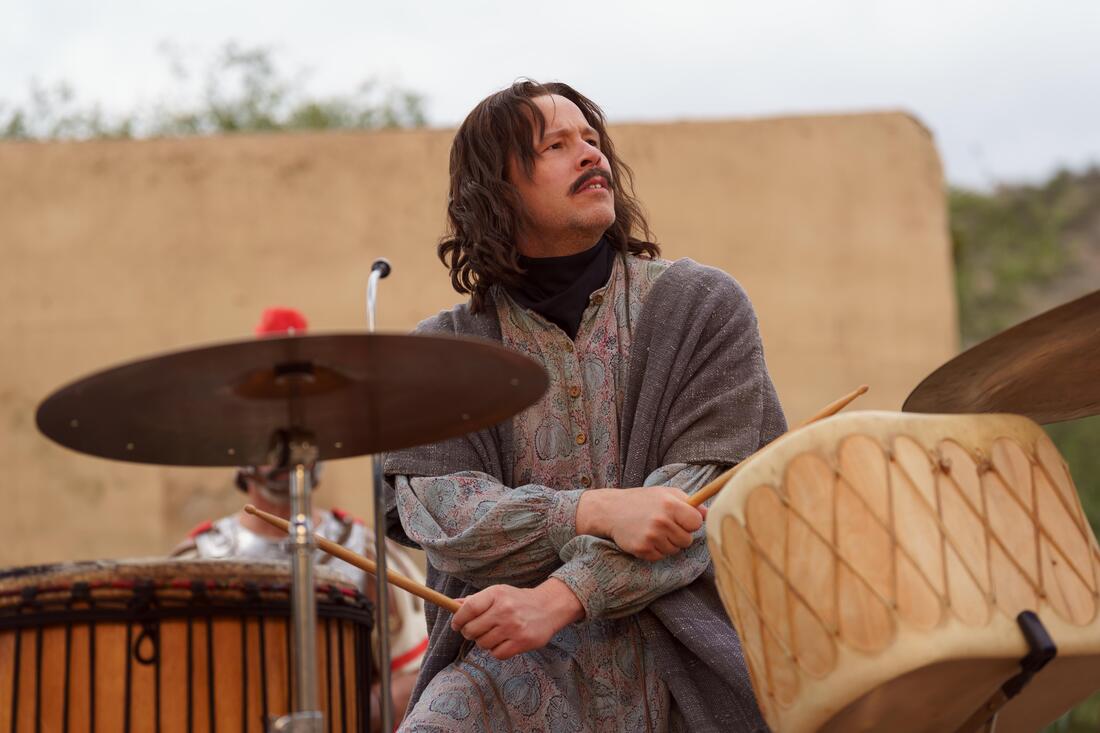
Photo by Aaron Epstein/Hulu.
What is perhaps most surprising about this show is that it often struggles with the balance between satire and goofiness, which is something that Brooks has never had an issue with. Many of the skits are either really insightful and perceptive, or really fun and absurd, but only a few ever manage to capture the perfect balance between both.
Of course, one of the strongest aspects of Mel Brooks’s comedy are his original songs, and this show has plenty of them. There’s one satirical song in the “Civil War” skit that is one of the funniest comedy songs that has been released in years. And one skit, “The Last Supper Sessions,” provides plenty of opportunities for great new songs. The absolute highlight of the series is a recurring sketch called “Shirley!” in which Wanda Sykes plays a ‘70s sitcom version of Black congresswoman Shirley Chisholm. In addition to being one of the most consistently funny sketches in the show — and being a perfect homage to classic sitcoms — this bit shines thanks to Sykes’s hilarious and endearing, perhaps even Emmy-worthy performance. There are some weak spots in History of the World: Part II, but there are far more hits than misses, and the hits are so good that this is still a great series despite its shortcomings. Even this many years into his career, Brooks still has it and his comedy is still as funny as ever. History of the World: Part II streams on Hulu beginning March 6 as a four-night event. All eight episodes reviewed. Rating: 4/5
0 Comments
Review by Dan Skip Allen 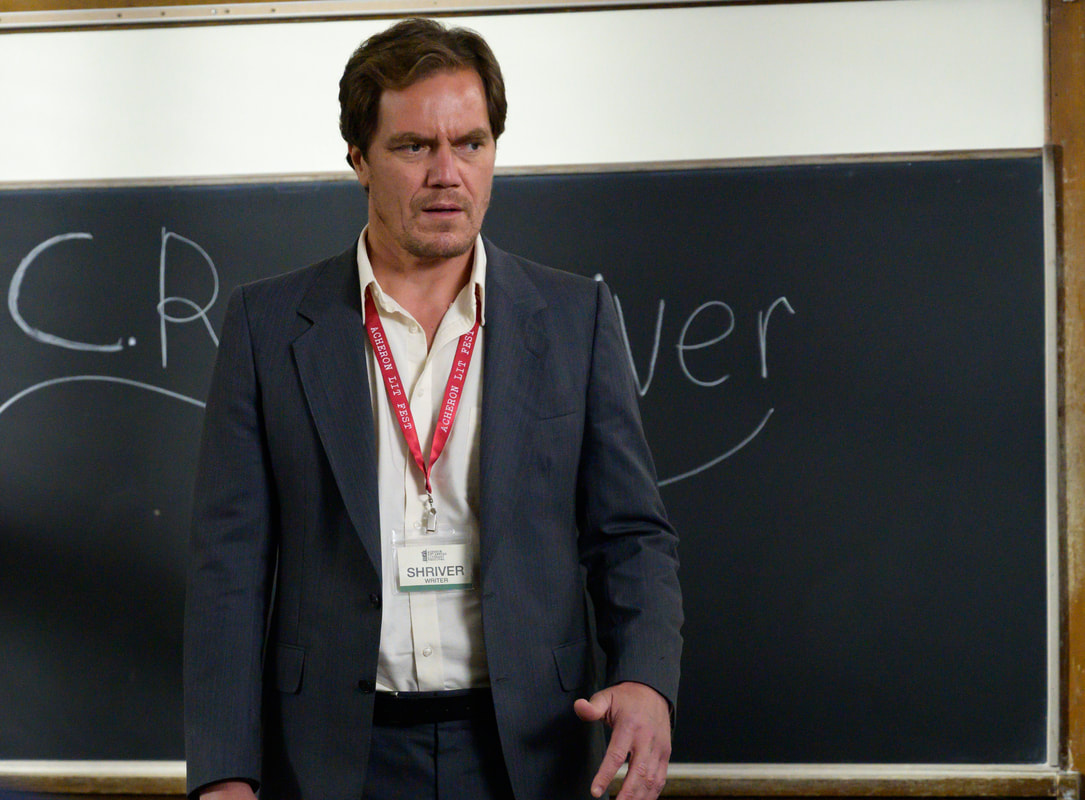 I am a big fan of films about or featuring authors. Adaptation, Barton Fink, Wonder Boys, and Misery are among my favorites. This small genre of film usually brings me a smile at the end of whatever film I'm watching thanks to their often whimsical nature. I didn't have any expectations, but A Little White Lie is another such film that brought me some delight. A lonely man, CR Shriver (Michael Shannon), who drinks his sorrows away with his buddy Lenny (Mark Boone Junior) at their local watering hole in New York City, gets a letter in the mail asking him to appear at a Literary Festival at Acheron University. He is mistaken for a popular author who's been in hiding for twenty years. The 92nd Annual Acheron Literary Festival hopes to feature him and his book Goat Time. He's not the real Shiver, or is he? He ends up going to the festival and tries to pass as this one-hit wonder of an author. The writer/director, Michael Maren, has assembled a good cast of character actors for this wild zany indie comedy. Simone Clery (Kate Hudson) is a professor and author in her own right. She welcomes Shriver in and befriends him. Don Johnson plays another professor who has a past with Hudson's character. He also believes in Shannon's character. Da'Vine Joy Randolph plays a fan of his he meets on an airplane, and he confides in her, and they also become friends. And Jimmi Simpson is a detective who tries to get to the bottom of a disappearance but helps solve another mystery instead. Everybody is very funny in their roles, and these people I mentioned are just the tip of the iceberg. 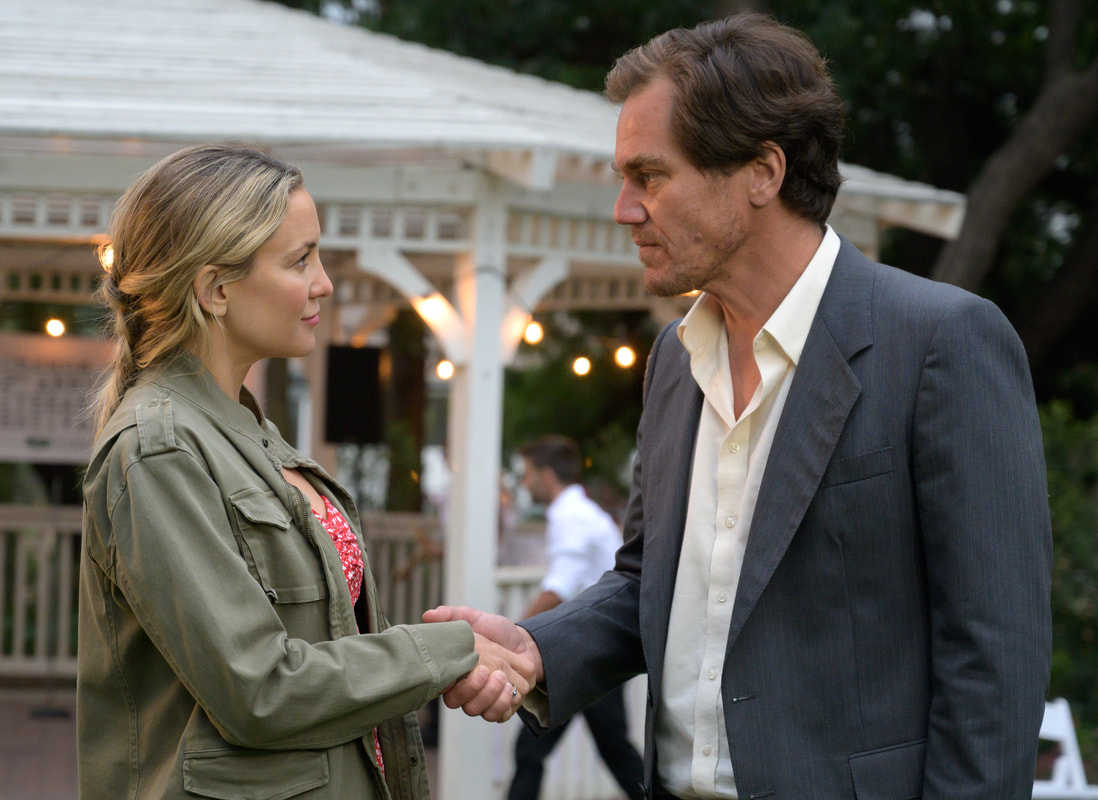 This film has a good premise. The story about a mistaken author is a pretty funny one for a movie. Shannon and the others go all the way to show viewers that he is who they believe him to be. Mystery abounds about whether this is true or not, and even an imposter comes out of the woodwork saying he's not who they all believe him to be. He himself doesn't believe he wrote his own book, so it's hard for anybody to believe in what's going on. That is what the charm of this little film truly is.
A Little White Lie is a fun movie with an interesting premise of mistaken identity or stealing someone's identity — depending on how one chooses to look at it. Shannon is very believable as this man who doesn't know if he is who these people think he is or not. He goes with it, though, and in doing so finds himself. He makes some new friends from the rest of the cast I mentioned and starts to believe in himself. The writer/director Merin balances a fine line between what is real and not, and how the viewers take his story is up to them. A Little White Lie hits theaters and VOD on March 3. Rating: 3/5
Review by Sean Boelman
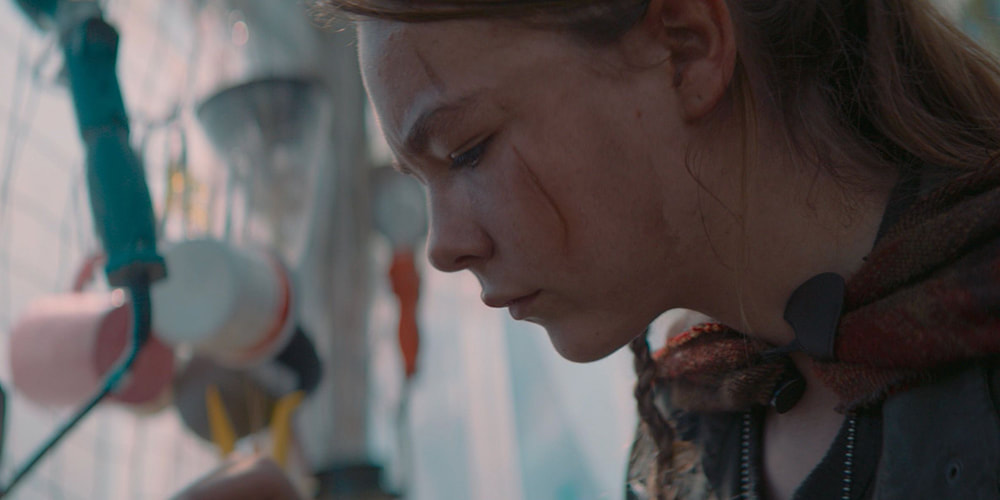
It’s always nice to see a film by an up-and-coming filmmaker and starring a cast composed mostly of unknowns. Unfortunately, these movies don’t always live up to their promise. The Park isn’t unwatchable, but that doesn’t mean that there is much of a reason to watch this largely underwhelming and underdeveloped dystopia.
The film is set in a near-present alternate future in which a virus has killed all of the adults on Earth, and several warring factions of children are left to fight for control. It’s a premise we’ve seen done a million times before, but filmmaker Shal Ngo’s vision seemed to be more fun and creative. In reality, it’s a carbon-copy of so many other works of cinema and literature with a similar premise. At a merciful 76 minutes including credits, it’s hard to say that the movie outstays its welcome, but it also hardly earns it. It feels like the first half of the first third of a sci-fi YA series. In other words, as set-up, it would have been passable; but as a self-contained feature film, it feels as if they ran out of money to make the third act. The character development is as weak as one would expect with such a short runtime. There just isn’t enough time for us to get to know the characters beyond their archetypes. It’s initially intriguing to see all of these archetypes that are typically applied to teenagers seen in younger kids, but this novelty wears off extremely quickly. 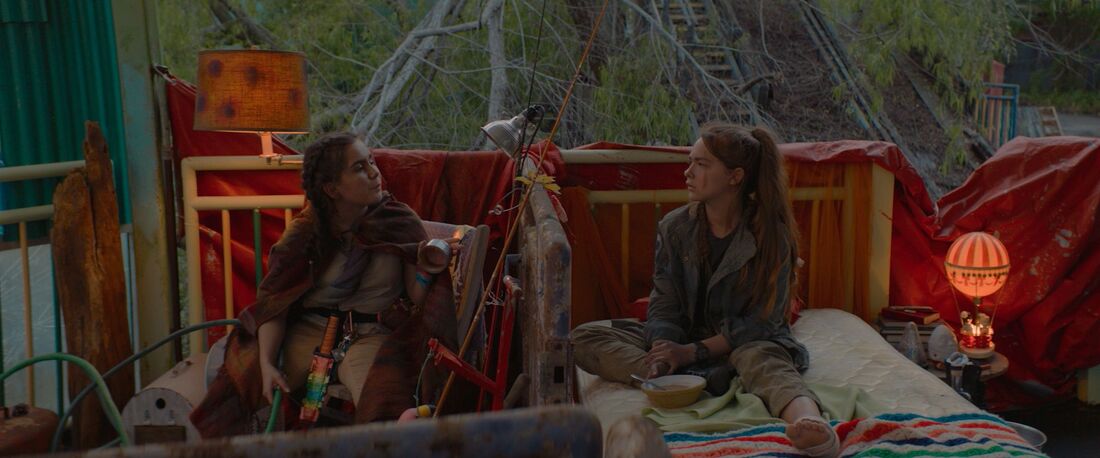
Ultimately, the biggest shortcoming of the movie is its dialogue, which is often borderline atrocious. Of course, no one comes to a post-apocalyptic film about a dystopia ruled by children to experience realism. However, it isn’t outside of reason to ask for something that at least resembles the sharpness of Lord of the Flies — even if it doesn’t come close to touching Salinger.
And while that may be the biggest weakness, the biggest disappointment is that the movie doesn’t do anything particularly interesting with its world-building. The setting is immediately compelling — a dilapidated amusement park — so for the film not to do anything with that potential is enormously frustrating. The story just as easily could have taken place in a cityscape, meaning that the post-apocalyptic world of the movie is entirely nondescript. The young actors do a decent job considering the caliber of material they are given to work with. Yes, the performances often feel like a more sick and twisted version of Disney Channel stars, but that seems to be exactly what Ngo is going for (and in some cases, that’s their actual background). Some of the performers, like Chloe Guidry and Carmina Garay, could have bright futures ahead of them. Thankfully, with it being as short as it is, it’s hard to fully hate The Park, if only because its pacing is so quick that you’ll never get bored. Still, it feels like a waste of potential due to its generic world and story that feels frustratingly incomplete. The Park hits VOD on March 2. Rating: 2/5 Review by Camden Ferrell 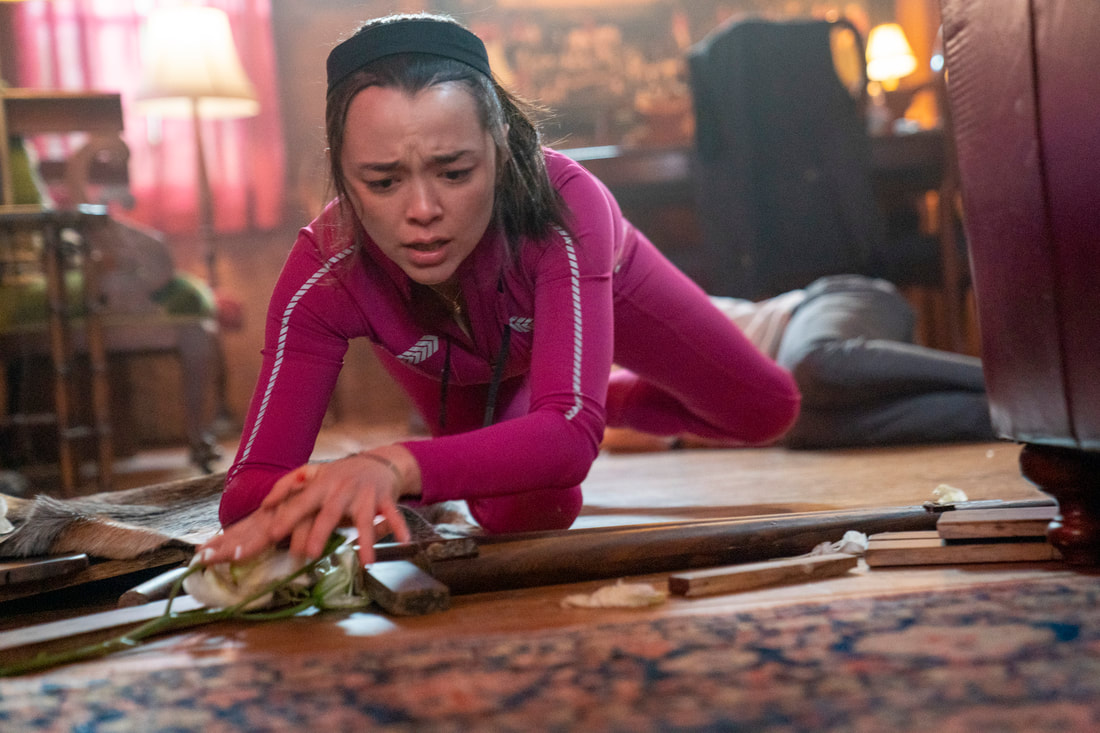 The circumstances surrounding a thriller movie are already frightening enough, but this intensifies when our protagonist finds themselves without one of their senses. This has been explored in movies like Hush and Bird Box, and Unseen is aiming to be another entry into this subcategory of film. In their feature directorial debut, Yoko Okumura delivers some exciting and brief thrills even if it is content to never test the limits of the genre. Sam is a jaded gas station clerk, dealing with rude customers and a faulty drink machine. One day, she receives a call from Emily, a nearly blind woman who is trying to run from her abusive and murderous ex-boyfriend. Left without her glasses, Emily must rely on Sam via video call to help her escape the forest before her ex can find her. This is a simple premise that isn’t complex but has an interesting angle to make for some creative conflicts and storytelling. Written by the relatively inexperienced duo of Salvatore Cardoni and Brian Rawlins, this movie has all the elements needed for an entertaining and somewhat mindless thriller. The dialogue is adequate and does the bare minimum in terms of exposition and character development. It may not be subversive with its plot, but it does have passion and genuine excitement for the premise, which is very interesting to see. It’s far from great, but this duo has a lot of potential, especially in this genre. 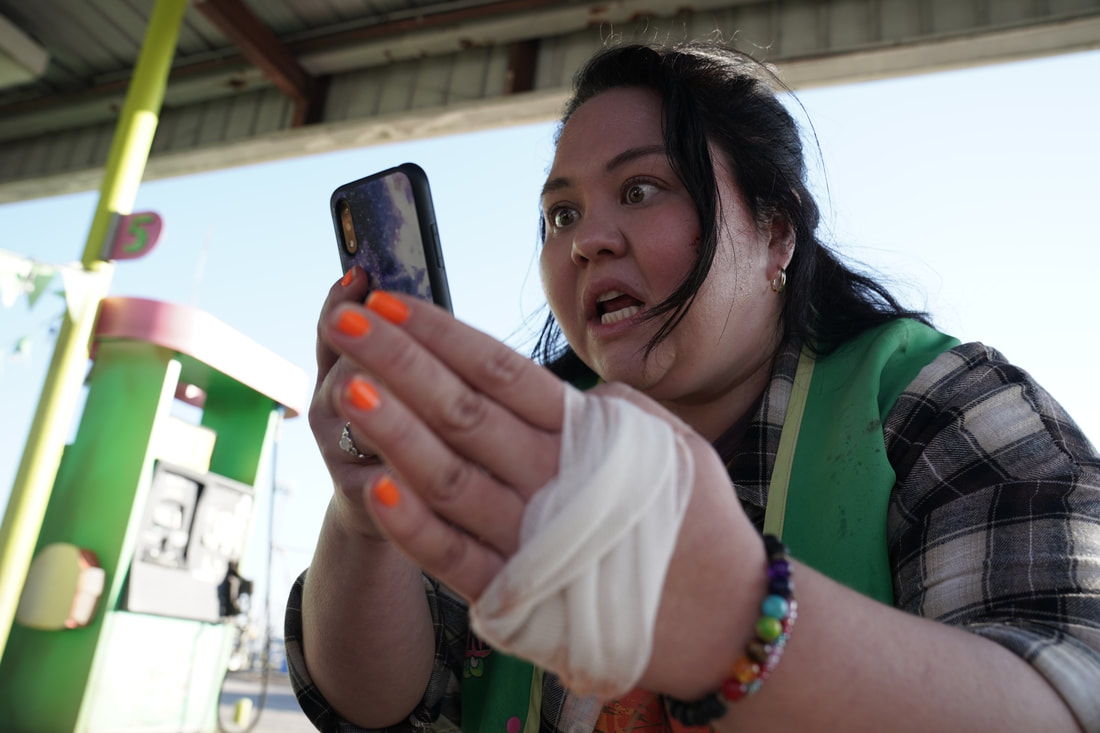 The cast is quite enjoyable too and does a lot of heavy lifting throughout the movie. The movie is co-led by Jolene Purdy and Midori Francis who play Sam and Emily, respectively. They have solid chemistry and are able to fit nicely within this genre. They’re able to convey strong panic, terror, and anxiety in an entertaining way, and they are usually fun to watch even when the movie might be lacking otherwise.
One of the highlights of this movie is Okumura’s execution of specific scenes throughout. They try and emphasize the interconnectedness of the two leads, and this is achieved through some really interesting editing. Clever split screens and great execution and timing create some cool moments that work on an aesthetic and more deep thematic level. More than anything, it looks great from a visual standpoint which helps amplify the quality of certain scenes in this movie. Unseen is very short and knows exactly when to leave before overstaying its welcome. A tad too predictable, playing safely within the confines of the genre, this is still an enjoyable thriller if you ever get a chance to watch it. Maybe not a cinematic priority, this is still a movie most general audiences can enjoy just for the thrills and narrative restrictions placed on its characters. Unseen is available on VOD March 7. Rating: 3.5/5 Review by Dan Skip Allen 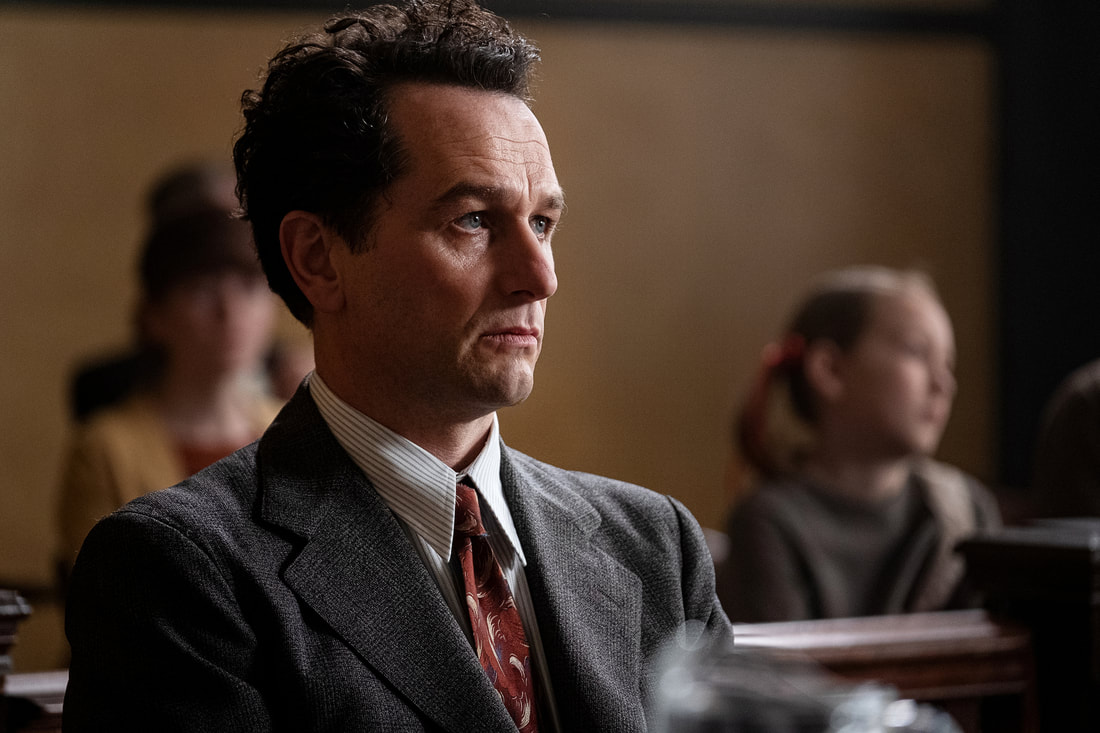 Photograph by Merrick Morton/HBO. Perry Mason was a law procedural that ran from 1957-1966, starring Raymond Burr. He reprised the role many times after that over the years. In 2020, Rolin Jones and Ron Fitzgerald, together with HBO, launched its version of Perry Mason, starring Matthew Rhys of The Americans fame. Coming in March, the second season of the acclaimed series kicks off with some great anticipation. When season two of Perry Mason kicks off, Perry (Matthew Rhys) has found himself doing general law. He and his associate, Della Street (Juliet Rylance), find themselves defending a grocery store owner against an ex-employee who supposedly stole company designs and secrets. He's not happy doing this, but it pays the bills. When a well-respected member of the community Brooks McCutchen (Tommy Dewey) turns up dead, two Mexicans are fingered for the murder. Their family members enlist the services of Perry and Della for help. They, in turn, ask a friend, Paul Drake (Chris Chalk), to help with this difficult investigation. Because of the era Perry Mason is set in, it has a vibe of film noir — a genre that has been popping up more and more lately. A new Philip Marlowe film starring Liam Neeson is out in theaters currently. Films like Chinatown, The Big Sleep, and The Maltese Falcon paved the way for shows like this. Season one was very good and had an interesting storyline. Season two is more in line with those classics I just mentioned, though, and that is more to my liking than the previous season. Matthew Rhys has proven he is a fantastic actor with his long run on FX's The Americans. His turn as Perry Mason is a bit different from that other starring role. He has a more unsure nature of himself about this character. This is before his more confident years in his previous series. He's still learning the law, and he has to rely more on his friends and associates and the instincts he used as a private investigator in previous years. Rhys changes direction as Mason, and it is fun to watch him in action. Sometimes, I'm a big fan of courtroom dramas or comedies. They just bring out dramatic things in films that make them better most of the time. This show is not like a television procedural, it has more of a cinematic feeling. Add in the film noir elements, and there is nothing like this series on television today. HBO and the showrunners, directors, and writers have created a show that takes risks and goes places unexpected for this type of series. Many story beats don't meet expectations — they exceed them. 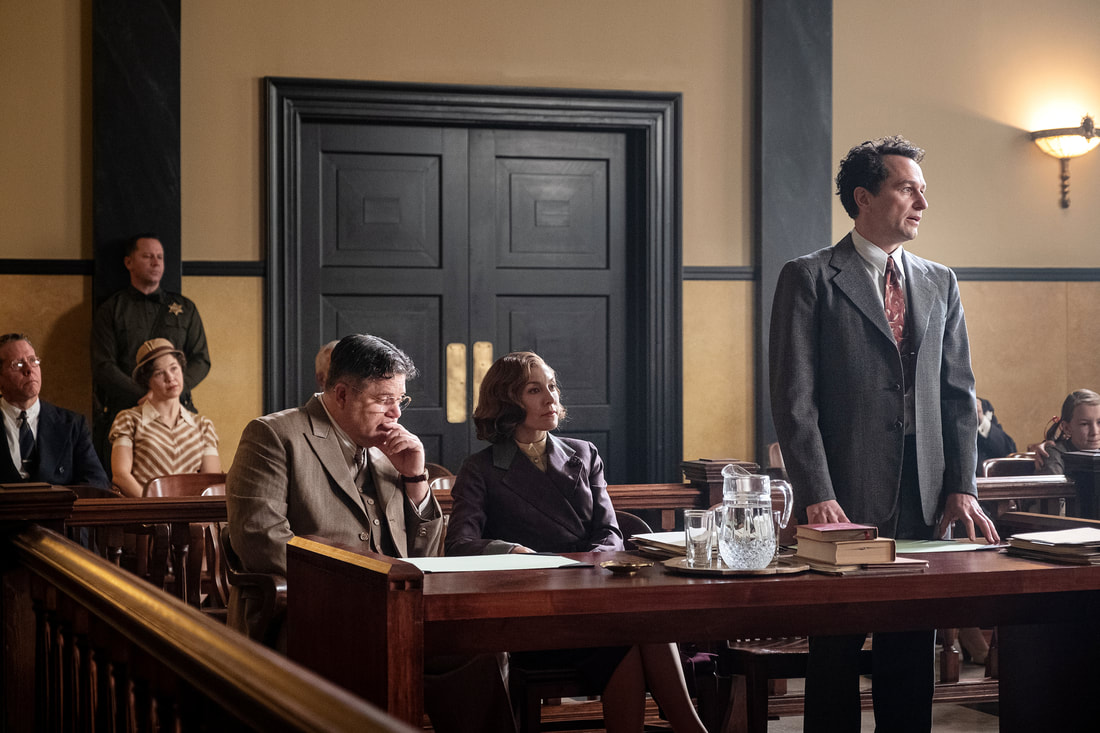 Photograph by Merrick Morton/HBO. This series has a good cast of characters. A few return from the previous season, but also some new ones. Shea Whigham once again plays both sides as a private investigator Pete Strickland for the district attorney, but he is also trying to keep his relationship with Mason. That is a hard thing to do in this climate. Oscar nominee for best supporting actor for Sound of Metal, Paul Raci, is the father of the deceased, Lydell McCutchen, but he has a mechanization of his own that may put him in the crosshairs of Mason and his team. Hope Davis, as Camilla Nygard, is a confidant and friend of Street, who relies on her wisdom about the town of Los Angeles and the men that run it. And Eric Lange returns as Detective Holcolm, who has a history with the deceased. This show has a stellar cast that makes it better with every episode.
As I mentioned, the film noir elements of this series are some of the best things about it. They add mystery and suspense where needed. With the investigative side of the show, the legal drama is set in 1930s Los Angeles, based on novels and short stories penned by Erle Stanley Gardner. They mix well with the film noir elements. These are the two main parts of how and why these types of shows and films work. There is a style and formula of film noir that fits perfectly into Perry Mason. I loved what they did with this show. Perry Mason mixes some great elements of film noir investigative work and a courtroom drama, and seamlessly creates a fantastic season 2 of this acclaimed series. The cast is filled with terrific character actors doing some of the best work of their careers. The star that never ceases to amaze with his range as an actor, Rhys, gives viewers watching this series a believability factor that he has embodied this lawyer who may be in over his head time and again, but never compromises his beliefs and fights for his clients. This is a character and actor viewers can and should get behind. This show also adds some other elements in subplots that are eye-opening for me and fans watching at home on their television screen. I want to see this series continue, and I hope the creators continue to break ground with the directors and people involved behind the scenes. These different visions aren't compromised by anything going on in the world. Perry Mason debuts on HBO on March 6 at 9pm ET/PT, with new episodes airing subsequent Mondays. All eight episodes reviewed. Rating: 4.5/5 Review by Jonathan Berk 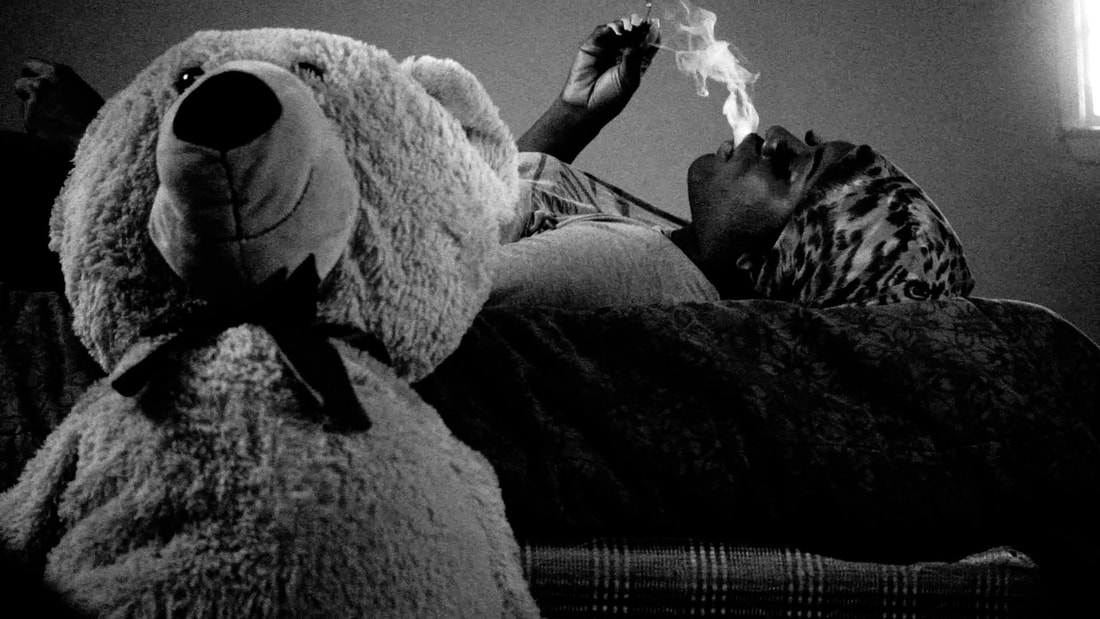 Gerardo Reyes as adult Sansón in Rodrigo Reyes' documentary SANSÓN AND ME. Courtesy of Cinema Guild. Sansón and Me is a documentary by filmmaker Rodrigo Reyes exploring the life of a young man named Sansón, an undocumented Mexican immigrant sentenced to life in prison without parole. Reyes met Sansón at his day job as a Spanish criminal interpreter in a small town in California. The director is sad to see someone so young lose the rest of their life because of a choice, and wants to learn his story. Reyes isn’t allowed to interview him because of Sansón’s circumstances, but for years the two exchange letters that morph into recreations of his childhood — many featuring members of Sansón's family. The process of making this movie is at the center of bringing up ethical questions of the genre and the role of art with legacy. Whether it's tiny paintings on a vase, sprawling cave walls, or more modern moving pictures projected on silver screens, our stories have been passed on for generations through visual mediums. The collection and passing on of stories, no matter how big or small, seems to be a fundamental element of humankind. Reyes seems motivated to not let Sansón’s story be lost to the sands of time as another cog in the prison system. However, the film suggests the audience ponder the moral implications and responsibilities that Reyes takes on by telling Sansón’s story. In one of the early letters, Sansón questions Reyes’s motivation to tell this story. Reyes cautions that this film is unlikely to help Sansón get out of jail or help his case. While filming the recreations, Reyes notes the stress it is putting on Sansón’s family for many reasons. The obligation of the filmmaker to help the subject or at least do no harm is definitely at the forefront of this film, as it blends the process with the final product. There is no definitive stance taken, but it leaves the audience with something to chew on as they walk away from the experience. 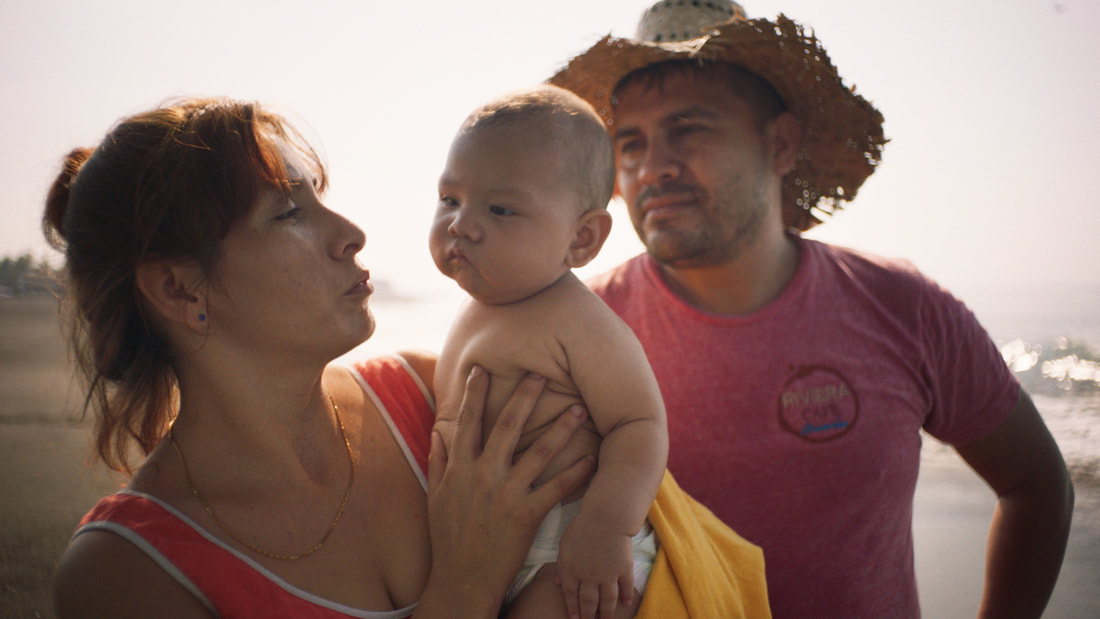 Miguel Andrade as baby Sansón in Rodrigo Reyes' documentary SANSÓN AND ME. Courtesy of Cinema Guild. Regardless of where you fall on the aforementioned debate, there is no denying the power of storytelling. History teachers across the land are known for saying some version of “those who forget the past are doomed to repeat it.” That phrase is predicated on the idea that we knew things to forget in the first place. However, what if you never knew about it? How many people have walked a similar path to Sansón and ended up with a life sentence or death? Reyes seems motivated by these questions to capture Sansón’s story. He doesn’t seem to want to pass judgment on the actions of the people in the film, but rather etch their existence into the ever-growing tapestry that is human history. He presents the information in interesting ways while turning the camera on himself, and the weight of responsibility in taking someone’s story.
Audiences looking for a true crime documentary won’t likely satisfy that itch with Sansón and Me, but those compelled by the never-ending struggle that is life will. Fans of filmmaking and documentary will appreciate the peek behind the curtain and the ethical debate about a filmmaker’s relationship to the subject. Reyes has an innate kindness about him, and his motivations seem genuine. He can also demonstrate his talent for narrative filmmaking through his recreations, and he is a director to keep an eye on for future projects. Sansón and Me opens in theaters on March 3. Rating: 3.5/5 Review by Joseph Fayed 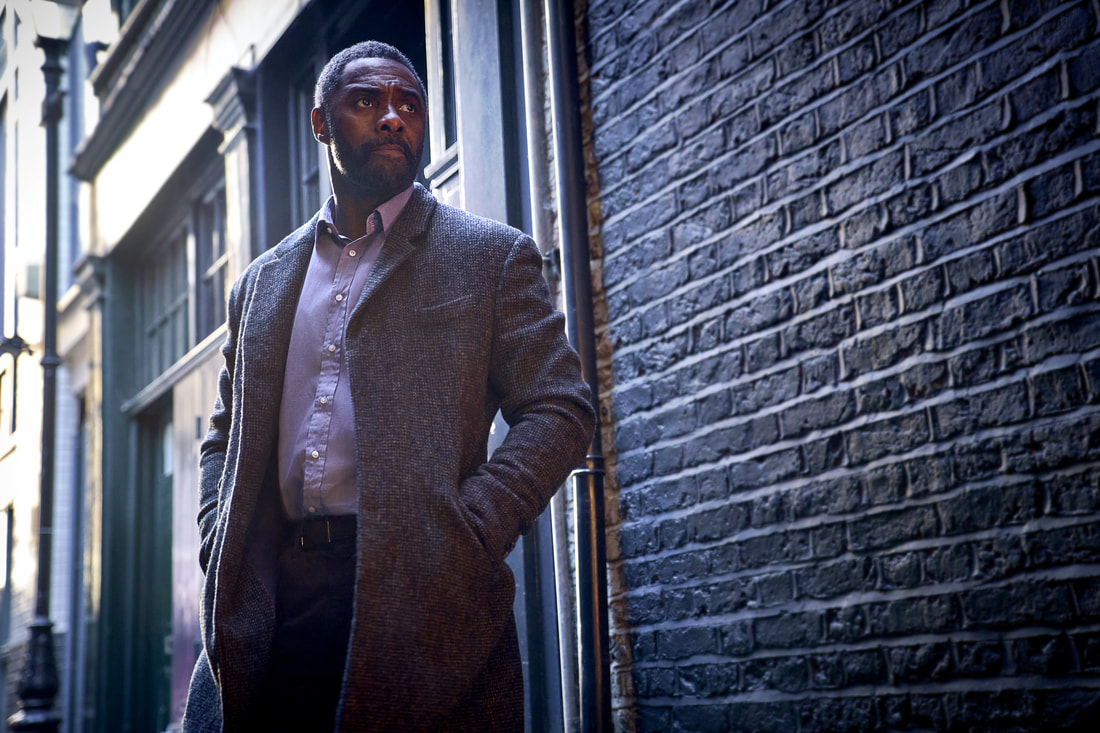 Idris Elba as John Luther in Luther: The Fallen Sun. Credit: John Wilson/Netflix © 2023. Continuing a beloved television series as a film carries some risks. In the case of the BBC series Luther, season long mysteries being condensed into just two hours for Luther: The Fallen Sun has its shortcomings, but the heart and soul of the series still feels very much alive. Following the events of season five of Luther, DCI John Luther (Idris Elba) returns in a very different environment than where we have seen him before, as an inmate behind bars. Meanwhile, a sadistic serial killer is on the loose, and when the killer begins to taunt Luther, he hatches a plan to escape prison and do what he does best, bring a killer to justice. At its core, the film feels like how the television series would play out. The main antagonist does the unthinkable, and as their motives get revealed, Luther, aided by his allies who become increasingly wary of him as time goes on, pursues the killer. The running theme between both is that John Luther puts his job before anything else. Luther's commitments and how he can't easily move on from any case are the best part of his character, and allow for a cat and mouse game between him and whichever killer he's facing off against. It is good that the film ultimately stuck to the roots of what worked about the series and didn't try to make a soft reboot of sorts. 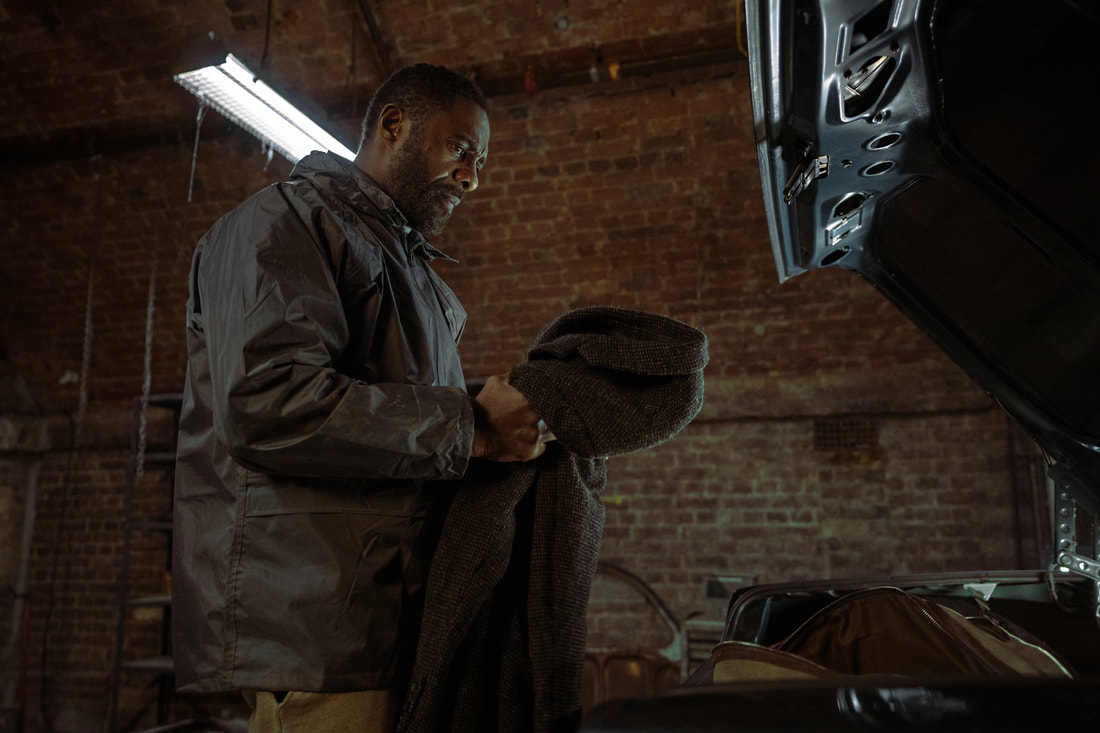 Idris Elba as John Luther in Luther: The Fallen Sun. Credit: John Wilson/Netflix © 2023. Idris Elba is as good as always, again donning his signature coat as DCI John Luther. He allows Luther to be afraid of nobody, but he can easily identify and calm the fears of others. Elba's acting serves as a good reminder that John Luther is a detective for a reason. Andy Serkis, who plays the tech billionaire turned serial killer who Luther goes after, unfortunately doesn't lean into how sadistic and unapologetic he could be. It may be due to time restraints of the film, but I wish there was much of him being unremorseful as there was of him committing heinous crimes.
Anyone eager to see the return of John Luther should give Luther: The Fallen Sun a watch. While almost none of the previous plot lines from season five of the BBC series are addressed, the start of this new story is not very different from how each of the previous seasons have begun, with a killer on the loose. Although the tactics and criminal pursuit that normally draw detectives and killers together tend to be overshadowed here, Luther: The Fallen Sun does one thing the series did right: include lots of Idris Elba. Luther: The Fallen Sun is now playing in theaters and hits Netflix on March 10. Rating: 3.5/5 Review by Dan Skip Allen 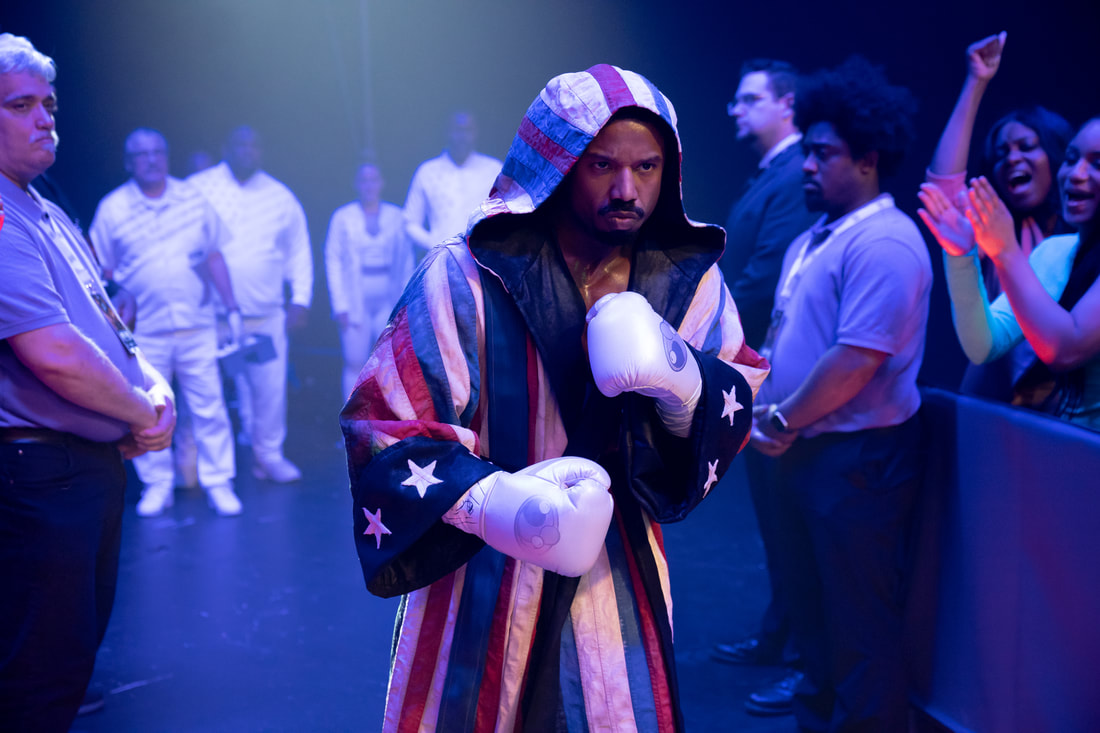 Michael B. Jordan stars as Adonis Creed in CREED III A Metro Goldwyn Mayer Pictures film Photo credit: Eli Ade. The Rocky franchise is considered one of the most successful franchises in film history, with five sequels to the original film, written by and starring Sylvester Stallone. The inevitable spinoff series was created to capitalize on the popularity, and most importantly, to make money for MGM. Stallone was fazed back into the story, with Ryan Coogler coming off of his breakout hit Fruitvale Station. He cast his young star Michael B. Jordan in the lead role as the estranged son of deceased legend Apollo Creed (Carl Weathers). With Sallone's Rocky as his mentor, and this franchise was off and running. Fast forward eight years later, and Creed III is coming out in theaters, once again starring Jordan as Creed, but this time he's also making his directorial debut. Adonis Creed (Michael B. Jordan) is again fighting the same fighter from the last film, but when he eventually wins another championship fight, he does the sensible thing and retires as the champ. He wants to spend more time with his wife Bianca (Tessa Thompson) and daughter Alana (Mila Davis Kent). Out of the blue, an old childhood friend — Damien "Dame" Anderson (Jonathan Majors) — returns, bringing back memories of a past that he would just rather forget. The problem is Anderson isn't in the forgetting mood because he spent eighteen years in prison and his future is now. This causes a rift between these two childhood friends. The Creed franchise has taken on a life of its own, and with Coogler writing and Jordan directing and starring in the latest installment, there wasn't much room for Stallone anymore. That's not a problem, though. These two have taken what they learned from the previous installments and made another stellar film that pulls on the heartstrings, as films in these franchises tend to do. This movie has a lot of emotional heft that these films are famous for. They are also famous for having contrivances that cause the most dramatic moments in many films in both franchises. This one is no different, with a major contrivance that changes the trajectory of where the story started and where it ended. It's not bad, it's just normal for these films. Fans of the franchise should expect this though. Jonathan Majors has had three films come out in the last four months, with Creed III being his fourth in five months. If audiences haven't discovered him by now from Devotion, Ant-Man and the Wasp: Quantummania, and his indie Sundance film Magazine Dreams, they are missing out. This character might be the most nuanced of the bunch. He uses the anger of being in jail to fuel his rage, and creates an inner-city accent to go along with it. His character is from the Crenshaw section of Los Angeles and has a chip on his shoulder. He feels left behind and forgotten, while Jordan's Creed went on to success. That would fuel anyone's return. Majors once again kills it in this role. He seemed to be born to play this character. With Jordan in the director's chair, there were bound to be some hiccups. He learned the craft from working with Denzel Washington, Destin Daniel Cretton, and of course his previous director of three films, Ryan Coogler. He chose to do a few things that were out of the ordinary with this movie. One of which I think was a lucky mistake, and that was turning the climactic fight into some kind of existential journey of self-discovery for the main character. A timelapse sequence was inserted, maybe by mistake, due to the COVID-19 outbreak creeping its ugly head into the production of the film. This actually worked well for the climax of the film. It showed the binds and mindset of where these two main characters were coming from. A series of flashbacks was another decision that was used to good effect to set up this rivalry. It gave the viewers backstory on these two, once childhood friends, now bitter enemies. 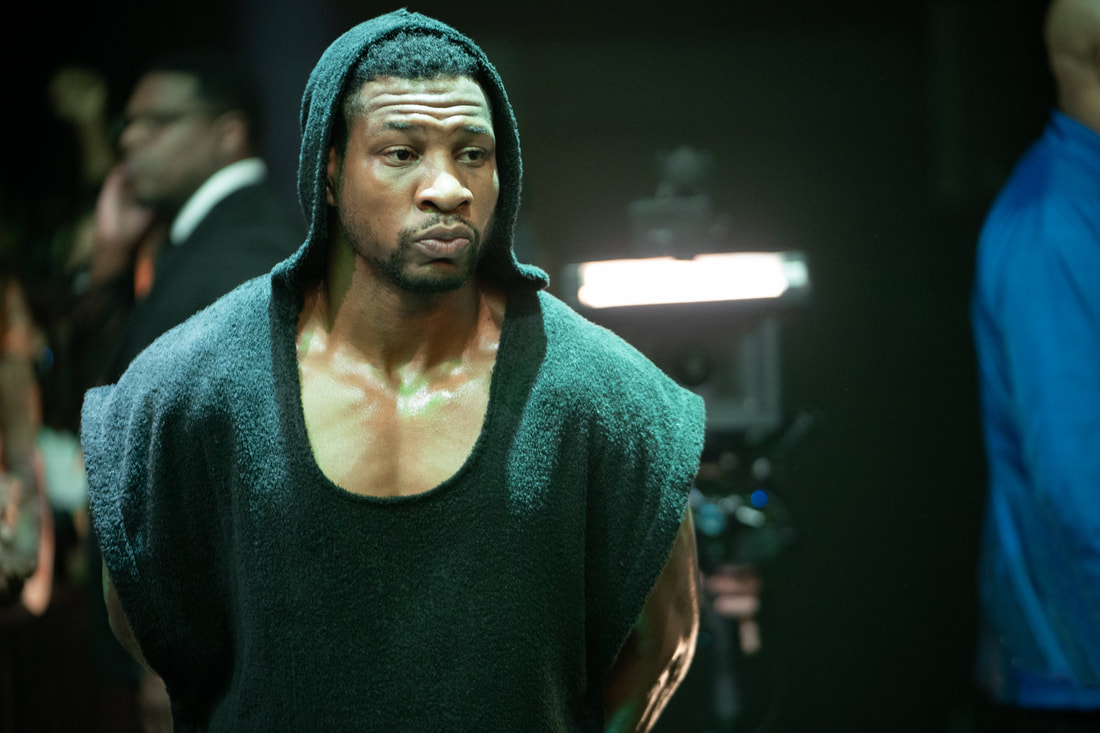 Jonathan Majors stars as Damian Anderson in director Michael B. Jordan’s CREED III A Metro Goldwyn Mayer Pictures film Photo credit: Eli Ade. If the main story taking up the bulk of the film by Coogler and Jordan wasn't enough, they also throw in a few subplots that put the dramatic tension to an all-time high. One of them worked, while the other did the mistakable job of putting the cart before the horse. Many franchises (the Fast & Furious franchise comes to mind) do this, and it's not necessarily wrong to set up sequels or spin-offs, but nobody knows how this movie will do. Setting up more films before this one is released is a mistake. These characters have been proven to be very popular, so I understand trying to capitalize on that popularity. The profitability will surely be there. MGM has to learn from past mistakes of other film companies like Universal, whose Dark Universe we all know the fate of.
One of the things I've always loved about the Rocky and Creed franchises is the emotional weight these films have. As a viewer, they bring out moments that can get a tear or two flowing from the eyes. This movie does that. Whether it's the rivalry of these two once-childhood friends or the relationship between husband and wife, these stories never cease to pull at the heartstrings. We can't help but be emotionally tied to what we're seeing on screen. Many people can relate to the struggle of Majors's character in some way, but they have also gone through similar tragedies and emotional trauma Creed is going through. It's just how life is sometimes. Whether it's Sylvester Stallone or Michael B. Jordan, both actors seem to have been made for these characters. And audiences keep coming back for more and more. With everything else going on in this movie, the thing that almost gets lost in the shuffle is the technical aspect. Jordan filmed this third installment in the Creed franchise with IMAX cameras. He wanted to get the people watching to be invested in the fight scenes. That being said, I wasn't able to see the film in the proper aspect ratio to get the full effect of that. What I saw though was very impressive, and I can only imagine how much better this would have come off had I had the opportunity to see it in an IMAX theater. Creed III is a joyous, thrilling film that pulls on the heartstrings while also being dramatic. Coogler and company balance the story and layer it well. It gives everybody involved many moments to shine. That being said, Majors is again the standout in another big franchise tentpole film. He brings an emotional heft that this movie needed to get the audience behind the title character. His acting lately has been off the chain, and he seems to have no ceiling regarding his acting ability. This movie will be a huge success, and my minor quibbles with a few things won't matter to the layman, who will flock to see this third installment of a franchise that seemingly will never go away. I hope they keep making films like this one, and I'll keep coming back time after time. This is an achievement in popcorn filmmaking by Jordan, Coogler, Majors, and the entire cast and production involved. Creed III hits theaters on March 3. Rating: 4/5 Review by Tatiana Miranda 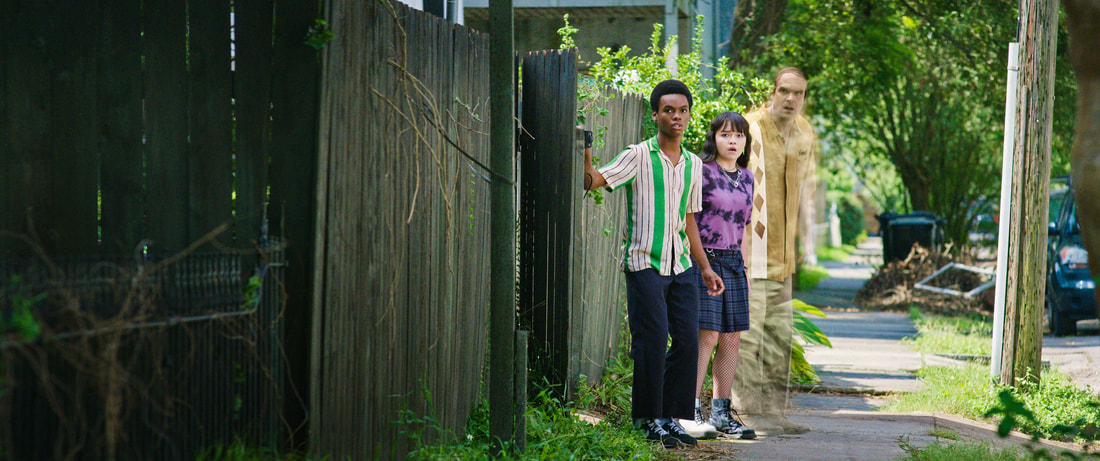 (L to R) Jahi Winston as Kevin, Isabella Russo as Joy, David Harbour as Ernest in We Have A Ghost. Courtesy of Netflix © 2022. Christopher Landon is notorious for his campy supernatural and slasher films, including Happy Death Day and Freaky. With his new film, We Have a Ghost, he attempts to reach a younger and more family-friendly audience. We Have a Ghost is full of well-known names such as Anthony Mackie, Jennifer Coolidge, David Harbor, and up-and-comers Jahi Di'Allo Winston and Niles Fitch. Inspired by the Vice short story by Geoff Manaugh, the film's plot is more silly than spooky and full of modern social media references. From TikTok to Twitter, social media fame is at the center of this supposedly E.T.-inspired story. As most haunted house stories begin, the film opens as teenager Kevin's family moves into a decrepit old home. Moody and almost perpetually listening to music, Kevin is a clear outsider in his own home. His dad questions his music choices, his brother looks down on him, and his mom tries to stay uninvolved. Between Kevin's inability to fit in and his family's financial issues, the move is seen as a desperate plea to make things right. In some ways, they got what they asked for in discovering a ghost in their attic named Ernest. Soon, Kevin discovers that Ernest doesn't remember his previous life, and they must work together to uncover his past in order for him to move on. This plan is derailed when Kevin's dad and brother find out about the ghost and attempt to monetize his existence. Quickly, Ernest reaches internet fame and is memorialized through memes and fan art. Even after run-ins with famous mediums and government officials, Kevin continues sleuthing so that Ernest can stop living as a ghost. 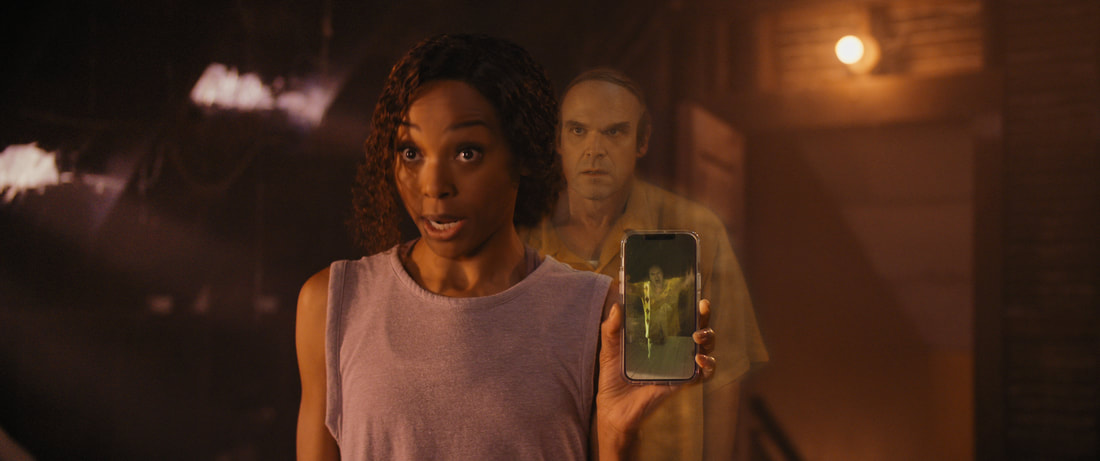 (L to R) Erica Ash as Melanie, David Harbour as Ernest in We Have A Ghost. Courtesy of Netflix © 2022. In interviews, Landon stated that he connected with the story for nostalgic reasons as it feels similar to E.T. While points can be made for that comparison, We Have a Ghost feels more like a Beetlejuice rip-off as both feature abnormal teens befriending ghosts that their parents try to monetize. While both are about parental relationships, the main difference lies within the more superficial notes that We Have a Ghost tries to hit, such as social media and even race, which is an interesting choice for a movie written by a white guy.
Overall, We Have a Ghost is in the same vein as the rest of Landon's films, as they are often easily forgettable and lack any real personality. Some of the main characters, mainly Ernest, Kevin, and Kevin's father, Frank, have the potential to be interesting, multi-dimensional characters, but instead, they fall flat against the jumble of plot points and action sequences. We Have a Ghost begins streaming on Netflix on February 24. Rating: 2/5
Review by Sean Boelman
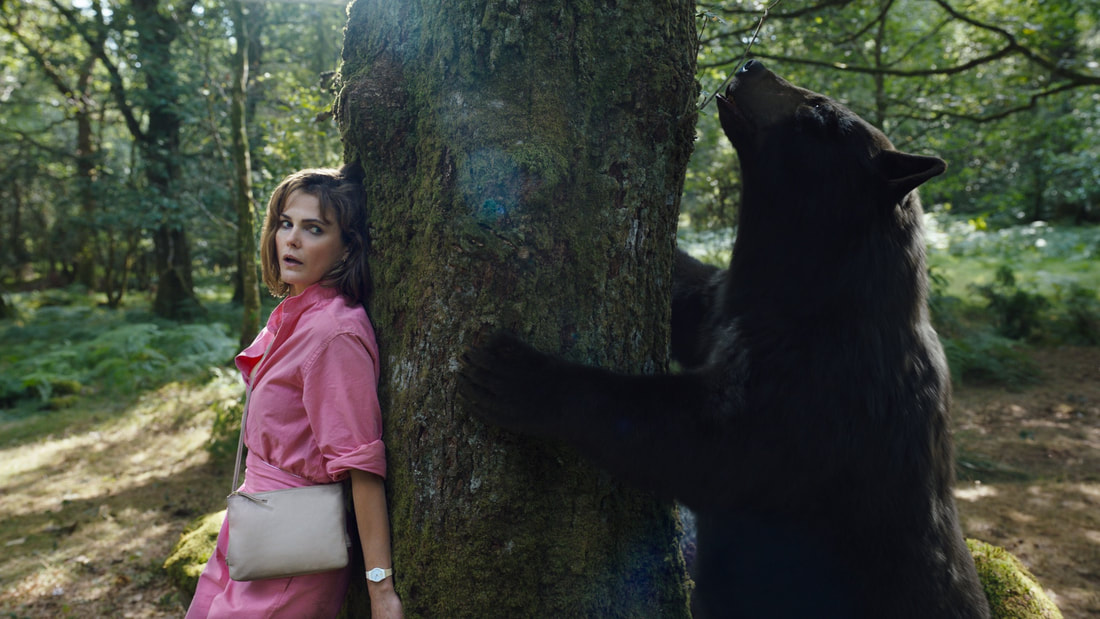
Keri Russell as Sari in Cocaine Bear, directed by Elizabeth Banks. Photo Credit: Pat Redmond/Universal Pictures.
The premise of Cocaine Bear is so insane that it became a major news story when this movie was greenlit. The final product is pretty much exactly as one would expect — a fast-paced ninety-minute comedy with plenty of absurd dark humor but not much substance to build beyond its central conceit.
This is the type of movie where the title is very self-explanatory. A bear finds cocaine in the woods, and goes on a rampage, sparing no one who gets in its way. Audiences know exactly what they are signing up for when they purchase a ticket to see this film, and it delivers on the promise of insanity. There’s no denying that the concept of this movie is pretty amazing in a purely campy way. It takes the stranger-than-fiction true story — a headline so wild that it feels like it came out of The Onion, but is somehow actually true — and makes a genuinely enjoyable (if overstuffed and shallow) creature feature out of it. The film is at its best when it embraces the lunacy of the premise. Much of the humor is pure shock value, whether it be from the bear being on cocaine or the younger actors doing something beyond their maturity, but it’s still very funny. Unfortunately, many of the best moments are shown in the trailers, but there are still a few very funny surprises in store. 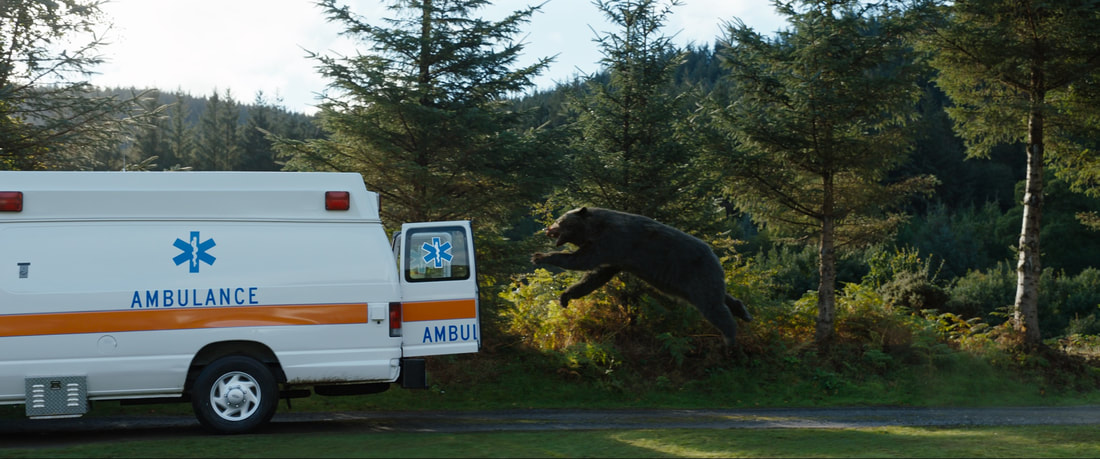
Cocaine Bear, directed by Elizabeth Banks.
There are also some horror elements in the movie that are quite well-done. Of course, everything is made with tongue firmly in cheek, but it’s clearly influenced by classic creature features. The gory practical effects, in particular, are used impressively both for comedic and disturbing effect.
Of course, the central bear is made using CGI, and it’s surprisingly very good. In a few of the closer shots, it becomes clear that the bear is fake, and some of the motion is a bit uncannily smooth, but it’s never particularly distracting. In fact, they do a very good job of making the bear emote, giving it more characterization than “bear on coke.” The big shortcoming of Cocaine Bear is that its human characters simply aren’t interesting. Throughout the runtime, we meet several groups of characters that we are meant to empathize with — including the drug dealers attempting to recover the cocaine, the cop chasing them down, a mother looking for her daughter lost in the woods, a love-struck park ranger, and more. Although the ensemble is great — Margo Martindale and O’Shea Jackson Jr. are particularly hilarious highlights — viewers won’t really care about their characters’ fates. Ultimately, any part of Cocaine Bear that features the eponymous creature is pretty great, and anything focused on the human characters is substantially less interesting. Still, it’s an entertaining and fittingly bonkers horror-comedy, and at a brisk ninety minutes, it’s hard not to recommend this for a good laugh. Cocaine Bear hits theaters on February 24. Rating: 3.5/5 |