
|
Review by Sean Boelman
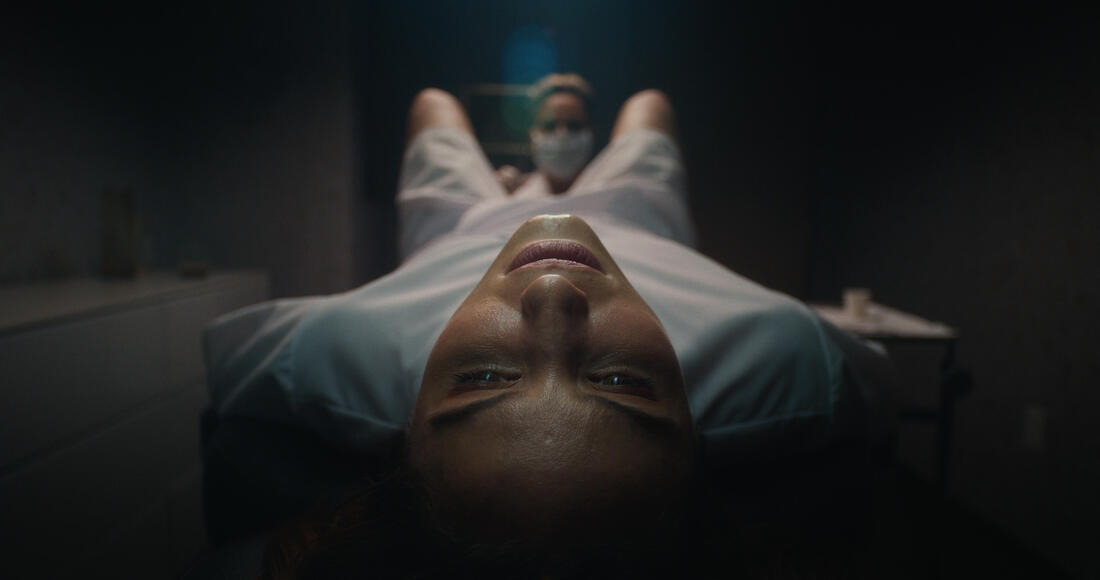
Clock is the second film to debut on the festival circuit that is adapted from a short on Hulu — the other being Appendage — and it suffers from many of the same issues. Underdeveloped and flawed, but still intriguing thanks to a solid concept, Clock may be satisfying enough to please some genre cinephiles.
The movie follows a woman who agrees to participate in a clinical trial in a desperate attempt to restore her biological clock, only to find that there may be a more substantial cost than she thought. It’s a concept that shows a ton of potential, but it’s developed in a way that leaves something to be desired. It feels like it’s an expansion of a short film — with a bunch of ideas that feel stretched way too thin. For the most part, the themes in the movie are aggravatingly conventional. It’s another horror movie about motherhood and femininity, and while these topics often make for interesting genre pictures, this one frustratingly feels content with the bare minimum. The things that the film has to say about conformity are more interesting, but feel underdeveloped. Yet despite having an undeniably interesting concept, this does not amount to much in terms of compelling characters. The protagonist is unfortunately rather generic, and while her internal journey is authentic, these same themes have been explored in other movies much better before. It also doesn’t help that her relationships with supporting characters are also underdeveloped, eliminating that as a method of characterization. 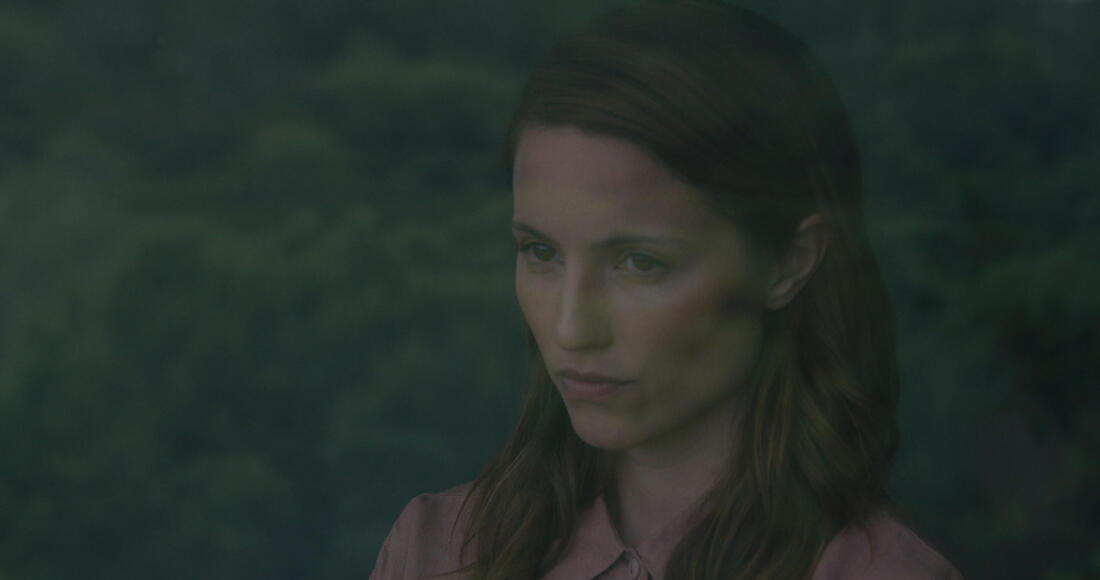
That being said, although the character she is given is somewhat thin, Dianna Agron’s performance is extremely strong. She brings a lot of empathy and emotion to a role that we’ve seen dozens of times before. No one in the supporting cast is given a particularly meaty role either, but Melora Hardin and Saul Rubinek do a good enough job for what is asked of them.
One of the more frustrating things about the film is that it lacks consistency in its level of severity. For the most part, the movie is made up of PG13-level scary images, and then — all of a sudden — there is a full-on shot of a mutilated d*ck. Because the film is such a slow burn for much of it, the shocking moments like this aren’t all that effective. It’s also disappointing that the movie struggles to find a balance between its different subgenres of horror. There’s obviously a lot of body horror in the premise, but it also has psychological aspects in that the protagonist is questioning her own reality. It’s a dynamic that should go together very naturally, but doesn’t add up here. Clock is yet another horror film that shows a ton of potential but doesn’t fully deliver. Alexis Jacknow is certainly an interesting new voice in filmmaking, and it will be exciting to see what she does with a more fleshed-out script. Clock is screening at the 2023 Overlook Film Festival, which runs March 30-April 2 in New Orleans, LA. Rating: 2.5/5
0 Comments
Review by Joseph Fayed 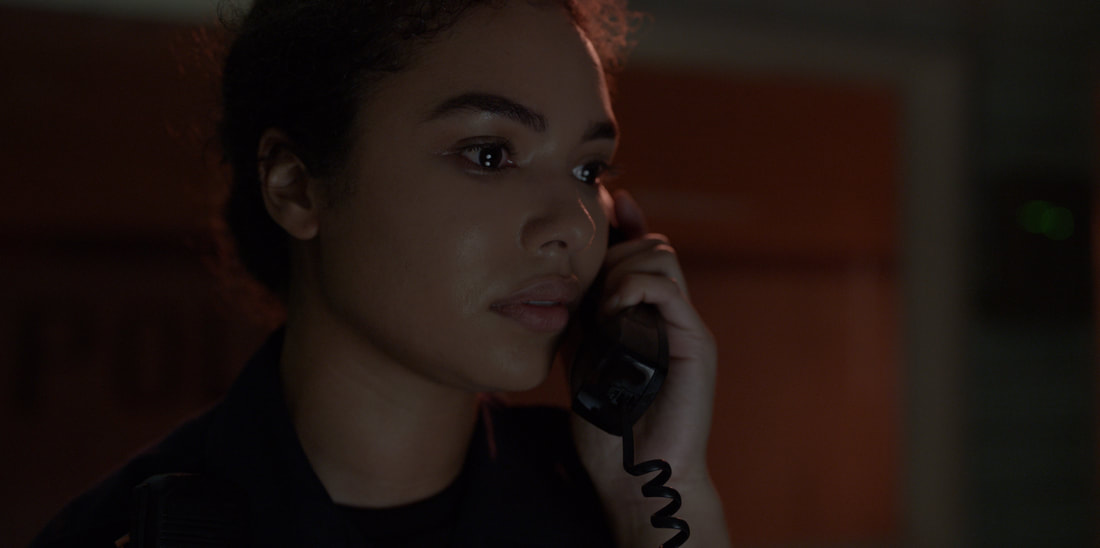 Cinematic depictions of the Devil that revolve around Devil worshipers trying to perform a ritual are a tale as old Satan himself. Malum is the latest example of that, and without any real suspense or interesting gore, it stands out in a negative light compared to its predecessors. The plot follows Jessica, a rookie police officer working the night shift alone at an unoccupied police station. Her father worked there a year prior, and before his tragic death, he had exposed the brutality of a local Devil-worshiping cult. Over the course of one night, Jessica learns more about the cult her father had investigated, and discovers that she only knew the surface of the story behind what happened to her father. This film is a remake of the director's previous film, Last Shift, from 2014. I have not seen that, but I can't imagine the story has anything else to say that would prompt a retelling of it — especially when it comes to the protagonist Jessica, who is given very little to do in the first half of the film. A remake like this should be welcoming to more shock and awe than the original, but it seemed like it relied too much on what may have scared fans of the original in 2014 without adding anything of value. 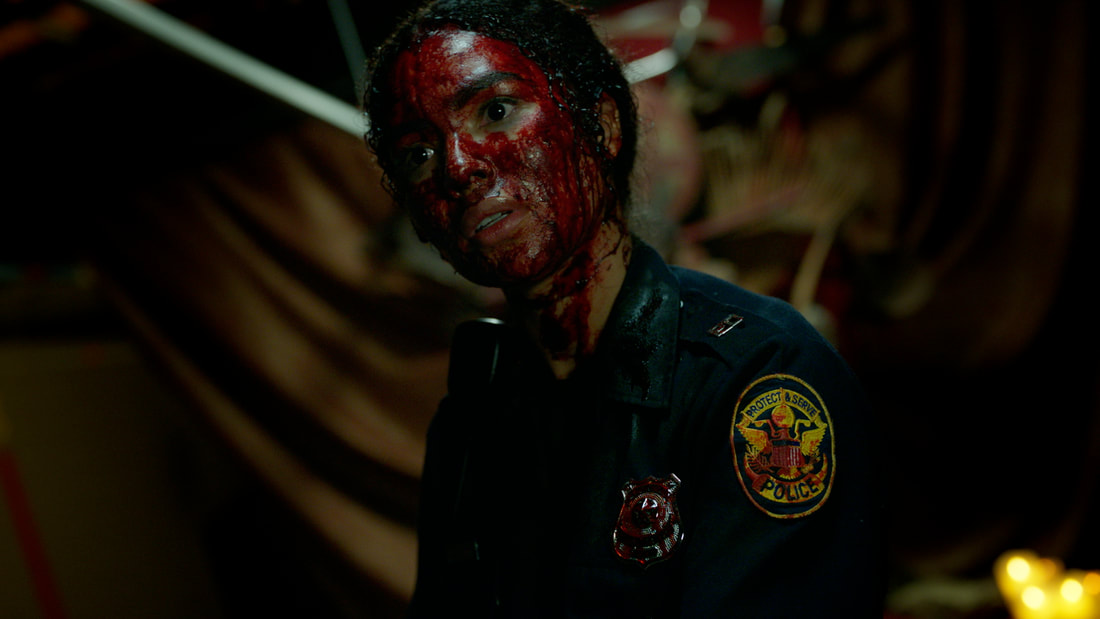 The idea that Jessica's father may have kept a secret from his daughter is not as fleshed out as it should be. Her father's background proves key to the story, but dialogue alluding to a dark secret her father kept is mostly ignored. I could see this working had there been a big third act reveal meant to shock the audience, but from what we are told, the writing is on the wall.
The performances of the cast tend to be below average all around. Our lead Jessica puts emphasis on panic in satanic panic, but her character seems too claustrophobic to her surroundings to be a standout. The supporting actors may have read one chapter of “Helter Skelter” as inspiration for their roles, and just ran with it. Malum has Satan worshiped by many characters. Its biggest flaw is that it doesn't bother to answer why or how many of them worshiped Satan. It also doesn't bring together the worshipers with the story's protagonist effectively. Lame kills can't even save this film from being anything other than a bloody mess. Malum is now playing in theaters. Rating: 1/5
Review by Sean Boelman
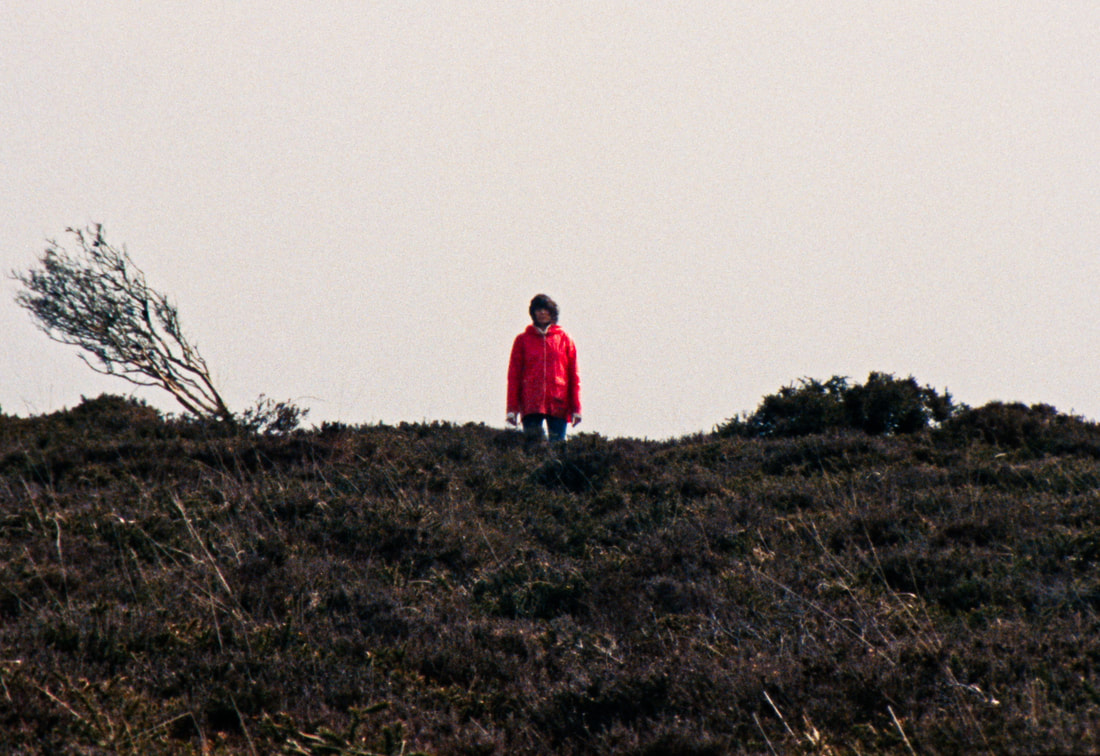
Recent years have seen more experimental horror and genre-adjacent films receive a large platform and wide theatrical releases. Mark Jenkin’s Enys Men has the backing of cinephile-favorite indie studio NEON, and while it is too experimental for most audiences, its niche will certainly enjoy its unique
The film follows a wildlife volunteer who observes a rare flower daily on an uninhabited island off the Cornish coast, only for her daily routine to begin to affect her psyche. There are a lot of comparisons that could be made as to the vibes that Jenkin is going for, and yet the film still feels entirely idiosyncratic. It’s hard to even describe the film as a slow burn, because it is so experimental and ambiguous that it barely moves along. Although the film has been billed as “art horror,” doing so seems unfair because someone will see the nautical setting and immediately expect something akin to The Lighthouse. Instead, what we get is something much more eerie and psychological. Undoubtedly the most impressive part of the film is its use of imagery. Although there aren’t any individual images that stand out or linger particularly long, the entire film’s atmosphere — brought about primarily by the imagery — is quite effective. Jenkin’s cinematography is stunning, both in its ability to capture the beauty of the landscapes of the eponymous island and in its capability to unsettle. 
The use of sound in the film is also quite effective, which is important given that there is so little dialogue in the movie. The score — also by Jenkin, who seems to be a jack of all trades, and surprisingly, a master of quite a few of them — does a great job of creating tension, even when the action on screen may not demand it.
Similarly, much of the film’s success hinges on the lead performance of Mary Woodvine, who is absolutely fantastic. Although there are some additional actors who come and go throughout the runtime, a majority of the film’s length is Woodvine by herself, wandering around the idea, interacting with its flora and making observations. She is surprisingly captivating in doing that. If there is one thing that is frustrating about the film, it’s that it is extraordinarily ambiguous. It’s really hard to pick a message out of the film’s thin narrative. For better or worse, Enys Men is the type of movie where a group of people could sit and watch the movie together and each come out with a different interpretation. Enys Men is not a particularly rewarding cinematic experience because it is so ambiguous, but it’s also hard to deny how well it is made. Cinephiles will certainly find themselves in awe of the film’s pure technicality, even if they aren’t as impressed by the narrative. Enys Men opens in theaters on March 31. Rating: 3.5/5
Review by Sean Boelman

A scene from IN VIAGGIO: THE TRAVELS OF POPE FRANCIS, a Magnolia Pictures release. ©Archivo Vatican Media. Photo courtesy of Magnolia Pictures.
Documentaries about religious figures are often approached with wariness out of the fear that they could end up being little more than propaganda, but the fact that In Viaggio: The Travels of Pope Francis was made by acclaimed documentarian Gianfranco Rosi (Fire at Sea) was encouraging. Although In Viaggio isn’t quite propaganda, it is also frustratingly shallow.
In the film, we follow Pope Francis in the first nine years of his pontificate, as he travels to 53 countries on 37 different trips. Throughout this journey, Pope Francis encounters and speaks on some of the most important issues facing the world today, from poverty to migration and even the environment and war. The movie is almost entirely made up of archive footage compiled from Pope Francis’s travels across the world, visiting and addressing the citizens of countries all over the place. Considering that it is directed by Rosi — who is known for his visually stunning documentaries — it’s a bit disappointing that the film is almost all archive footage (and close-ups of the Pope’s face, at that). Even at a mere eighty minutes in length, the movie starts to grow monotonous after a while. This is especially true since the speeches he gives are somewhat similar in nature and message. It’s interesting to see the slight differences in what he says based on where he is speaking, but the novelty of this wears off quite quickly. 
A scene from IN VIAGGIO: THE TRAVELS OF POPE FRANCIS, a Magnolia Pictures release. ©Archivo Vatican Media. Photo courtesy of Magnolia Pictures.
The message of the film is undeniably good — one of hope, love, peace, and acceptance — but it also feels very heavy-handed. Ultimately, it’s understandable that the movie feels like it is preaching to the viewer because it effectively is. Pope Francis is speaking to his followers in a way that is clearly meant to be teaching, and the film can’t shake the feeling of subjecting the audience to that.
Some of the more interesting portions of the movie follow Pope Francis as he rides through the streets of his destinations in the Popemobile. Although these seem like throwaway shots at first, they are indicative of the message of the film — perhaps even more so than the speeches themselves. The one thing that the movie does succeed at doing is giving the viewer an ample amount of respect for Pope Francis. Even though the film doesn’t offer a particularly deep glance into his life or work, it’s easy to see the commitment he has to his followers through these speeches he delivers and the love he shows for them. In Viaggio: The Travels of Pope Francis is ultimately disappointing considering that it is made by a filmmaker who has the talent to make so much more than this. Although it’s hardly a bad film — and it has good intentions — there is frustratingly little to it. In Viaggio: The Travels of Pope Francis is now in theaters and on VOD. Rating: 2.5/5
Review by Dan Skip Allen

Climate change is a real thing in this country and the world. The problem is convincing people that it actually exists and that they need to do something about it. What they need to do is the big question. The Ants and the Grasshopper is a documentary film by Raj Patel dealing with these problems and facing them head-on, focusing on those affected most by this worldwide crisis.
The film starts in Malawi, Africa, where Anita, Winston, and Esther all live and work — some farm, and others just sit around and watch. These people live a difficult life where everything is hard, because they don't have enough water to water their crops, which is one of the only forms of sustaining their lives and their children's lives. When the filmmaker suggests they go to America to talk about climate change, two of them jump at the opportunity to spread the word about their struggles and why American farmers affect them. Typical documentary fare this one has talking heads, but the way it uses the talking heads is different from other documentaries. It makes the main characters visit various farms in Wisconsin, Iowa, California, and Maryland to sit down to break bread with all the said farmers featured in the film. This showed these people's ways of living and their ideas about climate change, and how their ways of farming could affect other people. 
An aspect the film doesn't go into as much is again a topic that isn't talked about enough: the Green New Deal, which Senator Jeff Betkley of Oregon co-sponsored. Everything else in the documentary leads up to this part of the film, but doesn't hammer home how important it truly is to get people behind this deal. What we eat and where it comes from isn't something we normally think of, but maybe we should. It's an important thing in our lives going forward.
An aspect I rather enjoyed about the documentary was the fish out of water part of it. These women came over to this country to try to spread their agenda about climate control, but what they sometimes find is strange ways of doing things that are hard to get their heads around. Like tractors, segregated neighborhoods, and how one farmer could use deviated rainwater to make his crops grow in different areas even when rain is scarce. This was surprising to these women who live such menial lives. The title of the film hit me hard once it was used in conjunction with the story being discussed in the documentary. Ants have a reputation for moving large amounts of weight, but it's because they work together. That's why a handful of ants were able to carry a grasshopper. If a few people were able to convince many people about how important climate change is, then more and more change can happen here and abroad. This was an important film in that regard. The Ants and the Grasshopper hits theaters on March 31. Rating: 3.5/5 Review by Cole Groth 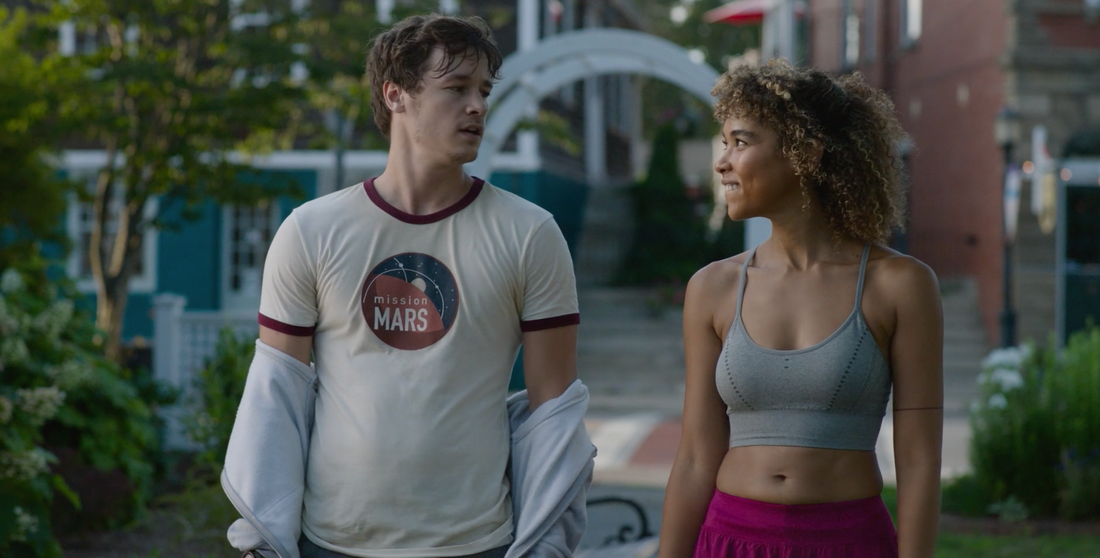 Kyle Allen and Alexandra Shipp in Space Oddity. Kyra Sedgwick’s directorial debut Space Oddity is precisely what you’d expect. No boundaries will be pushed in this romantic dramedy, but there’s a lot of comfort in the simplicity of a movie like this. Starring Kyle Allen, Kevin Bacon, and Alexandra Shipp, this film plays it too safe and ends up being a somewhat forgettable experience. This movie tells the story of Alex Mcallister (Allen), a young man planning to visit Mars. He’s joined a mission to leave the planet and is preparing to leave his family behind. His mom (Carrie Preston) and dad (Bacon) are having trouble as they prepare to live on their own, while his sister (Madeline Brewer) is increasingly frustrated at Alex’s decisions. One of the last ends for Alex to tie up is his insurance policy. His agent, Daisy (Shipp), grows attached to him, and the two navigate a romance as Alex plans on leaving. One of the things that immediately stands out in Space Oddity is how professional it looks. It’s nice to watch a rom-com with great cinematography, editing, and acting. Most of the crew behind this — including cinematographer Alar Kivilo, editor Stefanis Visser, and musicians Travis Bacon and Scott Hedrick — should be commended for their work. Elevating a simple story to look and sound powerful is challenging, and this excellent crew does it. In another year and with better marketing, I could see this being a solid hit on a streamer or even something that could succeed in the theatrical scene. Sedgwick has had an impressive career in front of the screen, and if she were given a more solid script, I could see her making an incredible sophomore movie. 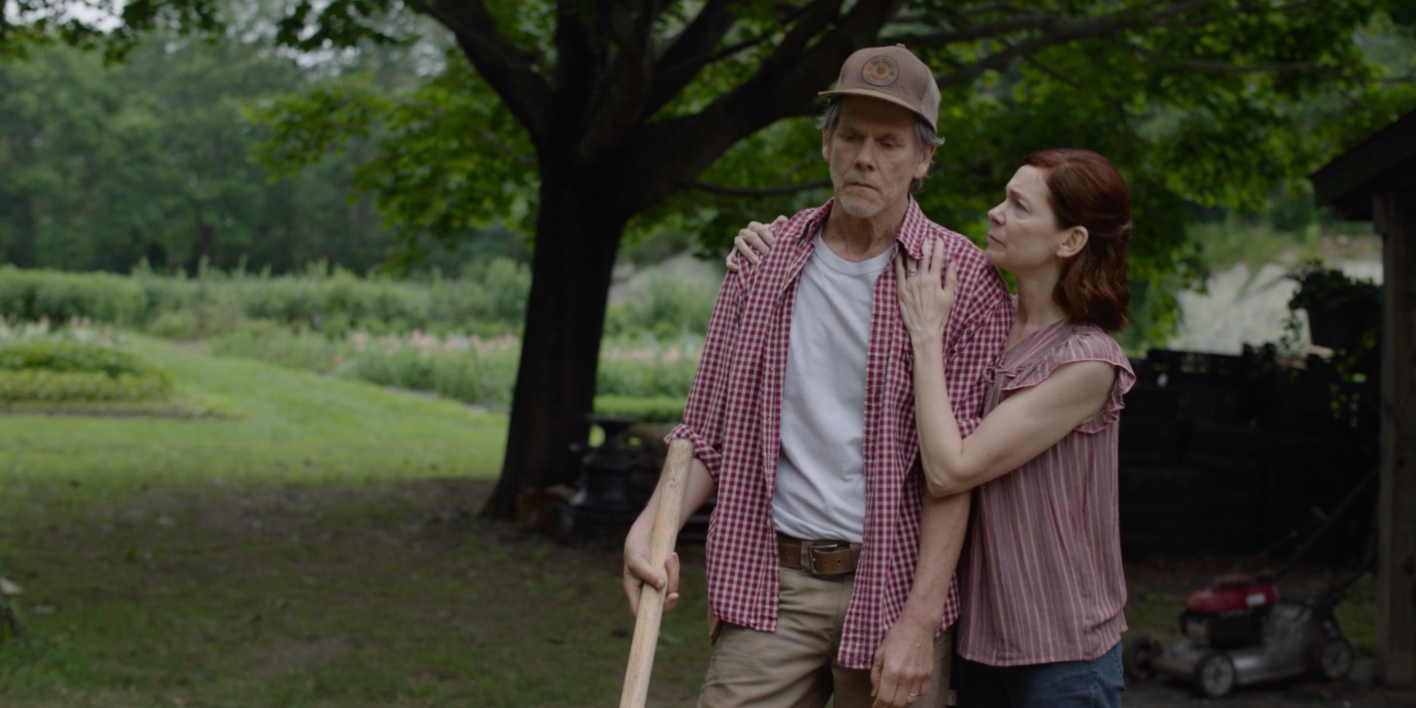 Kevin Bacon and Carrie Preston in Space Oddity. However, professionalism only goes so far when the core problem is a mediocre script. There are many great moments, but writer Rebecca Banner has created a weak conflict between Alex and his journey to Mars. Fortunately, Banner does an excellent job tackling nihilism, proving that although the script could’ve been polished more, she’s still a talented writer. A great premise is found within this, but the second and third acts are weak and cheapen the experience.
While the script might not be amazing, the cast certainly is. Kyle Allen and Alexandra Shipp are an excellent pairing on screen and have plenty of charisma, which is very important because this is, after all, a film about romance. Kevin Bacon is, as usual, great as Alex’s troubled father. Madeline Brewer and Carrie Preston are also unexpectedly brilliant, with their emotional climaxes being very powerful to watch. Space Oddity ends up being a bit lost in the wide variety of other coming-of-age romantic dramedies released each year, and while it won’t do enough to stand out to most viewers, this is worth a watch for fans of the genre. Kyra Sedgwick has an emotional eye for directing and brings out great performances against a somewhat weak script. With another rewrite, this would stand out as an excellent film, but this is a pretty good film with excellent production. Space Oddity releases in theaters and VOD starting March 31. Rating: 3.5/5 Review by Camden Ferrell 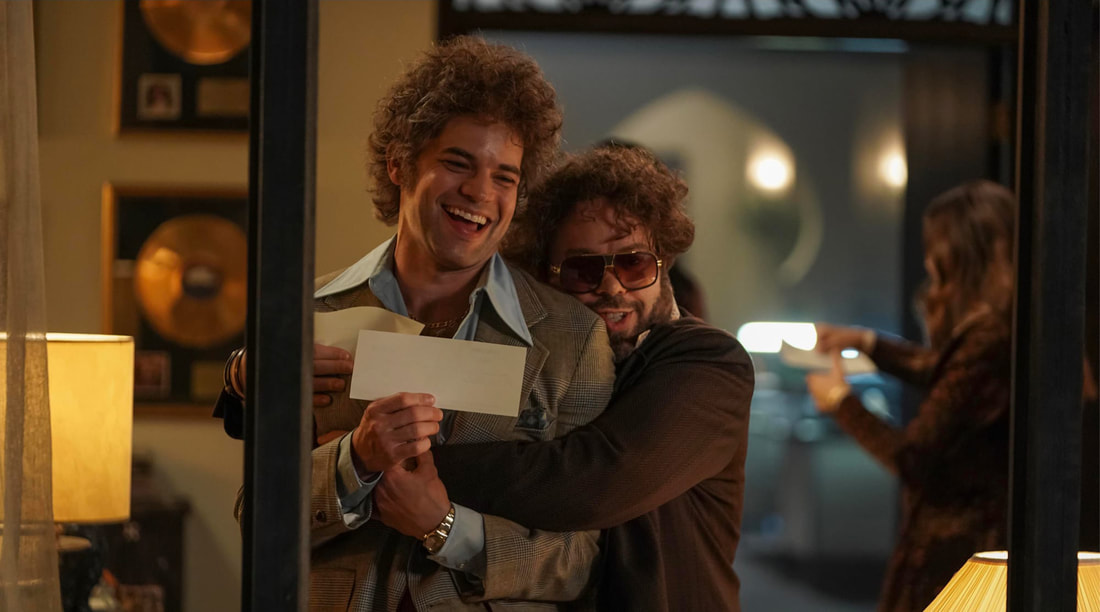 The musical contributions of Donna Summer and Kiss are known across the world by people of all generations. Aside from their fame, both Summer and Kiss were signed to Casablanca Records which was founded by Neil Bogart in 1973. Bogart is a name that might not be as widely known as that of his clients, but he was an influential figure in music, nonetheless. Spinning Gold tells the story of Bogart and his tumultuous journey to success. Directed by his son, Timothy Scott Bogart, there are a handful of fantastic moments in this movie that are ultimately dragged down by poor pacing, uneven storytelling, and undaring artistic choices. In this movie, we follow the life and career of Neil Bogart who has worn many hats as evidenced by his name changes throughout life. It’s 1973, and he founded Casablanca records while discovering artists like Donna Summer and Kiss. The problem is that nobody is buying their music, and Casablanca is struggling to stay afloat. Through lots of trials, tribulations, and insane bets, we see Bogart seek musical immortality through his company. This is an interesting story that features some major music icons, and it has all the makings of a hit biopic if it was executed properly. The most noticeable flaw from the start is how unbalanced the storytelling is. Scenes don’t flow together, and at best, it finds its rhythm albeit monotonous. It seems evocative of every other musical biopic of the last ten years while missing out on the fundamentals of screenwriting that made them work in the first place. The dialogue is imitative of better films in the music genre, and it doesn’t do much beyond giving a superficial telling of events. 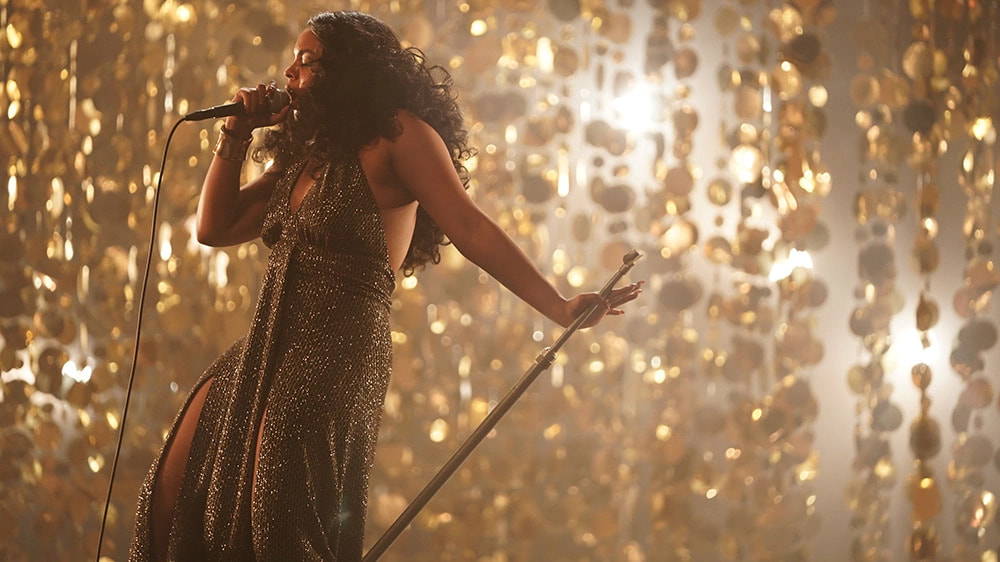 It’s unclear if this was intended to be an awards-caliber performance from its lead actor, but he certainly is giving it his all as if it was. The film is led by Jeremy Jordan in his biggest film role to date, and I have to give him props for putting his soul into this role. It’s always honorable for an actor to give everything to a role, but it doesn’t always work out. He plays Bogart so intensely, and it could often benefit from more subtlety. It’s also clear that the supporting cast is operating on different frequencies which means Jordan’s performance is lost in a sea of different performances. The only performance that is even worth mentioning is the small supporting role from Dan Fogler which is actually quite funny.
Despite the problems the movie clearly has, there are good things happening. The camerawork (which is only bogged down by bad CGI) is dynamic, and creative in the way it tells its story. There are some highly coordinated movements that are smooth, exciting, and fun to look at. This camerawork combines great music, bold set pieces, and sharp editing to create some electric moments throughout. It’s not enough to combat the movie’s bloated length, but it means you won’t leave the theater totally disappointed. Spinning Gold tells the story of Casablanca records using the same musical biopic formula seen many times before to mixed effect. Obviously, it has great music, but it’s slow, uneven, and not nearly stimulating enough considering the subject matter. Fans of the cast and Casablanca artists might enjoy it more than others, but for the average viewer, this can wait for VOD. Spinning Gold is in theaters March 31. Rating: 2.5/5
Review by Sean Boelman
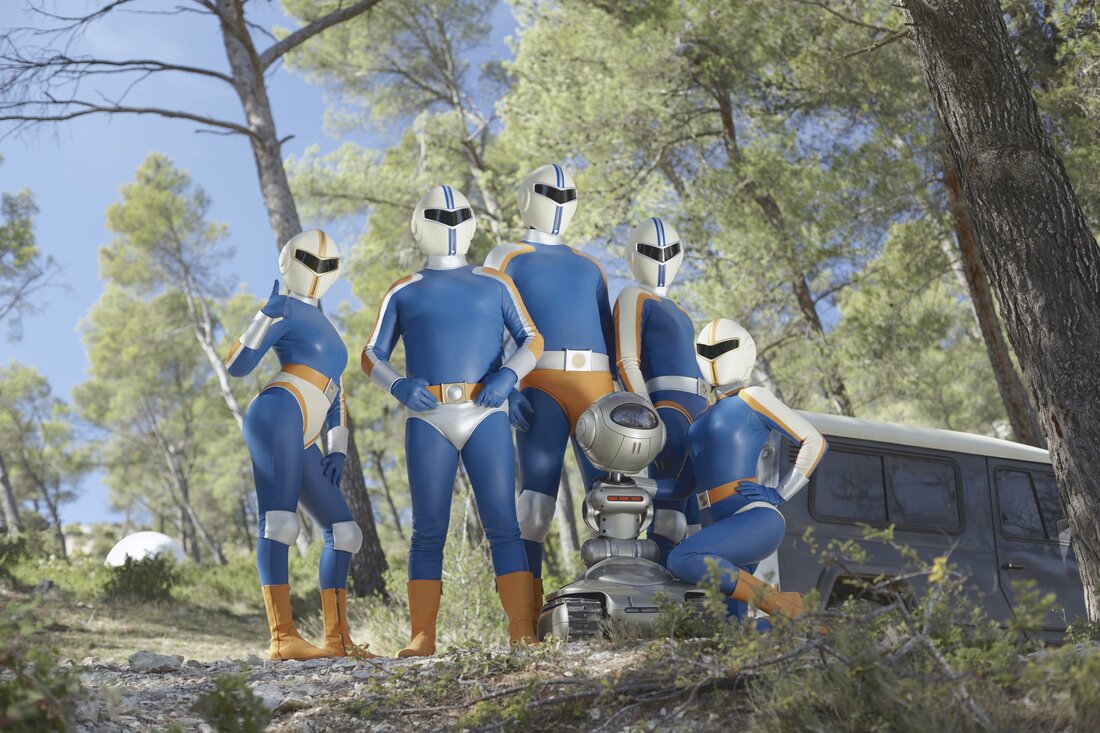
A scene from SMOKING CAUSES COUGHING, a Magnet release. © 2022 Chi-Fou-Mi Productions – Gaumon. Photo courtesy of Magnet Releasing.
French absurdist filmmaker Quentin Dupieux is one of the most idiosyncratic filmmakers working today, with his films being the very definition of “love it or hate it.” His latest venture, Smoking Causes Coughing, is as short and snappy as always, taking full advantage of its wacky, creative concept.
The film follows a band of five superheroes who, after declining success owing to a loss of group cohesion, is sent on a mandatory retreat to encourage them to get back in their rhythm. It’s both a perfect throwback and a film that feels incredibly timely — a balance that many filmmakers attempt, but few are able to pull off. The most obvious point of comparison for the film is like a more demented, adult version of Power Rangers. It’s the type of bizarre, creative comedy that only the mind of Quentin Dupieux could dream up. However, the level of detail he puts into this one is extraordinary, and every single one of the actors — several of which are French A-listers — are fully committed to the bit. Since this film is paying homage to a genre not exactly known for its technical prowess, its execution is understandably goofy-looking. However, Dupieux absolutely nails the recreation of this style he is going for, with impressively campy creature design and some pretty amazing use of puppetry. 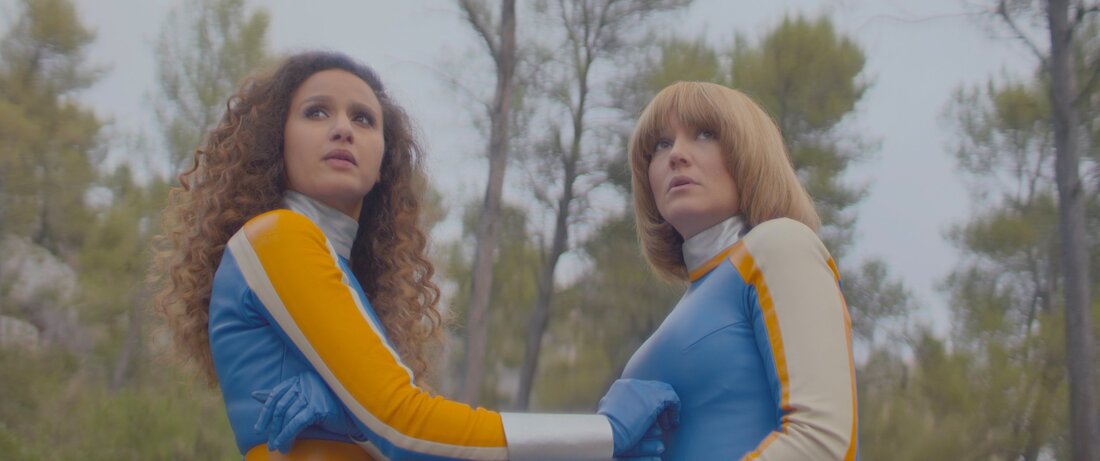
Oulaya Amamra and Anaïs Demoustier in SMOKING CAUSES COUGHING, a Magnet release. © 2022 Chi-Fou-Mi Productions – Gaumon. Photo courtesy of Magnet Releasing.
However, at a certain point, the film begins to shift into an anthology structure. On their retreat, the central characters bond by sharing stories around a campfire. Of course, being that this is a film by Dupieux — the stories are random, bizarre, and hilarious — but they all add up to the film’s impressive and thoughtful environmentalist message.
Dupieux has a very particular style of absurd humor, and it’s on full display here. However, Smoking Causes Coughing is more broadly funny than some of the filmmaker’s other films, likely owing to its many references to pop culture. It’s also his goriest film since Rubber, but as one would expect, the exaggerated violence is used to hilarious effect. The character development in the film is a bit more shallow than most Dupieux films, but then again, that seems to be the point. The characters are archetypes used to teach a message — much in the way that the superheroes in tokusatsu franchises were archetypes that taught children important values like honesty, courage, and fairness. Smoking Causes Coughing is another amazing film in Dupieux’s library, and has the potential to be a breakout hit on the level of Rubber. It’s hilarious, insightful, and delightfully twisted in the way that the filmmaker’s fans have come to expect. Smoking Causes Coughing hits theaters and VOD on March 31. Rating: 5/5 Review by Tatiana Miranda  Based on the book of the same name by M.O. Walsh, The Big Door Prize poses questions for both its characters and the audience about their potential and asks how far they'll go in order to fulfill it. The ten-episode first season opens on high school history teacher Dusty as he celebrates his 40th birthday with his wife, Cass, and teenage daughter, Trina. What seems to be an ordinary day in their small town of Deerfield is quickly derailed by a mysterious machine that appeared in the general store overnight. On the front of the machine are the words "Morpho. Discover Your Life Potential." Deerfield's inhabitants quickly spread the news of the machine and its magical ability to assign you your potential with just $2 and your handprint and social security number. Soon, everyone in Deerfield has used the Morpho, with some residents gaining specific roles such as "Male Model" or "Tattoo Artist." Others have more ambiguous potentials, including "Royalty" and "Hero." Characters like Dusty question the validity of the machine, but more so the effect the results have on the townspeople. For some, their "potential" pushes them to quit their job or get a divorce. For Cass, Dusty's wife and daughter of the mayor, her Morpho result pushes her to take action and gain confidence.  Eight out of the ten episodes focus on specific members of the town, such as Cass's mom Izzy, Jacob (who is one of Dusty's students), and the town priest. The Big Door Prize's small-town setting plays a big part in the plot and has the same comedic elements as show developer David West Read's previous work on Schitt's Creek. While the conversations surrounding potential and missed opportunities feel realistic, the show's characters are extravagant and theatrical, making the Morpho's presence feel a little less otherwordly. Each character has such a distinct personality and storyline that — although most of the show focuses on Dusty and his family — the audience is able to see how the Morpho has impacted other Deerfield residents.
Although The Big Door Prize doesn't answer every question it poses, it is entertaining and thought-provoking to boot. With its open-ended season finale, it wouldn't be surprising to find out a second season is coming. While the show is very comical in both its scenarios and character interactions, its heavy-hitting conversations are likely to spur similar discussions for the audience. The Big Door Prize is now streaming on Apple TV+. All ten episodes reviewed. Rating: 4/5
Review by Sean Boelman
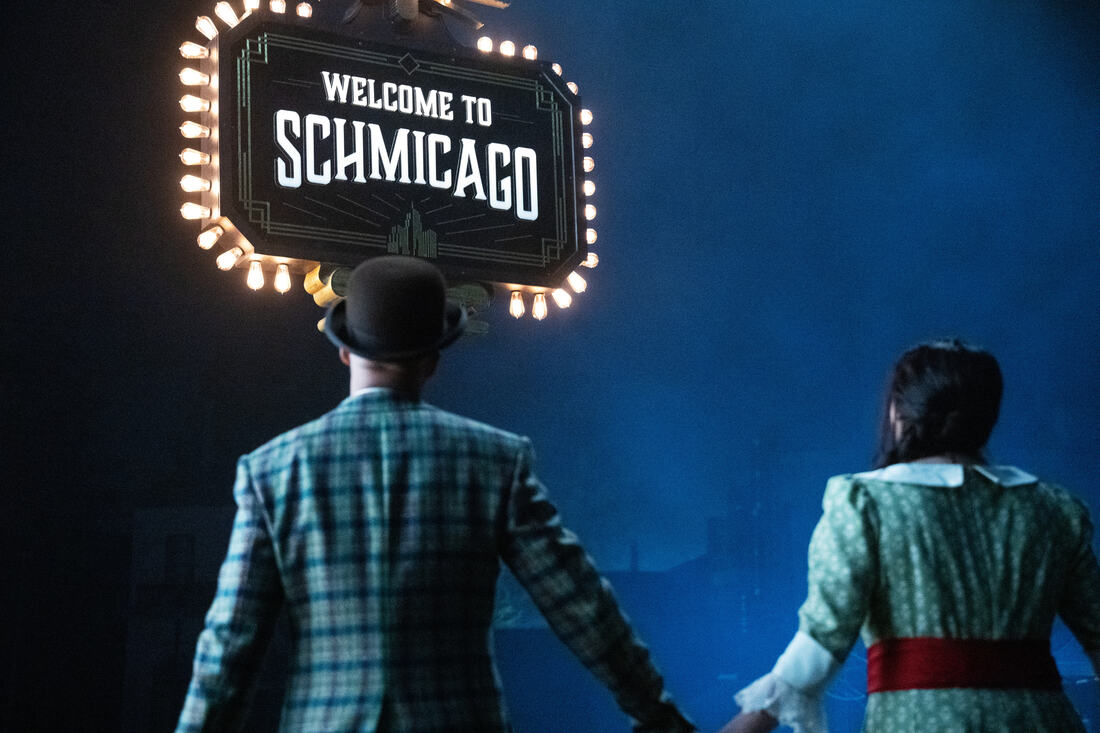
Keegan-Michael Key and Cecily Strong in "Schmigadoon!," premiering April 5, 2023 on Apple TV+.
Schmigadoon! was a pleasant surprise when it came out — one of the greatest comedy shows on streaming thanks to its charming, endearing homage to Golden Age musicals with some hilarious comedy to boot. Fans were overjoyed to find out it was renewed for a second season, and that it would pay homage to a different era of classic musicals. While it doesn’t quite live up to expectations, season two of Schmigadoon! is still plenty of fun.
Although the first season left viewers with a pretty open ending, season two picks up with our everyday protagonists (Keegan-Michael Key and Cecily Strong) having returned to their normal lives. Discontent with the mundanity of domesticity, they decide to attempt to return to Schmigadoon, only to find a new city in its place, inspired by the musicals of the ‘70s and ‘80s. Perhaps the biggest mistake that season two of Schmigadoon! makes is that it casts too wide of a net. Although even the most casual of musical theater fans will be delighted by all of the references — from Chicago to Cabaret and even Sweeney Todd — there are just too many things going on here. There are so many subplots that many of them feel underdeveloped and limited by the small number of episodes. Indeed, this season is perhaps even more ambitious than the last, and while it’s still charming, it’s not quite as infectious. With a few more episodes to flesh out the supporting characters — and offer a few more songs in the process — this certainly could have stacked up against the masterwork that was season one, but as is, it feels like something is missing. 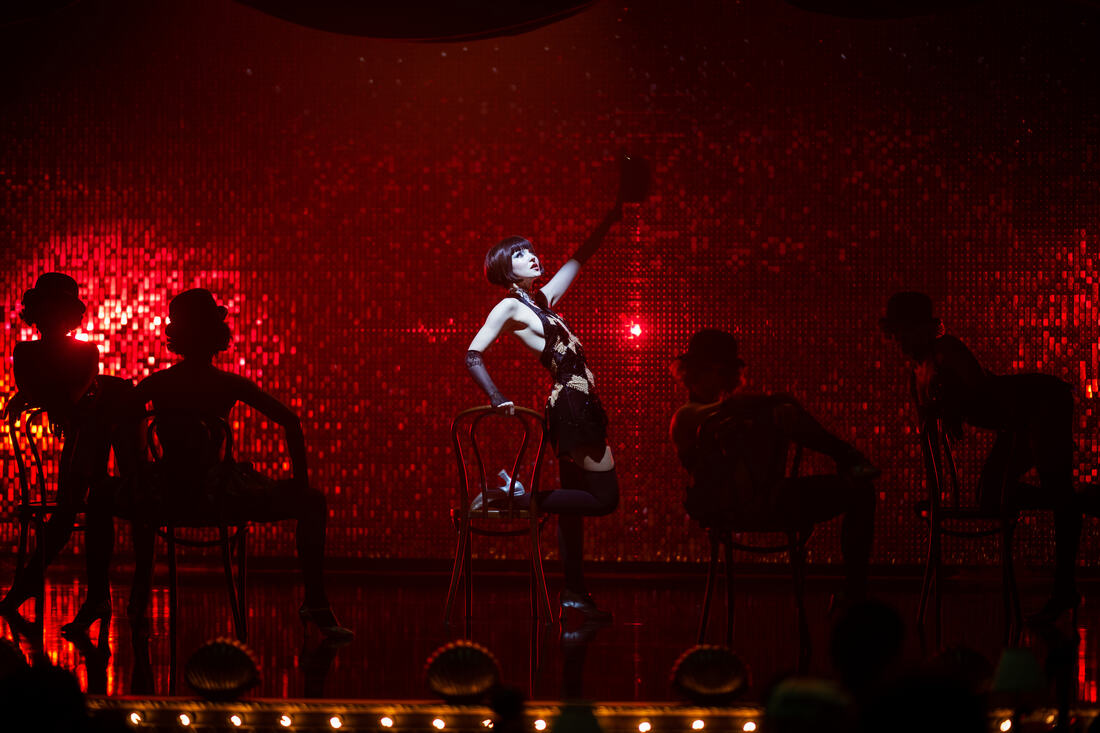
Dove Cameron in "Schmigadoon!," premiering April 5, 2023 on Apple TV+.
Still, some of the casting decisions made in this season are absolutely legendary. Casting Ariana DeBose as a stand-in for the Emcee from Cabaret and Jane Krakowski as what is essentially a gender-swapped version of Billy Flynn from Chicago are inspired choices that lead to some very fun moments — it’s just a shame that they aren’t used a bit more.
The music also isn’t quite as good as the first season. Although the primary song, which welcomes our protagonists to the new setting of “Schmicago” is really catchy — largely thanks to the phenomenal voice of Titus Burgess — the rest of the songs simply aren’t as memorable. And given that the writers had such a wealth of material to work with and parody, just good is not good enough. That being said, the film does thrive with its production design and choreography. Much like the first season, the sets here are exquisite, created to be a slightly surreal version of the world of these musicals we all know and love. And since there are so many more distinct influences this time around, there’s also a lot more variance in the designs. Season two of Schmigadoon! isn’t quite as good as the predecessor, but it’s still an entertaining (and highly bingeable) series. Unlike a lot of sequels, this doesn’t suffer from a shortage of ideas — it just feels like their execution was somewhat rushed. Schmigadoon! streams on Apple TV+ beginning April 5. All six episodes reviewed. Rating: 4/5 |