
|
Review by Sean Boelman

Dan Lippert in PARANORMAL ACTIVITY: NEXT OF KIN from Paramount Players. Photo Credit: Courtesy Paramount Players.© 2021 Paramount Players, a Division of Paramount Pictures. All rights reserved.
There has been a relatively recent trend in the horror genre to capitalize on goodwill from a once-popular property by connecting a series’s title to an otherwise unrelated film. Paranormal Activity: Next of Kin is the latest attempt to do so, and it’s about as bland of a found footage flick as one expects.
The movie follows a woman who, investigating her family’s past in a secluded Amish community, begins to experience some strange and disturbing occurrences. Ultimately, the film shares more in common with The Blair Witch Project than Paranormal Activity, both in terms of its particular found footage style and its story Like most found footage movies, the first hour or so of this is extremely slow, only for the last thirty minutes to get much more intense. However, Christopher Landon’s script fails to do much in the way of building tension in that early portion, resulting in an experience that is ultimately rather boring. There are a couple eerie sequences in the final act, but not enough to make it worth watching. One of the most disappointing things about the film is that it does not have a very interesting setting. The movie is set in a generic Amish community, and not much is done to make it feel distinctive. It’s a bunch of religious people doing weird and occasionally mildly creepy things, which is not an original set-up at all. 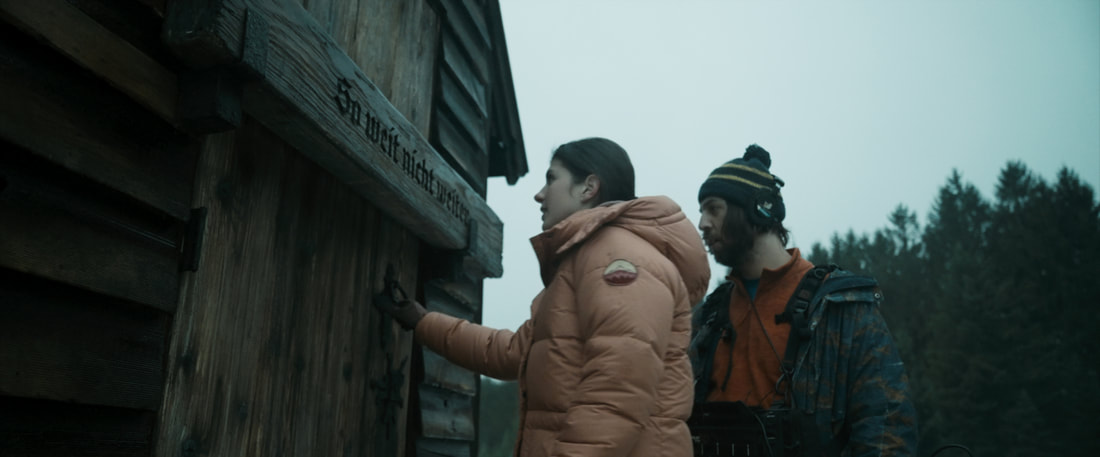
Emily Bader and Dan Lippert in PARANORMAL ACTIVITY: NEXT OF KIN from Paramount Players. Photo Credit: Courtesy Paramount Players.
The character development in the film is also extremely underwhelming. The audience is expected to connect with the protagonist’s desire to reconnect with her long lost mother, but this arc is so generic that it doesn’t leave much of an impact. And all of the antagonists are all entirely forgettable.
As is the case with the rest of the series, the cast is primarily composed of no-name actors. These are the type of roles that can be as much or as little as the actors make of them, and this cast leans towards the latter. Emily Bader’s performance feels derivative of every other found footage leading performance. From a technical standpoint, the movie is very standard found footage material. Apart from some solid make-up work in the final third, there isn’t much here that will leave viewers impressed. Instead, most will be left largely unaffected by its plainly cold atmosphere and predictable overuse of shaky cam. Paranormal Activity: Next of Kin is about as lackluster as one would expect from a very loosely-related standalone film in an already unimpressive series. It’s a shame, because with the talent involved, this had the potential to be a true chiller. Paranormal Activity: Next of Kin hits Paramount+ on October 29. Rating: 2/5
0 Comments
Review by Camden Ferrell

Bulletproof is the newest film from documentary filmmaker Todd Chandler. It is his second feature length film and has been playing festivals around the world for over the last year. The film tackles a timely subject and uses some clever storytelling, but it can’t always make up for it being less than the sum of its parts at times.
This movie tackles the topic of gun violence in American schools. It attempts to analyze the complexities and nuances of the topic through an examination of the industries and training that have emerged due to this rising issue. This is an interesting premise that is obviously timely to the country’s current climate, and there’s a lot of room for biting commentary and exploration. From the start, Chandler’s editing of the film is unique if nothing else. Instead of telling a clear-cut story, he opts to use the juxtaposition of school rituals to tell a story of modern-day American schools. We see typical school activities like marching bands, school announcements, and basketball games. However, this is contrasted by the number of scenes involving school shooter drills, firearm training, and other teacher-attended seminars on the topic. 
While Chandler’s means of storytelling is ambitious and should be commended, it is prone to feeling repetitive and monotonous at times throughout the movie. As the film progresses, it doesn’t always go deeper into its topic or its analysis of its phenomenon. This can lead the film to feel like it’s doing a lot without saying as much. This is especially disappointing considering how important and interesting the topic of gun violence in schools is.
The documentary also doesn’t ever seem to have a consistent style. Most parts feel like an observational documentary but will be interrupted by a talking head interview that throws off the pace of the film. In addition to those minor flaws, the film merely points out the state of American schools without ever analyzing truly analyzing the factors that cause it. With this approach, the film doesn’t have a strong call to action; it just presents its topic the way it currently is with no solution or opinion on how to proceed going forward. Bulletproof takes an interesting topic, an interesting approach, and delivers a not always interesting film. Its execution is unique even if it isn’t always effective, and it shows a lot of promise for Chandler’s future endeavors. However, the movie can feel like it has a higher opinion of itself than it warrants. Bulletproof is in theaters October 29. Rating: 3/5
Review by Camden Ferrell
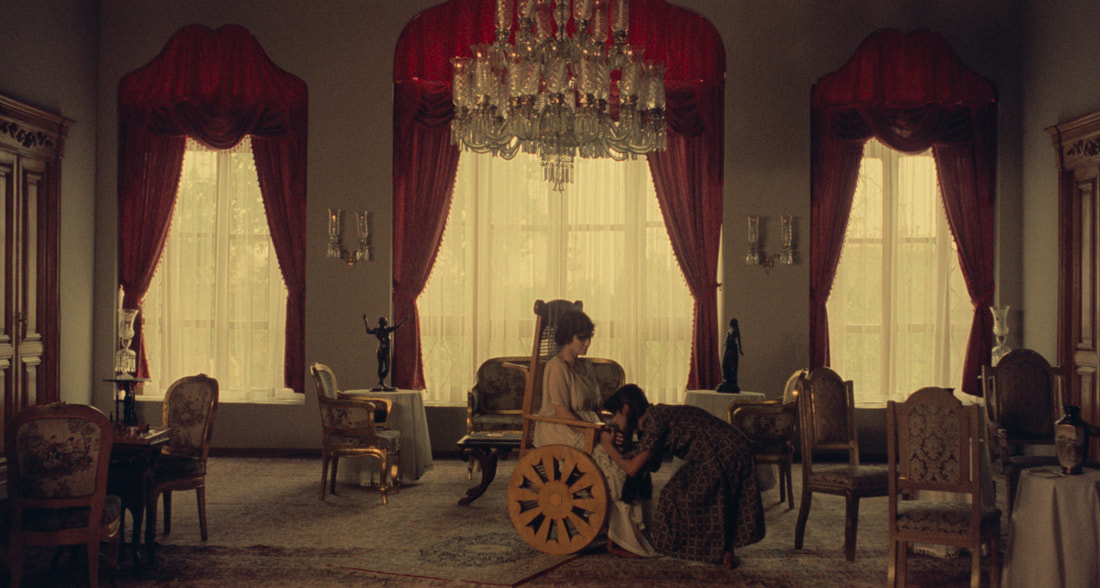
Chess of the Wind is an Iranian movie from director Mohammad Reza Aslani. It was screened a limited number of times in 1976 before being banned and presumably lost for decades, only existing in low quality VHS tapes. However, in 2014 Aslani’s son discovered the film negatives in an antique shop in Tehran, paving the way for a restoration and release of Aslani’s movie. While its visual aesthetic is something to be celebrated, the pacing and convoluted story ultimately muddle what could have been an unearthed jewel of Iranian cinema.
Set in early 20th century Iran, this movie follows a family after the death of the matriarch. There is a large inheritance and conflict ensues in regard to whom it will be bequeathed. While the widowed Hadji believes himself to be the rightful inheritor of the money, the matriarch’s daughter, Lady Aghdas believes it is rightfully hers. She then proceeds to scheme with her handmaiden to ensure she gets what she believes is rightfully hers. This is an interesting premise for a movie, that works well on a surface level and a more deep and thematic level as well. Aslani’s script isn’t anything impressive, but it does a decent enough job of telling its central story. The dialogue sufficiently reveals information about its character’s and their motivations, but it’s never quite compelling. It doesn’t do enough to retain attention or interest, and it simply satisfies the most basic requirements of what a screenplay needs to be. 
The acting is one of the film’s strong suits. Fakhri Khorvash plays Lady Aghdas and is probably the most impressive performance of the film. She is strong, steadfast, and entertaining as we see her plot to secure her inheritance. It’s nothing Earth-shattering, but it’s an enjoyable performance that is an insight into the middle of her career. The other actors support her well but aren’t quite as memorable as she is. The movie also excels with its cinematography. It’s a well shot movie that uses camera movement sparingly, and it works in giving the film a visually pleasant aesthetic. The restoration is fantastic and elevate the experience even when other areas of the film are lacking.
The film falters significantly in the film’s pacing. While its slow and steady pace is deliberate and should work for the story in theory, it meanders far too much. In addition to its wandering and sluggish pace, the movie also takes its relatively simple premise and executes it in a way that is convoluted. It doesn’t foster audience engagement, and it is ultimately what hinders the movie’s quality the most. Chess of the Wind may not be the beautiful hidden gem of Iranian cinema that one would hope, but it’s a great restoration of a movie that could have potentially been lost forever. The execution and slow pace may be off-putting to some, but fans of Iranian cinema might find something to enjoy in this film. Chess of the Wind will be in theaters October 29. Rating: 3/5
Review by Dan Skip Allen
Sports movies can be a mixed bag at times. They can inspire as well as entertain the masses, or they can go down a road so many have gone down before. It's hard to do a sports movie and make it original or have it say something important without using the same old tropes sports movies in the past have used. Unfortunately, Heart of Champions isn't very original and it follows a very familiar formula.
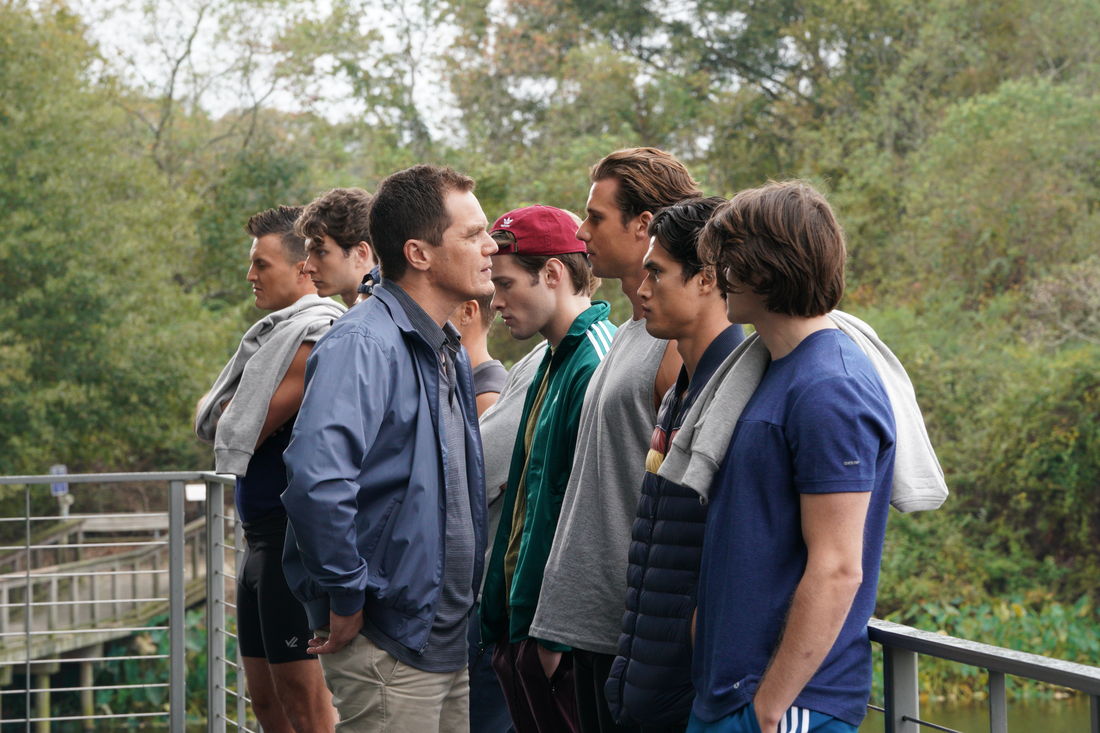
This film focuses on the sport of rowing. It's a high society sport that mostly rich kids are involved in. This particular Crew team is at an Ivy League college. The team has some issues with its members. They don't all get along. When an ex-Army veteran (Michael Shannon) takes over as coach, he shakes things up quite a bit. These kids haven't seen anyone like him in their lives. This film has the typical sports movie drama that the writers and director are trying to get the viewers to care about, such as the two main members of the team (Alexander Ludwig, Alex MacNicol) fighting for leadership and also a girl. A newcomer (Charles Melton) to the team shakes things up as well. His presence interrupts the already shaky dynamic of the squad. 
These characters all have different motivations for being part of this team. Some are just there because it's a legacy thing and others are there to prove something to someone, a family member, or a loved one. The fact remains the characters all have interesting story arcs, but this has been done before, and much better, in other films. Shannon is just going through the numbers himself. He's been much better in better films.
Even the trope of the overbearing father figure (David James Elliot, JAG) has been done to death. This film is as non-original as peanut butter and jelly. The filmmakers have copied so many sports films from the past, it's like they were watching them while writing this story. The style isn't original either, there aren't any visuals that stand out as far as cinematography or set production. The '90s setting of the film may have as well been today the way it looked. This film isn't very good from a bunch of places. It is a cookie-cutter copy of so many sports films from the past. Michael Shannon, a very good actor, seems like he's going through the motions. The young cast is fine, but I won't remember them tomorrow. The script and direction are bland and not very memorable. This film just doesn't know what it wants to be. The sport of rowing isn't this bad from what I've seen of it. It deserves a better movie to represent it though. Heart of Champions hits theaters and VOD on October 29. Review: 1,5/5
Review by Camden Ferrell

Passing is a movie based on the 1929 book of the same name by Nella Larsen. It had it’s premiere at the 2021 Sundance Film Festival and marks the directorial debut of Rebecca Hall who also wrote the film. The movie is visually gorgeous and thematically ambitious, but it doesn’t consistently stick the landing despite the great performances from its actors.
This movie follows two childhood friends, Reenie and Clare, who reunite in adulthood. Reenie is proud of her African-American identity and has a Black family, whereas Clare is white-passing, spending her days married to her prejudiced husband. The two former friends become involved in each other’s lives and become familiar with each other’s insecurities and emotions. This is a delicate premise that is simple on the surface but promises the room for a lot of thematic exploration beneath the surface. From the start, the movie makes it clear that it’s more character-driven than plot-driven. Hall’s script is steady, meditative, and it doesn’t feel rushed or forced in anyway. This is one of the script’s biggest virtues. It feels very natural, and it does a great job of setting down the foundations for the film’s setting and aesthetic. While the dialogue is fairly strong throughout, one of my main complaints is with how it doesn’t take full advantage of its premise. There is a lot of promising commentary in its premise, and even though certain scenes touch on it, it never feels wholly engaging in its exploration of its themes. 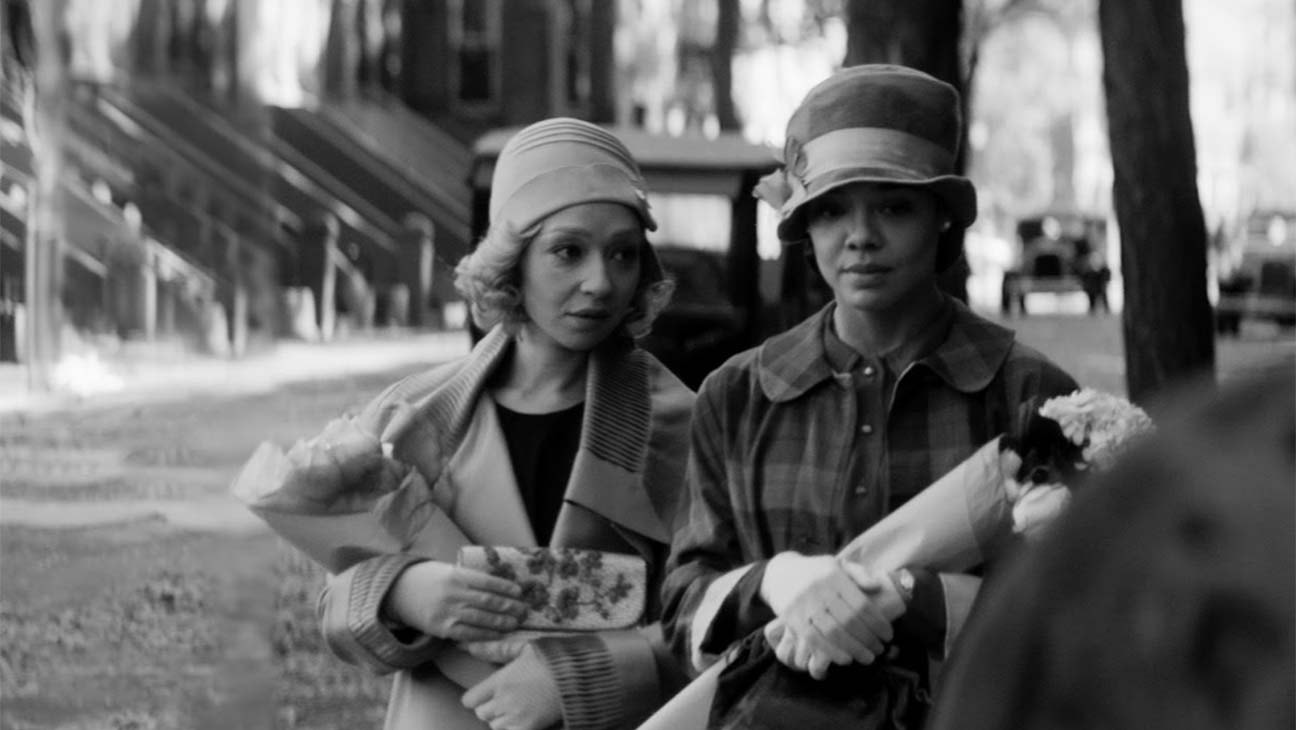
One of the main highlights of the movie comes from its two main performances. Tessa Thompson leads the film as Reenie, and she is supported by Ruth Negga who plays Clare. Both of these actresses do a great job embodying their characters and doing what actors are supposed to do, convincing us that what we’re seeing is real. They both have great chemistry and fit very well within the film’s style while still feeling realistic in their portrayals of their complex characters.
The movie is beautifully shot in black and white with a 4:3 aspect ratio. Cinematographer Eduard Grau truly demonstrates he knows how to use this aspect ratio and black and white style effectively. The shots are consistently composed well, and the camera always feels motivated and intentional. While there is a lot of merit in the craftsmanship in the movie, it can’t help but feel hindered by its execution at times. There are moments that get very close to be revelatory but never quite reach that level. The movie also has a very questionable final few moments that can also mitigate the impact the movie had up until that point. Despite its flaws, Passing is a promising directorial debut from Hall. It features some great performances, an interesting premise, and captivating cinematography. It may not be to everyone’s liking, but despite some problems, there may be something for most audiences to enjoy in the film’s message. Passing is in select theaters October 27 and on Netflix November 10. Rating: 3.5/5
Review by Sean Boelman

Matthias Schweighofer as Dieter in Army of Thieves. Credit: Stanislav Honzik/Netflix © 2021.
It’s interesting that Netflix banked so heavily on fans’ goodwill towards a particular character in Zack Snyder’s Army of the Dead that they greenlit and produced a prequel/spin-off before the main title was even released, but that risk paid off. Army of Thieves is a straightforward heist adventure, but its charming nature makes it more enjoyable than the original film.
The movie follows a young German safecracker who is recruited by a team of ambitious thieves to pull off an extraordinary heist as the world is distracted by the onset of the zombie apocalypse. It’s a pretty simple heist film structure, with a few smaller heist sequences leading to a massive climax in the final act. Admittedly, the movie does lose a lot of its steam in the third act because there is a bit of repetition involved. It’s essentially structured around the eponymous team cracking three increasingly difficult safes. And while the challenge is supposedly increasingly large with each one, the excitement drops with each. In fact, the best sequence in the film is not one of the heists, but rather, a safe-cracking competition early in the movie. The budget of the film is obviously quite a bit smaller than its Vegas-set bigger brother, but it’s still pretty impressive as a globe-trotting adventure. Since there aren’t many big set pieces, the action sequences here are more dependent on the editing, which results in them feeling a lot smoother, even if they don’t have Snyder’s flashy visual style. 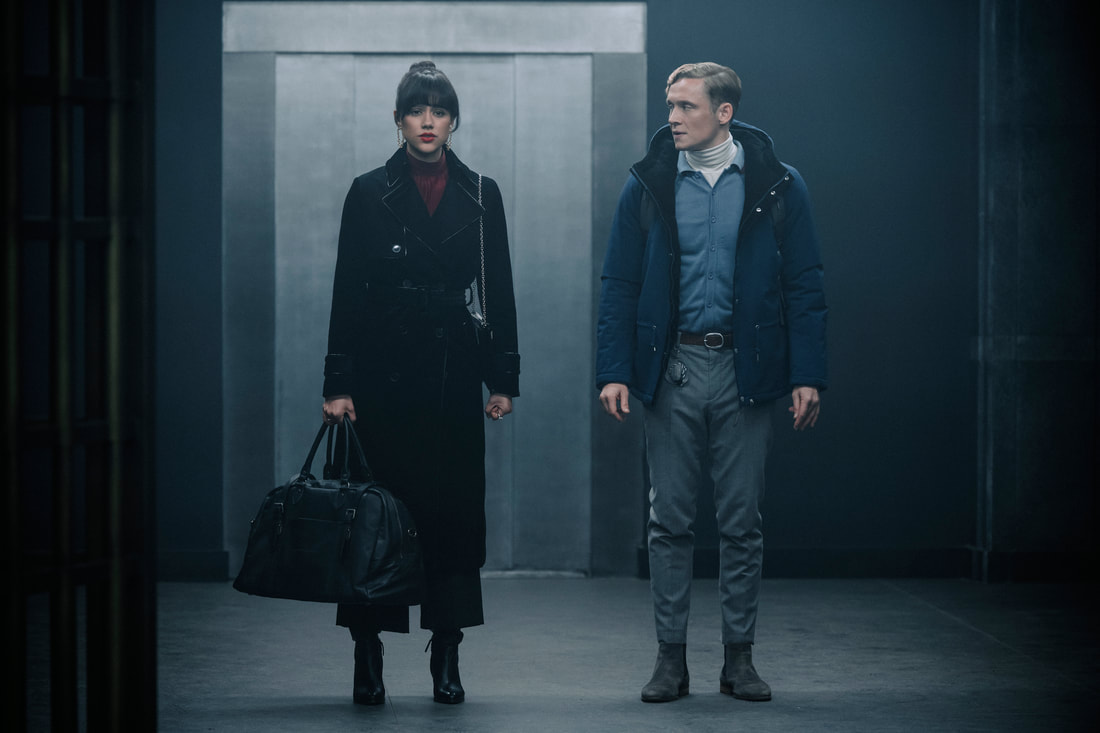
(L-R) Nathalie Emmanuel as Gwendoine, Matthias Schweighofer as Dieter in Army of Thieves. Credit: Stanislav Honzik/Netflix © 2021.
Dieter was a fan-favorite character in Army of the Dead because of his lovable charm and quirkiness, and it is interesting to see him come into that in this movie. Although it’s a bit unrealistic to see someone acquire a heroic personality over the course of one two-hour film, the character is still impossible to hate. The rest of the team isn’t as memorable as the team of Army of the Dead.
Matthias Schweighöfer (who also directs the movie himself) reprises his role from Snyder’s film and shows that he has what it takes to be a leading man. It isn’t often that a comedic side character is able to turn into the hero of a movie like this, but it works here. The other highlight in the cast is Nathalie Emmanuel (the Fast Saga). For those wondering what this film adds to the Army of the Dead mythology… the answer is not much. There are a few offhand mentions of zombies, news clips in the background, and a few dream sequences involving zombies, but there’s not much going on here in a horror sense. It’s more of a standalone adventure with the character than an expansion of the world. Army of Thieves is an all-around fun time, and while it doesn't set its sights as high as Army of the Dead, it meets its less ambitious goals more fully. It’s a fun action flick to stream on Netflix and forget about soon after the credits roll. Army of Thieves hits Netflix on October 29. Rating: 3.5/5
Review by Sean Boelman
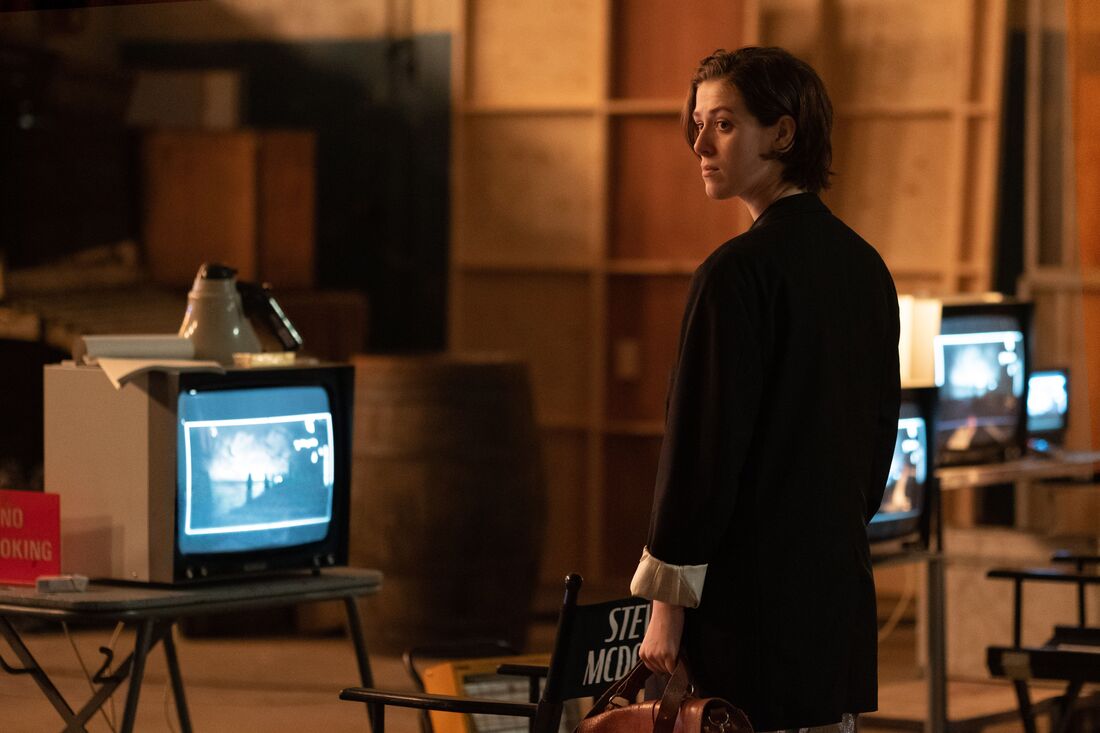
Joanna Hogg’s The Souvenir is something of an unsung masterpiece, beloved among the cinephile community but having received little interest or awareness outside of its core niche audience. The sequel seems destined to a similar fate, a specific and personal exploration of the filmmaker’s personal experience.
Set during the aftermath of her relationship in the first film, this movie follows a film student who channels her emotions into her graduation project. It’s definitely not the most accessible movie, as it blends aspects of melodrama and meta-filmmaking in a combination which won’t be relatable to everyone but will be very resonant for those with whom it does connect. A lot of the complaints aimed at the first film come from its slow pacing and dry nature, and that isn’t as much the case here. There is a much more buoyant air to this movie because of the sense of humor it has compared to the last one’s darker exploration of themes of addiction. And the surreal and dreamlike nature of the film goes a long way in making it more immersive. Whereas the first movie was about the protagonist having her own experience and trying to tell a story that is not her own, this is about her trying to come to terms with telling her own story. It’s not just a continuation of the first film from a narrative sense, but also a thematic response to it, and the result is surprisingly compelling and thought-provoking. 
Something else that stands out about this sequel is that it focuses almost entirely on the protagonist. There are three potential romantic interests, but none of them has a particularly big role, which ties into the protagonist’s arc. It’s a type of growth we have seen done before, but with a level of nuance that makes it effective.
Honor Swinton-Byrne gives yet another breathtaking performance in her leading role. Although it isn’t as quietly devastating of a turn, she still brings a certain power to it that really drives the movie. In an expanded supporting role, Richard Ayoade frequently steals the show. And new additions Charlie Heaton and Joe Alwyn are both good. From a visual standpoint, the film is undeniably very accomplished. This is particularly the case with the climactic sequence which is quite hypnotic in nature. It’s a gorgeous movie to look at with a sleek edge that makes it feel distinctive. It finds that perfect balance between nostalgia and elegance, making it work quite well. The Souvenir: Part II definitely does some things better than its predecessor, and while it doesn’t have the same emotional impact, it is an interesting follow-up in a way that few films are. Cinephiles will definitely want to check this duo of movies out. The Souvenir: Part II hits theaters on October 29. Rating: 4/5
Review by Sean Boelman

Written and directed by Amy Koppelman from her own novel, A Mouthful of Air is the type of mature, unflashy character drama that we don’t often see from the studio system anymore. Although the narrative structure often works against the film, it’s nevertheless an effective and emotional watch.
The movie follows a children’s author who begins to face a deep trauma after she gives birth to her daughter. Although the story doesn’t have much specificity to it — the emotions in the film exist in a weird middle ground where they aren’t quite universal, but don’t quite feel personal — it still has an impact because of a few extraordinarily well-written scenes. Inarguably the single biggest problem with the movie is its narrative structure. Koppelman uses a fragmented, time-jumping storytelling technique, seemingly in an attempt to depict the protagonist’s fractured perception of the world. It makes sense why she chose to do this, but the result can be somewhat difficult to follow at times. There is definitely something to be said in the film about postpartum depression, even if the script frequently dances around calling it that. Koppelman’s heart is definitely in the right place, calling attention to an issue that isn’t often discussed well, but it all too often pulls its punches when it comes close to the heavy-hitting stuff. 
The character development in the movie is a mixed success. The protagonist has an arc that is effective, if a little straightforward, and has the intended emotional impact. However, the supporting characters are all very shallow. No one has much of a purpose other than to support and hold back the protagonist, and we are given very little reason to care about anyone but her.
Amanda Seyfried gives an excellent performance in her leading role. Her performance feels completely authentic, both when she is delivering dialogue and has to communicate with more subtle emotions. The supporting cast has some strong actors, like Finn Wittrock, Paul Giamatti, and Britt Robertson, but they aren’t given much to do. From a technical standpoint, there are some things here that are done in a very straightforward way and others that are really interesting. There are some sequences in the film done in sketch-like animation to mimic the children’s book aspect of the story, and this creates an interesting juxtaposition, and then there are other parts shot in an oversaturated, melodramatic way. A Mouthful of Air is much better than one would expect from an under-the-radar theatrical release like this. Although it would have been better had the structure been a bit more simple, it has enough great moments to be worthwhile. A Mouthful of Air hits theaters on October 29. Rating: 3.5/5 Reviewed by Adam Donato 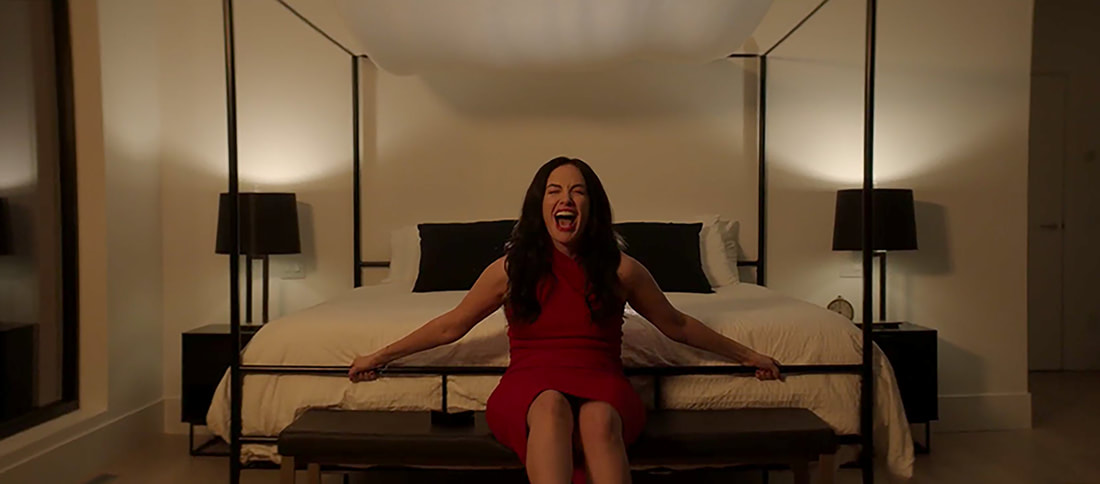 Hypnotic is the story of a woman in a rut in her life. A miscarriage led to a divorce between her and her husband. On top of that, she is out of a job. At a friend's party, she gets acquainted with a therapist who worked wonders on one of her friends. After seeing said therapist, her life completely changes, for better or worse. Directors Matt Angel and Suzanne Coote return to Netflix after their last collaboration on The Open House, a movie with a whopping 3.2 rating on IMDb. Pair that duo with the writer of Halle Berry’s The Call and you got the perfect movie to throw on a streaming service. More Netflix talent is in this movie as Kate Siegel from The Haunting of Hill House and Midnight Mass stars in Hypnotic. Watch both of those shows back to back this week and Hypnotic will be sure to be on your "For You" section. Rounding out the rest of the cast is Jason O’Mara, the voice of Batman in some recent animated movies, and popular television actor Dule Hill, most known from Psych. 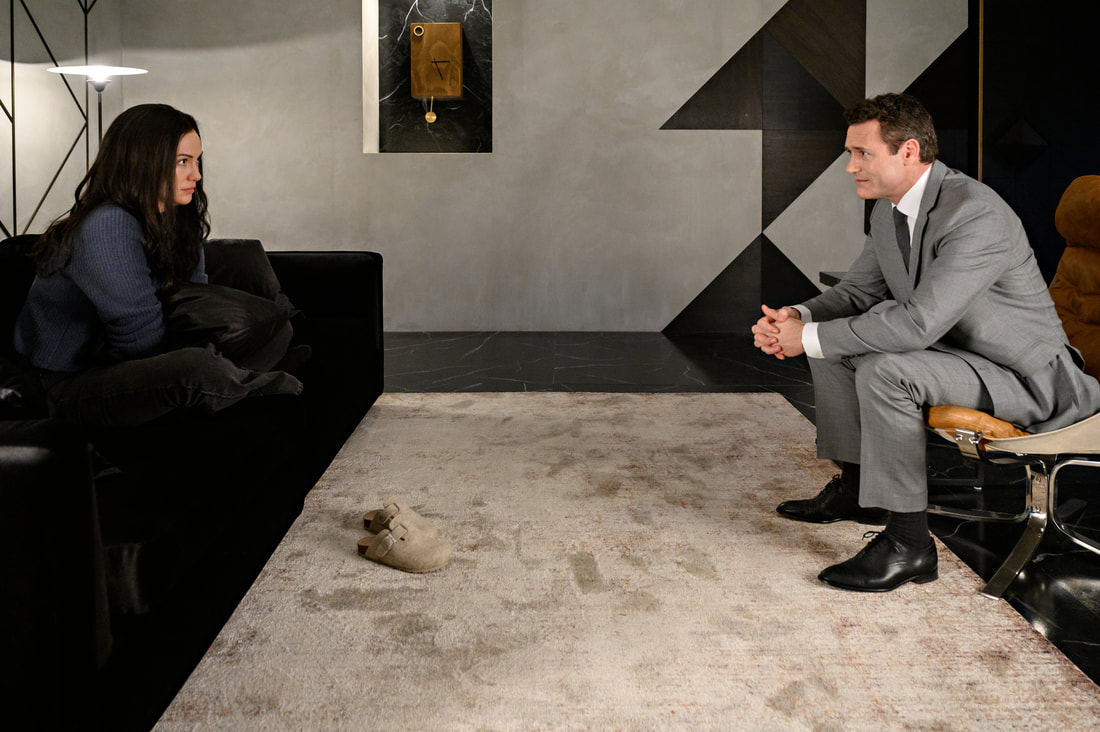 Hypnotic (L-R). Kate Siegel as Jenn, Jason O'Mara as Dr. Collin Meade, in Hypnotic. Credit: Eric Milner/Netflix © 2021. The nicest thing to be said about this movie is that it is serviceable. There’s nothing noticeably good here in any way, shape, or form. It’s like a watered down version of the most recent iteration of The Invisible Man. A down on her luck woman is terrorized by a rich man who wants to manipulate her into being with him with his magic powers. It’s an unworthy addition into the “Good For Her” genre, where a woman in a horror/thriller has to overcome those who seek to terrorize her. There’s certainly much better movies that could quench that thirst. Despite its flaws, there's definitely an audience for this movie, but not for those who care about quality.
The script is at times crazy. The villain’s plan is almost so bad that it’s good (almost). The protagonist is so unlikable that were the villain not so obviously evil, it would be complicated to know who to root for. It’s funny because there’s a conversation between the main character and the detective where they talk about how ridiculous the concept of the movie even is. In a way, that’s what makes this movie somewhat entertaining to watch, but unless this movie just starts automatically playing after you watched something else, then don’t watch. Movies like this are a dime a dozen. Without seeing this movie, you’ve seen it. Just switch out hypnosis with some other form of manipulation and it’s the same story. It’s fun in its ridiculousness, but there’s nothing of actual substance here. When it comes to Netflix, stick to the shows until awards season kicks in. Hypnotic is now streaming on Netflix. Rating: 1/5
Review by Sean Boelman
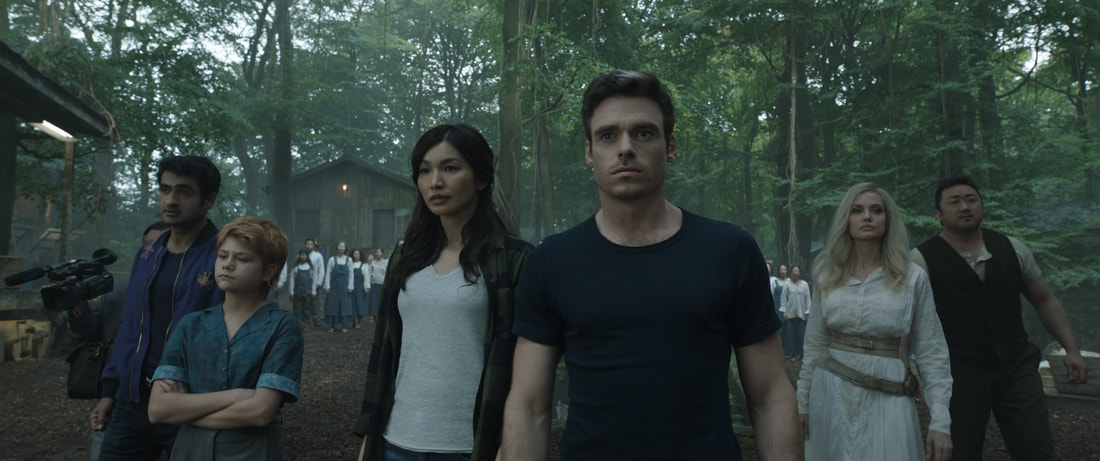
(L-R): Karun (Harish Patel), Kingo (Kumail Nanjiani), Sprite (Lia McHugh), Sersi (Gemma Chan), Ikaris (Richard Madden), Thena (Angelina Jolie), Gilgamesh (Don Lee) in Marvel Studios' ETERNALS. Photo courtesy of Marvel Studios. ©Marvel Studios 2021. All Rights Reserved.
The Marvel Cinematic Universe has attracted plenty of extraordinary filmmakers, but Eternals is the first from an Oscar-winning director (although Joe Johnston had won an Academy Award for Best Visual Effects, and Taika Waititi later would win for Best Original Screenplay). And while Zhao’s characteristic gorgeous visuals are present and welcome, the movie lacks the energy it would need to succeed.
The film follows an ancient group of powerful extraterrestrials who have lived on Earth for thousands of years, shaping the formation of civilization. As is the case with (almost) every Marvel movie, the team must fight end-of-the-world stakes, but here it takes a much longer time to get there as the first hour is very heavy in exposition. It’s clear that Zhao and the co-writers are going for something of an epic scale, hence the runtime clocking in at the second longest of the series, two hours and thirty-seven minutes. There’s enough action to keep the movie from leaving audiences completely bored, but every fight sequence in the film is virtually identical. There are some interesting themes here about playing God and the ethics of war, but the script is so heavy-handed with them that it feels unnatural. Zhao should be praised for doing something ambitious with the movie that helps it stand out from other Marvel projects, but it obviously never escapes the feeling of extensive studio oversight. 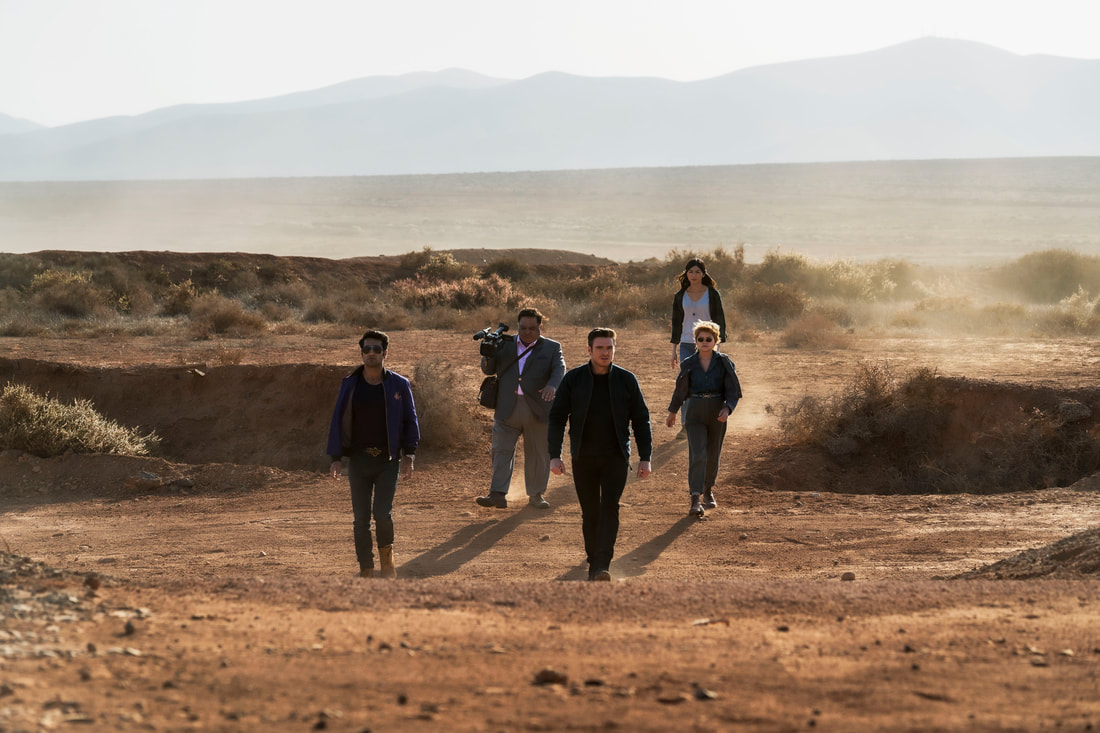
(L-R): Kingo (Kumail Nanjiani), Karun (Harish Patel), Ikaris (Richard Madden), Sprite (Lia McHugh), and Sersi (Gemma Chan) in Marvel Studios' ETERNALS. Photo by Sophie Mutevelian. © 2021 Marvel Studios. All Rights Reserved.
For a film that introduces so many new characters in one go, it does a decent job of making the audience care for them. It definitely helps that the movie ties the characters into real-world mythology (which, within the film, was inspired by these characters) but there’s also just a natural charm to many of their personalities.
This movie also has one of the biggest casts in all of the MCU (barring the Avengers films). The eponymous group is full of international superstars like Angelina Jolie, Salma Hayek, and Ma Dong-Seok, and among the other big names in the cast are Kit Harrington and Bill Skarsgård It’s crazy how many A-listers are in the cast… and also how they don’t give the most impressive performances. And lead actress Gemma Chan isn’t good enough to break Marvel’s anti-recasting rule. That said, audiences will be absolutely captivated by the visuals of the film. Of course, it’s disappointing to see such gorgeous shot compositions interrupted by CGI monsters, but that doesn’t make the backgrounds any less gorgeous to look at. The score by Ramin Djawadi is also excellent and accompanies the movie well. Eternals definitely aims higher than a lot of Marvel movies do, and while it is exciting to see a blockbuster like this embrace diversity behind and in front of the camera, it’s more often than not a swing-and-a-miss. There are enough redeemable qualities here to keep it from being a total disaster, but audiences deserve better than this. Eternals hits theaters on November 5. Rating: 3.5/5 |