
|
Review by Dan Skip Allen  Films come in all shapes and sizes, with filmmakers from all around the world contributing their unique voices. That's what makes cinema and filmmaking so exciting as an art form. A Night of Knowing Nothing is a film from India — a documentary about important subject matter that people in America maybe could have related to many years ago, in the ‘60s and ‘70s when the story took place, but could struggle to find sympathetic in today’s era. This film uses Bhumisuta Das as a narrator reading the letters of L, a student writing to her estranged lover. Das reads the letters throughout the documentary, describing the events that are going on during this time. Director Payal Kapadia uses this technique to tell this story from various points of view. The cinematography is mostly in black and white, with a few segments of color thrown in for good measure, all presented in a 4:3 aspect ratio. The footage is taken from images captured at various events in India during this time. While Kapadia’s approach is an older style, it has been used in films from this era quite a bit. 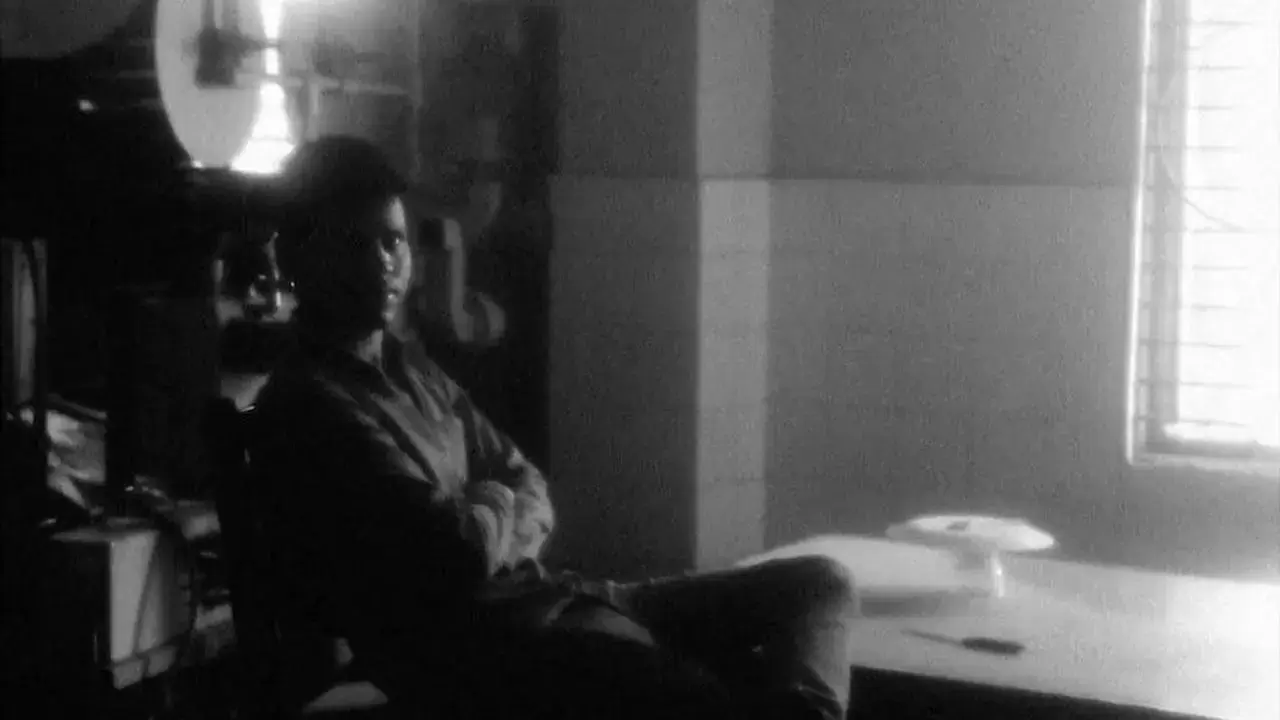 The documentary focuses mainly on younger people at universities and in the fledgling entertainment industry in India. Students are trying to make films and get their freedom from certain Indian religious dogma, such as Hinduism — a big subsection in this country. The leaders of the country put people in powerful positions that don't go along with the way many youth think at the time. It's reminiscent of our country in the same era. Many youth in this country rebelled against the powers that be.
The motto at the time in India's history was “Educate, Agitate, Organize.” This is the way the youth of India thought at the time, and the film strives to capture this through their first-hand stories. We hear of an act called the Citizen Rejuvenation Act that was put into place to bring the youth back, and a friend of the youth who dies as a martyr, giving this movement a real reason to fight against the status quo in the government. We are told these stories in the film, but we never feel a full connection. A Night of Knowing Nothing is not an easy movie to watch. Maybe younger people may relate to it more because of how the film tries to give youth in India a voice, but it didn't work for me. Although the narration and filmmaking style are compelling, the political activism and violent nature of the film can be somewhat overwhelming. I am always up to watch experimental films, but this one wasn't my cup of tea. A Night of Knowing Nothing screens in theaters as a special event on July 28. Rating: 2/5
0 Comments
WALID -- An Ambitious Martial Arts Extravaganza That Takes the Wrong Approach to Action Cinema7/27/2023 Review by Daniel Lima  There’s no greater joy than watching a scrappy independent action film made by a bunch of stunt people and martial artists. Whether a showcase for a group of hungry young guns just getting their name out there, or established veterans taking time out of their schedules to work on something that is their own, the passion that the filmmakers have for the art of action cinema is always on full display. Director Areel Abu Bakar's latest film, Walid, aims to continue in that fine tradition, mixing socially-conscious melodrama with some of the most densely packed action put to film. Unfortunately, the film goes about this in entirely the wrong way, and all the talent on display ends up going to waste. The first half of the film follows a dual narrative, bouncing between a good-hearted schoolteacher who begins to bond with a precocious local girl, and a criminal operation that is trafficking children. Those two threads come together exactly as you’d imagine, and the second half is filled to the brim with blistering, bone-cracking fights as the teacher seeks to save that little girl. Plenty of action movies force the audience to wait before getting to the action, but aside from a few quick skirmishes, most of the action here is saved for the second half. That places a greater emphasis on the film’s drama, its ability to build these characters and tell a compelling narrative, so that the audience both remains engaged until the fighting starts in earnest, and emotionally invested through the frenzied fights. Unfortunately, the film buckles under the weight of that expectation. The crime story is convoluted, featuring an ensemble of villains who lack the personality and flair to make them stand out. That this narrative is almost entirely disconnected from the emotional heart of the film — the relationship between the teacher and the girl — makes it feel particularly weightless. On the other hand, that relationship is the stuff of boilerplate indie dramas the world over, a mawkish play at heartstrings that is too transparent and simplistic to work. Bakar directs this part of the film in an abrasively amateurish fashion, forgoing deliberate compositions for shaky handheld shots that simply aim to keep people in frame and in focus. The result is a lack of a defined aesthetic that could lend this part of the film some flavor. For all the dense plotting of this first hour, by the time the action kicks off, it’s hard to care about what is happening. 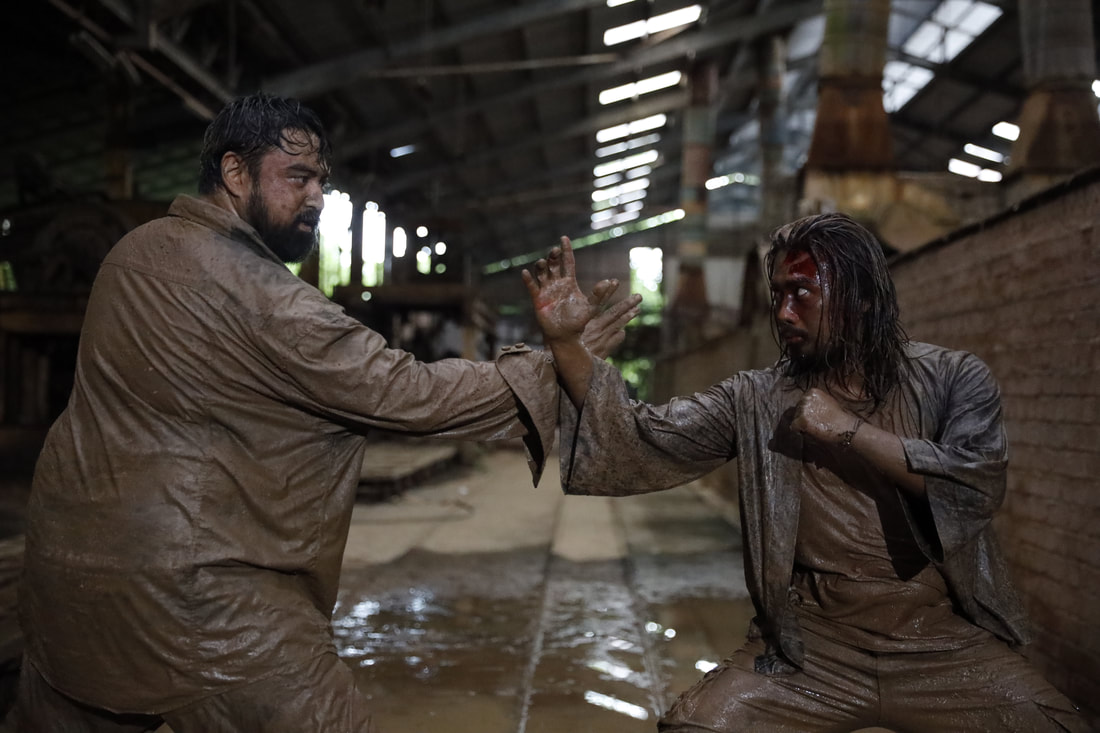 Sadly, this is where Walid reveals itself to be flawed on a conceptual level. There are plenty of action films that end with huge climaxes set in one large location that last an inconceivable amount of time. When someone like John Woo indulges in such an extravaganza, however, it’s never just relentless action until the credits roll. The characters make full use of the space, allowing for different environments to stage the action. Characters have goals that change with each set piece: save the hostages, get to the end of the hall, get rid of the bad guy. There are breaks from the action that reinforce the character work that came before, redraw the battle lines between the heroes and villains, and simply give the audience a chance to breathe and collect themselves.
None of that is true here. Just over an hour in, a fight breaks out at the villain’s compound, and for the next forty minutes, the fighting doesn’t stop. The combatants change, and the film constantly cuts between multiple bouts happening simultaneously. The only reprieve are the moments just before a new person joins the fray. The characters all feel just as indistinguishable as they did through the drama, meaning the audience has no vested interest in who wins. The fights all take place in similar-looking locations within the same building, often times with multiple fights in the same space. There is never any goal more complex than beating up the other guy, no narrative unfolding within the action. As ambitious as this finale is, it ultimately feels unbearably monotonous. The worst part is that the fights themselves are commendable. The cast is filled with actual martial artists, practitioners of silat, and the style’s penchant for incredible kicks, joint manipulation, and weapons use is on full display. The choreography, unvarying as it is, is thoughtful and complex. Some performers are more capable than others, and Bakar knows how to shoot around their capabilities. The less impressive displays are shot a bit tighter, edited a bit quicker, with zooms that follow the punches, kicks, and traps to lend a sense of impactful violence to looser movements. the truly impressive ones are captured in longer, wider takes that revel in the speed and power of the participants. It’s everything you could want from a small production like this. Action cinema, however, is more than just cool stunts and choreography. Action is storytelling, as integral to a film as developing characters, crafting an engrossing plot, establishing an aesthetic and tone. The action should act in concert with those elements: clarifying characters through movement, telling its own narrative within a set piece, complimenting the established rhythm and feel of the film. Though the ambition and passion behind Walid are palpable, and the desire to play with the action filmmaking formula should be applauded, the film loses sight of that core tenet. Walid releases in theaters July 28. Rating: 2.5/5 Review by Daniel Lima  Director William Kaufman has had a banner year, with three of his films released this month alone. Warhorse One is a lethargic vanity project that comes alive in a tightly choreographed climax. The Channel is a derivative but solid action-thriller that delivers some of the year’s best action set pieces. Rounding out this trio of releases is Shrapnel, which excises the best parts of the previous two films and doubles down on their worst aspects. The end result is bland, tedious agitprop that fails to deliver any of the thrills of Kaufman’s previous work. Shrapnel details the efforts of a Texas rancher on the U.S.-Mexican border to find his daughter, who went missing after a visit to Juarez. His search puts him at odds with the city’s cartel, and they quickly learn that he will go to any length for the sake of his family. This premise recalls any number of interchangeable, disposable thrillers, many of which are steeped in right-wing reactionary politics. The film earns place in that ignoble cinematic tradition through its portrayal of Mexico as a crime-addled, poverty stricken hellhole. Its protagonist is a physical manifestation of U.S. military might and its right to global dominance. Shrapnel revels in the violence and pain he inflicts on the supposed savages from south of the border (don’t worry, his wife is Hispanic). The moments when the film fully indulges in this ugliness are few and far between, though truth be told, they’re the only moments where the film has anything resembling a pulse. By comparison, most of the film feels inert and stagnant. The first third of the film attempts to set up the emotional stakes, and fails miserably. The characters are utterly indistinct and forgettable, voids of charisma and personality that exist simply to move the plot forward. Every scene feels like padding — two minutes of the lead driving through the desert, a flurry of establishing shots for locations that only get visited once, exposition repeated to multiple characters. It’s all incredibly perfunctory. 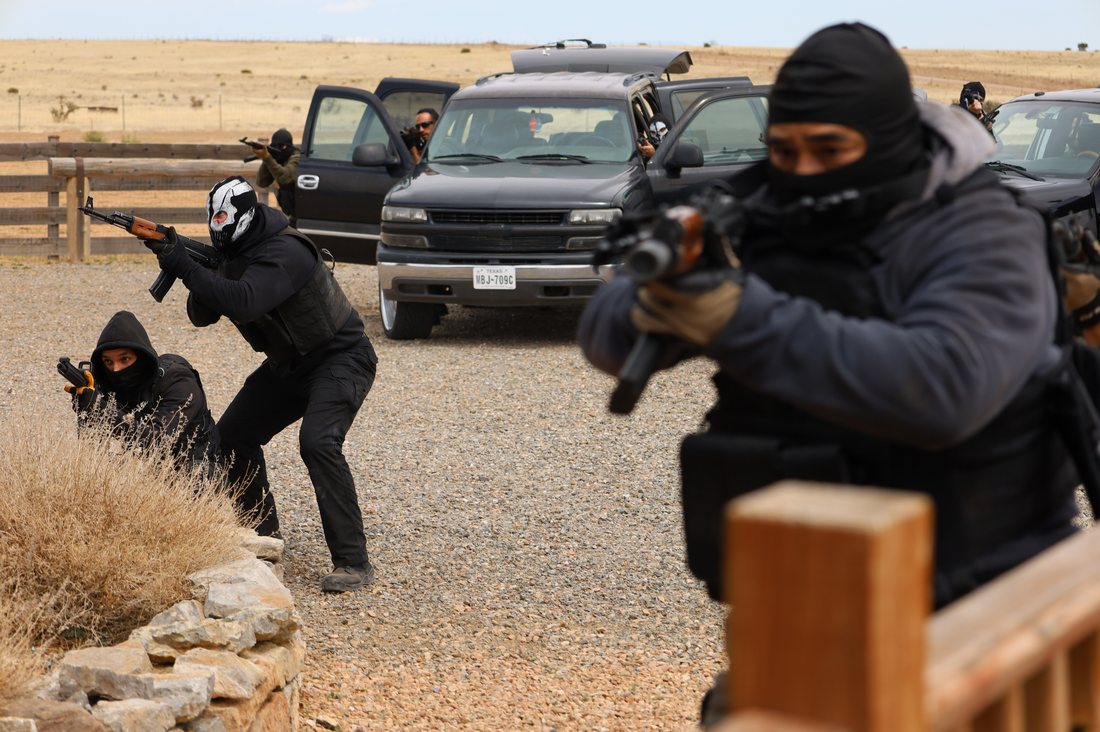 Kaufman’s strength as a director, however, has always been in how capably he handles action. The second and third acts are each taken up largely by one action set piece each, both in the condensed environments that allow Kaufman to employ the tactical gunplay that is his bread and butter. To his credit, there are a handful of inspired moments in that first scene where that penchant for creative choreography does come through, where characters use their environment in interesting ways and are forced to adapt to an evolving battlefield.
Unfortunately, it falls prey to the same lack of propulsive energy that plagues the first third of the film. So much time is spent just setting up the confrontation, and even when the shooting starts, there are long breaks that deflate any of the building momentum. The moments that work in that first shootout end up being mere flashes of brilliance. The second shootout does away with those, settling for shot-reverse shot firefights down long corridors. It would be disappointing in any action movie, but even more so in one from William Kaufman. It’s strange to say that the best part of a film was when it was at its most repellent, playing to the crassest and debased elements of its audience. Sadly, those are the only parts of this film where anything felt like it had any weight. It’s hard to imagine someone wanting to see a dry, limp, boring action-thriller that caters to unhinged perceptions of life in Central America, and not going out to the theater to see Sound of Freedom. For those who want Sound of Freedom at home, however, there is Shrapnel. Shrapnel releases in theaters and on VOD July 28. Rating: 1.5/5 ONLY MURDERS IN THE BUILDING (Season 3) -- Not as Snappy or Enjoyable as Past Seasons, but Still Fun7/27/2023 Review by Dan Skip Allen 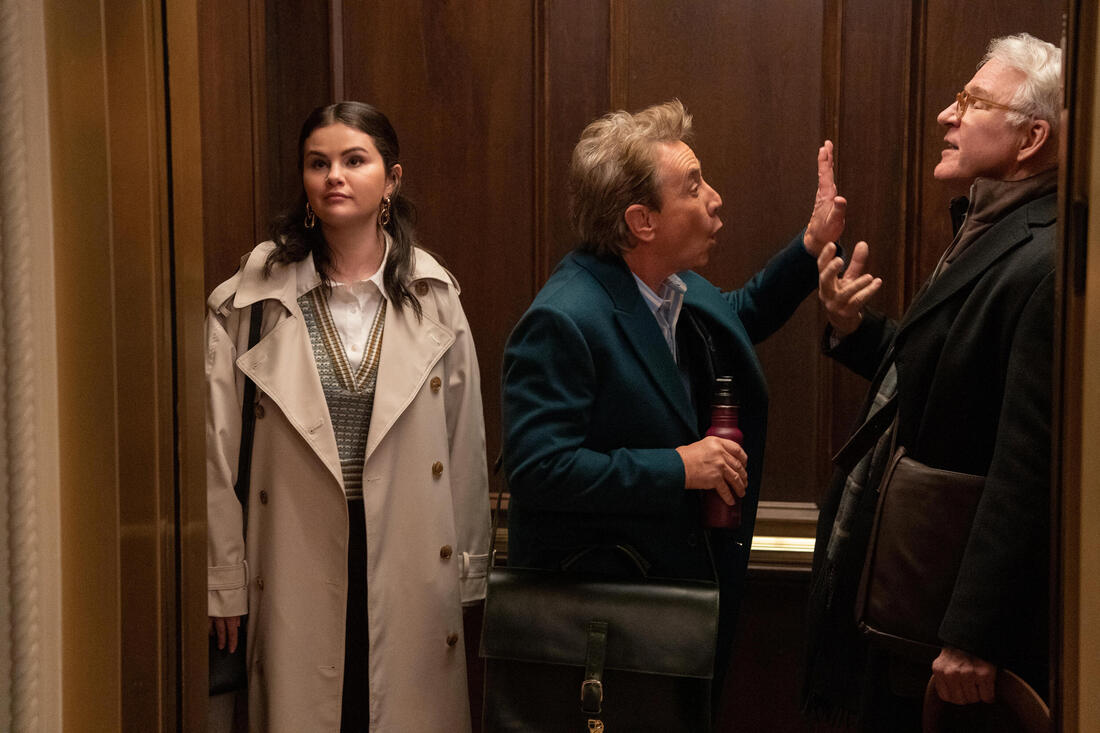 Photo by Patrick Harbon/Hulu. Only Murders in the Building took the world by storm a few years ago. It was this show that wasn't like anything on television or streaming. It starred two heavyweights of comedy — both alumni of SNL — Steve Martin and Martin Short, and child star turned megastar Selena Gomez. An unlikely trio if I ever heard of one. They made magic together in the first two seasons of this show. I laughed so much while watching it. The third season is a bit different and doesn't have the charm or laugh factor of the first two seasons. The third season is centered around a production of a new play by Short's character Oliver. He has assembled a new cast of actors for the play, including Martin's, Charles's character, Paul Rudd, and Meryl Streep, who are new members of the show as cast members of the show’s cast. The new cast members bring a fun and entertaining element to the show, but in a good turn, they aren't in every episode, which allows the original three to shine more. Gomez's character Mabel is again the center of the story. She has a good rapport with the other two guys, and she bounces back between them in the story. Her character is more concise in the story. We, the viewer, live vicariously through her. She finds clues and starts using them to investigate the murder centered in the series. I would call her the emotional support animal within the series. If that makes sense at all. Everybody relies on her to be their stability within the show. The fourth episode, mostly featuring Martin's character, “The White Room,” was one of my favorites of the series. He is supposed to sing or say a patter song about the supposed murderers in the play, which is now a musical because of the death of a character in the play. Everything he sings while doing the patter song causes him to crack up and ends up in a white room. It's pretty funny. One of the fun additions to this series is how relationships, or specifically love, play into the show. All the main characters have experienced love at one time or another in the series, but this season love is in the air quite a bit. All our main characters have some kind of love entanglement, which all play a big part in the show, but specifically, episode five shows a lot of this behavior with these characters and their significant others. It's a good diversion from the main storyline in episode 5, “Ah, Love!” 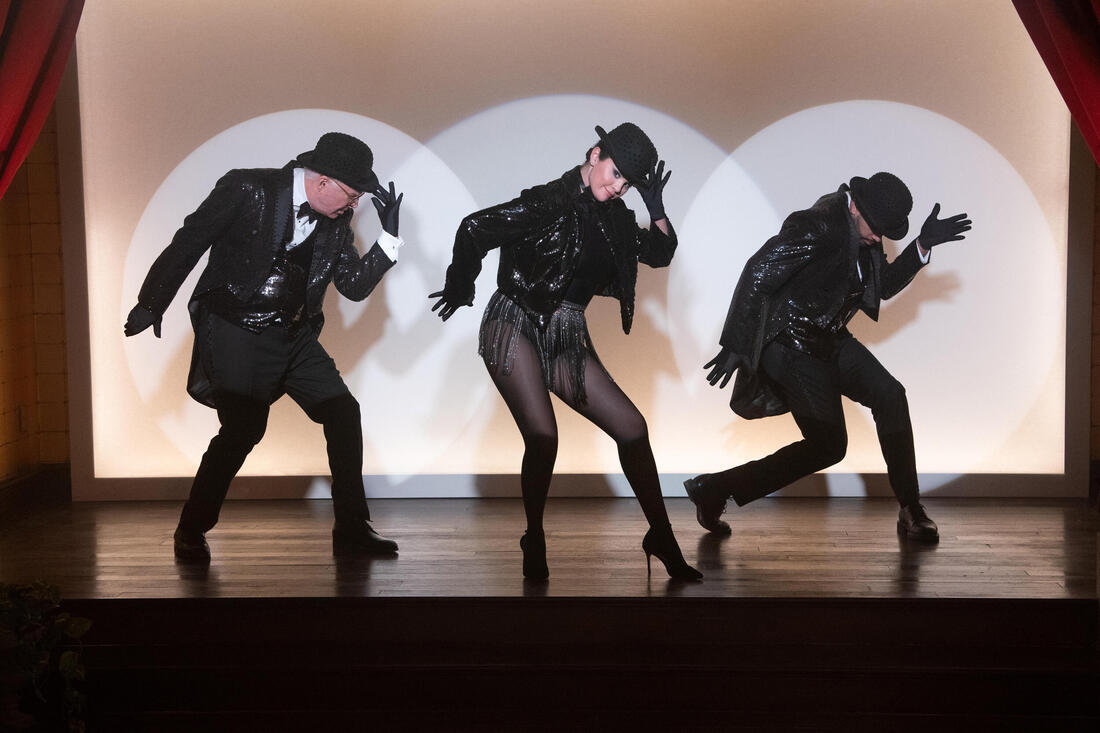 Photo by Patrick Harbon/Hulu. I love a good murder mystery, that's why I love this show so much. There are all these twists and turns that I love so much in this season, as well as the past seasons. The clues are always right there for us to see. Just like the main characters, we have to put them all together so they make sense. The obligatory miscues happen and people are accused without a warrant, but that always happens in this kind of mystery show. Eventually, the clues fall into place, though.
The Arconia is the setting of this series, but in seasons past, it played a bigger part in the murder mystery. This season is more of a glamorous place the showrunners and writers use as a place the characters love and cherish. This is a beautiful building with a fantastic set and production design. These rooms look amazing. Despite my hatred for New York, this seems like a great place to live and mingle with the neighbors upstairs, downstairs, and across the hall. The showrunners have made this a glamorous place. Season three of Only Murders In the Building starts a bit confusing and clunky, but settles into the usual fun and enjoyment fans of this series have come to know. Episode 6, “Ghost Light” is the best episode of the season. It has multiple stories going on at the same time, but the main characters all have good arcs. The unsung hero of the show is Michael Cyril Creighton as Howard. He has a lot to do this season, and he takes the challenge of that. He is an underrated actor, and I'm glad to see him shine in this role. There are a lot of clues that help everyone solve this mystery murder. Season 3 of Only Murders in the Building is a mixed bag. There are a handful of episodes that fans of the series will surely enjoy, but lose their way from time to time. The three main actors, Martin, Short, and Gomez, all have various episodes and arcs where they shine as usual. The supporting cast, Streep, Rudd, and especially Cyril Richardson, are all very good in their various roles. The story as a whole isn't of the quality of the first two seasons. And the laughs aren't as frequent either. I'm still a fan of this show, but it lacks the quality all the way around seasons one and two. It's hard for a series to continue to keep up a successful pace, as this one has, so it makes sense it takes a small dip in quality. Only Murders in the Building streams on Hulu beginning August 8. Eight out of ten episodes reviewed. Rating: 3.5/5
Review by Sean Boelman
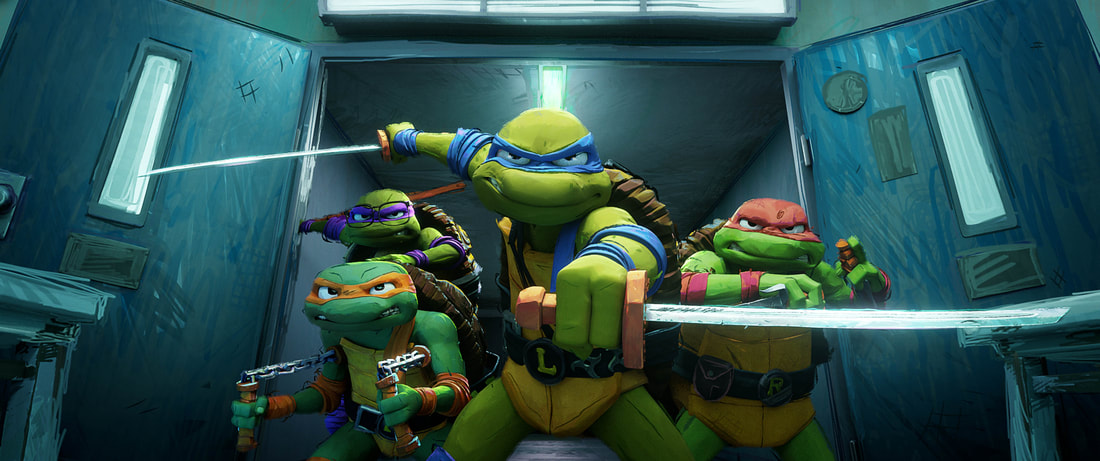
The Teenage Mutant Ninja Turtles series has gone through several attempts to make it work as a theatrically viable franchise, but it just couldn’t end up in the right hands… until now. Teenage Mutant Ninja Turtles: Mutant Mayhem manages to capture lightning in a bottle — it’s a charming, action-packed, funny, and sincere animated film, and breathes life into a franchise with a ton of potential.
In the film, the eponymous characters set out on a quest to be accepted in the human world by thwarting a mysterious crime syndicate, only to face an army of other mutant creatures. Although the film dives deeper into the TMNT lore than other recent theatrical outings in the franchise, it’s still undeniably fun and widely accessible. The biggest issue with the film is its pacing, which often feels rushed. On the one hand, it makes sense that the film feels a bit hyperactive considering that’s the way the characters are, and this is aimed at a younger audience with a shorter attention span. However, there’s a bit too much conflict, and things move a bit too quickly. As one would expect, there’s a pretty didactic theme in the film about being yourself. However, although this is not a particularly novel idea within the realm of animated films, the script explores it in a way that could be used to talk about other important issues like racism and xenophobia. 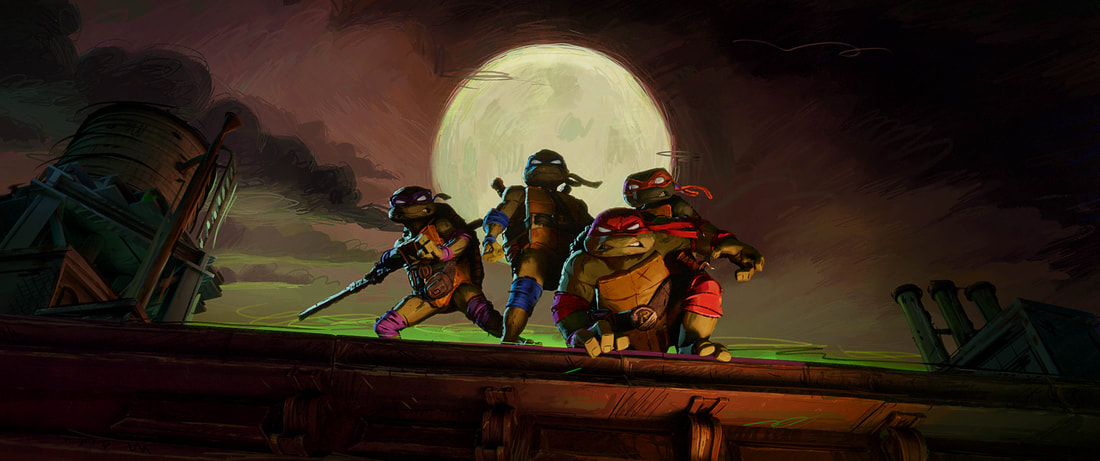
The filmmakers made the bold move of casting (mostly) unknown teenage actors in the four lead roles, rather than recognizable actors as has been done in previous films, and that swing pays off. Nicolas Cantu, Micha Abbey, Shamon Brown Jr., and Brady Noon are all unbelievably charming, and most importantly, they have tremendous chemistry to sell that family dynamic.
While the supporting cast can feel a bit overstuffed at times due to the number of A-listers in it, they all get their moments. Jackie Chan is the biggest highlight as the wise Master Splinter, especially during the fight scenes — which has what might be the most convincing voice acting for action in recent memory. Ayo Edibiri is also very charming as the Turtles’ human friend/crush, April O'Neil. And in various roles, Ice Cube, Seth Rogen, Natasia Demetriou, and Paul Rudd all shine. The film boasts the style of hyperactive, kinetic animation that we’ve seen in movies like the Spider-Verse movies and The Mitchells vs. the Machines. (It is worth noting that director Jeff Rowe was a writer on the latter film.) Although there are a few parts that are slightly clunky — namely the character design — there’s a lot of creativity on display here. Teenage Mutant Ninja Turtles: Mutant Mayhem isn’t without its blemishes, but it’s fun, often funny, and consistently heartfelt. It’s exactly what fans would want from a TMNT movie, and it will be a blast for adults and children alike. Teenage Mutant Ninja Turtles: Mutant Mayhem hits theaters on August 2. Rating: 4/5
Review by Sean Boelman
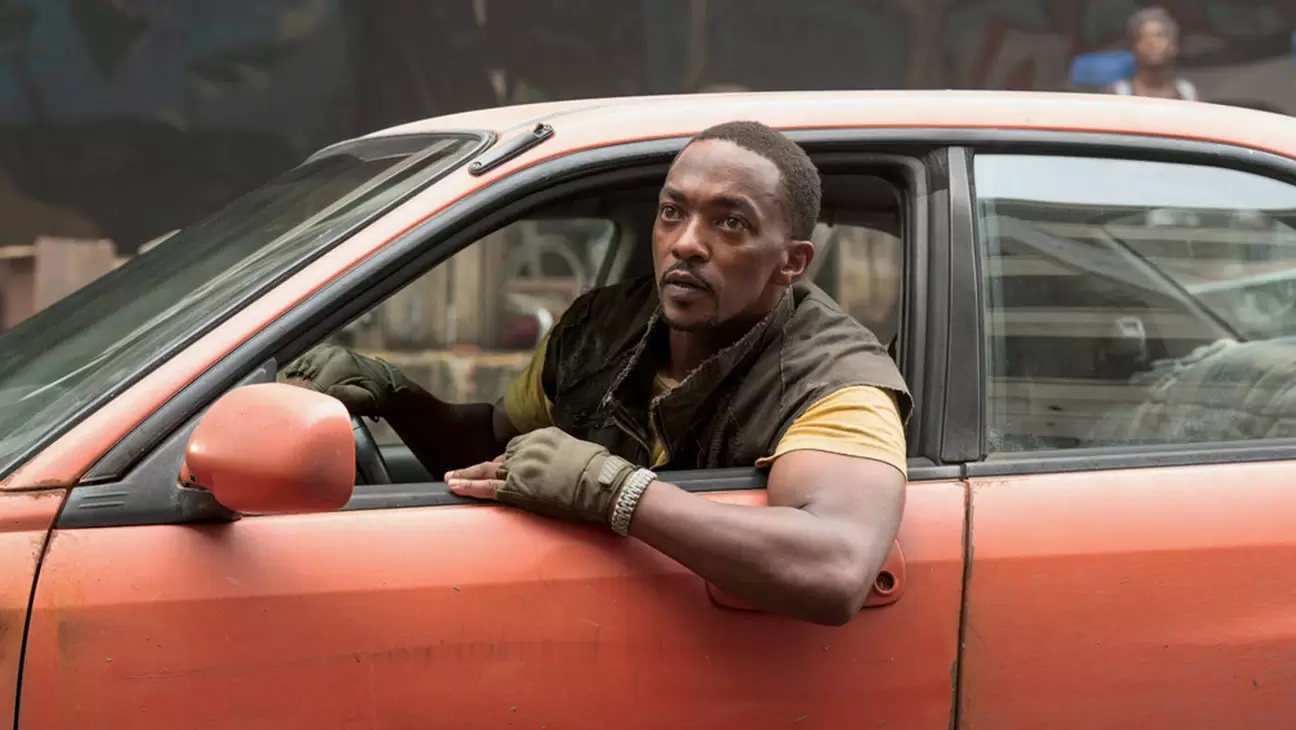
Video game adaptations are well-known to be cursed, but every once in a while, there comes around an exception that is surprisingly very good. Although it’s far from perfect, the amount of hilarious and exhilarating moments make Twisted Metal one of the most easily-consumable series in recent memory.
Set in a post-apocalyptic world, the series follows a delivery driver who spends his days making runs between safe havens through the anarchic wasteland as he is given a once-in-a-lifetime opportunity to earn his freedom. Ultimately, this MacGuffin-based storyline is only an excuse to get our characters into hijinks running into bands of survivors in the wasteland. The show is both action-packed and quick with its comedy. Add in the episode lengths all being right around a half hour — sometimes even shorter — and the series absolutely flies by. That being said, there are some portions that feel somewhat rushed. The show often jumps forward in time, rather than using tools such as montages to show the passing of time, which does make it a bit harder for us to buy into the “race against the clock” narrative. As the plots of the games are relatively thin and straightforward, it would be reasonable to ask how they found enough material to create a ten-episode series. The answer is that the show is better described as loosely-inspired by the games, with a vibe that feels much more akin to Zombieland with a dash of Mad Max. It’s a fun time, and there are a lot of easter eggs for those familiar with the games, but expect less Thunderdome and more of the 1979 film. 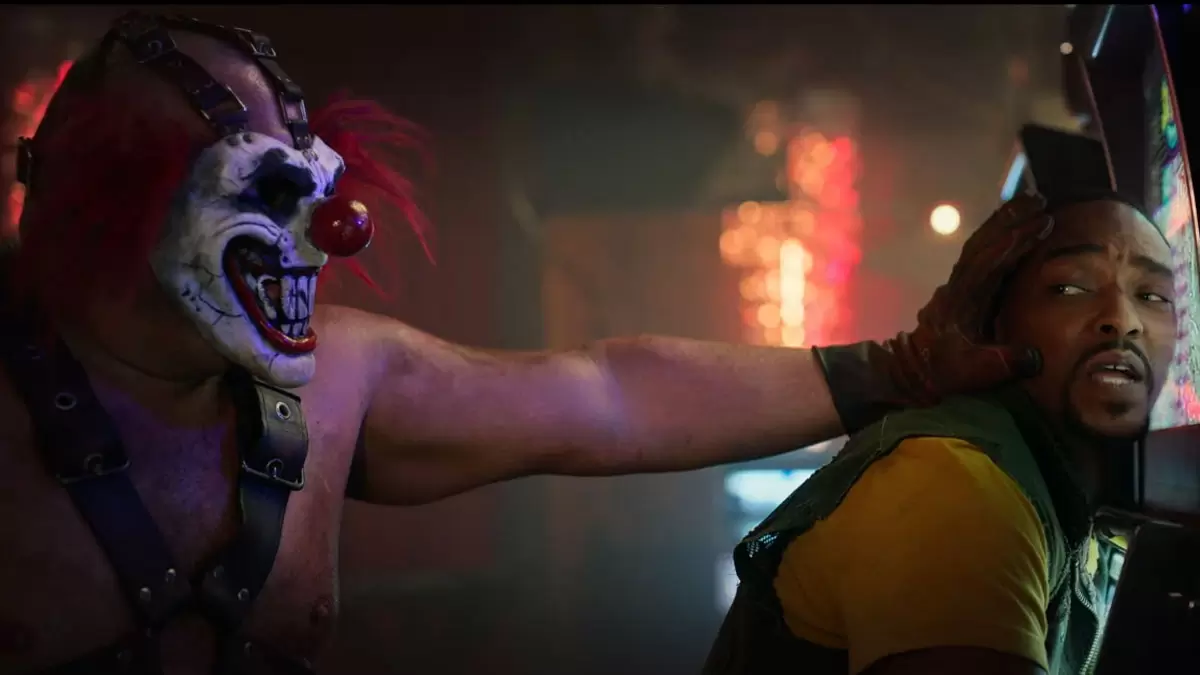
When it comes to the show’s visuals, they are a bit of a mixed bag. When the action sequences fall back on CGI, it’s blatantly obvious. However, given the heavy camp factor the show has anyway, it doesn’t detract particularly much from the viewer’s enjoyment. And while certain sets and costumes are great — the DMV torture chamber is particularly inspired — others don’t fully immerse us in the post-apocalyptic world.
After having been the sidekick or co-lead in so many franchises, Anthony Mackie finally gets his chance to be the leading man in Twisted Metal, and he truly shines. He’s charming and funny, and he nails the few hand-to-hand combat scenes he has. Stephanie Beatriz’s performance is more uneven. She’s often funny and has great chemistry with Mackie, but her line delivery often feels unnatural — especially during the more emotional moments. There are also plenty of other memorable supporting characters that would have been competitors in the game. In the supporting cast, Will Arnett is very funny as the voice of maniacal clown Sweet Tooth (one of the games’ more recognizable characters), and Thomas Haden Church is perfect as the depraved lawman. There’s also a particularly fun cameo from Jason Mantzoukas. Twisted Metal is a lot more fun than it has any right to be for a show based on a video game whose point is basically to smash other cars. What allows this to stand out from other video game adaptations is that the creators did not feel overly bound to the source material, instead using it as the inspiration for a genuinely fun action-comedy. Twisted Metal streams on Peacock beginning July 27. All ten episodes reviewed. Rating: 4/5 Review by Tatiana Miranda 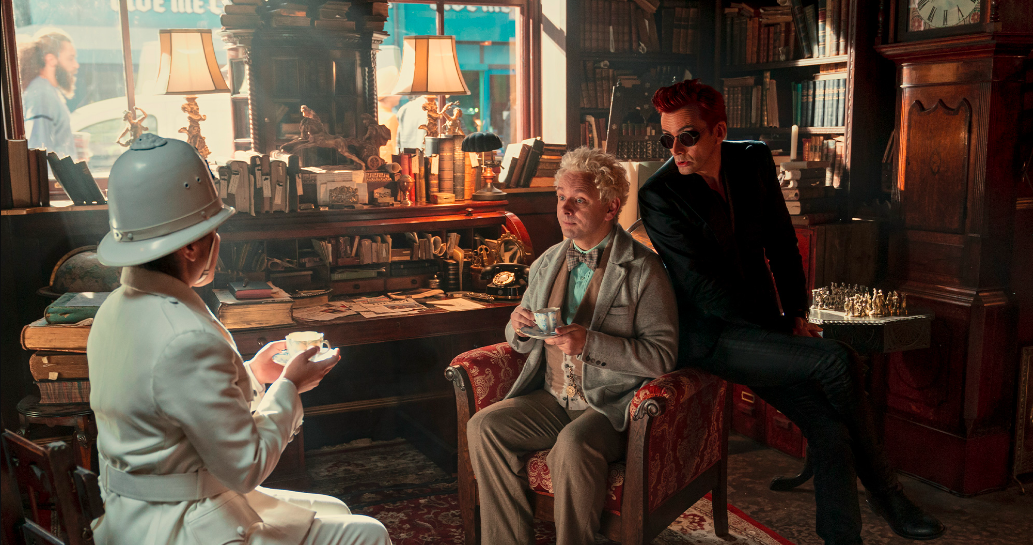 Based on the best-selling book of the same name, Good Omens follows angel Aziraphale and demon Crowley as they deal with humans and supernatural beings in modern-day London. Season 1 of the comedy series, which premiered in 2019, followed the plot of its source material, as Aziraphale and Crowley worked together to stop armageddon. In season 2, co-author of the book and co-showrunner Neil Gaiman takes inspiration from unwritten storylines he and the late Terry Pratchett had previously come up with. Along with the primary plot of the season are a handful of "minisodes" intertwined with the main episodes. These vignettes give a glimpse into Aziraphale and Crowley's past together, including depictions of historical moments such as WWII and biblical references such as the story of Job. While season 1 of Good Omens had similar storylines that featured the backstory of Aziraphale and Crowley's relationship, the minisodes in season 2 feel a bit overpowering as they take up a good chunk of the episode's runtime and distract from the main plot at hand. Even after the finale of season 1 left room for a continuation of Good Omens, season 2 doesn't seem to know where it wants the storyline to go next. The first episode opens with archangel Gabriel arriving at Aziraphale's bookshop with no knowledge of who he is or why he is there. Over the following episodes, Aziraphale and Crowley must keep Gabriel hidden from Heaven and Hell as they try to discover what happened to him. 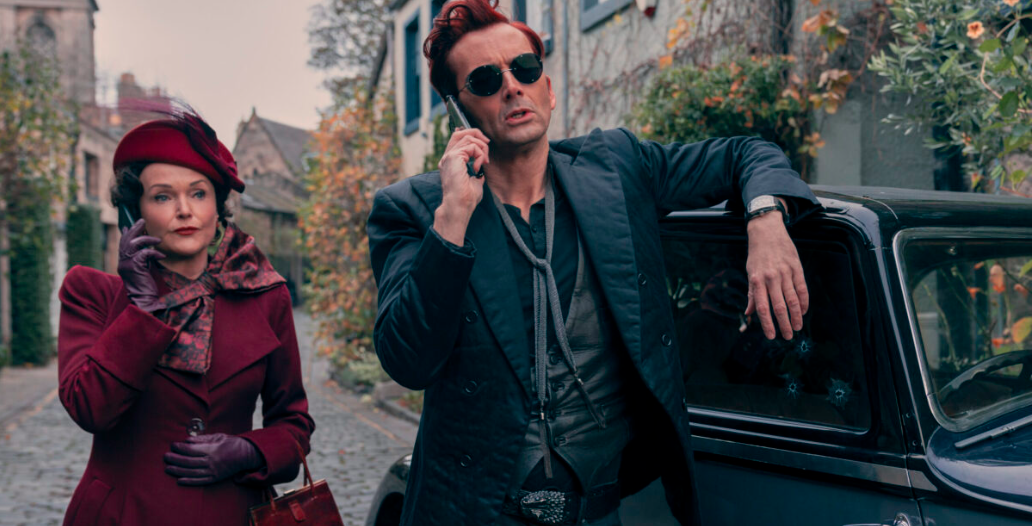 This storyline remains on the back burner for most of the season, though, and only begins to answer the mystery in episode 5. Meanwhile, other storylines — such as a romance between two local shopkeepers — are more prominent and act as a driving force for a lot of Aziraphale and Crowley's actions. Compared to the romance subplots in season 1, this storyline comes across as distracting and unnecessary.
Perhaps one of the biggest disappointments of season 2 is the misutilization of Aziraphale and Crowley's contrasting motives and their growth as characters. While the two aren't necessarily good or evil, a lot of season 1 dealt with the two working to further the agenda of either Heaven or Hell. Since they are now deemed traitors, both Aziraphale and Crowley are working based on their own motives, rather than what their higher-ups tell them to do. Although this has always been the case, as Aziraphale and Crowley regularly go against orders, their new position as outcasts would have made for some interesting character development, especially as they go against Heaven and Hell in their attempt to protect Gabriel. Overall, season 2 of Good Omens is a disappointing addition to an entertaining and well-loved show. Even with some humorous moments here and there, the disjointed nature of the plot and lack of interesting character development makes it an underwhelming season. Season 2 of Good Omens releases on Prime Video on July 28. Five out of six episodes reviewed. Rating: 2/5
Review by Sean Boelman
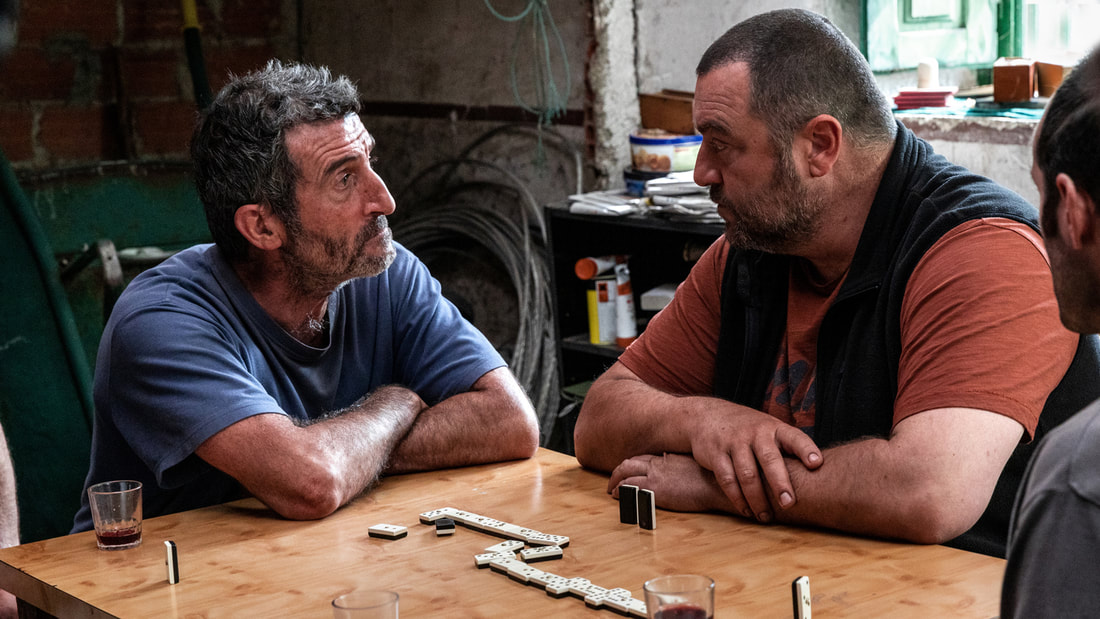
Left to right. Luis Zahera as Zan and Denis Ménochet as Antoine Denis in THE BEASTS. Courtesy of Greenwich Entertainment.
Rodrigo Sorogoyen’s The Beasts debuted at the 2022 Cannes Film Festival to great acclaim. Sadly, this seems to be a case of Eurocentrism at play, as although the film is entirely competent and means well, it presents a take on an important issue that is almost describable as tone-deaf.
The movie follows a French couple who moves to the Spanish countryside in the hopes of finding an escape, only to find their escape short-lived when they butt heads with the locals. This is the type of premise that should set up a battle of the wits thriller, but it is disappointingly lacking in the sharpness it needed to pull that genre off. The film shows promise as an examination of xenophobia. However, when there are so many other stories to be told about this problem, it’s admittedly frustrating to see a tale of xenophobia committed by white people against white people. Although these issues exist, the movie’s argument feels like the xenophobia equivalent to “all lives matter.” Although the first hour and a half are pretty compellingly paced, the film loses nearly all of its narrative momentum after that point. Ultimately, the movie feels somewhat unfocused. It either needed to be an examination of the consequences of hate, or a condemning depiction of the hate itself, but the combination of the two results in a film that feels bloated in its unnecessarily long runtime. 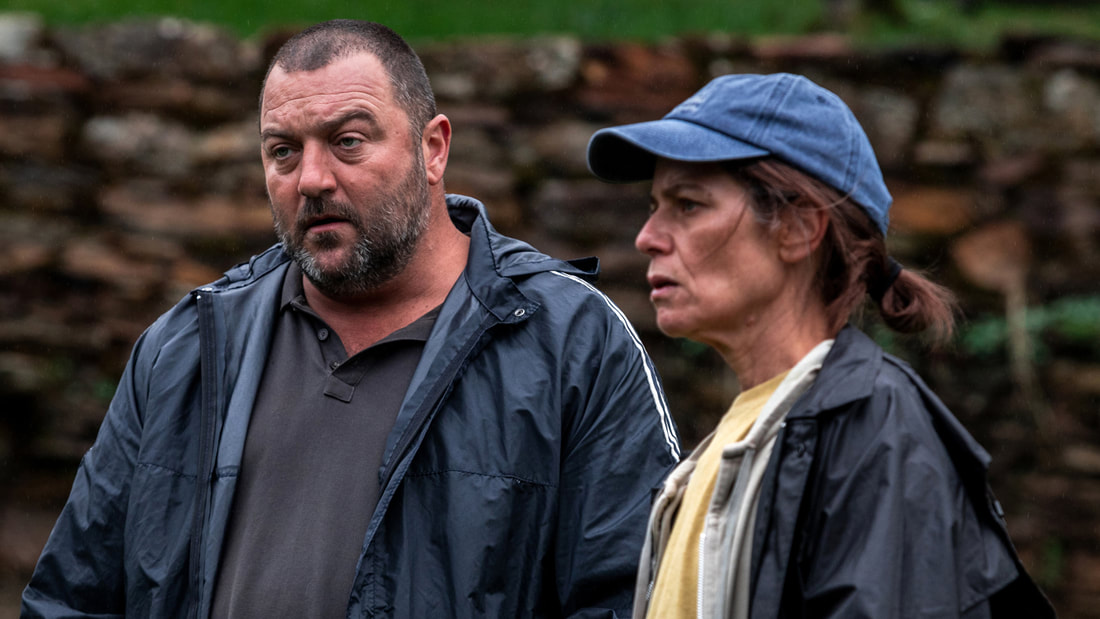
Left to right. Denis M énochet as Antoine Denis and Marina Foïs as Olga Denis in THE BEASTS. Courtesy of Greenwich Entertainment.
When you throw in an additional subplot about how the energy companies are attempting to steal the land (or at least not pay fair value) for development, there is simply too much going on in the movie. In trying to say something about a lot of things, the script manages to say very little about anything.
Sorogoyen manages to effectively maintain tension throughout the first two acts of the film through uncomfortably long takes with slow zooms. The focus is on the performances, and the entire ensemble is so captivating that the movie is entirely engaging. Unfortunately, the final act abandons the thriller genre — and it’s much less effective as a drama. It’s really a shame that the script isn’t strong, as Sorogoyen has assembled an exquisite cast. Denis Ménochet elevates the subpar material with a performance that is extraordinarily nuanced. He manages to radiate both anger and vulnerability, showing a great deal of range. Marina Foïs is okay in the first half, but really gets a chance to shine in the final act. And while a bit one-note, there’s no denying how intimidating Luis Zahera is. There are some commendable things about The Beasts, and it’s not reprehensible by any means. Still, there have been plenty of other, better films that have explored these themes in a more productive way. Your time would be better spent watching one of those instead. (R.M.N. is a recommendation that jumps to mind.) The Beasts hits theaters on July 28. Rating: 2.5/5
Review by Sean Boelman
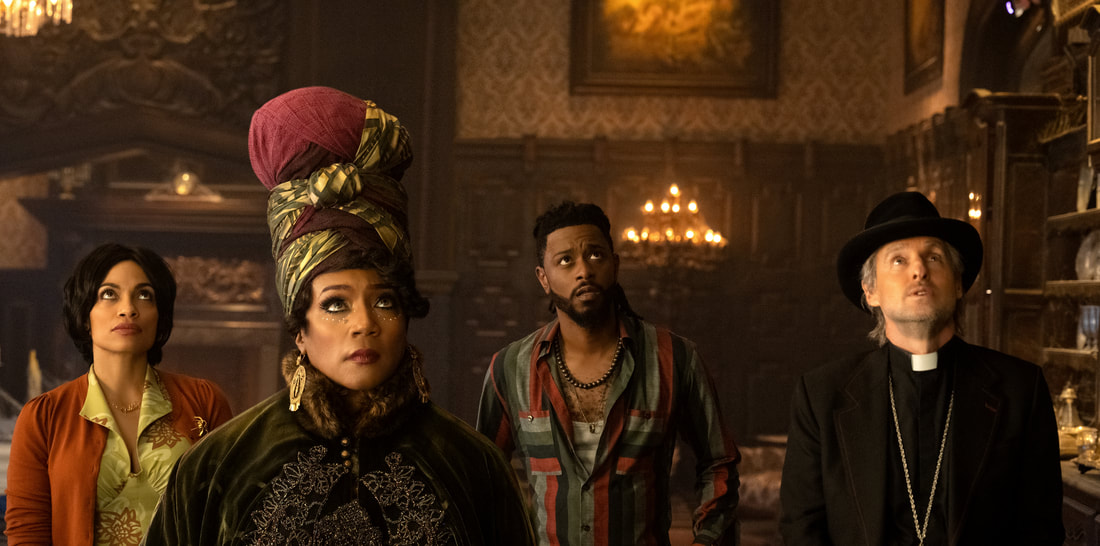
(L-R): Rosario Dawson as Gabbie, Tiffany Haddish as Harriet, LaKeith Stanfield as Ben, and Owen Wilson as Father Kent in Disney's live-action HAUNTED MANSION. Photo Jalen Marlowe. © 2023 Disney Enterprises, Inc. All Rights Reserved.
On paper, Haunted Mansion seems like it’s one of Disney’s most shameless cash grabs yet, but once you look at the talent involved, it inspires much more optimism. Haunted Mansion has its fair share of flaws, but it’s much more effective than your average nostalgia bait — a great throwback to the horror-tinged adventures of the ‘90s and ‘00s that much of the film’s target audience grew up on.
The movie follows an unlikely group of misfits who find themselves in over their heads after they are unwittingly trapped in a mansion haunted by ghosts. Compared to the 2003 Eddie Murphy film, this one is a bit more heavily inspired by the actual narrative of the ride(s), but it still supplements it quite a bit to create a satisfying story. The biggest issue with the movie is its pacing, as the film is a bit too long. Although the movie is consistently funny and adventurous, it takes too much time for the characters to encounter the main villain and get the ball rolling on the primary conflict. There’s at least fifteen minutes of this that likely could have been cut. As one would expect, there are plenty of Easter Eggs to the iconic Disneyland and Magic Kingdom attractions, many of which are worked in wonderfully well. (There’s one sequence that will have fans giddy with excitement — and you can probably predict what it will be.) But beyond those, the film contains some of the strangest and most disruptive product placement (that isn’t tongue-in-cheek or satirical) in any movie this writer can recall, including some particularly egregious mentions of Baskin’ Robbins and Burger King. 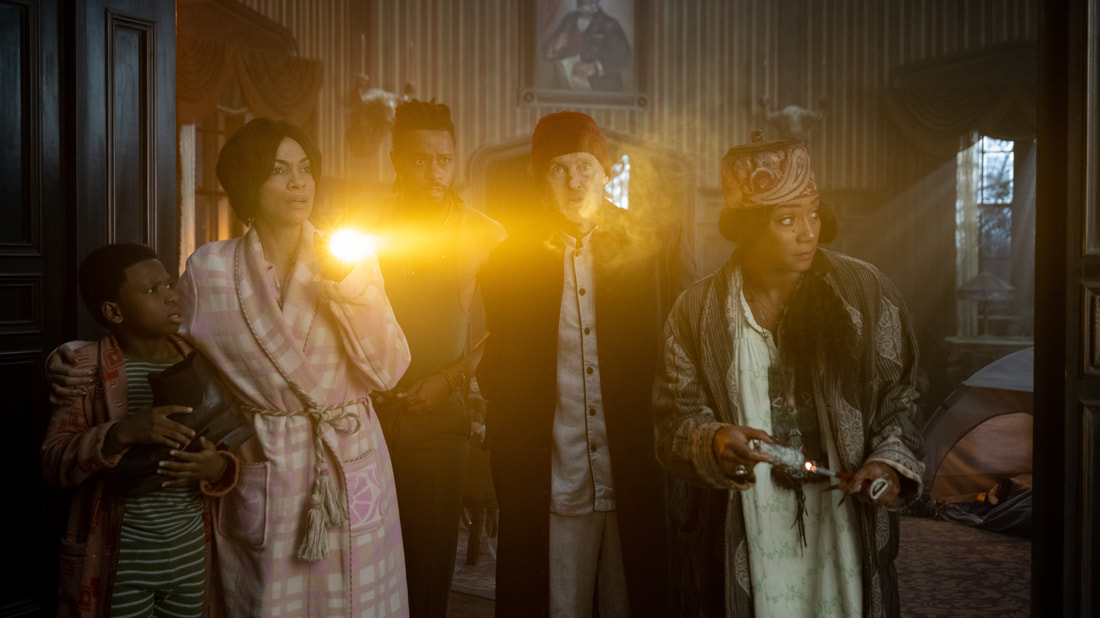
(L-R): Chase Dillon as Travis, Rosario Dawson as Gabbie, LaKeith Stanfield as Ben, Owen Wilson as Father Kent, and Tiffany Haddish as Harriet in Disney's HAUNTED MANSION. Photo by Jalen Marlowe. © 2023 Disney Enterprises, Inc. All Rights Reserved.
Viewers will likely be unsurprised to learn that, with an ensemble as massive as this, there are some players who get the short end of the stick. Many characters disappear for entire portions of the film — and with a budget reported to be north of $150 million, it’s not a matter of them not being able to afford the A-listers for the entire shoot.
Still, everyone in the cast is surprisingly game and willing to go along for the ride. Perhaps it’s nostalgia for the deep-rooted Disney lore, maybe it’s really strong direction from Justin Simien (Dear White People), or it could be — and likely is — a bit of both. Every member of the ensemble is firing on all cylinders here. Lakeith Stanfield brings so much emotional heft to the role, and Rosario Dawson isn’t far behind him. And in their supporting roles, Owen Wilson, Danny DeVito, Tiffany Haddish, and Jamie Lee Curtis are all quite funny. Haunted Mansion is also quite impressive visually, with an enormous level of attention to detail in the production design. And in what might be the film’s most shocking quality, the CGI actually looks really good. It feels like the budget was actually put to use. The score by Kris Bowers also stands out, incorporating familiar themes from the ride’s soundtrack, but with a unique spin. In terms of movies based on theme park rides, one could do a lot worse than Haunted Mansion. Although it seems unlikely to start a franchise a la Pirates of the Caribbean, it’s still a fun time at the cinema, and is a solid little kiddie horror movie you can enjoy with the whole family. Haunted Mansion hits theaters on July 28. Rating: 4/5 [Fantasia 2023] THE PRIMEVALS -- The Completed Work of a Lost Master Serves as a Relic of the Past7/24/2023
Review by Sean Boelman
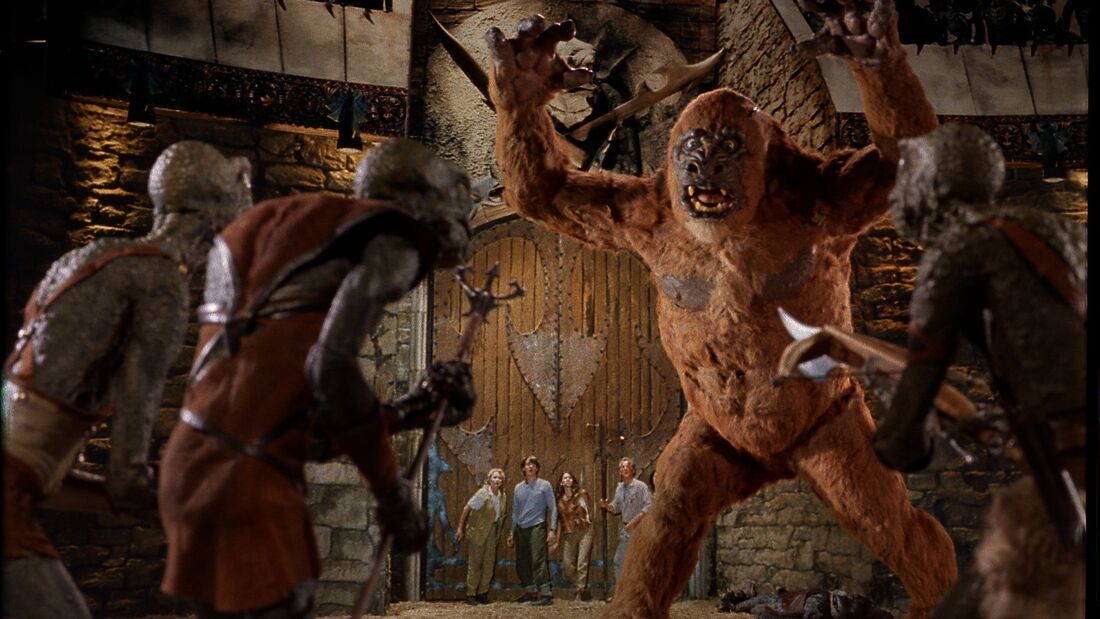
Visual effects maestro David Allen, who worked on films like The Howling and the Puppet Master series, passed away before he was able to complete work on his fantasy feature The Primevals. Decades later, the movie has finally come to fruition, and while it’s a bit scant narratively, it’s a great joy to see the work of a master completed.
The film follows a group of archaeologists who go on a voyage into the mountains in search of the legendary Yeti after the remains of an organism that seemingly resembles one are discovered, only for them to discover there are even more creatures than they could have imagined. It’s very much a throwback to classic adventure flicks, of which this maybe would have become one had it not been mired by tragedy. The movie’s origins as an unfinished passion project are evident in the pacing, which is incredibly choppy. At times, it can get difficult to determine which shortcomings can be attributed to the film’s troubled production history, and which are simply a product of the genre — but the final product doesn’t make a ton of sense, and is better enjoyed as a vibe piece than for its story. As is the case with many movies that are made primarily as an exercise in technique, the film is somewhat lacking in substance. Allen always wanted this to be a showcase for his stop motion abilities, and the world-building that goes along with them is interesting. However, one almost expects there to be either an environmentalist or anti-colonialist message here, and neither is particularly pronounced. 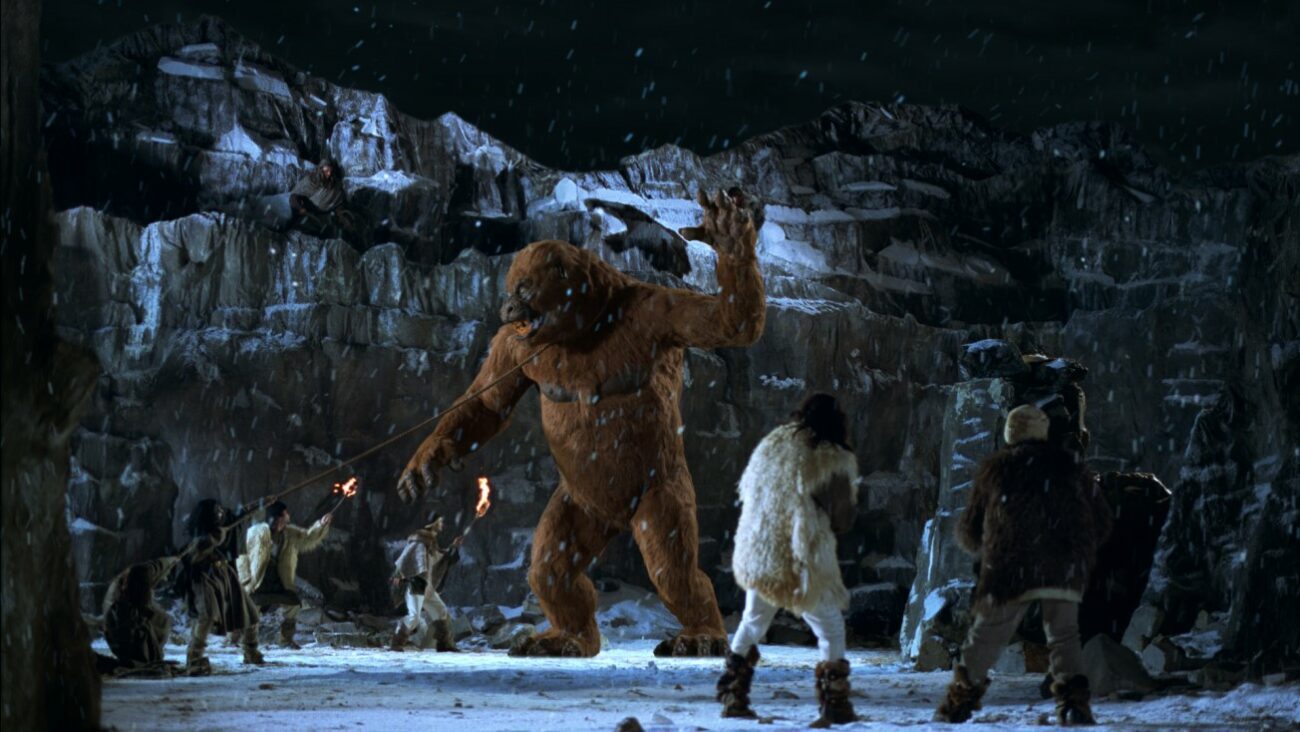
The character development is very archetypal, but considering that the movie is essentially a throwback to what was already intended to be a throwback, it makes sense that the characters are not particularly distinctive. It is a bit problematic, however, that the Asian characters in the film are completely underdeveloped.
Juliet Mills gives the only performance in the cast that actually knows what type of movie it’s in. She has the perfect camp factor, and manages to make the trope feel like it is her own. Richard Joseph Paul and Leon Russom both take their roles a bit too seriously and would have been served by being more tongue-in-cheek. Given that the production was initially started in the 1990s, the special effects feel very old-school — but that’s exactly the movie’s charm. It has a very Jason and the Argonauts-esque feel to it in terms of its blend of live action and stop-motion animation, and it gives the film an extremely fun vibe. If you approach The Primevals for what it is — a relic of the past — it’s a good time. The generic nature of the story and characters will prevent it from becoming a cult classic like so many of the movies that inspired it, but it’s still amazing that this is finally complete. The Primevals screened at the 2023 Fantasia Film Festival, which runs from July 20 to August 9. Rating: 3/5 |