
|
Review by Sean Boelman
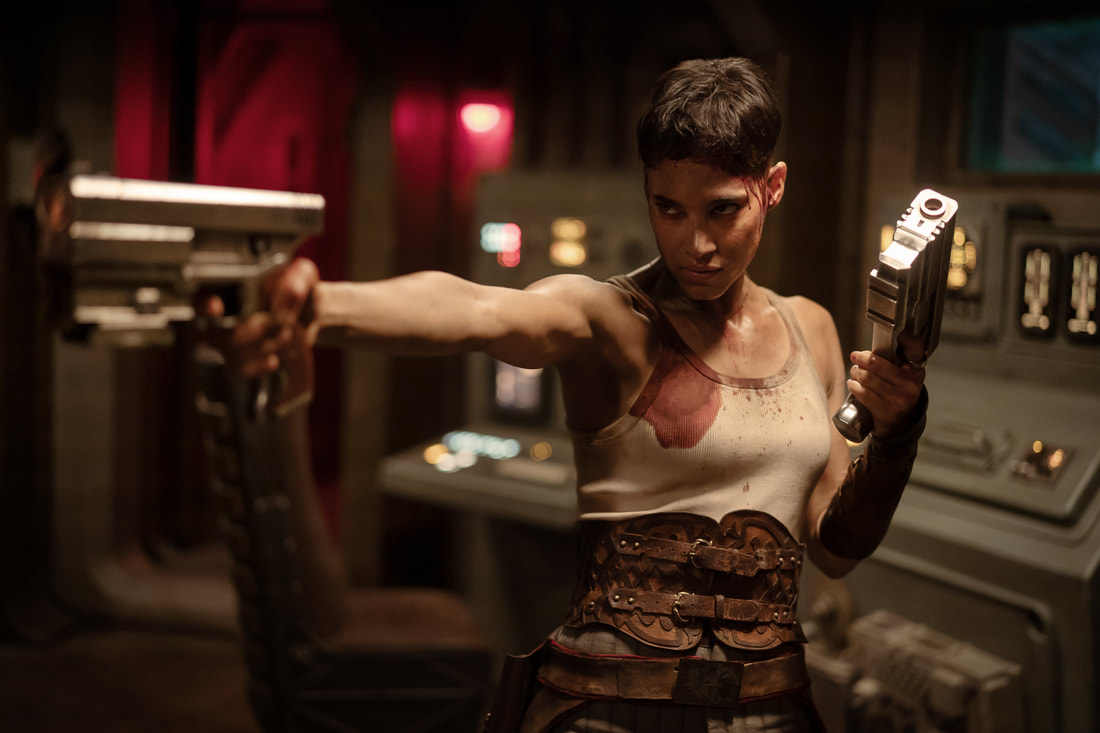
The first film of Zack Snyder's would-be franchise-starter sci-fi epic, Rebel Moon, was released in December to very little fanfare. Many were frustrated by its dependence on formula and generic tropes. Rebel Moon - Part Two: The Scargiver, shot simultaneously with the first one, isn't much less generic, but it is much more fun to watch.
This continuation picks up after the first movie, with Kora (Sofia Boutella) having killed the admiral Atticus Noble, and she and her band of warriors returning to the village, thinking they have avoided the oncoming conflict. However, as we know, Noble is not dead, and he is coming to siege the village. What comes is two hours of action ripped straight out of Akira Kurosawa’s films — it's about as blatant of a knockoff of Seven Samurai as you can find. (Worse yet, you can't even call it “Seven Samurai in Space” because so little of it actually has the sci-fi element.) One of the more surprising things about The Scargiver is that it clocks in a full 10 minutes shorter than the first movie and moves so much faster. The entirety of Part One is rendered meaningless by the opening narration of this sequel. The first film essentially functions as a feature-length version of a Star Wars opening credits scroll to this movie’s conflict. Part Two has a lot more happening, but that doesn’t make it any less generic. The area in which Rebel Moon’s generic nature becomes most evident is its character development. This sequel gives us more reason to care about and buy into these warriors’ stories, but each of their motivations against the villainous "Motherworld" (the “Empire” stand-in) is very bland. In the middle of the film, we hear the stories of each of the warriors and why they came to this fight, and they’re a rehash of every tragic backstory you’ve ever heard. While it’s incredibly easy to root for a band of peasants sticking it to the man, you might have a hard time remembering their names by the time the credits roll. 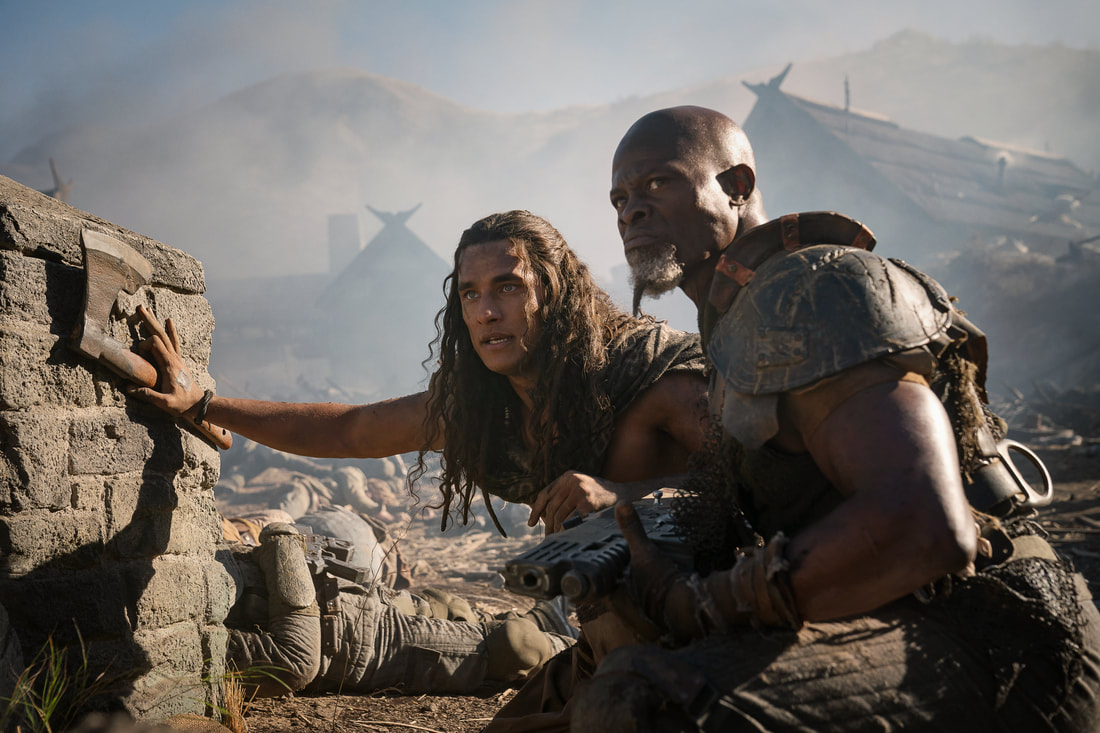
If audiences take one thing away from Rebel Moon - Part Two, it should be that Skrein is a much better actor than we give him credit for. Although his role is ridiculous, he acts the hell out of it. His inspired, menacing turn as the antagonist is the main thing that keeps the movie entertaining.
Unfortunately, the rest of the cast does not fare the same way. Boutella is not a compelling lead. Any of the allure she has shown in previous films is absent here in a role that is essentially a blank slate, and she is not able to paint on it. Djimon Hounsou is fine, but nothing particularly spectacular. He does the same thing here as he does in every other movie. Anthony Hopkins is humorously wasted. The rest of the cast makes little impression. Of course, most people are watching Rebel Moon for its visuals and action. Although the film has many of Zack Snyder’s stylistic flourishes, it's much less inspired than a lot of his work. The world isn't very distinctive, feeling far too Earth-like for its own good. From a below-the-line standpoint, the CGI, score, and sound design are all solid but not astounding. Rebel Moon - Part Two: The Scargiver is certainly more movie than its predecessor. There's more story, more action, more slow motion, more cheese, and more of everything else you would expect from late-stage Zack Snyder. Whether that's a good or a bad thing to you depends on whether you're a fan of the filmmaker. But do we need four more of these? Probably not. Rebel Moon - Part Two: The Scargiver hits Netflix on April 19. Rating: 3/5
0 Comments
Review by Daniel Lima 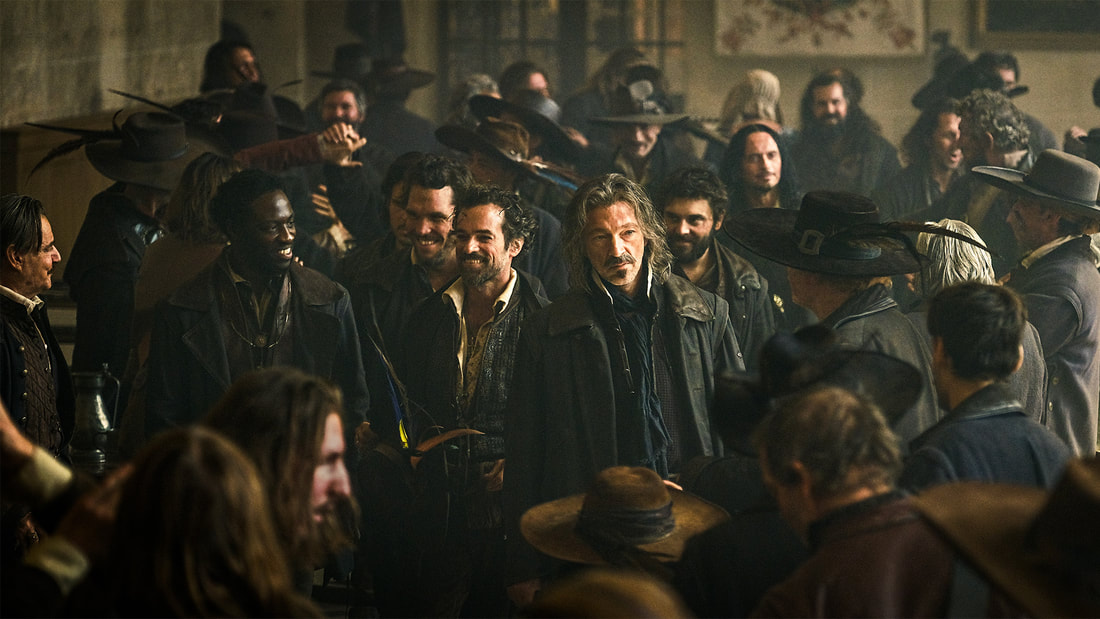 The first part of the latest adaptation of Alexandre Dumas's classic book The Three Musketeers was a surprising amount of fun, a lavish production filled with intrigue, romance, and action. That remains true in The Three Musketeers - Part 2: Milady, yet it feels like the spark has gone from the back end of this diptych. Where the previous film flies by, like the rousing adventure novel that inspired it, this ambles along without a clear sense of direction. As impressive as the production value is, it cannot cover for a lack of narrative momentum. Picking up right where the last one ended, the fresh-faced musketeer D'Artagnan wakes up imprisoned by an unknown adversary, having just witnessed his paramour being abducted by yet another unknown foe. From there springs yet another tale of convenient alliances, double-crosses, love, and brotherhood. Hopefully, you remember a good deal of what happened in part one; personally, the "previously on" segment at the start was insufficient, and it took a good amount of time before I was on the same page as the characters. The two halves were shot at the same time, so many of the observations about the first can be ported over to the second. The performances are all fine, with Eva Green being a particular standout here, lending her character a vulnerability previously unseen. The film's scale is impressive, though occasionally undercut by the drab palette and perfunctory compositions. The action is again a series of faked long takes, robbing the fights of any rhythm and doing no favors for the leads, none of whom seem particularly skilled at fight choreography. 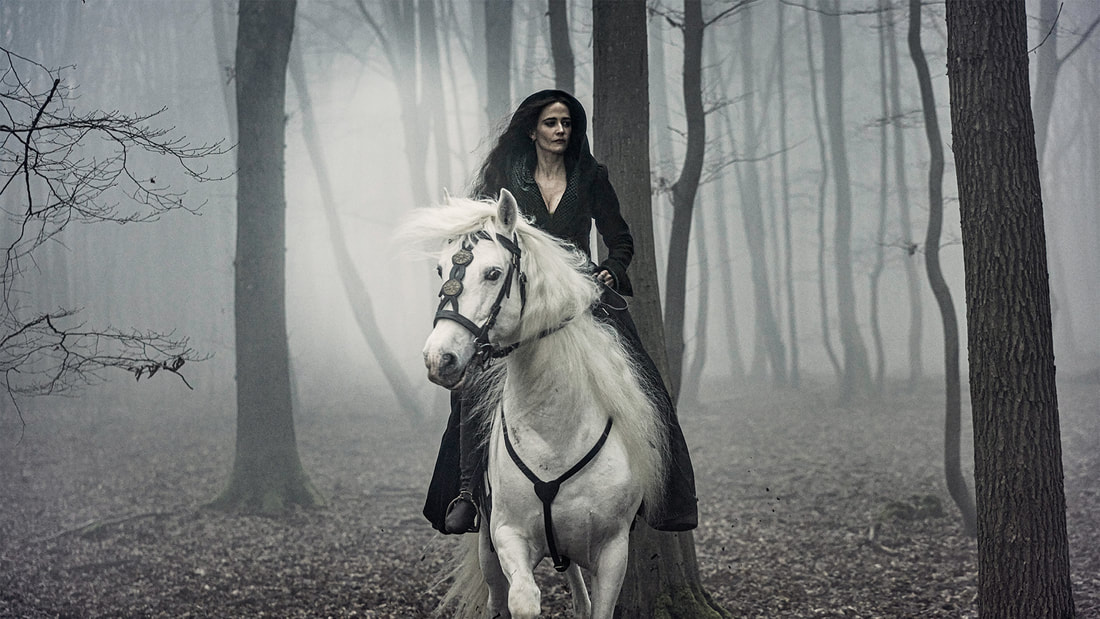 That is not where this entry falters. Where there were multiple narrative threads in the previous film that depended on the direct actions of its protagonists pushing the story forward — romantic interests being pursued, conspiracies being untangled, bonds being forged — all the characters here are relegated to reacting to circumstances that arise arbitrarily. It's a change that leaves the protagonists idling about, confoundingly inert, and passive even when one would assume their goals are time-sensitive. Combined with a comparatively sprawling story, one that sees most of the ensemble uprooted from the Parisian splendor that was their home, the result is a lack of focus that makes it hard to remain engaged with what is happening.
While I am only vaguely acquainted with the source material, it does seem like the adaptation is unduly constrained by it. Changes to the narrative and characterization — particularly of Eva Green's character, who christens this installment — that are meant to modernize a two-hundred-year-old story ultimately must still conform to its beats, leading to a work at odds with itself. Moral ambiguity is certainly not a storytelling flaw, but the clouded portrait the script paints feels less like a conscious choice and more the result of contradictory motifs and themes. This culminates in a finale that feels mean-spirited, rushed, and incomplete, a far cry from the clean ending of the previous movie. It is a sour note for The Three Musketeers - Part 2: Milady to end on, but that isn't to say it's a wholly unpleasant experience. The attention paid to craft is true for the entire production, and though there is no clear sense of purpose to anything that occurs, it at least does so at a decent pace. As clumsy as this landing is, it still leaves me interested in actually picking up the book to see whether this speaks to a weakness in the foundation or in the building. The Three Musketeers - Part 2: Milady hits theaters on April 19. Rating: 3/5 Review by Daniel Lima 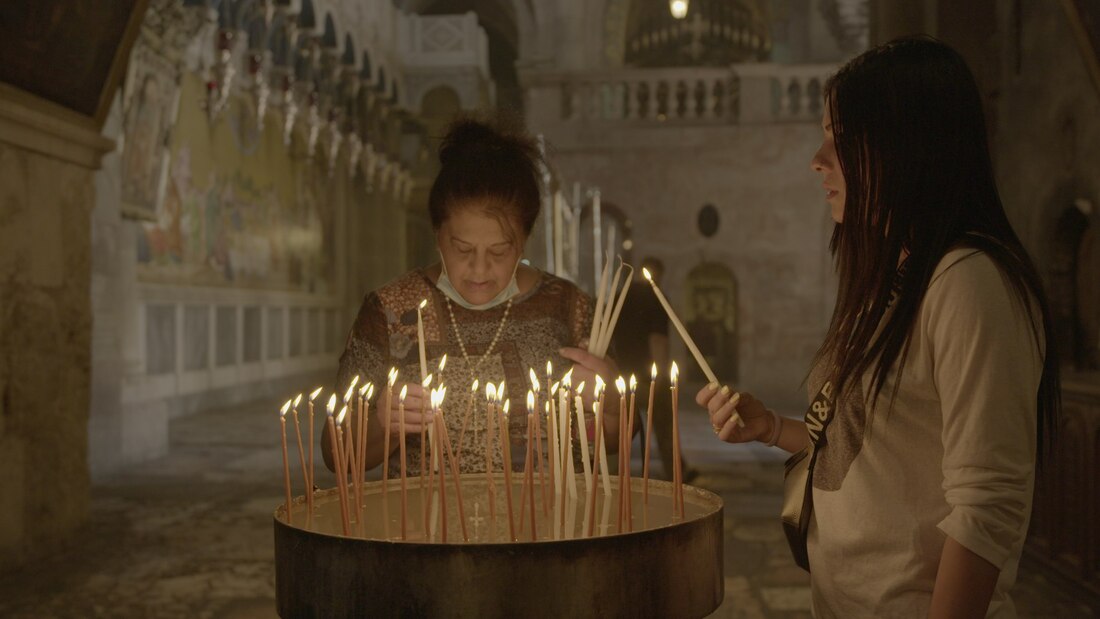 Mourning in Lod opens with text informing the audience that the city of Lod — Lydda to the Arab residents — is one of the "mixed cities" of Israel, with a large population of both Jewish and Arab Israelis. Absent from this context is why this is the case: while the city had an Arab majority for over a millennium and was included in the original UN plan for the state of Palestine, the city was annexed by Israeli forces in 1948, killing hundreds and expelling tens of thousands of Arabs from their homes. Whatever the intentions of director Hilla Medalia, this sets the tone for the rest of the documentary, a human-interest story that ultimately reveals more in what it omits than what it shows. The film charts the story of three families brought together by civil unrest in May 2021 during a period of intense conflict between Israel and Palestine. Musa Hassuna was an Arab Muslim citizen who was killed while walking home by an Israeli settler; Yigal Yehoshua was a Jewish Israeli citizen who was killed while driving home by an Arab protestor. Yehoshua's organs were donated, and his kidneys went to Randa Oweis, an Arab Christian citizen. Through interviews with the families and following them in the wake of these tragedies, the film explores the emotionally charged atmosphere of Lod/Lydda and laments the pain it takes to bring people together. While the film positions itself as an exploration of the city through this unique microcosm, it is first and foremost about these three families that found themselves connected by chance or fate. Their testimonies are indeed moving, a mix of anger, sorrow, and appreciation for the people in their lives and their community, as volatile as it might be. These moments are when the film is at its best, capturing the void that the death of these two men has left, as well as the new lease on life afforded to another. To give credit where it's due, Medalia doesn't shy away from the disparate realities that the Arab and Jewish families experience in Israel. Most of the scenes with the Hassuna's family center on the protests led in the aftermath of Musa's murder, with his killer's plea of self-defense accepted by Israeli authorities. Meanwhile, the entire Arab community feels the pressure in the aftermath of Yigel's murder, and the accused are quickly rounded up and held awaiting trial for years. There is a clear empathy for the struggles of Israeli Arabs. When Musa's father furiously attests to how little the government cares for people like him, it feels every bit the unvarnished truth as the moments where he cries over a son taken from him far too young. It's a commendable thing to include in a documentary such as this.  That being said, in rooting its own perspective on the conflict within the experience of these families, Mourning in Lod creates natural limitations in how much insight it actually has to offer. As marred by tumult and tragedy as this story is, it still ultimately is portrayed as something of a silver lining. There are scenes of the various members of the Hassuna, Yehoshua, and Oweis families interacting with each other, expressing their dismay at the state of their city, being genuinely appreciative of each other's company, and joining each other in their grief. Though the film is frank about the systemic discrimination faced by Arab Israelis, it stops short of giving voice to any solutions or even simply singling out an ultimate culprit for the discrimination. The plight of these people is acknowledged, but only as part of a larger cycle of violence, a heinous evil with no perpetrator. If the film was actually an impartial observation of these people and the lives they led — or at least adopted the veneer of impartiality — this could be excused as a consequence of adhering to the subjects' worldview, that they themselves see the conflict as something bigger than them and impossible to seek an end to or redress for. Putting aside that this does not seem to be the outlook of at least one of the families, this is a movie that uses the cinematic form to create a certain vision of reality. This is a slickly produced doc, clearly shot with an intention that goes beyond the capabilities of merely capturing candid moments. The images are skillfully composed, attention is paid to lighting and how people are positioned within the frame, and the score loudly announces to the audience what they should be feeling at any moment. Most egregious, however, are the scenes that are clearly staged. When the Oweis family shows up to Yigal's sloshim, they do not immediately leave their vehicle and must be coaxed out by his brother. It's a moment that might be heartwarming if one doesn't stop to think about how the camera crew had the foresight to set up both in the car and outside it for a proper shot/reverse shot. When Musa's widow visits his grave with their daughter and tearfully tells the child to speak to her father and promise to become a doctor, it's hard not to look at the tight, carefully composed shot of their faces together and wonder if they've been coached on what to say by the filmmakers for a scene that would be perfect for the movie. Similar scenes litter the entire runtime. Perhaps these moments were completely natural, with absolutely zero input from the production team. The point is that they don't feel natural; instead, they come across like the filmmakers utilizing the language of cinema to present a heightened version of reality. It's certainly no crime for the director to make something cinematic. Still, the manufactured quality of these moments calls attention to the role of a director in a project such as this. 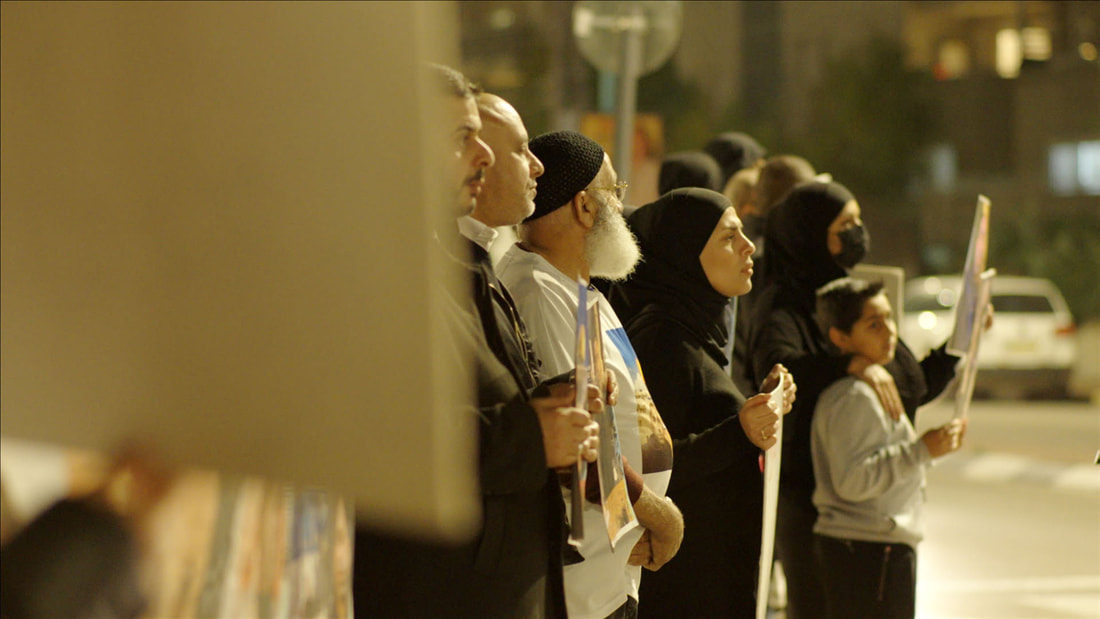 This begs the question: Why this heightened version of reality?
Why, in a city whose violent and forceful annexation by a colonial power is still within living memory, with a history of systemic discrimination and far worse against citizens within borders both disputed and undisputed, would one choose to tell a story with no ultimate sense of resolution or justice? Why is that oppression the backdrop to a personal story of unity, a borderline feel-good narrative that does not reflect the environment that it sprung from? With so many stories that speak to the struggle of the citizens of Lod/Lydda, why tell this one? Mourning in Lod is a film that genuinely seems to have its heart in the right place, full of empathy and a genuine love for these people who were able to transcend division and find some small measure of peace among each other. That said, it fails to provide a broader critique of the conditions that so dramatically affected the lives of its subjects, nor does it ever articulate a thesis for what this story has to say about those conditions. If we are to accept that there is a real power in documentary filmmaking to expose the truth and say something of substance about the world, then a film that so studiously avoids taking a stand can only be seen as a disappointment. Mourning in Lod premieres in theaters April 19, and arrives on Paramount+ May 17. Rating: 2.5/5 Review by Joseph Fayed 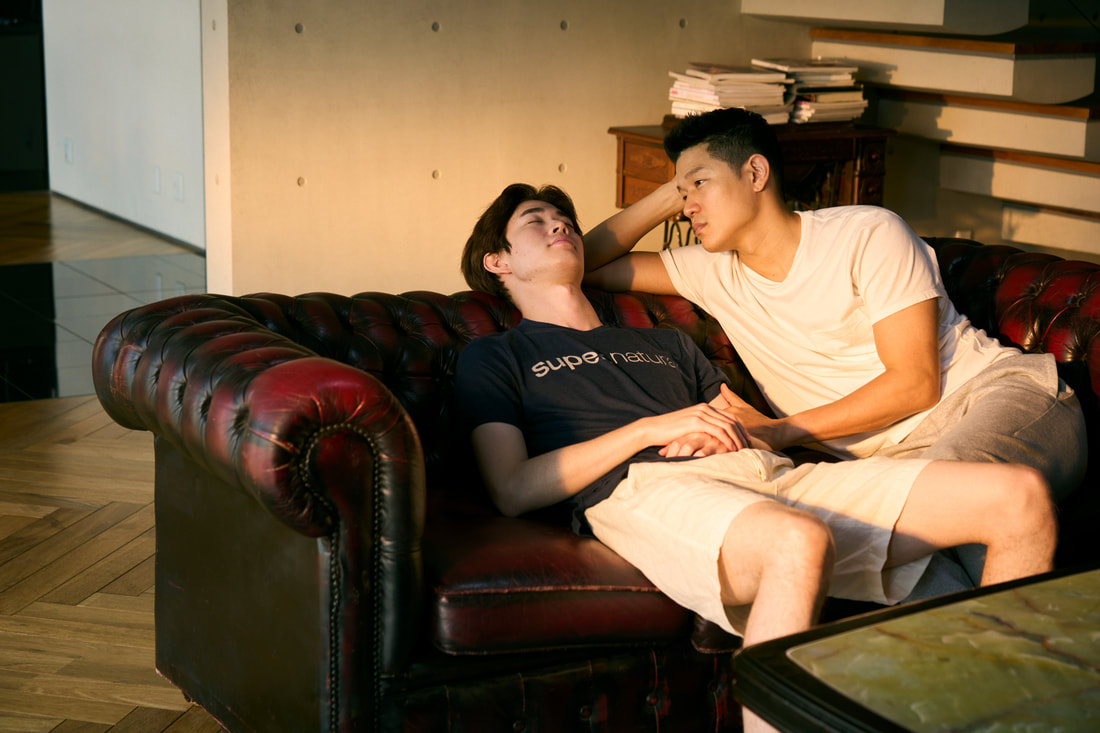 Egoist doesn't ask its audience how one should process grief, but instead how you live with it when it is all you have known. This heartbreaking Japanese queer drama puts emphasis on personal tragedies. But with its depressing themes comes a great challenge, a script that deserves to be more mellowed out, and with certain rushed plot points, it feels the opposite was happening. Mr. Kosuke (Ryohei Suzuki) is now an openly gay fashion magazine editor in Tokyo. Growing up, he lived in fear of his true identity and lost his mother, too. He meets Ryuta (Hio Miyazawa), his new personal trainer, and the two grow very close. He soon meets Ryuta's mom and feels a connection to her, just like he had with his mother. Then, one day, Mr. Kosuke receives news no one expected that puts deeper meaning on the relationships he has. One of the best things the film offers is the romance between its two leads. The strong chemistry between Suzuki and Miyazawa is present throughout. Opposites, especially in social classes, rarely attract, contrary to what popular culture has taught you. However, there is sincerity presented between the two main characters that causes sparks to fly and doesn't feel cheesy. Mr. Kosuke's sheer generosity towards Ryuta is not met with any third-party opposition. I could see how one would find this boring, but those scenes of them being cute together carry you through most of their relationship and the best parts of the film. 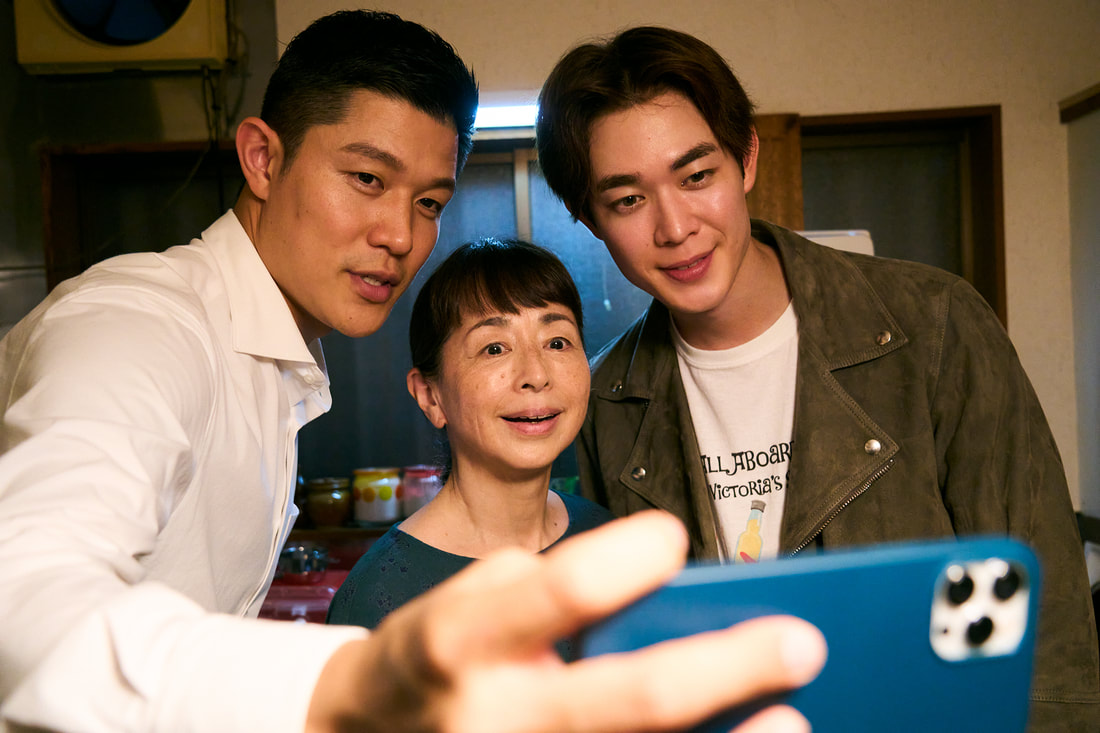 What the film doesn't properly address is its mommy issues. Everything centered around Ryuta's mother unleashes chaos — and not the fun, campy kind. Her introduction serves as the moment when the pacing of this queer romance becomes too rushed for enjoyment. Her character as a whole feels shooed in almost. The little buildup in anticipation of her on-screen arrival contributes to this feeling. Her introduction, set over a homemade dinner, needed to happen before the end of the first act as her son's key characteristic, that he had a mom he was very close to, remained an afterthought for far too long.
Death is another topic this film has absolutely no idea to approach. It's implied Mr. Kosuke has been through hell and back in his life, so when another death occurs in the climax, we begin to see him crack. This film takes the title from most horror films for a most unexpected death. But it's unintentionally hilarious how melodramatic Ryohei Suzuki's acting becomes from this point forward. His reaction to this untimely loss doesn't feel like the cathartic release he's been waiting for. It comes across as constipation with two tears — one from each eye — for dramatic effect. Still struggling to keep up with the pace in the latter half, the grim reaper decides to make a more drawn-out departure for another character. At least this one could be blamed on illness, but Mr. Kosuke and his kiss of death illicit heartbreak one last time. Egoist is a film that is held back by grief and family. Its romance had strong promises but intertwined with plot devices that are too rushed, everything falls apart. This being a queer romance doesn't mean it's entitled to have a happy ending, but its major shift wasn't even becoming too bleak. It was just too weepy to function — a true ego death. Egoist is now in theaters. Rating: 2.5/5 Review by Camden Ferrell 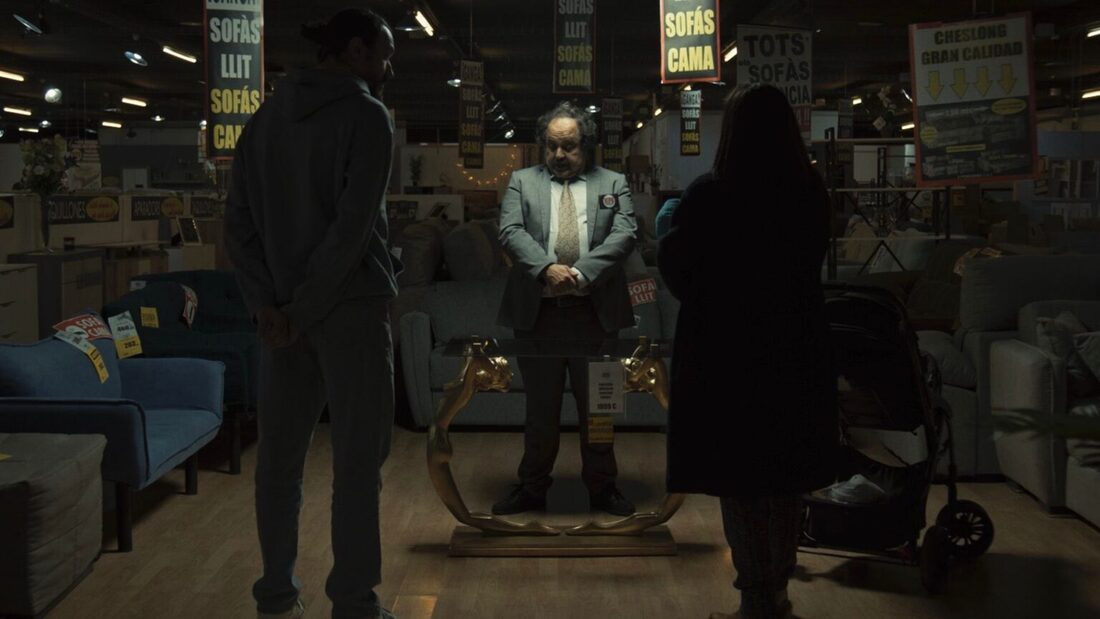 Making a purchase you later regret is a universal experience. However, one can only hope that the events of The Coffee Table, which transpire after such a purchase, are as far from universal as possible. This is the second feature length film from director Caye Casas and has been played at multiple festivals since its premiere in November 2022. This horror movie is an anxiety-inducing experience that keeps you engaged from start to finish. Jesus and Maria are new parents who are dealing with the struggles of marriage and parenthood. One day, in an attempt to make their place look nicer, the couple goes furniture shopping. On this trip, Jesus finds a tacky coffee table that he buys despite Maria’s hatred of it. Soon, this purchase becomes the biggest mistake of this couple’s lives, and it changes their world forever. It’s a purposefully vague premise just because saying anything more might ruin one’s experience watching this movie. Suffice it to say, there’s an entire can of worms awaiting viewers who choose to embark on this experience. Written by Casas and Cristina Borobia, this movie is mostly dialogue driven after its opening act, and it works on multiple levels. It’s strong conversational dialogue, but it also doesn’t undermine or overpower the underlying feeling of dread and anxiety that plague the movie. The writers reveal their hand incredibly early in the movie but manage to still maintain engagement and intrigue until its final moments. 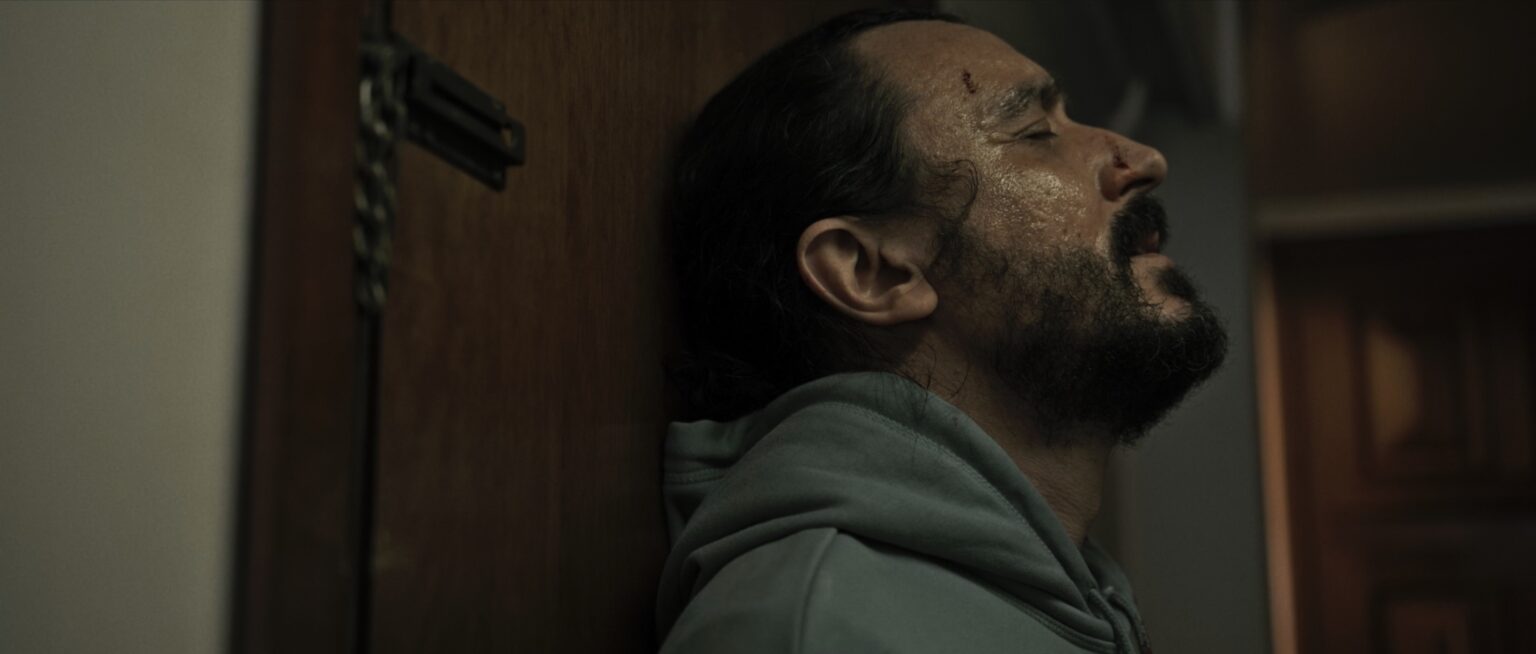 The performances are another strong aspect of this movie. Led by David Pareja and Estefanía de los Santos as Jesus and Maria, they both bring a lot to the table. They have strong chemistry as disenchanted lovers combined with the stress of being new parents. Pareja especially gets a lot to work with throughout the movie, and he is the driving force of the anxiety that defines the film. They work well with the conversational dialogue and the conflicts big and small that they find themselves faced with.
This is such a difficult movie to talk about just because of how important it is for the viewer to go into it blind. While the movie still works even with crucial details revealed, I think shock factor plays an important part in the perception of the film. Regardless, it’s hard to find a horror movie more disturbing than this, and it does so while keeping making most graphic imagery implied or minimal. It’s no small feat, and it’s one that requires prowess from all departments. The only main flaw is that sometimes it feels like it’s aiming for pitch black comedy, and this doesn’t always land because of how straight the execution is. It’s a subtly confusing juggling of genres that is noticeable but doesn’t take away from how impressive the movie is as a whole. The Coffee Table is a unique movie that is distressing, disturbing, and dreadful in all the right ways. It’s tragic and tense, and its brief runtime never gives the audience a chance to breathe. It’s an impressive calling card for Casas as a director, and this movie will likely find a strong niche in the horror community. There are some small tonal problems, but it’s not enough to detract from how darkly entertaining the final product is. The Coffee Table is in theaters April 19. Rating: 4/5 Review by Adam Donato 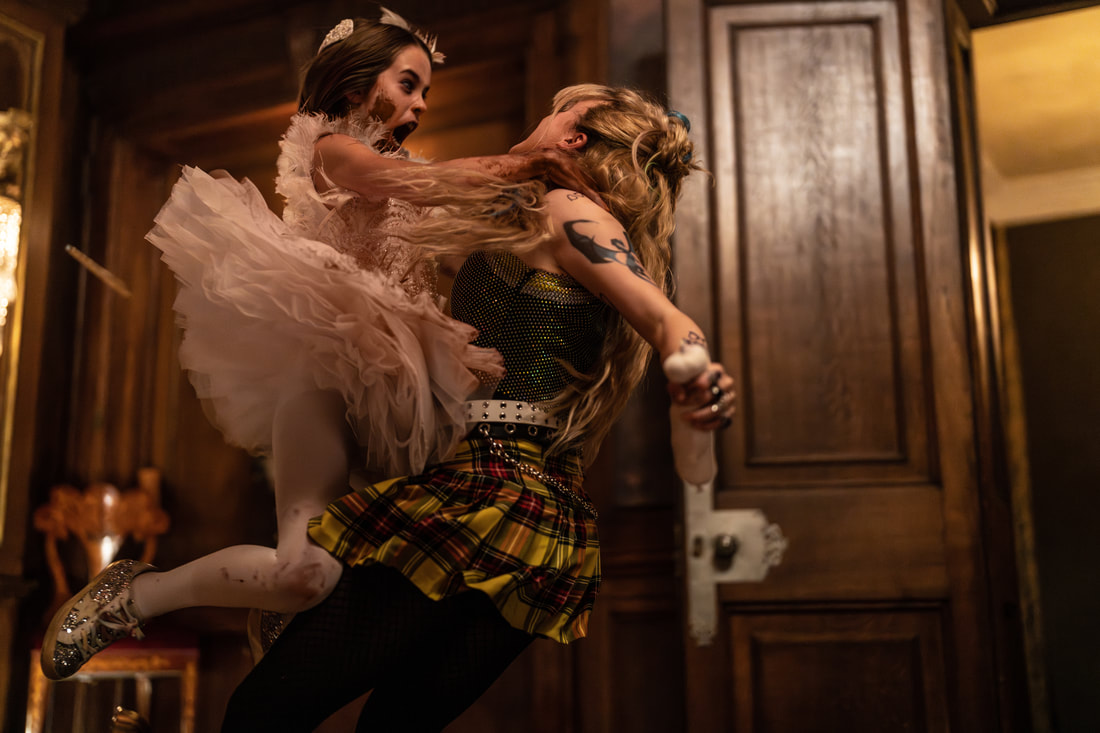 (from left) Abigail (Alisha Weir) and Sammy (Kathryn Newton) in Abigail, directed by Matt Bettinelli-Olpin & Tyler Gillett. Photo Credit: Bernard Walsh/Universal Pictures There’s a subgenre of horror that embraces the ridiculous to become almost more funny than scary. Abigail walks in the footsteps of the recent hit M3GAN, which also featured a villain in a form that appears to be a little girl. This time, the little girl is a ballerina vampire who preys upon a group of unsuspecting criminals trying to make a big score. The directors of the last two Scream films, Matt Bettinelli-Olpin and Tyler Gillett, reteam with Melissa Barrera on this crazy horror flick. Other stars include Dan Stevens, Kathryn Newton, and Giancarlo Esposito, who make this quite a fun ensemble all trapped in this mansion of horrors. Does Abigail have the fun to win the hearts of scary movie fans at the box office? It’s really cool that this concept is being made into a big studio movie. Bettinelli-Olpin and Gillett are competent enough filmmakers. Their Scream movies are decently well-received, and their breakout film Ready or Not is getting a sequel. This was definitely a movie they wanted to make, and they earned the right to do it. The concept is surprisingly not the funniest thing about this movie. It’s the cast. Barrera is a solid leading lady, but Stevens really stole the show. It’s ironic because he stars in Godzilla x Kong: The New Empire, which is currently still a big competitor at the box office. It’s awesome seeing him get more big opportunities like this, and he takes full advantage of his time in the spotlight here. 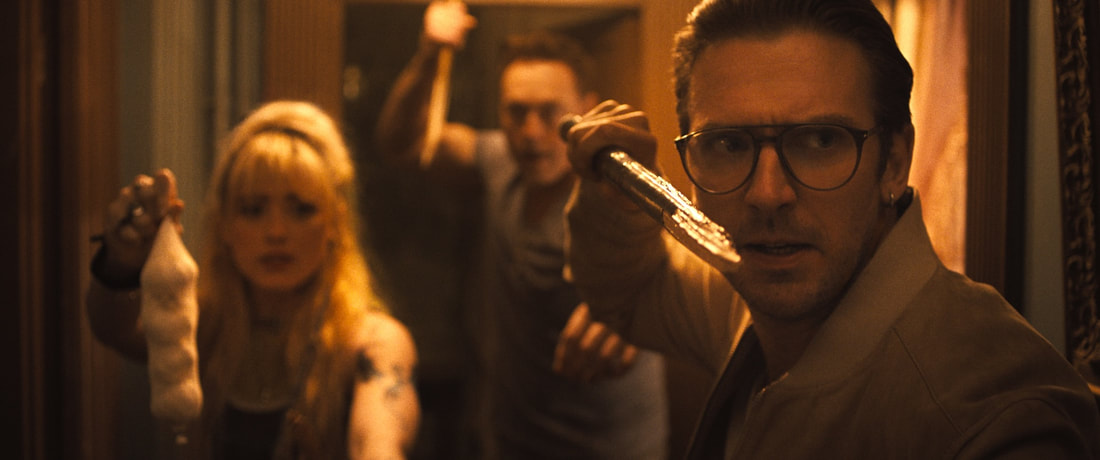 (from left) Sammy (Kathryn Newton), Peter (Kevin Durand) and Frank (Dan Stevens) in Abigail, directed by Matt Bettinelli-Olpin & Tyler Gillett. The supporting cast got a lot of love from audiences at the early screening of the film. Newton is coming fresh off of critical success in Lisa Frankenstein. She works much better here in a supporting role. Her character has a fun dynamic with Kevin Durand, who thrives in his role as the dumb muscle of the group. Esposito is underutilized, but his usage is effective. William Catlett and the late Angus Cloud are both solid members of the group. Alisha Weir’s biggest claim to fame before this is starring in Roald Dahl’s Matilda the Musical. Seeing such a fresh face do so well in such a gruesome film is cool. It will be cool to see this performance garner more opportunities for her in the future.
Abigail is a fun time at the theater but is held back from being a true cult classic because of the lackluster execution. It takes a long time to get to the conflict of the movie and a long time to wrap it up. A film that mostly takes place in one location should’ve been a tight ninety minutes instead of almost cracking one hundred ten minutes. There’s no real theme or emotional grip to the film. You’re rooting for the main character to escape, but there are no arcs or anything. While the other characters are likable enough, you’re more so rooting for them to fall victim to the ballerina vampire. It’s just trying to have a good time, and it succeeds. The horror genre has been going strong with various types of films at the box office lately. Abigail is sure to stand out amongst the crowd for its out-there concept. It deserves the attention, as the cast thrives under competent direction. Hopefully, this will inspire more original studio films in theaters. While this movie may not become the cult phenomenon that movies like M3GAN was, it’s a good time at the movies for anyone looking for a good combo of laughs and scares. Abigail hits theaters on April 19. Rating: 3/5
Review by Sean Boelman
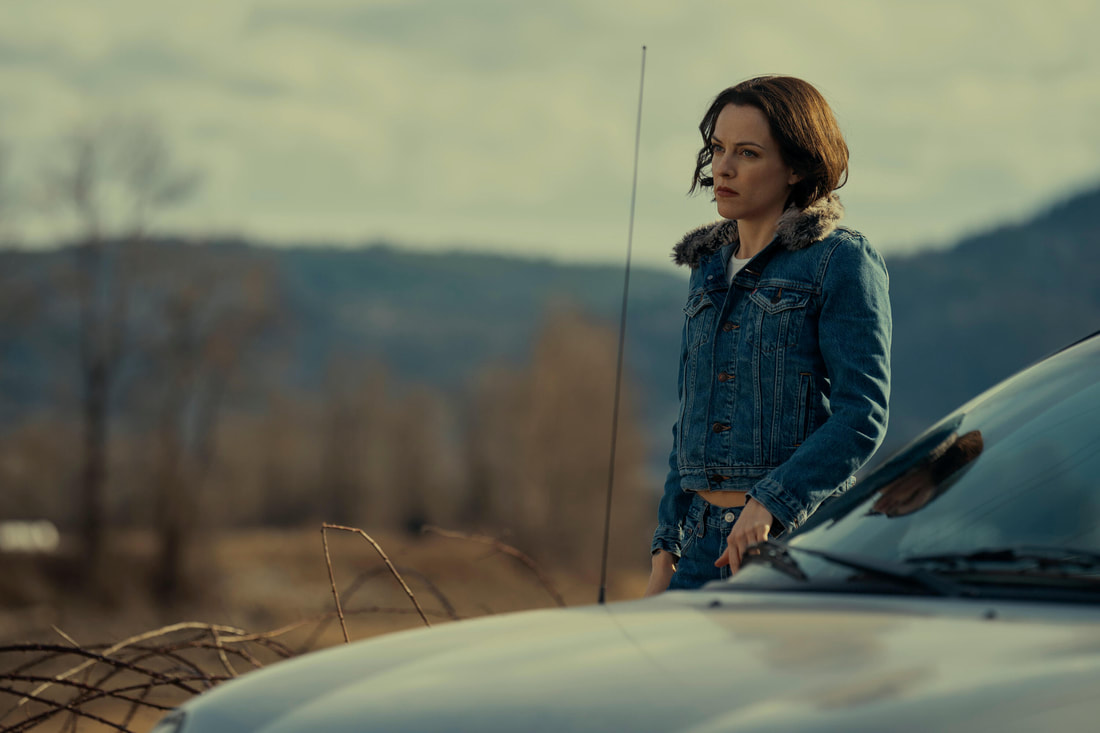
Real-life murders often serve as an interesting basis for the crime genre, but all too often, the series they inspire lack substance. With a strong cast, gripping story, and unexpectedly rich themes, Under the Bridge is the next true crime saga that audiences will be waiting to see unfold week after week and will have them walking away feeling more intellectually challenged than they typically do by the genre.
Under the Bridge is adapted from the book of the same name by Rebecca Godfrey, exploring the case of the murder of Reena Virk. Although the show juggles several moving pieces — Virk’s story leading up to her murder and the stories of her family, her peers, the investigators, and Godfrey herself — Quinn Shephard has managed to create a crime drama that’s consistently engaging and feels unexpectedly original. Unlike many true crime shows, Under the Bridge stands out thanks to its incredible empathy for its victim. Although it has elements of the journalistic drama and courtroom drama formulas this type of story is typically told through, the show is much more interested in exploring the nuances of this case than most entries in the genre. Although the primary theme is bullying, there are also some interesting themes about cycles of trauma and racial violence. The adult cast of the series brings a solid amount of A-list star power. Many will likely be drawn to the show as it is one of Academy Award nominee Lily Gladstone’s first roles since her star-making turn in Killers of the Flower Moon. Perhaps disappointingly, she feels somewhat underused here, but this is primarily because her character doesn’t have much of an arc. 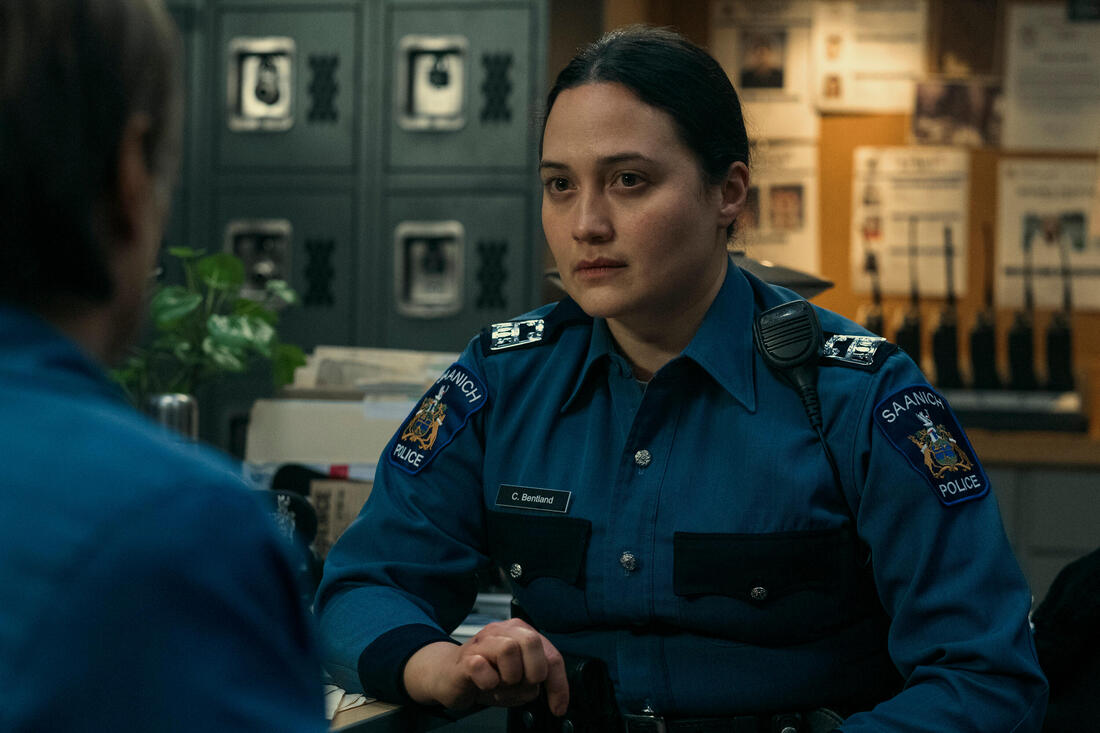
Riley Keough, who plays the journalist who authored the book upon which the series is based, fares much better in her role. She easily could have given an observational performance, serving as little more than the audience’s lens into the story, but she infuses the character with much complexity. It’s refreshing to see a piece of media that understands the nuance of journalistic integrity, and Keough dives into these darker, more uncharted aspects of her role with ease.
However, despite the star power in the adult cast, it is the young cast who consistently steals the show. Vritika Gupta plays Virk exceptionally well, even (and perhaps especially) when her character’s decisions veer on the frustrating side. The other big stand-out is Izzy G., who plays one of the main antagonists of the show — a friend-turned-bully of Gupta. Her performance is extremely chilling without ever feeling over-the-top or unnatural. As far as true crime dramas go, Under the Bridge is technically adroit. The show’s directors do a great job of transporting the audience back to 1990s Vancouver while also establishing an effectively unsettling atmosphere. While many of the choices are straightforward, they accomplish the show’s goals. Under the Bridge is a refreshingly deep true crime drama that manages to actually engage with its story's implications. The result feels genuinely meaningful — a rarity in a genre that has become so tarnished by bottom-of-the-barrel trash that discovering a legitimately challenging one like this is a pleasant surprise. Under the Bridge is now streaming on Hulu with two episodes, with new episodes streaming subsequent Wednesdays. All eight episodes reviewed. Rating: 4/5 Review by Daniel Lima 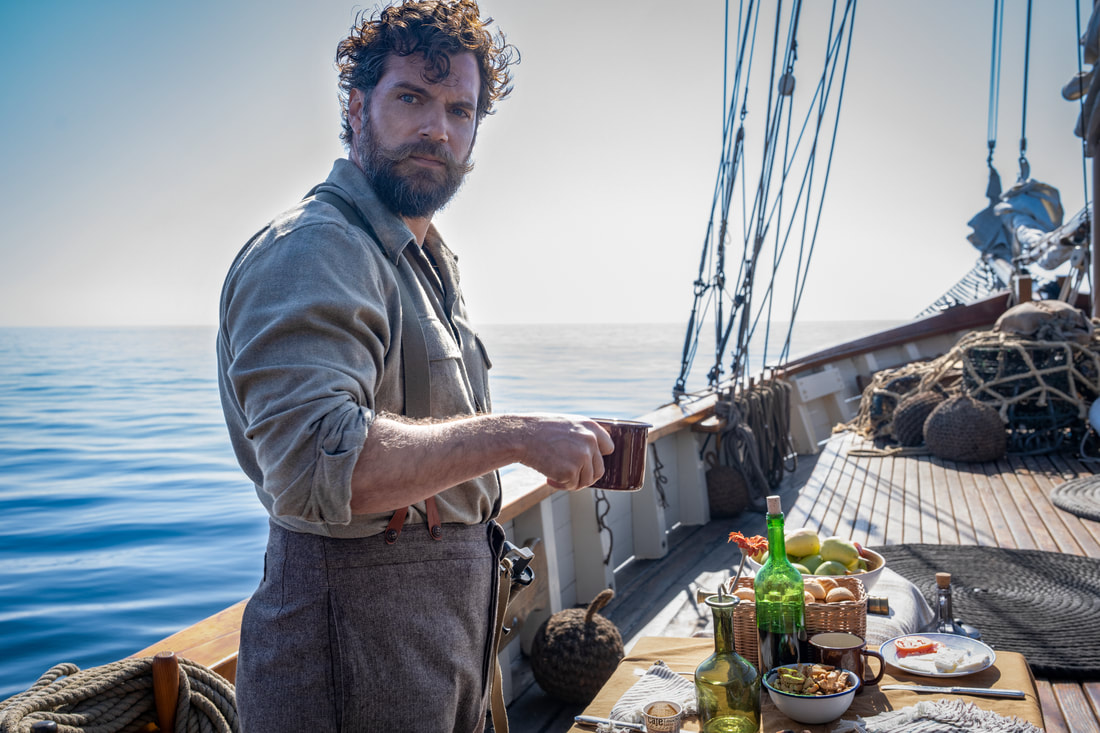 Photo Credit: Daniel Smith As people grow older and their relationship with the world around them changes, it is natural for their tastes in all things to change as well, particularly in art. What once seemed inert and opaque can resonate deeply as new experiences create avenues into seemingly impenetrable objects. By the same token, what once was incredibly moving and stirring can grow stale or even unpleasant. So it was that I found myself watching The Ministry of Ungentlemanly Warfare, the latest film from Guy Ritchie, feeling not only bored by its ambling narrative and lack of dramatic stakes but also annoyed at the jeering laughter of the people around me. To my surprise, I found myself repulsed by what I saw, the gleeful and childlike abandon in approaching serious material that I had never so much as blinked at before. The film is a retelling of Operation Postmaster, a mission undertaken by British agents in World War II that was an early example of the use of special operations units in modern warfare. What had been a mission that lasted a half hour and resulted in no loss of life becomes a men-on-a-mission movie filled with violence, intrigue, and all the trappings of the well-worn genre, filtered through the particular sensibilities of Guy Ritchie. Considering that the director has recently had a creative second wind, delivering some of his best work in years, the prospect of him tackling a genre that — on the face of it — so perfectly suits him is undoubtedly intriguing. Sadly, it quickly becomes apparent that he would not be playing to his strengths here. A child of the post-Tarantino '90s indie boom, Ritchie is a director most at home playing within the milieu of seedy, grimy, male-dominated spaces, with men on the fringes of society bouncing off each other with the brusque, faux-macho dialogue that manages the trick of being so blunt and juvenile that it circles back around to clever. He is at his best when his characters are within their insular communities, navigating them as only locals can and allowing the audience to experience the world through them. That doesn't happen here. While the team assembled is full of the requisite gruff men of action, almost all of their screen time is spent on a boat, idly traveling to the location of the climactic battle scene. Some obstacles are invented to give the film some vague semblance of tension, but each is dismissed as quickly as it arises. Most of their interactions are spent communicating with headquarters and agents embedded in the base they've set out to attack, meaning they spend almost no time talking to each other. With no time developing these characters, giving them distinct personalities, and allowing them to bicker and bond, every moment spent with them borders on tedium. The espionage doesn't fare any better. A pair of secret agents — a black marketeer and a lounge singer — set the groundwork for the British commandos' raid. Ritchie's penchant for obvious, heavy-handed dialogue works when spouted by the kinds of men for whom it might pass as wit. When transposed to situations that require tact and a delicate touch, they become jarring, unwieldy, incongruous, and downright embarrassing. That it's this part of the story where the bulk of the narrative is actively being driven forward makes it even tougher to sit through. 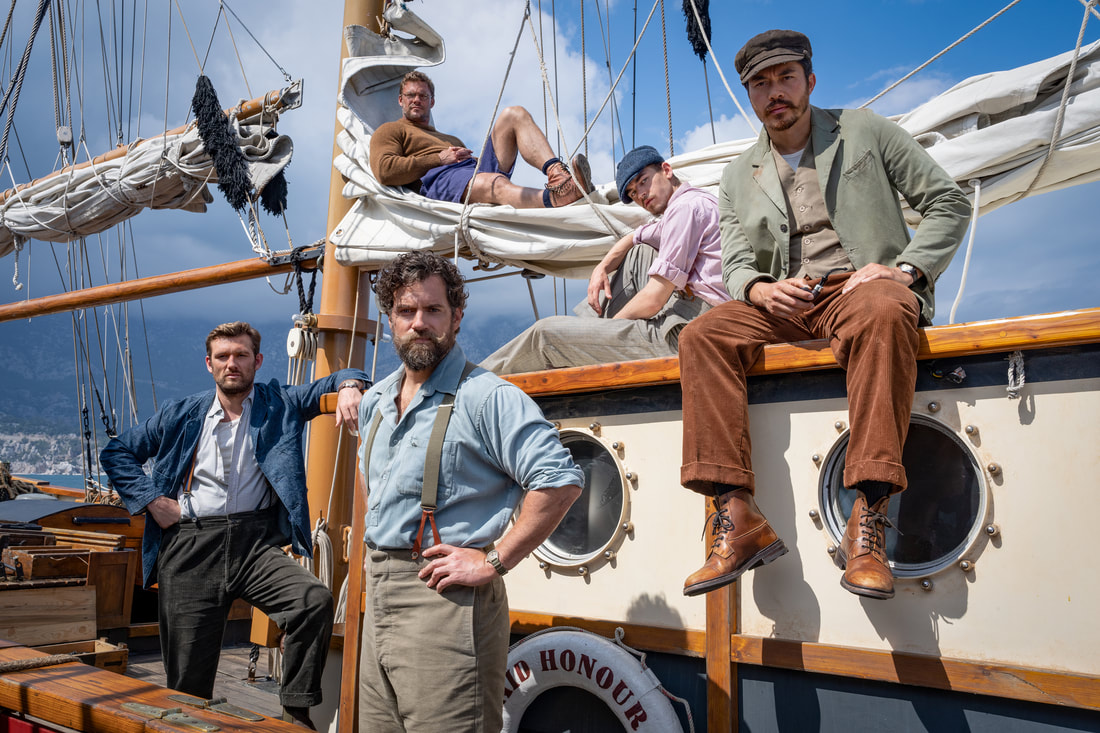 Photo Credit: Daniel Smith The action would ordinarily be the saving grace of a film like this. For the most part, what's here is pedestrian but serviceable. The action design is fine, incorporating the environment and setting up beats within the set pieces where the heroes are forced to adapt their own tactics. There's more cutting than necessary, occasionally ruining the sense of geography, and as the finale takes place at night, much of the action is obscured by darkness. That said, there are far worse offenders in the cinema of today. From the very first shootout, however, I couldn't help but feel discomfort as the audience cheered on every kill. The Second World War, particularly in the European theater, is one of the rare examples of a conflict with one side universally accepted as "the bad guy," as both the instigator and the perpetrator of one of the most horrific crimes in human history. If there's any war where one should be able to cheer on bloodshed with impunity, surely it would be the one with Nazis. Yet as the team gunned down uniformed fun with ecstatic abandon, smiling and laughing as blades and bullets ripped through unsuspecting victims, I felt more disturbed than anything else. Where did this newfound queasiness about cinematic violence come from? Obviously, there is the inherent jingoism. This film spends much time valorizing the British government, specifically the parts of the machine that pursued war. In this historical context, fair, the British were on the side of the angels. It's not a stretch, however, to see that Ritchie has a deep respect for his nation and sees the service of those depicted in the film as exemplary, not simply as a consequence of their adversary but because of their commitment to their country. It projects an air of righteousness that, in a contemporary film, is disquieting, particularly considering the form that nationalism has taken in the UK and elsewhere. 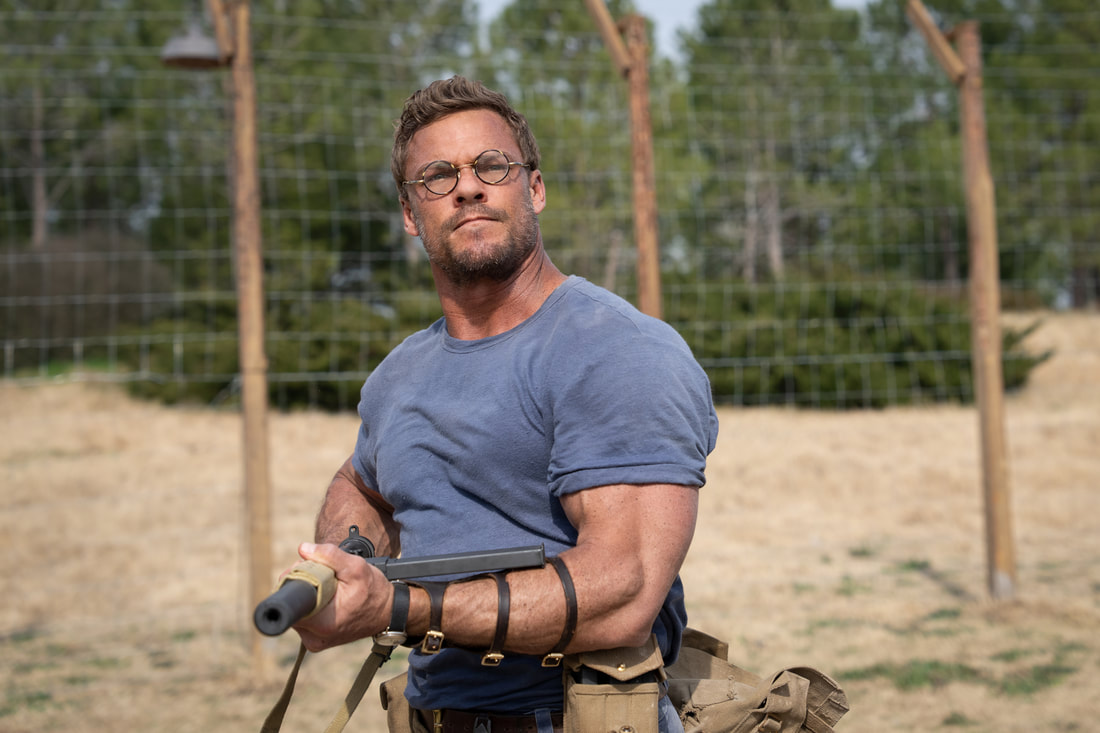 Photo Credit: Daniel Smith Perhaps more potent is the weight of the violence — or the lack thereof. To throw out some comparisons, classic examples of the genre, like Castellari's The Inglorious Bastards, vary in tone, but the violence actually feels dangerous; the Nazi enemies feel like flesh and blood human beings. Saving Private Ryan might have big battle sequences that function as blockbuster spectacle, but it takes care to highlight the horror of being a part of it, regardless of how despicable the other side is. Even when an artist like John Woo fully embraces the aestheticization of wartime violence, as he does in Bullet in the Head, that must necessarily lend the violence a gravity that makes it impossible to become desensitized to.
In the case of The Ministry of Ungentlemanly Warfare, there is no dramatic or moral importance to any of the killing. The heroes are never in any jeopardy, and so when they casually fire off submachine guns into men who are dining and sleeping, it feels more like an execution than combat. Elaborating on why Nazis are bad is, of course, unnecessary, but the film spends more time emphasizing the moral righteousness of fighting for the British Empire than against the Third Reich. This lack of rooting the violence in anything beyond government interests, with the lack of characters root for or dynamic set pieces that would lend the action any danger, ultimately gives the battle scenes a bloodthirsty aura, where the act of killing is joyful and fun in its own right. That said, I say this as someone who has had war on the mind. Only a few days ago, I had seen Alex Garland's Civil War, an asinine film that adopted the veneer of a somber look at political conflict but proved to be even less serious than this one. The movie has stuck in my craw, and the more I've reflected on it, the more aggravated I've become with its simplistic, borderline irresponsibly bone-headed take on war. Days later, Iran launched missiles into Israel in retaliation for the destruction of their embassy in Syria, and I found myself contemplating the possibility that my own government might involve itself in a major war on behalf of a nation propagating apartheid and genocide. All of which is to say, maybe I went into this in exactly the wrong state of mind. As dull as the narrative is, as misapplied as Ritchie's style is to this material, perhaps I would not have had such a visceral reaction to the film if it weren't for how I felt. Perhaps this represents a line of demarcation in my appreciation for these kinds of stories, and going forward, I will bristle at films that glamorize and glorify soldiers and war in any way. Or perhaps I'll return to this in the future and find I was just in a bad mood. Right now, as I reflect on The Ministry of Ungentlemanly Warfare, one particular image sticks out in my mind. In the middle of the big climactic gunfight, after the heroes have killed scores of German soldiers and sailors with firearms, knives, axes, arrows, and explosives, the squad leader rounds a corner and levels his rifle at a hiding Nazi. Upon seeing how young the soldier is, he lowers the rifle and allows the boy to run off. Perhaps Ritchie saw this as an act that cemented the British veteran's nobility. Personally, I thought of all the men that he had stabbed in the back, blown up, gunned down from afar, and wondered how many would have been spared if only he'd gotten a good look at their faces. The Ministry of Ungentlemanly Warfare arrives in theaters April 19. Rating: 2/5
Review by Sean Boelman
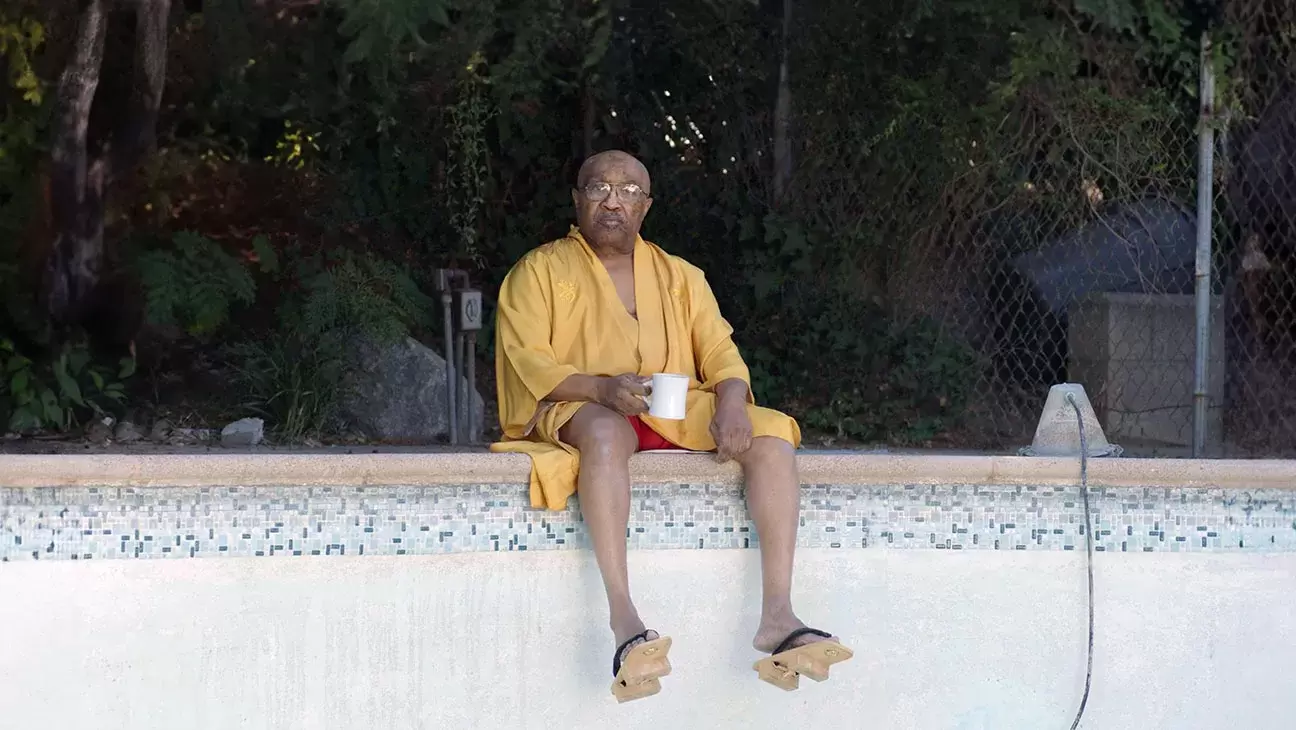
There are so many icons in the music industry that deserve documentaries about their careers and lives, and the R&B singer, songwriter, and producer Swamp Dogg is finally getting his due. Isaac Gale and Ryan Olson’s Swamp Dogg Gets His Pool Painted is an unexpectedly beautiful documentary bursting with personality and plenty of hilarious and heartfelt moments.
The film tells the story of the legendary but underrecognized musician Swamp Dogg as he reflects on his career when he decides to get a mural painted on the floor of his home’s pool. In a genre that’s all too often paint-by-numbers, Gale and Olson have created an incredibly distinctive and unique movie that perfectly captures its subject’s personality. On its surface, this documentary seems like little more than an old man reminiscing on his career. However, over the course of the runtime, it becomes clear that there’s much more to be found in this story. Sure, it’s about the music industry, but it’s also about themes like chosen family and being a Black artist in America. Of course, the movie's hero is Swamp Dogg, who has such a lovable presence. He’s a music industry legend, and the film doesn’t really have to convince us of his greatness because of how easily he radiates it. Yet, despite the incredible amount of talent he shows through archive materials and fly-on-the-wall footage, Swamp Dogg manages to come off as incredibly humble and approachable. 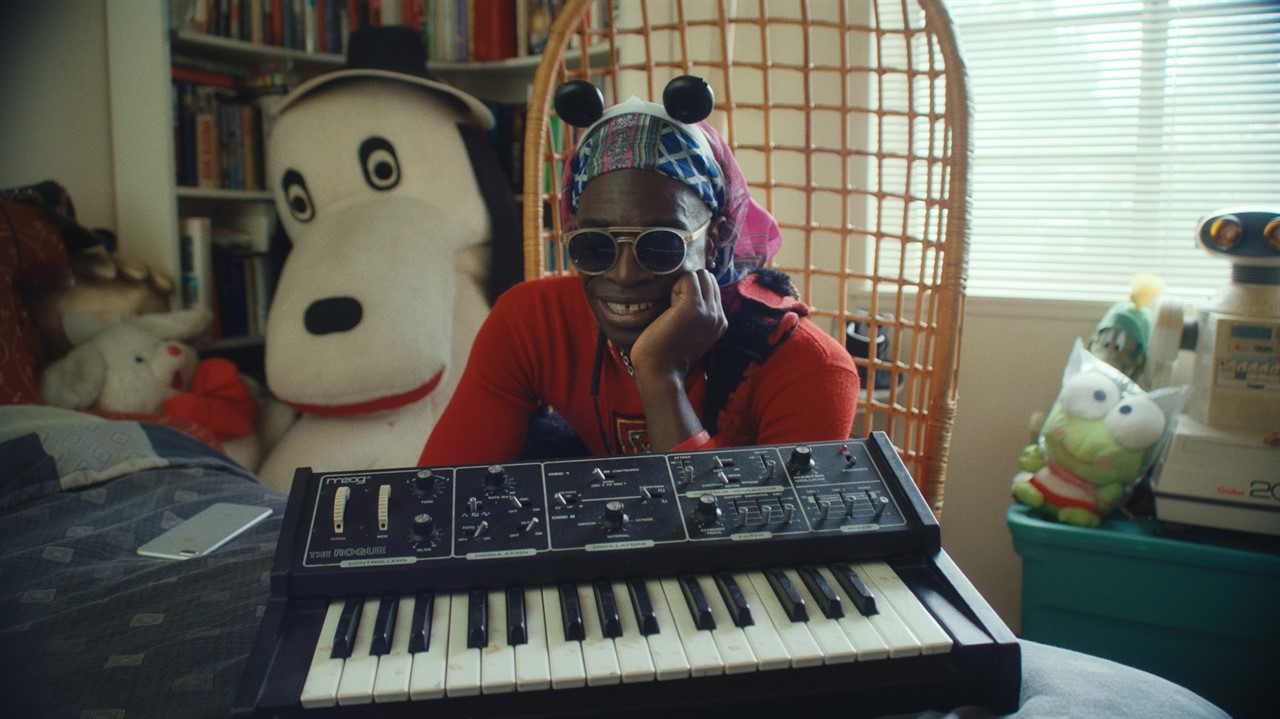
However, another big part of what makes Swamp Dogg Gets His Pool Painted so effective is that he is surrounded by a ragtag bunch of companions and roommates, including the ineffably charming Guitar Shorty and the lovably quirky Moogstar. Audiences will get just as invested in Shorty and Moogstar’s stories as they will in Swamp Dogg’s, which is part of what makes this such a transcendentally moving experience.
As with many documentaries about “underappreciated” figures, Swamp Dogg Gets His Pool Painted does lean on the participation of some more recognizable celebrities to boost its subject’s legitimacy. In this case, it’s Tom Kenny, Mike Judge, and Johnny Knoxville. However, instead of talking head interviews blandly showering praise, Gale and Olson do something more interesting — they have the celebrities become the interviewers. Although it may be equally pandering, this method feels much less forced. Stylistically, Gale and Olson infuse the movie with an astounding level of character that many documentaries try and fail to capture. It’s a scrappy, independent production, but this works considering that Swamp Dogg and his roommates exhibit the same type of unrestrained creativity and kineticism that Gale and Olson shoot for. Gale and Olson also do a very good job of incorporating Swamp Dogg’s music. The result of all of these stylistic elements is a film that’s both thoroughly entertaining and surprisingly tender and moving. Swamp Dogg Gets His Pool Painted is better than you would expect. Whether you’re familiar with the eponymous musician's work or are being introduced to his repertoire for the first time, you will undeniably find yourself charmed by his larger-than-life personality and inspiring story. Swamp Dogg Gets His Pool Painted screened at the 2024 Sarasota Film Festival, which runs April 5-14 in Sarasota, FL. Rating: 5/5
Review by Sean Boelman
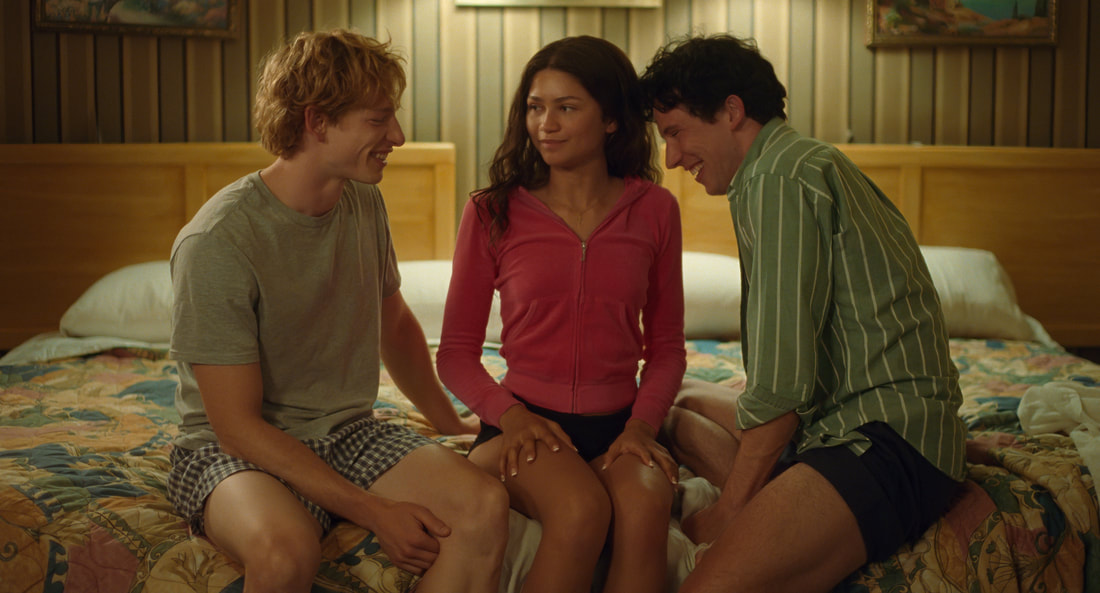
(L to R) Mike Faist as Art, Zendaya as Tashi and Josh O’Connor as Patrick in CHALLENGERS, directed by Luca Guadagnino, a Metro Goldwyn Mayer Pictures film. Credit: Metro Goldwyn Mayer Pictures © 2023 Metro-Goldwyn-Mayer Pictures Inc. All Rights Reserved.
Luca Guadagnino’s Challengers immediately became one of the most anticipated movies of 2024 after it was delayed from its prime awards season release last year due to the strikes. Unfortunately, the steamy drama was not worth the wait, boasting some solid performances and lots of style, but all in the service of a frustrating script.
The film stars Zendaya as a once-bustling tennis prodigy who, after a career-ending injury, has managed to stay on the court as a coach to her husband, only to be caught up in drama when he has to face his former best friend — also a former lover of hers. For something that’s literally being sold as a tennis threesome movie, the delicious moments are few and far between. Although the film’s highs are indeed very high, it’s surprisingly mostly tepid. Kurtizkes tells this story in a nonlinear structure, and while this decision has a narrative justification, it ruins the movie’s momentum. Every time you get really invested in the storyline, it cuts to another timeline. And with a runtime of 2 hours and 11 minutes, the nonlinear structure adds a lot of unnecessary fluff. Zendaya’s performance in the film is excellent, with a level of charisma and confidence that’s incredibly easy to watch. Yet, despite having a great screen presence, she knows when to cede to her co-stars, which is the mark of a truly talented performer. Josh O’Connor is also great, splitting the difference between charming and cuckish, nailing the perfect amount of tension with Zendaya. 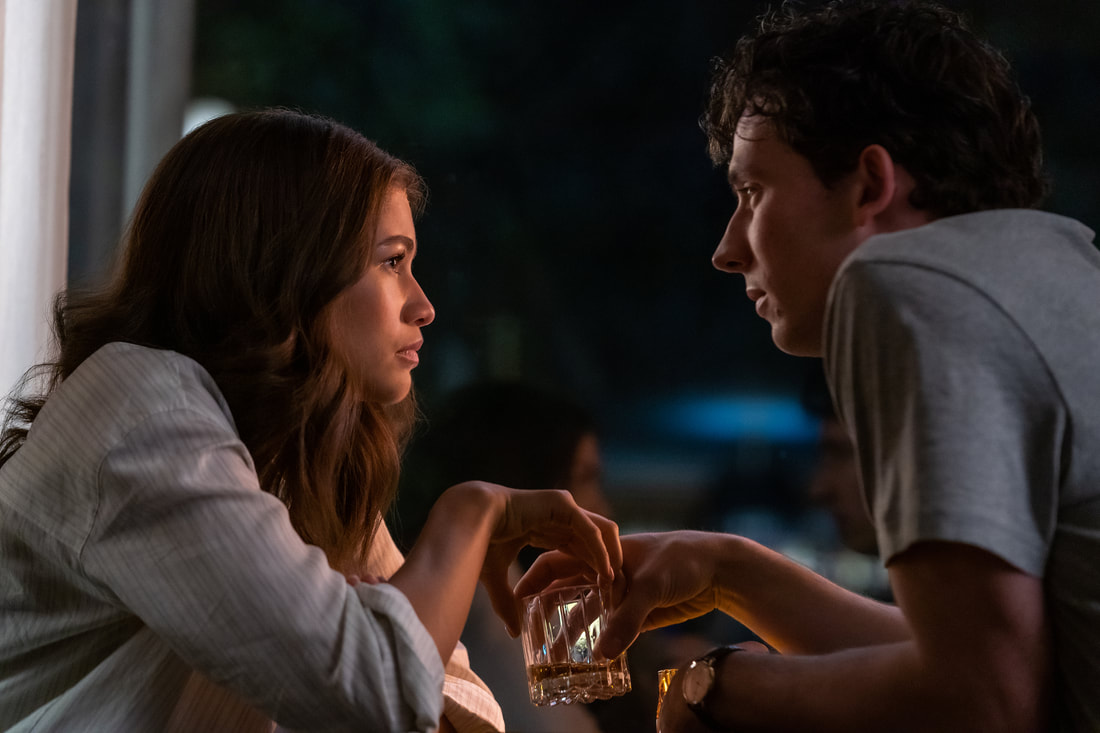
Zendaya stars as Tashi and Josh O’Connor as Patrick in director Luca Guadagnino’s CHALLENGERS An Amazon MGM Studios film © 2024 Metro-Goldwyn-Mayer Pictures Inc. All Rights Reserved.
However, much like in architecture, where a triangular structure will collapse if one of its sides is compromised, Mike Faist threatens to pull Kuritzkes’s love triangle apart. Faist simply can’t hold his own against the two more compelling actors — whether it’s his fault or the script’s is debatable. His performance is passable during the portions of the movie where he’s playing older, but he struggles when playing the younger version of the character.
Challengers also suffers from being Guadagnino’s most overly indulgent film yet. The movie is hyper-stylized, from a blaring score by Trent Reznor and Atticus Ross that can overwhelm at times to fast-paced editing and gimmicky shots that look cool but are used fleetingly with little narrative impact. This film has a massive amount of energy, but it’s largely wasted. Some other aspects of the movie simply aren’t aesthetically pleasing. The sheer number of CGI tennis balls that fly directly into the camera is one of the more baffling decisions in the film. It’s clear that Guadagnino is trying to make viewers feel immersed in the game's action, but tennis is already a mostly cinematic sport as-is. There’s no need to force it like this. Challengers is a flamboyant and extravagant film, but it’s also incredibly overwrought and overproduced. While the result is often entertaining, it’s not the astounding melodrama that it had the potential to be with the talent it has in front of and behind the camera. It’s mostly forgettable, which is the first time that can be said about one of Guadagnino’s movies in quite a while. Challengers hits theaters on April 26. Rating: 3/5 |