
|
Review by Sean Boelman
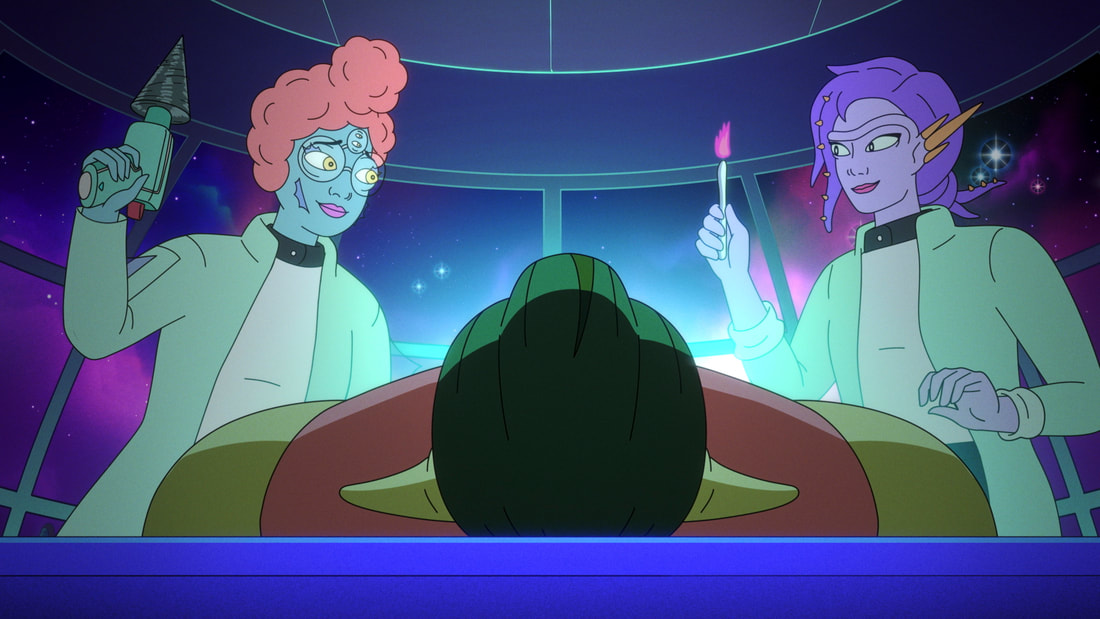
Rick & Morty kicked off a new trend in adult animation that many have tried (and failed) to replicate. We may finally have something that lives up to its precedent. Leveraging its tremendously talented cast and premise that is ripe for wacky, creative adventures, The Second Best Hospital in the Galaxy ends up being one of the funniest, most charming adult animated series in quite a while.
The show follows two alien doctors who work at a hospital specializing in “rare sci-fi illnesses.” The elevator pitch for this show would be a cross of Grey’s Anatomy and Rick & Morty — and if that mixture of medical drama with absurd sci-fi humor appeals to you, this is sure to be an addictive new watch. As far as world-building goes, there’s nothing to really distinguish The Second Best Hospital in the Galaxy from any number of other animated sci-fi comedies, but it accomplishes its goals well enough. The character design, while straightforward, is playful and colorful. And even though much of the series is set within the hospital, minus a few adventures outside, it feels satisfyingly expansive. That being said, where the show does stand out is its incredible sense of humor. There are lots of funny premises to be found in the series, from time loops to alien STDs, and the writer’s room really takes advantage of them. There’s a lot of really insightful and funny sex humor, but it never feels overly crude or out-of-place. 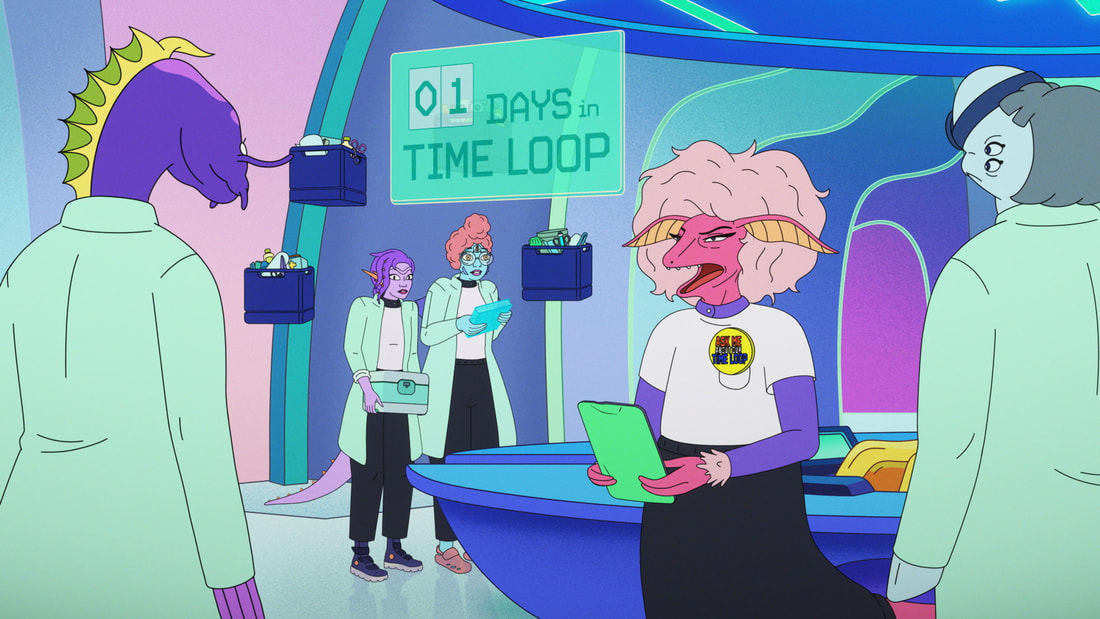
The show also deals with some incredibly mature, complex themes, although this is par for the course for recent adult animation. Despite having a premise that’s inherently absurd and ridiculous, this show has what might be one of the best, most sincere depictions of anxiety that has ever been attempted.
Part of what makes the show work so well is that it gets us to care about the characters. We buy into the friendship between the two heroines immediately in the first episode, but we also get shockingly invested in the lives of all their coworkers. Even though some of them only take part in a few episodes, it feels like everyone who has a pronounced subplot is fully developed. The voice cast of The Second Best Hospital in the Galaxy is also stacked, adding a lot of charm through their performances. Keke Palmer and Stephanie Hsu are great leads, having impeccable chemistry and infectious energy. Kieran Culkin nails the quirky and awkward love interest. Pop musician Sam Smith is also a stand-out in their supporting role. And that just scratches the surface of who’s in this cast — Maya Rudolph, Natasha Lyonne, Jay Ellis, Bowen Yang, Tracee Ellis Ross, and more all make appearances. Although the world of The Second Best Hospital in the Galaxy may not be the most original, the writing is incredibly refreshing, allowing this to become one of the best new adult animated series in a minute. Between Hazbin Hotel and this, Prime Video is really stepping up its game in the adult animation sphere, and it’s an exciting time to be a fan of the genre. The Second Best Hospital in the Galaxy streams on Prime Video beginning February 23. All eight episodes reviewed. Rating: 5/5
1 Comment
Review by Cole Groth  Inspired by a true story, Meg Tilly and Are You There God? It’s Me, Margaret filmmaker Kelly Fremon Craig tell the story of Sharon Stevens (Hilary Swank), a recovering alcoholic hairdresser who finds a new purpose in life: saving the critically ill daughter of a recently widowed father (Alan Ritchson) in Ordinary Angels. Directed by Christian filmmaker Jon Gunn, this film feels a little overly sentimental at times. Still, it will make for great viewing for family or those looking for a story of everyday heroes doing something remarkable. Ordinary Angels is one of those saccharine movies meant for your grandparents. It’s incredibly satisfying and fairly easy to follow. Bolstered by two knock-out performances from Hilary Swank and Alan Ritchson, the film presents a pretty easy format: there’s a big problem that Ritchson’s character faces, and Swank’s character finds a way to solve it. The problems mount up very quickly. Hundreds of thousands of dollars in medical debt, failing livers, snowstorms, you name it, and he probably had to deal with it. The principal problem with a movie like this is that even though it’s framed through a true story narrative, it seems outrageous that anything like this could happen. I simply don’t believe that a woman could convince a group of hospital executives to forgive $400k in medical bills from one visit or get five CEOs to get private planes on standby to help out the little girl. It’s all a little too inspiring, and say what you will about how cynical that sounds; the film doesn’t do an amazing job of making the unbelievable stuff seem believable. 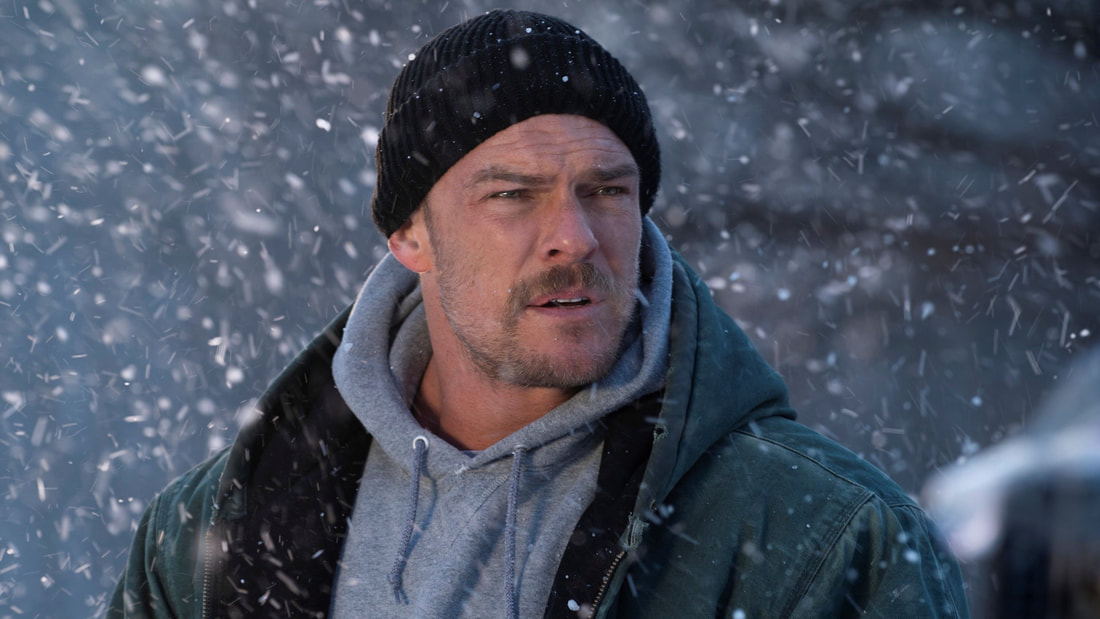 Even if it doesn’t seem entirely believable, I’d be lying if I said I wasn’t emotional towards the end. Tilly and Fremon Craig’s script brings a great deal of sincerity, and Gunn also handles the emotions quite nicely. It’s perfectly illustrated to have everything come together in an almost magical way towards the end.
I mentioned earlier that Gunn’s a Christian because he does a great job incorporating religion into the film. Hollywood doesn’t quite understand how to integrate Christianity into movies, and it’s important that films like this recognize it as a very helpful thing for some people. Ritchson’s character is anchored through his religious beliefs, which is believable, and Swank’s character is not. This is what life is like, and it’d be nice if other movies could do this. Life is so miserable nowadays, and maybe nostalgia isn’t the best way around it, but it’s also necessary to remember that movies are supposed to be an escape. Do you want to feel happy during this bleak winter? You’d be well off watching this. If you’re looking for something to see with your mother that doesn’t push any boundaries and is just decent overall, Ordinary Angels is that movie. Ordinary Angels releases in theaters on February 23. Rating: 3.5/5
Review by Sean Boelman

Robert Morgan's STOPMOTION. Courtesy of Samuel Dole. An IFC Films and Shudder release.
You do not often see animation in the horror genre, which is surprising considering how the medium allows imagination to flow freely. Despite an interesting concept and some very spooky imagery, Stopmotion is underwhelming because it struggles to find its narrative rhythm and hold the audience’s interest.
Stopmotion follows a stop-motion animator who finds the line between reality and her imagination blurred after the death of her overbearing mother. For the most part, it’s a very standard psychological horror flick, but what makes the film stand out is its incorporation of stop-motion animated sequences as the protagonist’s work comes to life. Considering that director Robert Morgan’s background is in stop-motion shorts, it’s no wonder that the animated sequences are the strongest part of the movie. With horror animation, Morgan’s creations are crude and grotesque, but they have an incredible level of detail nevertheless. Although the images and symbols aren’t particularly novel, Morgan uses them effectively to create a lingering, unsettling effect. However, Stopmotion is dragged down by its dreadfully slow pacing. It’s clear from the moment the movie starts that this is designed as a slow burn building up to an explosive climax. While the conclusion is satisfyingly gory and weird, the hour and 15 minutes that precede it feel like Morgan and co-writer Robin King were more interested in creating eerie imagery than telling a cohesive, compelling story. 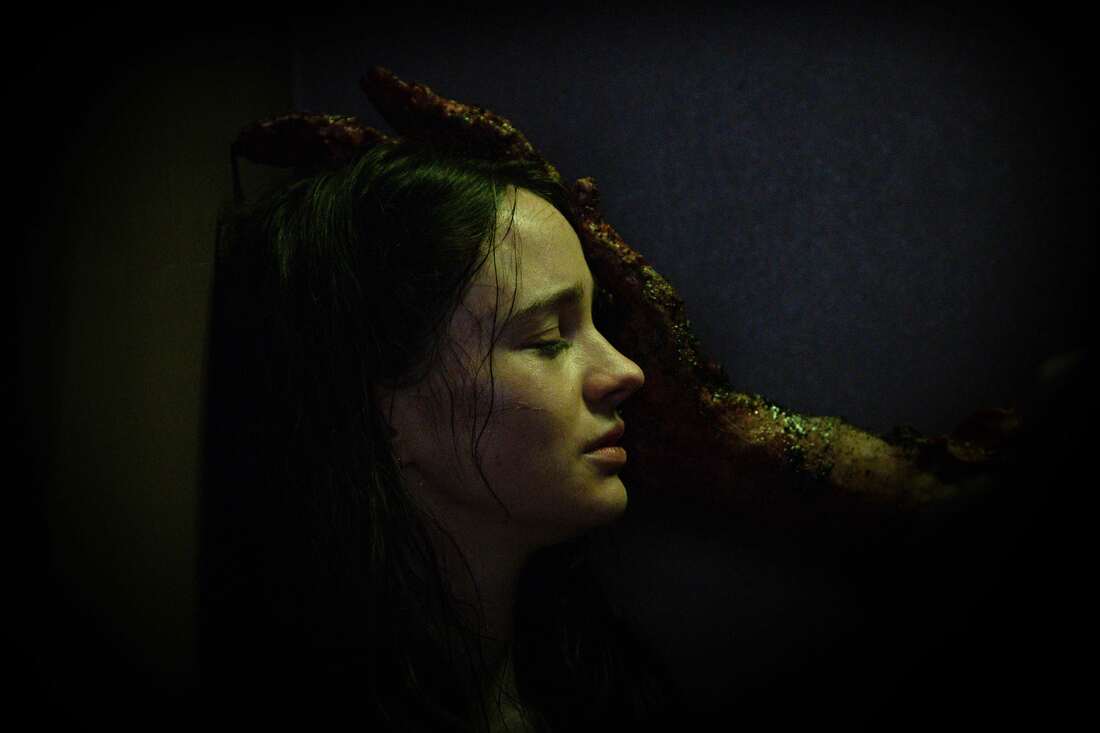
Aisling Franciosi in Robert Morgan’s STOPMOTION. Courtesy of Samuel Dole. An IFC Films and Shudder release.
The themes that Morgan and King explore are nothing new to the genre: grief, obsession, legacy. A few moments show the potential to be something unique — like a storyline involving the protagonist’s toxic relationship with her mother — but these are generally brushed aside because of the emphasis on horror rather than drama.
This emphasis also wreaks havoc on the character development. Although the protagonist has her arc (albeit a conventional one), none of the supporting characters are remotely interesting. We meet the protagonist’s boyfriend (Tom York) and a mysterious, nameless girl (Caolinn Springall) whose role in the story is needlessly confusing. Frankly, it would have been more interesting to see this story told from a wholly isolated perspective, with Aisling Franciosi as the only performer in the movie. Franciosi is an incredible actress, and she made a lot out of this role despite how little it gives her to work with. The character has few defining personality traits, yet Franciosi makes the role feel entirely authentic — even during the far-fetched final act. Stopmotion is the type of directorial debut that is more effective as a demo reel than a satisfying film in its own right. Robert Morgan is clearly very talented, with a knack for creating genuinely unsettling imagery, but this movie lacks the focus on storytelling and character development that is necessary for effective horror. Stopmotion hits theaters on February 23. Rating: 3/5
Review by Sean Boelman
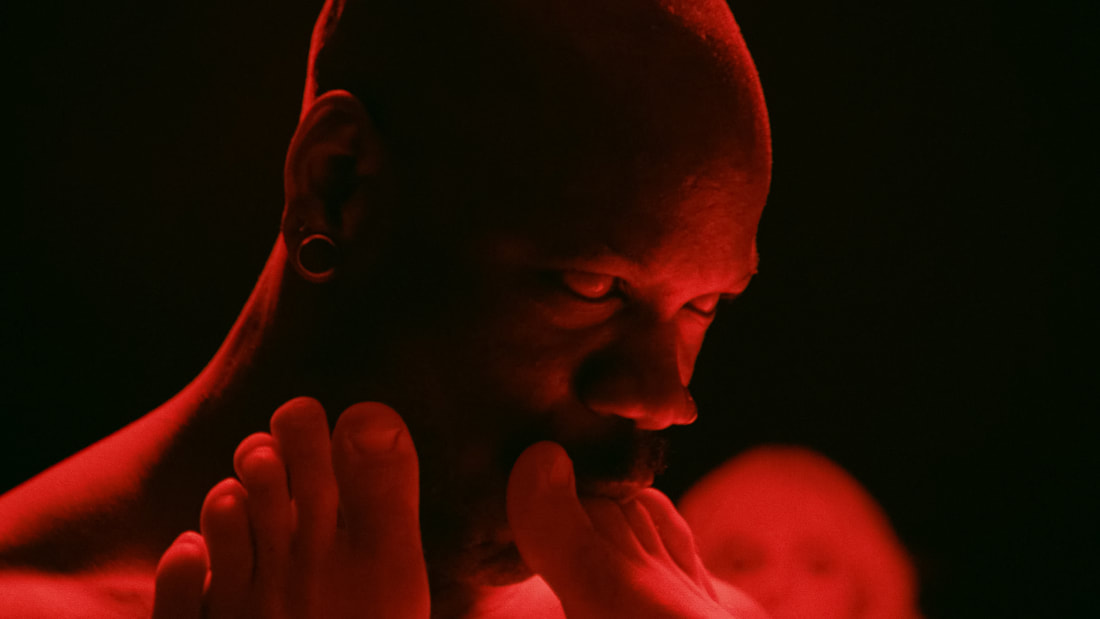
The pairing of Canadian provocateur Bruce La Bruce (The Misandrists) with the source material of the infamous Pier Paolo Pasolini (Saló, or the 120 Days of Sodom) seems like a match made in heaven. Unfortunately, The Visitor delivers on little of that promise — an exercise in grotesque style-over-substance that, while aesthetically intriguing, doesn’t amount to a particularly rewarding experience.
Billed as a “pornographic remake” of Pasolini’s Teorema, The Visitor tells the story of a refugee who infiltrates the lives of an upper-class family, seducing them one by one and causing them to have a spiritual awakening. Frankly, if you’ve seen any of La Bruce’s past work, you know what you’re getting into. And while the ambition of this project is admirable, it’s not always as thoughtful as it wants to be. La Bruce clearly has a lot on his mind, and while this concept seems like it could be fertile ground to explore his anger — anti-capitalism, anti-colonialism — it’s all a bit frustratingly executed. Although it clearly wasn’t the intention, there are certain points at which the film treads dangerously close to the “magical negro” stereotype, even if La Bruce is ridiculing the white characters. The most frustrating thing about The Visitor, though, is how painfully direct it can be. Everything La Bruce wants the audience to know is delivered via an expositional newscast voiceover or as on-screen text. Although lines like “eat out the rich” are enough to get a decent chuckle, they’re also frustrating in how they bash the viewer over the head with the message. 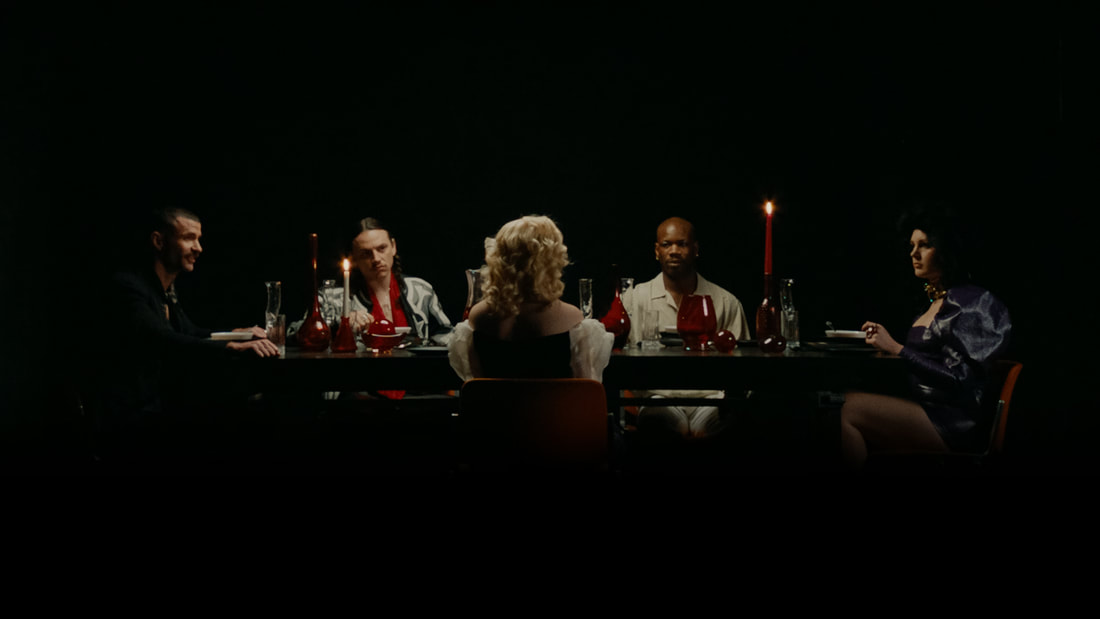
As a result, the movie feels like it is missing the substance that really sets apart Pasolini’s work. Although Pasolini’s films are certainly shocking, and subtle is not a word the filmmaker had in his dictionary, they built to something. The political message came first, and the shock was just a method to convey it. With The Visitor, it feels like La Bruce wants to shock, and the message is simply the justification to do so.
Unfortunately, the movie runs out of steam far too quickly. The edgiest and most provocative moments happen early on, and the rest of the film largely feels like it’s just weird for the sake of being weird. The final act, largely devoid of sexual content, somehow feels even more meandering than the belligerent barrage of depravity that proceeds it. On one hand, the over-the-top performances work in the movie’s favor to an extent. What we are watching is meant to be exaggerated and theatrical, so it’s fitting that nothing feels rooted in reality. However, this undermines the character development in many ways. Bishop Black’s performance never feels particularly mysterious. The rest of the cast is never particularly alluring. The dynamics don’t entirely work. In many ways, The Visitor seems like someone trying to imitate the work of Pasolini without truly understanding the essence of the filmmaker’s substance. As a stylistic exercise, it works and can be pretty entertaining. However, it’s frustrating that Bruce La Bruce didn’t take this opportunity to make something more meaningful. The Visitor premiered at the 2024 Berlin International Film Festival. Rating: 2.5/5 Review by Daniel Lima 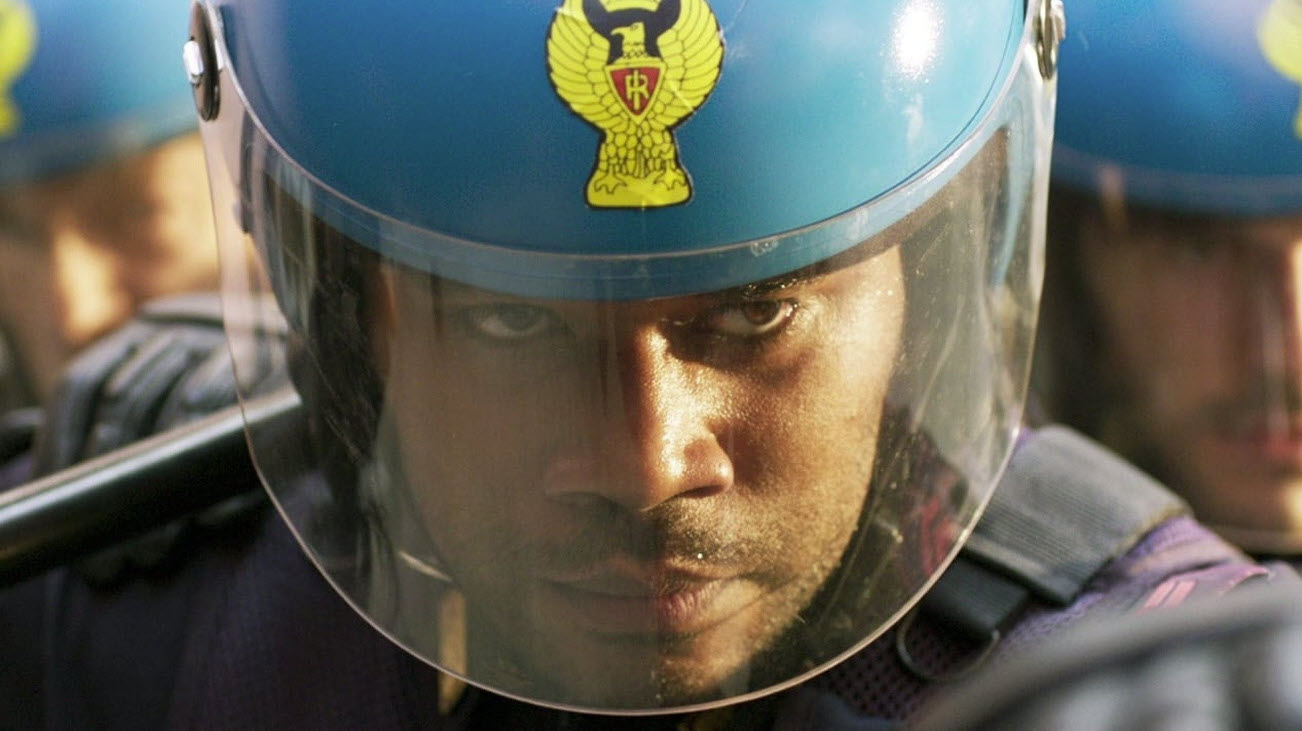 Regardless of one’s political affiliations, it’s hard to find any sympathy for police officers charged explicitly with clearing people out of their homes. The Legionnaire makes a valiant attempt to engender that sympathy through its portrait of a cop torn between his sense of duty to his badge and his roots. While the way it builds out his world is admirable, it can’t help but feel constrained by its own narrative limitations. Germano Gentile plays an Afro-Italian riot officer — one of the jack-booted troops with shields and batons who hit protesters and clear out apartment buildings of unwanted tenants. He emigrated to Italy from Africa, and his brother and mother still live in the apartment building he lived in as a child, along with a community of squatters who have a longstanding agreement with the building’s owners. Now, the owners want them out, and Gentile has to contend with navigating a war between two sides of his life. Some familiarity with Italian history and current events is helpful in understanding the film, and I must admit I have only cursory knowledge of any of that. The country has seen a large influx of migrants over the past several years, leading to a wave of anti-immigrant sentiment. Left-wing politics have played a large part in the nation, and the community of migrants seems to identify themselves as communists. Squatters have a decent amount of legal rights. Everything beyond that, however, was left for me to infer. 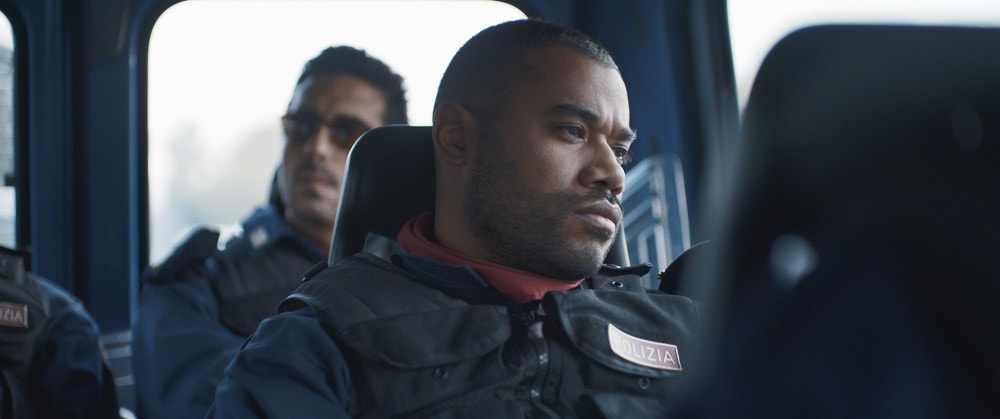 Fortunately, one of the greatest strengths of the film is how much it communicates: entirely organically. The cluttered, beleaguered apartment of the squatters is no paradise, but all that clutter is evidence of a place that has been a real home for hundreds of people for decades. The pristine settings Gentile’s cop finds himself in feel almost austere by comparison, clean and presentable but devoid of personality. The warmth and diversity of the migrants, devoted as they are to the well-being of the community, is likewise contrasted with the camaraderie of the police. Jovial and tight-knit as they are, the constant casual racism and meat-headed bravado created between the sole Black officer and his supposed brothers-in-arms begs the question: why is he even there?
The two brothers, like everyone else in the cast, give solid performances. Both Gentile and Maurizio Bousso, as the apartment-dwelling brothers, are tenacious, driven, and stubborn men, certain in their convictions, even though their parallel paths may put them against one another. That said, it does feel like a piece is missing from Gentile’s story. Considering how lived-in his former home is, it feels like a jump to then join the police force, then a special unit that might see him evicting people he grew up with. While the film does wring as much drama from that scenario as possible, that lack of definition ultimately feels like a writerly contrivance. This is almost certainly the case; The Legionnaire is an adaptation of director Hleb Papou’s short of the same name. Expanding the scope of that earlier film invites questions that hadn’t needed answering, and at a scant eighty minutes there simply isn’t enough time to truly flesh out both sides of this story. As hard as it is to imagine having real empathy for a riot cop, just a bit more context for his motivation in joining and staying in the force would have done wonders. Even so, The Legionnaire does a good enough job cultivating a particular feel for both sides of the world the brothers find themselves on, and the intensity in their performances carries the film even as you wish to spend more time taking in their surroundings. This is an unusually accomplished first feature for a director, and I look forward to whatever he may bring in the future. The Legionnaire is now streaming on Film Movement Plus. Rating: 3.5/5 Review by Cole Groth  Jennifer Lopez is ready to bare it all on her ninth album. After her recent marriage to Ben Affleck, she's ready to tell everyone the "greatest story never told" with an Amazon Prime subscription in This is Me… Now: A Love Story, a narrative version of the album of the same name. To fans of the pop icon, this serves as a love letter to you. It's a sweeping and audacious story of Lopez's hopeless romanticism and deserves praise for being such a wild vision. It's a little full of itself at times and sometimes so bizarre that it verges on insanity, but it is an ultimately interesting journey worthy of a watch. This Is Me… Now is what the title promises: Jennifer Lopez's story of her life… so far. Here, she plays a fictional version of herself as a young woman navigating her life as a former love addict who, after three divorces, finds herself no longer to love. We navigate between reality and fantasy as the film crosses from Earth to the celebrity-filled Zodiac council, who are trying to make her fall in love again. It's an inspired story that moves through the album fairly well. The album itself, at least shown in the film, is fine. This isn't exactly the place to review albums, so I'll refrain from covering that here, but none of the songs are particularly noteworthy. There's plenty of great choreography for each sequence, and while each could serve as a pretty good music video, they're brought down overall because they were all produced simultaneously. 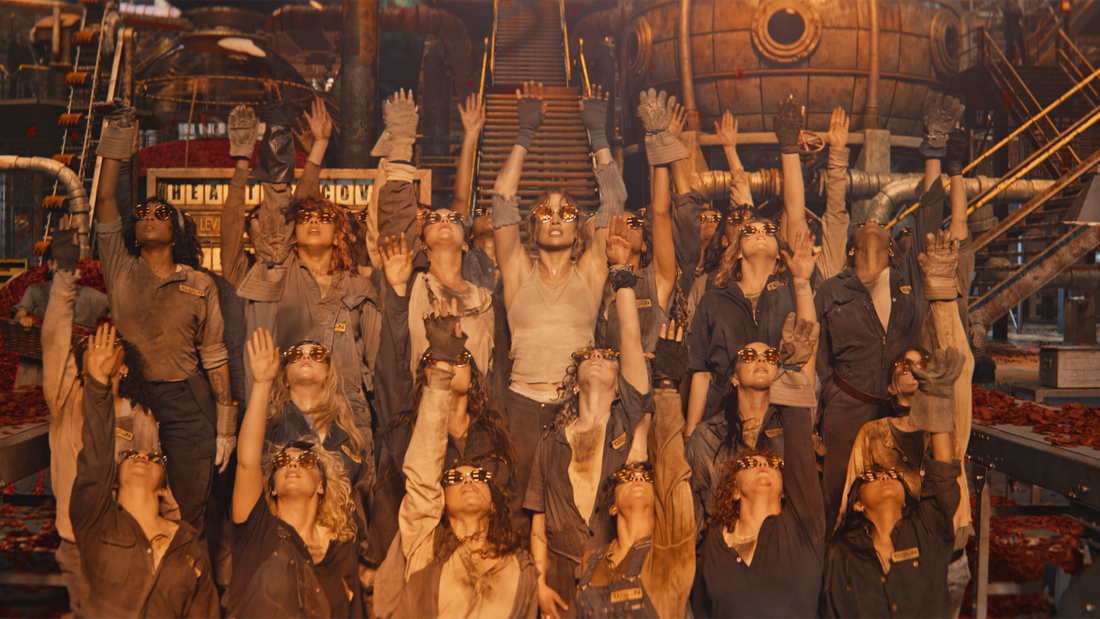 Now, if you expected some sort of grounded story of love, prepare to be slapped in the face with one of the most ridiculous movies of all time. It's such a viscerally strange experience that ultimately works more than it doesn't. One second, Lopez is sitting in a sterile therapist's office. The next, we're sitting in the Zodiac council chamber with Trevor Noah, Post Malone, Keke Palmer, Sofia Vergara, Neil DeGrasse Tyson, Jane Fonda, and Kim Petras hitting on each other and talking about star signs to justify why Lopez keeps getting engaged. So much of the film is made up of CGI straight from a Robert Rodriguez movie, and it honestly adds a lot of charm to it. It's campy in a way that is actually worthy of praise.
Now, one of the fundamentally difficult things about watching a story about Lopez's life is that through all of her emotional struggles, she's clearly this obscenely wealthy woman. This obviously isn't supposed to be a relatable story, but it gets especially strange as we watch Lopez mouth along to The Way We Were on her weirdly CGI-ed television while lounging in a three-story megamansion. It creates this discordance between fans of Lopez and regular human beings. Fans of hers will understand the struggle and enjoy it because it's uniquely her story, but people who aren't obsessed with her work will find some of this eye-rolling. At only 65 minutes long (more like 55 because the credits are obscenely long), This Is Me… Now is worthy of a watch for its sheer audacity. It's not the best musical and could use lots more work to be more appealing from an auditory and visual perspective, but Lopez has created something pretty special here. If one of the biggest singers of all time can make a movie look this impressively weird, hopefully, this will encourage others to do the same. Maybe Taylor Swift's upcoming movie will be some gonzo science fiction thriller instead of a grounded drama. This Is Me… Now: A Love Story releases on Amazon Prime on February 16th. Rating: 3/5 Review by Joseph Fayed 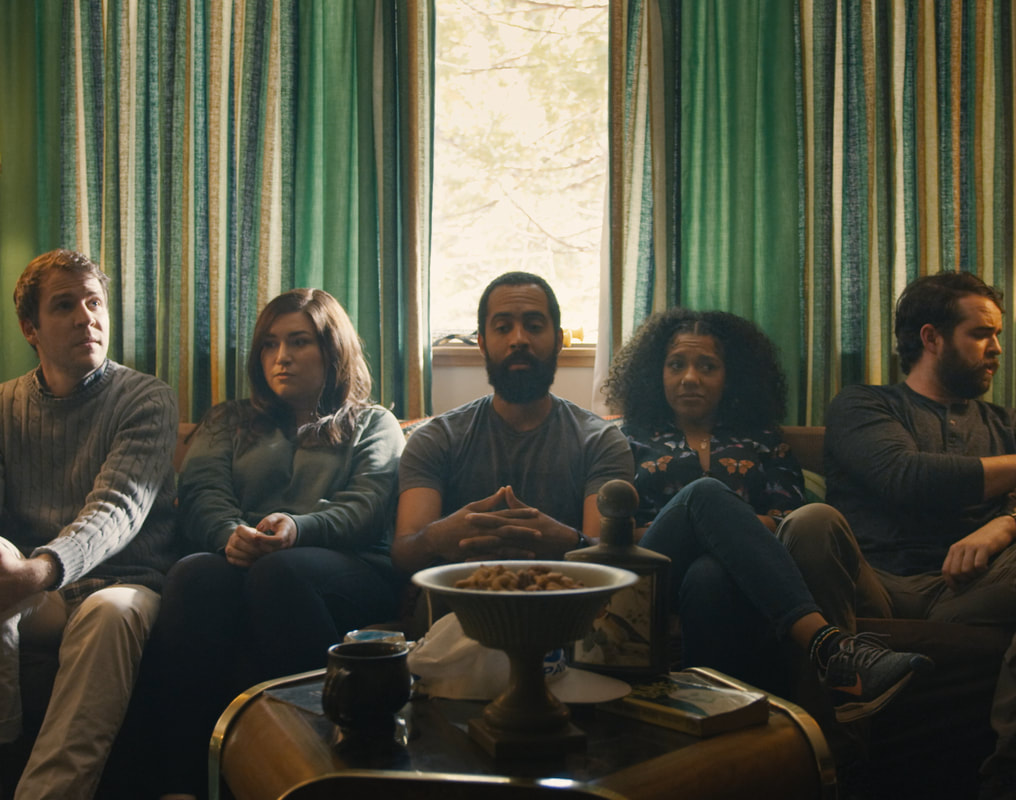 Do filmmakers often go to remote cabins to look for inspiration and clear their minds to write their next acclaimed project? Well, maybe after watching the cliche-ridden Stranger In The Woods, more of them will avoid rural areas altogether. The Newacheck Brothers missed this memo and must have the most bland friend group imaginable if this is who they think a weekend getaway consists of. After nearly dying following a suicide attempt, Olivia's friends try to lighten up the mood by taking her to a cabin in the woods for a few days. Olivia is adamant something awful happened to her, but she and her friends try to ignore it until an unexplained disappearance creates tension amongst the group. A dream vacation quickly becomes a nightmare, and Olivia begins to unravel, unsure who to trust. This psychological thriller comes with no exciting twists or turns. Plot twists aren't always needed, but suspense sure is. From the opening scene, which features what appears to be the first ChatGPT-written "suicide" note, tension is quite thick among the characters. Due to obvious circumstances, one would expect very few lighthearted moments, which is confirmed upon the introduction of an estranged half-brother to one of the friends, Clayton, who lives in the cabin next door. The script goes unnecessarily above and beyond to make Clayton a creep who lacks social awareness. So much of this occurs that you feel that Clayton has to be a red herring in the storyline somehow. 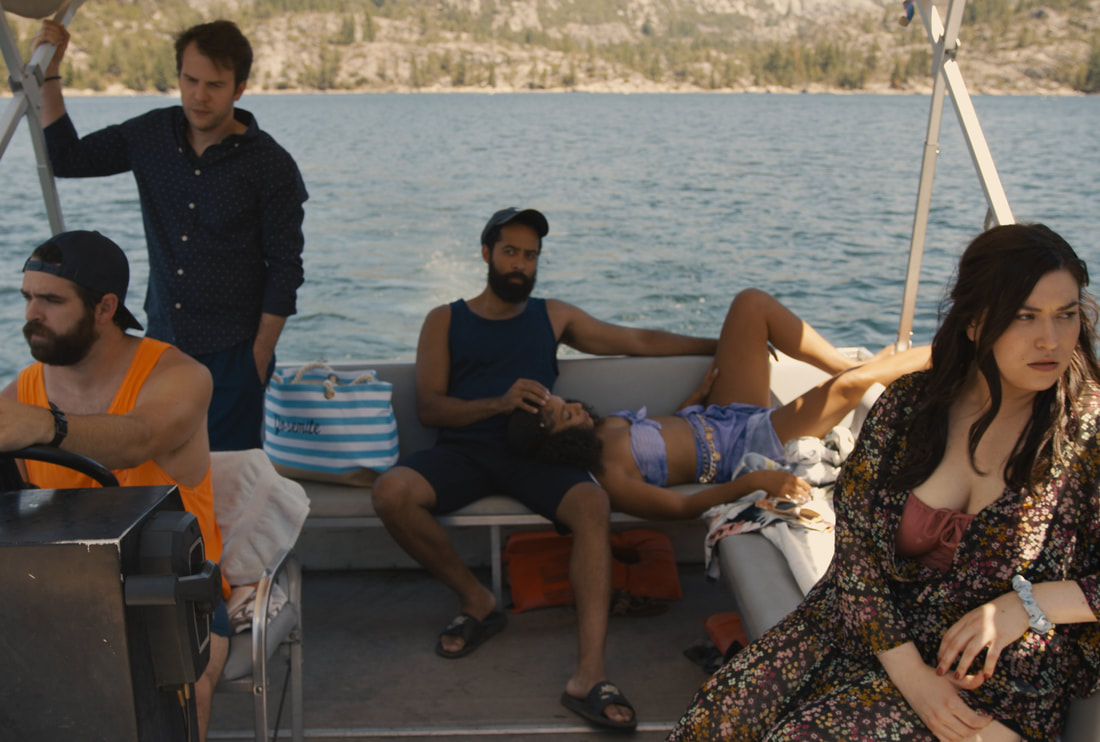 There is one line from Clayton involving his and Olivia's past that, if approached more carefully than painting him to be a creep from the start, would actually give the plot something to focus on. Part of the ensemble is just there to repeat lines. They are disregarded because they are not Olivia or the creep or Olivia's dog — yes, Olivia's dog draws more emotional significance than two humans bring to this. The dog at least gives Olivia something else to worry about besides the lingering aftermath of her near-death experience. Minus the dog, the acting is pretty stale. Olivia is characterized as having this dark cloud over her, and only briefly do we see it heightened. The script makes it seem like Olivia is the woman who has gone from 0 to 10 and is on wit's end when, in reality, she comes across as confused and broken. Had she been starring alongside actors who can actually act like they are her friends, then maybe a dog's performance wouldn't be the frontrunner for awards this film will never receive.
Stranger In The Woods is a misleading title because nobody in the film is meant to be a complete stranger to the rest of the group. That minor gripe aside, you can rewatch many thrillers in a remote setting that are engaging because they are original or well-acted, unlike this. The only redeeming factor this film will have is its less upsetting entry on doesthedogdie.com. Stranger in the Woods is now in theaters and on VOD. Rating: 1/5 Review by Daniel Lima  (L-R) Milo Ventimiglia as Sugar and Liam Hemsworth as Kinney in the action film, LAND OF BAD, a release by The Avenue. Photo courtesy of The Avenue. Only a few years after the end of America’s longest war — the last large-scale engagement of the Global War on Terror — and amid the federal government’s culpability in Israeli war crimes, it certainly does not feel like the public is yearning for a story about the righteousness of the U.S. military. Indeed, in the past two decades, it appeared that the classic rousing war picture has fallen entirely out of fashion, even at the height of pro-war sentiments in the aftermath of 9/11. How, then, do you make a 21st-century war movie? The latest attempt, Land of Bad, is more interesting in how it navigates that question than in the form it ultimately takes. Liam Hemsworth plays a young U.S. Air Force officer attached to a squad of special operations soldiers on a covert mission to extract an American asset from a militant compound located in Southeast Asia. When the mission goes sideways, he finds himself alone in hostile territory. His only companion is the voice of a USAF drone operator, located thousands of miles away, who attempts to guide him to safety. Perhaps the most important detail that separates the 21st-century war film from those of decades past is the kinds of soldiers and conflicts that tend to be the focus. Gone are the grandiose, large-scale battle scenes with thousands of combatants; America has not been in a war against a uniformed adversary that could match its military might in nearly a century. Instead, the war film has evolved into both a more character- and process-focused genre, delving into the personal lives of service members and the meticulous detail of their combat missions. Often, these are stories of elite special forces carrying out specialized missions rather than regular troops. Land of Bad follows this trend to a T. There are only a handful of named characters, all called upon to do a specific task. A good amount of attention to detail goes into getting all the military jargon correct, all the different roles the men in the squad would take, the numerous agencies that would come together for a mission like this, the approach these men would take in completing it, and of course, their emotional state and commitment to duty.  Ricky Whittle as Bishop in the action film, LAND OF BAD, a release by The Avenue. Photo courtesy of The Avenue. Most obviously, this results in a lean, straightforward narrative that allows for more emotional investment in these characters as people rather than representatives of an ideology of American superiority. As the men banter, we see them not merely as men in uniform but as people performing an incredibly difficult job. As they go about it, there are stakes beyond whether the government completes a task successfully. To that end, this film is a mixed success. Hemsworth gives a surprisingly natural performance, but considering his character is largely reactive to an evolving situation, not much time is spent developing him. As the drone pilot supporting him, Russell Crowe has a much meatier role and makes the most of it. As an anti-authority figure who nevertheless is a stickler for adhering to a particular order of doing things and feels great responsibility towards the operators, he finds himself partnered with. Even though he spends most of the movie in front of a computer screen, I found myself wishing more time was spent with him than the guys with guns in the jungle. The condensed perspective of this narrative, and the many others like it, does fulfill an ideological purpose. While focusing on these small teams is more reflective of U.S. military operations today, it also allows filmmakers to sidestep the many concerns surrounding American military activity abroad. Detailing the immediate hardship of a soldier under heavy fire with no way to retreat means the script never has to justify why that soldier had to be there in the first place. 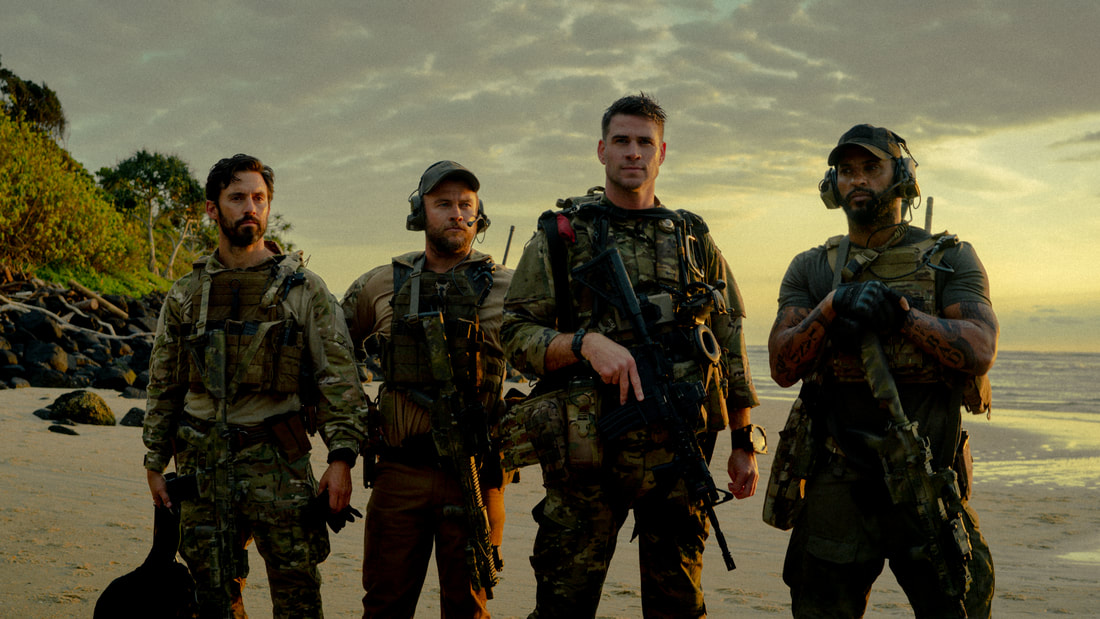 (L-R) Milo Ventimiglia as Sugar, Luke Hemsworth as Abel, Liam Hemsworth as Kinney, and Ricky Whittle as Bishop in the action film, LAND OF BAD, a release by The Avenue. Photo courtesy of The Avenue. Naturally, such is the case here. While the opening text crawl mentions that the Susu Sea is a hotbed for extremist groups, where exactly this compound is located is never specified. Going further, the film never clearly defines the actual adversary the Delta Force squad is there to combat. One antagonist is named, but what his goals are, what his activities include, his brand of politics, and his gripes with the United States are not elaborated on. The man is fully willing to kill children, which, of course, makes him a bad guy. Then again, as anyone who has been paying attention to the news in the past four months is aware, the American government is hardly one to throw stones.
This ambiguity is undeniably an effort to obfuscate the underlying assumption of all the war movies: the U.S. military agenda worldwide is inherently good, all those who support it are heroes, and all those who oppose it are villains. Of course, bad politics don’t make a bad movie, and there is no shortage of action movies doubling as propaganda that are quite enjoyable. However, with such an establishment-friendly and conventional worldview and a general lack of character development, a film like Land of Bad must deliver truly remarkable action and thrills to rise above a sea of similar works. That, more than anything, is its greatest failure. The set pieces here are decent enough by the standards of a mid-budget American production, thankfully keeping the camera steady throughout its handful of shootouts and melees and featuring some actual practical explosions. None of it, however, is particularly memorable, lacking a sense of geography or choreography that properly utilizes the environment. Without anything to make it distinct, the action fades quickly from memory. With it goes anything notable about Land of Bad, barring one fun performance from Russell Crowe. As run-of-the-mill as any other modern attempt at a muted, chest-thumping love letter to American imperialism, one can’t help but wish that this film took a more overtly jingoistic approach to the material if only to have something actually interesting to dissect. Sadly, the only purpose this serves is to illuminate how much times have changed. Land of Bad arrives in theaters February 16. Rating: 2.5/5 Review by Camden Ferrell  Starting out as a director for music videos, Trish Sie is now an established feature film director of films like Pitch Perfect 3 and last year’s Sitting in Bars with Cake. Her newest film, Players, is the obligatory Netflix Valentine’s Day release. It also serves as the feature film debut of veteran television writer Whit Anderson. Even though the cast has mildly decent chemistry, this romantic comedy hits narrative beats that have been beaten to death while clinging to awkward and exaggerated tropes. Mack is a sportswriter for a local New York paper and spends her free time hanging out with her longtime best friends. These friends have spent years devising a meticulous system of “plays” in order to hook up with their desired target. However, things get complicated when Mack decides she wants to finally play for keeps. Obviously, this movie will require some suspensions of disbelief, but it still had the potential to remain grounded and relatable, and this doesn’t get capitalized on at all. Anderson’s script flows exactly as one would expect it to. At no point in the movie, did the writing take me somewhere even remotely unexpected. While adhering to the story structure that romcoms seem to love isn’t inherently bad, this movie fails to add its own flair at all. The story does nothing to distinguish itself from other romcoms, and it feels borderline soulless. The dialogue is cheesy and unrealistic, and it never flows well. The characters feel exaggerated to the point of annoyance. They’re too excessive to be relatable, and they manage to occasionally become displeasing to a viewer. 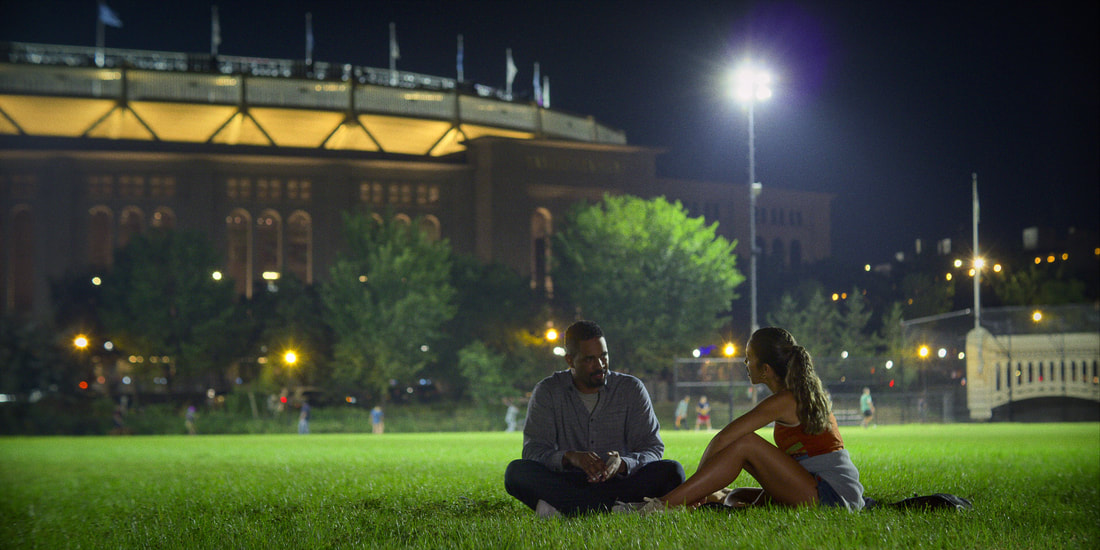 There isn’t much I can praise about the movie, but I will say its acting is probably its strongest aspect. It’s clear this ensemble is doing the best they can with the material given, and it goes about as well as expected. The movie is led by Gina Rodriguez, and she has proven she can give strong performances in romcoms, and her newest effort as Mack is passable. It’s not a memorable role with her, but it is a role that benefits a lot from her natural charm. The best actor in this film is Damon Wayans Jr. who also brings his signature charm to a movie that desperately needs it. The rest of the cast of actors like Tom Ellis, Augustus Prew, and Joel Courtney among others are decent albeit a little overblown.
It may seem like I’m being too harsh on a lighthearted and mindless romcom, but it really fails to do anything for me. It’s a specific brand of cheesiness that is insufferable more often than not. There are plenty of romcoms that endear me and audiences with their cheesiness and adherence to genre conventions, but this is not one of them. It’s an overacted film that devolves into caricature and fails to connect to your emotions in any earnest way. Players is a movie that you have definitely seen before, and it’s one you could predict within seconds of watching it. Your mileage may vary, but there isn’t a whole lot working in this movie’s favor. It is embarrassingly excessive at times, and at its best, it’s a mildly entertaining buddy comedy that is carried primarily by its good-looking and charming cast. Players is streaming on Netflix February 14. Rating: 2/5 Review by Adam Donato 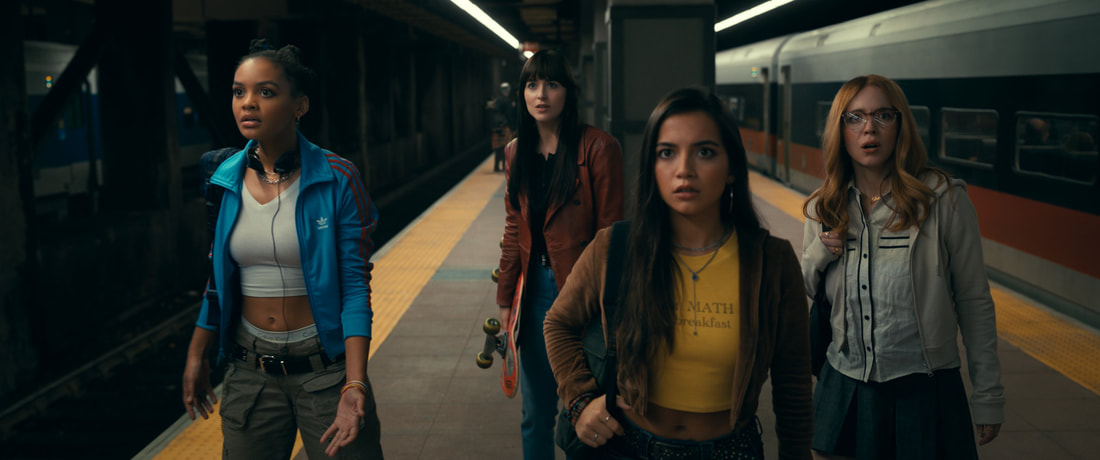 Mattie Franklin (Celeste O’Connor), Cassandra Webb (Dakota Johnson), Anya Corazon (Isabela Merced), and Julia Cornwall (Sydney Sweeney) in Columbia Pictures’ MADAME WEB. Sony has cultivated as awful of a reputation as a major movie studio can have. Their handling of the rights to Spider-Man has been bailed out by partnering with the MCU and taking a risk with their animated movies. They've tried to build off this success by attempting to expand their Spider-Man universe. While Warner Brothers has found outstanding success with their solo villain movies like Joker, Sony has shit out solo films for Venom and Morbius, and this year will see the release of both Madame Web and Kraven the Hunter. Thanks to the selfish studios causing a writer's strike, both Madame Web and Kraven the Hunter have been pushed back. Sony probably wishes they could erase these movies for insurance money like the hack known as David Zaslav. Is this negative buzz/momentum going to manifest a shit show, or can Sony see their own future and avoid a total disaster? Morbius asserted itself as one of the most infamous releases of this decade, but with Madame Web, Sony has truly outdone themselves. At least Morbius looked like the comic book character sometimes. Madame Web has three scenes where the superhero characters are in their costumes, and the first two are in the trailers. It's so vile of Sony to market this movie like it's a superhero movie when it's clearly not. They're so desperate to squeeze every last drop of viability from the Spider-Man brand. Watching this movie is like eating the peel of an orange with the stickers still on it. Every conceivable connection to Peter Parker is already exhausted in the marketing. If you're only interested in this film for the cameos and references, steer clear. That is unless you're interested in hearing yet another interpretation of the "with great power comes great responsibility" line. Remember when Dakota Johnson's second role was a bit part in The Social Network? Choose your projects wisely, or you can fall down the same path. Johnson is learning that lesson now, as this movie made her switch agencies. This was due for her as she's a three-time nominee for the Alliance of Women Film Journalists award for Actress Most in Need of a New Agent. You don't need to watch the movie to tell that Dakota Johnson doesn't want to be there. Just watch her interviews! They're far more entertaining than her performance in the film. After this performance, the two-time Razzie winner is certainly due for a lifetime achievement award. At least Jared Leto tried with Morbius. 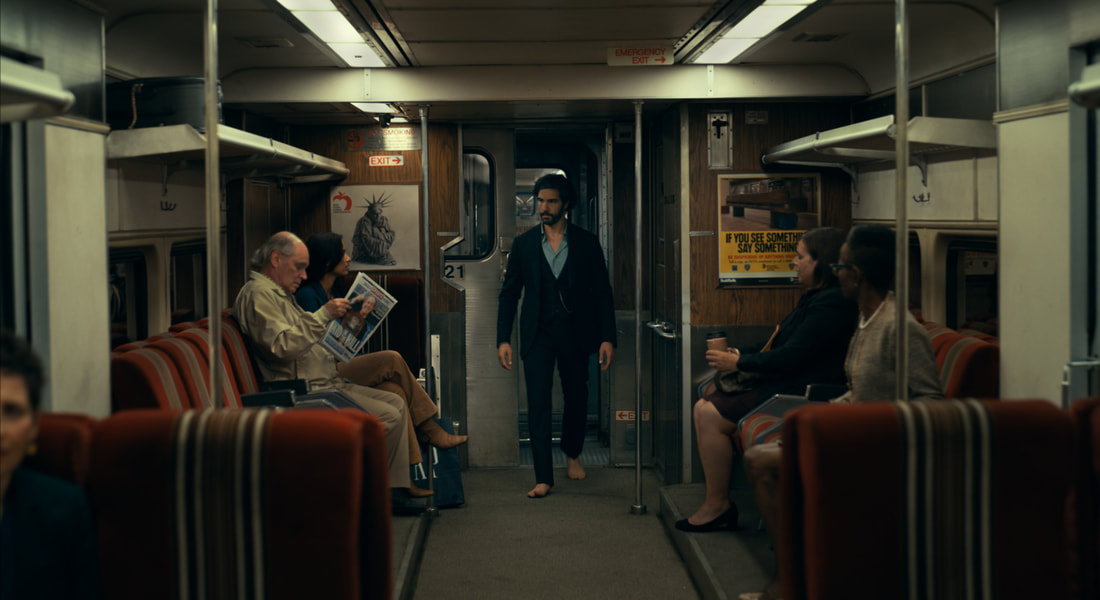 Ezekiel Sims (Tahar Rahim) in Columbia Pictures’ MADAME WEB. The marketing outside of Johnson's indifference has been the sex appeal of the film. It's a female-led superhero film starring the star of the most iconic sex trilogy of all time. There are several promos for the movie where Johnson and Sydney Sweeney play up the sex appeal of watching this movie. It comes out on Valentine's Day, for Christ's sake. This is such a sleazy marketing move, as there's nothing overtly sexual about the film. How many types of movies will Madame Web try to be to entice anybody on the planet to see this movie in a theater? It's not a superhero movie, a thirst trap, or a romance. Who is Madame Web even for?
The rise of superhero movies in terms of quantity has not been met with a subsequent rise in great supervillains. The Batman aside, the supervillain landscape has been completely barren since the fall of Thanos. Tahar Rahim plays Ezekiel Sims in Madame Web. His character murders Madame Web's mother and takes the spider they discovered back with him to the States. He uses the spider to gain wealth and powers but is haunted by the visions of three young Spider Women killing him. He's a standard mustache-twirling villain, but not in a fun way. He's just the bad guy, and even his personal connection to Madame Web is completely squandered. His look is so bland it's ugly. There's no interesting backstory for his character. There's no compelling performance. There's no moral gray area. His powers are lackluster. What a waste of a villain. Sydney Sweeney, Isabela Merced, and Celeste O'Connor will probably get away with this disaster of a movie. Obviously, there will not be any sequels or continuation of this story whatsoever. They're young enough in their careers that they will be able to endure this shit show. Sweeney still has the surprise hit Anyone But You in theaters for an encore release, Merced has an Alien film, and O'Connor has another Ghostbusters film coming out this year. This trio has to deal with the stereotypes of their characters dialed up to the absolute maximum. Their wardrobe is reminiscent of when Disney adults go to the theme parks wearing regular outfit versions of Disney costumes. They sport the color scheme of their superhero counterparts, and they're rarely allowed to be proactive in the action. These helpless schoolgirls annoyingly bicker throughout the entire film, and their default move for playing around is throwing things at each other. While it's frustrating only to see these characters in costume during visions, nobody will be clamoring to see these characters continue forward. Madame Web is a film that will make audiences lose respect for ambulances and never want to drink Pepsi again. Johnson is due for a career redemption arc after this stinker of a performance. There isn't an ounce of anything compelling here, from the story to the characters. It's an embarrassment to the genre and is sure to inspire many empty theaters. In what has been a pitiful year at the cinema so far, Madame Web blows itself out of the water. Only a Dune sequel can save us now. Be sure to catch Dune: Part Two in theaters starting next month. Madame Web hits theaters on February 14. Rating: 0/5 |