
|
Review by Sean Boelman

Photo Courtesy: BEETZ BROTHERS FILM PRODUCTION.
Artificial intelligence is all over the news these days, and while some worry about it replacing them in their workplace, one software might replace us after we die. Directed by German filmmakers Hans Block and Moritz Riesewieck, Eternal You is a fascinating documentary about this emerging technology with an unexpected level of insight in its discussion of its timely themes.
The movie tells the story of Project December, an innovative generative AI software that allows users to interact with their deceased loved ones through a chatbot mimicking their conversational patterns. It’s a surprisingly balanced look at a trend that is still emerging, allowing the conversation around it to be incredibly nuanced. Eternal You asks a lot of big questions about the technology at its core, with the central concern being whether or not it is “right.” And as one would expect, there are no easy answers. Ten years from now — heck, maybe even one year from now — we might look back at this documentary and wonder why it didn’t argue more strongly in one direction or the other. But for the point we are in the development of AI technology, this film feels incredibly timely and on-point. One of the most impressive things about Eternal You is how well it manages to connect its intimate story to the bigger picture. Project December is not a particularly large use case for artificial intelligence — at least compared to more well-known ones like ChatGPT — yet Block and Riesewieck use this as a starting point for the larger AI conversation. They even include OpenAI CEO Sam Altman’s testimony before Congress to provide context. 
Photo Courtesy: BEETZ BROTHERS FILM PRODUCTION.
It’s honestly pretty surprising how much participation the filmmakers got from the creators of Project December because it’s not particularly flattering to their work. By no means is this a hit piece, but it’s engaging with the deep moral complexities of this technology, and the fact that its creators are willing to willing to have this conversation so openly is quite impressive.
Of course, the more compelling side of the film’s story comes from the clients of Project December, who have used the generative AI technology to recreate an avatar of their loved ones. The filmmakers are incredibly sensitive with these families, taking particular care not to shame them for their decisions, and the result is deeply empathetic and profoundly emotional. Aesthetically, the movie is fantastic, with some excellent cinematography and an excellent score that do a great job of setting the somber tone for the film. Occasionally, it does feel like the level of formalism to the visuals does distract from the story itself, but what the movie explores is so compelling that it always draws you back in. Eternal You has a fascinating story to explore, but what makes it even more impressive is the complex way in which it approaches this challenging material. In a time when so many movies about AI are unable to have the conversation with sufficient depth, Block and Riesewieck’s documentary has emerged as essential viewing. Eternal You is screening at the 2024 Sundance Film Festival, which runs January 18-28 in-person in Park City, UT and online from January 25-28. Rating: 4/5
0 Comments
[Slamdance 2024] BRANDO WITH A GLASS EYE -- Dull Drama Confuses Navel Gazing for Instrospection1/20/2024 Review by Daniel Lima 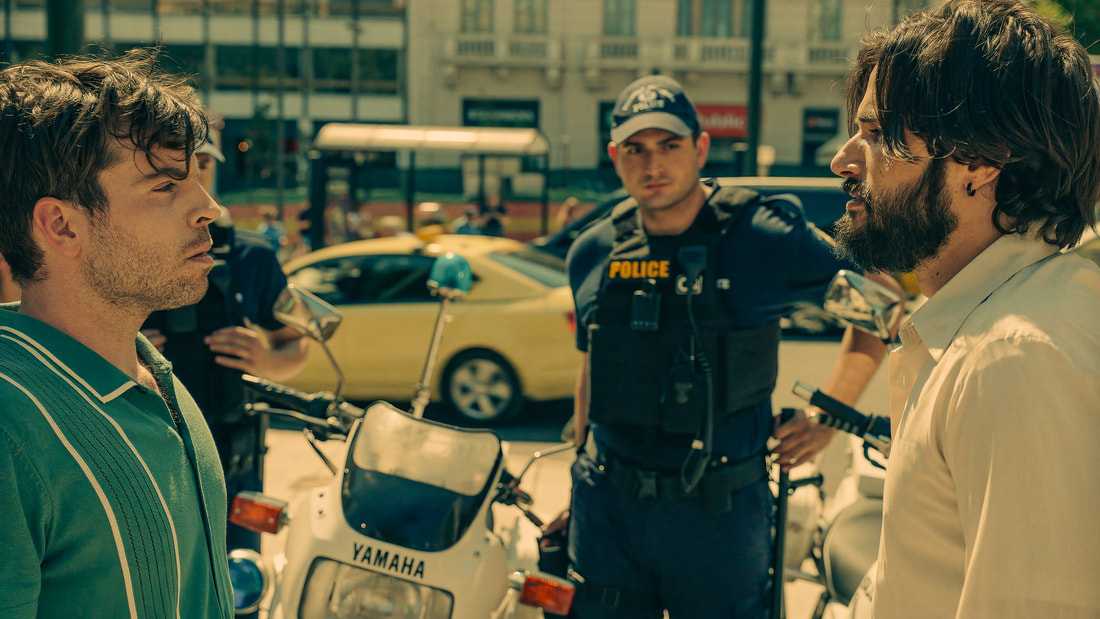 Acting might be the single most emotionally challenging element of film craft. To be able to perform for an audience — even if that audience is simply cast and crew — requires a baseline degree of openness, a willingness to look like a complete fool in search of emotional honesty, that most people simply aren't capable of. Brando with a Glass Eye attempts to use that as the foundation of an introspective character study and the life of the artistic mind, but unfortunately, that introspection slowly reveals itself to amount to nothing. Yiannis Niarros is a struggling actor in Greece who is completely committed to his art, frequently engaging in outrageous performance art and intense acting exercises both in public and private. When given an opportunity to audition for a spot at a prestigious school in New York, he attempts a robbery with his brother, which ends with a bystander being shot. He begins to befriend his none-the-wiser victim, and as his guilt mounts and that friendship deepens, the lines between the roles he plays and reality start to disintegrate. At least, that seems to be the intent. From the jump, the film's weakest part is that the main character is not at all compelling. Part of this is by design; he spends so much time wrapping himself up in these layers of abstraction to the point neither the people around him nor the audience is clear on whether he's performing a bit at any given moment — that there are only occasional glimpses of the man underneath. The problem is that neither these performances nor the person beneath them are compelling. His friends say he's genuinely a talented actor, but he comes off as more of a try-hard enamored with the idea of being an artist than a good one himself. That dichotomy could itself be compelling, but the film never truly interrogates it. Besides, the man is so unpleasant even when he isn't "on," it's a wonder anyone would want to spend time with him. 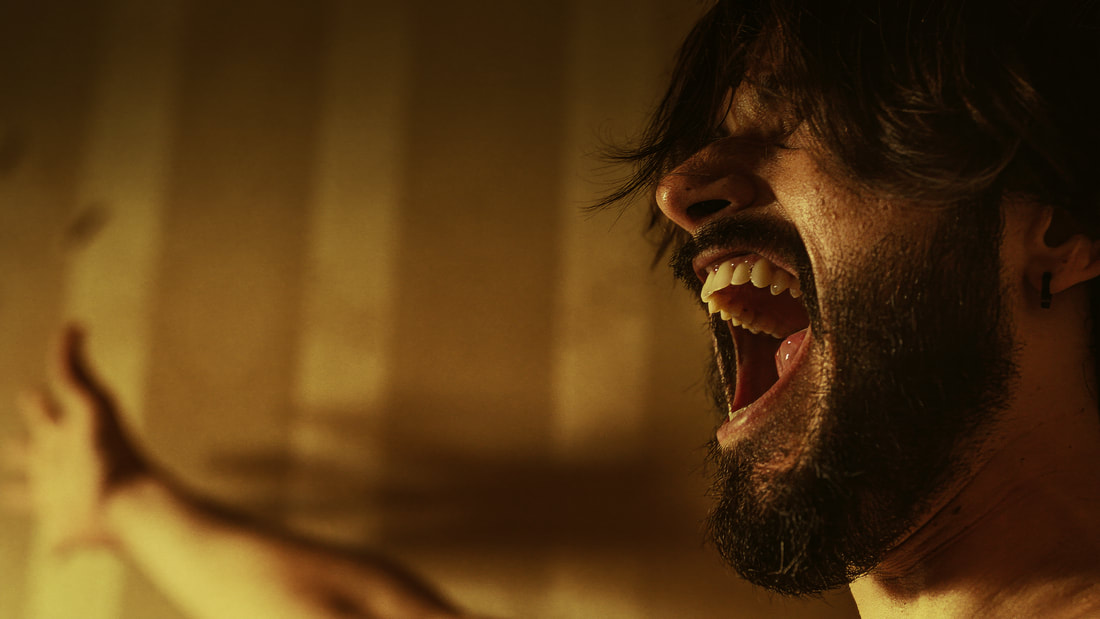 That is actually another major issue, as most of the drama of the film concerns his relationships with others. His strained relationship with his brother is easily the strongest part of the film, with their competing visions of the future and the death of their mother creating the only real sparks. His friendships with fellow artists — and affair with one friend's partner — provide little context to his character, and even the specter of his mother, as ever-present as it is, offers little insight beyond the obvious. Since the interactions he shares with them aren't inherently enjoyable — he's unpleasant, they largely lack distinct personalities, and the dialogue they share isn't funny or charged — all this feels purposeless.
Nowhere is this more glaring than his burgeoning friendship with the man he shoots. Revealed to be a thoroughly unpleasant bourgeois bored by his own wealth, one would expect their new bond to highlight something distinct about the two men, or for the film to tackle the class divide between them, or play the inherent irony of the situation for laughs or tension, or use it as a springboard for a deeper examination of the guilty man's psyche. None of these possibilities ever come to pass, and the slow realization that the time they spend with each other is nothing more than it seems is aggravating. The most that can be said in defense of Brando with a Glass Eye is that the aimless and ambiguous portrait of Niarros' self-involved actor is meant to be frustratingly opaque, that the character cultivates an enigmatic air about him that is meant to obscure the emptiness within in. Its depiction of that, however, is inert, skin deep, and most damning of all, dull. No film should be expected to hand out easy answers, but it should at least hold attention while asking questions. Brando with a Glass Eye is screening at the 2024 Slamdance Film Festival, running January 19-25 in-person in Park City, UT and online from January 22-28. Rating: 2/5
Review by Sean Boelman

When thinking of movies that would get delayed sequels, you’re probably not imagining an indie movie from 20 years ago that not many people have seen. However, 23 years after the premiere of his directorial debut, Virgil Bliss, at Slamdance, filmmaker Joe Maggio returns to the festival with Bliss. More polished, albeit not quite as effective, Bliss noneteheless is an intriguing work of American independent cinema.
Bliss picks up two decades after the events of the last film, following the ex-convict as he lives a low-key life as an Oxy-addicted stablehand. Of course, trouble has a way of finding Virgil, as he faces an unbelievably tragic chain of events. While the movie definitely feels a lot more melodramatic than its predecessor, there are still plenty of moments that work quite well. The biggest difference between the two films is that this one takes a much more lethargic pace. While Virgil Bliss was a ticking time bomb you were just waiting to see explode, Bliss is akin to a slow march to an end you sadly know is inevitable. The experiences are both quite emotional — just in very different ways. With this follow-up, Maggio also swings bigger with his themes, almost to the point of biting off more than he can chew. The movie attempts to comment on a bunch of different ideas, including grief, addiction, recidivism, and more, but it doesn’t quite have the guttural emotional impact that Virgil Bliss had. Instead, it feels as if it’s treading on the same ground that so many other movies have before. 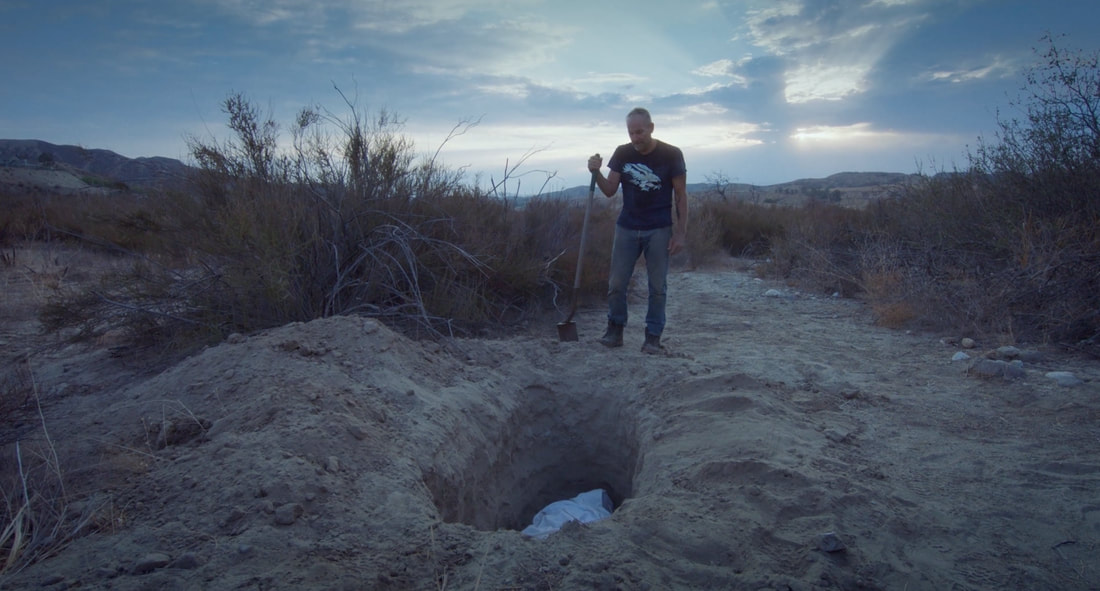
Gone too is the scrappy aesthetic of the first film, as it is replaced by cinematography that’s genuinely beautiful. From a formalistic standpoint, Bliss looks a lot better than your average Slamdance selection. A big part of this is owed to the natural beauty of the desert setting in which the movie takes place, which does quite a bit of heavy lifting.
In many ways, it almost feels as if Bliss was developed as a separate project, and then reworked to include the characters from Maggio’s directorial debut. The character goes by a different name for most of the runtime (the excuse given is that he’s on the run), and he feels like an entirely different person than we saw in the previous film. Granted, the 20 year time gap would explain that, but there’s not enough development on what happened in those decades for it to quite work. Still, Clint Jordan makes the most out of the role and delivers another excellent performance — this time much better than the movie he’s in. Although some of the dialogue trips him up when it gets particularly stilted. Despite some uneven moments, Faryl Amadeus’s dual role also mostly impresses. She’s much better when she plays it low-key than when she goes for the big, showy moments. Bliss is not as strong or idiosyncratic of a film as its predecessor, but it’s still an interesting expansion of this character’s story. There’s a lot going on here that makes the movie worth watching — particularly Clint Jordan’s excellent performance. Being that Maggio intends this to be the second part of a trilogy, it will be interesting to see where they go from here. Bliss is screening at the 2024 Slamdance Film Festival, which runs January 19-25 in-person in Park City, UT and online from January 22-28. Rating: 3.5/5
Review by Sean Boelman
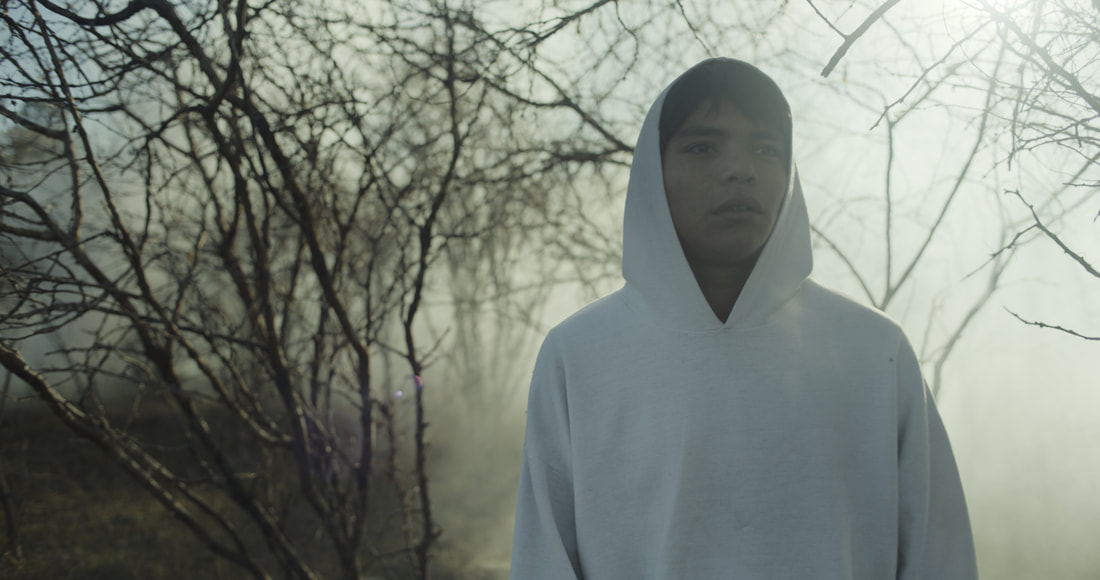
Mexican filmmakers Astrid Rondero and Fernanda Valadez previously collaborated on the highly acclaimed Identifying Features, so their follow-up, Sujo, was one of the most exciting international prospects of this year’s Sundance. Although the film ends up feeling much more conventional than it clearly hopes to be, the level of artistry and ambition on display are certainly impressive.
Sujo tells the story of a Mexican boy who, as he grows up after the cartel assassination of his father at the age of 4, attempts to grow out of the shadow of violence into which he was born. Although the script hits many of the typical beats of the coming-of-age genre, it’s mostly very nuanced in its approach, ensuring that the emotions always resonate. The first hour and a half of Sujo are unconventional in a way that one would almost expect this to have been in the NEXT section, rather than the World Cinema Dramatic Competition. It’s very expressionistic and poetic, using beautiful cinematography by Ximena Amann to create symbolism to elevate it to something greater than the sum of its parts. In the final third, Sujo turns into something much more conventional. As the protagonist enters his teenage years, his arc begins to hit much more predictable beats. At a certain point, the film turns into the type of “teacher helps disadvantaged student” movie you’ve seen dozens of times before, then it just… ends. It’s still good as a whole thanks to Rondero and Valadez’s tender direction, but it is a letdown compared to the extraordinary first two-thirds. 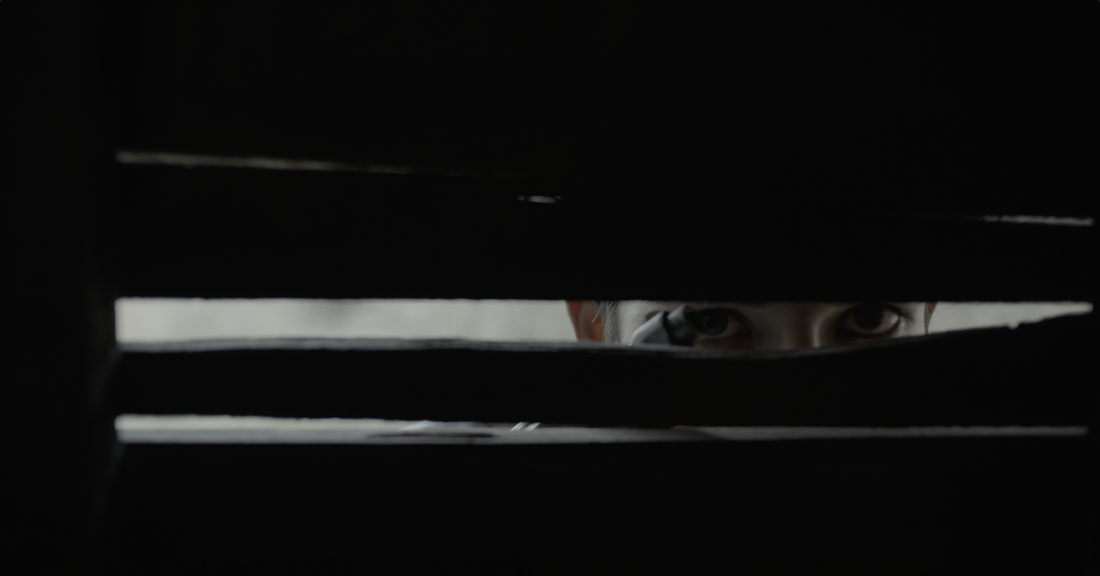
Admittedly, compared to their work in Identifying Features, the approach Rondero and Valadez take to their themes feels much less urgent in Sujo. It feels like what is missing is a deeper connection between the big picture of the epidemic of cartel violence and the more intimate aspects of this character’s story.
However, the first third does such a great job of connecting us with the character that, when the movie resorts to pulling at the heart strings with more melodramatic “tragedy,” we are still on board with Sujo and feel a deep pain for him. The supporting characters, while not particularly compelling on their own, are effective as a web of connections to develop the protagonist. The biggest strength of Rondero and Valadez seems to be getting phenomenal performances out of their actors. Both actors who play the protagonist — Juan Jesús Varela and the younger Kevin Uriel Aguilar Luna — are newcomers, yet they bring an understated emotion to the role, even in the moments that feel more familiar. Sujo may not be as strong as Rondero and Valadez’s last cinematic outing, but it still has plenty to offer. Thanks to great direction and some utterly breathtaking cinematography, the film is able to overcome some of its conventional plotting to still be transfixing — even if the third act threatens to derail the whole thing. Sujo is screening at the 2024 Sundance Film Festival, which runs January 18-28 in-person in Park City, UT and online from January 25-28. Rating: 3.5/5 Review by Joseph Fayed 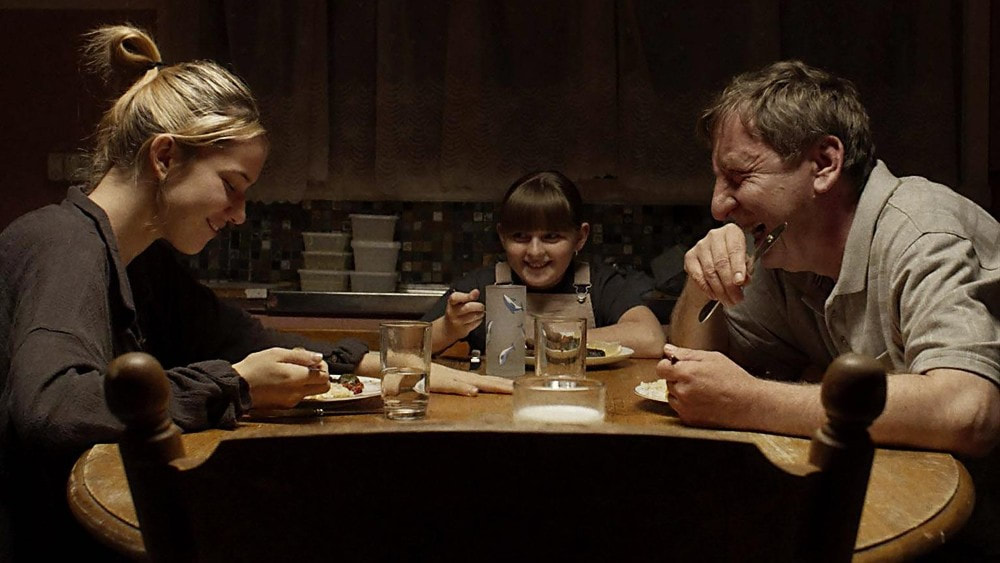 Over the years, many early-career directors have made family dramas heavily focusing on the family's youngest member. They tell the story of hardships while treading lightly with melancholy. Making her impressive directorial debut, Sara Kern's Moja & Vesna is the latest to add to this trend. Ten-year-old Moja lives with her father and her pregnant 20-year-old sister in the suburbs of Melbourne, Australia. The family is still grieving the unexpected loss of their matriarch, while Moja is seemingly the only one who anticipates the arrival of her niece. Feeling that Vesna can fill the gap their mother left behind, Moja looks forward to a brighter future. The film's point of view doesn't come directly from Moja — the most interesting of the three — and it pays off. Moja still serves as the protagonist, but viewers are allowed to make assumptions about her family that a 10-year-old simply can't comprehend. Moja has the quirks any kid her age would have, but one distinction is that she can process her feelings like an adult can, too. The script sees Moja have a blend of both child-like and adult personalities, but a consistent trait she has is being mellowed out. Her emotional maturity is well written as her actions speak louder than words and prove Moja is much more stable than she may realize. 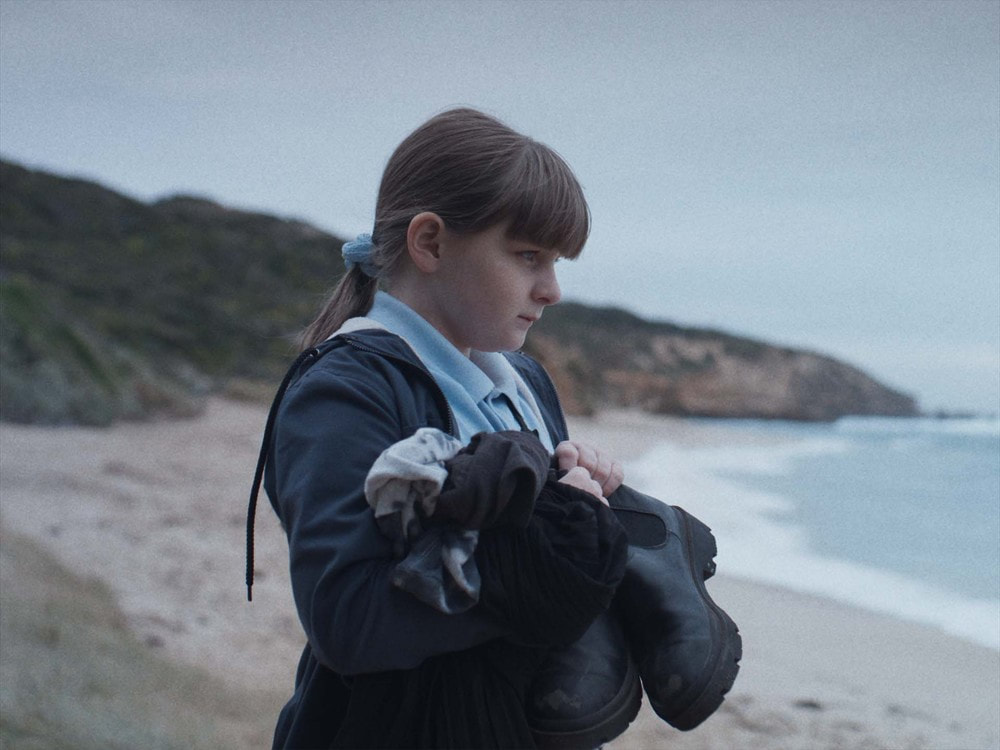 It is hard to describe Vesna other than she is someone who, whenever she opens her mouth, you expect her to yell. Thankfully, she does very little of that. Vesna is truly broken on the inside, and she is the most emotionally driven. Her pregnancy serves as another misstep to her; positive encouragement shows a glimmer of what she could be like as a mother, but it is clear why she is not ready to handle that role. Loti Kovacic and Mackenzie Mazur have great chemistry as Moja and Vesna, and the latter's performance is elevated when she acts opposite her sister Moja, who becomes more of an adult than Vesna is.
The supporting characters are well-acted, too. Moja and Vesna's father, Milos, wears his grief over his wife's death on his sleeve. Moja's friend Danger is the carefree spirit she craves the most, and Danger's mother — the biggest outsider to the rest of the characters — wants to help Moja but just can't put herself in Moja's shoes soon enough to make a difference. These three and their storylines represent parts of her life that Moja is willing to embrace, even if Vesna becomes increasingly distant from her family. Moja & Vesna will make you want a supportive sister if you don't already have one. It is raw and candid in how a child is supposed to deal with loss, as it should be. This take on how grim the present is for a girl and how she vows to have a bright future not only for herself but those surrounding her is as fascinating as any childhood fairytale. Do yourself a favor and give this film the nice warm embrace it deserves instead of giving it the cold shoulder. Moja & Vesna is now streaming on IndiePix Unlimited. Rating: 5/5
Review by Sean Boelman
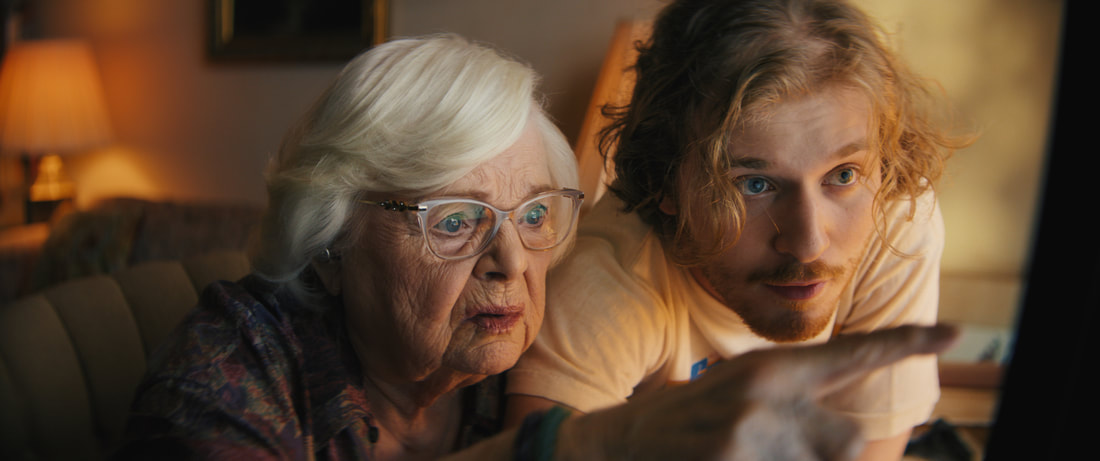
In recent years, Sundance has drifted more and more away from its indie roots, featuring premieres of films with A-list casts. Few titles at the festival this year have as recognizable of an ensemble as Thelma. While Josh Margolin’s comedic caper is far from perfect, but it rides on the strength of its talented cast and enjoyable tone to deliver an entertaining, if not particularly stirring romp.
Thelma follows an elderly woman who sets out on a quest across the city to get revenge after being duped by a scammer pretending to be her grandson. This is the type of movie where you know exactly where the story is going, but as with so many things in life, it’s not the destination that’s important, but the journey — and Margolin gives us one enjoyable ride. If you’re looking to find something meaningful here, you’re looking in the wrong place. This is not some hard-hitting exposé about the wrongs committed against the most vulnerable in our society — it’s just a silly little comedy about an old woman doing things you don’t expect old women to do. In many ways, it’s a neo-noir with a grandma as the heroine. Yet, for as absurd as the premise is and the far-fetched turns the story takes, Thelma manages to work thanks to how incredibly charming the characters are. Sure, the title character is just a stereotypical grandma, but that makes her impossible not to love. You’d have to be heartless not to be rooting for her to win against the evil scammers of the interwebs. 
June Squibb’s performance in the leading role is so much fun to watch. Although it’s the same type of schtick we’ve seen the veteran actress do time and time again, her comedic timing is impeccable and never fails to charm. She doesn’t take the role too seriously, yet she is entirely believable and never feels like she is ridiculing the character.
The movie also boasts a decently star-studded supporting cast. The late Richard Roundtree has a fun role as one of Squibb’s sidekicks, and it’s a lovely little swan song for the acclaimed actor. Malcolm McDowell also has a memorable bit part. Others, like Fred Hechinger, Parker Posey, Nicole Byer, and Clark Gregg, don’t make much of an impact. If one thing does hold the film back, it is the production values. It’s in the weird middle ground where it’s not scrappy enough to feel truly “indie,” but also not polished enough to be mainstream. It’s clear that Margolin had ambitions of this being a sleek, stylish genre exercise, but it doesn’t quite get there. Thelma is nothing spectacular, but it is fun. Although you might expect this type of lighthearted, star-driven genre film less from Sundance and more from Tribeca or even SXSW, Thelma will serve as a nice reprieve from the more “elevated” fare at the festival. It knows exactly what it’s meant to do, and it delivers on that promise. Thelma is screening at the 2024 Sundance Film Festival, which runs January 18-28 in-person in Park City, UT and online from January 25-28. Rating: 3.5/5 [Sundance 2024] NEVER LOOK AWAY -- Lucy Lawless's Directorial Debut Boasts Uncommon Nuance1/18/2024
Review by Sean Boelman
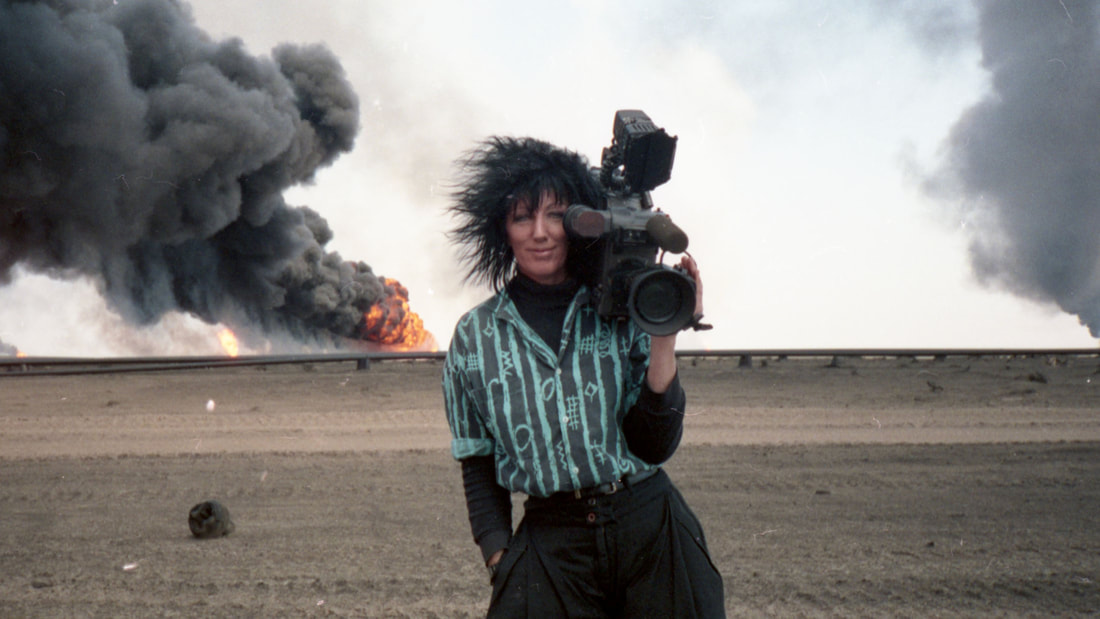
A documentary about a journalist might not seem like a natural fit for the directorial debut of an actress whose best known work is a fantasy show that started almost three decades ago, but Never Look Away — from Lucy Lawless (Xena: Warrior Princess) — defies those expectations. With a level of nuance one doesn’t expect from any biography, much less one made by a first-timer, this is an early surprise from this year’s Sundance.
Never Look Away tells the story of New Zealander journalist Margaret Moth, who became a notable camerawoman in war zones for CNN before facing a fateful injury and persevering through it. Moth is the type of subject whose story just screams “unsung hero,” and Lawless really leans into this, creating a compelling portrait of the camerawoman as an absolute badass. One of the more interesting things about Lawless’s approach is the film’s tone. While many might be used to documentaries set against the backdrop of war being bleak and heavy, Lawless has created something often energetic and vibrant. In the movie, one interviewee talks about the rush that being in the moment creates, and the difficulty of conveying this without glorifying war. This is something that Lawless pulls off extremely well with Never Look Away. Yet for all of the violence Moth captured and the debauchery shown from her personal life, this documentary never loses sight of the intimacy. Yes, the film’s subject lived larger-than-life, but there is still a deep poignancy to her story and an eerie timeliness considering the threats war correspondents face in today’s international conflicts. 
Of course, the movie uses many of the typical methods of the documentary medium of telling its story, like talking head interviews with Moth’s contemporaries and archive interviews of Moth from when she was still alive. That being said, there’s such a kineticism to how Lawless constructs the narrative that it is consistently engaging.
There are also some really ambitious techniques employed in the film, like the use of dioramas to illustrate some of the more perilous situations that Moth found herself in. Combined with the news footage shot by Moth and her peers, the movie creates an interesting perspective on its subject’s life and career that makes it feel different from many other biographical documentaries. When the film gets more serious, talking about Moth’s injury, it understandably loses some of its steam. However, this is also where Never Look Away begins to dive into the deeper moral complexities of the story, and with a runtime of around 85 minutes, it manages to bring a lot of nuance to these themes in a short time. The best way to describe Lucy Lawless’s directorial debut, Never Look Away, is “deceptively simple.” On its surface, it seems like it’s just going to be another biography of someone you might not have heard of before; but eventually, the film reveals that it has much more to explore than it let on, allowing it to stand out amongst its peers. Never Look Away is screening at the 2024 Sundance Film Festival, which runs January 18-28 in-person in Park City, UT and online from January 25-28. Rating: 3.5/5 Review by Cole Groth  To put it simply, Founders Day is fine. People with a proclivity for campy kills and stupid dialogue, this film is for you. For those uninterested in slashers or who aren’t already fans of this genre shouldn’t use this as the slasher benchmark because it’s a tonally confusing mess for the most part. With a few decent scares, this is only a bit worse than your average slasher flick. Founders Day tells the story of a small town shaken up after a masked killer begins hunting down the various townspeople in the days leading up to an unusually intense mayoral election. Twists and turns ensue. There are plenty of characters to follow, but the leads here are two teenagers, played by Naomi Grace and Devin Druid. Rounding out the cast is a smattering of decent actors waiting to be slaughtered, including William Russ, Amy Hargreaves, Catherine Curtin, Emilia McCarthy, Jayce Bartok, and Andrew Stewart-Jones. Each character is pretty interesting, and most are nicely acted. The biggest place this film struggles is in its politics. It’s nice that the movie is trying something new with a political twist, but it falls flat because of its lack of nuance. There’s a generic asshole politician who’s a clear stand-in for Donald Trump. He’s brash and obnoxious — a clear villain from the start. It’s all so eye-rollingly evident from the get-go and has nothing new to say. Even if it’s pretty cringeworthy, another big fault is that it doesn’t go far enough with the politics. It’s just cringy enough to be noticeable but not ballsy enough to go all out. 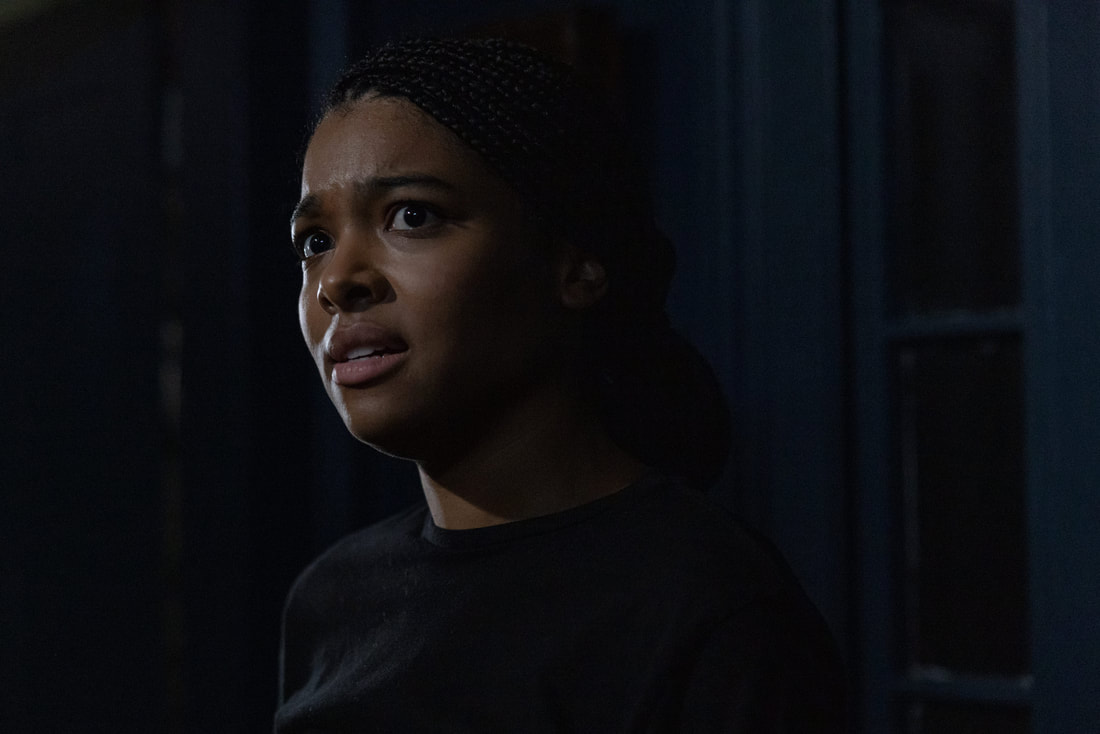 As far as the kills go, this is decent. There are a few creatively inspired deaths and a few standard ones. It’s a good mix; this is where slasher fans will enjoy the film. The kills are just silly enough to be fun but also scary enough to be taken seriously. That said, the special effects on so many of the kills fall flat. Digital blood is used in a few kills and looks absolutely ridiculous. Some of the practical stuff is weird, too. There’s one throat-slitting kill where the knife slides at an odd angle. It takes you out of the immersion, and that’s important for horror films.
Like the kills, the technical stuff is a mixed bag as well. The cinematography is pretty good, but the lighting is all off. Sometimes, it’s a visually interesting film. Other times, it’s plain and uninspired. The score is generic as far as slashers go. Don’t go into this expecting a great-looking movie. The editing is a little manic, too. Sometimes, it’s hard to follow. The big killer reveal at the end is convoluted but also plenty of fun. By the end of it all, Founders Day amounts to a campy yet mostly enjoyable time. If I had to describe it briefly, it would be “Scream if it was political and much worse.” The kills are alright, the characters aren’t very good, and the writing sucks. It’s a little forgettable but ultimately a little better than its worst moments. Again, if you enjoy this genre a lot, you might have a good time. If you don’t like them, you definitely won’t like this, either. Founders Day releases in theaters starting January 19. Rating: 2.5/5 Review by Daniel Lima 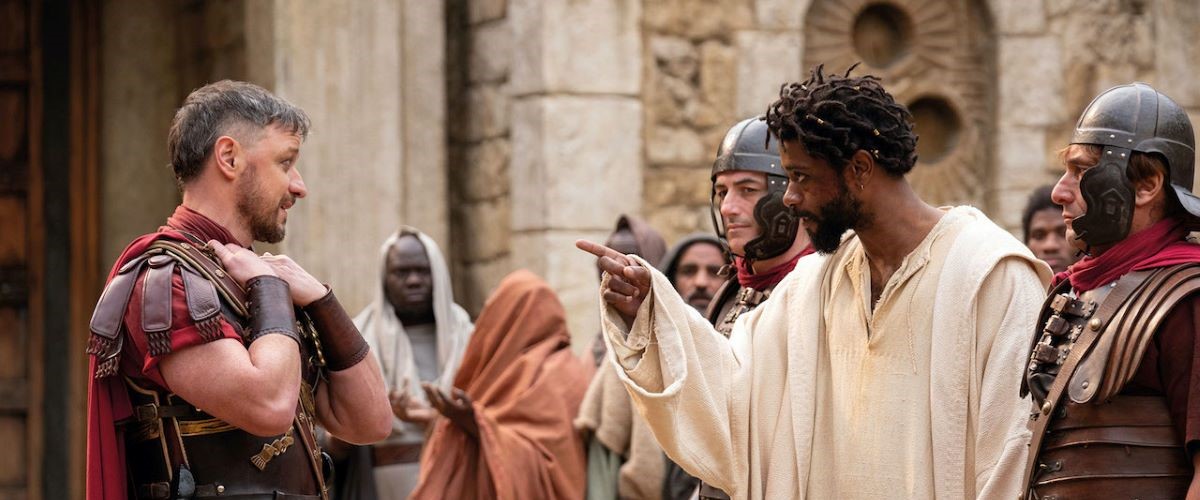 Writer-director Jeymes Samuel has said that he wanted The Book of Clarence to explore the crevices of the grand Biblical narrative, to serve as a counterpoint to totemic works like Ben-Hur and The Greatest Story Ever Told and focus on the everyday people who are left out of those stories. That intent is absolutely nowhere to be seen. This could have been originally conceived as a farce, satire, or post-modern Passion Play, but it could never be taken as a genuine attempt to explore such foundational stories in a new way. What it actually is is a vapid, asinine tract, too adherent to its convictions to be effective satire and too committed to limp comedy to serve as a thoughtful examination of faith. Set in Jerusalem in the year of the Lord 33, the film follows Lakeith Stanfield as the titular ne’er-do-well, a hustler and drug dealer who lives on charm and moxie. After he finds himself in debt to a local crime boss, he has a revelation: to join the flock of a new religious sect led by a man named Jesus Christ, who claims to be the son of God. His efforts to get out from under the thumb of a local rogue snowballs into a movement, and he finds himself, his family, his friends, and his community swept up in a storm that ultimately puts them into conflict with the Romans that lord over them. The Judea of this film is a heightened reality. It doesn’t take a theologian or scholar to see that this is not reflective of life as it was; the citizens are played by a Black ensemble, white Roman legionnaires patrol the streets like American police, modern slang is used, and modern trappings like hair salons, nightclubs, and drug dealing are adapted into this historical setting. This is all mostly tongue-in-cheek, but it’s so simple-minded that it can’t help but feel juvenile. When these parallels are meant to be treated with any degree of seriousness, they completely fall apart. One of the great strengths of Samuel’s last film, The Harder They Fall, was its incredible ensemble. Unfortunately, the performances here do not match. Stanfield has never felt less compelling a screen presence, a big problem in a film where it is essential to believe people might actually want to listen to what he has to say. The supporting cast is adequate, but no one leaves any impression, with the notable exception of a cameo spoiled in the opening credits. To be fair, they do not have much to work with. Clarence is a particularly unlikable protagonist, and most of the other characters are one-note cliches, with only a handful revealing themselves actually to be two-note cliches. The cast of The Harder They Fall had some crackling material to work with. It’s hard to imagine any human being capable of selling this dreck. At first, The Book of Clarence positions itself as a comedy. This makes sense: the premise is already ludicrous, and it seems like a deliberate play on the seminal satire The Life of Brian. Sadly, comedies have the frustrating need to be funny to work, and that is not the case here. This has some genuinely dire, lazy, tired, cringe-inducing attempts at jokes. Stanfield claims to “have the cobblestones on lock,” like the modern parlance “streets on lock.” Jesus Christ himself tells an annoying woman named Jezebel that one day, everyone will know her name, a reference to the slang usage of the name. It’s all the lowest-hanging fruit, delivered with a painfully belabored setup before the groan-inducing punchline. It’s genuinely surprising that there are no rapping grandmothers or a “well that just happened.” 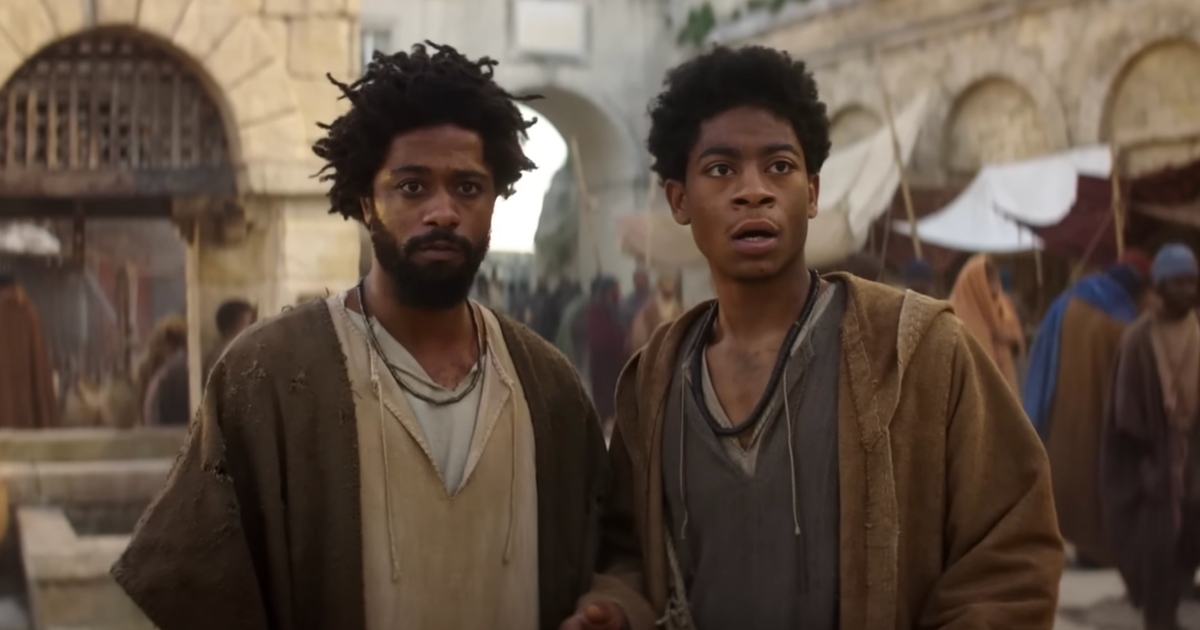 It would be reasonable to expect that a comedy set in Biblical Jerusalem might have some satirical edge, something to say about the church or Christian dogma, or any number of critiques to offer one of the primary foundations of modern Western culture. Instead, The Book of Clarence goes for a rather tortured analogy between the oppression of the city’s denizens by the Romans and the oppression of Black people in the modern United States. Black men stopped by legionnaires because they “fit a description,” the Romans throwing spears into the backs of men running away, whether played for laughs or drama, all of this is a hack — surface-level observations that lack any deeper interrogation of the systems in place that allow for these evils. If this movie were made two decades ago, it might have been novel, if rudimentary; today, they are just rudimentary. That said, there is something insidious underneath this milquetoast social commentary. While no fiction is necessarily beholden to historical fact, how a storyteller twists and distorts history to suit their needs says much about their worldview. The fact is the religious persecution of Jews by the Roman Empire is not analogous to the systemic racism faced by Black people in America today. Why does Samuel subsume their suffering into the Black experience, to the point that the characters are not even explicitly referenced as Jews? Perhaps it speaks to a certain instinct among some intellectuals to view the Black experience solely through the lens of suffering, to such an extent that the particulars of the oppression of others cannot be unwound from the oppression of Black people. Perhaps it simply speaks to a desire to make an “Important Film,” knowing that the religious content would not survive any amount of serious scrutiny. Whatever the case may be, the attempt at commentary here feels entirely mercenary, a cynical and superficial play at profundity that is frankly insulting. So, what does The Book of Clarence have to say about Christianity? Precious little. Though the film positions itself as a doubter’s journey to moral clarity and faith, it has absolutely zero interest in offering any meaningful adversity to his growth. When Stanfield declares that he will become a new Messiah, championing that knowledge is greater than faith, that inspires a multitude of questions. What does such a message mean to the daily lives of his brethren? How is that more attractive a prospect than the message that Jesus preaches? If he is trying to become a proto-empiricist, why does he resort to chicanery to mimic miracles, which are meant to be proof of the divine? If he offers nothing to his would-be followers, no promise of an all-loving God, or an afterlife of eternal bliss, why would anyone follow him? What exactly does “knowledge is greater than faith” actually mean to him and everyone else? Predictably, these questions are all studiously avoided. It just all works out. Clarence realizes the error of his ways without anyone actually calling him out on them and makes the grand climactic gesture proving he is a changed man just over halfway through the film. Only then does the movie reveal itself to be a sham. All the lame attempts at satire and commentary were a mere smokescreen for what is, at the end of the day, just another traditional, conservative, preaching-to-the-choir faith-based movie about the inherent goodness of Christ and his message. The rhetoric about focusing on the people left out of these grandiose stories, the barest flicker of any challenging question of the institution of religion, or the nature of blind faith dissipates. Ultimately, the aims of the film are indistinguishable from any right-wing kitsch marketed to an entirely Christian audience.
Nothing is inherently wrong with a film that simply aims to placate an audience that wants to see their values parroted back to them on screen. There’s nothing inherently interesting about that either. More than that, the narrative structure of a traditional faith-based story is antithetical to making something genuinely insightful. When the only goal is to reinforce the worldview of a niche audience, any potential for a more profound and incisive perspective is obviated, even if it would make for a stronger story that ultimately still is reflective of that worldview. What makes Christianity so compelling, dramatically and otherwise, is not the acceptance of Jesus Christ as the son of God as an immutable, objective fact that can be observed with one’s own two eyes, a truth that everyone should submit to. The beautiful thing about the faith is that it is blind, that regular everyday people who will never actually witness a miracle must find some way to cling to their belief despite all the temptation and pain of the material world, whispering for them to give it up. That might not be the story of Thomas the Apostle or John the Baptist, but it is the story of untold millions who have devoted themselves to the teachings of Jesus. Considering Samuel’s alleged impetus, it’s a shame the same could not be said of Clarence. In fairness, there are vestigial hints here and there of something more audacious, if not in the message, then in form. The world might be paper thin, but the Italian location shooting and intricate sets do sell the illusion of a city from thousands of years ago. There are some beautiful costumes and a handful of inspired visuals, and the soundtrack is pretty good (though the score is as hackneyed as the script). At the end of the day, however, none of these meager craft elements can make up for the intellectual dead end that The Book of Clarence sets out to create. To sit through the agonizing comedy, the self-important and insufferable attempt at a political message, only to face the realization that this film has no desire to actually engage with its own conceit, is a punishment as heinous as anything devised by the Romans. The Book of Clarence is in theaters beginning January 12. Rating: 1/5 Review by Daniel Lima 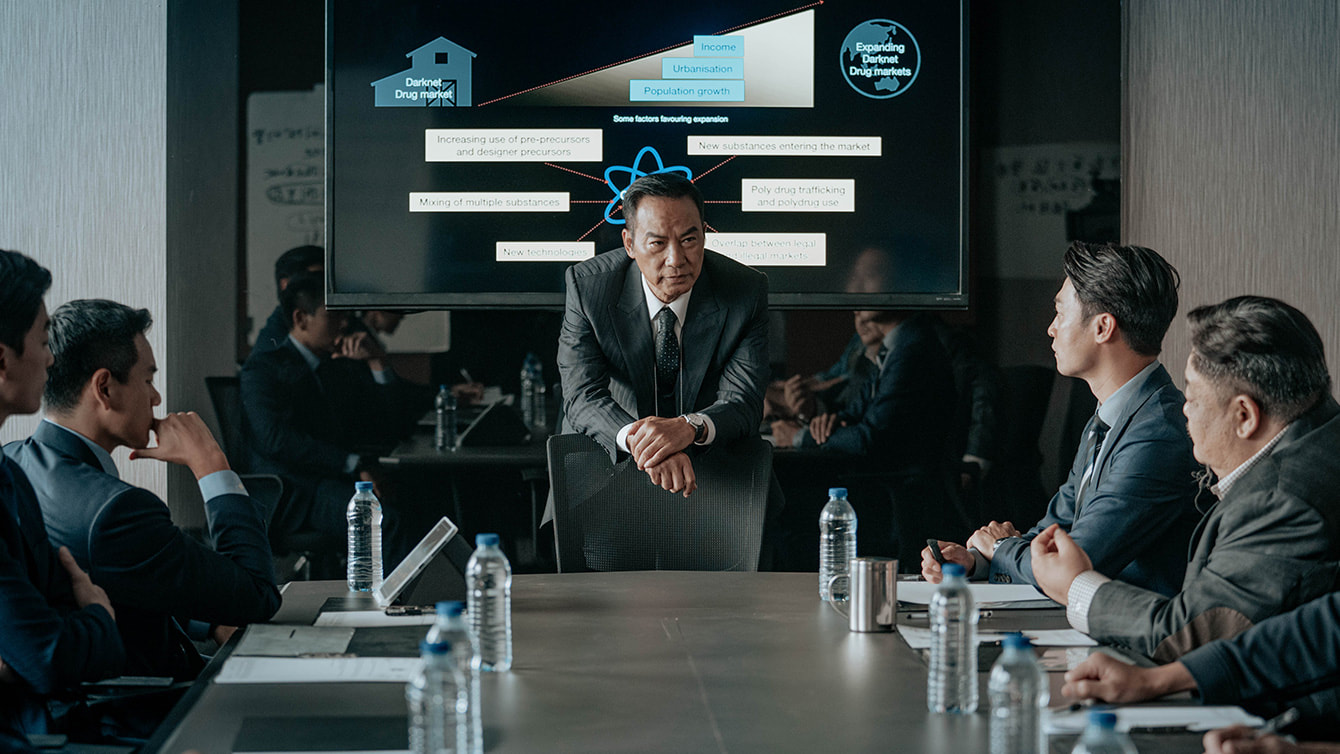 It used to be the case that there was simply no competing with Hong Kong action cinema. From about the 1960s through the 1990s, even the most middling action film produced on the island would still be lightyears beyond anything to come out of the West. Post-handover, with their industry swallowed up by mainland China and subject to PRC censorship laws, every new movie feels like a mere shadow of what once was. So it is with I Did It My Way, an unambitious film that recycles a host of familiar tropes with just enough energy to be not boring and little else. Andy Lau stars as George Lam, a crime boss masquerading as a lawyer who seeks to use the scary new dark web to peddle his wares. Hot on his trail are the intrepid and relentless brave officers of the Hong Kong Police Force, morally righteous but constrained by the laws they swore to protect. Will they be able to nab the bad guy, even with the help of their well-placed undercover agents? Well, crime films are quite literally not allowed to let the bad guys win or show the police in a negative light, so you can take your guess. The mole hunt crime-thriller has been a staple of Hong Kong cinema for decades, and even as constrained as the narrative possibilities are, there is something inherently compelling about the proceedings. Sure, all the beats are familiar: the mole says he’s in too deep, the lead detective says we’ve spent too much to let you out now, and the mole feels conflicted between his duty to his badge and his crime buddy. It’s cliché, but it’s cliché for a reason: it works. The tension created by this, where any moment could be the last for our hero, and such a reveal would be just as devastating to our villain, is enough to power even something as rote as this. 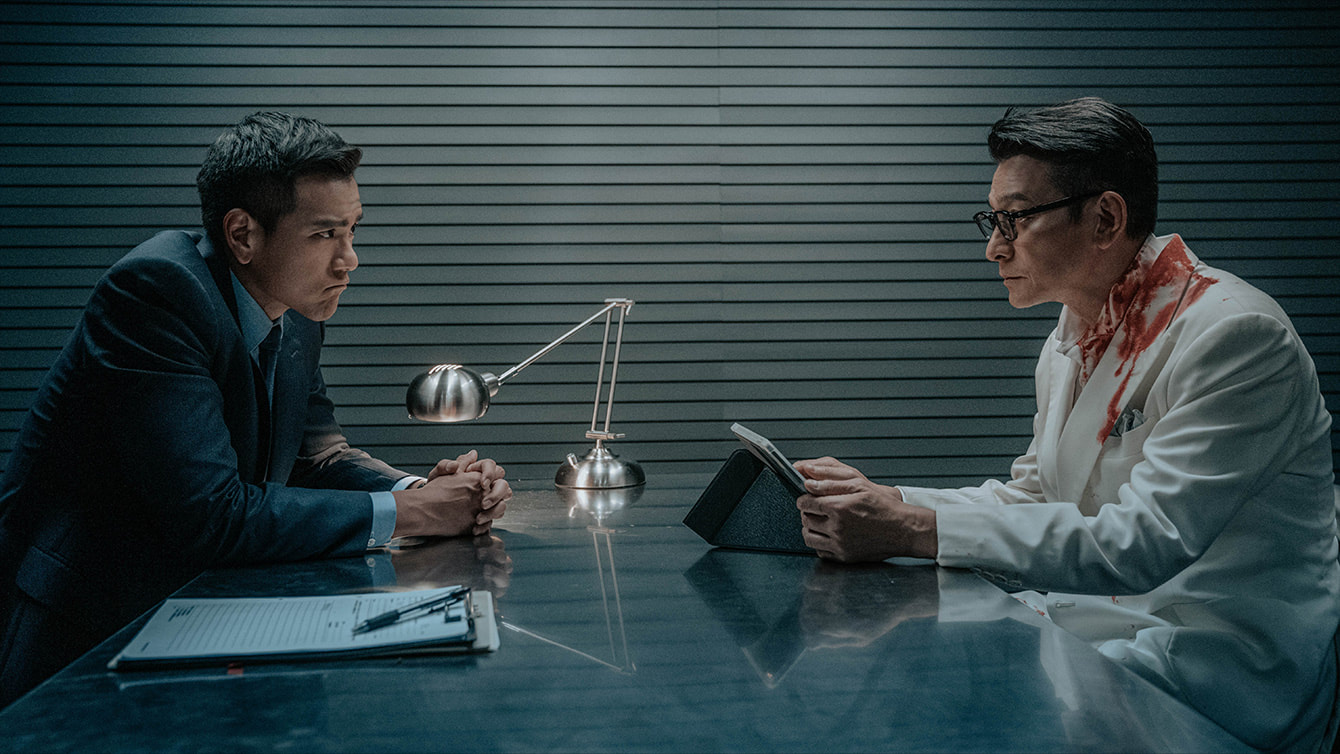 It certainly helps that while there is a lack of creativity, this isn’t a poorly made film. Director Jason Kwan has worked as a cinematographer and director for decades, serving behind the camera on plenty of similar grim and tense crime dramas, and he is certainly capable of maintaining the breakneck momentum here. The ensemble is solid, with plenty of veterans besides Lau giving naturalistic performances (Lam Ka-tung, coincidentally also in the famous Lau-starring mole hunt film Infernal Affairs, deserves special note). While the action is a far cry from the heyday of Hong Kong, even falling short of mainland web movies like Fight Against Evil 2, it’s still more composed and kinetic than most American blockbusters.
Despite all that, there is no getting around it: I Did It My Way lacks all of the moral complexity you would find in the Hong Kong crime films of old. You look at the classic work of John Woo or Johnnie To and see worlds where the line between criminal and cop is truly blurred, where virtue exists among gangsters, and the supposed guardians of peace are easily corrupted. This backdrop makes the struggle of an undercover cop, pulled between two worlds, much more potent. There’s a paltry attempt to do that here, with Andy Lau’s crime boss portrayed as a family man, but it’s clear where the audience’s sympathies are supposed to lie. When a cop rails against all the lives that have been lost through Lau’s peddling of dangerous drugs like molly – accompanied by a montage straight out of a 1930s scare film – you know you’re supposed to cheer. That world is so much less interesting to spend time in. I Did It My Way hits theaters on January 12. Rating: 3/5 |