
ALIENOID: RETURN OT THE FUTURE -- Superior Sequel Mixes Spells and Sci-Fi to Spectacular Effect1/26/2024 Review by Daniel Lima 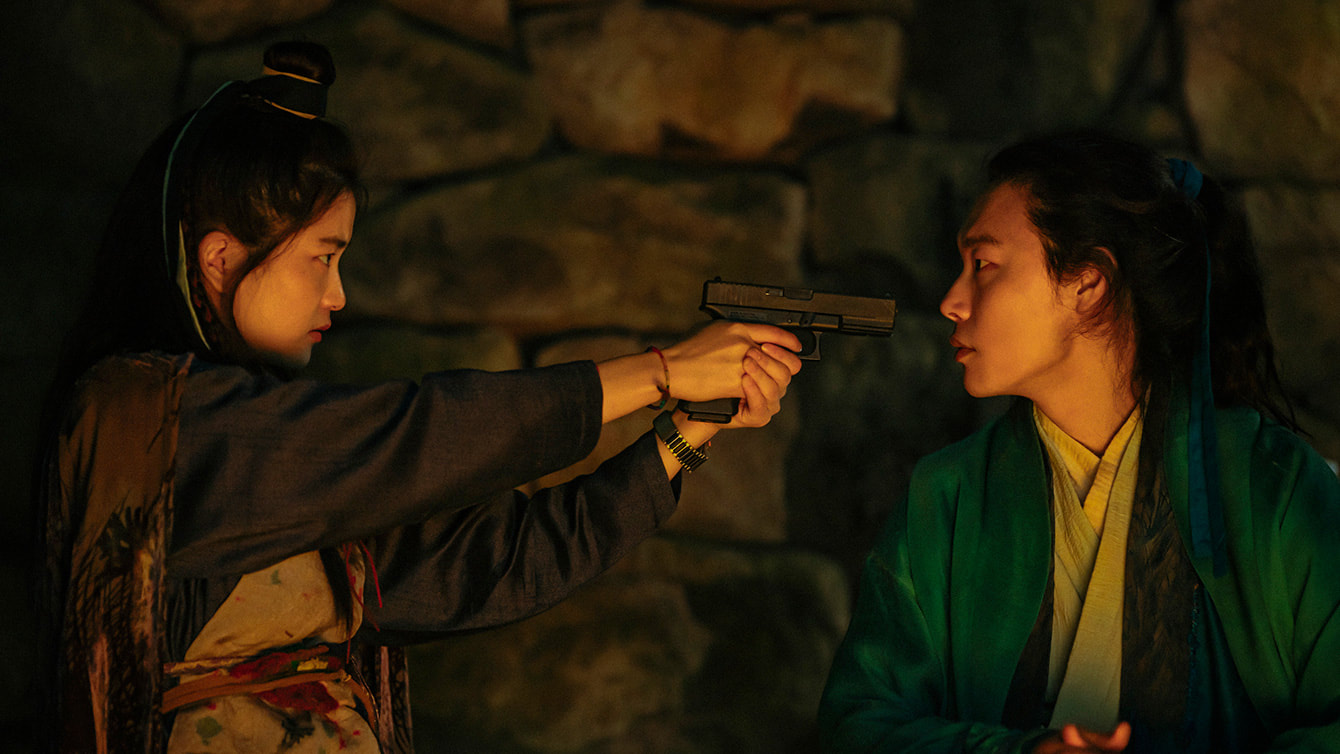 The first Alienoid film was a raucous mess of historical martial arts fantasy and modern science fiction action. The bouncing between timelines, the amount of depth in its worldbuilding, and the vast number of characters make for an incredibly ambitious high-concept blockbuster that, as fun as it is, becomes absolutely overwhelming. Almost two years later, Alienoid: Return to the Future picks up right where the last one ends, with a far more streamlined plot and comparatively little time spent recapping the story so far. The result is an engaging, madcap genre pile-up that is a satisfying conclusion to one of the most unique projects of the decade. Wisely, this does not linger so much on reminding the audience of what happened in the first film, as a thorough explanation would be as long and difficult to follow as the film itself. Essentially, a pair of sentient AIs serving as jailers of alien criminals attempted to stop a dangerous convict from terraforming the Earth into a habitat for its species. Chasing it from modern Seoul to late 14th century Korea, the duo ended up inadvertently recruiting numerous people to the cause: a young girl thrust into their care, a variety of sorcerers, a modern customs officer, and a pair of men who are also cats. The sequel begins with a simple goal: find the energy source that will take our heroes back to the future and end the villainous plot. I cannot overstate how much that summary leaves out. Considering the breadth of the story and how nonsensical it all was to begin with, spending only the first couple of minutes refreshing the audience’s memory is a wise decision. Though it never becomes easy to separate what we should know from the original and what we’re learning now (the two movies were shot simultaneously), it quickly becomes simple enough to understand the web of character relationships through context. Unburdened by the need to set up the world all over again, the narrative is free to move quickly, burning through a mountain of story at a pace that laps the lethargic predecessor. It helps that most of the runtime is spent in the past. One of the most exhilarating elements of Alienoid is how it incorporates futuristic technology — from alien superweapons to a 9mm Glock — into the fantastic Joseon period setting, marrying these with Daoist magicians and high-flying wirework perfectly at home in classic wuxia (or its Korean equivalent, Muhyeop). There is an undeniable thrill to watching someone leap through the air, firing a semiautomatic pistol at an alien creature in an ornately decorated pre-modern inn. 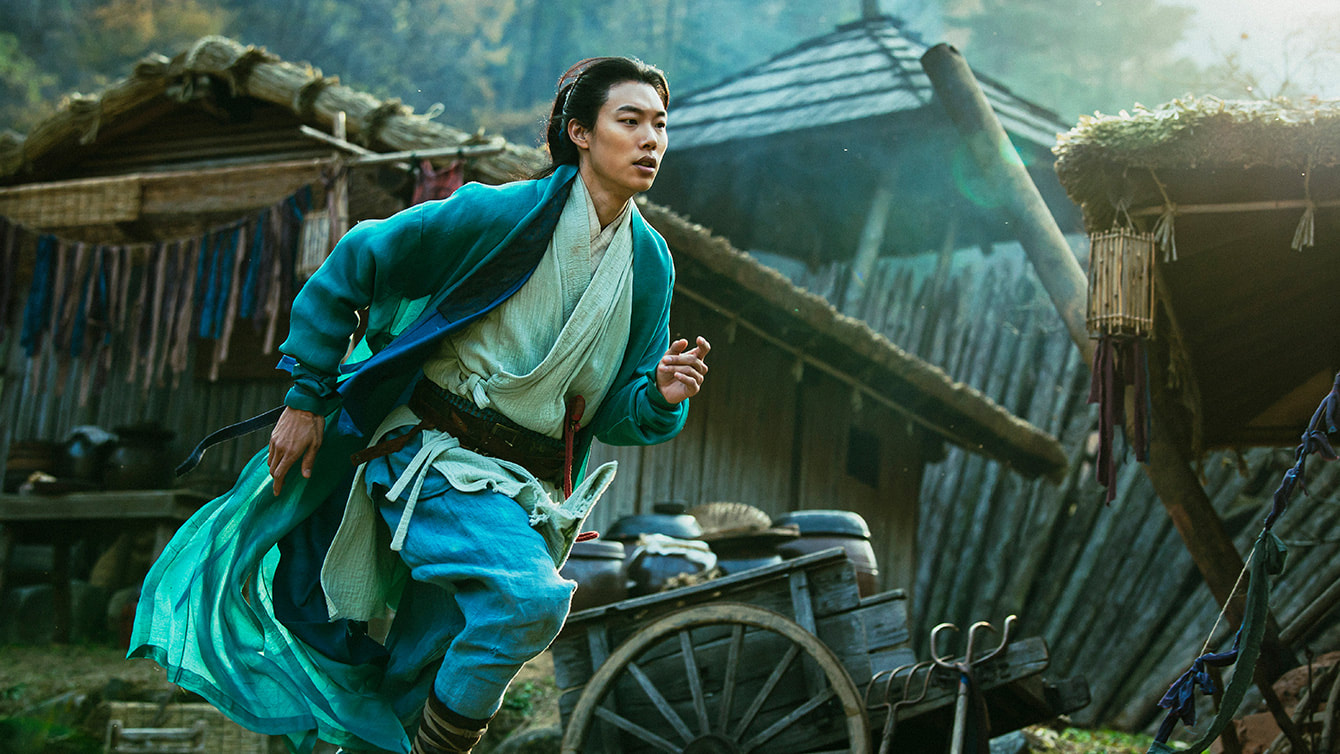 Return to the Future continues to deliver stellar action, particularly since this one spends far less time on weightless CG-driven set pieces. Every battle has a tactile quality, with characters moving through the space, tearing it apart, and using every tool at their disposal in exciting ways. When effects are used, they are rooted in reality, shown to have an actual physical impact on the world around them, and shot with such deliberate intention that it’s clear that the director had a real vision of how the scene would ultimately look, not leaving it up to others to piece together in post. From classic martial arts brawls with a sci-fi twist to a train fight that mixes magic and technology with wild abandon, this is the kind of filmmaking that makes the most of every tool at its disposal.
The one area in which the film comes up a bit short is emotion. This doesn’t feel like a movie about anything in particular, lacking a clear animating idea beyond sheer spectacle. In part one, that, combined with the vast ensemble of characters, made it feel unfocused, with many scenes feeling like pure filler. That the comedy was very broad — and one can imagine much of it untranslatable — certainly made these moments less tolerable. While Return to the Future fails to find the heart of this story, the more concise narrative means that the protagonists are forced to be more proactive, making them far more interesting to follow. Without the constant exposition dumps elucidating the premise, the cast is given more room to find the humanity within their performances, and they are all charming and delightful heroes. The villains don’t get as much to do here, but when in human guise, they are suitably intimidating. If this cast wasn’t as lively as they were, it might be easy to mentally check out, but by the climax, you just can’t help but hope for a happy ending for everyone. It’s always surprising to find a sequel superior to the original, especially when they were a product of the same production. Yet such is the case with Alienoid: Return to the Future; unencumbered by the bloat of the first part, this finale is allowed to revel in the thrilling possibilities that this genre mash-up allows. Honestly, this movie is so much fun it had me wondering if the first deserves a reevaluation. Anything to spend more time in this world. Alienoid: Return to the Future is now in theaters. Rating: 4/5
0 Comments
Review by Joseph Fayed 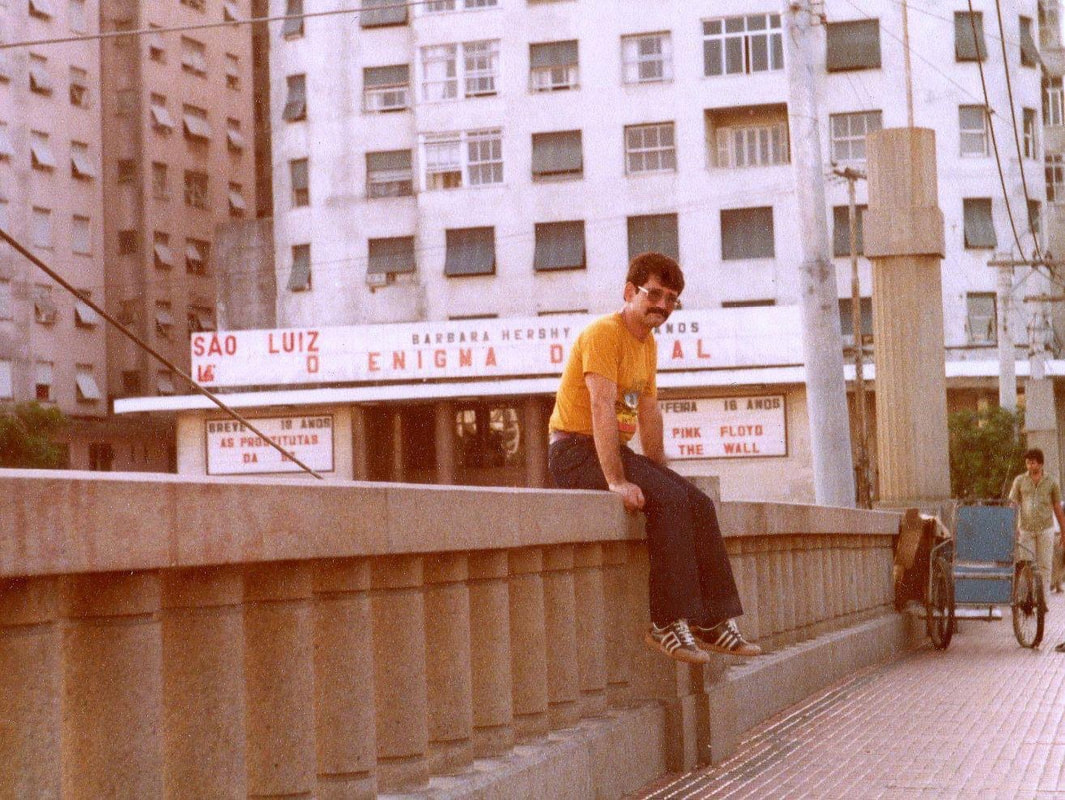 One can not reflect on the cultural landscape of society shifting over time without discussing the personal impact it has had on them. In the documentary Pictures of Ghosts, filmmaker Kleber Mendonca Filho tells the story of past and present-day Recife, Brazil. But in what is meant to be a love letter to his hometown, there is rich history but not much to expand on. Throughout his life, Kleber Mendonca Filho has always had an innate passion for film, which he began growing up in a small neighborhood in Recife. Recife has always been at the heart of Filho's filmography through home video spanning decades; the director shares why that is the case. Recife is treated as the main focus of this documentary. However, its evolution does not feel like it is being explained in a practical manner. Recife's rich history feels stuck in the past, meaning there is little context or insight to describe the neighborhood outside of explaining its current structures. Someone unfamiliar with this landscape won't learn much about the present and how Recife has evolved, contributing any major change to essentially nothing. 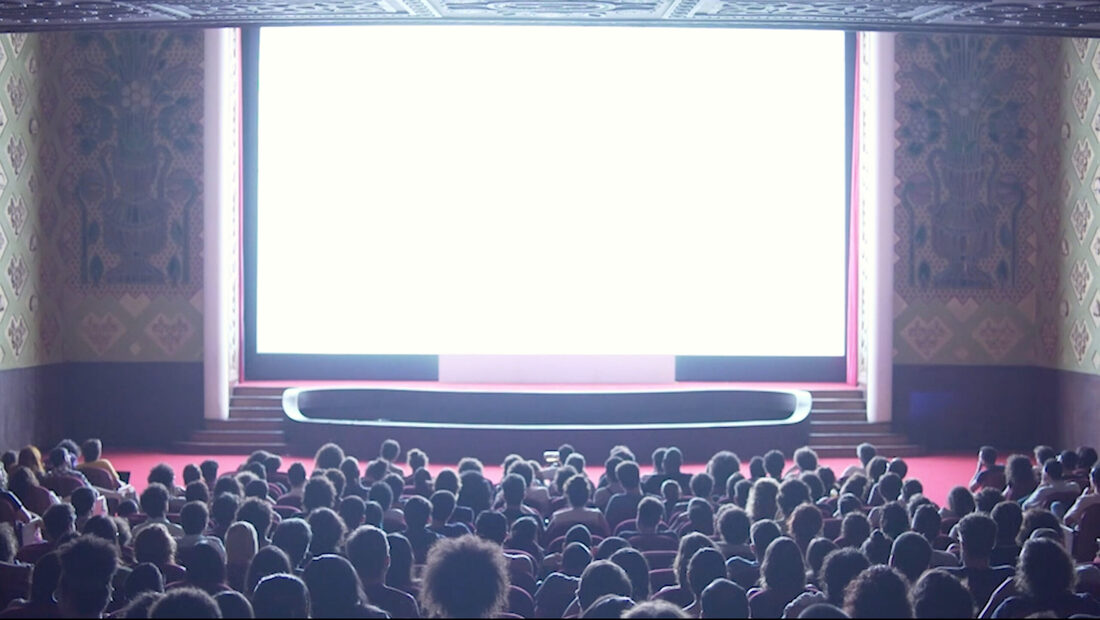 The shining moments are the characters we are introduced to in the past and near present. With how blunt the film can feel with how it expresses its message, archive footage of people like the cinema projectionist on the job does make this film relatable to an extent. Each one's experiences with Filho are recounted before it mentions how they, too, feel like they have been lost to time.
The cinematography is simple and makes some wise choices. Shots of the apartment the director lived in for many years feel intimate and not like a walk-through tour. Anything taking place outside relies on wide shots usually from above street view. A particular sequence is a long shot that captures Recife's Carnival at night. It lasts about two minutes and is the sole indicator of something that has been carried over from the past. The shot does feel out of place compared to the rest of the film but it helps link together the past and the present more than the rest of the narrative does. Ultimately, Pictures of Ghosts are old memories with nothing new to say. Any architecture that is no more becomes an afterthought narratively speaking. One must wonder why Filho, who seems so appreciative of the past, didn't use all of the footage he had shot decades ago and just structured his film to reflect on that time period instead of an attempt to flip back and forth. Filho's own narration sounds like it's obligatory when it doesn't revolve around himself or his family/friends either. Recife is at the heart of many of his films, so it is upsetting that such an integral part of the story doesn't have the anthropological vision it needs. Pictures of Ghosts is now playing in theaters. Rating: 2.5/5 Review by Daniel Lima 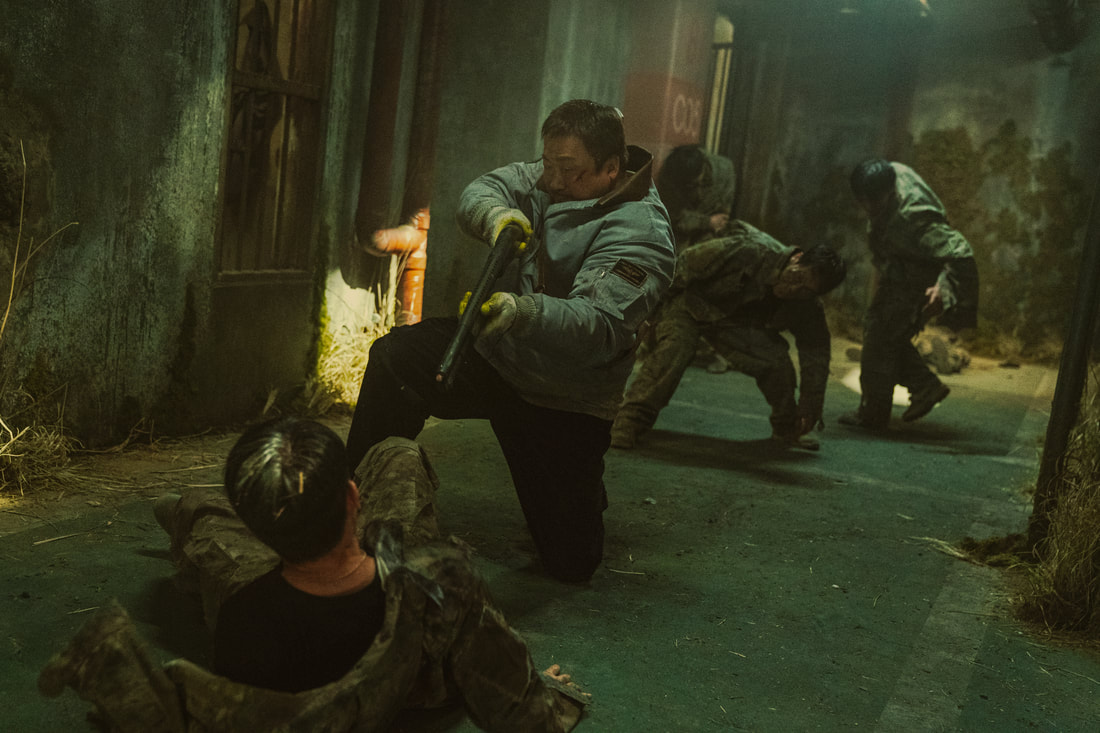 How would humanity survive in a world that has faced an apocalyptic event? This question has fascinated people for as long as it could be raised, and in the aftermath of the worldwide societal disruption of the COVID-19 pandemic, it has gained a new resonance. The post-apocalyptic action film Badland Hunters focuses little on how the world saw its end or the societies that formed in its wake. Instead, it adopts a simple narrative that happens to be set in such a world and so fails to distinguish itself from countless other works. Technically a sequel to last year’s Concrete Utopia (though set years after and never referencing its events), the film stars Ma Dong-seok as… a hunter in the badlands of South Korea, years after an apocalyptic earthquake, working with a young partner and exchanging meat for goods within the small village he’s made home. When a local girl is spirited away to a mysterious apartment building in Seoul run by a scientist who may not be all that he seems, the two set out to get her back. One of the appeals of this subgenre is the particular vision of a society rebuilding itself from the ashes, the strange new social dynamics and structures that arise when the old order disappears. Alternatively, you can just make the entire thing look like Mad Max and call it a day, which is the approach taken here. The world has an appropriately cobbled-together look: homes made from broken-down old buses and corrugated sheet metal, utilitarian costuming, and even the seemingly utopian apartment shows the wear of many hard years. Unfortunately, the facade of a disused, grimy future is just that: a facade. The clothes are too clean, the stains on the walls too fresh. There’s an obvious artifice to every setting, a sheen that shatters the illusion of a fringe wasteland. Beyond that, the visual language of the film is comparable to any number of slick, polished, but anonymous Netflix releases. As gritty and desperate as this future is on paper, it is not reflected at all in how it is captured. 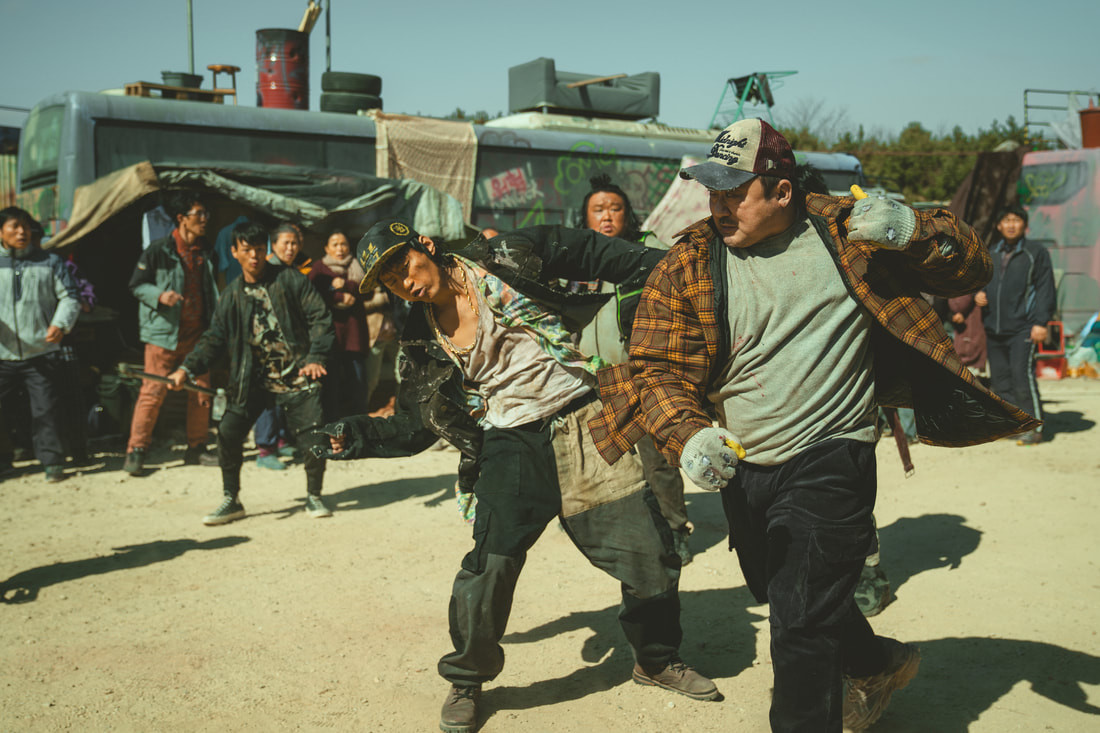 Compounding this is the lack of depth in the characters. Each is an archetype better summed up in how they figure into the story than any unique personality traits. Ma Dong-seok is the gruff tough guy who bulldozes through everything, his assistant is the plucky excitable apprentice meant to serve as his foil, the village girl is a living MacGuffin who loves her grandma. With no time spent elaborating on the setting and so much time spent with a small number of characters, one would hope that any of them would be easy to root for — or at least pleasant to be around. This is not the case.
Structurally, this movie is flawed from the start. Spoiling the plot is impossible, not only because it’s so familiar, but because the very first scene telegraphs the situation the protagonists will find themselves in. It’s a truly baffling decision because it robs the entire first hour of any mystery. Instead of the audience putting the pieces together along with the characters, the audience must wait for the characters to catch up — a premise inherently devoid of any dramatic tension. Taken with the blandness of both the setting and the people that populate it, this is an arduous task. The sole saving grace is the action. Director Heo Myung-haeng has been working as a stuntman and action director for decades, even serving as Ma Dong-seok’s stunt double in the past, and he puts that experience to good use here. There is an impressive scale to the fights here, many juggling multiple combatants that move around and use their environment organically. The intensity of some of these scenes and the creativity and complexity in the choreography are the only times the film truly comes to life. And, of course, it’s hard not to cheer whenever the former boxer Ma Dong-seok punches someone. That man might be the single greatest puncher in action film history. It’s to the benefit of Badland Hunters that so much of the action is back-ended. If left to linger on the limp, unambitious drama set in a paper-thin world, this would be a difficult film to recommend. While it’s still not an easy recommendation, anyone interested in seeing wildly powerful haymakers demolish bad guys left and right will have that urge satisfied. Whether that’s worth how lackluster the rest of the movie is... well, they really are great punches. Badland Hunters hits Netflix January 26. Rating: 2.5/5 Review by Jonathan Berk  The Underdoggs is a funny, swear-word-laden throwback to '90s sports films. Director Charles Stone III and writers Danny Segal & Isaac Schamis don't hide their influences at all, as Mike Epps encourages Snoop Dogg to pull a "Mighty Ducks" and then outlines the film's plot. Snoop also calls Kal Penn a "Harold and Kumar" looking mf-er. Fortunately, the film wears more than just its influences on its sleeves, as there is plenty of room for heart and cursing there, too. '90s kids will surely connect with much of this film, as it will remind them of their childhood while appealing to their adult sensibilities. Jaycen "Two Js" Jennings (Snoop Dogg) is a washed-up former pro-football star searching for an entry to the second phase of his career. However, his selfish attitude, both on and off the field, has left him isolated as he approaches rock bottom. Desperate and in trouble, his opportunity comes after he is sentenced to do community service coaching an unruly pee-wee football team in his hometown. Will he continue to engage in his selfish ways and use this as nothing more than a PR stunt, or will he find what's been missing his whole life? In many ways, Snoop seems to be having a Hugh Grant-type of acceptance of his new role in pop culture. Whether you've watched him with Martha Stewart, sitting on set with Kevin Hart, narrating animal videos, or now taking lead roles in comedies, Snoop seems to embrace his funny side. If you're skeptical of his ability to be the main character in a film, The Underdoggs may ease those concerns. Snoop is immersed in this film and delivers both motivational speeches and comedy with ease. 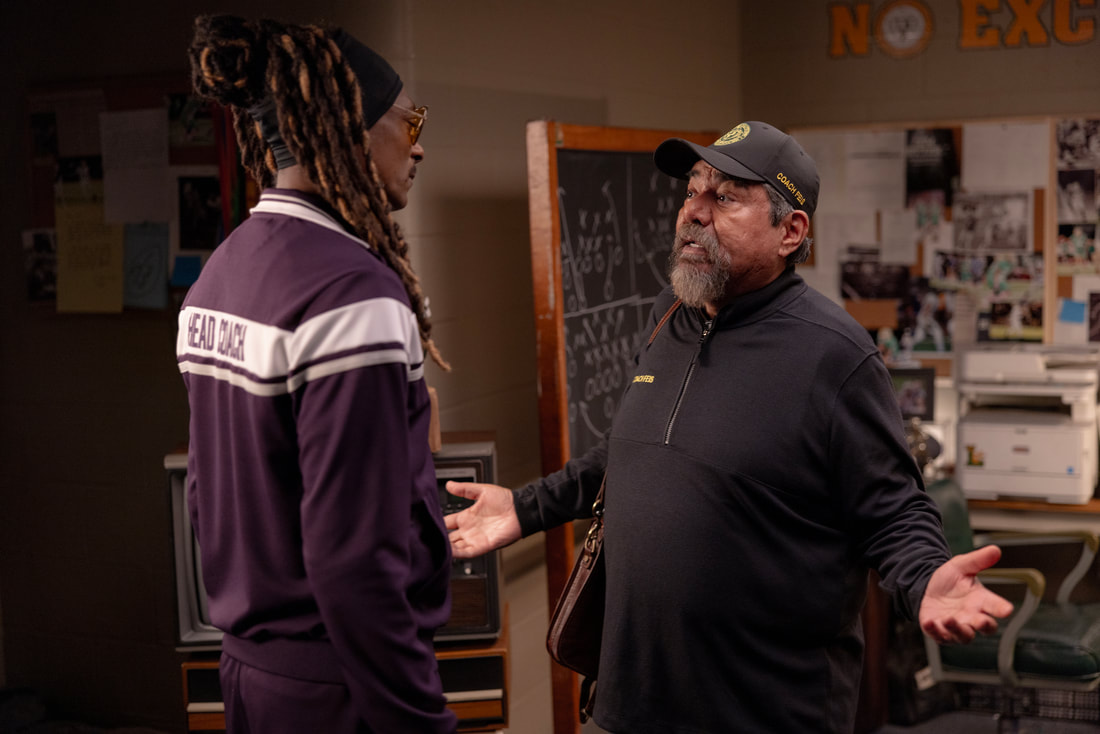 He and Epps have tremendous comedic chemistry from the moment Epps shows up in the film. The two share some hilarious moments but are the best on the sidelines, roasting their players. It's an odd choice to have your coach and assistant coach throw swear words and insults at the players we hope to see overcome the odds. You may even think it'll be impossible for a movie that dedicates so much time to insulting the kids to make you love all the characters simultaneously — but it does. This film has several laugh-out-loud moments and a few that'll tug on the heartstrings and make even the manliest man produce a few tears.
A few smaller storylines involve a past love, played by Tika Sumpter, and Two Js's high school coach, played by George Lopez. However, these aren't given much time, as the film focuses on football. The kids in the movie — who are all quite charming and perform their roles well — also take a shift to the background. Snoop is at the forefront, but his interactions with the team provide that cliché inspiration that usually works for fans of the genre. If you were a fan of movies like The Little Giants, Mighty Ducks, Rookie of the Year, The Sandlot, and Ladybugs, you'd probably find some joy in The Underdoggs -- especially if you enjoy movies where they aren't afraid to shout profanities at children and have those same children retort with their own foul language. Sure, the comedy in this film is working blue, but it does it rather well. It may be hard for this film to find an audience, as it's not meant for kids, but rather the '90s kids who are now high on (legal) marijuana. The Underdoggs will be on Prime Video on January 26. Rating: 4/5 Review by Adam Donato 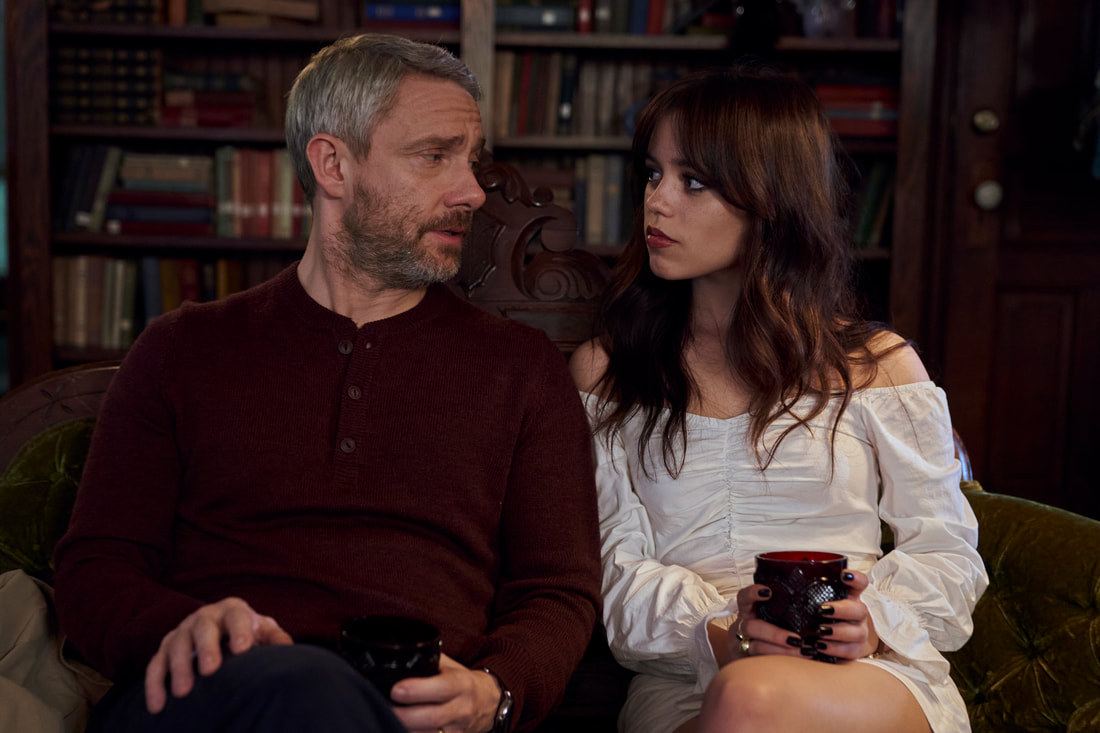 (L-R) Martin Freeman as Jonathan Miller and Jenna Ortega as Cairo Sweet in the Psychological Thriller film, MILLER’S GIRL, a Lionsgate release. Photo courtesy of Lionsgate. Jenna Ortega has wasted no time this decade becoming one of the most iconic “it” girls working today. From X to the Scream franchise, she has asserted herself as many people’s celebrity crush. There’s a subgenre of film whose specific purpose is to be visual softcore erotica, and Ortega is taking her swing at it with Miller’s Girl. Ortega is a passionate schoolgirl who begins a relationship with her teacher due to their mutual love of writing. This is Jade Halley Bartlett’s debut as a writer, director, and producer. With this kind of star power, does Bartlett have the juice to deliver a satisfying sexual awakening? Ortega can’t control her height or cute face, but she can control the projects she chooses. The schoolgirl look is brought to life here as her character tries to pursue an older man for sex. It’s one thing for movies like The Voyeurs and My Policeman to be built around their sex appeal, as Sydney Sweeney and Harry Styles play consenting adults in their sex dramas. How is anyone supposed to indulge in their sexual fantasies of situations like Miller’s Girl without coming across as a total pedo? Ortega is a legal adult, so it’s fine for an adult to be attracted to her, but the nature of the context removes all sexual comfortability. It’s not sexy to watch an underage girl seduce a married middle-aged man. If the goal is to turn on the audience, Miller’s Girl fails. 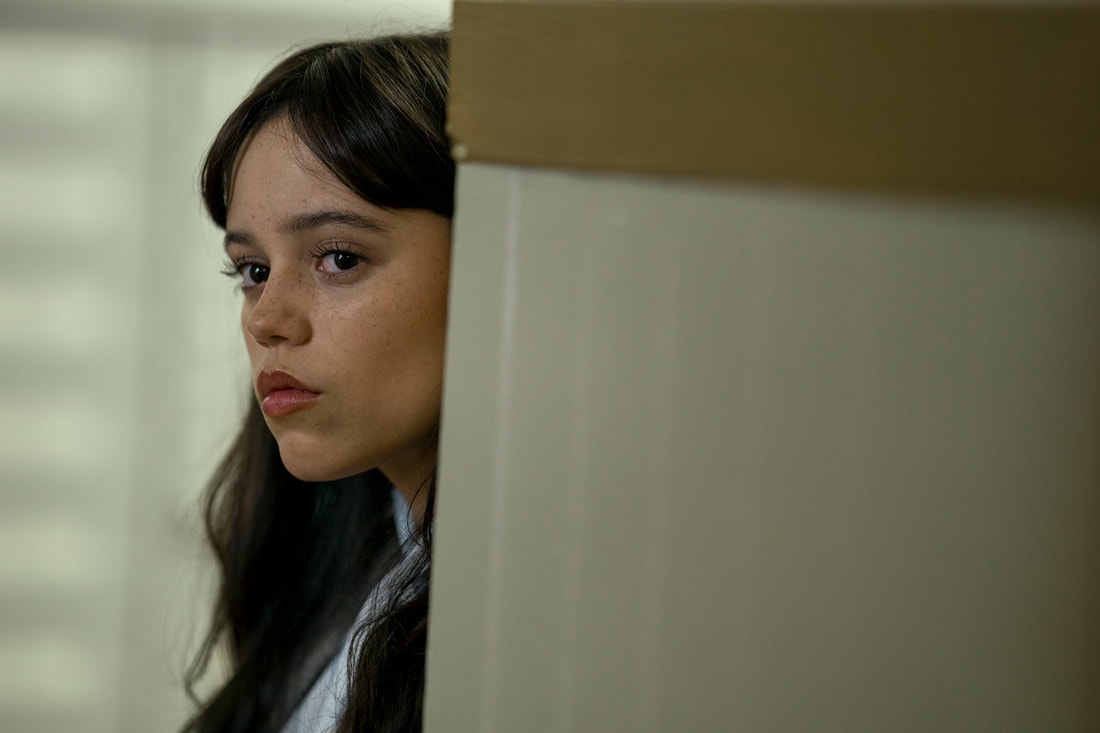 Jenna Ortega as Cairo Sweet in the Psychological Thriller film, MILLER’S GIRL, a Lionsgate release. Photo courtesy of Lionsgate. The moral question the film begs about adolescent sexual fantasies is the most interesting aspect of the film. Ortega’s character is a child, so she cannot consent to sex, but that doesn’t change her feelings. The blame would then befall the parents who hold zero presence in their daughters life as she transitions into a young woman. Martin Freeman plays the teacher Ortega’s character with which is infatuated, and his character is not exactly innocent. He aids and abets his fellow teacher friend, who is openly courting a promiscuous student. Who could blame Freeman’s character as he shuts the situation down when it becomes too sexually charged? His pleasure in the situation seemed more so to derive from a place of appreciation for previously withheld recognition for his work, but it’s implied he has sexual feelings for his student, too. The moral of the story seems to be to not neglect parental duties, for the child’s pursuit of love may become misguided.
Ortega’s performance is nothing she hasn’t already done before. Fans of her work will find this role to be a lateral move. It doesn’t seem like she will be venturing outside her comfort zone anytime soon, though, as her next big project is the Beetlejuice sequel. While trying to withhold judgment, it feels problematic to portray Ortega’s character here as cool. She's certainly shown as a villainous character, but a cool one at that. Her character is not condemned in the way it should be as the context of the story is very troubling. Freeman is similarly uninspired. It feels like his role could be played by a litany of similar actors and it’s easy to wonder why Freeman would be the man to inspire such a sexual awakening. While Bashir Salahuddin’s character is the most reprehensible, his performance is the standout of the film as he brings life to every scene he participates in. Miller’s Girl goes down a problematic path for a movie trying to arouse its audience. The moral dilemma at play is flirted with, but the story wraps up before anything is allowed to get really interesting. The goal of the film clearly is for Ortega to be portrayed as cool and hot. Check Miller’s Girl out if you’re a die-hard Jenna Ortega fan or if your kink is the Hobbit from the prequel trilogy. Other than that, steer clear of this one. Miller's Girl hits theaters on January 26. Rating: 2/5 Review by Tatiana Miranda  Masters of the Air is the latest captivating miniseries from Apple TV+. Produced by Steven Spielberg and Tom Hanks and based on the book of the same name by Donald L. Miller, the series centers around the 100th Bomb Group of the US Eighth Air Force as they were stationed in East Anglia during WWII. While the show is based on the real-life bomb group — nicknamed the Bloody Hundredth due to its 77% casualty rate — and features fictionalized versions of its members, it never comes across as a history lesson and is instead a riveting look at the realities of war and the technical aspects of the US Air Force. Chock-full of recognizable faces, as well as new names, Masters of the Air utilizes nearly every single character who comes across the screen. Led by Austin Butler as Major Gale Cleven and Callum Turner as Major John Egan, the show also features stellar lead performances from relative newcomers Nate Mann as Major Robert Rosenthal and Anthony Boyle as Major Harry Crosby. More established stars such as Barry Keoghan, Raff Law, Bel Powley, Isabel May, and Fionn O'Shea also star, although in more minor roles. Still, each performance is a standout, and even with such a large cast, the characters never feel overwhelming. While it would have been easy for each episode to fall into a routine of focusing on a specific mission that the Bloody Hundredth faced, it instead weaves different storylines and locations of members to give the series a more cinematic feel. From German imprisonment to celebrations on base, Masters of the Air doesn't focus solely on the fighting aspects of the war or the Air Force. Instead, it paints a multidimensional picture of the 100th Bomb Group and their sacrifices. 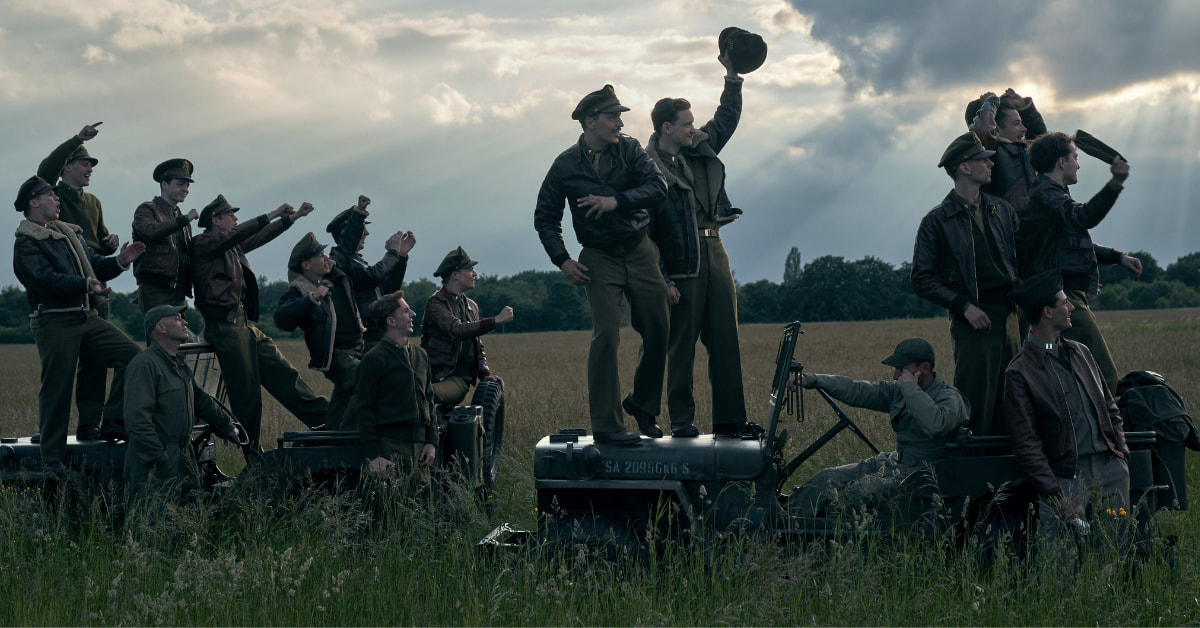 One of the more disappointing aspects of the series is its portrayal of the Tuskegee Airmen. Coming in at episode eight of the nine-episode series, the 332nd Fighter Group is portrayed as the supporters of the 100th rather than having their own established storyline and characters. Although the series focuses mainly on the 100th, the attempt to show any of the 332nd, comprising African American military pilots, comes across as a last-minute addition to the storyline. Actors such as Branden Cook and Ncuti Gatwa don't get nearly as much screen time as their white costars, and even when their storyline is interwoven with those of Butler and Turner's characters, they are seen more as background characters.
Overall, Masters of the Air is a fantastically shot and well-acted series, although it does have its few flaws. Still, it's a fascinating look into WWII that doesn't watch as solely a war series but instead features moving portrayals of grief, romance, friendship, and sacrifice in the US Air Force. Masters of the Air premieres on Apple TV+ on January 26. All nine episodes reviewed. Rating: 4/5
Review by Sean Boelman
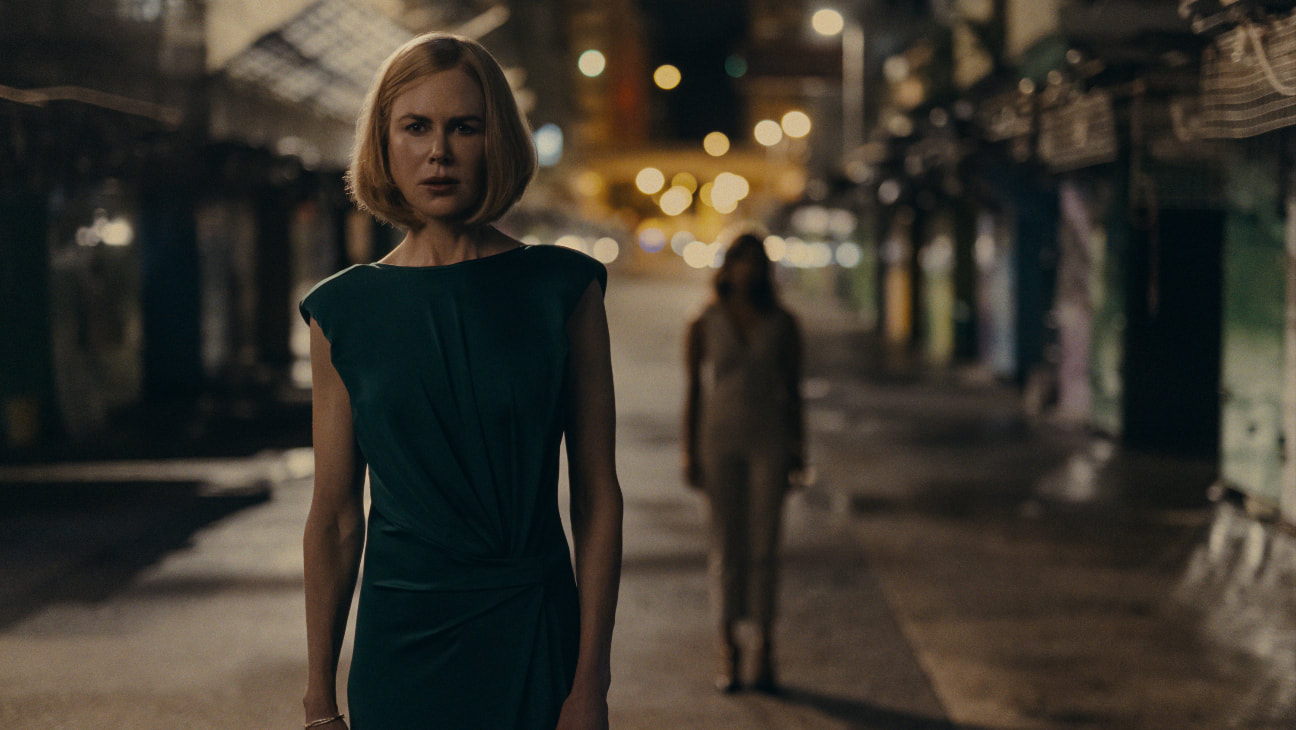
Lulu Wang established herself quickly when her feature debut, The Farewell, was released, and cinephiles have eagerly been awaiting her follow-up. Wang’s miniseries Expats is maybe one of the most impressive feats in any recent series — thanks to incredible direction and nuanced writing that takes a story that could have easily been melodramatic and turns it into something more profound.
Set in the community of expatriates living in Hong Kong, Expats tells the interconnecting stories of a group of women tied together by a devastating tragedy. Based on a novel by Janice Y. K. Lee, the show is in many ways a melodrama, but there’s such a deep and unexpected humanity that oozes through it, allowing it to avoid histrionics. For much of the first two episodes, it can be hard to see where the story is going, but when the pieces fall into place around the end of the second episode, it’s astounding. Everything really comes together in the penultimate episode, which is one of the biggest swings a series has made in recent history, and it mostly pulls it off. Knowing the world in which Expats is set, one is constantly waiting for the show to become more political. There are definitely some hints of a deeper message — particularly in the fifth episode, which is predominantly set from the perspective of the Filipina servants of this upper-class enclave of society — but the writers seem more interested in the intimate human drama than the bigger societal implications. 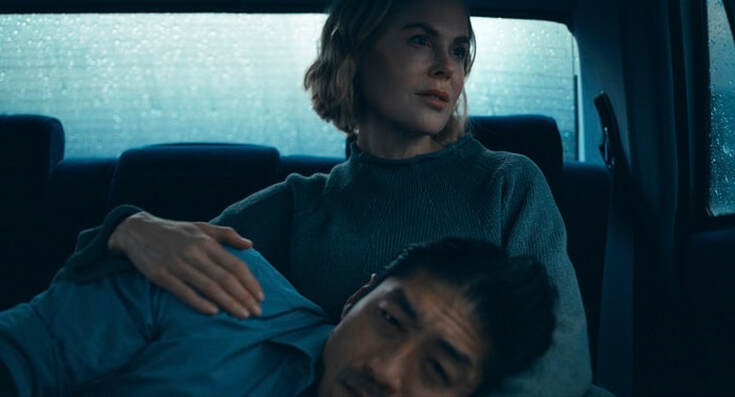
The show’s complexity arises from its characters, who are tremendously complicated individuals. Several of the characters do things that would generally make them unlikeable, and others would typically be seen as pitiable, but Wang’s eye on these people is refreshingly unique. Wang challenges the audience to understand our sympathies in an entirely different way, asking us to consider whether our judgments are fair.
Expats is built around three main performances: Nicole Kidman, Sarayu Blue, and Ji-young Yoo. Kidman’s performance is incredible, with as much nuance as any she has given in her career. However, Yoo steals the show, holding her own with a turn that starts mostly unfussily but explodes into something much bigger in the final third. From an aesthetic level, the show is fantastic. The cinematography by Anna Franquesa-Solano is nothing short of beautiful. However, the series is also elevated by some ambitious directorial flourishes, including some stylistic bookends that are absolutely breathtaking. Expats is a wonderfully nuanced exploration of its story, even if it feels like things wrap up a bit too cleanly. With this, Lulu Wang has cemented herself as one of the best new filmmakers working today, with an excellent ability to craft an emotional story. Expats streams on Prime Video with two episodes on January 26, with new episodes dropping weekly. All six episodes reviewed. Rating: 4.5/5
Review by Sean Boelman
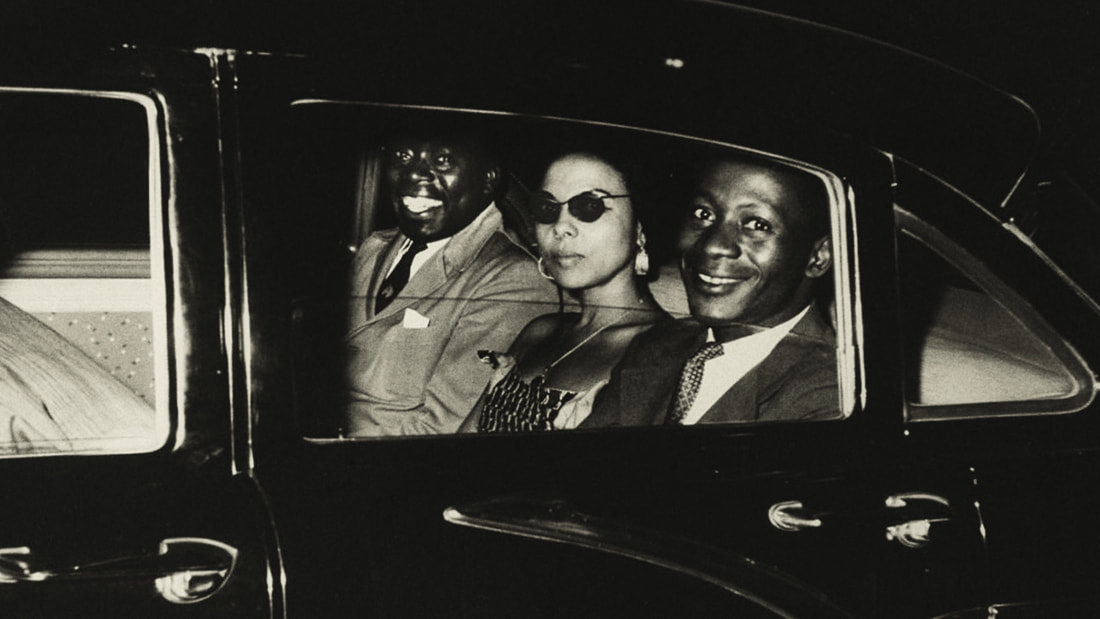
In recent years, the Sundance documentary competition sections have largely been filled with biographies or social justice films, with anything more formally audacious generally being relegated to other sidebars, like NEXT. Johan Grimonprez’s Soundtrack to a Coup d’Etat, playing in the World Cinema Documentary competition, is the exception to that rule — an essay film that swings for the fences and is mostly satisfying despite its complex nature.
Soundtrack to a Coup d’Etat explores how the United States government and the Belgian monarchy, among other forces, conspired to use some of the most influential African-American musicians of the 20th century as part of their plot to assassinate the Prime Minister of Congo, Patrice Lumumba. It’s an incredibly wild story, and one you might not have heard, but it’s a lot more zeitgeisty than it seems on paper. The biggest thing working against the movie is how incredibly dense it is. It’s understandable that the film is so complex — convoluted even — because the web of deceit being spun here is more intricate than virtually any espionage thriller you’d have seen. Still, for audiences who aren’t able (or willing) to put in the work to dissect the story, it could be easy to get lost in its moving pieces. Still, for all its complexity, Grimonprez manages to tell these interconnecting stories in a way that is consistently engaging. For a documentary that’s two and a half hours long, it moves by quite quickly, thanks to the combined efforts of the stranger-than-fiction story and the kinetic jazz soundtrack lent to it by its subjects. All of this is thanks to the tremendous talent of director Grimonprez. The documentary comprises entirely archive footage, yet there’s such a liveliness and modernity to it. It never feels as if we’re being taught a history lesson. The way Grimonprez weaves the stories of these musical figures into contemporary political events is something that many documentaries have tried and failed to do in the past. Admittedly, the movie does bank a lot on the audience already knowing and respecting who these musicians are. For festival audiences, that’s not going to be an issue. The names involved include jazz legends like Louis Armstrong, Max Roach, Abbey Lincoln, Dizzy Gillespie, and more. But it is hard to imagine that a viewer who comes in that doesn’t have an appreciation — or at least a passing knowledge — of this cohort wouldn’t be frustrated by the deluge of information thrown at them. However, Soundtrack to a Coup d’Etat is a film that reward patience. The hectic first hour, when all the various pieces in this political chess game are being put into place, is incredibly hectic. But when the story begins to fall into place, the suppositions Grimonprez makes about the connection between this incident and its greater societal implications are as terrifying as they are brilliant. Soundtrack to a Coup d’Etat is maybe the most singular documentary playing at this year’s Sundance. Although it’s not always successful — you could say it’s occasionally overambitious to a fault — there’s no denying the film’s sheer audacity, something which very few nonfiction works have these days. If nothing else, it’s an entertaining ride that poses some fascinating questions. Soundtrack to a Coup d’Etat is screening at the 2024 Sundance Film Festival, which runs January 18-28 in-person in Park City, UT and online from January 25-28. Rating: 4/5 Review by Daniel Lima 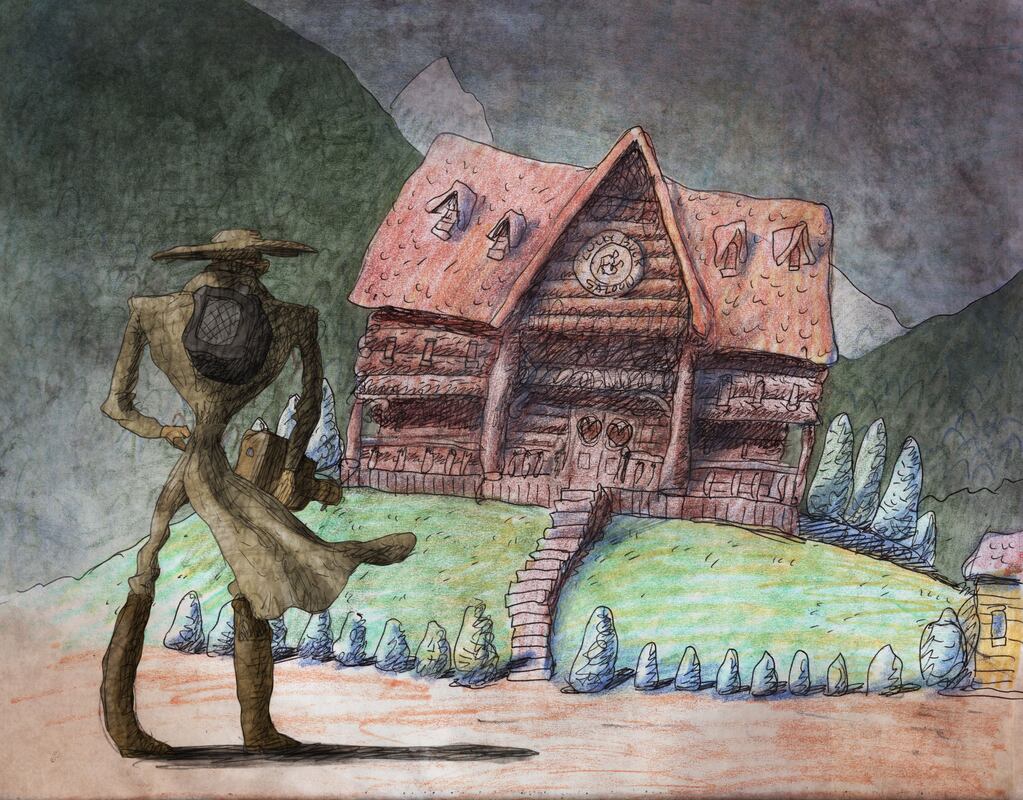 Animator Bill Plympton has been at it for decades, exploring his intensely idiosyncratic and off-kilter style and sensibility through short films, feature-length movies, and even the occasional sketch comedy show interstitial. His latest feature, Slide, is another absurdist work that could only be compared to his own oeuvre, which is to say that it is an incredible, visually captivating film that somehow manages to achieve a poetic beauty both in spite and because of how it bucks convention. This is the story of Sourdough Creek, a fictional logging town in the American West around the 1940s. When the unscrupulous mayor gets an offer from a movie studio to shoot a film there, he immediately declares that the town will be converted into a resort, with disastrous effects on the local community. As tensions flare and his grip on the locals becomes tyrannical, the only spark of hope comes from a masked vigilante who looks suspiciously like the mysterious guitar player who just happened to wander into town. To get the obvious out of the way, this does not look or feel like a polished studio release with an astronomical budget. Part of that is due to circumstance; this is a crowdfunded, independently made, traditionally animated film, with a crew of only about a dozen and an animation team of one. Befitting those facts, the animation here is crude, often animating not on ones or twos but on threes and fours, sometimes forgoing animation altogether. Every cut feels almost violent, and scenes are connected either with dream-like haziness or a jarring suddenness. Some might be taken aback by this, but it certainly isn’t atypical of indie animation, particularly when only one person is doing the work. A cursory glance at Plympton’s previous films shows that this is a predicament he has often found himself in. 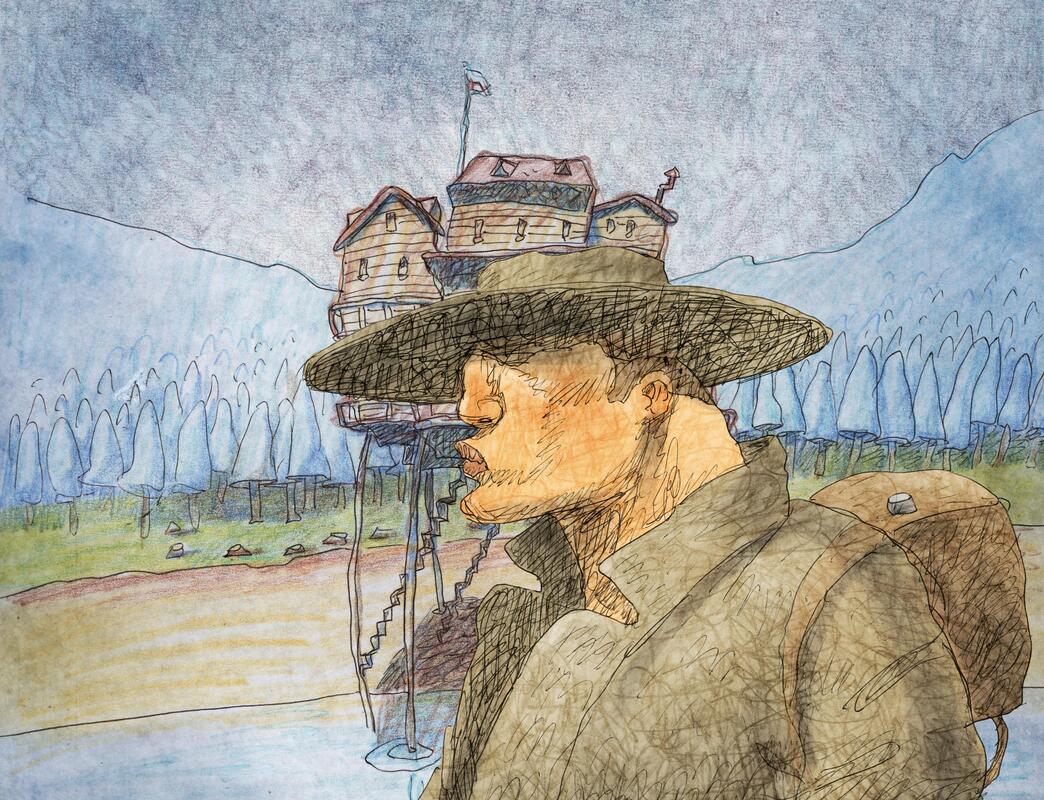 His penchant for utterly surreal and abrasive imagery is well-documented, and Slide is no exception. The film filters his somewhat off-putting style through the tradition of American folk art, creating wild, borderline nightmarish caricatures of classic Americana: the enigmatic stranger astride a horse, the raucous and sinful town brothel, the darkness of a forest that hides monsters. Everyone from the most dastardly villain to the most righteous heroes is shown in such an exaggerated fashion that they become grotesque, completely divorced from reality. The way these images are drawn only calls attention to the lack of polish, with rough sketch outlines on every character and every background, as if the project was still only a workprint. At first glance, it’s hard not to find it unpleasant — even ugly.
Once the initial shock wears off, however, it’s clear that this effect is intentional. As unconventional and strange as the film looks, it is ultimately telling a very familiar story using very familiar archetypes. The humble village with an evil baron basking in his power, the girl who dreams of growing beyond the confines of home, the monster in the woods, the musician whose songs are so beautiful they can pacify a bloodthirsty mob. This is classic American folklore, but where a more traditional work would make these well-worn touchstones feel rote and safe, Plympton’s style completely disrupts the audience’s ability to let the film wash over them passively. As challenging as the form is, it forces the audience to see this story not as another conventional Western but as a tall tale — an epic myth that merely happens to be cloaked in the iconography of Americana. The initial response may be to recoil, but once the language of this bizarre vision is accepted, it’s impossible not to be swept up in its grandeur. How much one gets out of Slide depends on whether one can actually get on that wavelength. As a film attempting to evoke the spirit of myth and folklore, the actual substance is broad and simple. The moral universe of the world is black and white, the characters are thin, the story isn’t inherently compelling, and the humor is sophomoric and easy. The musical numbers — a fitting mix of the American musical tradition including blues, bluegrass, country, and jazz — are all visually stunning, audibly… less so. The entire appeal rests on whether the Plympton touch is enough to coax the audience into accepting this as not merely a low-budget indie but a 20th-century legend brought to life. It’s easy to understand why some might not be able to make that leap, but I personally find it hard to call it anything less than gorgeous. Slide is screening at the 2024 Slamdance Film Festival, running January 19-25 in-person in Park City, UT and online from January 22-28. Rating: 4.5/5
Review by Sean Boelman
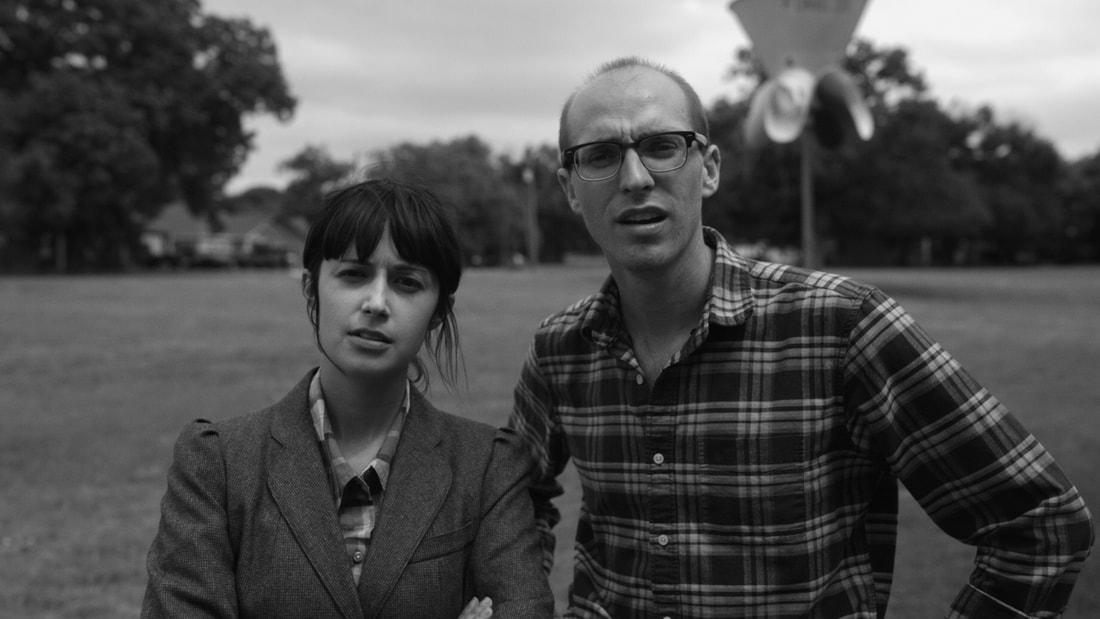
Slamdance is often referred to as the quirkier, more indie alternative to Sundance, as the former is where you find many of the more idiosyncratic, smaller-budget discoveries of the year. Filmmaker Pete Ohs is no stranger to the festival world — his previous feature, Jethica, having premiered at SXSW — and his latest film, Love and Work, is a nice little satirical comedy, even if it seems to think it’s more profound than it is.
The movie follows two aimless people living in a world where having a job is illegal, which is unfortunate, because they love to work. In many ways, this high-concept comedy feels like a mixture of mumblecore and lo-fi sci-fi. It’s on a very particular, weird wavelength, but audiences who are willing to meet it on its quirky level are in for a delightful little romp. It will probably come as no surprise that this absurdist premise is tied to some pretty staunchly anti-consumerist themes. There’s absolutely no subtlety to be found here — with a narrator even going so far as to outright state the central thesis of the film in the final moments — and in many ways, it feels like preaching to the choir, as the audience that will seek out a low-fi indie like this probably already agree with its sentiments. Similarly, the humor is also rather one-note. The first twenty to thirty minutes have a novelty to them that’s quite funny, but the movie reveals its hand a bit too early. At under 75 minutes in total runtime, Love and Work is still breezy and agreeable. However, the attempts at jokes in the back half are somewhat uneven. 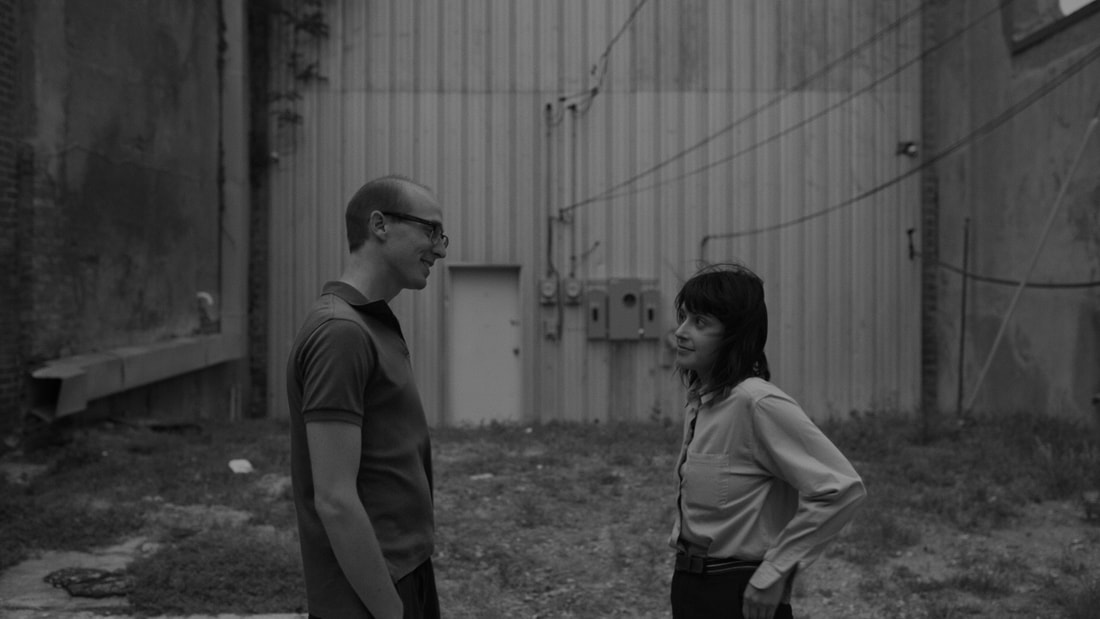
That said, the film is kept consistently engaging with some interesting bits of world-building sprinkled throughout. For example, an explanation of the underground slang — best described as a Cockney-esque secret language for workaholics — is pretty ingenious and goes a long way in immersing the viewer in the movie’s “past of another future.”
This is clearly a micro-budget indie, but the style goes a long way in making it feel a lot bigger than it actually is. There’s a simple worker’s tune used as a motif in the film, which functions perfectly as a comedy song. The movie looks very good, too. The black-and-white cinematography is an age-old trick for independent filmmakers, but it is used here in an incredibly deliberate way. It also helps that the characters are pretty charming and relatable. The “love” in the title refers to the romantic comedy aspect of the story, which kicks in mostly in the back half, and really humanizes these characters on an even deeper level than we already empathize with them. Despite the absurdity, the film manages to remain firmly grounded in emotion. Love and Work is an effective, if simple micro-budget satire from Pete Ohs. Although it’s entirely obvious what the movie’s trying to say, and it doesn’t offer any particularly profound observations we haven’t heard before, it has more than enough quaint charm to have a solid life as an indie gem on the festival circuit and beyond. Love and Work is screening at the 2024 Slamdance Film Festival, which runs January 19-25 in-person in Park City, UT and online from January 22-28. Rating: 4/5 |