
|
Review by Camden Ferrell 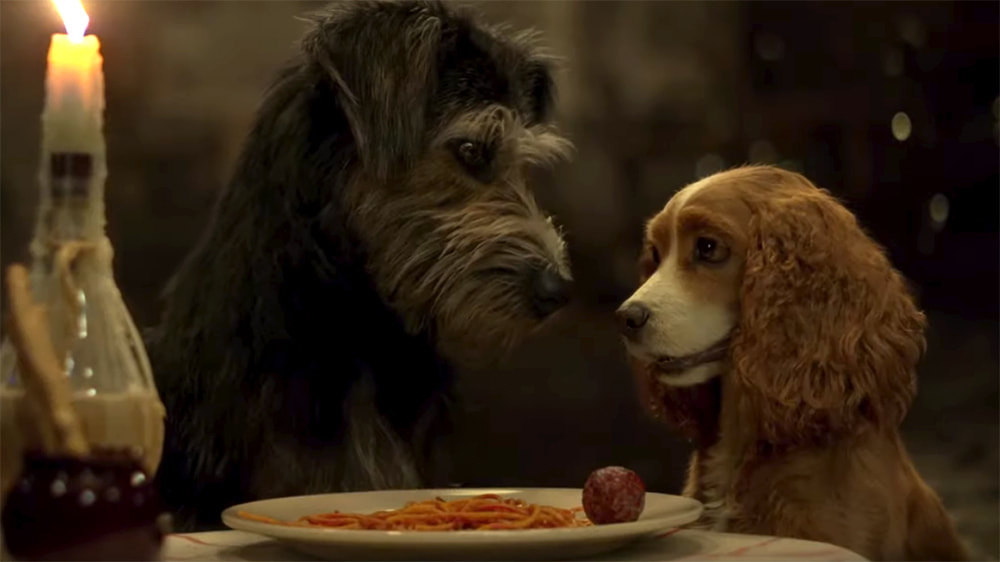 Premiering as a part of the launch of the new streaming service Disney+, 2019’s Lady and the Tramp is a live-action remake and reimagining of the animated classic of the same name. While, there are still some glimmers of the original’s charm, this remake can’t help but feel dull and completely unnecessary. This film follows the exploits of a moderately affluent dog named Lady that meets and goes on adventures with the scraggly stray called Tramp. This is almost the exact premise of the original, and while the meet-cute premise still has some charm, this movie doesn’t exploit the premise to its full potential. However, Disney made the right choice to use this for their streaming platform instead of a theatrical release. Regardless of the investment put into this movie, it can’t help but feel like a television movie, and even then, it barely works as one. It definitely doesn’t match the cinematic qualities as this years Dumbo and The Lion King. It just feels cheaply made, and it doesn’t strive to be more than passable throughout its runtime. Tessa Thompson (Thor: Ragnarok) and Justin Theroux (The Leftovers) lead this film as the titular pups. While both of their performances are adequate, it feels devoid of any real emotion or passion. They can’t make the CGI dogs feel very human, and it doesn’t have the same charm as the original. Other members of the cast include Sam Elliott, Janelle Monáe, Benedict Wong, and more, and they also have the same problem as the leads. Even though they are all very talented, they can’t liven up this movie like it needs.  On a technical level, it’s passable. The CGI for the dogs is better than you’d expect for a movie launching on a streaming platform. There are times where it blends in very well to the environment, but there are many moments where the dogs stick out like sore thumbs. Much like The Lion King, it doesn’t do a great job of conveying emotion through the animal’s faces and designs, but that’s a problem that is more subtle and won’t bother most people.
Other aspects of the film aren’t bad by any means, but it just feels bland. The cinematography has no character and no life, and it doesn’t really keep the audience engaged at all. The film editing isn’t effective in racketing up tension in the more perilous moments of the film, and overall, this is a movie that lacked a lot of much needed originality. However, there are a few moments where this remake can sometimes taste the glory of the original. There are a few musical numbers that are very fun to watch, and some of the original’s iconic moments can’t help but feel sweetly nostalgic in this remake. This will definitely satisfy fans of the original even if it doesn’t last very long. A somewhat underwhelming debut for Disney+, this is a fairly lifeless but easily consumable movie. It lacks creativity and features some pretty forgettable elements, but it should be enough to satisfy families and audiences on the small screen. Lady and the Tramp is currently streaming on Disney+. Rating: 2.5/5
0 Comments
Review by Sean Boelman  Devika Bhise as The Warrior Queen of Jhansi. Photo Credit: Nick Wall. Courtesy of Roadside Attractions. The Warrior Queen of Jhansi, co-written and directed by Swati Bhise, is a new historical drama based on an inspiring and true story. However, despite the legendary icon whose life served as the basis of the film, this is a disappointingly shallow and bland period piece with little to offer but a positive message. The movie tells the story of Lakshmibai, the Rani of Jhansi, as she led her army into battle against the British Empire and the British East India Company. One of the film’s biggest shortcomings is that, while this story is interesting, the script fails to adequately connect this to the bigger picture of the Indian Rebellion of 1857. For example, reference is made to the Sepoys and the pork-fat coated cartridges that were a major factor in the war, but the movie doesn’t explore the religious aspects of this conflict with much depth. Instead, a majority of the film’s runtime is spent creating an idyllic portrait of the protagonist as a hero of the Indian people. Although the Rani is undeniably an impressive figure in Indian history that deserves quite a bit of respect, this movie fails to acknowledge the contributions made by other leaders in this admittedly huge turning point in that country’s history. While it is nice to see perspectives like this on history being seen, this film is unable to effectively convey the scope of this moment in history to an audience that is likely unfamiliar with this story. Since this is such a little-known historical event, one would expect that the movie would be a fascinating story on its own, yet the script is so weighed down by formula and convention that the end result often feels boring. Even the battle sequences, which could have been the film’s saving grace, do not make the movie any more interesting because they feel like they were included out of obligation rather than a natural need for them in the story.  Devika Bhise as The Warrior Queen of Jhansi. Photo Credit: Nick Wall. Courtesy of Roadside Attractions. Bhise’s direction is sadly uninspired, yet that may result from the fact that she is a first-time director. The battle sequences are particularly frustrating, as better choreography or even some kinetic cinematography could have went a long way in making the film much more exciting. With a better and more experienced director at the helm, some much-needed life could have been breathed into the movie.
That said, the film does offer a positive role model in the eponymous leader. Though the restricted rating (for violence) will likely keep those who need to see this movie the most from hearing the inspiring story of the Rani, young women who get to see the film will likely find themselves inspired by the empowering tale of how the protagonist took control of her own life and stood up for a cause in which she believed. Devika Bhise, the daughter of the writer-director, does a very good job in her leading role. Having co-written the script with herself in mind, it is obvious that the role plays to her strengths, and as a result, she lends the character a natural charisma that makes the story slightly more compelling. Unfortunately, although the supporting cast includes some recognizable faces, such as Rupert Everett, none of them give a turn that is particularly memorable. Although there is some value in The Warrior Queen of Jhansi as an inspiring story for young women, one can’t help but feel like it is a missed opportunity. Maybe one day this extraordinary story will receive the cinematic treatment it deserves. The Warrior Queen of Jhansi opens in theaters on November 15. Rating: 2.5/5 Review by Sean Boelman 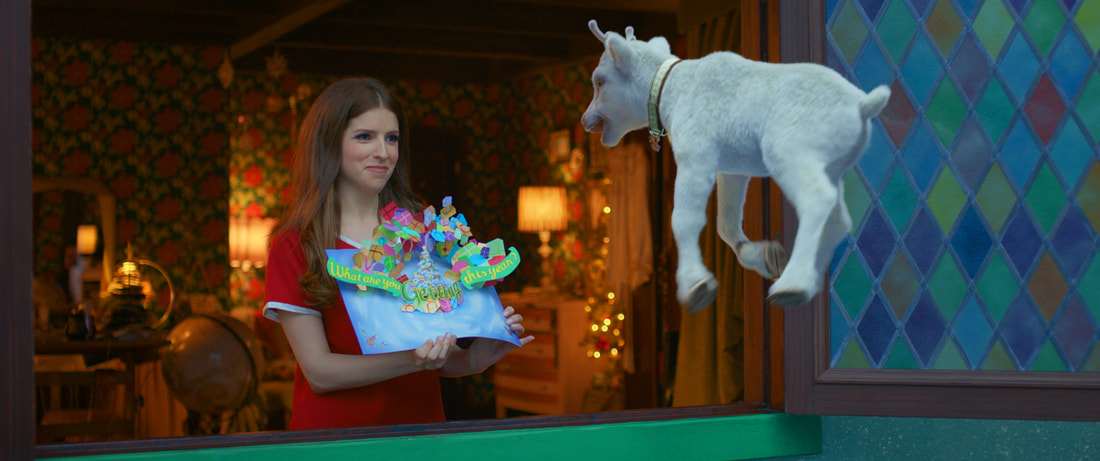 Disney's NOELLE. L to R: Noelle (Anna Kendrick) and Snowcone. Photo: Film Frame. © Disney 2019. Noelle, written and directed by Marc Lawrence, is a new family holiday comedy and one of the first two Disney+ original films. Although it is understandable why this didn’t quite make the cut to receive a theatrical release, it is nonetheless infectiously cute and jolly despite the many flaws in its execution. The movie follows Santa’s daughter as she searches for her brother who goes missing right before he is set to take over the family business. Though there is a lot of potential in this story for an interesting commentary on family and legacy, the film too often falls back on the fish-out-of-water comedy inherent in the situation. Since there is already a (much better) movie about a character from the North Pole finding themselves hopelessly out of their element, one can’t help but feel like the filmmakers put their effort into the wrong areas. The humor of the film is never hilarious, but it is silly enough to keep a smile on viewers’ faces for the entirety of the runtime. For the most part, the comedy consists of goofy quips and puns on Christmas carols, and many of these will elicit a chuckle from audiences young and old. Some of the more ambitious jokes don’t always land, but a few that are not-so-subtly aimed exclusively at older audiences work extremely well. As with any children’s movie, there is a very clear message to this story, and it is exactly what one would expect given the premise. However, the film’s feminist themes only become clear in the latter half of the movie, the first hour or so failing to take advantage of the premise’s potential to inspire younger audiences. Ultimately, the film’s message of the need to be oneself is compelling and delivered in an effective way. 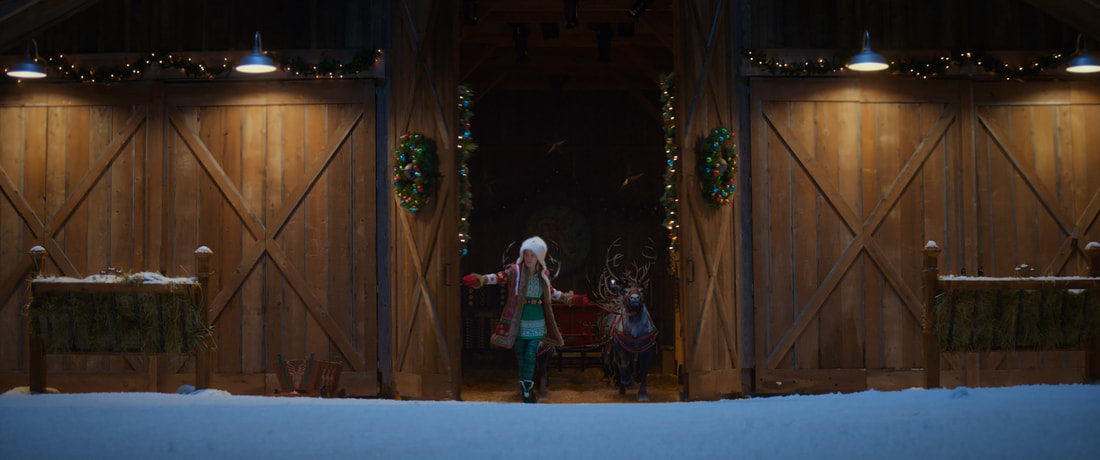 Disney's NOELLE. L to R: Noelle (Anna Kendrick). Photo: Film Frame. © Disney 2019. The eponymous protagonist is a likeable heroine, but her arc is telegraphed and predictable. If nothing else, she serves as a good role model showing the joyous and giving spirit that defines the holidays. Perhaps the most disappointing thing about the movie, though, is that it fails to take advantage of some of the extremely interesting supporting characters that are introduced. Viewers will be left wanting to see more of the other Kringles, or even the human companions that Noelle meets on her journey.
As a starring vehicle for Anna Kendrick, the film works quite well. Kendrick’s charming and ditzy schtick fits the character perfectly to an extent that makes the role seem like it was tailored to her strengths. The supporting cast includes many impressive names, including Bill Hader, Shirley MacLaine, and Billy Eichner, and while each of them has a few moments in which they shine, Kendrick often steals the show from them. It is on a technical level that the movie struggles the most. The visuals are far below the standard that is typical for Disney, so one has to wonder whether Disney+ will end up being a dumping ground for products that won’t receive as much of an investment because they aren’t as safe of a bet. (With some more polish, this likely could have been a holiday hit.) The main success of the film’s execution is the soundtrack, which is filled with boppy renditions of Christmas classics. As a family comedy, Noelle offers enough light chuckles and holiday spirit to satisfy families. Though there are better movies with a similar premise, kids who are unfamiliar with those classics will surely be wrapped up in the charm and magic that this film has to offer. Noelle is now streaming on Disney+. Rating: 3/5 Review by Sean Boelman 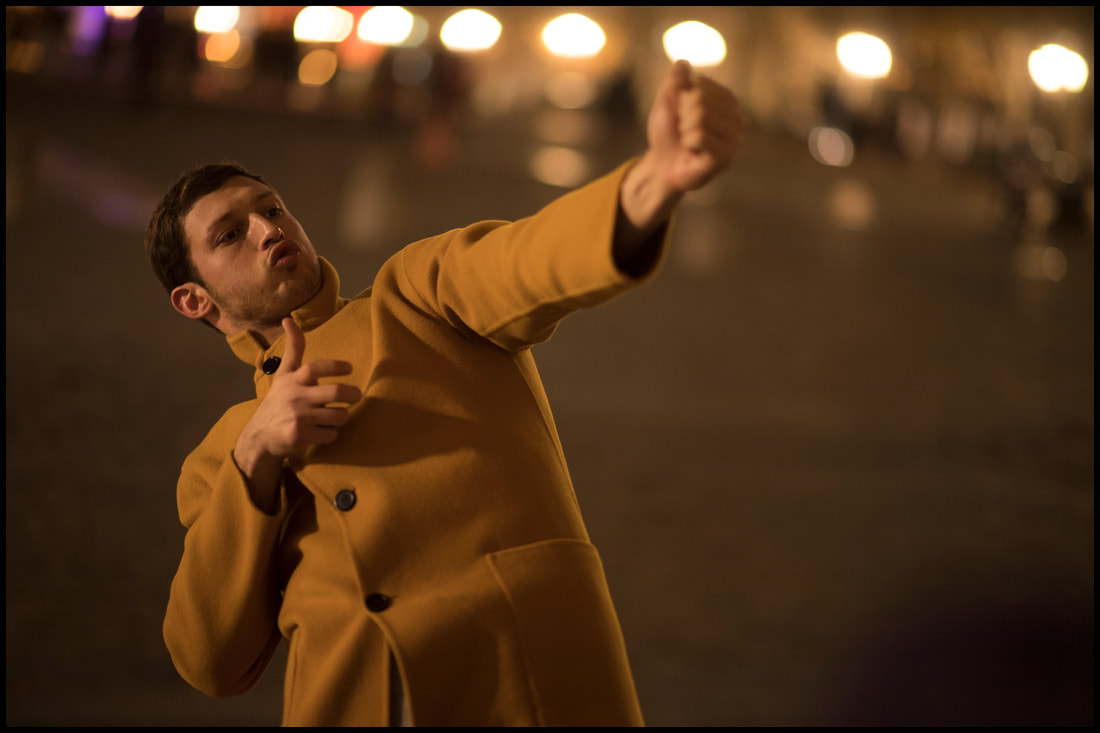 A scene from Synonyms, courtesy Kino Lorber. Synonyms, directed and co-written by Israeli filmmaker Nadav Lapid, is a semi-autobiographical tragicomedy inspired by Lapid’s experiences of moving to Paris. Featuring one of the most personal and effective scripts of the year, this is certainly one of the most wonderful films to come out this year. The film follows an Israeli young man as he moves to Paris, embarrassed of his Israeli identity and in search of a fresh start. This story, although familiar, is presented with such a fresh and interesting perspective that it manages to feel entirely personal and emotionally involving. In this era in which people are becoming more and more disillusioned with their country and themselves, this film is likely to connect with audiences in an unexpected way. Some of the most interesting portions of this film deal with the protagonist’s specific identity crisis. Although viewers everywhere can relate to some aspects of the character’s experiences, there are certain portions of the film that are connected directly to the filmmaker’s Israeli origins, and these are the portions of the film that are more likely to stick with audiences and start a conversation. Lapid’s approach to this story is extremely interesting as he balances multiple different tones. By blending elements of serious drama and fish-out-of-water comedy, Lapid is able to make the emotional beats hit even harder than they otherwise would. The subtle humor provides a much-needed relief from the tension of the protagonist trying to find his footing in an unfamiliar world. 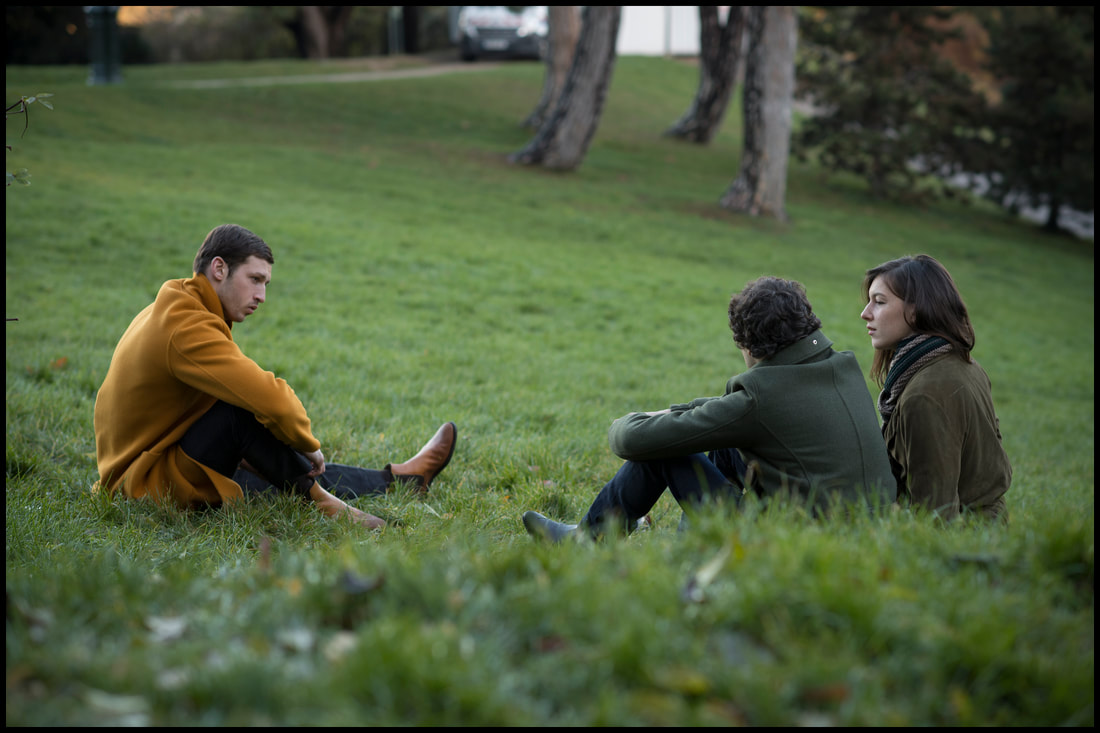 A scene from Synonyms, courtesy Kino Lorber. Because of the personal touch which Lapid infused into the script, the protagonist is immediately sympathetic. The key to this film’s effectiveness is the disillusionment and confusion that the protagonist experiences, and Lapid builds the character in a way that sells those feelings to the audience.
First-time actor Tom Mercier does an absolutely phenomenal job bringing these emotions to life. There is so much depth and nuance to the character, and Mercier is able to pull it off in a way that feels honest and completely natural. He has a natural charm and charisma about him that helps make the character feel more approachable and lovable. On a technical level, the film is excellent. Lapid makes some very interesting choices with the cinematography and sound design that will provoke thought regarding what the audience is seeing on screen. The cinematography by Shai Goldman is affecting, often beautiful but sometimes perfectly horrifying, highlighting the frustration being experienced by the characters. Synonyms is a difficult film to describe because filmmaker Nadav Lapid is able to do so much with it so well that no words could possibly do justice to the brilliance that is shown on screen. Effective in more ways than one, this is a film that simply demands to be experienced and will likely stick with audiences long after the credits have rolled. Synonyms is now playing in theaters. Rating: 5/5 Review by Sean Boelman 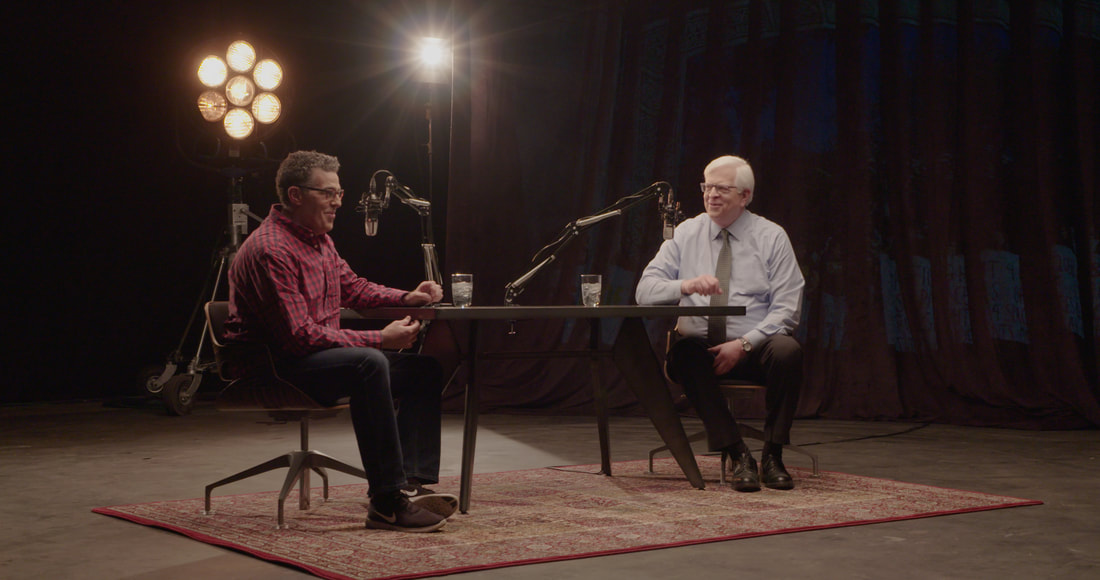 No Safe Spaces, directed by Justin Folk, is a politically-charged new documentary about an issue that seems to be gaining more and more attention in the media today. Featuring two charismatic leads to communicate its message, one may not agree with this film’s politics, but it is a surprisingly well-argued documentary. This documentary explores the idea of free speech and how this fundamental right is being threatened, particularly on college campuses across the nation. Admittedly, this is a very divisive topic and audiences are unlikely to be swayed by the information they see on screen. Although this documentary is very much one-sided, it thankfully manages to never feel like it is propagandizing. Although the politics of the subjects serve as the core of the movie, this documentary does have quite a bit of merit beyond simply reinforcing the ideas held by conservative viewers. Regardless of one’s perspective on the issue, this is a conversation that needs to be had and this film can serve as an effective conversation starter. The movie, clocking in at just over an hour and a half, is surprisingly entertaining for a political documentary. Films like this have a tendency to feel like they are preaching (often to the choir that will be seeing it), but No Safe Spaces is an exception that feels like it is trying to present information to the audience. Even though it doesn’t succeed in being as reasoned as it hopes to be, it is still much more well-argued than a majority of other uber-conservative documentaries like this.  Perhaps the most impressive thing about this documentary is the variety it brings to the methods of presenting its information. At times, this does begin to feel a bit overwhelming and hectic, but for the most part, it helps the movie feel much more entertaining. Although the discussions that occur between Dennis Prager and Adam Carolla are interesting, they are obviously staged and aren’t the most effective tools used by the film.
The best sequences of this movie are those that are intentionally edgy in a way that makes them absolutely fascinating to watch. One sequence that immediately stands out is an animated musical sequence made to parody Schoolhouse Rock, albeit with an extreme twist. This scene is so unexpected and hilarious that one can’t help but admire the ingenuity that went into making it. That said, one of the film’s biggest weaknesses is the fact that it doesn’t feel entirely in touch with the issue at hand. Although having Prager and Carolla as the faces of the documentary will go a long way in making it appeal to older conservative audiences because they are easily recognizable, the movie likely would have been more effective had it been presented from the perspective of the people who are actually affected by this issue: college students. No Safe Spaces is undeniably going to be a very divisive film because of its political nature, but it serves as an interesting examination of an issue that has gotten quite a bit of media attention as of late. Much more creative than most similar films, this documentary manages to deliver its message in a palatable and entertaining way. No Safe Spaces is now playing in theaters. Rating: 3.5/5 Review by Sean Boelman  Disco’d, directed by Matthew Siretta, is an important new documentary exploring the shockingly prevalent issue of homelessness in the streets of Los Angeles. Although the film effectively defines the issues plaguing the L.A. streets, it fails to connect these stories to the bigger picture, preventing it from creating a much-needed sense of urgency. The movie follows multiple homeless L.A. residents at night as they fight for the most basic necessities of survival, such as food and shelter. Many people (especially those who live in urban areas) encounter the homeless on a daily basis, but few realize exactly how widespread this epidemic has become. If Siretta’s film only gets one point across, let it be that this issue is worse than people think and expect. Siretta tries to address a lot of the issues that arise from the greater problem of homelessness in Los Angeles, such as poor quality of living, drug addiction, and the endlessly perpetuating cycle that traps people in these poor conditions, but the movie almost would have been more impactful had it stuck with a single one of these topics. The film is at its most effective when it is exploring the human impact of homelessness. The people who are portrayed in the documentary were actually living on the streets at the time of filming, and Siretta is brutally honest in the way he shows these subjects and how they are living. There are some sweet moments throughout, but this is very much a movie meant to horrify the audience about what they are watching.  At times, the film does lean a bit too heavily into this shock value, particularly in the sequences depicting the subjects’ drug addictions, but for the most part, the movie is extremely resonant on an emotional level. Surprisingly, some of the most powerful shots of the film are long takes that simply show the conditions in which these people are living.
Clocking in at under an hour and fifteen minutes, this documentary moves very quickly, especially with the amount of subjects it has. Over the course of the movie, the focus switches between multiple homeless residents of Los Angeles, and even though each of them contributes to the story in their own way, the film likely could have eliminated one or two of them from the narrative. On a technical level, the movie is mostly strong especially given the fact that a majority of the footage was shot at night on the streets. This environment is almost as far as one can get from controlled, so the fact that Siretta was able to pull this film off in a way that effectively conveys the story and its emotion, and still manages to make the movie look terrifyingly great is very impressive. Disco’d may not be the force of change that it hopes to be, but it is still an interesting documentary with a message that needs to be heard. Director Serietta’s passion about the issue is evident, making the film a compelling watch. Disco’d is now playing in theaters. Review: 4/5 Review by Sean Boelman 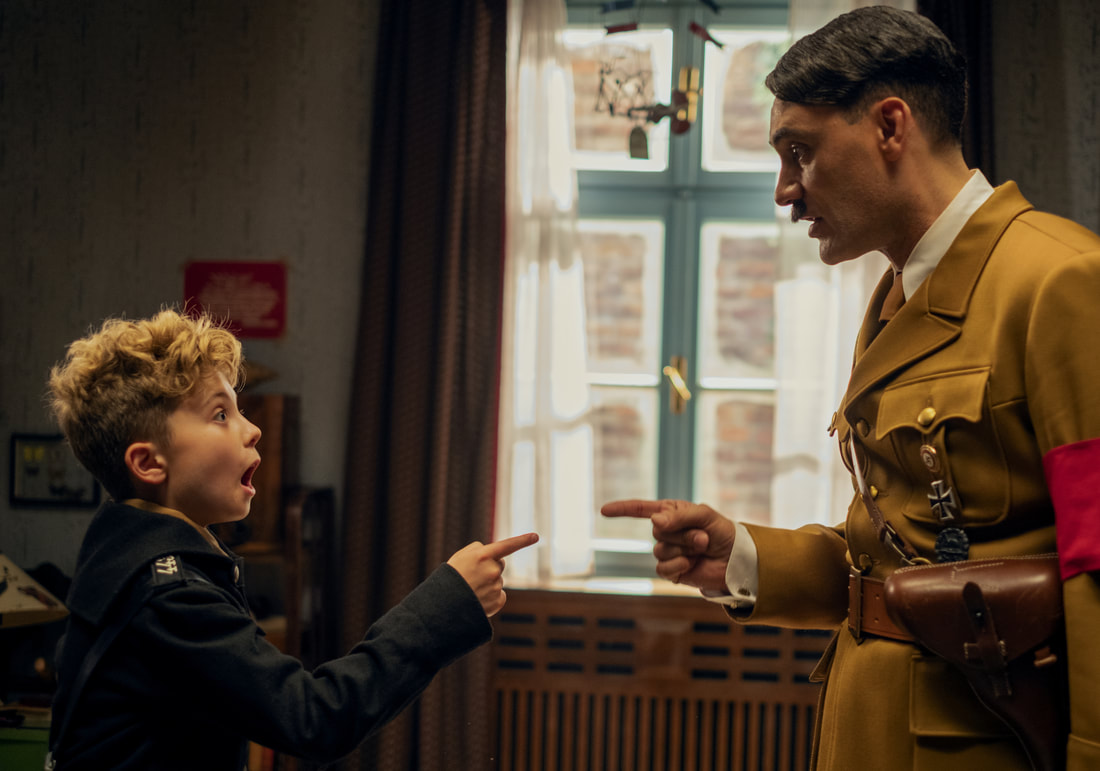 Roman Griffin Davis and Taika Waititi in the film JOJO RABBIT. Photo by: Kimberley French. © 2019 Twentieth Century Fox Film Corporation. All Rights Reserved. Jojo Rabbit, loosely adapted by New Zealander filmmaker/comedian Taika Waititi from the novel Caging Skies by Christine Leunens, is the type of movie that is undoubtedly going to turn heads. However, thanks to its heartwarming story told with a wicked and original sense of humor, this manages to be one of the year’s most refreshing films. The film tells the story of a young boy in WWII Germany as he finds himself conflicted between his allegiance to his country and what he knows is right when he discovers that his mother is hiding a Jewish girl in their home. While the story holds few surprises, this is a story that has proven to be effective time and time again, and the unique perspective which Waititi brings to the script helps it stand out. More so than any of Waititi’s other films, Jojo Rabbit leans heavily on slapstick humor to brighten its tone. There are some witty one-liners scattered throughout, though the film is at its funniest when its characters are thrown into an absolutely ridiculous situation that causes them to end up in some comedic hijinks. That said, the biggest strength of the film is not in its comedy, but rather, in its ability to appeal to the emotions of the viewer. Films about the Holocaust have a tendency to be quite hard-hitting, and despite the bouncy and lighthearted tone that is dominant in this film, there are portions of the film that will effectively tug at the heart strings of most audience members. 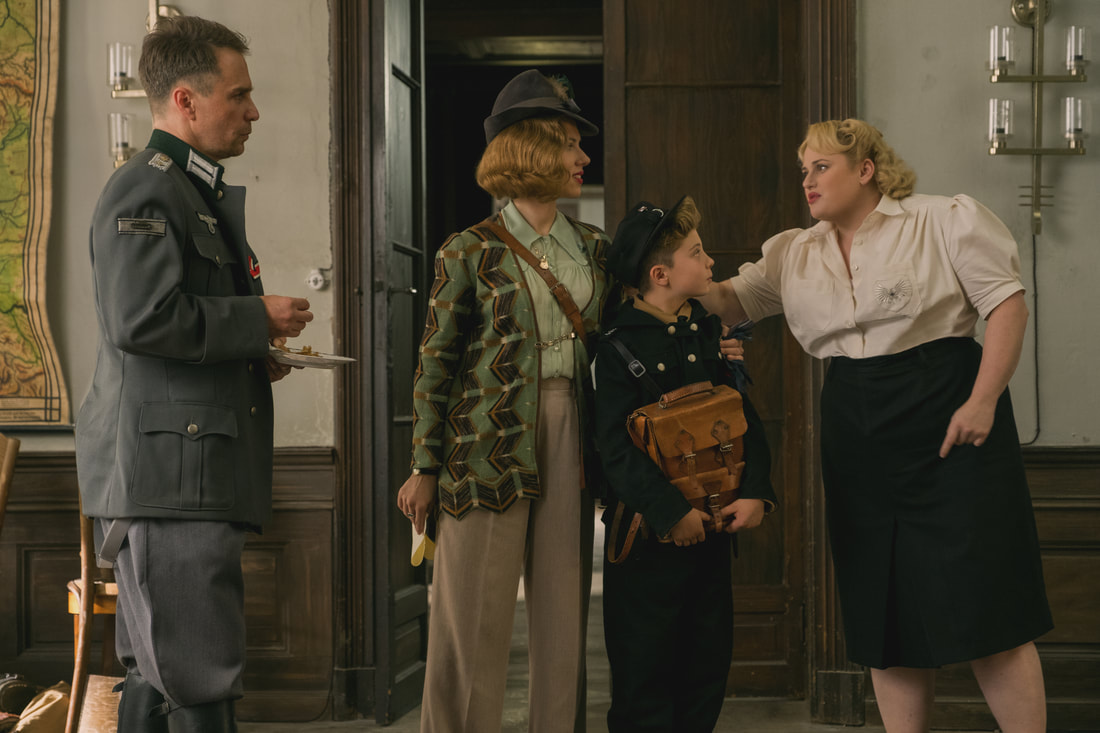 (From L-R): Sam Rockwell, Scarlett Johansson, Roman Griffin Davis and Rebel Wilson in the film JOJO RABBIT. Photo by: Larry Horricks. © 2019 Twentieth Century Fox Film Corporation. All Rights Reserved. The protagonist of the film is a very well-written and complex character. Some viewers may take issue with the fact that the film presents him as a sympathetic character despite his aggressive patriotism and Nazism in the beginning of the film, but the ultimate message of the film is that he was just a kid whose mind was being swayed by the people around him.
Roman Griffin Davis’s breakout turn is perhaps the single most impressive part of this film. The supporting cast that surrounds him is extremely talented, featuring Thomasin McKenzie, Scarlett Johansson, Sam Rockwell, Alfie Allen, and of course Waititi in hilarious roles, but the level of nuance that Davis is able to bring to the character, particularly for someone so young, is astonishing. Visually, the film is highly stylized, containing much of the same bright and colorful cinematography and production design that defined Waititi’s other films, albeit applied to a historical setting. The humor of the script and the quirkiness of the visual style mesh very well together, creating an experience that is altogether very fun and joyous. Though Jojo Rabbit understandably won’t be everyone’s cup of tea, those who are willing to read into Waititi’s message are sure to find this to be an effective tale of empathy. Waititi took a huge risk with this film, and it paid off massively. Jojo Rabbit is now playing in theaters. Rating: 5/5 Review by Sean Boelman 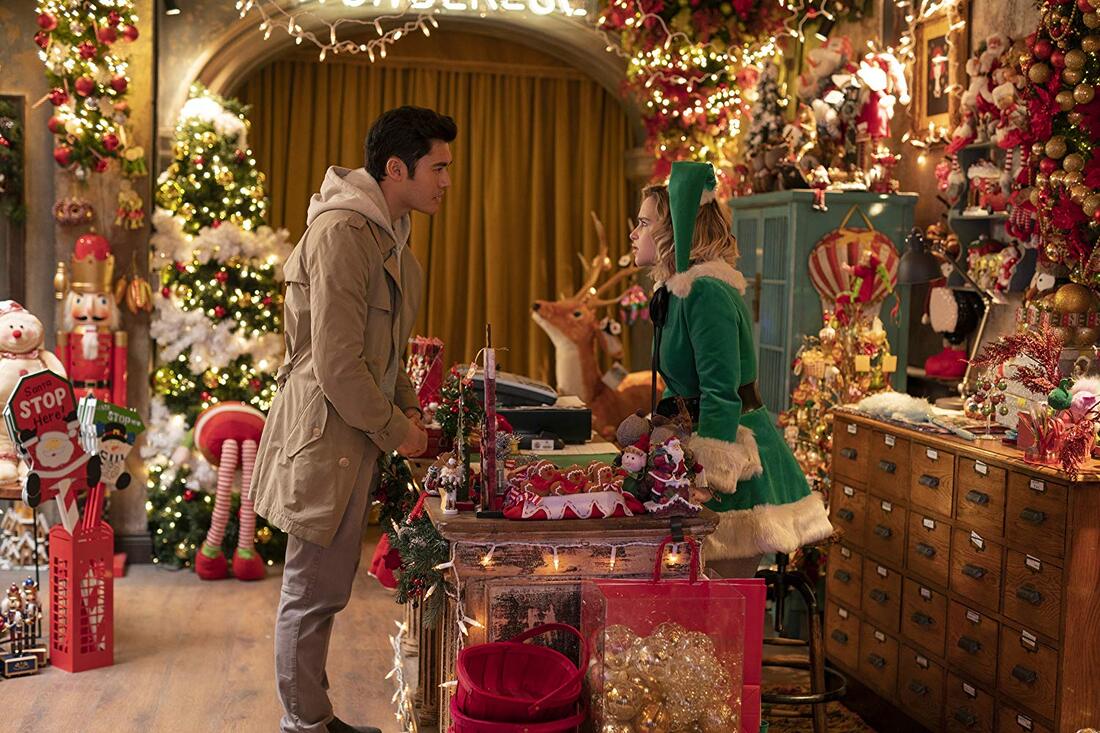 Last Christmas, directed by Paul Feig (Bridesmaids, A Simple Favor), is the first Christmas movie of 2019 — a romantic comedy inspired by the classic Wham! song of the same name. Predictable but hilarious and full of the holiday spirit, this is just what was needed to bring in the holiday season the right way. The film tells the story of a Christmas store employee who is prone to making bad decisions when her life begins to take a positive turn after meeting a handsome and mysterious stranger. As one would expect, the story is conventional and all of the twists are telegraphed pretty early, but those who have a soft spot for romantic comedies will undeniably have a ton of fun with this movie regardless of the amount of tropes on which it relies. While some of the funniest moments of the film were revealed in the trailer, some of the most effective scenes in the movie feature witty lines that come out of left field for the laugh. The script, written by Emma Thompson (who also plays a supporting role in the film) and two other writers, is very funny and will easily keep the interest of the audience for the entirety of the runtime. The main area in which this movie is lacking is its character development. All of the characters, leads included, are very archetypal. Although they do have arcs, the direction in which these characters will be experiencing growth is obvious from the beginning of the film. Still, it is heartwarming as ever to watch a protagonist as they learn the meaning of the Christmas spirit.  Because the movie is so predictable, it likely won’t be as much of a tear-jerker as it seems to want to be, particularly at the end. However, there are some truly heartfelt interactions between the characters, including some wonderful ones between the protagonist and her mother, that are likely to sit with audience members long after the film is over.
Emilia Clarke and Henry Golding have wonderful chemistry together. Clarke is able to bring a lot of heart to her performance, giving a turn that is fittingly charming. Golding complements her well, and even though he isn’t given as much to do, he is quite well-fit to the role. Thompson is absolutely hilarious in her supporting role, as is Michelle Yeoh. On a technical level, the movie is solid thanks to competent direction from Feig. Perhaps the most notable thing about the film is its soundtrack, comprised of music from the late George Michael. A wonderful tribute to the talented musician, Michael’s music infuses the movie with a liveliness that helps make the film feel even more enjoyable. Last Christmas may not be a particularly deep or complex movie, but thanks to a witty script and an excellent soundtrack, it is a ton of fun. As far as popcorn entertainment goes, this is just what the multiplexes are in need of right now. Last Christmas opens in theaters on November 8. Rating: 4/5 Review by Sean Boelman 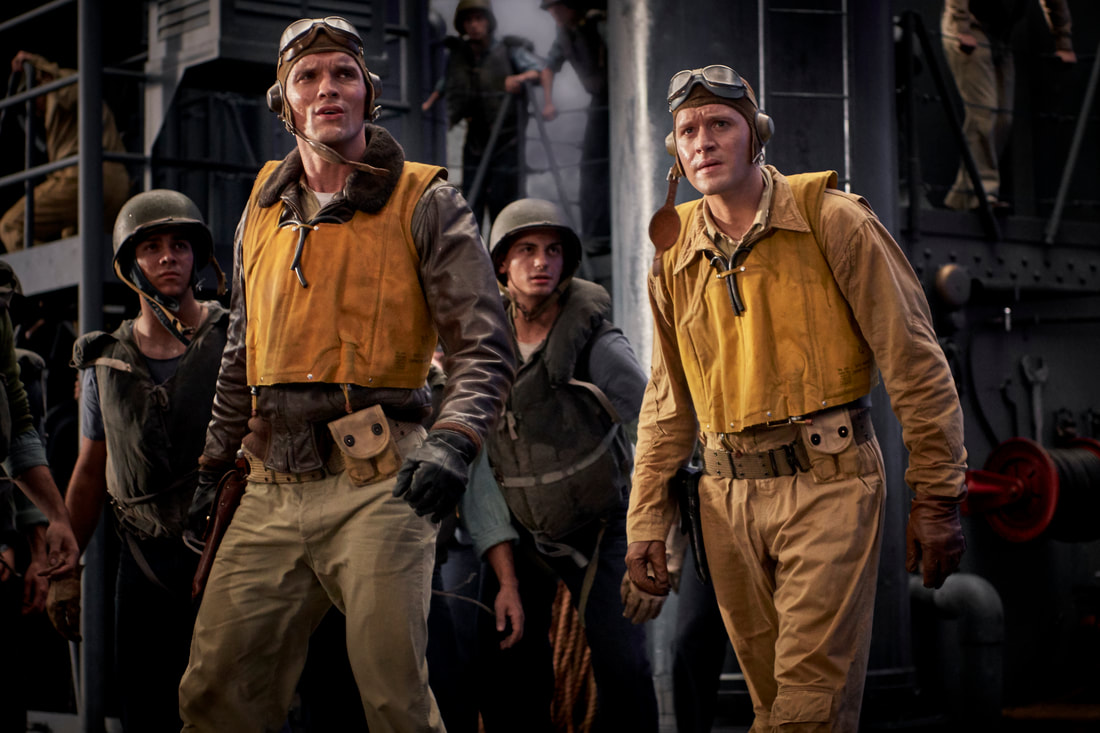 Dick Best (Ed Skrein, left) and Clarence Dickinson (Luke Kleintank, right) in MIDWAY. Photo Credit: Reiner Bajo. Midway, directed by Roland Emmerich, king of the disaster movie, is a new war film telling the story of the Battle of Midway, one of the most important naval battles in WWII. Basically a more violent and jingoistic telling of a basic history book version of this story, this movie is painfully dull but will likely be embraced by its target audience nonetheless. The film focuses on the events that led up to and occurred during the Battle of Midway, which happened after the Japanese attacked the Americans at Pearl Harbor. Perhaps the only thing that is truly admirable about this movie is that, unlike most other war films, this does show the strategy of both sides of the battle. However, as is the case with most movies of the genre, this film takes a firm stance on one side (in this case the Americans) to an extent that feels aggressively patriotic. While this will help the movie appeal to older audiences, particularly veterans, the film does sometimes come off as xenophobic in its portrayal of some of the Japanese characters. That said, the American characters don’t have much more depth, which prevents the movie from having any real emotional impact. Although there is a main storyline featuring a navy pilot (portrayed by Ed Skrein), the film features cutaways to other pilots, higher officers, intelligence operatives, and even Japanese sailors that the movie fails to create any real connection between the audience and the people they see on screen. 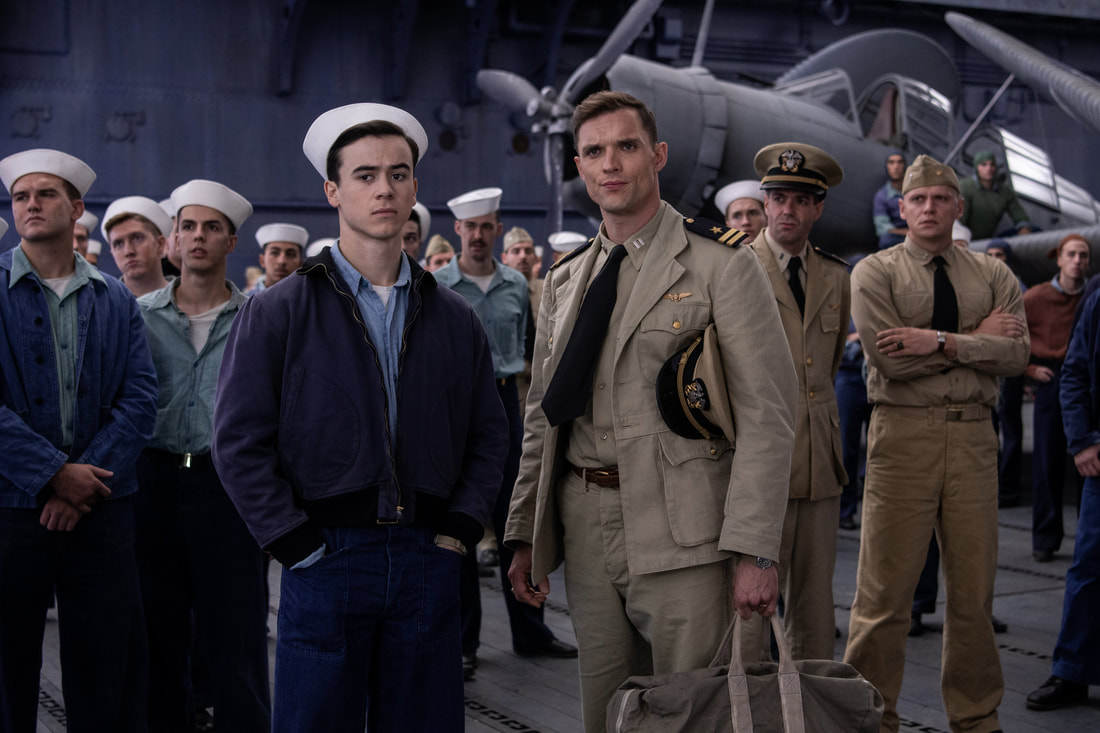 James Murray (Keean Johnson, left) and Dick Best (Ed Skrein, right) in MIDWAY. Photo Credit: Reiner Bajo. It really is a shame that the characters don’t have more depth, as the cast that Emmerich was able to assemble for the film is truly impressive, their talents feeling entirely wasted on this hollow script. Talented actors such as Dennis Quaid, Aaron Eckhart, and Woody Harrelson aren’t given enough screen time to make a difference. Others, including Nick Jonas, Luke Evans, and Patrick Wilson try their best to make something of what they are given but aren’t able to overcome the laughable dialogue.
The single biggest issue with the movie, though, is that it is poorly paced. For a film full of explosions and set in a high-intensity naval battle, this sure is boring. One of the reasons why the movie feels so slow is that it takes over an hour to get to the actual Battle of Midway. Much of the first half of the film is spent showing Pearl Harbor and the way that people reacted to it, a story that has already been seen on screen before. On a technical level, the movie looks extremely fake due to Emmerich’s over-reliance on CGI. Although Emmerich was one of the pioneers of CGI spectacle cinema, his style simply does not translate well to a war epic. The aesthetic feels like that of a video game, and not in a good way, as a result of the overly artificial nature of the action. Even though there is an audience that will appreciate this film, Midway is a bigger disaster than those that Roland Emmerich typically depicts in his movies. Dreadfully slow and dull, this is one film to avoid this crowded holiday season. Midway opens in theaters on November 8. Rating: 1.5/5 Review by Sean Boelman 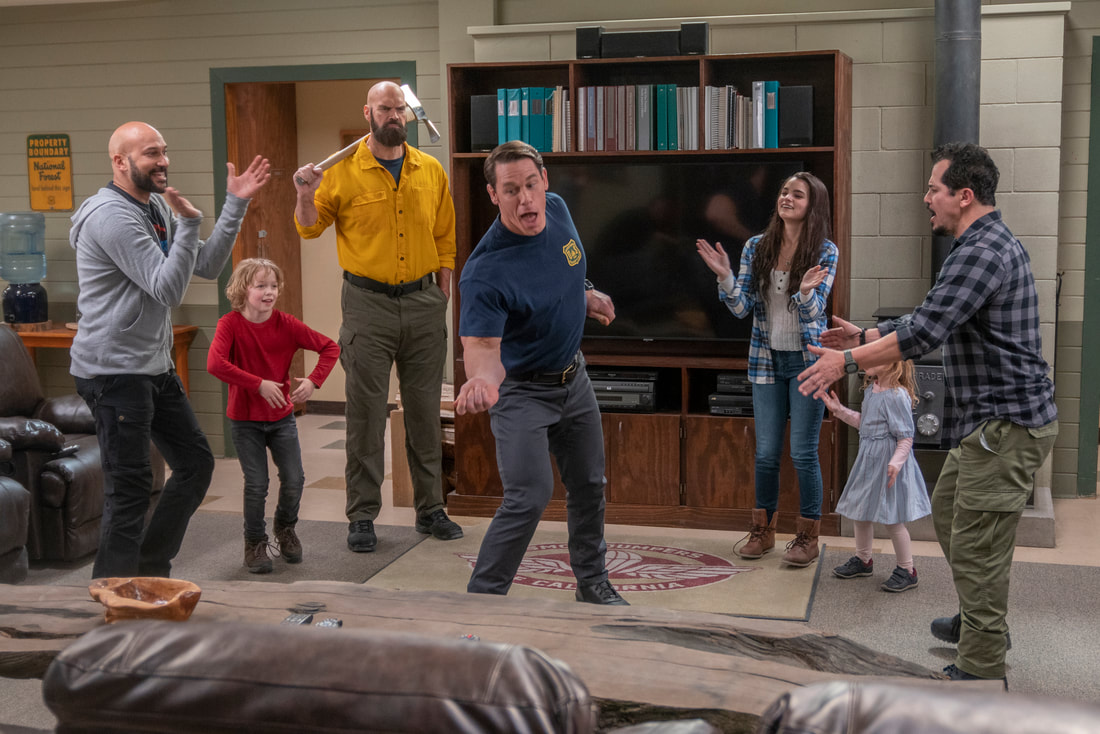 L-R: Keegan-Michael Key, Christian Convery, Tyler Mane, John Cena, Brianna Hildebrand, Finley Rose Slater, and John Leguizamo in PLAYING WITH FIRE from Paramount Pictures. Photo Credit: Doane Gregory. Playing with Fire, starring John Cena, Keegan-Michael Key, and John Leguizamo, is the latest film to pit comedic actors against cute kids in the hopes of eliciting cheap laughs from the audience. Painfully conventional and sadly devoid of legitimate laughs, this movie feels like a waste of the surprisingly large budget that went into making it. The film is about three firefighters who must take care of three troublemaking kids after they rescue them from their burning home and their parents are unable to retrieve them. As one would expect, there is more going on in this story, but every attempt at surprising audiences will only be unexpected for the youngest of viewers. Parents and even older kids who see this will likely be able to see where this story is going as if the ending is giving off smoke. However, perhaps even more disappointing than the predictable story is the fact that the humor is annoyingly derivative. Gags often go on for much longer than they should, if they were ever funny at all, to the point that many viewers will be left checking their watches to see what time they can escape. Even the obligatory gag reel that accompanies the credits is largely unfunny. Although the runtime of the movie is just over an hour and thirty minutes, the film ends up feeling much longer because the filmmakers seemed to have no sense of comedic timing. Often, the movie will be building up to a big joke, only to let the audience down with a cringe-inducing punchline, or even worse, no punchline at all.  John Cena and Christian Convery in PLAYING WITH FIRE from Paramount Pictures. Photo Credit: Doane Gregory. The characterization in the film is also extremely weak. All of the characters are extremely flat and have little to no arc. The only character that has any legitimate development is the character portrayed by Cena, but everything about his story is extremely bland. His quest to get a promotion provides some much-needed conflict in the movie, but isn’t explored in a way that adds depth to the character.
Despite the talented comedians that comprise the cast, the film feels sadly devoid of any charm. It isn’t that the actors aren’t trying — they seem to be legitimately having fun — it is that they don’t seem to realize that the movie they are acting in is not particularly good. The only actor who does consistently get laughs in Dennis Haysbert, playing the straight-faced character. On a technical level, the film seems to have a decent amount of money put into it, especially for a comedy like this. The opening, featuring the characters fighting fires, actually features a few somewhat impressive effects. However, the way in which it is blocked to make it feel more comedic ruins the effect that this has. Even though the premise seems ingenious on paper, and the filmmakers were able to assemble the cast to make it work, Playing with Fire burns out rather quickly. Lacking humor or an interesting story, this movie is likely to bore both the kids and their parents who decide to venture out to see this burning mess. Playing with Fire opens in theaters on November 8. Rating: 1/5 |