
[TIFF 2020] FIREBALL: VISITORS FROM DARKER WORLDS -- A Detailed and Lecture-Like Documentary9/24/2020
Review by Sean Boelman
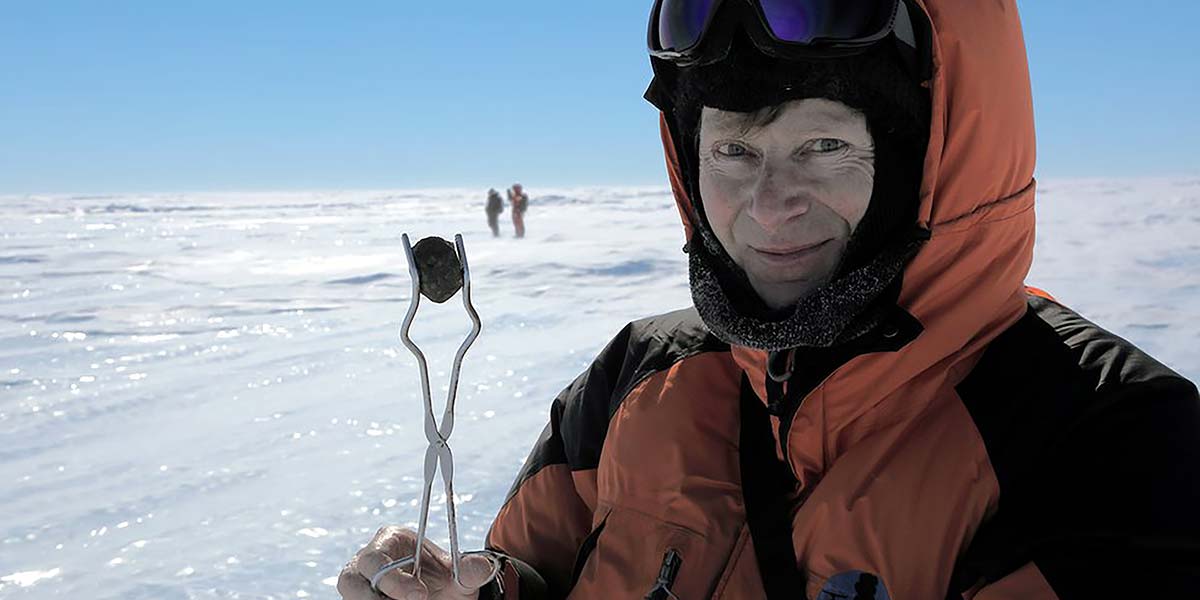
Image courtesy of TIFF.
Werner Herzog has an obvious and infectious fascination with the world that surrounds him, as is made obvious by his documentaries that are filled with appreciation for the planet and the people who inhabit it. However, in expanding his scope to a cosmic level in Fireball: Visitors from Darker Worlds, along with geologist Clive Oppenheimer, he loses a lot of what makes his films so wondrous.
In the movie, Herzog and Oppenheimer explore meteors and comets from both a scientific and cultural perspective, with a focus on how they have impacted earth both literally and figuratively. And while those who are interested in outer space will undoubtedly be fascinated with the material, general audiences will likely reject the film’s technicality. That isn’t to say that the movie is hard to understand — Herzog and his interviewees do a good job of explaining the scientific jargon as to allow those less scientifically informed viewers to understand what is being discussed. Still, it’s little more than a scientific colloquy for its hour and a half runtime. Like so much of Herzog’s other work, this film questions our role in the greater picture, but in also attempting to explain the greater picture, it loses that much-needed personal touch. The most fascinating portions of the movie are those in which the filmmakers are exploring how these individual cultures saw and treated these astronomical phenomena. 
Image courtesy of TIFF.
Instead, Herzog seems to be taking a more environmentalist approach to the material. Of course, it’s nowhere near as gloom-and-doom as some of his more recent political work, but there’s obviously something here about the life of the universe, specifically in relation to our planet, and the message feels disappointingly conventional.
The film also doesn’t assert a clear subject. Herzog’s signature narration with his smooth voice obviously serves as the common thread, but some of the interviews are conducted by himself and others by Oppenheimer. The movie certainly would have been much more effective had it set a more concise focus. Regardless, the film is as gorgeous as expected from Herzog, featuring plenty of beautiful nature shots that will leave the audience in awe of the world’s mightiness. And while Herzog unfortunately struggles to find the substance to back up the wonderful eye of his camera, it’s at least a pretty movie to look at. Fireball: Visitors from Darker Worlds should have been another magnificent documentary from Werner Herzog, but instead it tries to do too much and feels like it isn’t doing enough at the same time. Still, the inner astronomer in all of us will find enough to enjoy to make it worth the watch. Fireball: Visitors from Darker Worlds screened as a part of the 2020 Toronto International Film Festival which ran September 10-19. Rating: 3/5
0 Comments
Review by Sean Boelman
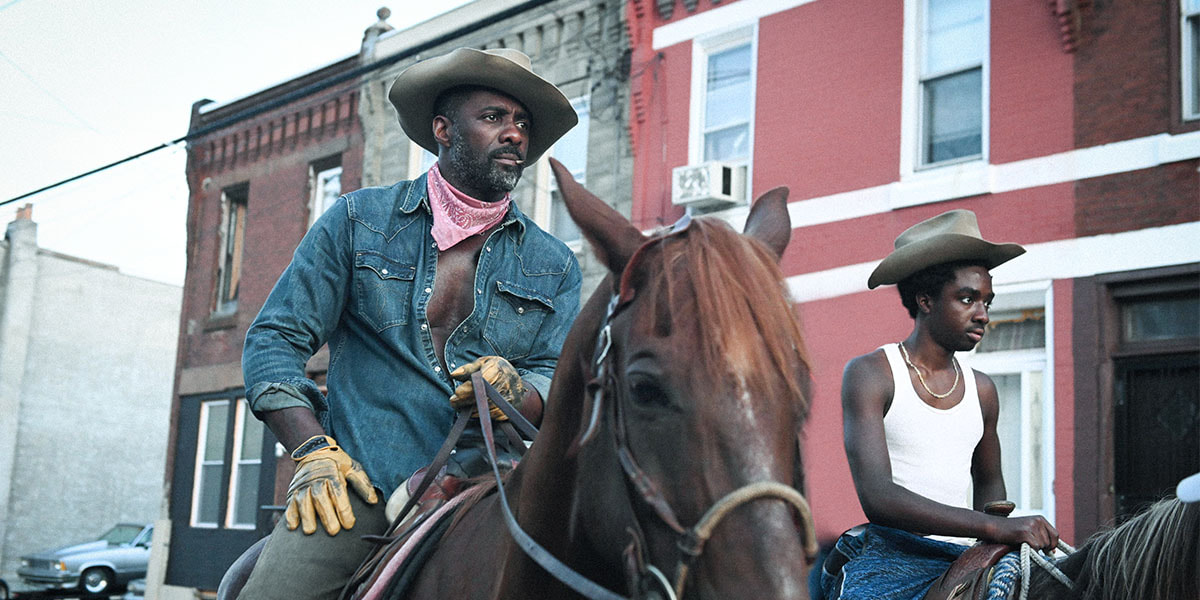
Image courtesy of TIFF.
Ricky Staub’s feature debut Concrete Cowboy is the type of film that sounds like it should be a massive hit on paper: a talented star in a prominent supporting role, a great up-and-comer in the lead, and a unique real-life inspiration. But despite all these bits of potential, it simply doesn’t come together into something compelling.
The movie follows a teenager who gets drawn into the urban cowboy subculture when he moves in with his estranged father. And while the Fletcher Street Urban Riding Club is fascinating and should make for a very interesting film, Staub and his co-writer Dan Walser don’t make anything more out of it than a rather conventional coming-of-age story. There are plenty of movies about troubled teens exploring unique subcultures, and in fact, there’s even a much better one coming out next month, but there has to be something personal to a film like this to make it stand out beyond the initial intrigue of its premise. And here, the movie just doesn’t do enough to feel distinctive. The protagonist’s arc is frustratingly obvious. It seems that in films about unusual identities (in this case the urban rider), the lead is forced to choose between their newfound passion and a life of crime. The fluctuations between these two callings are almost always predictable, and this is no exception. 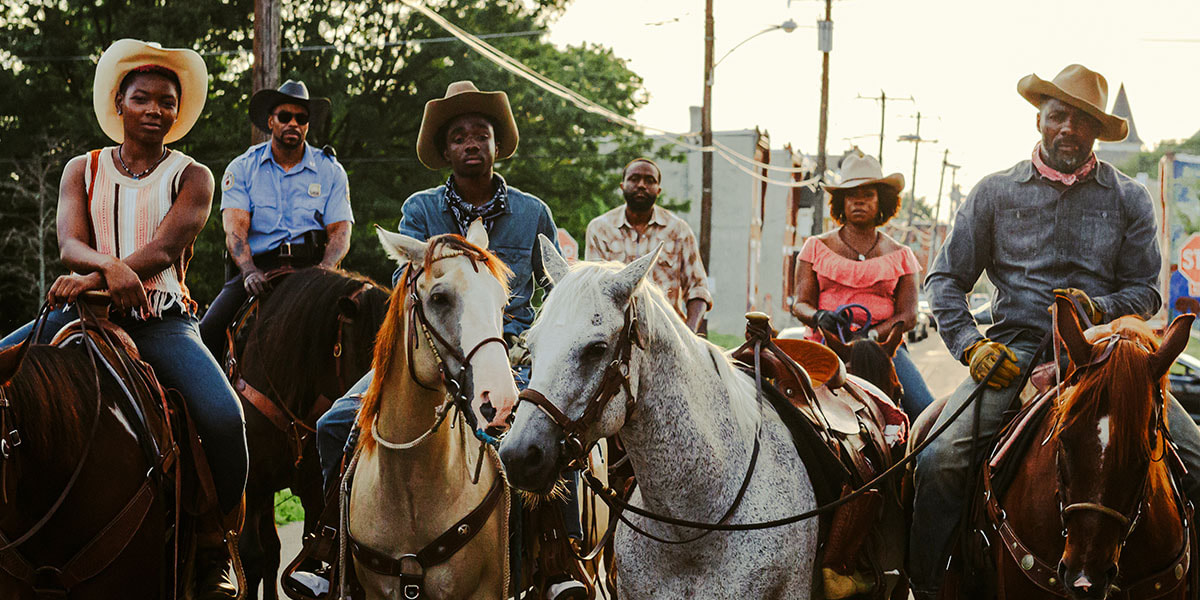
Image courtesy of TIFF.
And in terms of the supporting characters, they are little more than vehicles to spew vaguely metaphorical and shallowly wise dialogue for the protagonist to come to understand as he experiences life in his own way. It’s not a very interesting approach at all, and it gets dull after about thirty minutes of the movie’s hour-and-fifty-minute runtime.
Caleb McLaughlin (of Stranger Things fame) is excellent in his lead role, proving that he deserves something more meaty and substantial. As always, Idris Elba is phenomenal, delivering his dialogue (or more like failed attempts at poetry) in a way that is often moving. Jharrel Jerome also makes an appearance but is sorely underused. Staub takes a very matter-of-fact approach to filmmaking, shooting the film in an almost documentary-like style. And while this definitely heightens its sense of realism and authenticity, it also feels cold and creates a disconnect. With some added energy, this easily could have overcome its substandard script. Concrete Cowboy is definitely a bit of a let down. There are some good moments and lots of talented people involved, but unfortunately, it ends up feeling dead-on-arrival because of its conventional script. Concrete Cowboy screened as a part of the 2020 Toronto International Film Festival which ran September 10-19. Rating: 3/5
Review by Camden Ferrell
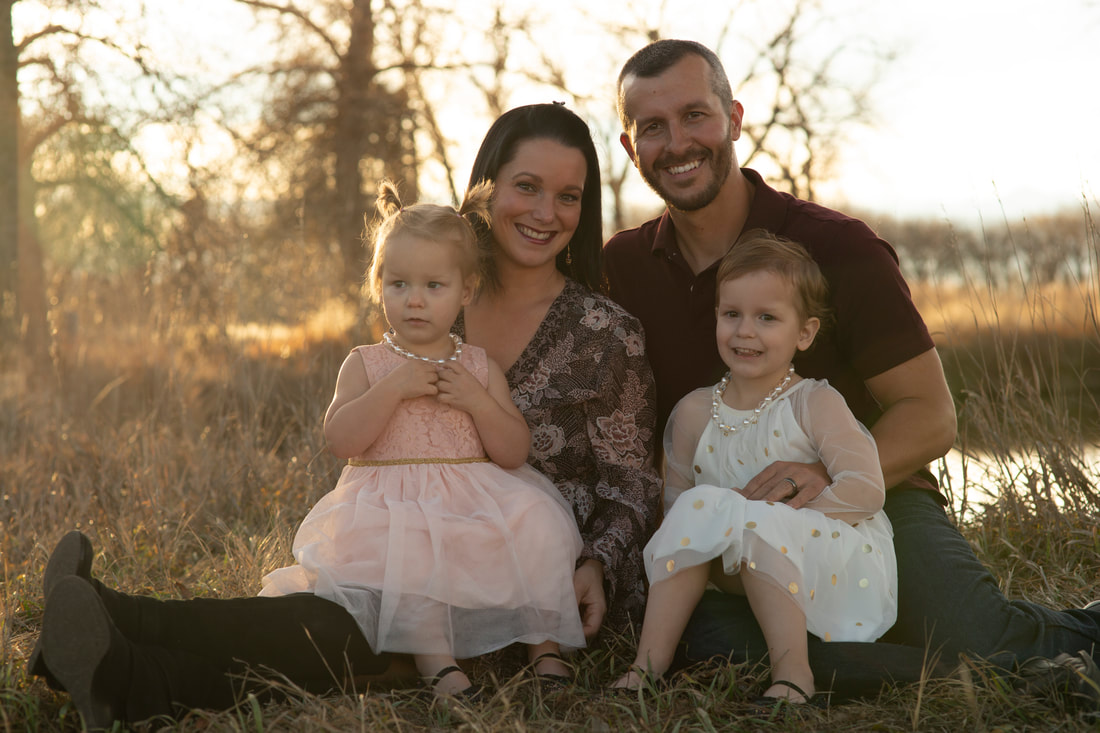
American Murder: The Family Next Door is the newest true crime documentary from Netflix. Known for their entertaining and popular true crime docs, Netflix’s newest feat may prove to be one of their best endeavors. Jenny Popplewell’s newest film is a relentlessly chilling look into a very famous and horrific case.
This documentary tells the real-life story of the Watts family murders that occurred in Colorado in 2018. After a woman and her children go missing, very surprising and disturbing discoveries are made soon thereafter. This is a very famous case with which many people are familiar. Even if it’s a story that has been heard before, this is an interesting and shocking story that provide a strong basis for the documentary. What’s notable about this documentary is its use of actual footage from these events. There are no interviews, recreations, or anything non-authentic. It uses a combination of police footage, security camera footage, and social media posts to create a detailed account of the events that transpired. It’s an interesting way to tell the story, but there is a great amount of material with which to work. Due to the nature of the documentary, there are no performances at all or interviews that were prepared, and that gives the movie a very natural and unpredictable feeling. We get to see everyone’s genuine actions and reactions as they occur spontaneously, and it’s haunting more than anything. 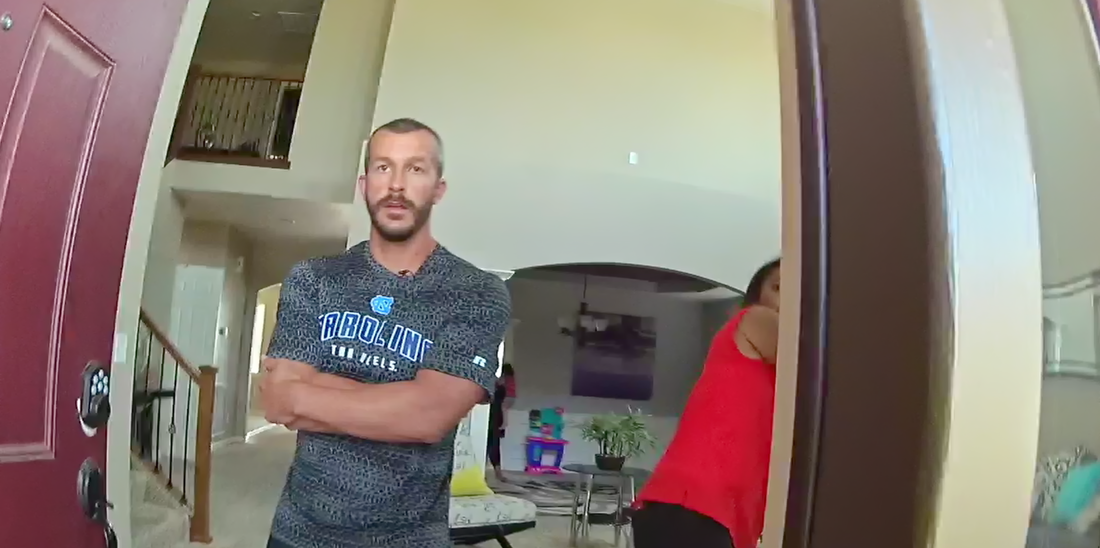
True crime documentaries have a tendency to sensationalize their subjects. This movie doesn’t do that too much, but it definitely uses common techniques to artificially create heightened tension and a certain shock factor that is commonplace in the genre. However, this does also heighten the entertainment factor, which is an important characteristic for a film of this type.
Popplewell organizes this documentary very well. It’s straightforward, but it employs techniques that tell the story but jumping between the before and after moments of the disappearance. This prevents the film from having a completely linear progression that might have gotten old very quick. Considering the amount of footage there is, she also does a great job of keeping the film concise without any unnecessary moments. For those familiar with the case, this film might not inform or shock as much, but it’s still an intimate and chilling look into the specifics of the case and all of the aspects that were involved. It may seem to use the case and the victims to create an entertaining story rather than honoring them at times, and it may be problematic for some viewers, but it really is an interesting and horrifically tragic case that’s worth checking out. American Murder: The Family Next Door is another interesting and captivating true crime documentary from Netflix. This film won’t win any new converts for the genre, but for fans of true crime, this is a must watch documentary. It’s surprising, fast-paced, and it’s a horrific look into the tragedy that struck one Colorado family. American Murder: The Family Next Door is available on Netflix September 30. Rating: 4/5 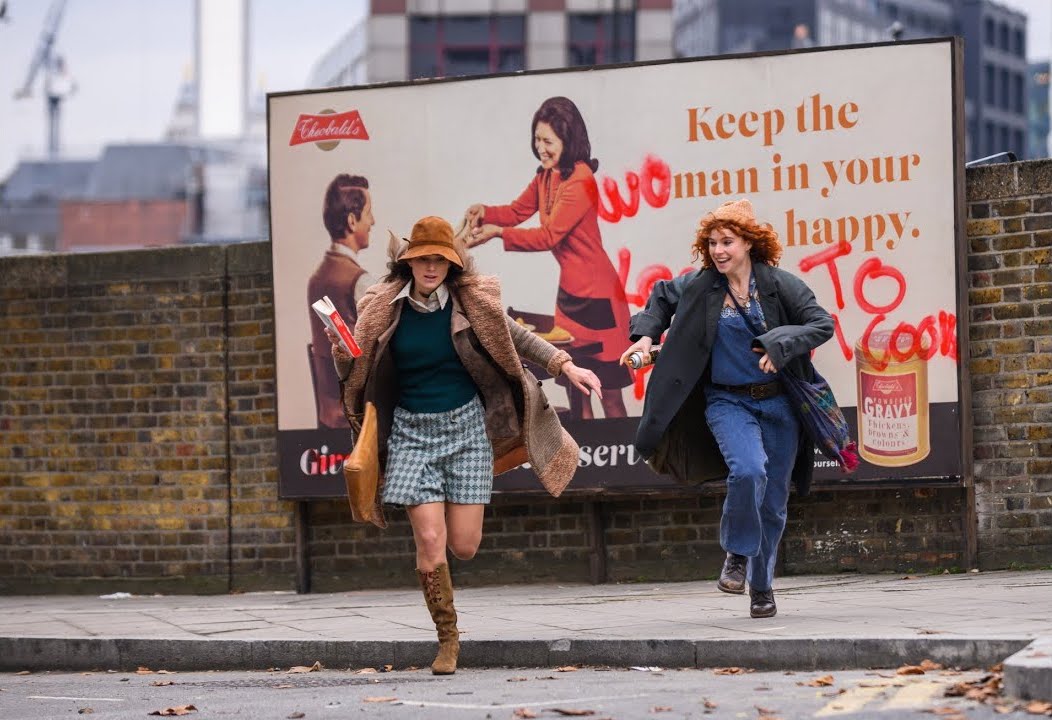
Inspired by a true protest that feels like it could have happened today but was actually conducted by a group of revolutionary women fifty years ago, Misbehaviour is an above-average ensemble film with a wonderful message. Chaotic (but fittingly so) in its attempt to cover the story from all angles, it’s a thoroughly charming flick nevertheless.
The movie tells the story of the 1970 Miss World beauty pageant and the group of women’s liberation protesters who hatch a plan to disrupt it. And while every one of the people who has a part in this story adds something interesting to the equation, trying to juggle the contestants, the organizers, and the protesters prevents the script from doing justice to any of the groups. Part offbeat comedy and part prestige drama, the film manages to juggle its many important ideas while still being entertaining and crowd-pleasing. At times, the sentimentality becomes a bit overwhelming and the pacing grinds to a halt for a tear-jerking moment, but the rest of the movie has such a sense of energy that it isn’t too distracting. There are actually some really fascinating implications that this story has, and writers Rebecca Frayn and Gaby Chiappe do a great job of exploring them. The portion of the film which deals with the racial tension in the era is especially compelling, even though it may not be as deep-cutting as it has the potential to be. 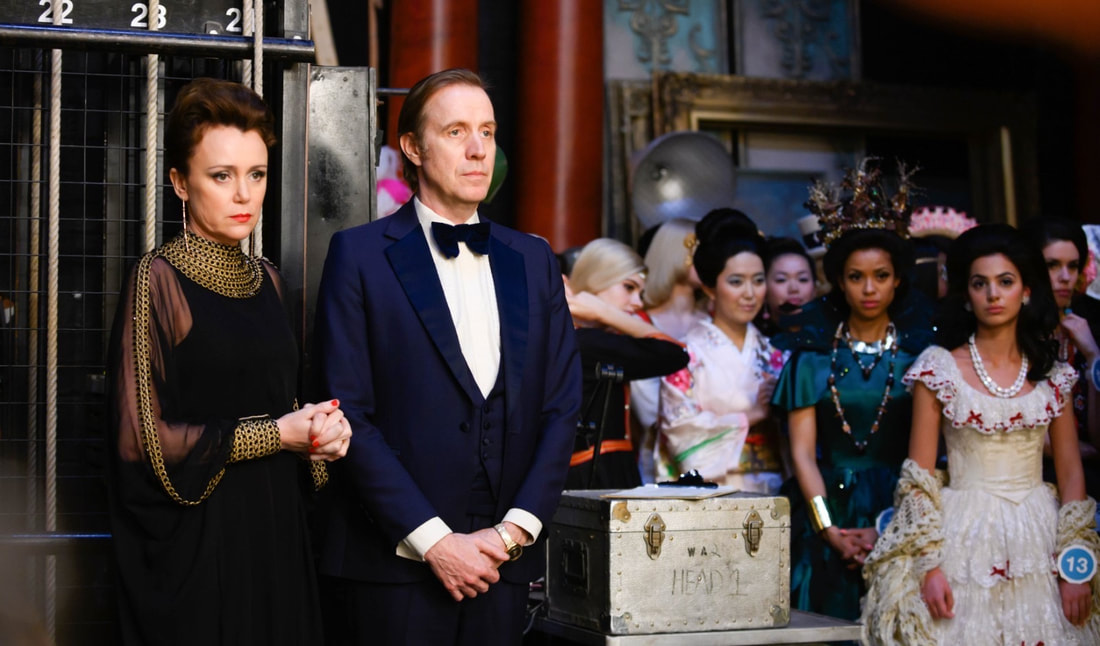
Without a doubt, the activists fighting against the objectification of women through beauty pageants have the most compelling story. And given the fact that America’s commander-in-chief was once best-known for sponsoring one of the most prominent competitions of the sort, this message feels just as important now as it did in 1970.
But the movie also does a good job of showing how some of the contestants in the pageant were making a difference in their own way. A forced scene allows the storylines to connect and shows how there is more to the situation than either side would initially have seen. And in addressing both perspectives, it becomes clear why these issues remain under debate today. That said, the portion of the film about the pageant’s organizers isn’t as necessary. Rhys Ifans goes a bit too far as the head honcho, and Greg Kinnear tries his hardest but is miscast as television personality Bob Hope. Thankfully, actresses Keira Knightley, Jessie Buckley, and Gugu Mbatha-Raw steal the spotlight from them with their stellar turns. Misbehaviour would have been a lot better had it cut some of the fluff, but it’s still a lot better than it sounds on paper. It’s nice to see a somewhat conventional movie finally take advantage of its stellar cast to elevate it substantially. Misbehaviour hits VOD on September 25. Rating: 3.5/5
Review by Sean Boelman

Image courtesy of TIFF.
The second collaboration between filmmaker Thomas Vinterberg and actor Mads Mikkelsen after their extraordinary drama The Hunt, the comedy-drama Another Round couldn’t be more different from the film that established them both as significant players. Taking full advantage of its wacky premise, it’s a very funny film that also packs a surprising emotional punch.
The film follows a group of teachers who try to find a new way to connect with their students by setting out to maintain a constant blood alcohol level throughout the day. And while this may sound like the set-up for the most absurd drinking comedy ever, and to an extent it is, it’s also an examination of how people come to terms with the world around them, or refuse to do so. Much of the story follows the expected beats apart from a couple moments that are definitely surprising (for better or worse), but it isn’t the plot that makes the film stand out — it’s the way in which Vinterberg and co-writer Tobias Lindholm pull so much insightfulness and humor out of an inherently ridiculous concept. The film is at its best when it features the four lead characters together, having very drunken and somewhat philosophical conversations. The fish-out-of-water comedy is great, and that happens mostly in scenes where they are on their own, but the dynamic between the group is what will create that emotional investment. 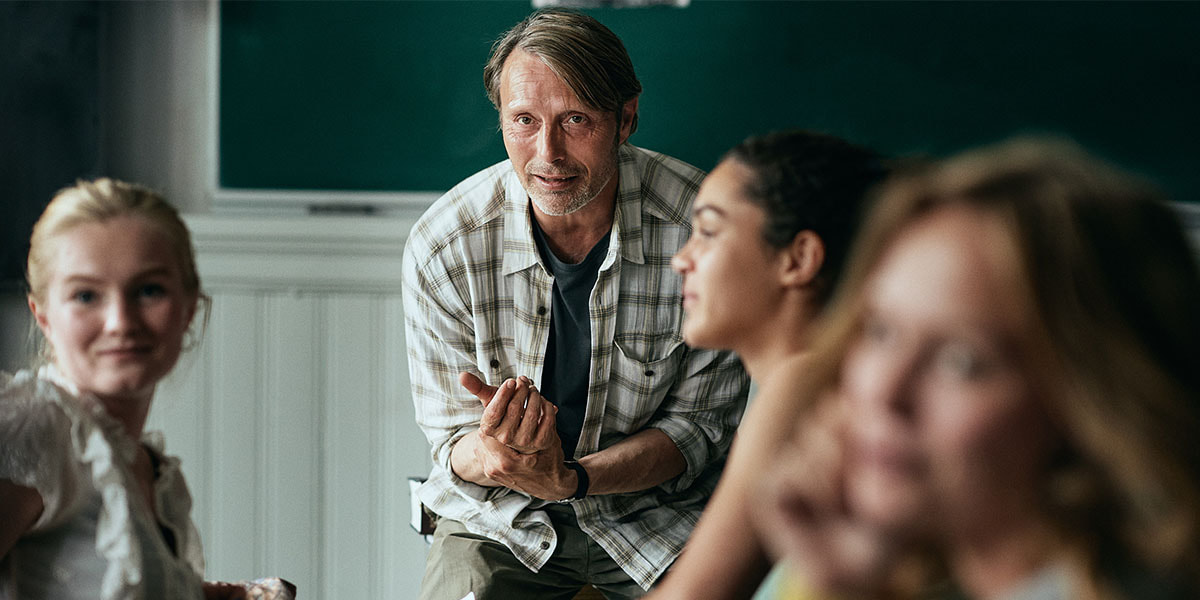
Image courtesy of TIFF.
Mikkelsen gives another phenomenal performance in the lead role, although one would expect nothing less. He’s more known for his serious and darker work, so it’s nice to get to see him let loose a bit… and take advantage of some of the special skills on his resumé. Thomas Bo Larsen, Lars Ranthe, and Magnus Millang round out the quartet quite well.
There is an attempt to explore each of the character’s personal lives, and ultimately, the audience will care far less about these subplots than the central story. These asides are well-written, but viewers will find themselves thinking more about the experiment when they are supposed to be concerned about the character’s marriage. This is also a much more conventional film than much of what Vinterberg has made recently (aside from maybe Kursk). And while there are some stylistic flourishes as anticipated, in addition to a finale that will blow most viewers away, this film returns the filmmaker to his roots of focusing on the emotion of the performances more than the cinematic medium. Another Round is just as wonderful and lovely as one can ask for. Even though it’s on the opposite end of the spectrum from Vinterberg and Mikkelsen’s last collaboration, it shows that they are a dynamic duo in the making no matter what material they are working with. Another Round screened as a part of the 2020 Toronto International Film Festival which ran September 10-19. Rating: 4.5/5
Review by Sean Boelman

The coming-of-age tale is a tried-and-true genre, but the reason that filmmakers, especially young ones, keep coming back to it is that everyone experiences what it means to grow up. Jessie Barr’s intensely personal debut Sophie Jones has a few weak moments, but for the most part, it’s a wonderful entry into the genre.
The film tells the story of a teenage girl who experiences a sexual awakening after the death of her mother sends her on a quest to find any sort of connection with another person. Everyone grieves differently, and this shows a very different mourning process from anything that has really been depicted on screen before, but still in a way that is entirely empathetic and humanistic. What makes this stand out from so many other movies of the genre is its refreshingly down-to-earth approach. The film is never condescending about the decisions she makes, not showing them as mistakes or something that will become a burden to her, but rather things that she had to go through in order to find herself. That said, the structure shares a lot more in common with a slice-of-life movie than a traditional coming-of-age story, as it is less about forming a conventional arc than depicting the various ups and downs which the protagonist experiences in her life. And while some of the transitions between these vignettes are a bit rough, they work very well for the most part. The protagonist is definitely very compelling as a character in a way that will feel relatable to a lot of young people, but the supporting characters consist of a bunch of archetypes. It’s clear that the focus is primarily on the eponymous character’s internal journey, but the external forces that affect her, such as her relationship with her family, could have been more developed. Jessica Barr (co-writer of the film and cousin of Jessie) gives a very naturalistic performance as the lead. Apart from a couple of scenes in which stilted dialogue causes her delivery to feel a bit wooden, she does a great job of capturing the disconnect that the character has with the world around her, which is ultimately what will allow the movie to connect with its audience. And Jessie Barr shows a lot of talent behind the camera, with a very developed visual style even in her feature debut. At times, the film feels like an exercise in poeticism and aesthetic experimentation with shots that are undeniably gorgeous but don’t have a real purpose other than to look pretty, but the loose narrative structure gives the filmmaker plenty of room to play. Sophie Jones is the type of indie coming-of-age movie that is built to be accepted by audiences with open arms. It’s approachable enough to be enjoyable and personal enough to be memorable, hitting that perfect balance of originality and familiarity. Sophie Jones debuted at the 2020 Deauville American Film Festival. It is currently seeking distribution. Rating: 4.5/5 [TIFF 2020] PIECES OF A WOMAN -- A Magnificent Introduction Leading to an Anticlimactic Finale9/23/2020
Review by Sean Boelman
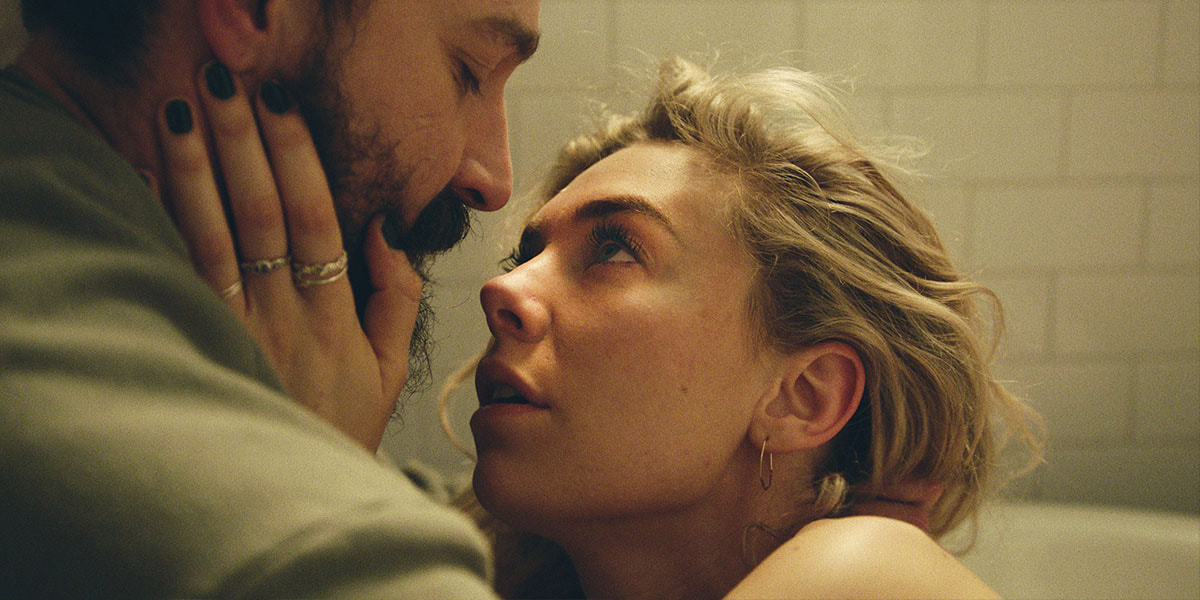
Sometimes all it takes is a single scene for a film to become memorable, and that is definitely the case with Kornél Mundruczó’s drama Pieces of a Woman. With a magnificent opening thirty minutes leading into an otherwise just rather solid film, this is a mostly riveting watch nevertheless.
The film tells the story of a grieving woman as she processes her emotion after losing a baby. It’s a story that most people couldn’t imagine and others will feel intense empathy for, but it will have a strong emotional impact on most viewers regardless. However, in its attempts to be subtle, it ends up feeling almost a little too quiet for its own good. Without a doubt, the first act is the strongest portion of this film. Shot like a thriller, the film depicts a childbirth in a way that will fill the viewer with anxiety. And the fact that it’s easy to tell where the film is going doesn’t make it any easier to watch. However, the film then turns into a courtroom and domestic drama for the rest of its runtime, and it simply isn’t compelling. In terms of execution, the film is really great, especially in the introduction. Benjamin Loeb’s camera is fluid and intimate, drawing the viewer into the drama quite effectively. And the score by Howard Shore, while used minimally as to not be overbearing, does a great job of accentuating the emotion of the actors. Kata Wéber’s script really could have spent more time developing the relationships between the characters. Although the protagonist’s situation is undeniably tragic, and she earns the audience’s sympathy as a result, her feelings are really only explored on a surface level. And her relationship with her family definitely could have been more well-developed. That said, Vanessa Kirby makes the most out of a character that is ultimately rather basic. Her performance has been getting all sorts of acclaim, and rightfully so, because she turns this material into something powerful and harrowing. Shia LaBeouf is fine in his supporting role, but doesn’t get much to do. Ellen Burstyn, Sarah Snook, and Molly Parker are all excellent in their bit parts as well. The film supposedly focuses on the protagonist’s inner journey, but that is something that is difficult to trace. And while a phenomenally-delivered monologue at the end of the film does a great job of showing what the character’s growth is supposed to have been, the middle hour isn’t as dynamic as it needed to be. Pieces of a Woman gets off to a brilliant start before coming back down to ground level. Vanessa Kirby’s performance is definitely one of the year’s best, and that opening scene is top-notch, but it ultimately could have been more. Pieces of a Woman screened as a part of the 2020 Toronto International Film Festival which ran September 10-19. Rating: 4/5
Review by Sean Boelman
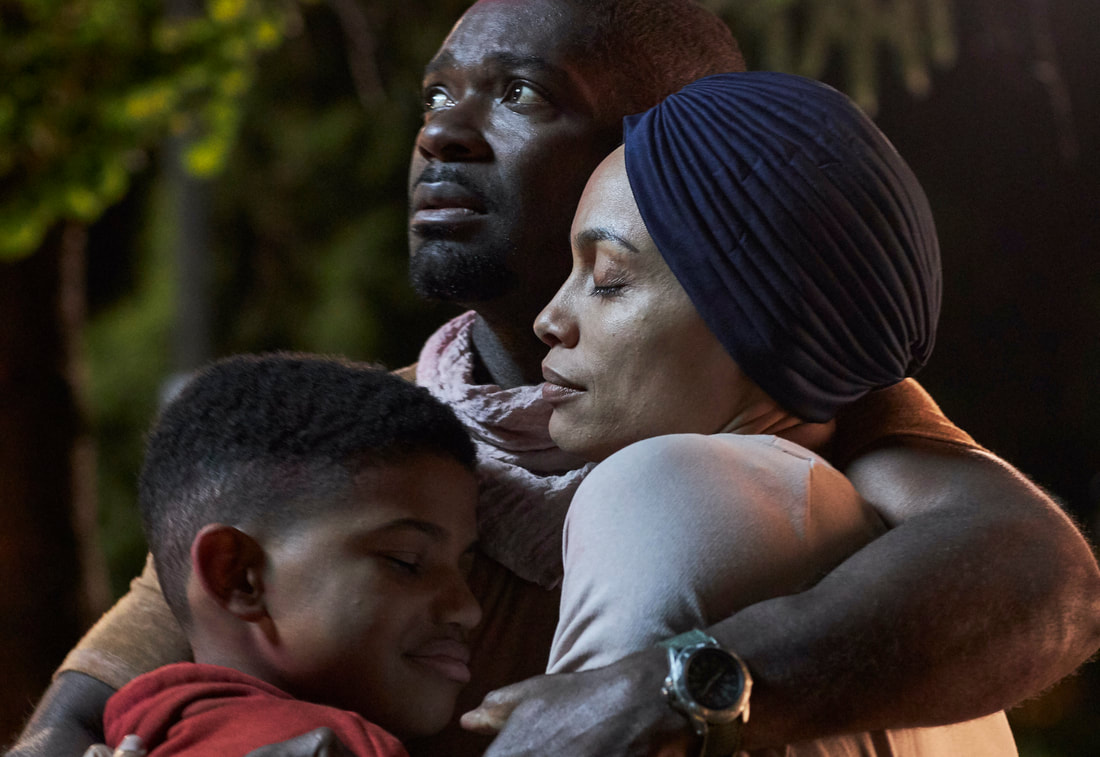
Image courtesy of TIFF.
Even if a film doesn’t break new narrative ground, it can still be magical if it traverses its familiar beats in a way that is both enjoyable and meaningful. David Oyelowo’s feature debut The Water Man succeeds in doing so, capturing the charm of the adventure movies that defined many a childhood and telling a touching story in the process.
The movie follows a young boy who, distraught with the suffering of his terminally ill mother, sets out on a quest to find a mythical figure who may be able to heal her. Admittedly, Emma Needell’s script is a tad on the conventional and predictable side, but there is something undeniably delightful about it. One of the things that makes this film stand out from other recent family adventures is that it isn’t too caught up in delivering big and exciting action sequences. Rather, the emphasis is on the emotional elements that are more endearing. This will appeal to the nostalgia of adult viewers but also catch the imagination of younger audiences. Thematically, the movie covers some pretty hefty stuff for a modern film. There are a lot of movies aimed at kids about a young protagonist who must grieve the loss of their parent, but few explore how it feels to have that parent slipping away. And in this way, Needell offers a unique approach to familiar ideas. Young actor Lonnie Chavis is a star in the making, giving a performance that is complex and packed with emotion. He holds his own against the supporting cast filled with acclaimed actors such as Oyelowo, Rosario Dawson, Maria Bello, and Alfred Molina. His excellent father-son chemistry with Oyelowo is particularly notable. Oyelowo brings a very colorful and beautiful visual style to his feature debut. It’s an energetic movie with rapid pacing and the dynamism to back it up. Through his world-building and cinematography, Oyelowo draws us into the protagonist’s fantasy world that shares a lot in common with real life but is filled with hope and wonder. If the film does fall flat in one area, it is that it doesn’t really explore the friendship that forms between the protagonist and his wayward companion. Unfortunately, the female characters here serve mostly as devices to serve the male protagonist’s growth, although a brief subplot does offer some much needed development in this area. The Water Man is arguably one of the more exciting prospects to come out of this fall’s festival circuit. A fun, old-school adventure with plenty of heart, this is the crowd-pleasing and hopeful movie that audiences need in this time of darkness. The Water Man screened as a part of the 2020 Toronto International Film Festival which ran September 10-19. Rating: 4/5
Review by Sean Boelman
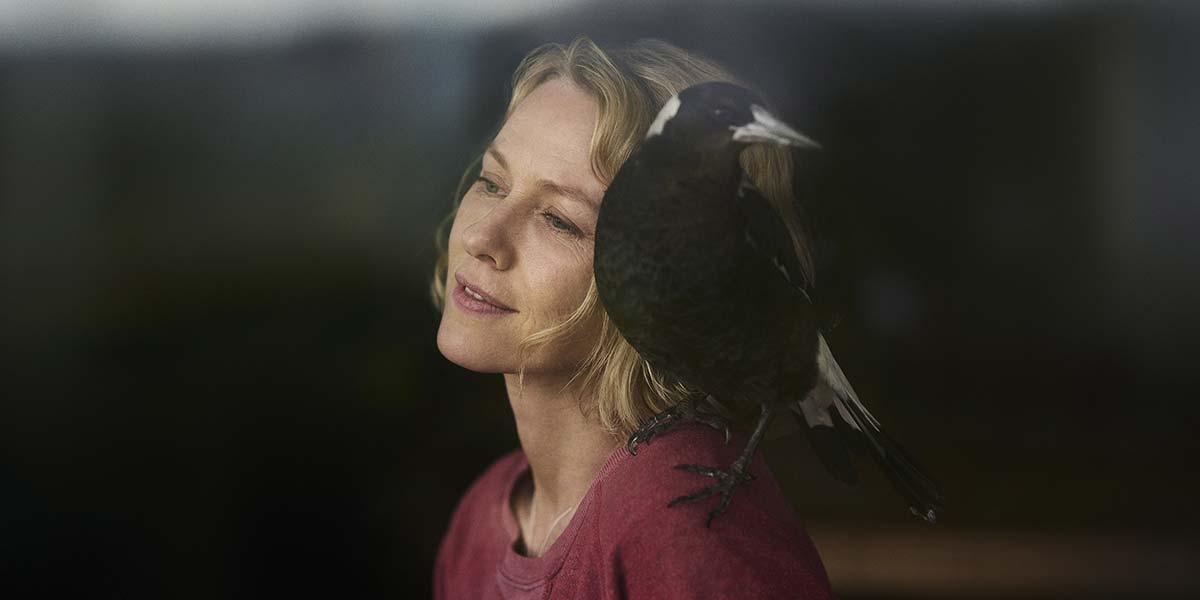
Image courtesy of TIFF.
Penguin Bloom is the type of uplifting, crowd-pleasing drama that is clearly made with a particular family audience in mind. Yet despite the best efforts of the cast and crew involved, it too often falls into cliché to be more than passable, and is almost made to be outright unlikable because of an annoying bird.
The film tells the story of a family with a paralyzed mother whose lives are changed when they take in an injured magpie to rehabilitate it back to help. The comparison between the recovery of the bird and the revitalization of the protagonist after her accident is obvious and didactic, and sadly gets too caught up in being motivational to be a strong narrative in its own right. Based on a book co-written by the husband of the protagonist, something must have been lost through the translation of this story to the screen because so much of the script consists of generic motivational drama tropes. The hopeful message at the center of the movie is nice, but hardly has the substance to justify its existence. For the most part, the film follows the familiar beats of the pessimistic protagonist learning to love again. There are definitely some moments in the movie that work really well, like a subplot in which the protagonist trains to be able to kayak again, but the family drama at its core is too basic to land. The film definitely would have benefitted from developing the supporting characters with more depth. For this story to work, we needed to actually care about the protagonist’s relationship with her family. And while it is easy to feel bad for her children who had effectively lost their mother despite her still being alive, the movie fails to make that relationship work on both sides. Naomi Watts’s performance in the lead role is the only thing that keeps this film afloat. Her performance is thankfully subtle in a movie that deals heavily in cheesiness. Andrew Lincoln is also good as her husband, but his role is simply too small. Jacki Weaver and Rachel House are memorable in bit parts as well. That said, the make-it-or-break-it part of this film will be the bird. Some may find it to be cute, but others (this critic included) will find its constant cawing to be more grating than endearing. And since the bird eventually becomes a supporting character in the movie named after it, one wonders why the filmmakers couldn’t just have it shut the hell up. There is an audience for Penguin Bloom, and that audience will enjoy it for the straightforward drama that it is. But those hoping that this cast would bring something different to the genre will be sorely disappointed, as it is average at best and irritating at worst. Penguin Bloom screened as a part of the 2020 Toronto International Film Festival which ran September 10-19. Rating: 2.5/5
Review by Sean Boelman
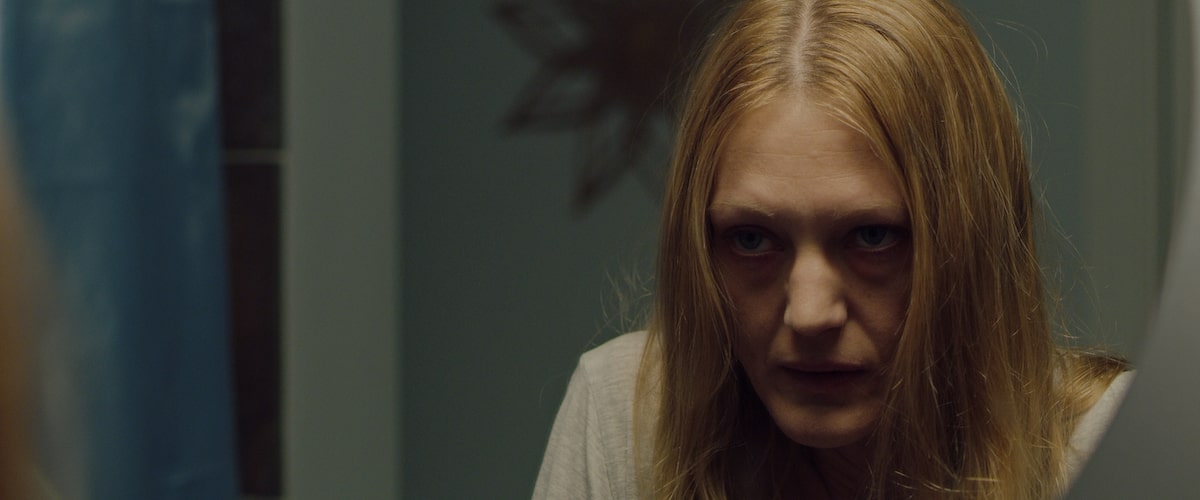
The domestic drama and thriller genres blend together shockingly well because of the way in which the mundanities of everyday life tend to slowly drive one insane, and Dean Kapsalis’s new film The Swerve dials into these common anxieties. And while the movie does struggle to balance too many moving parts, it’s a frequently unsettling mindbender.
The film follows a woman who seemingly has it all as her stable domestic life is upended when she begins to suffer from insomnia and increasingly troubling things start to happen. The movie definitely succeeds in making the viewer feel uncomfortable and disoriented, although it would have been nice had it settled on a more consistent tone, with some portions having a darkly comedic edge and others feeling disturbingly serious. This is a very slow burn, the tension constantly mounting to a payoff that may or may not be worth the runtime that led up to it. There are short bursts in which the viewer will be caught off-guard, but some of these feel like they are more intended to shock than add something particularly constructive to the character arc. One of the more challenging things about Kapsalis’s script is that the character isn’t traditionally likable. We sympathize with the protagonist’s frustrations, but not the way in which she expresses them. But the film doesn’t take an approach to the character that is morally ambiguous enough for it to be particularly thought-provoking. 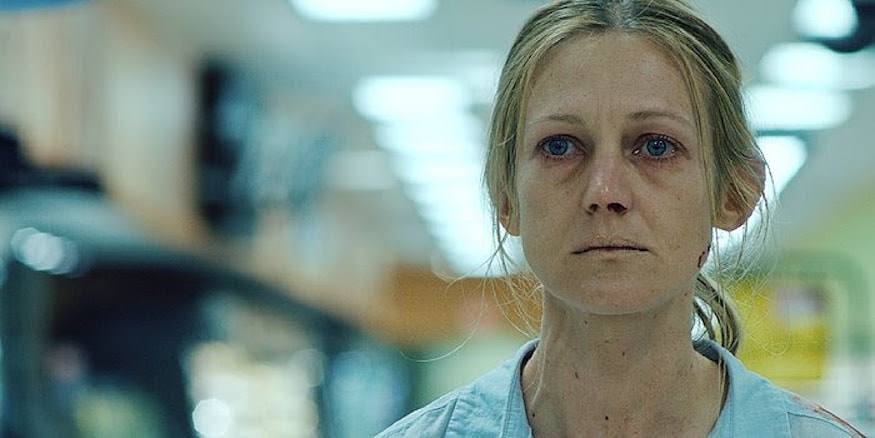
The commentary on the self-destructive nature of people is really interesting. It’s not a hopeful or optimistic movie by any means, but Kapsalis questions why people engage in such harmful actions in the pursuit of goals that were once thought to have been achieved. When we are frustrated at the protagonist for her behavior, we are really expressing our frustration with ourselves.
Azura Skye’s performance is undeniably complex and a significant portion of what makes this film so effective. The character is written in such a roundabout way and yet Skye is able to cut to the emotional core of it. Even when the movie feels like it is on the edge of imploding, Skye draws meaning out of a scene that easily could have felt exploitative to make it feel essential. In terms of execution, the film does feel a bit self-righteous. It’s definitely competent and even has some moments in which greatness and genuine creativity shine through. But too often it feels like the meticulously-planned work of someone who thinks they are the next big thing but are really only bringing slight alterations to the established formula. The Swerve ultimately could have ended up either a lot better or a lot worse than it is. But thanks to Azura Skye, the glue that holds the whole thing together, it’s an interesting watch even if it is frustrating to think about what it could have been. The Swerve is now available on VOD. Rating: 3/5 |