
|
Review by Sean Boelman

OC Ukeje (as Amadi) and Ike Barry (as Ogboh) in Shine Your Eyes, directed by Matias Mariani. Image courtesy of Netflix
With Shine Your Eyes, Brazillian filmmaker Matias Mariani has made one heck of a narrative feature debut, his film having far more personality than those made by most first-time directors. And while some of the movie’s ideas don’t exactly shine through, Mariani’s passion is obvious and effective.
The film follows a Nigerian man who travels to São Paulo in the hopes of finding his missing brother, but soon discovers that his brother may have been living a very different life from what he supposed. Ultimately, despite this relatively simple setup, there are so many additional layers to the plot that it eventually becomes a bit convoluted. It seems that the biggest struggle that Mariani and the five other credited writers had was trying to find the right balance between the elements of mystery and melodrama in the narrative. The movie is at its best when it is in the latter mode, as these have much more of an emotional impact and feel far more authentic. The idea of finding oneself in the search for someone else is nothing new for the genre, and so the film holds few thematic surprises, but it is in Mariani’s frequent poeticism that its charm lies. While frequent flashbacks create some issues with pacing, they have their intended effect more often than not. 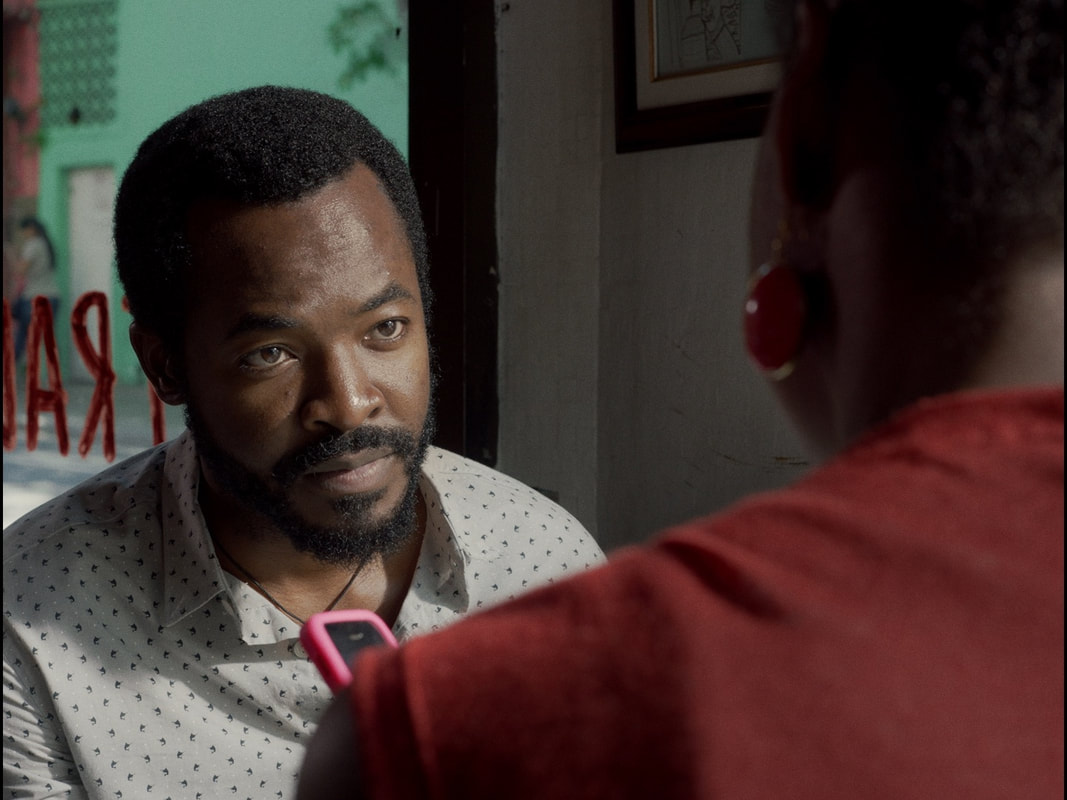
OC Ukeje (as Amadi) in Shine Your Eyes, directed by Matias Mariani. Image courtesy of Netflix.
And while the protagonist’s main arc is quite sympathetic, there isn’t enough going on in the various subplots to warrant the runtime devoted to them. Often, these threads serve only to reinforce the ideas introduced and explored in a more satisfying and thoughtful way through the main plot.
That said, the performance of OC Ukeje in the lead role is very good and serves as an excellent glue to hold the picture together. His interactions with the supporting players are great, but he is at his best when he has the scene all to himself, holding the movie up with his subtle emotion and humanity, There are some very interesting things happening with the film’s execution, but not all of them are fully utilized. One of the most intriguing aspects that is never truly delivered upon is the musical portion of the movie. Largely relegated to the flashbacks, these moments are moving but had the potential to do much more had they been more prominent. Shine Your Eyes is definitely a solid film, and it shows Matias Mariani’s tremendous potential. It’s a conventional story at times, but the empathetic touch lent to it by the filmmaker and cast goes a long way. Shine Your Eyes streams on Netflix beginning July 29. Rating: 3/5
0 Comments
Review by Camden Ferrell
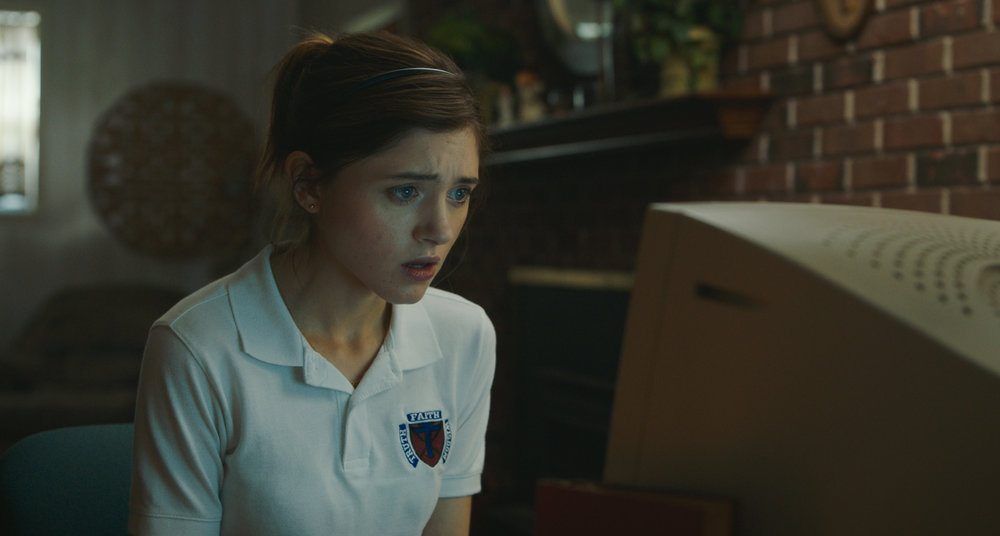
Yes, God, Yes is a coming of age comedy that had its premiere at the 2019 SXSW Film Festival. It is the feature directorial debut of Karen Maine. This is one of the most refreshingly clever takes on adolescence in years, and it’s one that succeeds from Maine’s candid execution and Natalia Dyer’s fantastic leading performance.
In this movie, Alice is a teenager attending a Catholic school in the early 2000’s. We see the hallways lined with posters promoting abstinence and pro-life sentiments, her teacher is a priest who tells them that those who have premarital sex and masturbate will face eternal damnation, and she is as sheltered as it gets. However, after an AOL chat, she discovers masturbation and must deal with these urges while on a retreat with her classmates. This is a story that is so realistic and ripe for commentary and comedy, and Maine uses this premise to its fullest extent to create a great narrative. Maine’s script is impressive to say the least. It makes it a point to really recreate the atmosphere of the early 2000’s without using nostalgia as a crutch. The way she crafts the character’s dialogue in regard to sex and her obliviousness to vulgar slang is charming and very tastefully done. It doesn’t overemphasize and exploit its racier themes and moments, and it frames it in a light that feels very reminiscent of the talks many of us have undoubtedly had at some point or another. The script is a triumph in realism, and it's full of plenty awkward and funny moments as well. The acting throughout is very good, but the obvious standout is from Natalia Dyer (Stranger Things) as Alice. Dyer takes on this character gracefully, and she really plays off all of the innocent qualities of Alice and convincingly portrays her increasing lustful desires throughout. I think it’s a unique role, and it’s one that requires a delicate and proper performance, and Dyer delivers on all fronts. 
What’s best about this movie is how accessible it is to those who are unfamiliar with Catholic ideology and the retreats that are often part of that experience. Despite its religious themes and overtones, it’s still an honest teen comedy that allows all members of the audience to take part in Alice’s moral dilemma and really relate to it in one way or another. Maine has a special way of speaking to the audience and making us feel seen through the way she executes a scene.
Even though it’s accessible to all, this movie will definitely resonate with those raised in a Catholic household. Having been on some of these retreats in my adolescence, there are some scenes in this movie that made me cringe just because of how realistic Maine nailed these aspects of Catholicism. The movie is packed with awkward conversations and uncomfortable and hormone-soaked interactions, and it really makes the movie what it is. It may honestly be too authentic at times, but it’s very well-done. The movie also does a great job of showing the inherent hypocrisy in Catholic organizations and its members as well as the need for personal choice and free will when dealing with religion. Maine does this without discrediting the idea of religion, and her themes and messages really aren’t objectionable. This movie is a letter to every teenager who feels like they’re lost, confused, or doomed to Hell, and it let’s them know that it’s okay to feel that way. Maine created this movie to tell their story. Yes, God, Yes may not be for everyone, but this is one of the best movies this year, and it’s one of the most honest portraits of adolescence and religion in a very long time. Maine’s film is one of the best directorial debuts in recent memory, and this movie benefits significantly from her fresh perspective. It’s a movie about a teenage girl, written by a woman, and it’s a story that only she could tell so convincingly. Yes, God, Yes is currently available at virtual cinemas (a list can be found here) and will be available on VOD July 28. Rating: 4.5/5
Review by Camden Ferrell
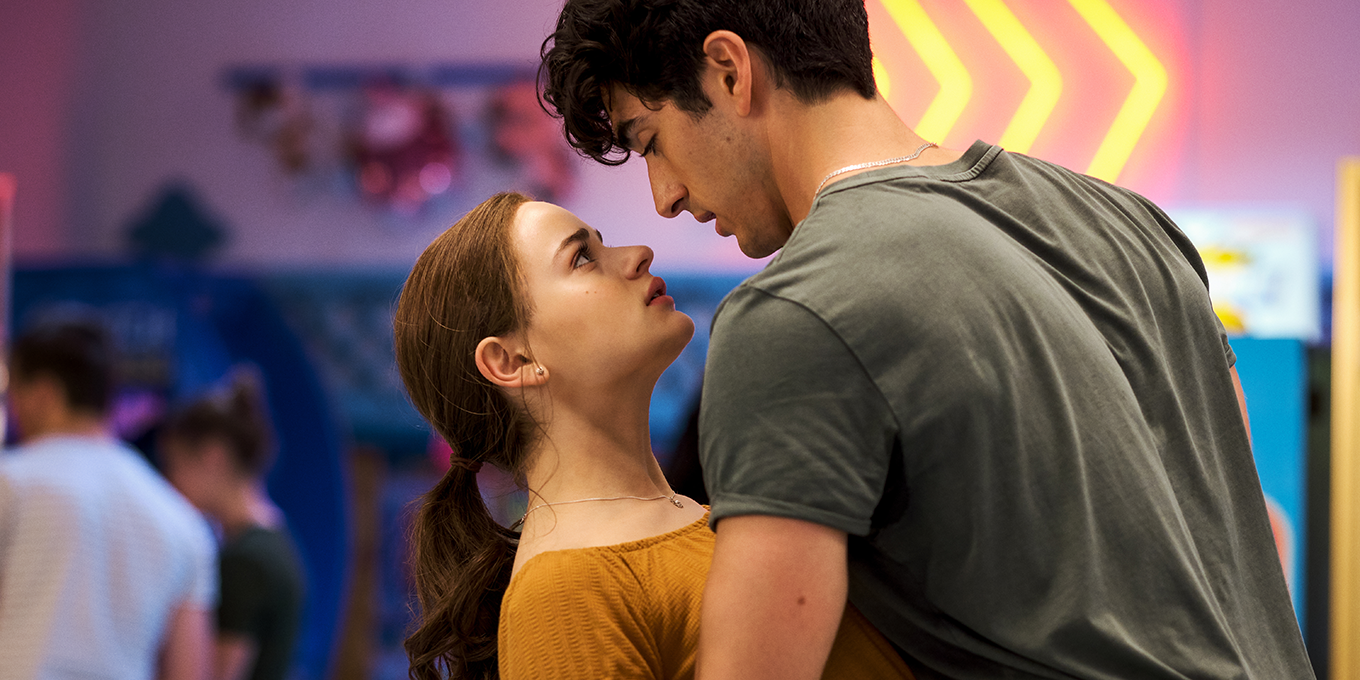
The Kissing Booth 2 is the sequel to the successful albeit offensively problematic Netflix film The Kissing Booth. With Vince Marcello returning to direct, this sequel is a significant improvement over its predecessor, but it is still an extremely flawed film that once again fails to craft a meaningful story or characters.
In this film, Elle is now high school senior who must juggle the demands of her life with her long-distance relationship with her boyfriend. This film doesn’t focus as much on the titular booth, and it instead opts to explore multiple plot lines including Elle’s best friend and a new handsome student at school. This premise is once again logically flawed, but beyond that, it’s a cliché set up that is half-baked at best. To be fair, the writing is still quite abysmal, but Marcello and Jay S. Arnold’s script avoids many of the problematic moments of the first. It doesn’t sexualize Elle nearly as much, and it doesn’t have a creepy aura like the first one that merely writes-off moments of sexual harassment and misogyny. However, even though its slow progress, there are plenty of ways for the script to be better. The dialogue is stale and predictable, and it features all of the lazy tricks and plot devices that have been used countless times before. As the lead, Joey King still gives it her all even if it comes off as a bit over the top. I imagine that this is just the style of the movie, but it isn’t always executed very well. The rest of the cast is quite forgettable and supporting actors like Jacob Elordi feel like they’re completely phoning in their roles. The addition of actors like Taylor Zakhar Perez are welcome, but they still can’t stand out from the rest of the cast in any meaningful way. 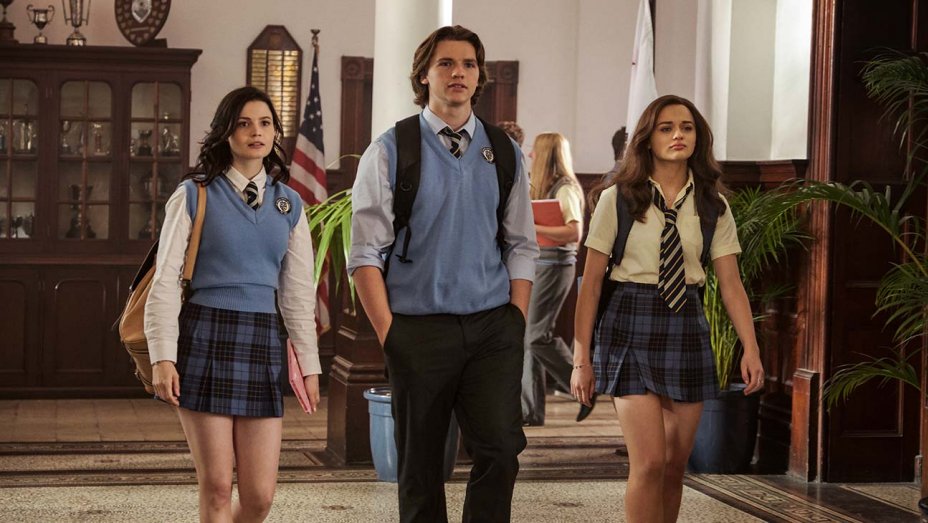
After the commercial success of the first film, it seems there wasn’t a lot of effort put into making this a more virtuous feature. It still possesses the same teen comedy tropes and antics that you would expect, and it still features some heinous interactions and pandering that feel quite cheap even for a teen movie. Even its improvements fail to succeed on its own, and it merely makes the film look better only when being compared to its predecessor.
While the film definitely does a better job at not explicitly and disgustingly objectifying its female characters, it still doesn’t develop them. There is no meaningful growth; it’s all superficial, and every female character is only presented through their relationships to the male characters. To say it’s misogynistic like the first film might be a stretch, but the film has no interest in properly telling stories from the woman’s perspective, and this leads the film to becoming forgettable at best. The movie also bites off way more than it can chew. There are quite a few separate plot lines to the point where the actual kissing booth is hardly mentioned throughout. Some of these plot lines seem like overkill and really lazy and forced inclusion and diversity. This directly contributes to the film’s bloated runtime, and it never really feels earned at all. Even though some of these moments have some mildly entertaining crescendos, it doesn’t make up for a lot of wasted time. The Kissing Booth 2 may be an improvement, but it is still a movie that will appeal to a very specific demographic and not much else. King tries her best as a leading actress, but it doesn’t make up for a weak premise, lazy writing, and a cast that has already outgrown this series. The Kissing Booth 2 is now streaming on Netflix. Rating: 1.5/5
Review by Sean Boelman
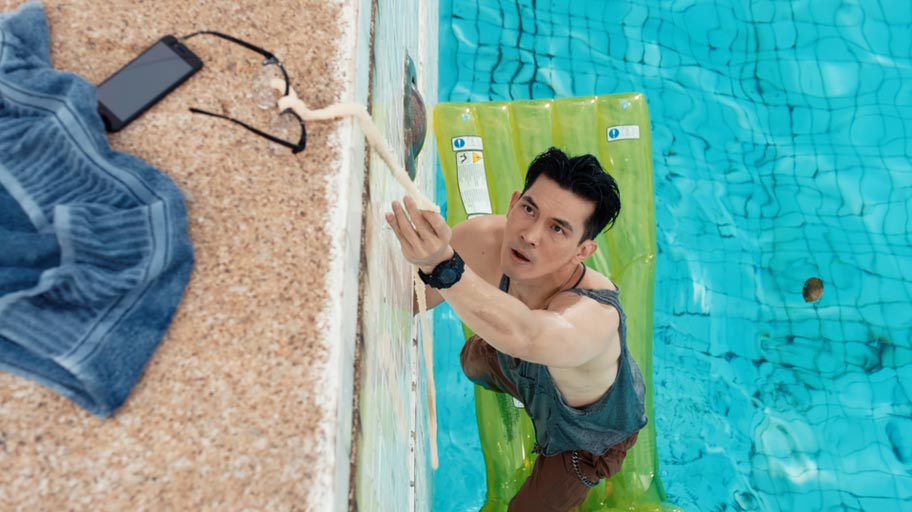
The creature feature is a subgenre of horror that many would say is overdone, but in recent years, it has experienced a bit of a revitalization with filmmakers using the setup to give audiences simple, old-school thrills. The new Thai film The Pool does just that, offering plenty of great moments within a lean ninety-minute runtime.
The movie follows a couple who find themselves stranded in an abandoned six-meter pool (that’s twenty feet for those who prefer the customary system) with a crocodile and no ladder to escape. It’s a simple and clear-cut premise, but that is exactly what this type of film calls for, and there are enough unexpected moments to keep the audience on their toes. Perhaps the most impressive thing about the movie is its lead performance from Theeradej Wongpuapan. Unlike other creature features, Wongpuapan doesn’t have a prominent co-star, only sharing the screen with a few others for a few minutes at the time. As such, it is up to Wongpuapan to sell the emotion of the film, and he does so quite well. Perhaps what is most intriguing about this movie is that the monster is only the secondary threat, with the overwhelming depth of the pool being the true beast that the characters must conquer. In fact, the crocodile isn’t even introduced into the equation until about thirty minutes in, that first half hour being more intense than anything that comes for the rest of the film. 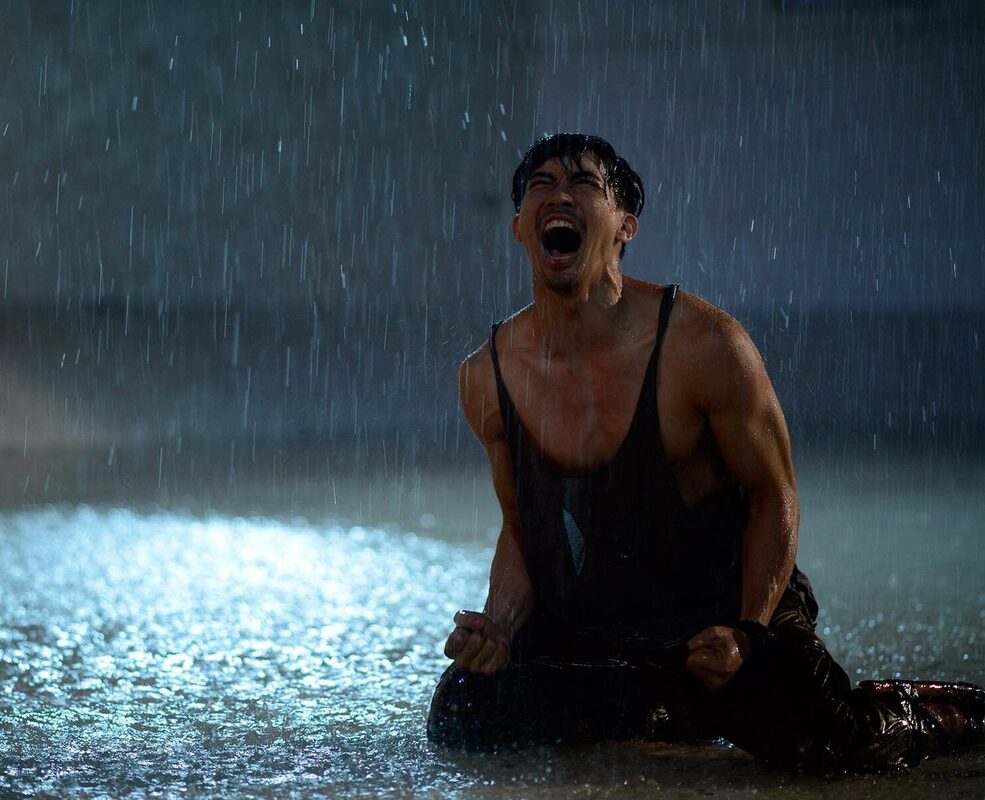
That said, the movie does have some significant weaknesses, particularly in regards to its character development. Early on, there are some plot elements introduced, and in a clear-cut example of Chekhov’s gun, come back into play later. However, the payoff is rarely satisfying, and the anticipation the audience invests in these threads distracts from the suspense of the main storylines.
The film’s romantic subplot is also a bit underwhelming. Unfortunately, the female character serves very little purpose other than to give the male protagonist a motivation for escape. While this lends the movie an emotional core that capitalizes on the most basic of human instincts, the reliance on such a problematic trope keeps it from standing out within the genre. It’s hard to criticize the visual style of the film, because it is obvious that the filmmakers did the best they could with the resources they had, but there are a few scenes in which the CGI looks cheesy. That said, the use of the minimalistic set is excellent, and every single sequence without the beastly antagonist is pretty exhilarating. The Pool does struggle to stay above water in a few of its more conventional moments, but it’s a fun creature feature nevertheless. For a genre that was once thought to have drowned long ago, it is nice to see a ninety-minute thrill ride like this. The Pool is now streaming on Shudder. Rating: 3.5/5 HELMUT NEWTON: THE BAD AND THE BEAUTIFUL -- An Unorthodox Biography of a Controversial Artist7/24/2020
Review by Sean Boelman

Self portrait, Monte Carlo, 1993. Photo by Helmut Newton, courtesy Helmut Newton Foundation.
As the medium becomes more accessible and popular among amateur communities and the mainstream world, photography has started to become even more interesting as a form of artistic expression. However, photographs have always been an artform and Gero von Boehm’s new documentary Helmut Newton: The Bad and the Beautiful serves as a great reminder of that fact.
In the film, von Boehm explores the work of the eponymous photographer by interviewing those who were photographed by him. Newton was known for his provocative and controversial images, so it will come as no surprise to audiences that a lot of time is spent exploring the content of Newton’s images rather than their form. Perhaps the most interesting thing to come out of the movie is its exploration of the female image in photography. Nude photographs such as Newton's tend to receive a lot of backlash because of their almost objectifying depiction of the female body, but in the film, the models make a case as to why they were not only willing but eager to be photographed by Newton’s camera. It’s interesting to hear these subjects talking about how they felt working with Newton. Certain assumptions can be made about the photographer’s persona based on his portfolio, but these interviews attempt to disprove some of those myths. One interviewee even suggests that Newton’s work may be a commentary on female objectification. 
Pina Bausch, Wuppertal, 1983. Photo by Helmut Newton, courtesy Helmut Newton Foundation.
That said, the main thing that is missing from this movie is the perspective of Newton himself. The approach taken by von Boehm is certainly very intriguing, but secondhand information is really only criticism. The use of archive footage and interviews could have gone a long way in making the discussion feel more definitive.
Regardless, von Boehm’s question-and-answer style is quite fascinating, especially for those who have an existing interest in the photographic arts. This is a very focused narrative compared to most biographical documentaries, with less of an emphasis on the artist and more of a fascination with his body of work. And as expected, von Boehm does some interesting things to incorporate Newton’s photographs into the film. Some of the best sequences show all of the different photographs Newton took of a specific subject before isolating the one or two that made the cut as meeting the photographer’s standards. Helmut Newton: The Bad and the Beautiful is an interesting and challenging documentary. Thanks to its unorthodox approach and its thought-provoking content, this is a must-watch for anyone who loves art documentaries. Helmut Newton: The Bad and the Beautiful is now streaming online in partnership with indie theaters. A list of participating locations can be found here. Rating: 4.5/5
Review by Sarah Williams
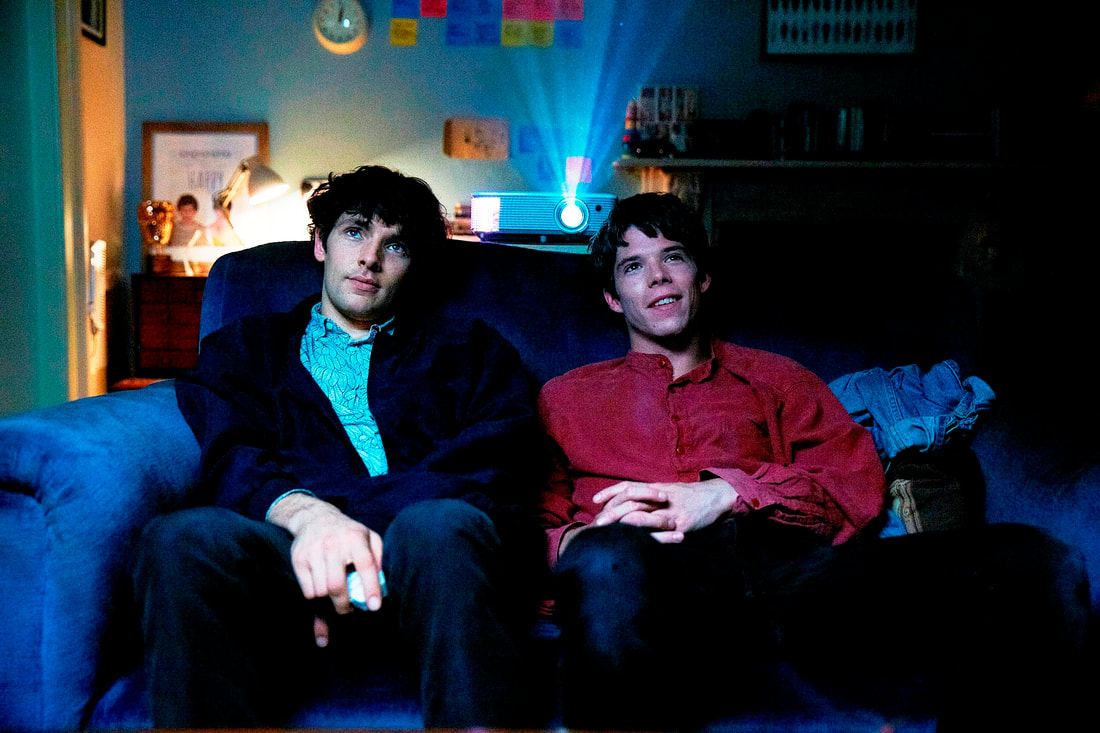
Playfully intimate, Simon Amstell's Benjamin is a love letter to falling in love with the concept of being loved. A slight indie rom-com that's genuinely charming, it's the film we've been asking for to make the genre gay. Light, gentle, and still surprising Ben Whishaw doesn’t have a role anywhere in it, it’s a hidden gem of easy viewing with a massive amount of heart, not to mention the Mark Kermode cameo.
Merlin's Colin Morgan plays a film director, the titular Benjamin, on the verge of premiering his second film. He is introduced to a young French musician while at London Film Festival, and is enamored at first watching from a distance. The two soon hit it off, and it’s a slight love story filled with that messy awkwardness from the beginning of getting to know someone beyond just watching them. Noah (Phénix Brossard) has this natural, teasing chemistry with Ben, who can say anything, joking about French stereotypes constantly, and is enamored just the way Ben is when he sees Noah sing that first night. Almost Xavier Dolan-esque in its brightly colored gay love story about two pale skinny guys with dark floppy hair (the only kind of Dolan love interest) meeting and falling head over heels, it avoids much of the enfant terrible’s melodramatic tendencies. Where the young auteur goes for heartbreak and over the top drama, Amstell’s film goes for tender laughs in a way that may appeal to those who’ve tried to like Dolan, but just can’t get behind the height of his maximalism. Nobody is perfect in this sweet little rom-com world, and though the romance is idealized, it is put on the same pedestal as the typical heterosexual rom-com (and even those seem to be disappearing), and never does it make the characters seem any different. 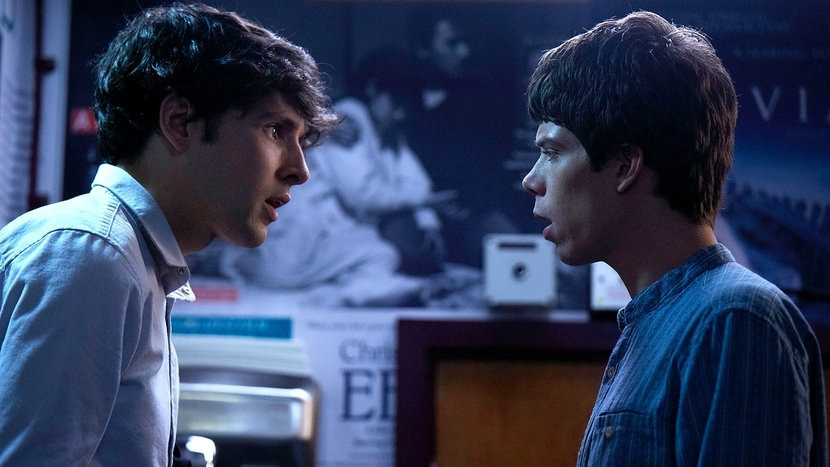
Neither man is given a struggle of toxic masculinity, allowing a refreshing save of tenderness to wash over the film. A scene where Noah softly washes Ben’s hair in the bathtub comes to mind, eyes shut as they touch, and it's so rare to see two men allowed their desire without any hardness. There's a warm, grainy haze washed over the whole film, like we are peering into an archive of memories of woozy nights spent falling into love, projected on a screen later on in the relationship. They’re the kind of memories you’d show the world, the moments in your love that create a neatly packaged retail book that make it all look so easy.
As a friend of Ben once says, “You only like people who are well lit and weak”. There’s a love letter here, drawn often from Amstell’s own experiences, to loving the easy targets, those that you are sure will love you back from a pretty picture. While this isn’t always the soundest way to go about things, as sometimes love is tough, it’s refreshing to see the two men slip together so easily. Benjamin may not be the meatiest romance, but it has a massive heart, and is the kind of simple gay romance the internet has been begging for. Benjamin is now available on VOD. Rating: 3.5/5
Review by Sean Boelman
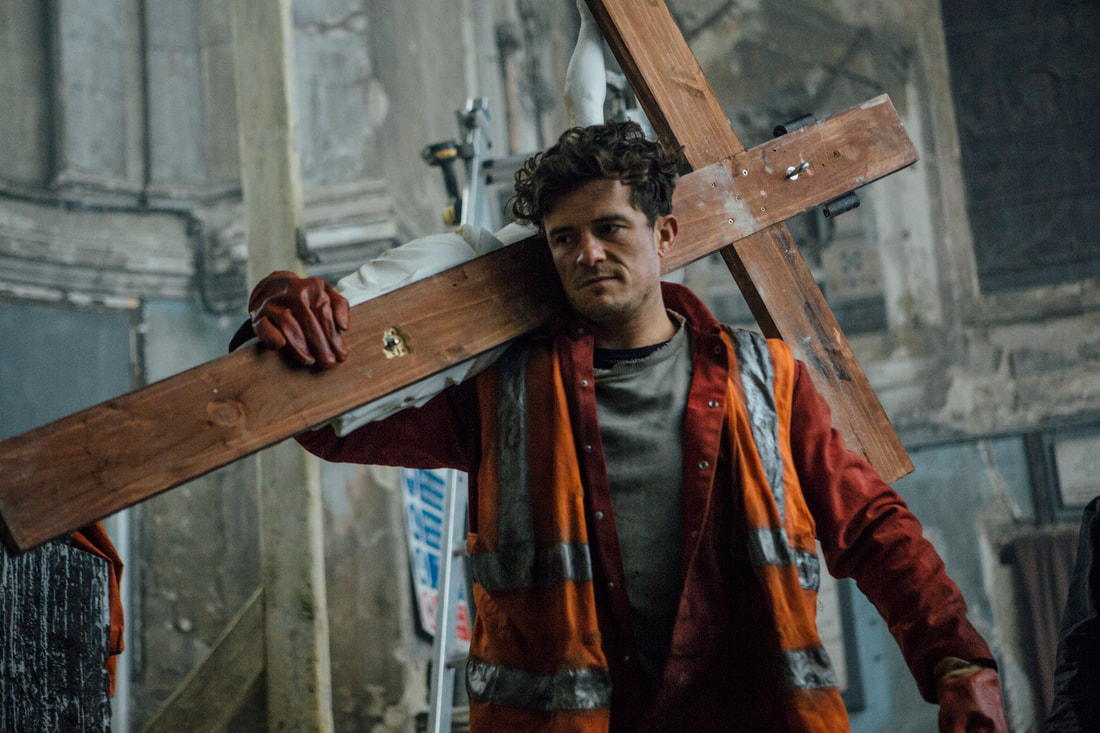
Orlando Bloom in a scene from RETALIATION.
Every once in a while there comes along a film that is obviously made with the best intentions but are so mean-spirited that their message is lost in its anger. The Shammasian Brothers’ Retaliation fits that bill, turning what should be a tale of compassion and empathy into a forgettable revenge thriller.
The movie follows a survivor of sexual abuse as he finds his life thrown into disarray when he encounters the priest that traumatized him as a child. While there are some interesting ideas here about confronting one’s trauma in adulthood, in trying to make the film more entertaining, much of the authenticity in this regard is lost. However, the movie largely fails at providing a truly thrilling or intense narrative. There are a few moments that are powerful or disturbing, but more often than not, it feels dull. Despite many attempts to be edgy, the film gets too wrapped up in the histrionics of these scenes to be particularly impactful. Additionally, the movie is quite bleak in a visual sense, and that seems to be tied to the Shammasians’ apparent desire to make the film as gritty as possible. Still, by throwing everything into a visual style that is neither appealing nor fitting, the movie ends up being altogether unpleasant to look at. 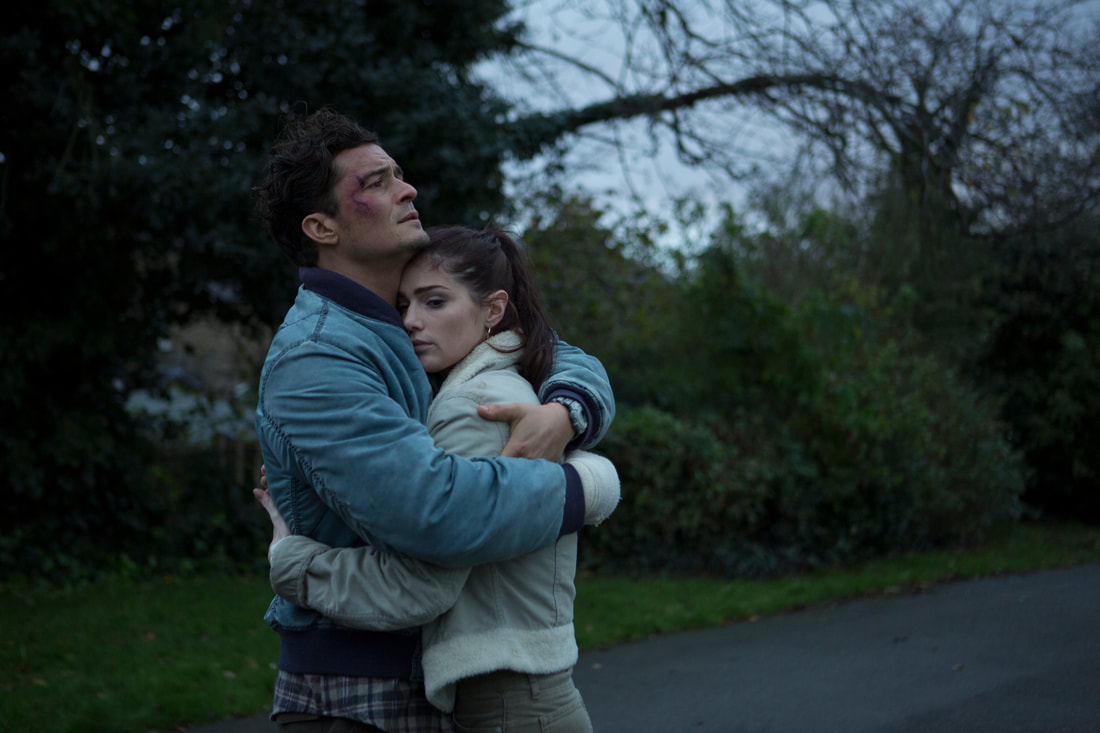
(Left to right) Orlando Bloom and Janet Montgomery in a scene from RETALIATION.
The original title of the film was “Romans”, presumably based on the Biblical book that is referenced multiple times in the dialogue, but the message of the movie runs counter to the message of this scripture. Frequent bouts of anger and violence don’t exactly embody the idea of “If your enemy is hungry, feed him; if he is thirsty, give him something to drink. In doing this, you will heap burning coals on his head.”
That said, there is one sequence at the climax of the film that is quite effective, almost as if writer Geoff Thompson built the rest of the script around this one pivotal moment. The dialogue in this portion is pretty great, teasing the emotion that could have come out of the rest of the movie had it taken a more original approach. Perhaps the single best part of the film, though, is Orlando Bloom’s performance. Bloom is, quite literally, the only thing that keeps this movie going. Despite a story that keeps getting more and more ridiculous, Bloom completely sells every aspect of what he puts on screen, giving the film its only semblance of nuance. Retaliation is a great example of a mediocre script bolstered by a talented star. Were it not for Orlando Bloom’s surprisingly strong bout, this would fade into obscurity along with most other faith-adjacent B-movies. Retaliation is now available on VOD. Rating: 2.5/5
Review by Sean Boelman

Independent horror has given a voice to some of the most exciting filmmakers of recent years, but it also results in some films that shoot for unreachable heights. Unfortunately, Pamela Moriarty’s A Deadly Legend strives to be more than a B-movie, but without the budget (or the talent) to pull it off, the result is something comically bad.
The movie follows a group of people involved with the demolition of a former summer camp site as they discover its dark history when they unintentionally release supernatural spirits and reignite a war between evil and whatever is worse. Yet despite having such a simple premise, this manages to be yet another needlessly convoluted horror flick. One of the biggest issues with the film is that Eric Wolf’s script has far too much happening at once. There is a large ensemble with concurrent storylines, and there really is no reason that one or two of these couldn’t have been cut. Even at less than an hour and forty minutes in length, the movie still feels altogether too long. Another issue with the film is that its characters aren’t particularly interesting. Since the narrative is so erratic in nature, it becomes difficult to keep up with who is who and why they are someone that deserves the audience’s sympathy. It’s entirely too overwhelming to be compelling, and too laughable to be scary. 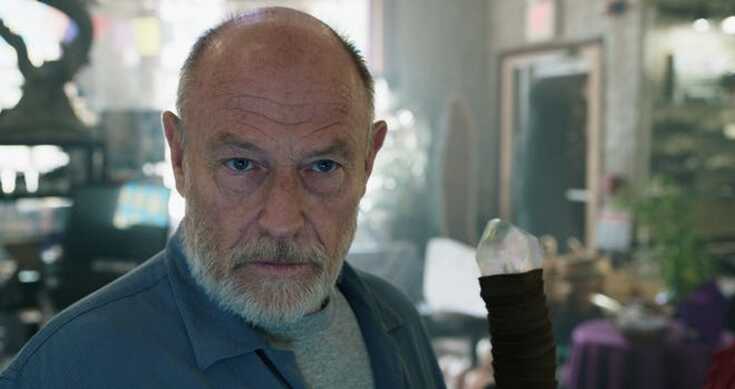
Furthermore, the world-building of the movie is severely lacking. Wolf easily could have made up for some of the goofiness in the execution by giving the film more of a mythological grounding. Instead, viewers get half-baked ideas about spiritualism and the fight between good and evil, all of which are ideas that have been done before.
This is an unusual case, though, in that it does feature some recognizable character actors in the supporting cast, which makes it all the more baffling as to why the script is so excessively bad. Judd Hirsch, Corbin Bernsen, and Lori Petty all give memorable turns, if only because they seem to realize how bad the movie that they’re in actually is. Of course, in terms of visuals, the movie is certainly very lackluster because of its low budget. The special effects are of a consistently low quality, as is the cinematography. For the most part, the film feels rather threadbare, even in regards to the set pieces that are intended to bring about the big scares. A Deadly Legend is not an especially impressive horror movie, but it is entertaining in all of its absurd messiness. Unlikely to please anyone except for those looking for something so-bad-it’s-funny, this is one that most audiences should skip. A Deadly Legend is now available on VOD. Rating: 1/5
Review by Sean Boelman

(L-R) Fisherman’s Friends Band Members in the comedy/drama/musical film “FISHERMAN’S FRIENDS,” a Samuel Goldwyn Films release. Photo courtesy of Samuel Goldwyn Films.
Underdog stories based on true stories are a dime a dozen, but ultimately, it’s a tried-and-true genre that works, so as long as audiences keep rooting along, filmmakers will keep bringing them to the screen. Chris Foggin’s new musical comedy Fisherman’s Friends is an uplifting crowd-pleaser that is conventional but mostly effective in its approach nevertheless.
Based on a true story, the movie follows a music manager who, as the victim of a prank, finds himself working with a group of singing fishermen who perform sea shanties for their community. It hits all of the beats of the traditional musical rags-to-riches tale in an expected way, but the charm of the characters goes a long way in making the film more enjoyable. Perhaps the biggest issue with the movie is that it focuses too much on the manager and not enough on the eponymous unorthodox boy band. The protagonist has a compelling arc, but none of the other characters show substantial growth. Additionally, the focus on the romantic subplot is often frustrating. The film does a very good job of building the group dynamic that exists between the fishermen, but a lot is left on the table in terms of these characters. For example, the group’s leader struggles with his daughter (who also happens to be the protagonist’s love interest), yet this subplot is left mostly undeveloped. 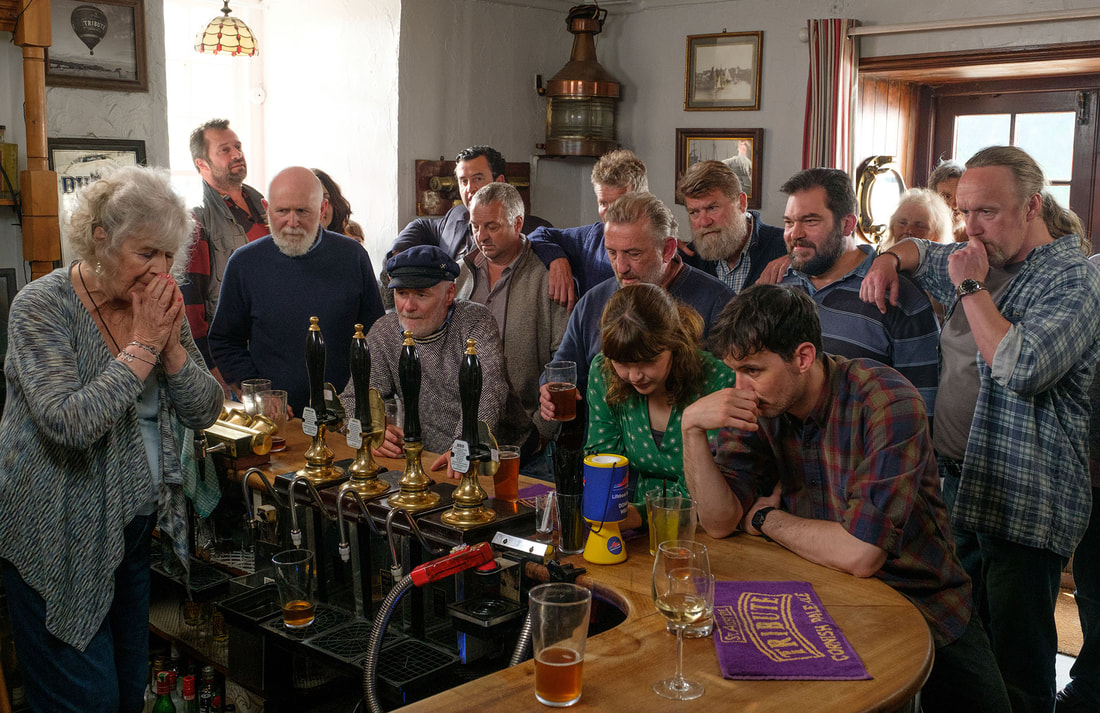
A still from the comedy/drama/musical film “FISHERMAN’S FRIENDS,” a Samuel Goldwyn Films release. Photo courtesy of Samuel Goldwyn Films.
And when the movie does attempt to elicit more of an emotional reaction, it often feels forced and telegraphed. Perhaps by trying too hard to force the true story to fit the conventions of the genre, the writers lose a lot of the authenticity and humility that made the real-life group so successful in the first place.
That said, the actors all do a very solid job in their roles. James Purefoy, playing against type, is very charismatic in his role and gives what is perhaps the most nuanced performance in the film. Daniel Mays is quite funny as the lead, holding his own against the more experienced character actors in the ensemble. David Hayman is also an absolute joy to watch. Arguably the best sequences in the movie are those that allow the stars to perform uninterrupted. Too often, these sea shanties are cut off by a joke, but they have merit in their own right. It’s much more entertaining to hear them being sung than to have them being ridiculed. The picturesque scenery of the Cornish coast also works to the film’s advantage. Fisherman’s Friends admittedly doesn’t hold a lot of surprises, but herein lies much of its appeal. It’s a wholesome, well-acted, and entertaining watch, and this is often exactly what audiences are asking for. Fisherman’s Friends hits VOD on July 24. Rating: 3/5
Review by Sean Boelman
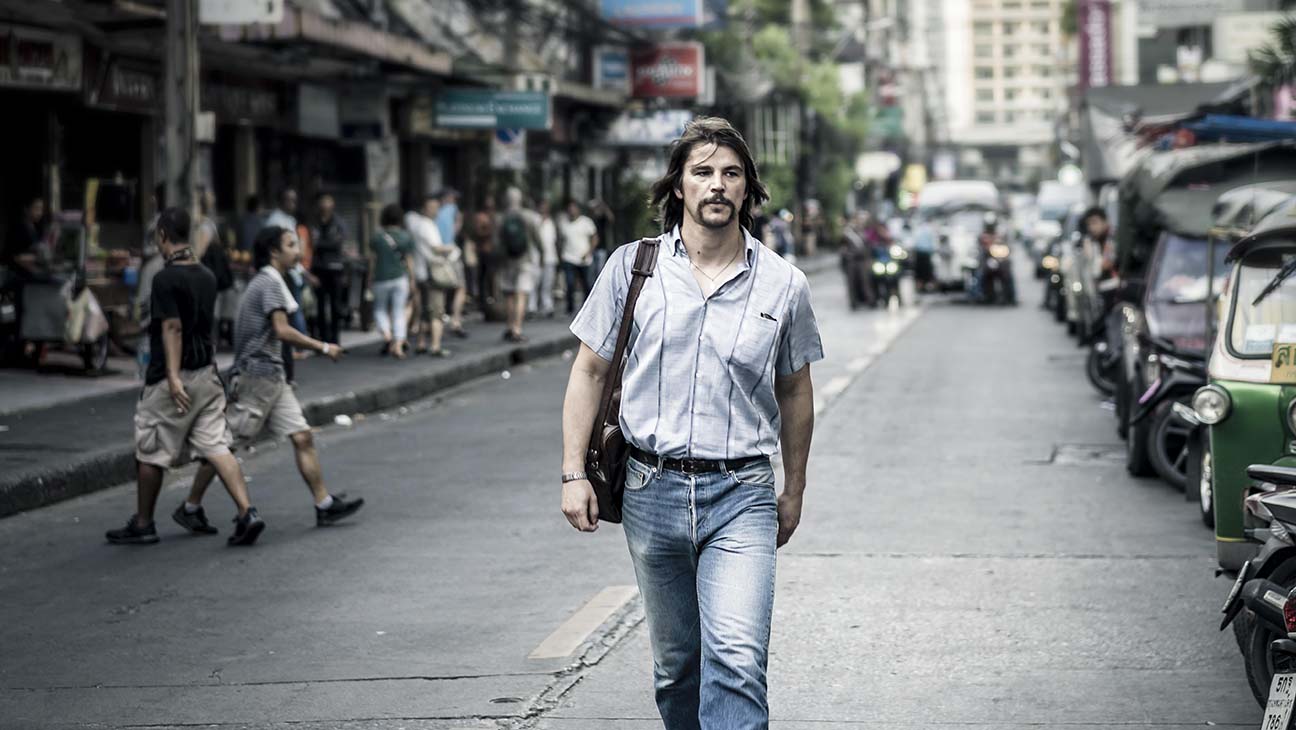
Despite a cast whose track record is inconsistent at best and a premise that seems like a recipe for disaster, Daniel Roby’s newest film Most Wanted is shockingly pretty good. A fascinating combination of journalistic drama and crime thriller, this is a rare popcorn flick that actually has something to say.
Based on a true story, the movie follows a junkie who gets arrested and convicted as part of a crackdown on an international drug operation and the journalist who hopes to set him free by exposing the law enforcement officers who put him there. And even though this may seem like an uplifting tale of redemption, it’s really a bleak and gritty look at the problems with the system. There is a lot going on in this film, with multiple moving aspects woven together. However, Roby manages to balance the three storylines surprisingly well, bringing each of them to a natural and satisfying emotional conclusion while still delivering and emphasizing the political message he hopes to convey. While the persuasive element of the movie can be a bit aggressive at times, Roby’s film never reaches the level of adulation that some other journalist-centric movies have hit in the past. Instead of giving the reasons why freedom of the press should be supported, the film makes a phenomenal case for it by providing an excellent example of it in action. 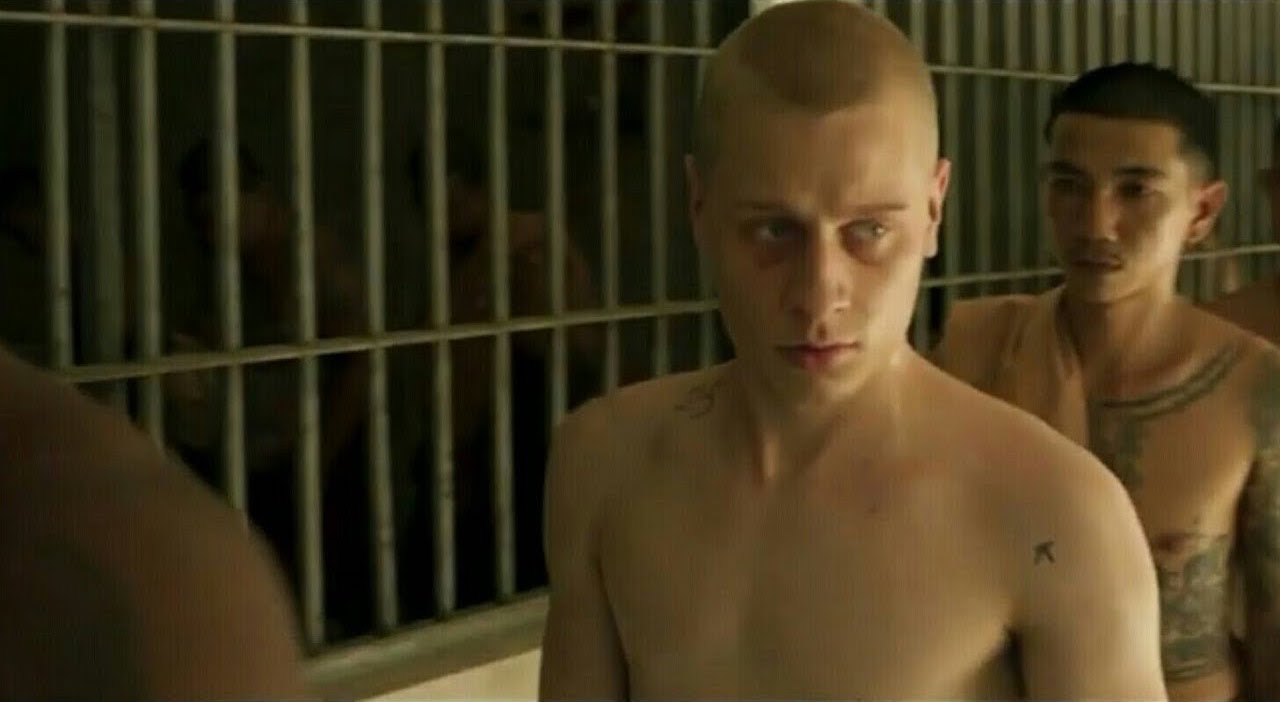
The movie is at its best when it is telling the story of the wrongfully convicted man that serves as the center of the story. He is the aspect upon which all of the other storylines are hinged, and his arc is extremely compelling. By humanizing the character who makes mistakes yet is extremely sympathetic, the film has much more of an emotional impact.
Antoine Olivier Pilon is the absolute highlight of the cast as that lead character, giving a performance that is extremely nuanced and emotional. Josh Hartnett’s performance is also a standout, although it is less subtle in nature. The scenes that the two have together are among the best in the movie. The film also works quite well in terms of its executions. The cinematography and production design do an excellent job of periodizing the story. That said, the true MVP of this movie is the score by Jorane, which does a lot of heavy lifting in terms of making the narrative feel urgent and suspenseful. Daniel Roby’s Most Wanted has a lot on its plate, but everything ultimately comes together into a satisfying whole. For audiences looking for an upscale yet entertaining thriller, this is one of the best offerings in recent months. Most Wanted hits VOD on July 24. Rating: 4.5/5 |