
|
Review by Sean Boelman
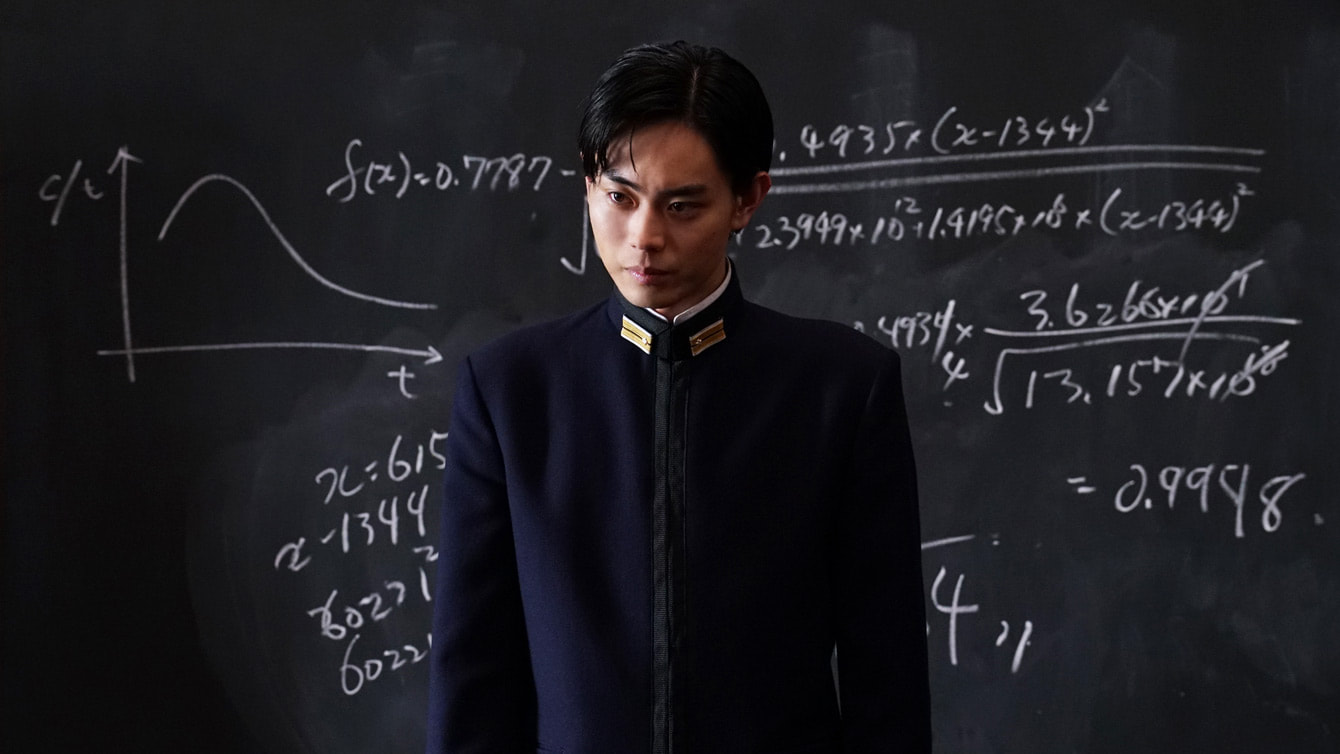
The Great War of Archimedes isn’t about the eponymous Greek mathematician, but it’s arguable that his story would have made for a more compelling movie. Dully exploring the numbers that go into supporting a war financially, those who are deeply into history may enjoy this, but most will likely find themselves bored.
The film follows a Japanese naval officer who investigates a conspiracy involving the building of warships for the country’s military during WWII. There have been plenty of successful movies that have been built around the premise of exploring the homefront of the war, but this won’t join them, as it gets far too wrapped up in technicalities. The first scene kicks the film off with a literal bang, a wonderfully-crafted battle sequence that sets up absolutely epic expectations that the rest of the movie can never manage to reach. After that, it becomes a film about watching people do math problems, and despite the writers’ attempts to the contrary, it’s not that cinematic to watch. That said, one thing that this film does have working in its favor compared to a majority of other naval movies is that it is not especially jingoistic. The film is actually quite critical of some of the flaws of the Japanese military during that time, and while there are certainly movies that have done the same thing better, this is still mostly effective. 
One of the film’s weaknesses is that the characters are all so shallow. All of the classic wartime archetypes make an appearance, from the seasoned general who is dead-set on following the old ways, for better or worse, to the neophyte who challenges the status quo with his unique perception of the world.
The ensemble is much better than the movie they are in. Lead actor Masaki Suda is genuinely charming, bringing a lot to a character that is otherwise pretty bland and unapproachable. Supporting actors Hiroshi Tachi and Jun Kunimura both do a good job in their roles as well, even though they aren’t given a ton to do. In a visual sense, the movie leaves a lot to be desired. Given that it is based on a manga, one would think that director Takashi Yamazaki would have committed to a more stylistic approach to the film, but a couple of interesting set pieces aside, it’s actually a mostly generic period piece. The Great War of Archimedes is a really unexceptional entry into a genre that isn’t particularly riveting in the first place. There are a few moments that show the potential of what this could have been, but these only make it even more frustrating. The Great War of Archimedes hits VOD on June 15. Rating: 3/5
0 Comments
Review by Camden Ferrell
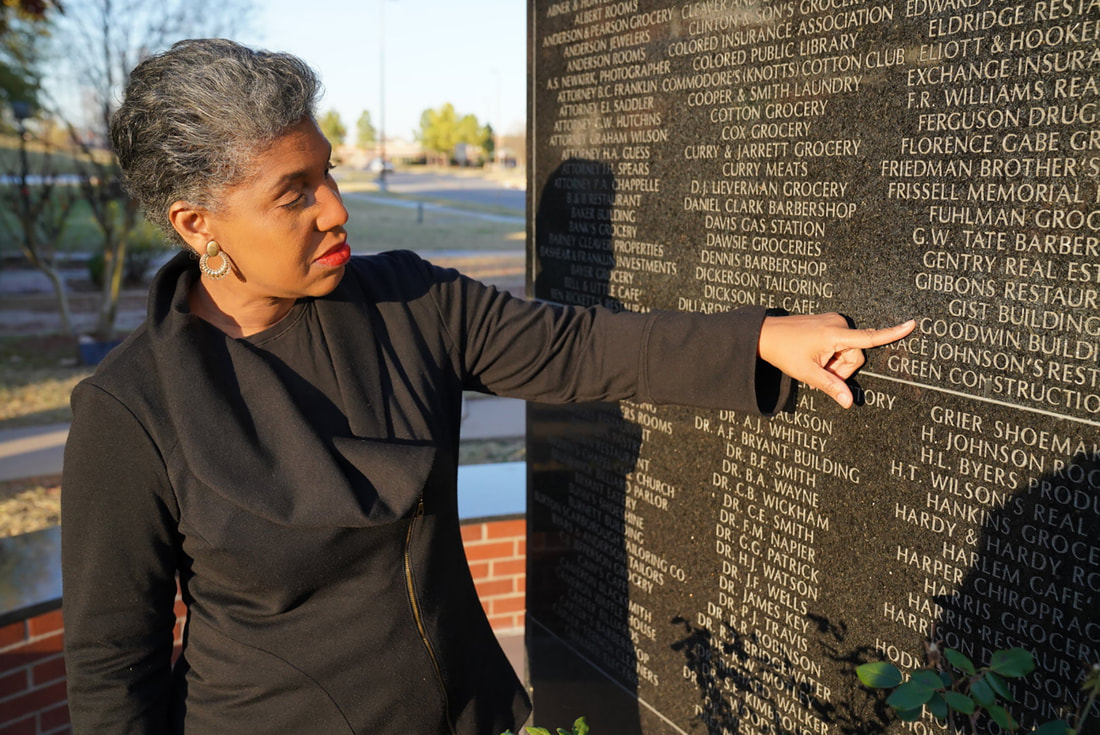
As a country, some like to think we eradicated white supremacy and that our nation’s atrocities against African Americans is confined to the distant past. However, it’s all too obvious that such racism and prejudice is rooted deeply in our systems and continues to have an impact on many lives today. One of the most horrific acts of violence in our country, the Tulsa Race Massacre, was committed about 100 years ago, and it doesn’t nearly receive the attention it warrants. In her newest movie, Rise Again: Tulsa and the Red Summer, director Dawn Porter aims to explore this massacre as well as the events and other tragedies that led up to it. It’s essential history and quite informative at times, but it does suffer from being too safe and conventional in its execution.
Never being taught about the massacre on Black Wall Street in my 12 years of public education, it’s genuinely surprising to see how much of Black history has been suppressed. This movie explores this massacre as well as the Red Summer of 1919 that consisted of widespread racial violence. These are fascinating subjects that have not been properly taught to the public in an accessible manner, and it’s important that these stories are being told in any way possible. Porter’s approach to the subject is confident yet conventional. It features a lot of testimonials from a diverse group of people and professions, and it combines this with news clippings and archival footage. As a whole, the information and content is mostly present. However, in its execution, the film opts for more straightforward coverage rather than a captivating journey through history that would have been more effective in communicating the subject’s urgency and relevance. 
What it lacks in style and execution, it certainly makes up with its commentary and relevance. It tackles a wide array of pertinent issues that affect Black people in the country today. They intelligently tie all of this back to America’s checkered history with white supremacy and oppression. Reparations for Black people in the U.S. is a controversial topic amongst many groups, but this movie does an excellent job of breaking down what this entails and the justification for it. If nothing else, this movie is extremely informed and is able to impart knowledge and wisdom to its viewers.
Another problem with the movie comes from how much more information the viewer is left wanting. It does a great job of giving a superficial rundown of these events with a fair amount of in-depth commentary. Even though its execution wasn’t too dynamic, after a brief ninety minutes, you feel like there was more that could have been said. While I like that the director wants you to continue your education with independent research, there are some parts that I wanted to be examined a lot more thoroughly. More than anything, it’s important to remember these events are not ancient history. There are still people alive today (albeit few) that are survivors of the Tulsa Race Massacre. This problem is rooted deeply in our country’s history, and the only way out is through education, compassion, and justice. Rise Again: Tulsa and the Red Summer premieres on National Geographic June 18 at 9pm EST, and it will subsequently be streaming on Hulu. Rating: 3.5/5
Review by Dan Skip Allen

Ryan Reynolds (left) as ’Michael Bryce,’ Salma Hayek as ’Sonia Kincaid,’ and Samuel L Jackson (right) as ’Darius Kincaid’ in THE HITMAN’S WIFE’S BODYGUARD. Photo Credit: David Appleby.
The Hitman's Wife's Bodyguard is the sequel to the 2017 film, The Hitman's Bodyguard. Both films star Ryan Reynolds as a Triple A-rated protection agent and Samuel L. Jackson as a hitman responsible for the death of the biggest client in Bryce's career. Patrick Hughes was the director of both films.
Not that the first film in the series was anything great, but the second film isn't nearly as good as the first one. A minor character in the first film, Selma Hayek plays the titular wife of Jackson's character. She enlists the help of Reynolds's character to help rescue her husband from a Greek madman (Antonio Banderas) bent on the destruction of Europe. The toxic relationship between Reynolds's and Jackson's characters may get in the way of saving the day. Both films have an R rating and for that, they have quite a few bloody violent death scenes and cursing. The second film doubles down on the cursing, though. Whereas the first film had the occasional curse word, the second film has characters cursing it seems every third word. I know Samuel L. Jackson is known for saying a specific curse word in films in his career, but they go way overboard with the cursing in this film. It was a complete turn-off for me. I've used the occasional curse word in my day, but to write a script where cursing is used so prevalently is just ridiculous. Even though all the cursing got a lot of laughs in my screening and probably by many others watching the film in the future, it ruins the movie for me. 
Samuel L. Jackson as ‘Darius Kincaid,’ Antonio Banderas as ‘Aristotle Papadopolous,’ Salma Hayek as ‘Sonia Kincaid,’ and Ryan Reynolds as ‘Michael Bruce’ in THE HITMAN’S WIFE’S BODYGUARD. Photo Credit: David Appleby.
The film also has an equally ridiculous story. To use a real-life event such as the financial failure and instability of a country and its downfall as a plot device for revenge by a bad guy is unacceptable. Using the strife of people such as the Greek people for such a childish revenge plot goes beyond intelligence as far as I'm concerned. This plot and story are terrible. There had to be a better idea they could have gone with than this stupid idea.
The first film gave viewers two actors that had good on-screen charisma when they were in other films. They worked well together in The Hitman's Bodyguard. Their banter was fun. The second film wastes all that with useless ad-libbing. Instead of sticking to a straightforward storyline, they go way out of the way to just try to get laughs by ad-libbing and cursing too much. This cast was wasted in this film. A prime example is Morgan Freeman. He plays in another ridiculous turn of events, Reynolds's character's father. Why on earth did they think this was good casting I have no idea, but it wasn't. Freeman was awful in the film as well! This film was a waste of time from the get-go. Just because the first film had some mild success doesn't mean they had to make a sequel. Some films just don't need sequels to them. I know it's a business and Lionsgate was probably trying to capitalize on the money that the first one made. That being said, this film was a waste of my time. It was way too vulgar. The plot straight out of a James Bond film was unnecessary and ridiculous. The chemistry and action in the first film were wasted in this film by too much ad-libbing and cursing. A good pairing, as well as the rest of the cast, were completely wasted in this garbage sequel. It just says you don't always have to make sequels to successful movies. Hollywood is just running out of good ideas, and The Hitman's Wife's Bodyguard proves that fact. The Hitman's Wife's Bodyguard hits theaters on June 16. Rating: 1/5
Review by Sean Boelman

Former Rolling Stone editor Ben Fong-Torres is such an influential figure in the world of rock journalism that he was a character in the beloved film Almost Famous, but there is so much more to his life than that. The documentary Like a Rolling Stone: The Life & Times of Ben Fong-Torres does an excellent job of paying tribute to his extraordinary accomplishments.
The movie follows Ben Fong-Torres from his childhood as the son of Chinese immigrants to becoming one of the most influential music journalists in the history of the industry. Of course, as is the case with any biographical documentary like this, there is more than a bit of self-indulgence going on, but in this case, it absolutely feels earned. Music fans, especially those who love the music of the ‘70s and ‘80s will find themselves fascinated by hearing about Fong-Torres’s experiences of interviewing and working with some of the greatest performers of all time. It’s worth watching just to hear some of the crazy behind-the-scenes stories that Fong-Torres gets to share. The single greatest tool that director Suzanne Kai had at her disposal in order to get the audience to appreciate the influence that Fong-Torres had is interviews with well-known musicians who affirm that Fong-Torres was a master at what he did. A portion of the film in which Fong-Torres attends an Elton John concert backstage will sell audiences on his brilliance if they weren’t sold already. 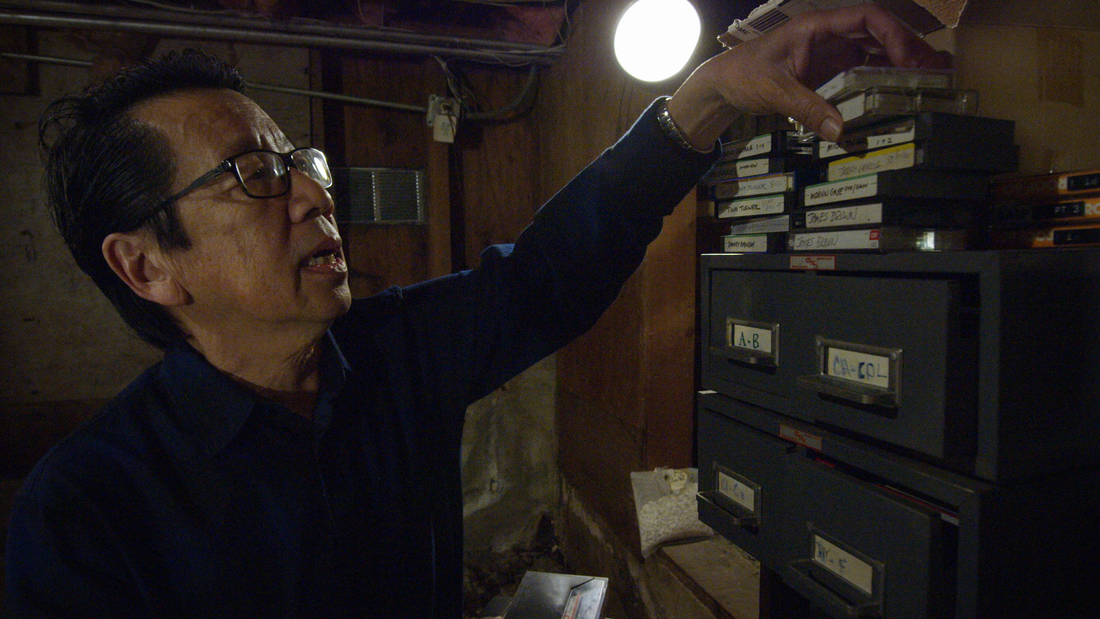
That said, there is another level to the movie, and that explores Fong-Torres’s experience as a Chinese-American. There is a portion of the film which discusses the obstacles that Fong-Torres had to overcome with his culture in order to be successful, both in his career and his personal life, and these are absolutely moving.
This definitely feels like more than the average biography profiling its subject. In addition to being about Fong-Torres’s life, it is also a celebration of writing about music and music as a whole. The way that journalists report on the beat has changed a lot since Fong-Torres’s time at Rolling Stone, and it is interesting to compare them. What is interesting about Kai’s approach to telling this story is that she fashions it as if it is a standard rock doc even though Fong-Torres was not known for being a musician. But the argument that seems to be made is that Fong-Torres was a rockstar in his own way, and the form of the movie supports that. Like a Rolling Stone: The Life & Times of Ben Fong-Torres is a documentary that music fans will definitely want to seek out. Suzanne Koi found a story in the most obvious place to look that somehow still isn’t explored, and it’s a wholly entertaining watch. Like a Rolling Stone: The Life & Times of Ben Fong-Torres is currently seeking distribution. Rating: 4/5
Review by Sean Boelman

Although the celebrity chef craze is no longer as big as it was a decade ago, there are still plenty of people who have made it very big for themselves through the culinary arts. Filmmaker David Gelb (Jiro Dreams of Sushi) offers an interesting glimpse into this trend with his film Wolfgang, a standard but scrumptious food doc.
The movie tells the story of chef and restaurateur Wolfgang Puck and how he gave birth to the notion of the celebrity chef. The documentary is a relatively basic biography, and Puck’s story is a rags-to-riches tale the likes of which we have seen before, but there is plenty of inspirational value here, especially for those who aspire to a career in food. Gelb’s style of presentation is very straightforward, but it works for what the film is. Documentaries about a well-known person who is still alive can sometimes start to feel like they exist more as promotional materials for their subject, but the professional look of this movie keeps it from feeling that way, even if it barely scratches the surface. At under an hour and twenty minutes in length, the film absolutely flies by, especially for those who enjoy the genre. One of the things that impresses most about Gelb’s storytelling approach is that he was able to capture Puck’s personality so well, which is a big part of what led to Puck’s success in the first place. 
Admittedly, the movie doesn’t go deep enough in talking about the themes of fame. Even though Puck seems to have provided Gelb with ample access to himself, and there was apparently a wealth of archive materials available, it often feels as if the film isn’t asking its subject enough hard questions.
Furthermore, the movie really gets caught up in glorifying its subject. Obviously no one would expect this to be anything more than a puff piece, but the film would have audiences believing that Wolfgang Puck single-handedly saved the restaurant industry. However, it is absolutely clear that there is more nuance to the situation than that. A majority of people who seek out this movie will likely be doing so for the purpose of seeing some tantalizing food shots, and this movie delivers plenty of that. The cinematography by Will Basanta is clearly the highlight and will leave any right-minded viewer with their mouth watering by the time the credits roll. Wolfgang is exactly what one would want and expect from a biography of the celebrity chef. Maybe it should have been more with Gelb at the helm, but audiences will walk away with their appetites fulfilled. Wolfgang releases on Disney+ on June 25. Rating: 4/5
Review by Sean Boelman

Cult filmmaker Mickey Reece has a particular style that cinephiles will either love or hate, but it depends on the project as to how well it works. The exorcism drama Agnes is particularly fitting for his sensibilities, and while it is far from perfect, it’s a really solid entry in a genre that is too often filled with terrible schlock.
The film follows a young priest and a reserved nun who experience a crisis of faith after there is an instance of demonic possession within the convent. Reece does a great job of taking these classic tropes and doing something unique with them that feels unique but will still appease genre fans. It’s almost as if there are two separate movies in one here, as the first half is a supernatural horror flick and the final act turns into something more nuanced. That isn’t to say that the earlier part is any less distinctive — the entire film clearly carries the mark of being Reece’s work — but that final third is absolutely mind-blowing. Religious themes are nothing new in the horror genre, as a lot of horror is based around faith and superstition. That said, Reece takes the ideas that are commonly explored within the exorcism subgenre on a surface level and adds an extra level of existential dread to the equation to make it hit even harder. 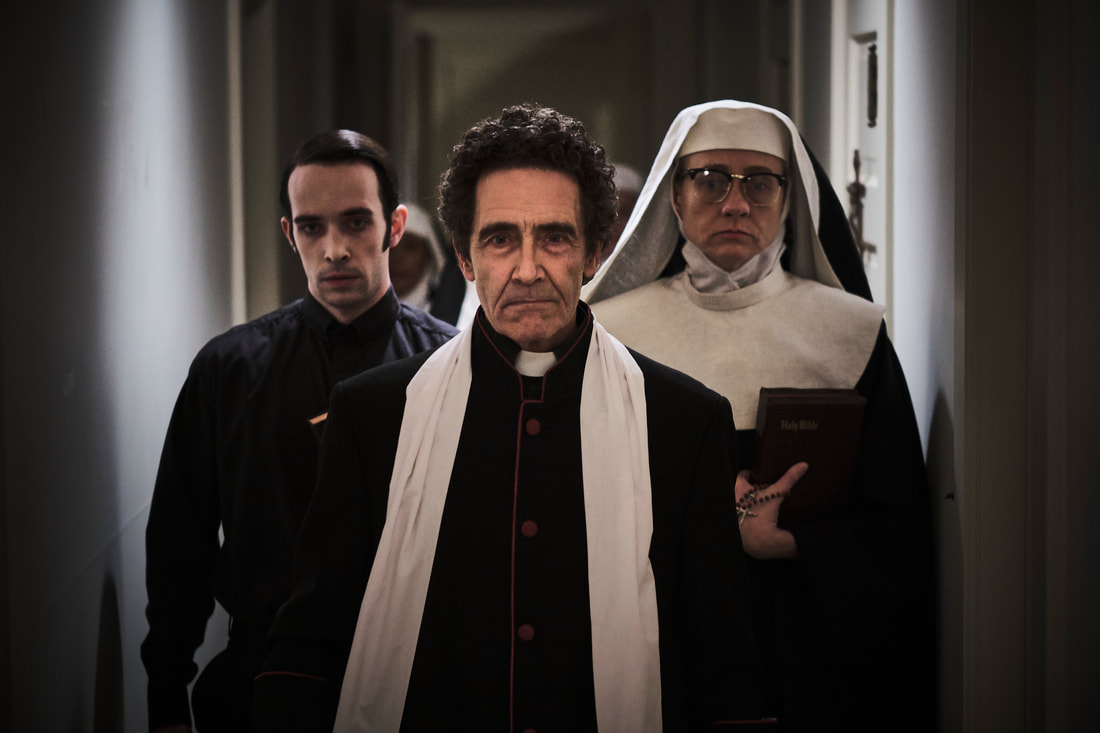
However, even though the movie does a good job of addressing the religious qualms that the characters are experiencing internally, there could have been much more development to the characters as a whole. The film switches protagonists a few too many times, causing the connection to be lost at times.
Molly C. Quinn gives a very nuanced performance, especially in the more emotionally-demanding latter portion of the movie. The supporting cast also has some strong performances. Sean Gunn and Ben Halla are the highlights, both giving performances that are tremendously fun to watch. A lot of what makes Reece’s style so distinctive is that it has a very low-budget feel to it, but still feels very inspired. There is clearly a lot of influence from the classic exorcism movies, but there’s a lot of quirkiness to it. Part of the unsettling nature of the film comes from the tongue-in-cheek humor of Reece. Agnes is probably going to be one of the most divisive movies to come out of this year’s Tribeca, but those who are fans of it will be very supportive. In terms of midnight festival flicks, this fits the bill to a tee. Agnes is currently seeking distribution. Rating: 4/5
Review by Sean Boelman

The newest film from Oscar-nominated documentary filmmaker Bing Liu and co-director Joshua Altman, All These Sons is a movie that is undeniably difficult to watch, but it also deals with very important issues. Eye-opening and thought-provoking, this film proves that the success of Minding the Gap was far from a fluke.
The movie follows two men who spend their lives changing the lives of young Black men in Chicago’s South and West sides in an effort to curb the effects of deadly gun violence. This story has exactly what it takes to make for a documentary that is both important and compelling, and Liu and Altman are able to capture what makes it so special. Of course, the issue of gun violence is still one that is prevalent in America and needs to be discussed. There have been a lot of films that follow people trying to fix this issue, and some that have explored the human impact that gun violence has, but rarely is a movie able to address both so gracefully and effectively. One of the best things about Liu and Altman’s approach is that they give equal focus to both the subjects of the film and the people they are helping. It is clear that the filmmakers care just as much about the people who are being affected by the issue as the people who are inciting change. 
The empathetic lens through which Liu and Altman shoot the movie definitely helps in getting the point across. Part of what made Minding the Gap effective was that it made the audience feel as if they were living among that group of people, and while this isn’t quite as intimate as that, it still does a great job of making the viewer feel acquainted with the people in the film.
This is a movie that hits really hard and wants the viewer to know that these are real people whose lives are being destroyed by gun violence. We get to see more of these people’s lives than just their activism or victimhood, which makes it all the more powerful when we hear about how tragedy has stricken them. The one thing that this film is missing compared to Minding the Gap is the sense of visual poetry. The cinematography is still solid, but there is a much lesser focus on aesthetics here. Perhaps it’s because this movie is dealing with subject matter that is much less nuanced, but the storytelling is far more straightforward here. All These Sons is a great documentary, and while it doesn’t quite reach the heights of Minding the Gap, it’s expectedly powerful. Hopefully Bing Liu and Joshua Altman continue to make exceptional nonfiction cinema like this. All These Sons is currently seeking distribution. Rating: 4/5
Review by Sean Boelman

Dan Chen’s Accepted tells a story that may seem obscure and not all that compelling on paper, but really makes for some unexpectedly compelling nonfiction cinema. Sleek in execution and full of crazy twists that viewers won’t see coming, this is the type of documentary that has the potential to take the internet by storm.
The film tells the story of the students and educators at the TM Landry Prep School, which had a 100% acceptance rate of its students getting into elite colleges of their choice before they became embroiled in a scandal. But there is even more to this story that viewers would know from the news, and this is where Chen’s movie succeeds. For much of the first half of the film, this is being presented as if it is a puff piece on a school that is using revolutionary new educational methods to great success, but when things start to get a bit weirder, the pacing picks up in an absolutely crazy way, bringing us to a conclusion that will absolutely shock viewers. The movie does a really good job of exploring some of the greater ethical implications of this story. Although the teaching methods used at TM Landry are certainly problematic, people in the film question whether they are worth the consequences in the name of giving disadvantaged children a chance in a rigged system. 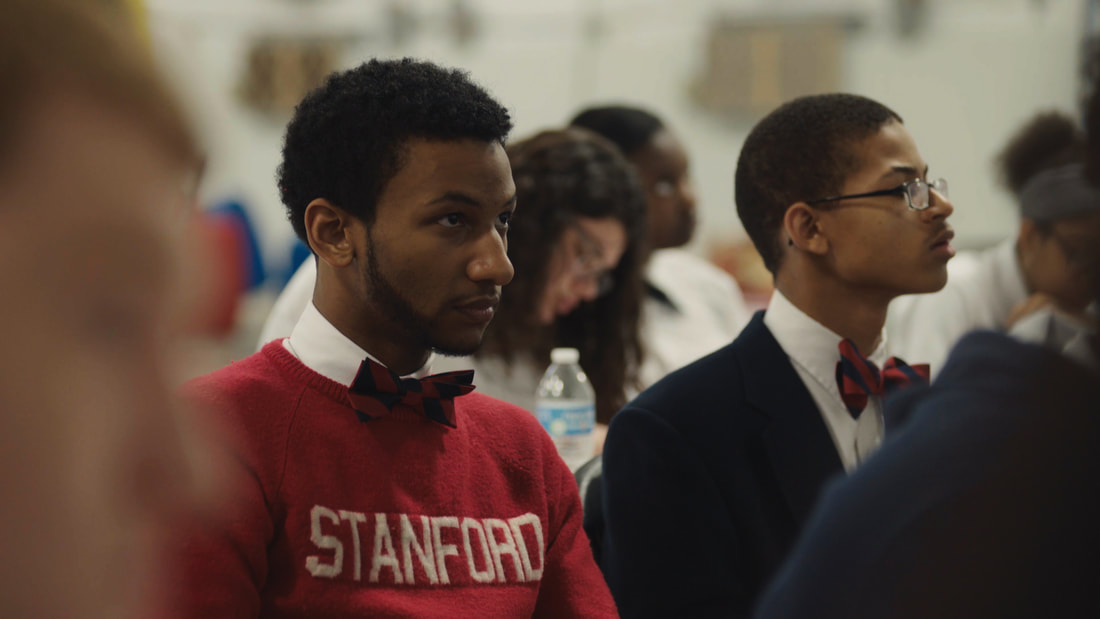
Chen’s approach to presenting the founders of TM Landry is definitely very interesting. Although the movie doesn’t glorify him, it also avoids outright vilifying him. It shows the ways in which he truly cares about the futures of his students but also the hypocritical tendencies they have that manifest in toxic ways.
The portions of the film which follow the former students of TM Landry are also very effective. It is obviously heartbreaking to see someone pursuing a dream in an unflinching way only to have it ripped away from them due to circumstances outside of their control. And it feels like Chen was able to get surprisingly unfiltered access to these individuals. For the first half of the movie, this is a fly-on-the-wall documentary following the founder of TM Landry, but in the second half, it starts to resemble more of an exposé with interviews and more secretive footage. There are also some portions in this back half that deconstruct what we saw in the first part, and it would have been cool to see it go deeper into this meta angle. There are some excellent things going on in Accepted that make it an unexpectedly compelling documentary. It will get viewers invested in the story early and keep them hooked with how insane it gets as it progresses. Accepted is currently seeking distribution. Rating: 4/5
Review by Sean Boelman
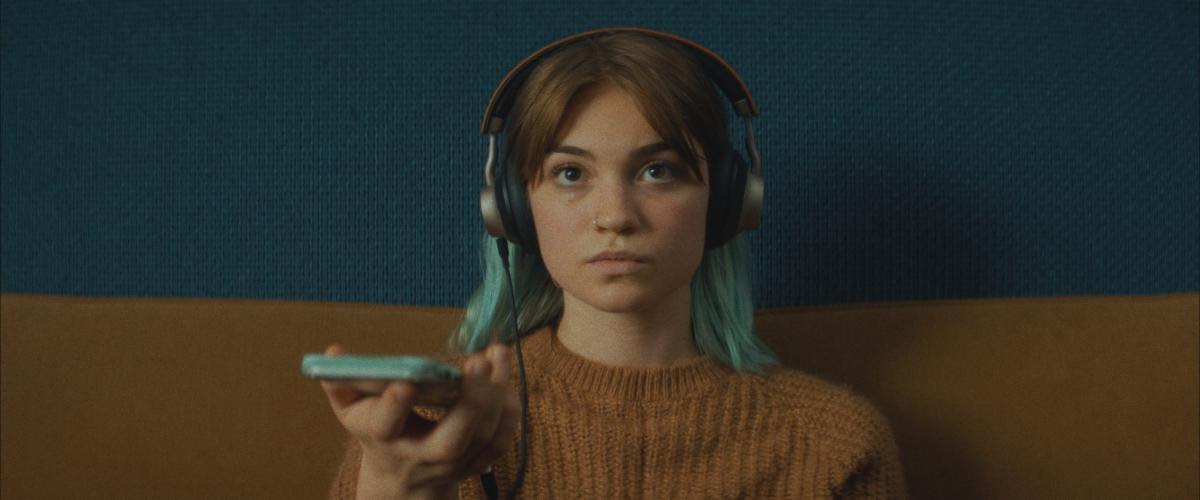
One of the best things about festivals is getting the opportunity to see films from exciting new voices in the world of cinema, and Noah Dixon and Ori Segev’s Poser may be one of the most intriguing discoveries of this year’s festival. Imperfect but alluring, this dive into the world of music and music journalism is the type of movie that eludes description.
The film follows a young music podcaster who finds herself forming an obsession when she is taken under the wing of an indie pop musician. It starts out playing like a quirky comedy with a bit of a thriller vibe to it but eventually evolves into something more complex, hooking the viewer in a way that is even better than traditional suspense. Somehow, the movie ends up exactly where you think it will from the beginning and yet feels subversive and unexpected at the same time. It’s a slow burn leading up to a payoff that is obvious yet still entirely unsettling. For much of the film, viewers will be laughing nervously, completely expecting to be shocked but caught off-guard nevertheless. One of the things that makes Dixon’s script stand out is that it absolutely holds nothing back. It is a searing dissection of this portion of the music industry and how hypocritical it can be at times. Entertainment journalism is a unique beast, and Dixon captures it in a way that is effectively both satirical and true-to-life. 
If the movie does struggle with one thing, it is the character development. Too much of the film is shrouded in mystery for the audience to form a genuine emotional connection with the characters. Of course, a feeling of distance from the characters appears to be intentional but extends a bit too far into a coldness at some points.
Sylvie Mix’s lead performance is excellent, made more impressive by the fact that this is one of her first on-screen roles. She takes a character that could have been somewhat generic and turns it into a showcase for her range. The supporting cast which includes multiple real Columbus indie musicians adds an extra dose of realism to the movie. The film also looks really good, Dixon and Segev having an unexpectedly assured style despite this being their debut. One of the most impressive things about this movie is how they use the visuals to make everything feel somewhat off-kilter, as if it is taking place in a world that is close but slightly different from our own. Poser is one of those festival films that doesn’t have the highest profile, but deserves some of the most eyes of the lineup. It’s an insanely intriguing watch, and cinephiles should keep Noah Dixon and Ori Segev on their list of filmmakers to watch. Poser is currently seeking distribution. Rating: 4/5
Review by Sean Boelman

At this point, festival-goers need to get used to seeing films made during and about the COVID-19 pandemic, but their quality will have a great deal of variance. The romantic comedy 7 Days is one of the better ones to come out, benefitting from a genuinely witty script and some excellent chemistry between its two stars.
The movie tells the story of two people who, after a pre-arranged date set up by their traditional Indian parents, find themselves stuck together during the beginning of lockdown in the COVID-19 pandemic. Part of this film’s charm is that it takes something we’ve all been through (the pandemic) and uses it as the setting for the standard rom-com premise. However, even though the pandemic is a fundamental factor in the story, the thing that allows this to stand out from other similar movies is that it would work very well on its own without that connection. As a culturally-specific romance about how these people’s Indian heritage drives their dating lives, it’s a fascinating film. That said, it would have been nice to see a bit more substance in relation to the characters. It’s the standard old school versus new school archetypes, and while the message about finding a compromise between staying true to one’s roots and embracing modernity is genuine, it also doesn’t go deep beyond the surface in this regard. Still, the absolute highlight of the movie is the comedic duo of Geraldine Viswanathan and Karan Soni. Both have had some very funny turns in the past, but this is probably their best work. Soni, in particular, is impressive here, giving a performance that makes it clear that he is much more than just the comedic relief. Much of the film’s comedy is based in the awkward situation in which the characters find themselves, but it works thanks to how believably uncomfortable the scenario is. Additionally, when Viswanathan and Soni are given the opportunity to feed off of each other’s energy, it results in some wonderfully comedic moments. Admittedly, the movie is very plainly shot, but that is a direct consequence of the fact that it is a COVID-19 movie. It would have been nice to see the film play out in a way that makes the audience feel the same level of entrapment felt by the characters, but the writing is discomforting enough on its own to do the job. 7 Days is a very entertaining romantic comedy, and while its core plot isn’t anything special, the unique flourishes are what makes it noteworthy. But beyond that, it’s worth watching for Geraldine Viswanathan and Karan Soni alone. 7 Days is currently seeking distribution. Rating: 4/5 |