
|
Review by Sean Boelman

Directed by attorney-turned-filmmaker Michèle Stephenson, Stateless is a new documentary addressing an issue that has received shockingly little coverage to this point. Eye-opening in many ways, Stephenson’s film opens the floor for an important conversation that needs to be held as citizens of the world.
The movie examines the deeply-rooted discrimination that exists within the Dominican Republic, culminating with an order in 2013 that took away citizenship from anyone with Hatian parents, leaving thousands without a nationality or identity. It really is a shame that this story hasn’t received more coverage, as it is absolutely heartbreaking. Stephenson’s film is at its most effective when it gets up close and personal with the people who are affected most by this crisis. Interviews with Dominicans of Hatian descent are able to communicate the loss and grief being felt by these people. It’s unimaginable to think of this happening to oneself, and these people will easily get the sympathy of the audience. However, Stephenson also focuses on an attorney running for a seat in the Dominican Republic’s congress, advocating for the people who had their lives stripped away from them. Although it is understandable why Stephenson found interest in this story as an advocate for human rights herself, it is ultimately less compelling than that of the people who have the most to lose. 
At times, it starts to feel like the movie is leaning a bit too heavily on emotions, but Stephenson is almost always able to rein her narrative back into her control. There’s an element of poeticism in her approach, and while the film isn’t too subtle with its message, the way in which it is delivered is mostly effective.
Even though this movie is very intimately tied to a particular country and the identity of its people, it touches on themes that are timely and universal. There may be bigger fish to fry at the moment, but there is a lot of division around the world, and this film offers a very scary warning of what that division can ultimately become. Stephenson is certainly a very talented filmmaker behind the camera, telling the story in an almost impressionistic manner. The cinematography is gorgeous and there is a lot of juxtaposition used between the visuals and subject matter. This shows the stark contrast between the way people like to view the world and the way it actually is. Stateless would have been a much better documentary had it focused a bit more on the core of the issue, but it’s a mostly riveting watch nevertheless. There is a lot to be learned from this story that seems localized at first glance. Stateless was set to debut at the cancelled 2020 Tribeca Film Festival. It is currently seeking distribution. Rating: 3/5
1 Comment
Review by Sean Boelman
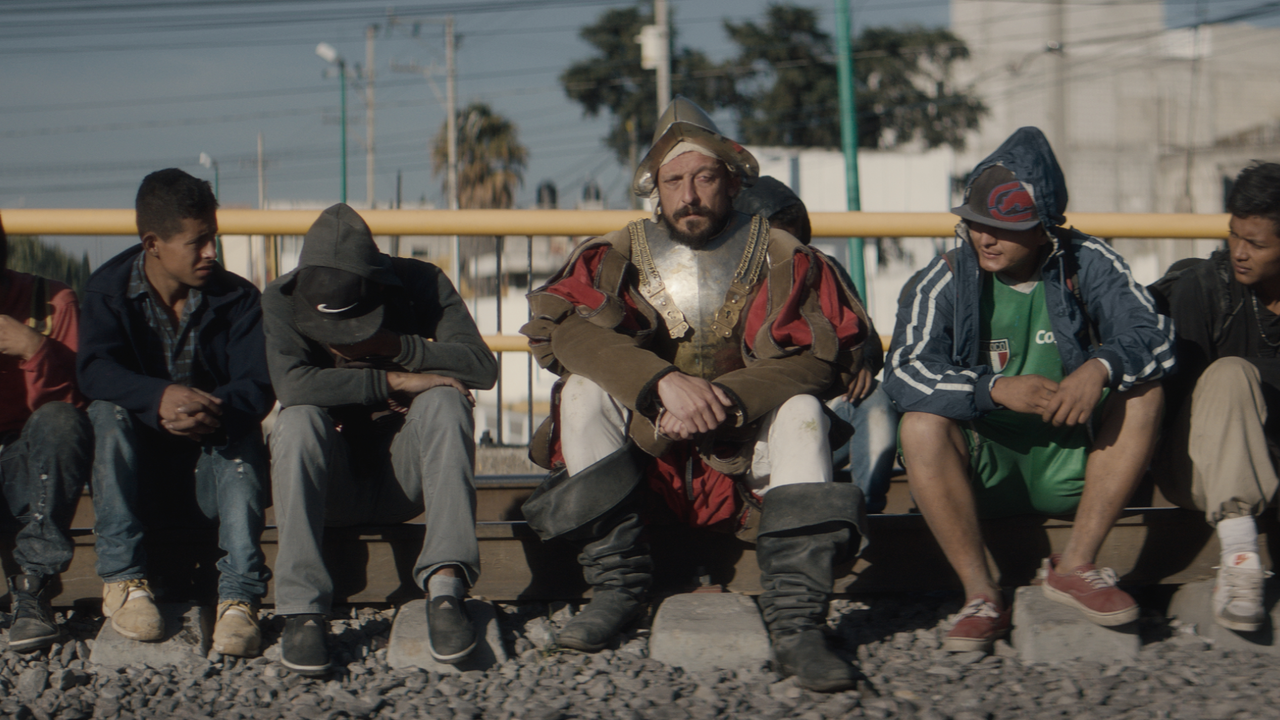
Directed by Rodrigo Reyes, 499 is a new documentary exploring modern Mexican society with a unique lens. Poetic and gorgeous, the unorthodox narrative structure of the film won’t be everyone’s cup of tea, but Reyes is able to offer some interesting and insightful observations with his approach.
In the movie, 499 years after the Spanish conquest, a ghostly conquistador arrives on the shores of Mexico and wanders through the streets, learning what has become of the land he once colonized. Although the conquistador is obviously an actor, everything else in the film is nonfiction, a depiction of what is really happening in Mexico today. The device that Reyes has invented for the movie is pretty ingenious, and it has some interesting effects on the narrative. For one, audiences will be kept entertained by the segments that incorporate a bit of fish-out-of-water comedy as the conquistador struggles to understand the New World (both in geographical and temporal sense). However, perhaps more impressive are the parallels that Reyes is able to draw between the conquistador’s story and those of the people of Mexico. The film’s warning about how history has a tendency of repeating itself is universal and timely, and will undoubtedly connect with audiences of all ages and backgrounds. 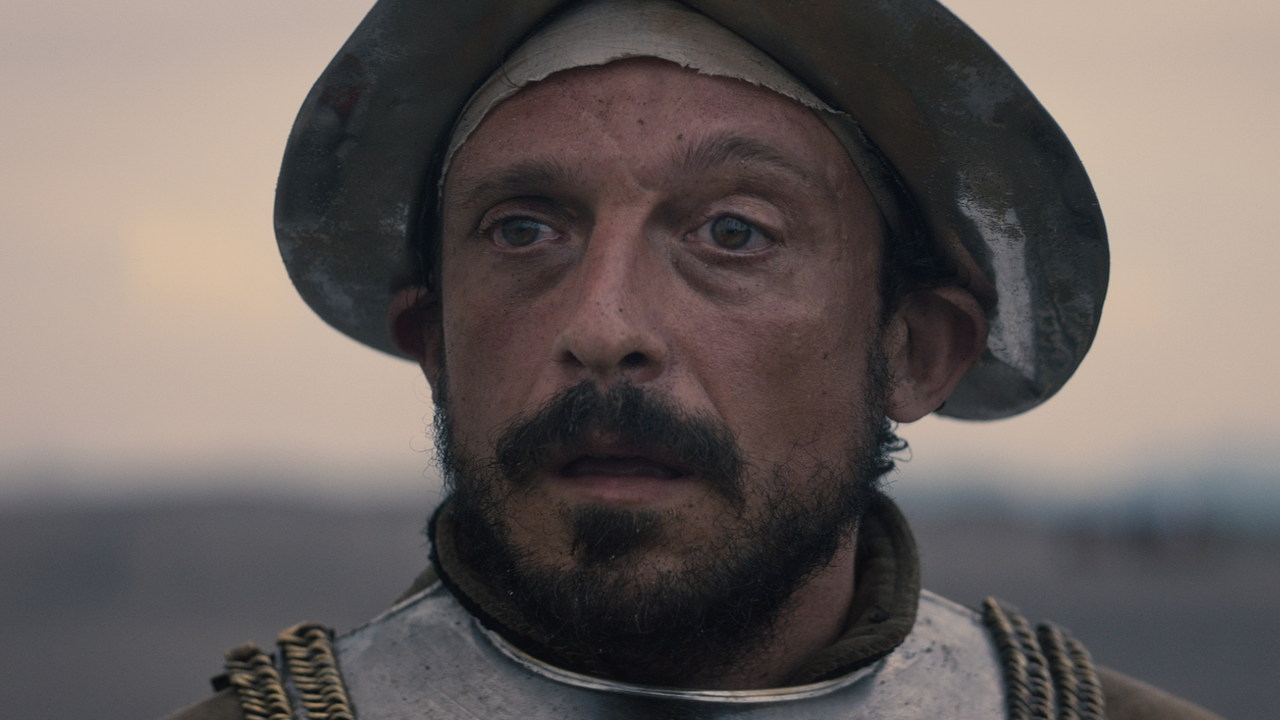
Throughout the movie, the conquistador interacts with citizens of varying ways of life, and while there is a bit of inherent theatricality tied to the premise, there is still a feeling of authenticity to what is being shown, for the most part. The portions of the film that specifically explore the Mexican lower class are particularly fascinating.
The movie is divided into different sections, each of them addressing a different aspect of Mexican society. Yet with a runtime under an hour and a half long, one can’t help but feel like Reyes may have bit off a bit more than he can chew. The film is consistently involving, but it likely would have been even more so had Reyes approached one or two of the topics with more depth. On a technical level, the movie is undoubtedly excellent. The cinematography of the film won an award via remote judging at the Tribeca Film Festival, and it is completely understandable why. Reyes has an obvious admiration and respect for the country and people of Mexico, and that allows the viewer to become fully immersed in his movie. 499 is an unusual documentary, but more often than not, that works in its favor. Director Rodrigo Reyes took an ambitious swing, and while he doesn’t exactly knock it out of the park, he comes pretty close. 499 was set to debut at the cancelled 2020 Tribeca Film Festival. It is currently seeking distribution. Rating: 3.5/5
Review by Sean Boelman
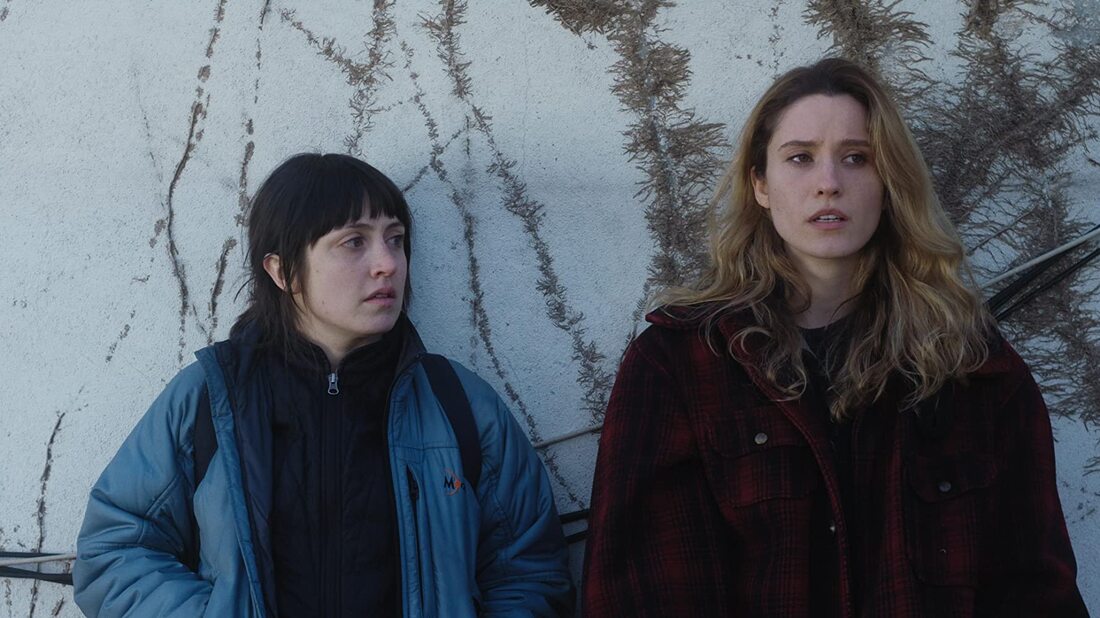
Fourteen, the newest film from independent filmmaker Dan Sallitt, is a low-key drama that could have spared to be a bit more subtle. Yet despite some issues with the dialogue and script, there’s some very good material here that makes it a much more satisfying watch than one would expect.
The movie follows two childhood friends over a decade as they grow apart, one of them striving for success in her personal and professional life, and the other struggling to find her footing without support. It’s a relationship melodrama with a structure that has been seen before, but it is refreshing to see it explore a friendship rather than the more conventional romantic love. The narrative jumps around time a lot, being a series of interactions between the two lead characters. Because of this, the audience focuses on the high-conflict moments of the relationship. However, unlike other films with a fragmented narrative such as this, there is no opportunity to see the more mundane, and as a result, the movie loses its feeling of authenticity. There isn’t a whole lot of subtlety to what Sallitt has to say, and unfortunately, a lot of the material is discussed through heavy amounts of exposition. This gives the film a very play-like and uncinematic nature, especially in the final segment of the movie, which is very over-the-top and forced. 
Undoubtedly the most interesting part of this film is the dynamic that exists between the two characters. Even when the events of the movie only involve one of them, the shadow of the other is obviously present. Sallitt does a very good job of building his characters to be compelling in this way.
That said, the acting in the film sticks out as one of the weaker links in the movie. Perhaps because the dialogue comes across as so theatrical, the actors very much feel like they are giving a performance to the camera, not bringing their characters to life. Tallie Medel and Norma Kuhling are undoubtedly talented, but they simply seem to be going about the delivery in the wrong way. Visually, Sallitt’s film is very simple but elegant and effective. The movie was made on a very low budget, though it feels extremely lived-in nevertheless. Plenty of movies that are purely independent like this find themselves brushed under the rug, but Sallitt’s command of the medium in exploring his characters will allow it to stand out. There are some rough moments in Fourteen, but those portions are countered by others that are thoughtful and insightful. The audience for this film may be limited, but those who enjoy this type of refined melodrama will certainly appreciate what Sallitt brings to the table. Fourteen is now streaming in partnership with indie theaters. A list of participating locations can be found here. Rating: 3.5/5
Review by Sean Boelman
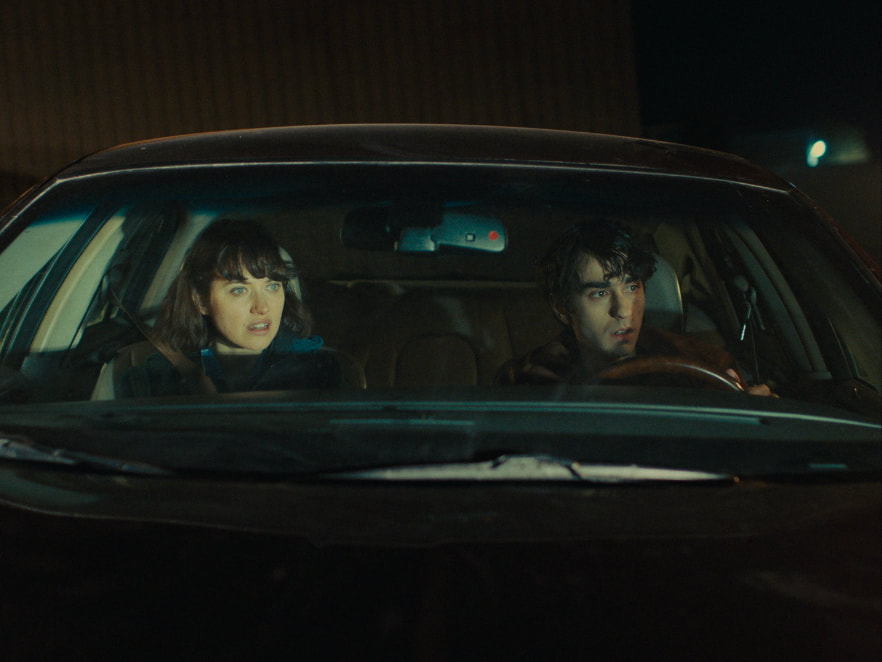
Written and directed by Joey Klein, Castle in the Ground is a new drama hoping to tackle the very topical issue of the opioid crisis. However, despite an extremely strong start, the film largely abandons its character-driven drama heading into the third act before becoming a thriller that is significantly less compelling.
The movie follows a young man grieving the untimely death of his mother as he forms a friendship with his troubled neighbor, sending him into a dark spiral of despair and addiction. It’s a bleak film, and when it approaches its subject matter with honesty and empathy (which it does for a majority of the first half), it works quite well. Yet there comes a point in the script when Klein seems to become more concerned with telling a story that adheres to cinematic conventions, and that is not what this subject matter demands. There are plenty of hard-hitting melodramas about the topic, but what made this one stand out for so long was the level of restraint it exhibited. Once that goes out the window, the film starts to falter. There’s a lot to be gained from this story, but perhaps the most interesting thing it has to offer is an exploration of the way in which an addict’s environment can drag them down even further. Though the protagonist’s arc is interesting in its own right, it is his relationships with other characters who feed off of his energy in a parasitic way that really make the movie interesting. 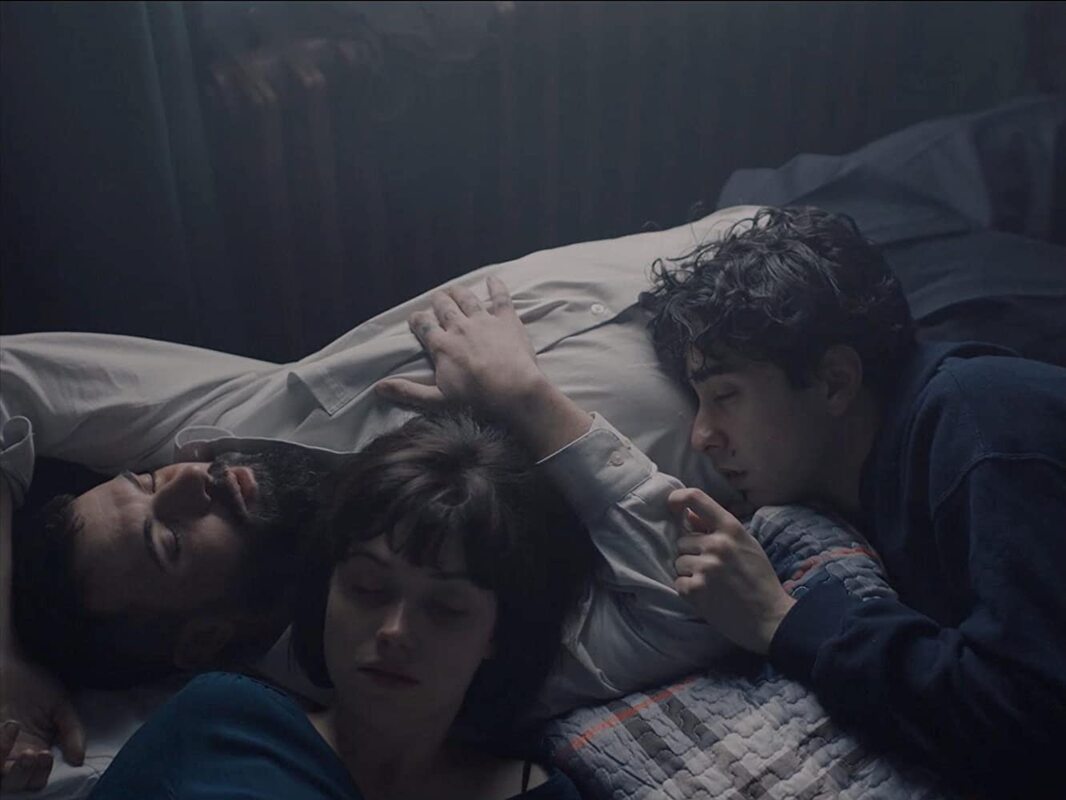
Klein is able to establish some really interesting arcs in the beginning of the film only for them to take a much more predictable turn by the end of the story. It was certainly very refreshing to see a movie take a more low-key perspective on the lives of addicts, focusing on how the smaller aspects of their lives are affected, hence why it is so disappointing when the finale tries to go too big.
Alex Wolff and Imogen Poots both give very good turns, with Poots being particularly impressive in a role that is much less charming than usual. In most cases, she is playing one of the most dynamic and interesting characters in the script, but here, she absolutely nails the despair and pain that Klein hopes to capture. Neve Campbell also makes a welcome appearance in a small but powerful supporting role. On a technical level, Klein’s film is very deliberate and atmospheric, although the somber visual style likely won’t be everyone’s cup of tea. The unusual choice of aspect ratio and overwhelming greyness in which the movie was shot aren’t particularly welcoming, but that seems to be Klein’s point here, to show how addiction isn’t pretty. The first and second acts of Castle in the Ground are undoubtedly much stronger than the third, but it is still an all-around interesting watch nonetheless. Just don’t expect this to be an easy or comfortable watch. Castle in the Ground hits VOD on May 15. Rating: 3/5
Review by Sarah Williams
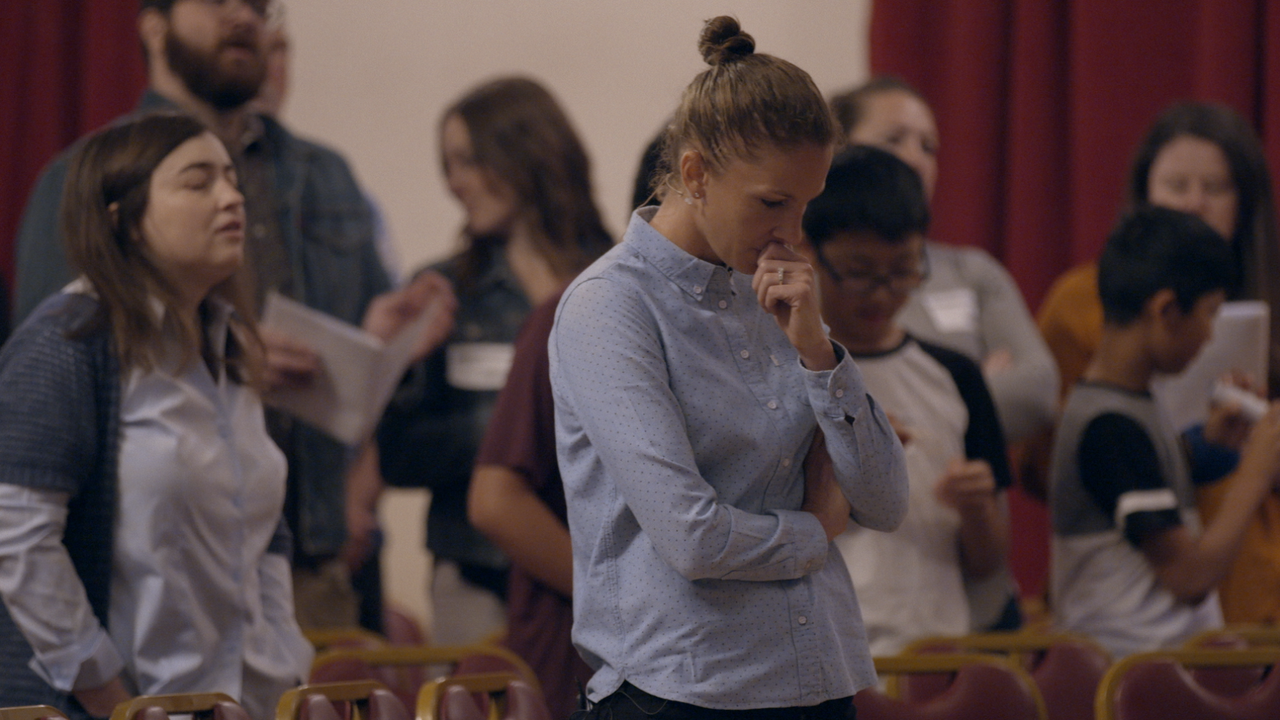
Time comes with many conditions, but it also bears a potential for change. Sometimes this change comes with progressive attitudes, no longer feeling the need to destroy anything that challenges our worldview, but sometimes this change is forced, a trial to push away some unwanted concept. In the case of Kristine Stolakis's feature documentary, Pray Away, time, for many, is hope that they can change themselves to make the world easier.
So-called reparative therapy has originated in its prominent form within evangelical church groups. It is an attempt to cure one of homosexuality, whether by force of another, or voluntarily. It makes the subject overanalyze their attraction, and blame the world around them for leading them down some sort of "sinful path". This idea only works if it is viewed as a subconscious choice for the participant, and the "ex-gay" graduates of the programs often say they have chosen a new life of normalcy. This is true somewhat, but it isn't that they have made the choice of sexuality, but that of repression. It’s fairly dense subject matter that’s received quite a few depictions, but few outside the realm of fiction fully dig into why this happens, and what the exact psychological effects are. This one is a little different than others, as we see the supposedly cured “ex-gays” who lead these programs, trying to help others become like them, even if they themselves are still actively repressing their own desires. We hear from the former face of a group called Exodus, Josh Paullk, who admits that even he never changed, and that he lied that he didn’t still have feelings for men. Since leaving the organization, that he says he truly believed had the power of change, he moved to Portland with his male partner. 
The subject is handled showing voluntary conversion therapy as what it is: a form of self harm. Whether it comes from societal pressure, religious conviction, or any other fear of one’s same-sex attraction, this process of lying to oneself and the world, and treating a part of the self as a form of evil is incredibly damaging. For some, they panic, and for others, they turn further inwards. Trained self-hatred leaves scars, and these Christian fundamentalist programs are exactly that.
The hardest to watch of the four threads in the documentary is that of Julie Rodgers, who was held up as the teen ex-lesbian face of the movement after being forced into a reparative program at sixteen. Some parts, like enforced adherence to gender roles (girls must wear makeup, sports are too masculine), come off as almost cartoonish for these programs. Then the reality sinks in: these are young teenagers being trained to hate themselves. She says she’ll always remember being a teenager who was told she was a bad kid for having acknowledged part of who she was, and this is where we see just how much these teachings stick — even when those who’ve gone through them have left and denounced them. When we cut to Julie in the present day after meeting her through archival footage, we get to watch her prepare for her marriage to a woman, and we see the happiness that comes with freedom, as well as how the effect never quite leaves. This afterimage is what sets Pray Away apart. Instead of beating down the misery, it shows that there has always been a future possible for the subjects who had tried to fix something they were told was wrong with them. We see them happily married, or living as themselves, years after what they had been through, and we can see that future instead of lingering on wondering if maybe it could have worked. When we are only shown the misery of conversion, we are led to believe that it is an ending, when it is very much so. Pray Away depicts it as a painful false path, but that there’s always a way back, and that’s when it hits hardest. Rating: 4/5
Review by Sean Boelman

Directed by Jong-ho Huh, Monstrum is an epic new Korean monster movie set in the 16th Century. With themes that are eerily timely given the state of society now, but a script that doesn’t quite know how to use them, this is an entertaining watch even if it doesn’t live up to its full potential.
The film takes place in a kingdom ravaged by plague and paranoia as panic begins to brew over rumors of a vicious beast living in the mountains. Ultimately, the story is very interesting, and makes for a great action movie, but there are portions of the film that seem determined to be a creature-feature horror flick, and those are the portions that don’t work as well. For about the first thirty or so minutes, it’s not really clear what the film wants itself to be, but when it finally finds its rhythm, it ends up being quite a lot of fun. That last hour runs like wild, and while it is admittedly a bit disorienting, it’s a crazy ride, and there aren’t many movies that come out like that anymore. The message of the film is quite obvious, and the didacticism in the middle third is somewhat excessive, but the idea that humanity is the true monster is something that feels more relevant now than ever. It’s a message that’s very common to this particular subgenre of horror, yet people seem to keep making the same mistakes over and over again in real life. 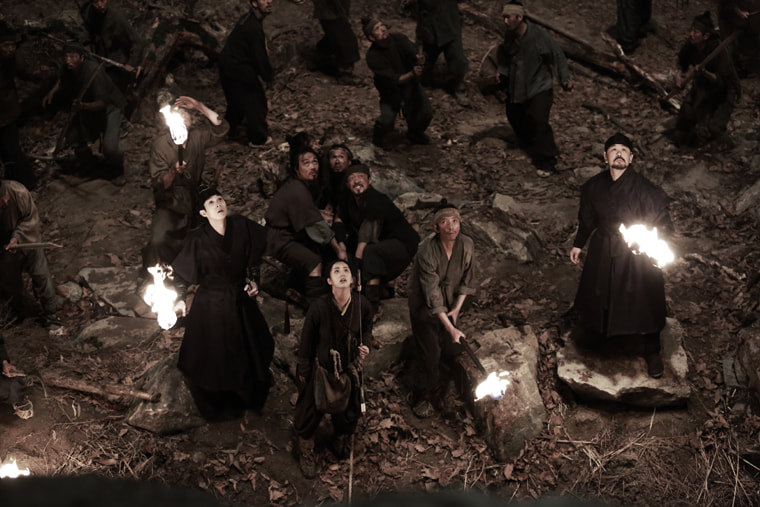
Perhaps the thing that is going to make this movie less accessible to mainstream American audiences is its idiosyncratic tone. The film will switch in an instant between really dark and gruesome to surprisingly airy and goofy (a fart joke being the most memorable instance of the latter). Fans of Asian genre cinema will undoubtedly be familiar with this style, but it may be off-putting to the uninitiated.
On a technical level, there are a lot of things that work really well in this movie. The production design and costuming do an excellent job of making the viewer feel immersed in the period in which the film takes place. And even though one would think a giant CGI monster would be a significant distraction, the filmmakers do a good job of making its inclusion feel natural. That said, undoubtedly the most impressive part of the movie is its action choreography. There’s a lot of swordplay, particularly in the first two acts, and this will make one wish that the filmmakers would have gone for more of a straightforward action picture than an action-horror hybrid. These scenes are shot in a very cinematic and exciting manner. Monstrum is a very fun monster movie, and while it probably would have benefitted from having even more of its (excellent) action sequences, it’s satisfying nonetheless. It’s definitely good enough to be worth adding to your watchlist. Monstrum streams on Shudder beginning May 14. Rating: 3/5
Review by Sean Boelman

Somehow the first horror movie to ever come out of the Spanish-speaking country of Panama, Diablo Rojo PTY seems like it was designed for the midnight circuit. With a visibly low budget and countless rip-offs of mainstream classics, no one can accuse this of being a particularly good film, but it’s lovable in all of its absurdity.
The movie follows a group of people as they find themselves stuck in the Panamanian jungle under the spell of a clan of supernatural creatures, with a “Diablo Rojo” bus as their only refuge. The script by J. Oskura Nájera actually isn’t that bad — just a bit conventional — leaning into the most basic motivation of the genre: survival. That said, there’s very little in terms of character development here. All five of the lead characters are very archetypal, and not much is done in order to make the viewer form a connection with them. The mythology that is built around the antagonists is also frustratingly shallow. There’s a lot happening in the film, and the situations as written are actually pretty creepy. Unfortunately, director Sol Moreno’s style is too wrapped up in stealing more effective scares from other movies instead of leaning into the atmospheric potential that is inherently present in the premise. 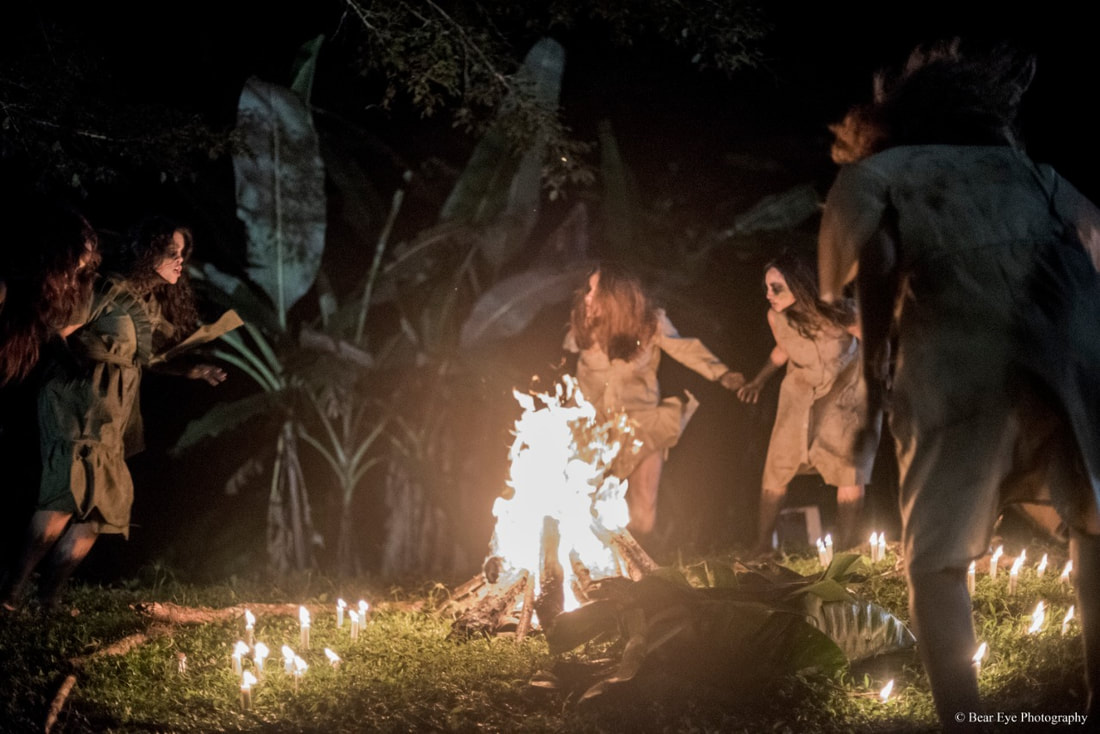
The level of mimicry in this film goes beyond homage into thinly-veiled near-plagiarism. Some of these moments are subtle, like shots that are clearly reminiscent of others that have been seen before, but others are embarrassingly obvious. The most frustrating of these can be heard in the score when a section of the movie uses a riff that viewers will undoubtedly recognize from The Shining.
Perhaps the biggest issue with the film is that the production value isn’t the greatest. Apart from making solid use of its tropical setting, the movie overwhelmingly looks cheap and campy. The visual effects are particularly laughable, with a blend of cartoonish CGI and ridiculous practical effects, but it’s still a noble effort given the historic nature of the production. As a result, it’s hard to buy into the film because one never knows whether or not it is meant to be taken seriously. And when it is obvious that the movie is supposed to be scary, viewers won’t be able to stop themselves from laughing. This is especially the case when the audience is expected to be frightened by the mediocre monster designs. Diablo Rojo PTY is by no means a good film, but it is an entertaining one. Now that Panama has their first horror movie under their belt, it’s time for a filmmaker with a unique vision for the genre to step up and bring something truly terrifying to the table. Diablo Rojo PTY hits VOD on May 14. Rating: 1.5/5
Review by Sean Boelman
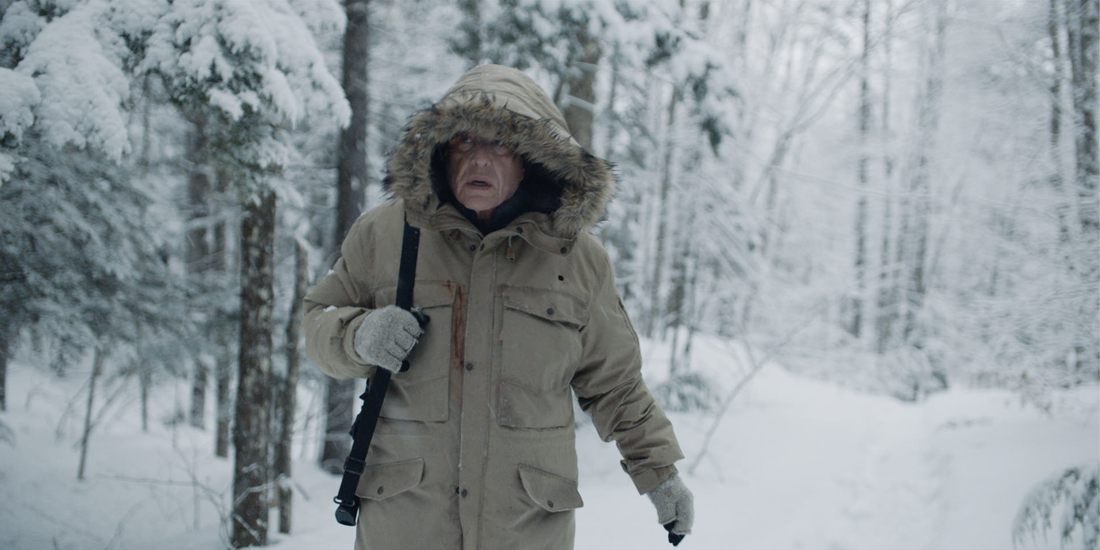
Tom Berenger as Jim Reed. Blood and Money arrives in theaters and on VOD on May 15, 2020 from Screen Media. Photo Credit: Screen Media.
As a starring vehicle for Oscar-winning actor Tom Berenger, writer-director John Barr’s directorial debut Blood and Money is sufficient, reminding viewers why the actor was so beloved in the first place. But as a film in its own right, this is an unimpressive and mundane thriller because of its dull script.
The movie follows a retired hunter who is on a trip in the woods when he accidentally shoots a woman carrying a large amount of money, causing him to become the target of a band of ruthless criminals. As is the case with most films that follow this cat-and-mouse storyline, it’s a thinly-veiled exploration of ethics and morality, and Barr fails to add anything to the discussion that hasn’t been said before. The slow pacing of the script is likely what will cause audiences to tune out of the movie. Even though the runtime is under an hour and a half long, it takes a solid thirty minutes for there to be any conflict that is of legitimate interest. In the last hour, there are sporadic bursts of excitement, but they are far too short to be impactful. One of the most disappointing things about the film is that its action sequences are entirely underwhelming. Unlike most other movies that feature a former star trying to prove that they have relevance enough for a second life, there’s nothing creative here. The only memorable thing about the action is a recurring gag about the protagonist continuing to run out of bullets. 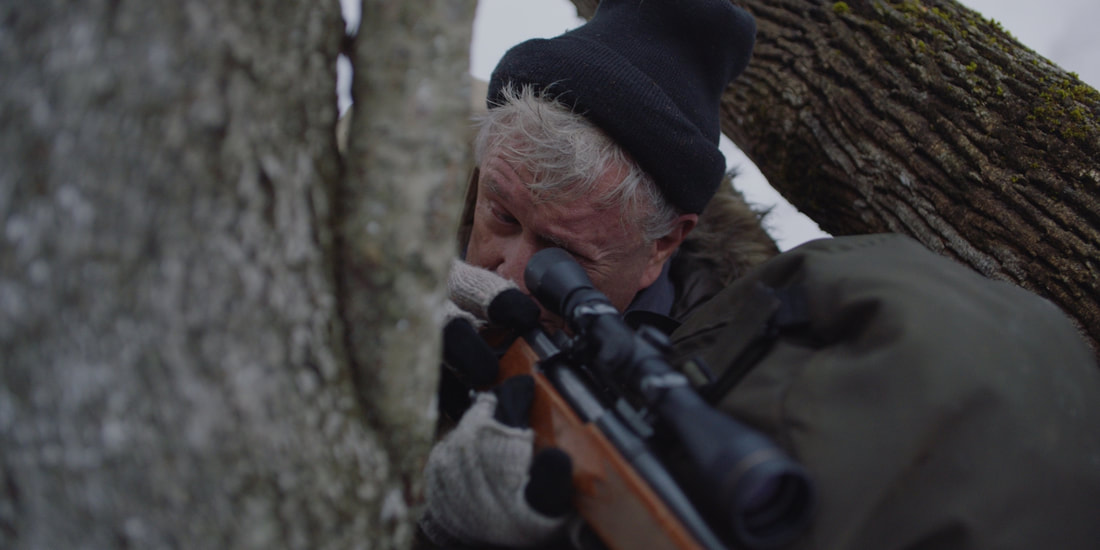
Tom Berenger as Jim Reed. Blood and Money arrives in theaters and on VOD on May 15, 2020 from Screen Media. Photo Credit: Screen Media.
Yet Barr’s script does not have the character development to compensate for the lack of cinematic conflict. The motivation for the characters, both protagonist and antagonist, are weak and conventional. And while the first act of the film is spent with the protagonist interacting with other characters in an attempt to make him feel more relatable, these scenes are so generic that they don't work.
Berenger is certainly a very talented actor, and it is his performance that keeps this ship afloat. Although the role isn’t too different from the type that is usually given to aging actors, it’s moderately demanding for the bunch. His delivery of the dialogue is particularly impressive, giving the movie a surprisingly natural feel. On a technical level, Barr’s film is also not up to par. The movie takes place completely in the woods of northern Maine, and yet there is no spatial geography to the action at all. With a film that is confined to limited locations such as this, it is important to create a feeling of immersion for the viewer. Blood and Money is a watchable thriller thanks to a solid performance from Tom Berenger, but it’s mostly forgettable. The actors’ fans would be better off watching some of the more entertaining flicks from when he was in his heyday. Blood and Money hits VOD on May 15. Rating: 2.5/5
Review by Camden Ferrell
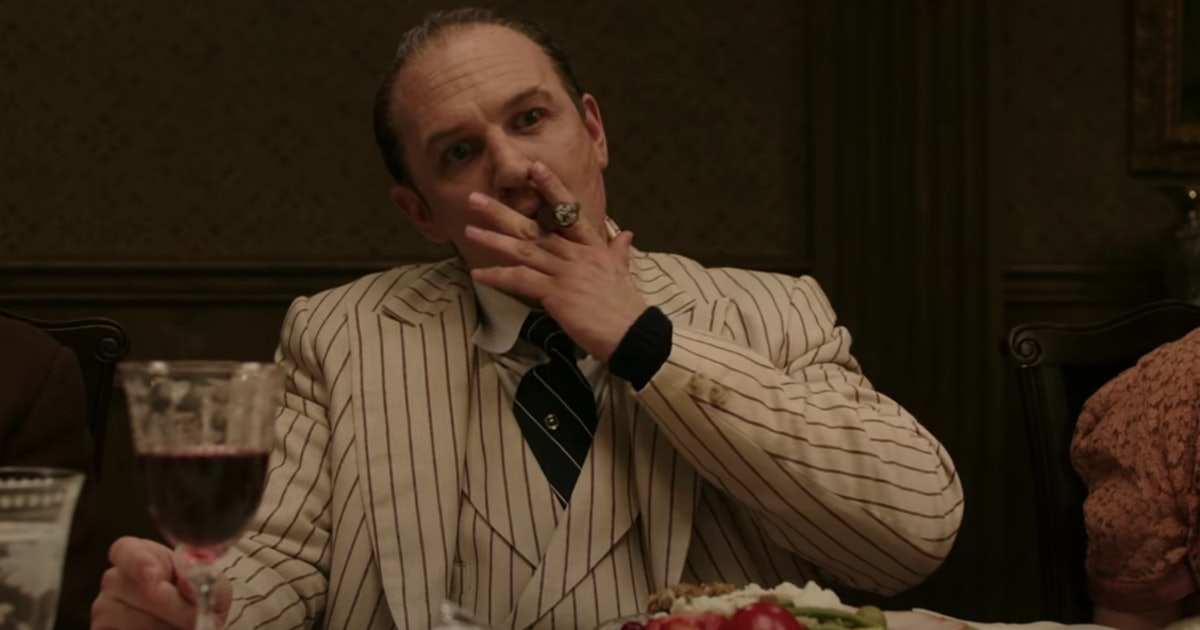
After the fallout of his previous film, Fantastic Four, Josh Trank (Chronicle) has returned to the director’s chair for his newest feature. Capone is his first film in 5 years, and he served as writer, director, and editor. While it is undoubtedly the result of singular vision, the ostentatious performances, muddled script, and poor execution make this movie a major misfire.
This movie tells the story of legendary and notorious gangster Al Capone. However, the film doesn’t focus on his years as a crime boss, but it opts to tell the story of the end of his life. After no longer being deemed to be a public threat, we see Capone as he is released from prison as his health declines due to neurosyphilis. This is a period of Capone’s life that isn’t often talked about, and while it could have been interesting to see him in this time, this movie squanders this premise with sloppy writing and themes. The script is very weak throughout. It juggles a lot of cliché dialogue throughout, and it feels terribly superficial. It also fails to elucidate some of the basic facts of this story, and even though this could be for the sake of ambiguity or artistic merit, it comes off as messy and uncontrolled. It’s not as insightful as it tries to believe it is, and it leaves one knowing very little about its titular character. This is a shame considering how retrospective the movie tried to be. The acting is also all over the place. Tom Hardy (Venom) plays Al Capone, and his performance ranges between uninspired and off the rails. A lot of the time, he painfully overacts every scene, delivering his dialogue with a baffling accent. It’s comes off as a caricature rather than an honest depiction of its subject. Even though some members of the cast like Linda Cardellini (Dead to Me) and the typically reliable Kyle MacLachlan (Twin Peaks) are somewhat passable, the rest of the cast fails to add anything of worth to the film. 
Trank’s execution is also erratic. It jumps between a variety of paces and tones, and it does so with abrupt shifts that make little narrative or thematic sense. It’s clear that he’s a director with a distinct vision, but it’s a shame that the vision is clouded and involves a lot of unique albeit misguided creative choices. It is possible that this movie could just be another misstep for Trank, but there are some glimmers of hope in a handful of moments throughout the movie that suggest better things to come in the future.
Peter Deming (Twin Peaks) was the director of photography for this movie, so it should have been as visually stunning as his other works. However, this wasn’t terrible, but it was one of the bigger let downs of the film. He usually delivers with some stylish visuals and beautiful imagery, but this movie doesn’t fully deliver on this. There are a few really great shots, but many of the scenes feel lackluster and somewhat uninspired. This along with the film’s score leaves a lot to be desired. Ultimately, the movie is an extremely confusing and shallow look at the legacy of one of the most famous men of the 20th century. It’s moments of tension are weak, and they do little to add to the entertainment value of the movie. Despite being under two hours, this movie feels sluggish, and it is rather uninteresting for most of its runtime. Capone is one of the most bizarre movies of the year, and it’s one that is better left unseen. While it’s subject is somewhat interesting, its themes and messages are lost in senility. There is a profound lack of awareness, strong performances, or sound creative choices, and it wastes the potential of its cast and intriguing subject matter. Capone will be available on VOD May 12. Rating: 1/5
Review by Sean Boelman
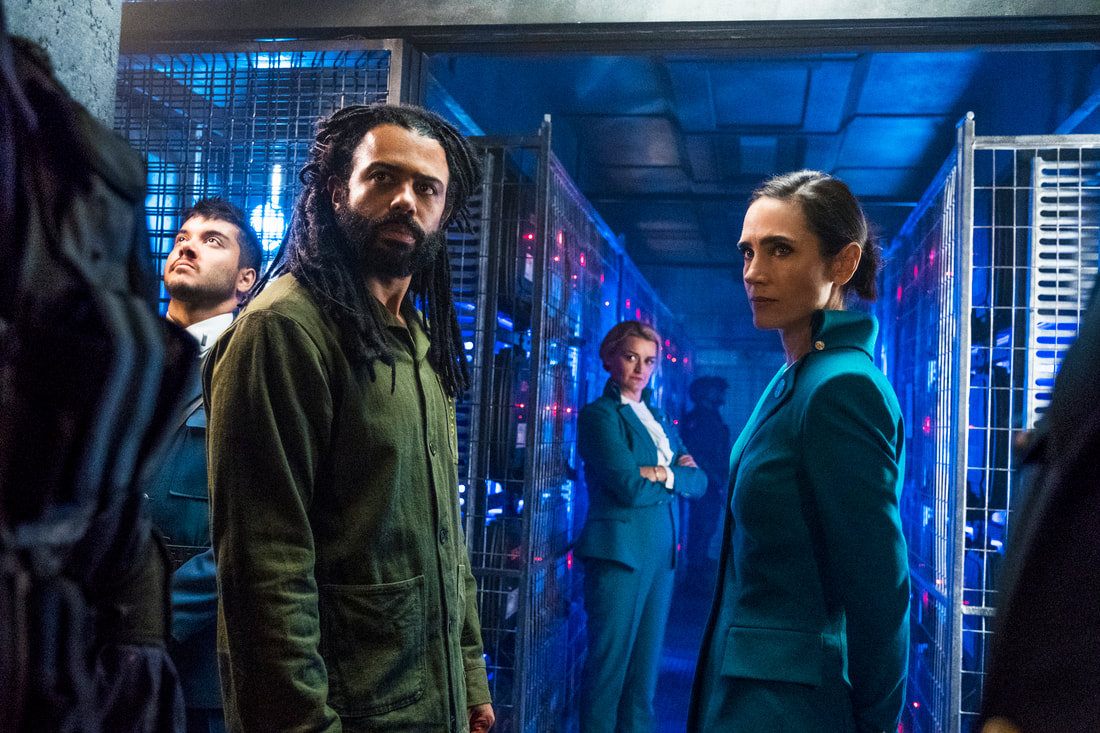
Photograph by Justina Mintz.
Inspired by Bong Joon Ho’s 2013 film of the same name (itself an adaptation of a French graphic novel), the new TNT series Snowpiercer is one of the most highly-anticipated premieres of the summer television season. And while the series takes advantage of its intriguing premise more often than not, it is in desperate need for some streamlining heading into its already greenlit second season.
The series follows the last survivors of an apocalypse brought about by climate change, living on a perpetually moving train circling the globe. Much like Bong’s film, this series places an emphasis on the social commentary inherent in the premise, as the passengers of the eponymous train have divided themselves into different classes based on the position of their car. It seems that the biggest challenge the creators of this series had in translating this story to a serialized format was trying to make it more accessible for primetime television. But instead of going all-in on the world-building as they should, the creators force in a procedural storyline. Ultimately, this investigation is a lot more conventional than the premise deserves. That said, those portions of the show that explore the relations between the different classes in the train are absolutely fascinating, particularly in the later half of the season, which is undoubtedly much stronger than the first five episodes. And if the cliffhanger at the end of the season finale isn’t a misdirection, next year’s batch will be the intelligent satire that fans so desperately crave. 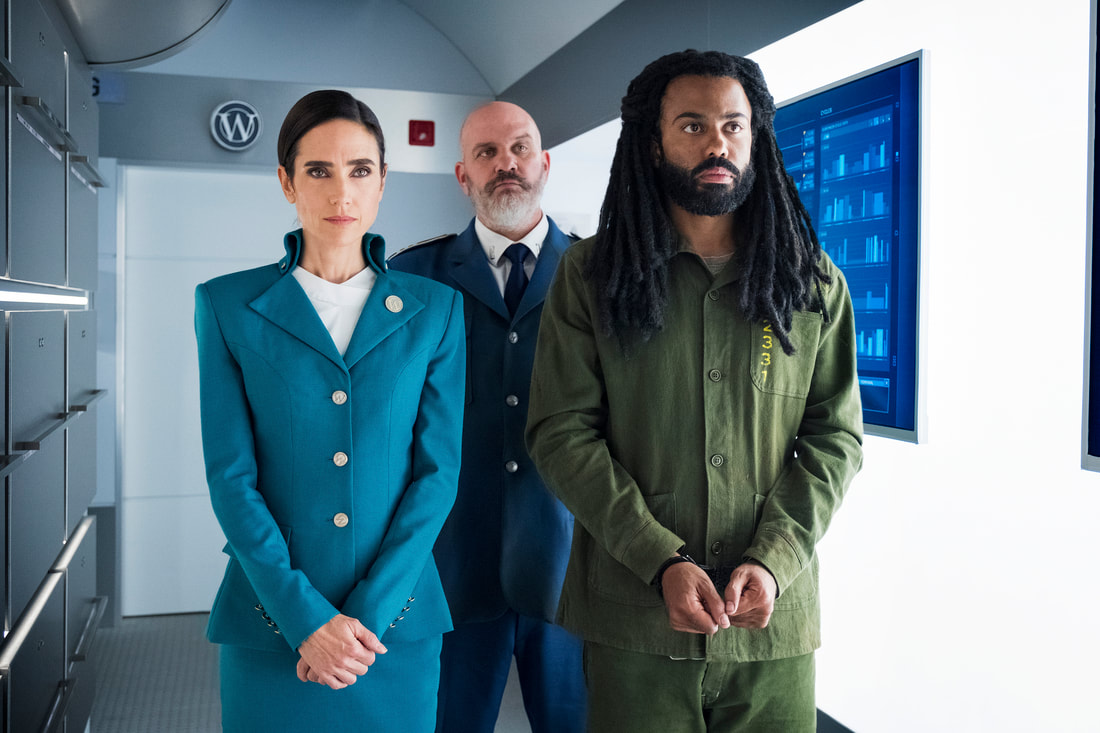
Photograph by Justina Mintz.
The first season’s protagonist, played by Daveed Diggs, is a pretty run-of-the-mill network television hero. Wielding a noble backstory that cements him firmly as a man of the people, and an uncannily clear perception of good and evil, Diggs may not have the same star quality as the movie version’s lead, Chris Evans, but he’s still charming enough to carry the series nonetheless.
Perhaps more interesting though, is Jennifer Connelly’s character who doesn’t have an exact analogy in the film’s version. Her subplot is infinitely more interesting than any other in the series, perhaps because hers is the arc that feels most complete by the finale. And of course, Connelly’s performance that is equal parts menacing and alluring helps as well. Visually, the series is a bit of a mixed bag. For the most part, the production value is much higher than the average network show (hence part of the reason why it was stuck in development for so long), but there are still some areas in which it is lacking. The action sequences are edited in a way that is almost too hectic to the point that it is hard to keep up with them, and in other scenes, the CGI is not up to par. Thankfully, these issues mostly smooth themselves out after the first few episodes. After waiting years for another visit to the eternal engine, TNT’s Snowpiercer may not quite live up to fans’ expectations. That said, more often than not, the show is entertaining enough to be worth a watch, especially given the potential it shows in its last three entries. Snowpiercer debuts on TNT on May 17 at 9pm, with additional episodes airing on subsequent Sundays at the same time. All ten episodes reviewed. Rating: 3/5 |