
[SXSW 2021] UNITED STATES VS. REALITY WINNER -- A Flashy yet Effectively Shocking Documentary3/25/2021
Review by Sean Boelman
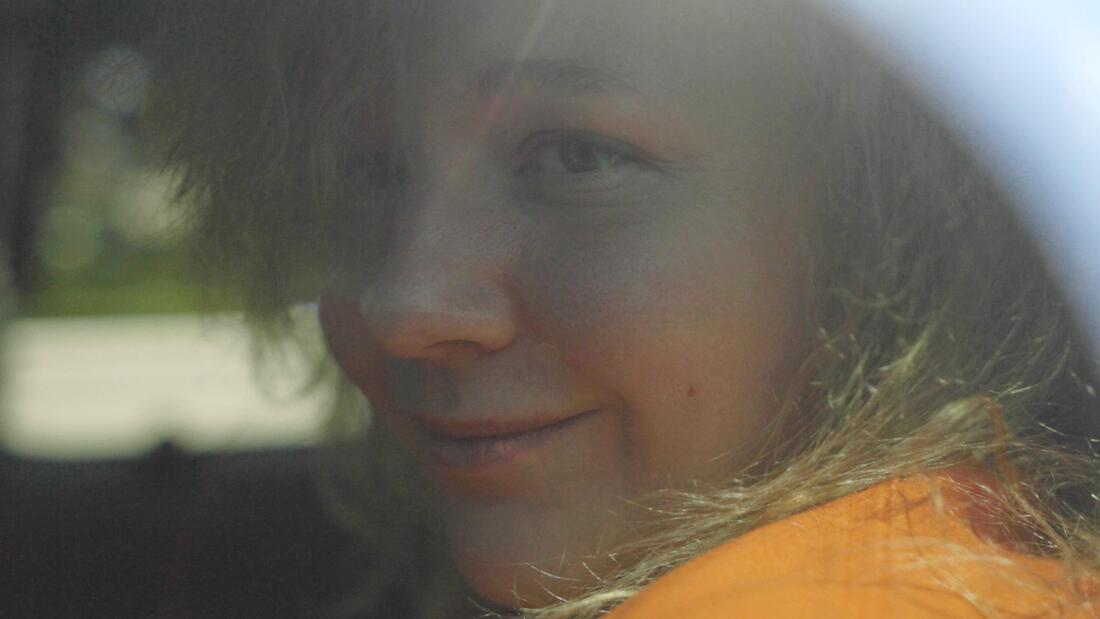
Reality Winner. Credit: Torsten Lapp.
Coming at a time in which election fraud has seemingly dominated the headlines for months, the documentary United States vs. Reality Winner asks how much the American government actually cares about the issue. And while this does lean towards the flashier side of nonfiction filmmaking, it still manages to be compelling because of its shocking story.
The film tells the story of Reality Winner, a former NSA contractor turned whistleblower who was prosecuted by the U.S. government for leaking information about foreign interference in the election. It’s a fascinating case study that a majority of people have heard of but likely don’t understand the extent to which it has implications on our country. First and foremost, this is a work of advocacy to tell Winner’s story in a way that pulls back the curtain on media coverage of her trial. The film poses some interesting questions about the way in which the government, media, and public treat whistleblowers who are acting in the public’s best interest but are designated as criminals. However, the more fascinating aspect of the film explores on whom the culpability for Winner’s situation falls. Is it a system that punishes those who want there to be transparency for the public? Or is it a bad journalist who failed to protect the anonymity of their source? Audiences are left to decide the answer to that question. Like in her previous films, director Sonia Kennebeck does a good job of exploring the effects of the subject’s story beyond themself. Much of the film is presented from the perspective of Winner’s family, who was forced to watch as their daughter became an object of public scorn, causing them both great sadness and scorn. This provides a really solid emotional foundation for the film. On the other hand, the more political aspect of the film is explored by experts in the field and other famous whistleblowers, including Edward Snowden. These interviews work to put Winner’s story into context within the history of whistleblowing in the United States and really shock the audience with how lack of transparency has been an issue in this country for a long time. There are a lot of techniques used in this film that are intended to make the narrative more entertaining and sensationalized for mass audiences, and even though it is easy to recognize them, they aren’t terribly distracting. For example, narration from Natalia Dyer voicing Reality Winner is used, but not in a way that steals the spotlight from the interviews and archive materials. United States vs. Reality Winner is an interesting documentary about a story whose importance has received a bit of a resurgence in recent months. Apart from a slight gimmickiness, this is an accomplished and effective political documentary. United States vs. Reality Winner screened as a part of the online edition of the 2021 SXSW Film Festival, which ran March 16-20. Rating: 4/5
0 Comments
Review by Sean Boelman
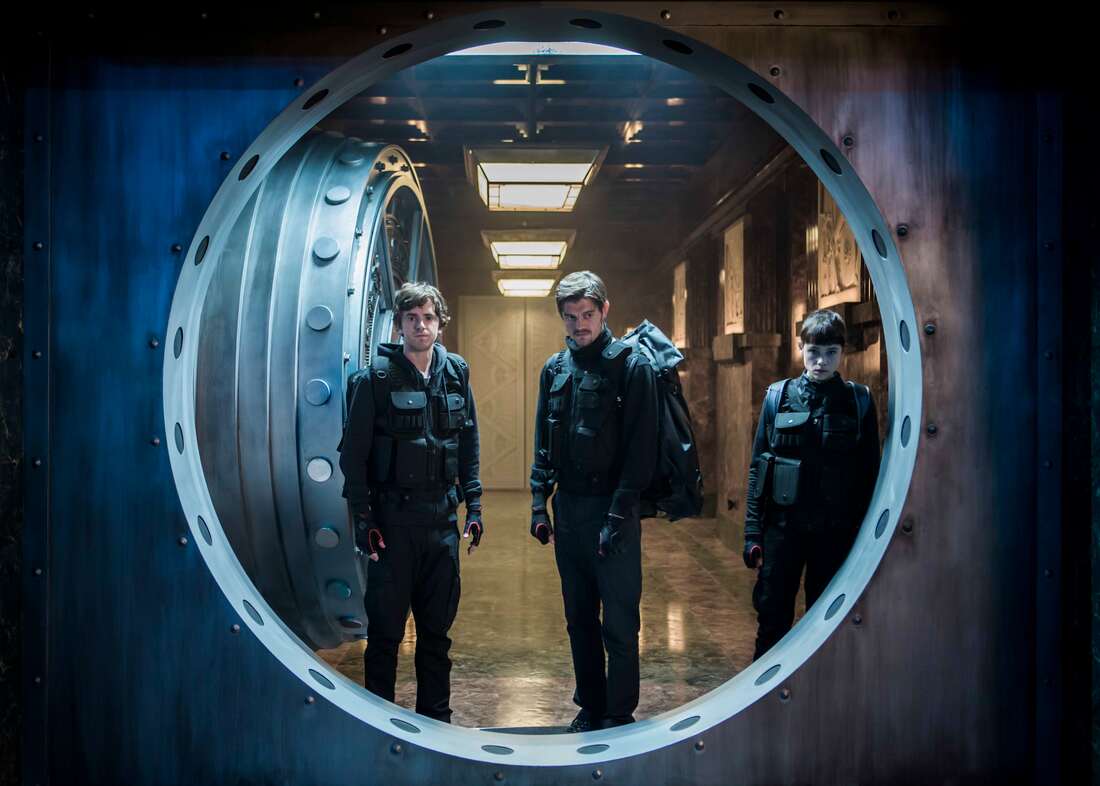
(Left to right) Freddie Highmore, Sam Riley, and Àstrid Bergès-Frisbey in a scene from THE VAULT. Photo courtesy of Saban Films
The heist movie is one of the best guilty pleasure genres, as there is an undeniable level of joy in watching thieves execute a convoluted plan to rip off the rich. Jaume Balagueró’s The Vault is a bit overlong, with a lot of dull filler before we get to the actual robbery, but that climactic sequence is pretty fun.
The film follows a genius engineering student who is recruited by a treasure hunter to recover artifacts from the Bank of Spain’s vault that were confiscated by the Spanish government. It’s a very thin story devised for the purpose of forcing these thieves to come up with a complex plan to break an impressive safe. Perhaps the biggest issue with the movie is its pacing. Although planning is a necessary element of any heist movie, this film is nearly two hours long, of which more than an hour is the build-up. A mini-heist keeps the excitement going as the movie pushes into the second act, but this easily could have been a ninety minute flick. What will likely be the main draw of the film is the eponymous chamber, protected by a defense system that threatens to drown anyone who dares to attempt a robbery. It’s a really fascinating feat of engineering, and it’s based on truth, albeit with some dramatic liberties taken, adding an extra layer of intrigue to the movie. 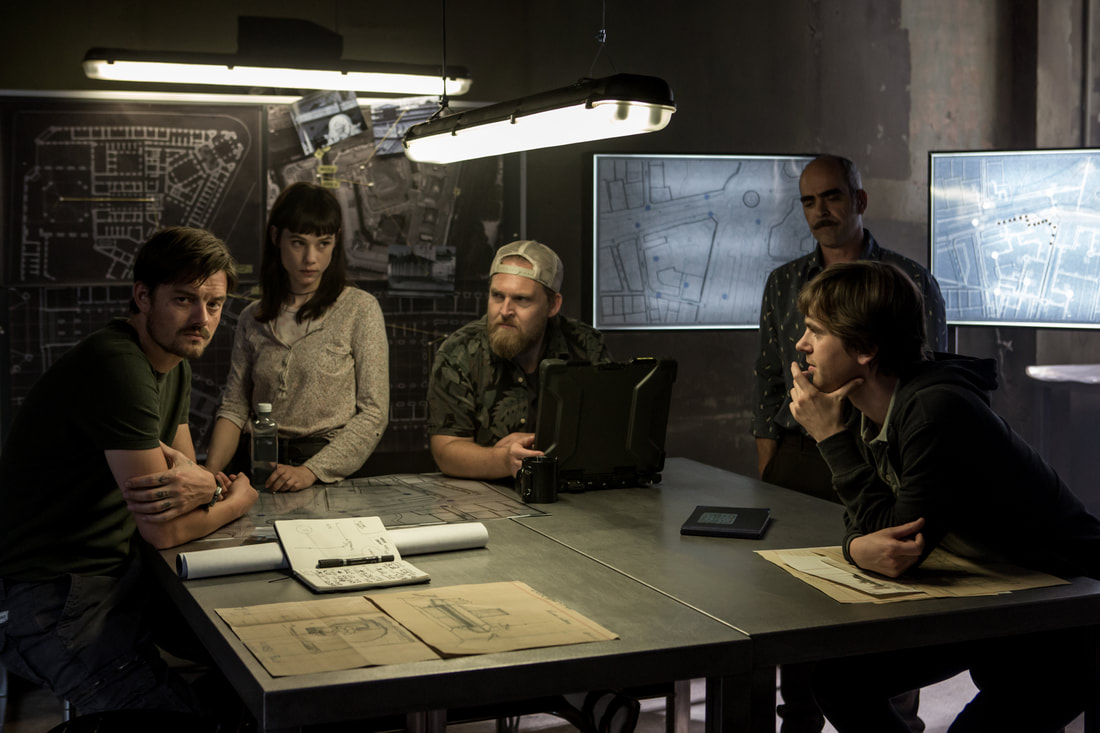
(Left to right) Sam Riley, Àstrid Bergès-Frisbey, Axel Stein, Luis Tosar, and Freddie Highmore in a scene from THE VAULT. Photo courtesy of Saban Films
The production design is impressive, as the replicas of the bank are really well-done. Other than that, the film is a mostly standard action flick in terms of execution, with rapid editing, mostly straightforward cinematography, and a few memorable sequences. It’s definitely not among the stylish entries in the genre, but Balagueró’s movie is at least entertaining.
If there is one thing that is significantly missing from the film, it is character development. The protagonist is extremely underwritten, with basically no motivations whatsoever. The female lead is mostly a romantic interest for the hero, but has a few scenes in which she shines. All of the rest of the players are various stock characters. It can be a little hard to believe Freddie Highmore in this role. He’s just a bit too deadpan in his delivery to be a charming scholar-turned-reluctant-criminal. Sam Riley is a highlight as the more experienced thief, although he is over-the-top. And in the supporting cast, Liam Cunningham and Famke Jannasen are underused as background forces. The Vault certainly isn’t an exceptional entry into the heist genre, but it’s competent enough to be watchable. It’s one good thirty-minute set piece with a bunch of filler around it, so take that as you will. The Vault hits VOD on March 26. Rating: 3/5
Review by Camden Ferrell

Violation premiered at the 2020 Toronto International Film Festival and played at other festivals including the Sundance Film Festival and the SXSW Film Festival. This is the first feature film from writing and directing duo Madeline Sims-Fewer and Dusty Mancinelli. Their feature debut is a disturbing and effective revenge movie with some great performances.
Miriam’s marriage to Caleb is falling apart. They both go to visit Miriam’s sister, Greta, and her husband, Dylan. However, after a shocking act, Miriam embarks on an endeavor of revenge, not realizing the repercussions it will have on her own psyche. This comes off as a standard revenge thriller at first, but the movie quickly proves it knows how to add new life to the genre. The writing of Sims-Fewer and Mancinelli is very strong throughout. The dialogue between the characters is compelling and realistic, and they convincingly capture the nuances of these relationships. There are lots of twists and shocking moments that are written very well, and the movie deals with some very serious subject matters that are handled delicately by the writers. The performances in this film are great. Sims-Fewer leads the film as Miriam, and she plays the role impressively well. She effortlessly handles the broad range of emotion for the character. There is one brutal scene in which her quite literal regurgitative reaction was entirely real, and it’s an impressive feat. The supporting cast is also talented, but the one that stands out most is Anna Maguire as Greta. Her relationship with her sister is very complicated over the course of the movie, and she perfectly captures those dynamics. 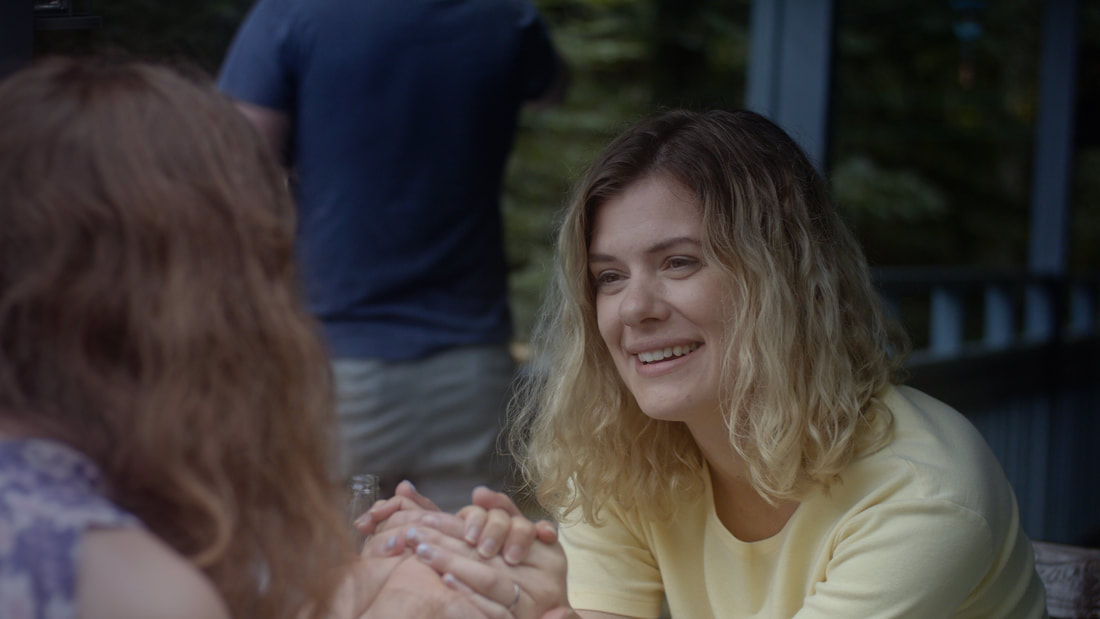
The movie is told non-linearly, which catches you off guard at first, but the execution of the scenes makes it work brilliantly. It makes the film’s disturbing and shocking moments even more unexpected, and it makes its themes more effective. There are some jaw-dropping moments that only work as well as they do because of how the narrative is uniquely structured.
While the film is incredibly brutal, the topic of sexual assault is a sensitive issue that is essential to handle properly. I was impressed by how the film handled that topic throughout, and it didn’t feel exploitative in any way. It maintained its effectiveness without having to exploit the female lead at all. The movie is a revenge film that contains many timely themes and says something unique about the toll revenge can take on somebody. The film is supported by a brilliant classical score and some haunting imagery. The movie can lose a bit of its steam in the end, but it makes up for it with its eerie ambiance and tension. It’s a fantastic debut from Sims-Fewer and Mancinelli, and they have a profound way of telling this unique story in an engaging way. Violation is a unique and shocking revenge film that contains some powerful messages. The writing and directing is superb and the acting from Sims-Fewer is fantastic. While it’s not for the faint of heart, this is a film that must be on your radar. Violation will be released exclusively on Shudder March 25. Rating: 4/5
Review by Sean Boelman
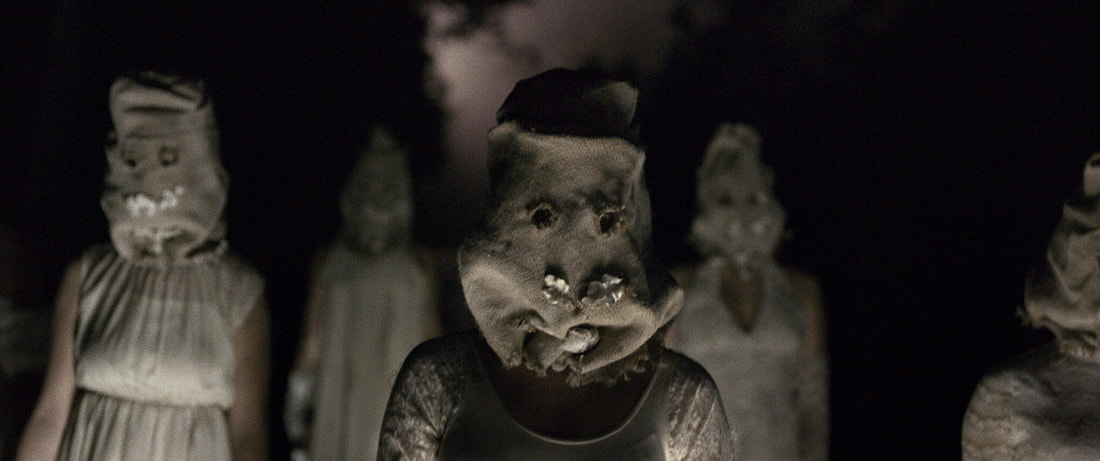
The idea of a rideshare horror movie is something that undeniably would have been intriguing a year ago when it was supposed to debut at the SXSW that never happened, but now it seems like a relic of a distant past. Nevertheless, the supernatural chiller The Toll starts strong with some intriguing world-building, but stumbles when it falls back on more traditional cliches.
The film follows a woman who finds herself mysteriously stranded on a remote road with her awkward and creepy rideshare driver when they discover that they are being stalked by a supernatural presence. It’s a high-concept horror premise that sets up some interesting tension, both between the characters and the ghostly entity and between the characters themselves, but this is largely squandered by a predictable ending. This is definitely a very nicely-paced horror movie. There are a few scares that are a bit derivative, such as a scene featuring a television monitor that feels like it has been done hundreds of times before. However, there are also some scares that are genuinely interesting in their execution, allowing the film to creep under your skin as a whole. On the other hand, Nader isn’t able to find his thematic groove so easily. The things that the movie has to say about trust and paranoia are nothing new to the genre and pay off in a way that is ridiculously anticlimactic. And while the end of the second act suggests that this might go somewhere deeper, it pulls back quickly. 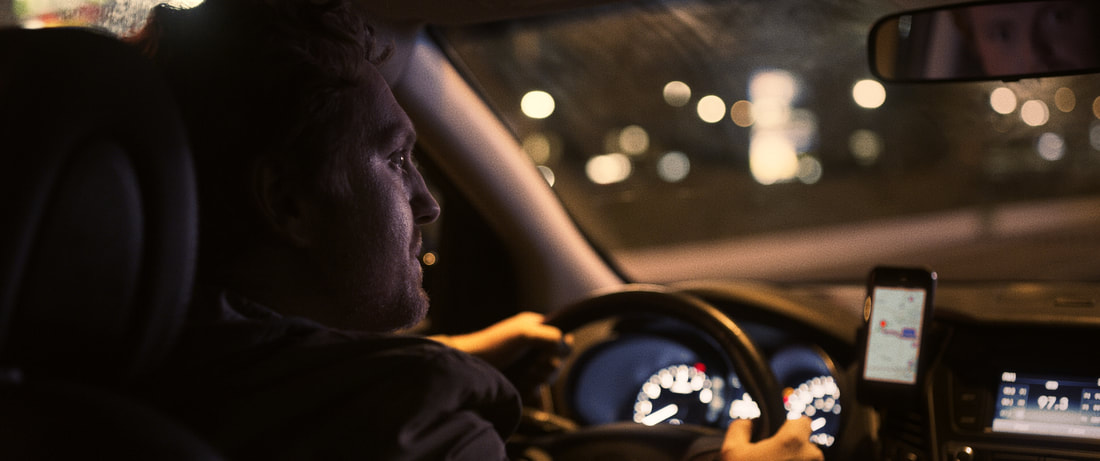
Additionally, the character development in the film isn’t very strong. Granted, it is clearly the intention for the audience to be constantly changing their opinion on the characters, but Nader does it to such an extreme extent that it becomes difficult to connect with either of them on an especially deep level.
Yet despite being given tremendously ambiguous roles, Max Toplin and Jordan Hayes manage to pull some legitimately good horror performances out of their turns. Toplin in particular is wonderful, oscillating between the charming and intimidating aspects of the character quite effectively. Hayes’s performance is much less extreme, but still effective. Nader makes the most out of the largely secluded nature of the location to create an eerie atmosphere. It was an interesting choice not to restrict the movie to exclusively being set in and around the car, but it works (and quite well at that). The woods elements are a bit generic, but Nader compensates for this with above average world-building in the script. The Toll does unfortunately let itself down in the final third, but for the most part, it’s still an enjoyable and mostly well-done horror flick. For those looking for some spooky escapism, this is a good one to scratch that itch. The Toll hits theaters and VOD on March 26. Rating: 3.5/5 [SXSW 2021] PAUL DOOD'S DEADLY LUNCH BREAK -- A Zany Dark Comedy with a Great Central Performance3/23/2021
Review by Sean Boelman
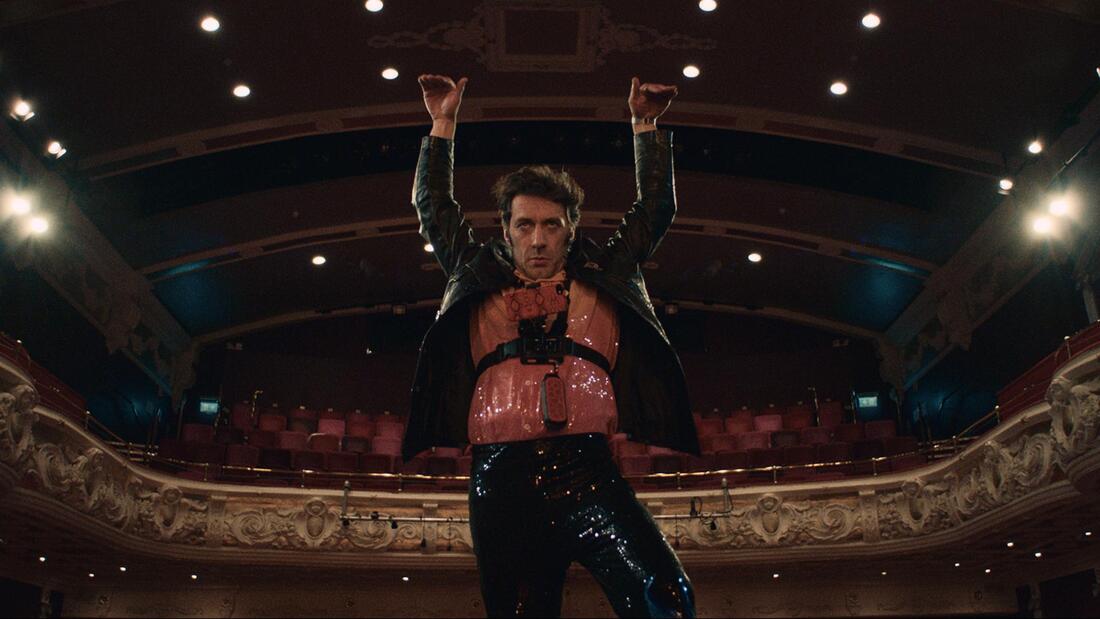
Credit: Belstone Pictures.
The SXSW Film Festival is known for showcasing some very out there films, even beyond its Midnighters category, and the dark comedy Paul Dood’s Deadly Lunch Break is one of the wackiest movies that was in this year’s lineup. And even though it does take some time to pick up its steam, this offbeat romp is the type of film that seems destined for cult classic status.
The movie follows a lonely man living with his mom who, after failing spectacularly on an audition for his favorite talent show, sets out on a deadly path of revenge against the people who caused him to embarrass himself. It’s a dumb plot, but it sets up some scenarios that are absolute comedic gold. Admittedly, the film does have a bit of a problematic message. This is clearly meant to be a spin on the revenge thriller, and it’s effective as such, but it is also disappointingly mean-spirited. Ultimately, the message is to be kind to one another, but apparently it takes showing a whole lot of rudeness to get that moral across. Paul Dood is an absolutely charming lovable goof. Yes, he has a lot of eccentricities that can be a bit much at times, but the unabashed zaniness of the protagonist is honestly what makes the movie work so well. Tom Meeten’s lead performance is wholly committed and surprisingly lived-in, almost as if he was taking a character he had already worked with and expanding it. The supporting characters in the film aren’t quite as well-written. Everyone except for Paul is a total archetype, with very few distinguishing characteristics. There’s the supportive mother, the jerk co-worker who tries to make the protagonist’s life a living hell, and the arrogant television show personality. On one hand, it is a little frustrating that it takes about thirty minutes for the movie to get to the eponymous catastrophe, but once it does, it moves along quite well. And the necessity of the first act is obvious, as it provides a needed foundation in characterization, even if there probably was a better way to do the same thing. There are some really interesting things going on in the film’s execution. The costuming choices for the protagonist are inspired and create an excellent visual gag. Additionally, the use of practical effects during the spree in the second half is really impressive, with some strong and funny visuals. Paul Dood’s Deadly Lunch Break is an entertaining movie, and while it isn’t as deep as it seems to think it is, it’s more than diverting enough to work. Viewers will be left wanting to see more of Paul Dood, which is a good thing. Paul Dood’s Deadly Lunch Break screened as a part of the online edition of the 2021 SXSW Film Festival, which ran March 16-20. Rating: 3.5/5
Review by Sean Boelman
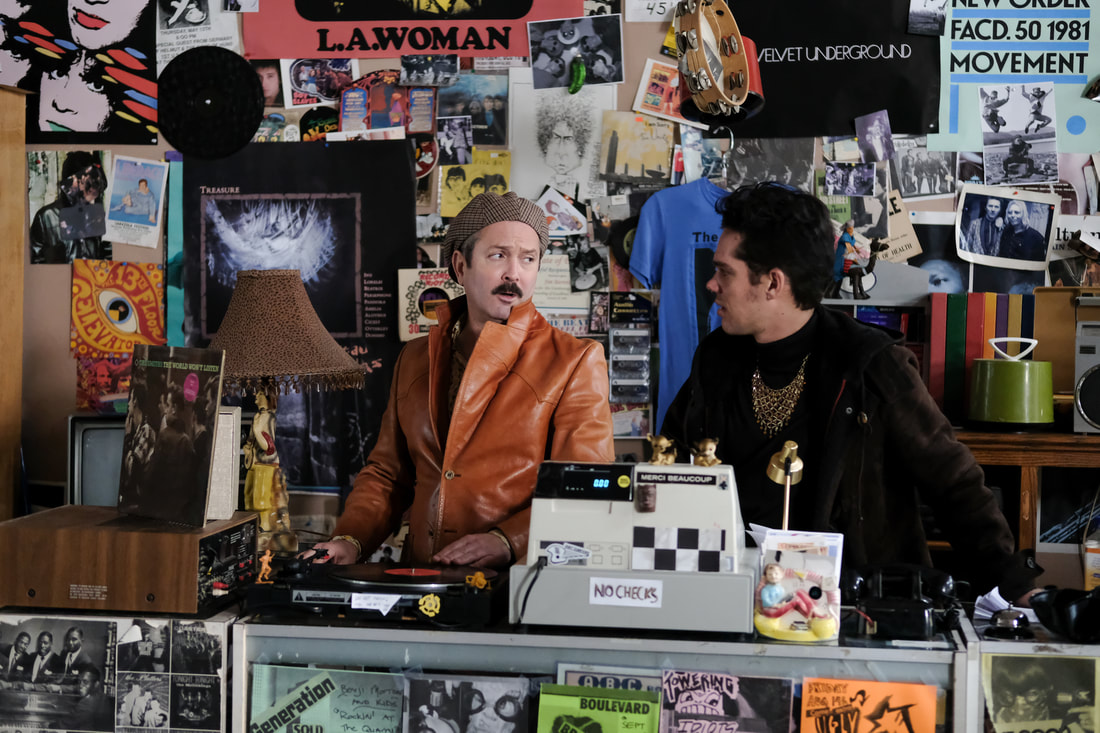
[L-R] Thomas Lennon as Uncle Dick and Ellar Coltrane as Dean in the drama/comedy SHOPLIFTERS OF THE WORLD, a RLJE Films release. Photo courtesy of RLJE Films.
There are a lot of coming-of-age films that prominently feature music as a significant force, as it is easy to find oneself through the power of great lyrics. A love letter to the great rock band The Smiths, Stephen Kijak’s film Shoplifters of the World is a bit of a slog to get through, an overwhelmingly mediocre film that fails to do anything interesting with its characters.
The film follows a group of teenagers whose lives are about to fundamentally change as they get together and party on the night that The Smiths break up. We have seen plenty of movies that tell a fictional story against the backdrop of true events, but few have been as frustrating as this bland mix of tropes and shallow philosophical ramblings. That said, there is a subplot in the film that is really interesting, about a young man who kidnaps a radio station DJ and forces him to play the music of The Smiths, but this is really underdeveloped. It has the most stakes of any of the storylines yet is treated like a cutaway from the main tale of these four friends coming of age. Additionally, it feels like the film is afraid to say anything particularly challenging about the topics it hopes to address. There are portions of the film which apparently want to explore the sexuality of the young characters, but this discussion is shallow at best and regressive at worst. And while the poetry of the music is often mentioned, the film never really does anything with it. 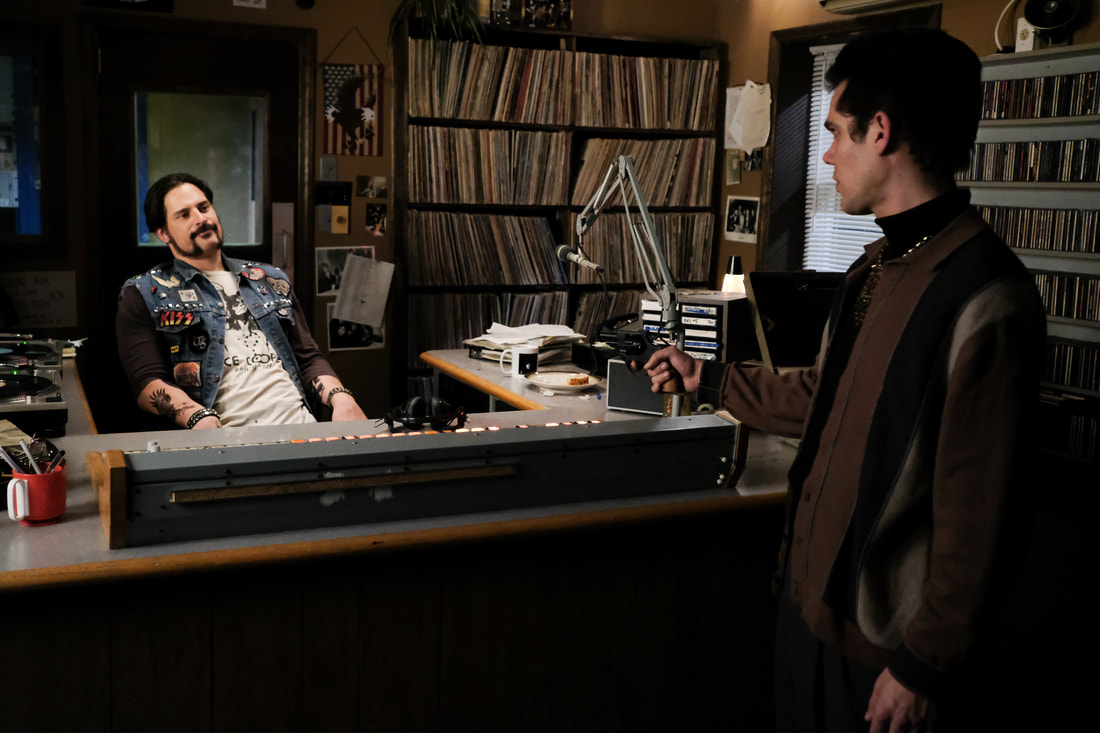
[L-R] Joe Manganiello as Full Metal Mickey and Ellar Coltrane as Dean in the drama/comedy film, SHOPLIFTERS OF THE WORLD, a RLJE Films release. Photo courtesy of RLJE Films.
Perhaps the biggest issue with the film, though, is that the dynamic between the four characters isn’t that interesting. Kijak seems to have been more interested in the characters’ individual arcs, but unfortunately, they are so archetypal that they just don’t work. And that element of friendship definitely would have gone a long way in creating an emotional connection to the story.
It’s definitely a shame that the characters aren’t more well-developed, because the actors are all very talented. Helena Howard (Madeline’s Madeline) plays the lead, and while the character isn’t very deep, she at least brings some personality to the role. Elena Kampouris threatens to steal the show with some of the most memorable scenes in the film. And Joe Manganiello has a fun if overdone supporting turn. It is on a technical level that the film is most disappointing. Although the soundtrack featuring the music of The Smiths is wonderful, that is one of the few highlights. The production values of the film are otherwise rather cheap (all the money was probably spent on music rights and Manganiello), resulting in some disappointingly bland party scenes. Shoplifters of the World isn’t a very good film despite the potential in the concept and the cast. It’s ultimately just another coming-of-age movie, and we have seen enough of those that this generic one isn’t necessary. Shoplifters of the World hits theaters and VOD on March 26. Rating: 2/5
Review by Camden Ferrell
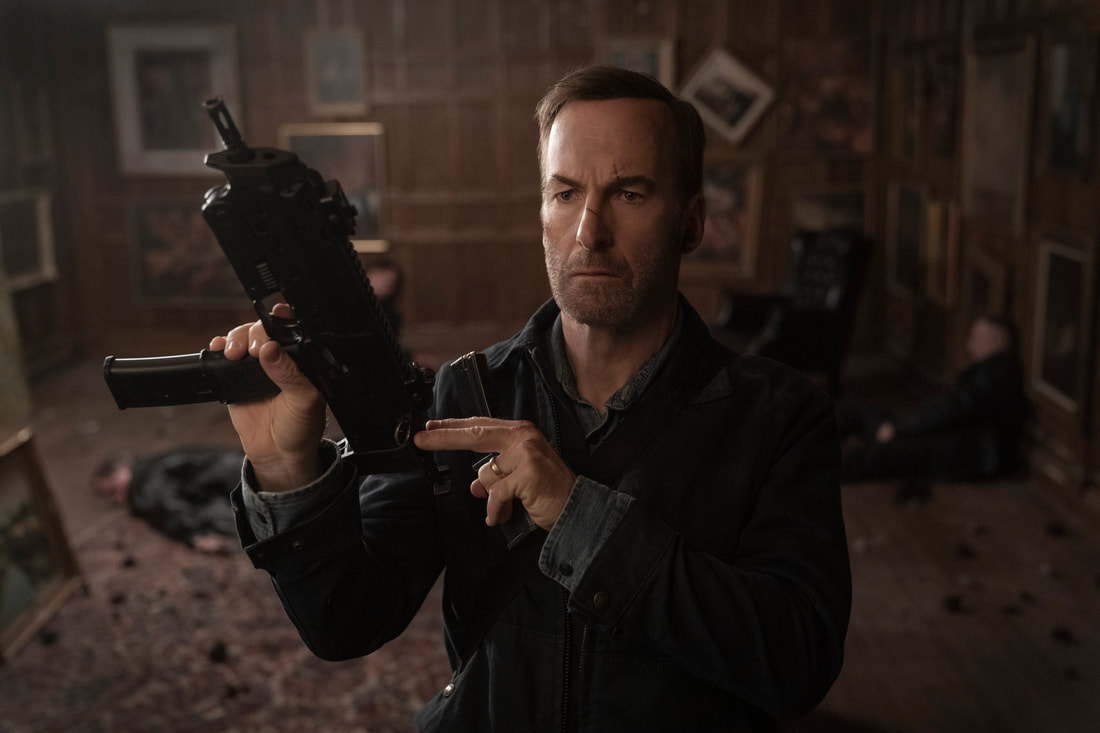
Nobody sees the return of director Ilya Naishuller, whose most recent feature film was 2015’s Hardcore Henry. After numerous delays due to COVID-19, Naishuler’s return to cinema, is finally set to be released. While the handful of big action sequences are extremely energetic and well-executed, the rest of the film can feel muddled and somewhat bland.
After his home is broken into, Hutch, a husband and father, chooses not to defend himself or his kids, a decision that weakens his relationship with his family. However, in the aftermath of the robbery, his lethal skills are unleashed after a period of dormancy. Hutch finds himself on a brutal and bloody path that uncovers secrets about his past as he aims to protect his family from a Russian crime lord. It’s a simple premise that works really well in setting up some great conflict and fight scenes throughout. The main problem with this film comes from its writing. The script was written by Derek Kolstad who is responsible for the excellent John Wick films. Those films have great action, but they still have great stories and dialogues to propel the non-action scenes. Nobody lacks the compelling narrative and dialogue to make the film interesting when bad guys aren’t being slaughtered, and that’s why the film drags far too often. The acting is mostly enjoyable. Bob Odenkirk steps out of his comfort zone in order to play the lead in this action film. He does really well with the fight scenes and choreography, but he sometimes seems out his element in certain exchanges with other characters. The supporting cast is above average, including Christopher Lloyd and RZA who give energetic performances. 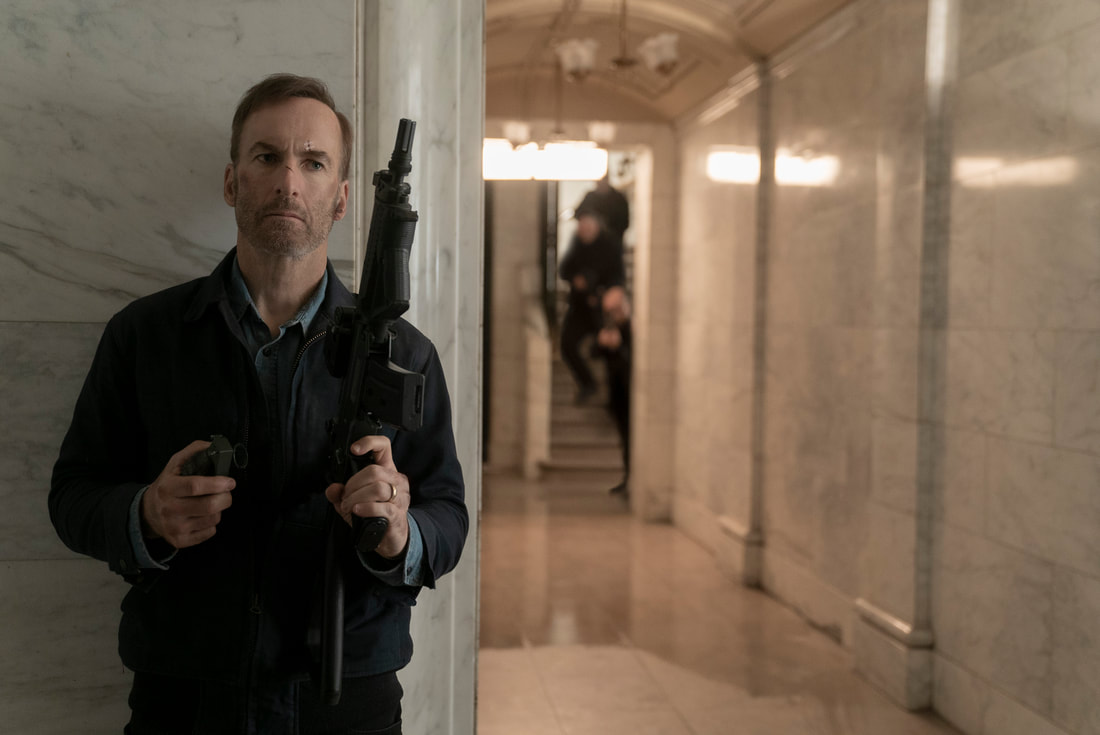
Arguably, one of the let downs of this film is how it pales in comparison to Naishuller’s previous film. Hardcore Henry was a film with non-stop blood, guns, and gore, and it was a really interesting POV film. His newest film isn’t quite as brutal, but it lacks the momentum that made his previous film so enjoyable.
The cinematography is very well-done, and it does a great job of making all the action cohesive. It captures everything clearly, and in the fight scenes, it makes sure to frame all of the brutal injuries properly. The editing in these scenes is also great, and it compliments the cinematography in a way that the action becomes very tangible. While the action is amazing throughout, there aren’t nearly enough action scenes to carry the film. There’s a handful of big sequences, and they’re all super compelling, but the rest of the movie pales in comparison to it. Even if it has to be smaller encounters, the movie could have benefitted from a heavier dose of action to supplement its story. Nobody may not be the next John Wick, but it still boasts some great action and an interesting turn from Odenkirk if nothing else. It shows that Naishuller hasn’t lost his touch for high-octane action, and it should be sufficient viewing for fans of mindless action. Nobody will be in theaters March 26. Rating: 3/5
Review by Sean Boelman

The tragic struggles of Disney child star turned pop icon Demi Lovato got a lot of media coverage when she was having her darkest moments, but there is a lot more to her story. Offering the musician an opportunity to reclaim the narrative, the documentary Demi Lovato: Dancing with the Devil is an intimate and harrowing exploration of addiction.
In the series, Lovato and those close to her discuss the factors that led to her near-fatal overdose and the lessons she learned from her experiences. This is not a music documentary in the classical sense in that it is almost entirely about Lovato’s addiction and recovery and barely about her music. Split into four episodes, the series clocks in at right around an hour and forty minutes in total runtime. On one hand, it feels like a very comprehensive exploration of Lovato’s experience, both from her perspective and those of others with personal knowledge of her situation, but it’s organized in a way that is uneven and frustrating. The series really does an excellent job of discussing the catastrophic impact that addiction can have, both on the addict and everyone around them. It helps that Lovato seems to be being very upfront and honest about the things that she went through, making it something really groundbreaking in how it approaches the subject. Obviously, fans will immediately identify with Lovato, and they are likely to make up a majority of the viewership of the series, but the series also does an excellent job of exploring what makes Lovato’s story so heartbreaking. There are a lot of distressing revelations made in the series that people may not have realized had been a factor in her life. The series is at its best when it allows Lovato to speak freely and discuss what she has been through and how she has grown. Other portions of the series feature interviews with Lovato’s friends and colleagues, discussing how they were affected by Lovato’s overdose and what they are doing to help her overcome her addiction. It’s a competent series on a technical level, although there are definitely some things that could have been done better. The use of arrangements of Lovato’s music in the soundtrack is understandable and expected, and while it does achieve the intended emotional effect, it also feels somewhat melodramatic. Demi Lovato: Dancing with the Devil is a strong documentary series that is worth watching, even for those who may not be fans of the musician. It’s one of the most nuanced and empathetic takes on addiction to grace the screen in quite a while. Demi Lovato: Dancing with the Devil screened as a part of the online edition of the 2021 SXSW Film Festival, which ran March 16-20. Rating: 4/5 [SXSW 2021] ALONE TOGETHER -- A Moving Documentary About Making the Most of a Bad Situation3/21/2021
Review by Sean Boelman

The COVID-19 pandemic has forced artists to re-evaluate and adapt their creative process to accommodate for what is happening in the world. The documentary Alone Together is a fascinating and moving portrait of one such artist, popstar Charli XCX, as she sets out to make art despite the difficult circumstances.
The film follows Charli XCX as she makes a new album in a mere forty days, all the while maintaining an intimate relationship with her global community of fans. It’s interesting to get to see the behind-the-scenes process of how she makes her music, especially since this is one of the first cases in which we get to see music being made in the time of COVID. Additionally, the movie explores what Charli XCX means to her fans. Although this portion of the film is admittedly a bit underdeveloped, it’s still nice to see documentaries like this that care just as much about the people who make the celebrity successful as the celebrity themself. And there are some surprisingly emotional moments when it comes to this. There are some interesting fan stories in the movie, but there are clearly more to be told. It seems as if the filmmakers are only using these as a publicity opportunity for Charli XCX. However sweet they may be, the popstar’s contributions are somewhat trite (and perhaps even self-serving) in nature. That said, what filmmaking duo Bradley & Pablo does best is humanizing their subject. Music documentaries often either glorify the musician or paint them as a tragic figure, but Bradley & Pablo do neither. Instead, they show Charli XCX as just another person who is stuck in the same situation as all of us, lonely and struggling. At an hour and ten minutes long, the film really rushes through its story. It keeps things to the bare minimum, not presenting a significant amount of performance footage or in-depth interviews, opting for more of a fly-on-the-wall approach watching Charli XCX and co. as they work their magic. Bradley & Pablo do a great job of incorporating Charli XCX’s music into the movie through the soundtrack, but some of the filmmaking choices are a bit more questionable. For example, there are a few animated sequences that don’t look particularly good and feel out of place since they are so inconsistent. Alone Together is a very impressive documentary, and one to which a lot of people will likely be able to relate. Although it is far from the most important COVID-19 story to be told, it is nice to see uplifting stories like this about people making the most of the situation. Alone Together screened as a part of the online edition of the 2021 SXSW Film Festival, which ran March 16-20. Rating: 4.5/5
Review by Sean Boelman

Photograph by John P. Johnson/HBO Max.
The sci-fi romantic comedy series Made for Love is weird and ambitious, and the result is entertaining if a bit puzzling. Great performances by Cristin Milioti and Billy Magnussen and lots of uncomfortable laughter make this something to watch even when all of the jokes don’t quite land.
Based on a novel by Alissa Nutting, the series follows a woman who escapes from a suffocating marriage to a tech mogul only to discover that he has implanted a new tracking and surveillance device in her brain. It’s a crazy, high-concept sci-fi premise that is used effectively to create some interesting satire. What will likely put some audiences off is the fact that the series struggles to find a balance between its thriller and comedy elements. At times, it’s meant to be taken seriously as it follows this woman on the run from an abusive husband, but then it turns into an absurd comedy with jokes about a middle-aged man in a relationship with a sex doll. These tonal shifts are jarring but mostly even themselves out after the first couple episodes. There are some interesting themes presented in the series about gaslighting and domestic abuse, but the way in which it is handled isn’t always the most sensitive. One of the biggest problems with the series is that it almost humanizes the abuser, because even though his crazed mentality is evident, his actions are also presented as an act of overzealous love. Perhaps this is resolved in the remainder of the season. 
Photograph by John P. Johnson/HBO Max.
The arcs of the characters are also somewhat disappointing. For much of these first episodes, the protagonist is defined through her experience of being a victim, with little other development coming in until the fourth entry. And her father serves as little more than a butt of repeated (and frequently unfunny) jokes.
Milioti’s performance is great, leaning on her delivery of darkly comedic quips. Magnussen has found a nice little type as the crazed but oddly charming psycho, having a lot of the funniest moments in the series. Ray Romano also has a supporting role, and while he has played the loser character more than once, he isn’t fully utilized here. For a sci-fi comedy series, there’s still a lot of room for this to grow. It’s clear that this is meant to be a near future with technology that is exaggerated but not too out there, but the audience probably won’t be fully immersed in this world. Instead, canny viewers will likely be trying to figure out who inspired the (seemingly) composite character antagonist. Made for Love is an entertaining series, and it will be interesting to see where it goes for the remaining six episodes. Not all of the jokes land, but those that do get some solid laughs thanks to the two talented leads. Made for Love is screening as a part of the online edition of the 2021 SXSW Film Festival, which runs March 16-20, 2021. Four out of eight episodes reviewed. Rating: 3.5/5 |