
|
Review by Dan Skip Allen
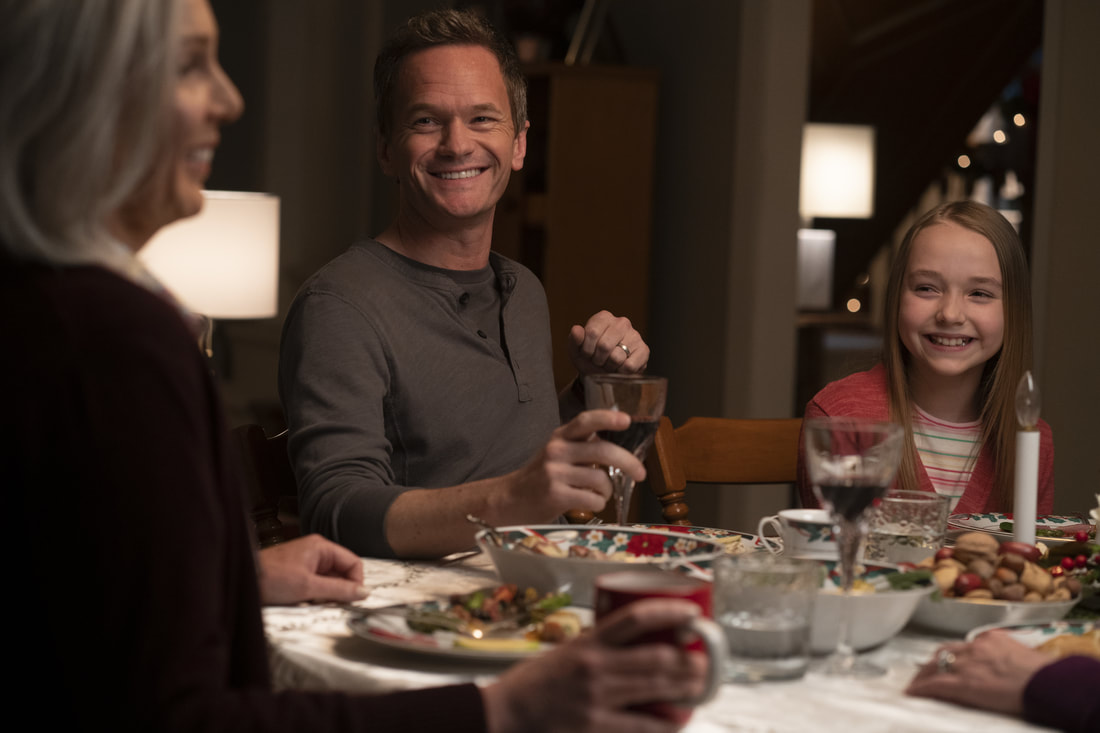
(L-r) JUNE DIANE RAPHAEL as Kathy Doyle, NEIL PATRICK HARRIS as Jake Doyle and SOPHIA REID-GANTZERT as Annie Doyle in New Line Cinema and HBO Max’s family film “8-BIT CHRISTMAS.” Photo Credit: Sabrina Lantos.
It's that time of year when all the studios are releasing their holiday movies. Warner Bros. has tapped 8-Bit Christmas as their entry into the Christmas film genre. Some of them are just throw-away films that don't have much meaning to them, while others have a deeper meaning that can transcend the genre. 8-Bit Christmas is one of the latter.
This film picks up in the outskirts of Chicago. Neil Patrick Harris plays a father who has to tell a story to his daughter about Christmas. She needs a lesson about why she should get a cell phone. This is a framing device of the main story. The main story takes place in 1988 and depicts a younger version of Harris's character (Winslow Fegley). He wants a Nintendo video game system for Christmas. Christmas movies of the past, such as It's a Wonderful Life, Miracle on 34th Street, and Elf, have touched audiences worldwide. They hit on something most movies can't: the spirit of the holidays and what that means for millions of people. 8-Bit Christmas captures that spirit like those legendary films from the past. The period aspect of the film was quite nostalgic for me as a child of the 80s while the framing device showed a fatherly moment with his daughter. Both elements worked very well together 
(L-r) SOPHIA REID-GANTZERT as Annie Doyle and NEIL PATRICK HARRIS as Jake Doyle in New Line Cinema and HBO Max’s family film “8-BIT CHRISTMAS.” Photo Credit: Sabrina Lantos.
This film dealt with kids a lot from the past to the present. It had a feeling of The Sandlot in regards to the various types of kids you would see in a group. The smart kid, the geeky kid, the rich kid, and every type of kid in between, including the school bully, which every film like this needs. The parental figures in the film are very entertaining as well. Steve Zahn and June Diane are typical parents in the '80s: a little overbearing, but very loving and supportive of their son and daughter. Harris is very good as well in his role.
This film is a period piece that reflects on the 1980s. It deals with so much from that period such as references to the Chicago Bears, Super Bowl champs from a couple of years before, Cabbage Patch Kids, a popular doll that every little girl wanted at that time, and the focus of this film Nintendo. My brother was great at Nintendo. He beat games very fast. Mike Tyson's Punch-Out and Super Mario Brothers were favorites of mine growing up in that era. I can relate to the need and love of that gaming system. 8-Bit Christmas has so much going for it, even beyond the time of year it's being released in. The family aspects are very sweet. The camaraderie amongst the youths is a lot of fun in the film. The nostalgic bits bring back so many memories for me. The performances were all terrific as well. I think a lot of people are going to relate to this film like I did. Warner Bros. and HBO Max have another winner on their hands. 8-Bit Christmas is now streaming on HBO Max. Rating: 4/5
1 Comment
Review by Adam Donato  HENRY LAWFULL as NIKOLAS. © 2021 Netflix US, LLC - Studiocanal SAS. These days, Netflix churns out Christmas movies like it’s the Hallmark channel. The latest comes from Gil Kenan who switches holidays after directing Monster House and Poltergeist. The supporting cast is where it’s at with this movie. Maggie Smith, Toby Jones, Sally Hawkins, Kristen Wiig, Joel Fry, Jim Broadbent, and Stephen Merchant all get a chance to shine in this movie. Newcomer Henry Lawfull comes off a minute role in the Les Miserables TV miniseries to star in this movie. Lawfull plays a boy named Nikolas who goes on an adventure with his pet mouse to find Elfhelm and bring back hope. All of this is a story told by Smith’s character to Fry’s children on Christmas Eve. This cliche is very tired and feels entirely unnecessary in connection to the story. It’s nice to have Smith as the narrator throughout, but everytime the movie cuts back to real life, the pacing comes to a grinding halt. The story within the story is also not very fresh. It’s saved by good performances and solid special effects. 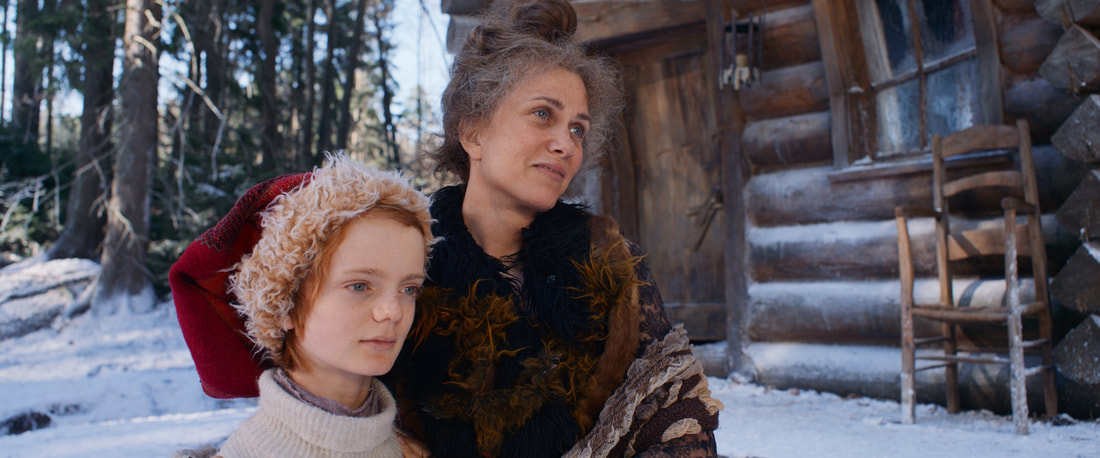 (L-R) Henry Lawfull as Nikolas and Kristen Wiig as Aunt Carlotta. Cr: © 2021 Netflix US, LLC - Studiocanal SAS. The tone is the weirdest part of the movie. It’s a Christmas movie so it is supposed to be a generally feel good type of movie. It’s obnoxiously sad throughout the majority of the movie. It deals with the loss of parents with Christmas as the solution. They heavily rely on Merchant as a talking mouse for the majority of their comic relief. Seldom is he at all funny and is the most cringe character in the movie. Besides that, the movie is too dark for its own good.
Obviously, the story is an origin for Santa Claus. There’s a million of these and while this one is certainly well made, it doesn’t stand out well at all. It takes way too long for the adventure to get off the ground. When it’s time for the third act, it feels like there is a severe drop in the stakes. Yes, the goal of the story is to bring back hope to the people, but the main character shows zero affinity for his town or his people. Why anything happens at the end feels less of a natural progression of the characters in the story and more of a shoehorned fulfillment of the tired origin story. It’s really not that bad at all. The supporting cast is enough to keep this Christmas flick afloat. There’s a lower bar for Netflix movies as it’s much less of a commitment to click on an app than it is to go spend money at a theater. The target audience will surely enjoy this movie and not care about its flaws. Its prime form is to be thrown on in the background this holiday season. A Boy Called Christmas hits Netflix on November 24. Rating: 2/5
Review by Sean Boelman

Hailee Steinfeld as Kate Bishop and Jeremy Renner as Clint Barton/Hawkeye in Marvel Studios' HAWKEYE. Photo by Chuck Zlotnick. © Marvel Studios 2021. All Rights Reserved.
The crazy thing about the Marvel Cinematic Universe is that it was essentially kickstarted by a series of unexpectedly successful comic book movies featuring B-list superheroes like Iron Man and Thor. It’s only fitting that this new phase of the series, dominated by Disney+, is led by some of the more obscure properties, although Hawkeye may be pushing the limit a bit too far.
The series follows Clint Barton as he takes a young, skilled archer under his wing when his dark past begins to catch up with him and finds her in the crossfire. Many wondered how they were going to pull off an entire show based off of the Avenger who is generally considered to be the lamest, and the first two episodes don’t make it clear that they did. There is something to be said in the series about accountability for one’s past actions, but this isn’t anything that hasn’t been explored better in the past (specifically in Captain America: Civil War). It’s also very clear from the beginning that this is a passing-the-baton arc, which is frustratingly bland. Kate Bishop ranks among the middle of the new Phase Four MCU protagonists so far. She has a slightly arrogant and entitled attitude to her that makes her a bit difficult to approach. What the series is doing with Hawkeye, turning him into an unwilling mentor of sorts, shows a lot of potential to add depth to a previously uninteresting character. 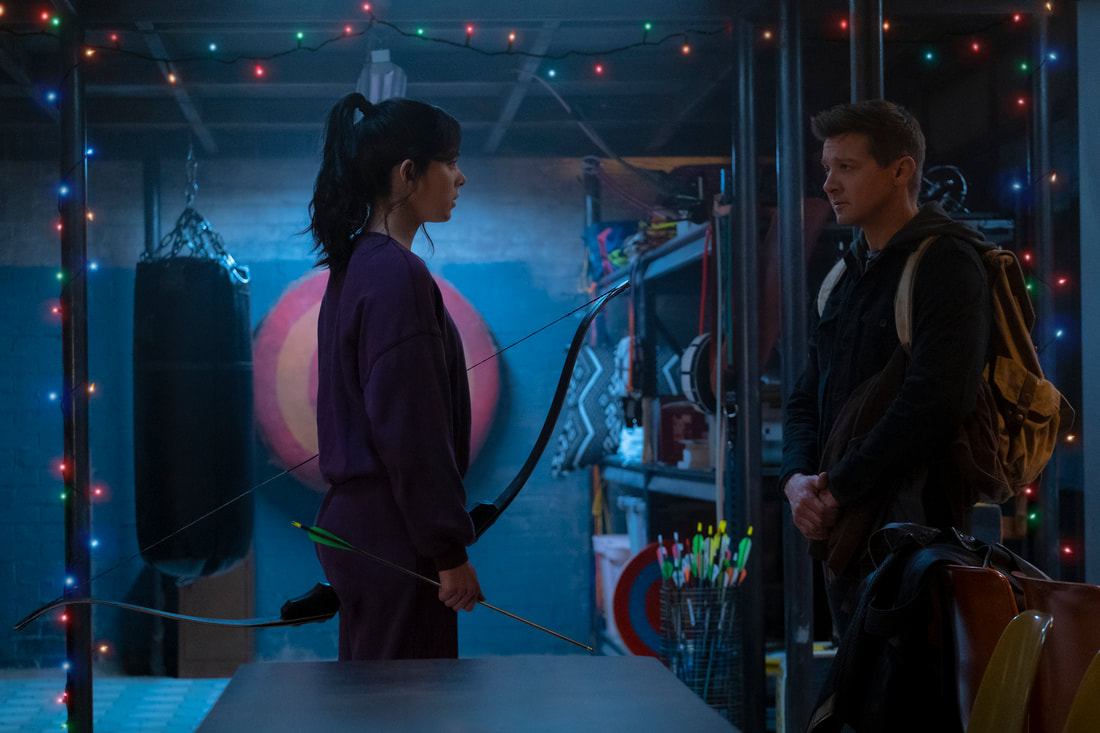
Hailee Steinfeld as Kate Bishop and Jeremy Renner as Clint Barton/Hawkeye in Marvel Studios' HAWKEYE. Photo by Chuck Zlotnick. © Marvel Studios 2021. All Rights Reserved.
Jeremy Renner is at his best in the show when he is able to flex his comedic chops. One of the issues with the show is that it is trying to be both a serious crime drama and a campy show about people running around in spandex shooting bows and arrows. And Renner seems to be much more comfortable with the latter.
Avengers: Endgame gave us a brief glimpse of Barton picking up the Ronin mantle, and while those events have a direct influence on the plot of this series, the action here is nowhere near as inspired as that one fight sequence. Although there isn’t much action in these first two episodes, the little which there is doesn’t have much creativity in the choreography. And then there’s the fact that this is also a Christmas show. This may not serve too much of a purpose other than to allow the series to be set in winter in New York City, but that does make for a gorgeous background. And it’s definitely one of the more restrained series in terms of execution, but that’s because it’s one of the smaller-scale ones. More so than the other Disney+ series, it’s hard to figure out what’s going on in Hawkeye with just the first two episodes. However, if it doesn’t pick up the pace (and soon), the result will be one of the most forgettable entries in the MCU. Hawkeye streams on Disney+ beginning November 24. Rating: 3/5
Review by Dan Skip Allen

Adam Driver stars as Maurizio Gucci and Lady Gaga stars as Patrizia Reggiani in Ridley Scott’s HOUSE OF GUCCI, a Metro Goldwyn Mayer Pictures film. Photo credit: Fabio Lovino © 2021 Metro-Goldwyn-Mayer Pictures Inc. All Rights Reserved.
Stories about the origin and tragic fall of a famous family are nothing new in Hollywood. As books are written or people pass away from one thing or another, these types of stories get brought to the big or small screen. In the case of House of Gucci, it's not the first film or television project about a famous fashion designer, and probably won't be the last.
Young Maurizio Gucci (Adam Driver) is an innocent law student in Italy when he catches the eye of Patrizia Reggiani (Lady Gaga) at a nightclub one evening. She's the daughter of a garbage truck mogul. They eventually hit it off and become romantically linked despite the efforts of his father Rodolfo Gucci (Jeremy Irons) to stop the relationship. His uncle, Aldo Gucci (Al Pacino) takes him under his wing to show him the fashion side of the Gucci business. He takes his now-wife Patrizia along with him to New York. This is the beginning of the end for this thriving family. Ridley Scott has had a long and storied career in filmmaking since the late '70s and early '80s. His films range from Alien to Blade Runner to Gladiator. This year he's got two awards contenders on his hands — The Last Duel and House of Gucci — each with big-name casts. Both are distinctly different from anything he's done in the past. House of Gucci isn't his first biopic either. American Gangster was a big hit back in 2007. He's aiming for another with his latest film. Besides the aforementioned cast members, there is also another actor known for immersing himself in his characters. He'll put on a lot of makeup, or in the case of House of Gucci, prosthetics. Paolo Gucci (Jared Leto) is a dim-witted fool with a gift for designing clothes. Leto is unrecognizable as this character, but he has a lot in the script to do despite being unrecognizable. He's like a court jester or a Fredo to put a Godfather reference to good use. On those lines, the clothes and hairstyles match the aesthetic of the film. The setting of the '80s is very well fleshed out on screen. The scenes in Italy and New York City seem very authentic. Seeing as this story wasn't that long ago, the film looks like it's set in the modern-day even though this took place four decades ago. The crafts departments were on point in House of Gucci as they were in Scott's other 2021 film, The Last Duel. The filmmaking style is very solid. 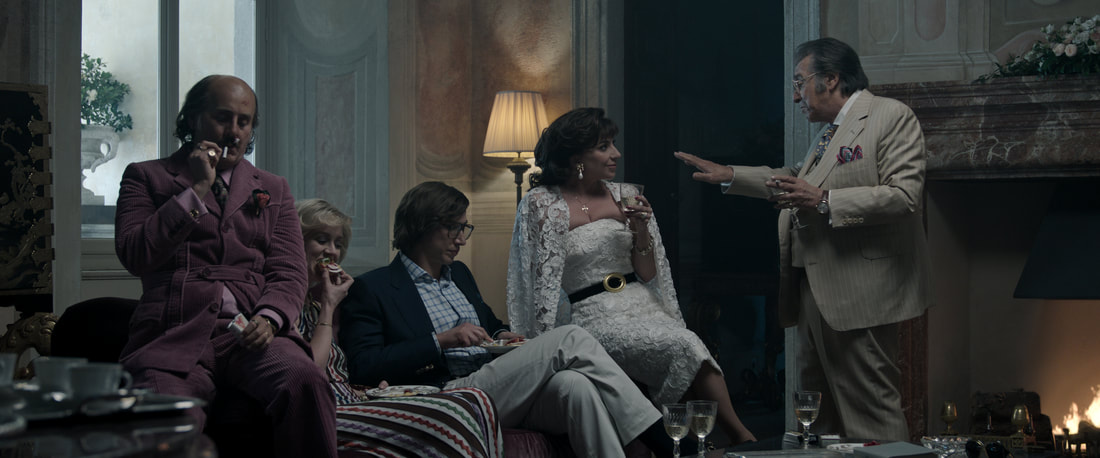
(L-R) Jared Leto stars as Paolo Gucci, Florence Andrews as Jenny Gucci, Adam Driver as Maurizio Gucci, Lady Gaga as Patrizia Reggiani and Al Pacino as Aldo Gucci in Ridley Scott’s HOUSE OF GUCCI, a Metro Goldwyn Mayer Pictures film Photo credit: Courtesy of Metro Goldwyn Mayer Pictures Inc. © 2021 Metro-Goldwyn-Mayer Pictures Inc. All Rights Reserved.
As with all films set in a specific period, it's nice to see music in the film from the '80s. Blondie, The Eurythmics, and George Michael songs ring throughout the film. The entire soundtrack is on point in the film. The score by Harry Gregson Williams is very good as well.
A framing device alludes to an ominous event about to happen at the beginning of the film but doesn't eventually happen until the end. Even though this film and story are based on real events, it's good that Scott and the writers, Becky Johnston and Roberto Bentivegna, were able to flesh out the main story of a jilted lover seeking retribution on her husband that she perceived he did wrong. That's a pretty simple story when it's all said and done. The power struggle between the members of this rich family is another key aspect of the film. As it's said in Wall Street by Gordan Gecko, "Greed, for lack of a better word, is good." It kind of reminds me of Rome at its height before the fall. Well, maybe a little too much greed isn't good for everybody. A subplot about cheap knock-off bags proves that. The knock-offs were making millions for the family, so who cares if they are being sold as legitimate Gucci bags if the family was getting rich off of them. Some things should be left alone. House of Gucci was being hailed as an Oscar contender and this year and after seeing it, I have no reason to dissuade those thoughts. This film has brilliant performances from Gaga and Driver, while Leto is crazy good as well. The soundtrack, story, and overall look of the film are all solid. This film has one flaw and it's the length. Some of the meandering scenes of Driver's character could have been cut from the film. That's a small flaw though. Otherwise, this is a solid biopic about the fall of a great fashion designer family. House of Gucci hits theaters on November 24. Rating: 4/5
Review by Dan Skip Allen
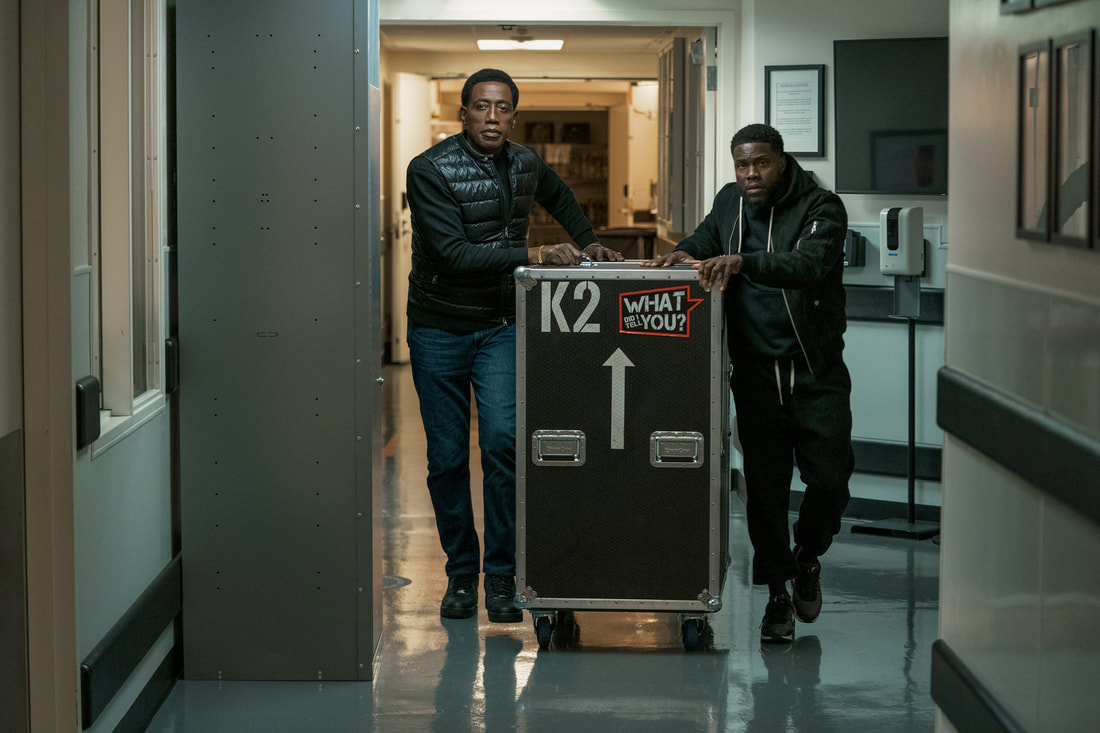
(L to R) Wesley Snipes as Carlton, Kevin Hart as Kid in episode 103 of True Story. Credit: Tyler Golden/Netflix © 2021.
Kevin Hart is considered one of the best comedians in the world. He's entertained millions with his stand-up routine, comedy specials, and movies over the last couple of decades. He usually has this manic style where he talks fast and screams and yells. He acts scared a lot as well in a lot of the movies he's in. That is very different from the character he plays in True Story. He plays it straight in this series. It's a great career choice.
Hart plays a comedian, not a stretch for him obviously. He goes back to his hometown of Philadelphia to do some shows, but that is just the beginning of his homecoming. He reunites with his older brother (Wesley Snipes) who brings more problems to the table than he's worth. Things start to unravel for Hart's character. This series depicts the life of this comedian with more going on than meets the eye. The series delves into some interesting topics about fandom, family domestic problems, and some popular topics in films dealing with murder and gangsters. It's interesting how the showrunner Eric Newman and writer Cameron Litvack weaved all these topics into this series. Phones come into play a lot as well, capturing thoughts and conversations that help drive the story forward. Social media plays a big part too. Using modern things to help tell the story helps show creativity in the writing process. Seven episodes is the perfect number to tell this story in as well. It's not too long or too short. The suspense is riveting at times and the episode length of about a half-hour to forty-five minutes long keeps the viewer wondering what's going to happen next, but doesn't drag on too long. The tension is ratcheted up as each episode comes to a close and the next one begins. The showrunners had a great plan going in. It pays off in the end result. 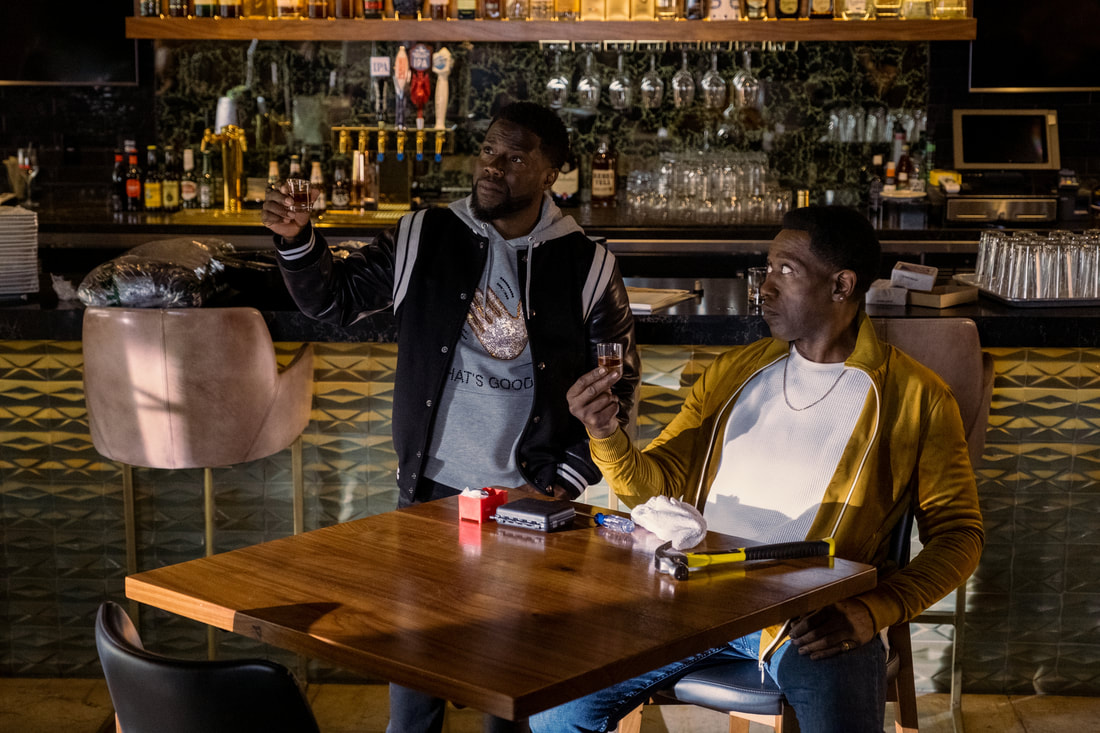
(L to R) Kevin Hart as Kid, Wesley Snipes as Carlton in episode 107 of True Story. Credit: Adam Rose/Netflix © 2021.
Everybody in the show is all in on the story. The supporting cast from the personal driver to the agent to the joke writers are all terrific. Even the Greek gangsters are entertaining. They all bring an authenticism to the story and series. They all help drive the story and character development forward. The title of True Story almost feels like it could be real. From the comedian aspect to the fanatic aspect, it's as realistic as a story can get. Even the twists and turns are a bit surprising.
A key aspect of the show is sleeping characters. Things happen while people are sleeping in the show. It creates a time-lapse dynamic to the show where characters lose time and don't know what's going on. The viewer gets lost as well at some points, but as the show progresses these story points are revealed and Hart's character's life starts to unravel before the viewer's very eyes. Netflix has invested in a lot of films and television shows. Their streaming service has become a staple in people's lives and homes. They have doubled down on new and interesting creators and also let established directors and stars develop new fascinating and groundbreaking projects. One of those is True Story. Hart got involved in the right show to expand his career and his range as an actor. His comedian schtick is nowhere in sight in this series and that's a good thing. Netflix and Hart have another hit on their hands. This is a very good show. True Story streams on Netflix beginning November 24. Rating: 4.5/5
Review by Sean Boelman
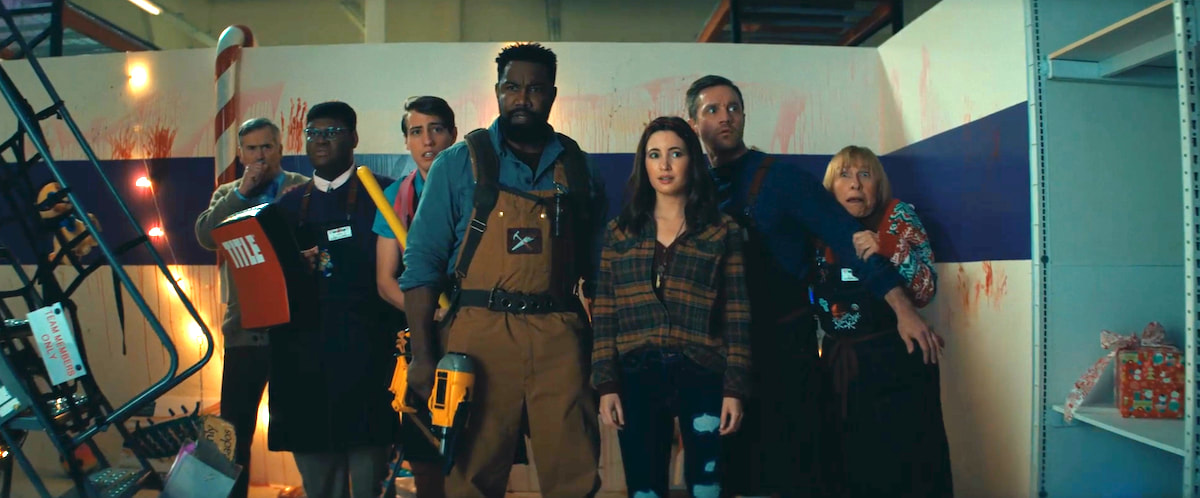
When it comes to holiday movies, Christmas is all the rage, but there are comparatively few set on Thanksgiving. And while Casey Tebo’s definitively unfestive horror-comedy Black Friday is unlikely to join the very small pantheon of classic Turkey Day flicks, it’s a good time thanks to how much fun the cast is having.
The film follows a group of toy store employees on the busiest shopping day of the year as their customers become a ravenous horde infected by an unknown parasite. In terms of story, it’s a pretty by-the-book zombie movie, but the dark sense of humor in Andy Greskoviak’s script allows it to be a good time, even if it isn’t anything original. Like so many horror flicks that clock in at under ninety minutes, this movie feels quite rushed. But at least the film has the frenetic energy to keep up the momentum, resulting in a genuinely fun watch. However, the action-packed nature of the movie prevents many of the emotional beats from resonating as they probably should. As one could expect, there is a strong anti-capitalist edge to the film. This is clearly making fun of the consumerist tradition of this so-called “shopping holiday”, something which ties in extremely well to the absurdity of the premise. Ultimately, there’s not a ton of emphasis on this, but it’s definitely there. 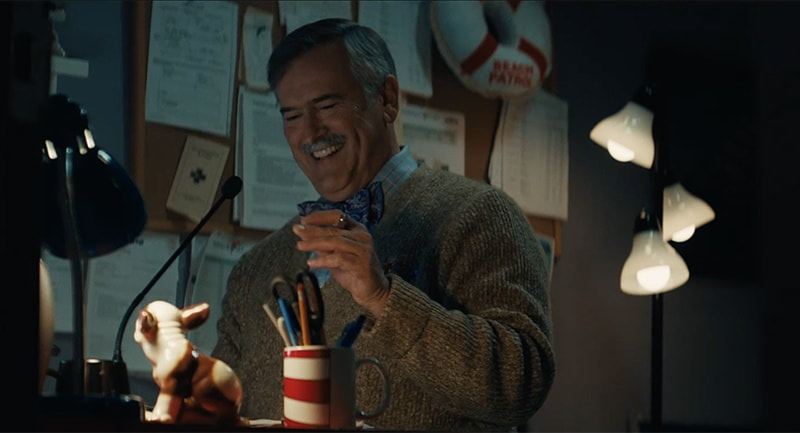
One of the issues with the movie is that the character development is so thin. All of the employees of the store are archetypes to an almost cartoonish level. Ultimately, no one is going to really care who gets killed because there’s really not much done to make the audience become invested in their stories.
That said, the entire cast does an extremely good job of playing it over-the-top in a way that makes these caricatures fun to watch. Bruce Campbell is definitely the highlight as the arrogant store manager, hamming it up as usual. And the rest of the cast, including Devon Sawa, Ivana Baquero, and Micahel Jai White are all fun. It’s clear that this is a B-movie from its technical qualities, but there are still some really fun things going on here. The gore effects aren’t super convincing or anything, but given that the film itself is very cheesy, it fits. And as for the creature design, it’s nothing especially creative, but it’s just barely nostalgic enough to work. Black Friday isn’t anything exceptional within the realm of horror-comedies, but it’s a good time. For those looking for a mindless watch, with a fun Bruce Campbell performance to boot, this is definitely worth checking out. Black Friday is now in theaters and hits VOD on November 23. Rating: 3/5
Review by Sean Boelman

(L-R) Vinette Robinson as Carly and Stephen Graham as Andy Jones in the drama/thriller, BOILING POINT, a Saban Films release. Photo courtesy of Saban Films.
Although the single-take film is undeniably a gimmick, when executed well, it can result in a genuinely suspenseful thriller. Philip Barantini’s Boiling Point certainly isn’t without its flaws, but it has plenty enough strong elements to make it a worthy movie even beyond its storytelling device.
The film follows the head chef and staff of a gourmet restaurant as they prepare for an especially grueling dinner service. Ultimately, one of the issues of the movie is that it has too many moving parts in the story. And while this does contribute to a feeling of realism, it also makes it feel like the film is too busy. As is the case with any movie that is shot in a single take, the film is limited by the constraints of playing out in real time. But unlike a lot of those movies, this never drags thanks to the fact that it keeps pushing. There is a constantly mounting feeling of tension, and while it doesn’t pay off as one would hope, it mostly works quite well. Because of the fact that there are so many moving parts, there are also a lot of themes in play. Some of these, like the film’s exploration of accountability, are really insightful. But on the other hand, there are a lot of subplots that feel entirely underdeveloped. And the ending of the movie is about as unsubtle as they come. 
(L-R) Vinette Robinson as Carly, Ray Panthaki as Freeman and Stephen Graham as Andy Jones in the drama/thriller, BOILING POINT, a Saban Films release. Photo courtesy of Saban Films.
The character development in the film is also a problem. It is in this regard that it becomes abundantly obvious that the movie has bitten off more than it can chew. The film does a good enough job of developing the protagonist, but he is the only character in the movie with a substantial amount of depth. The film tries to make the audience care about some of the other restaurant employees but there is not enough screen time for it to work.
This is an extraordinary showcase for lead actor Stephen Graham, who gives what is undeniably the best performance of his career. He does an exceptional job of capturing this rapid descent into madness. In the supporting cast, Jason Flemyng is also a stand-out, being very effectively hateable. Any movie that is shot in a single take is obviously quite an impressive feat, but the thing that stands out about this is the way in which it really immerses the viewer in the restaurant setting. The production design and cinematography are very effective at ratcheting up the anxiety that the viewer will inevitably feel. The writing of Boiling Point definitely isn’t its strongest suit, but there are a lot of really good things happening here. It’s a tense, effective thriller boosted by strong performances and strong execution. Boiling Point is now in theaters and hits VOD on November 23. Rating: 3.5/5
Review by Sean Boelman
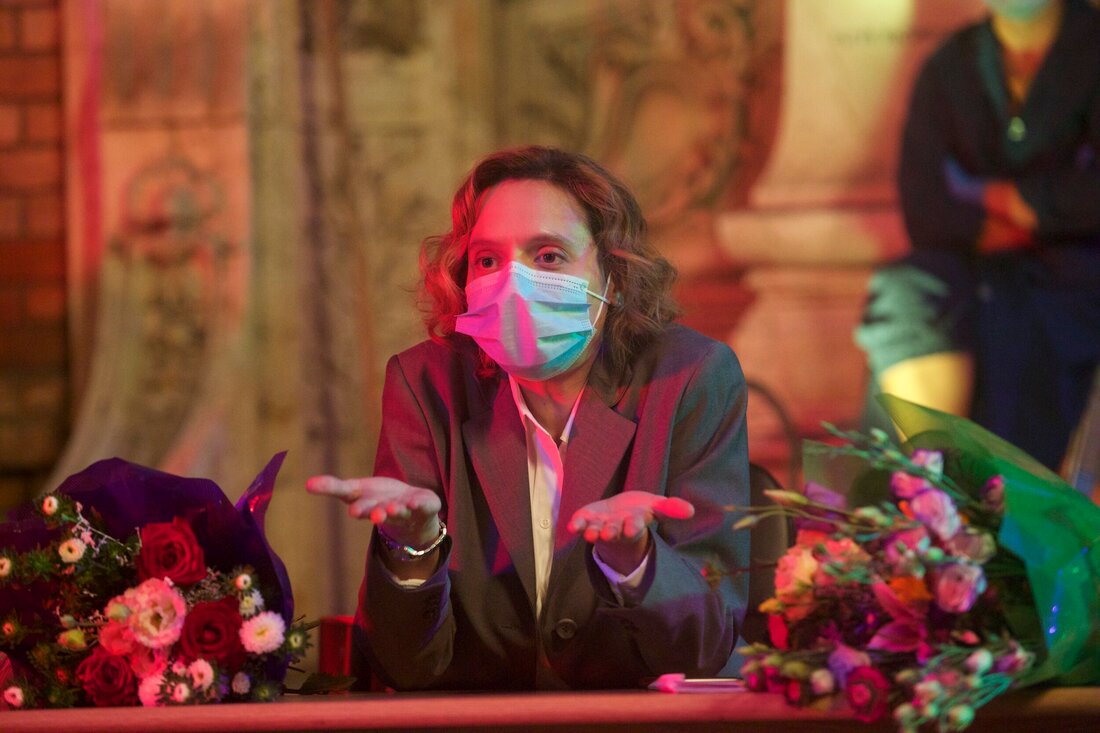
Katia Pascariu in BAD LUCK BANGING OR LOONY PORN, a Magnolia Pictures release. Photo courtesy of Magnolia Pictures.
Romanian filmmaker Radu Jude is nothing if not unique, and his newest film Bad Luck Banging or Loony Porn is definitely one of the more unorthodox movies to come out this year. However, despite having a compelling premise, a messy (almost scattershot) structure keeps this from being more than a zany and pretentious art house film.
The movie follows a teacher who comes under fire from the local community when her personal sex tape is leaked online, causing a great deal of outrage. It’s a premise that seems opportune for some great situational comedy, but Jude almost gets too caught up in his political message for his film to be especially funny. One of the biggest issues with the movie is that it bites off more than it can chew in a thematic sense. The main message about freedom of speech and invasion of privacy is compelling and discussed in a thought-provoking way, but there is too much else going on in the film. Jude does not let the audience lose track of the fact that this is a COVID-19 movie, but it doesn’t say that much about it that is interesting. And then there is the pacing of the film. After getting off to an extremely (and hilariously) graphic running start, the movie devolves into a bunch of wandering for the first chapter. And the third chapter is exactly what viewers likely expected from the premise. But the second chapter is very difficult to get through, a visual essay that has little audio and tells its story only through captions. 
A scene from BAD LUCK BANGING OR LOONY PORN, a Magnolia Pictures release. Photo courtesy of Magnolia Pictures.
The character development in the film shows a lot of potential, but any momentum the protagonist’s arc has is lost when the movie shifts into its less narrative format for the middle third. Had Jude focused exclusively on the central plot of the film, the result undoubtedly would have been much more intriguing.
In the final third of the movie, Katia Pascariu does an excellent job in her role, but it is frustrating to see how underutilized she is for the rest of the runtime. And the actors who play the angry mob of townspeople fighting back against the supposed obscenity are all gleefully over-the-top, fitting the satirical nature of the film. For a movie made during the COVID-19 pandemic, the first and final third of the film are quite well-made. Although the mask wearing and social distance limit blocking and the camera, Jude still does a good job of creating isolation in the first act and entrapment in the third act. The middle portion is a whole different beast, but is technically accomplished. Bad Luck Banging or Loony Porn is not an agreeable film by any means, but that doesn’t mean there isn’t value in it. It’s easy to admire Jude’s movie for what he was trying to do, even if one isn’t on the same wavelength as him. Bad Luck Banging or Loony Porn is now in theaters. Rating: 2.5/5
Review by Sean Boelman
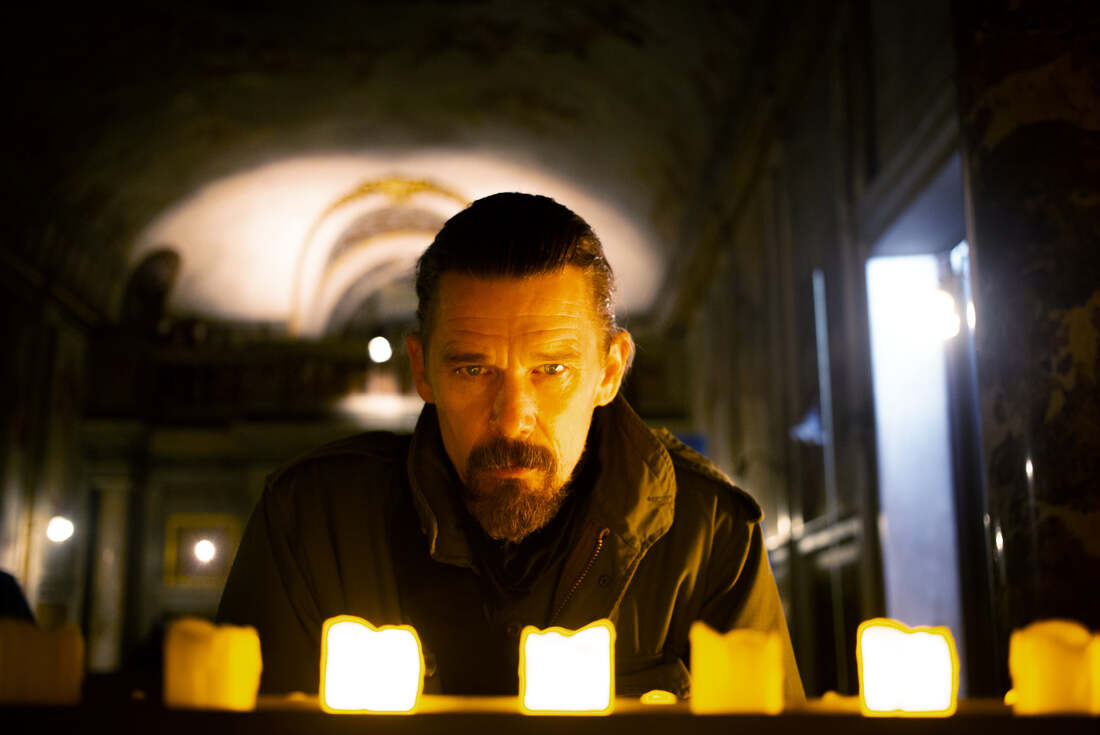
Ethan Hawke as J.J. in the thriller film, ZEROS AND ONES, a Lionsgate release. Photo courtesy of Lionsgate.
Abel Ferrara has a very eclectic filmography, with an almost auteur-like output blending the intelligence of art house fare with the trashiness of genre flicks. His newest movie, Zeros and Ones, is just as angry and confusing as one would expect, but there are enough interesting things going on here to make it worthwhile.
The film follows an American soldier who fights an unknown terrorist threat after the Vatican is blown up. And while this may sound like a relatively straightforward espionage thriller on paper, it is anything but. Like so much of Ferrara’s work, trying to follow what is happening in the story in a literal sense is futile, and the audience is better off going along for the emotional ride. Ferrara builds an excellent atmosphere for the movie, taking advantage of the isolation of the COVID-19 pandemic (although within the world of the film, the lockdown is caused by the fictional war of the plot) to allow these characters to wander through the streets of Rome, and more metaphorically, the consciousness of society. And if audiences are looking for a clear answer as to what the movie is about, they clearly shouldn’t be watching the new Abel Ferrara film. There are messages about capitalism, the government, and of course Ferrara’s favorite: religion. As always, most of the exploration of the themes in the movie is through not-so-subtle dialogue packed with symbolism and metaphors. 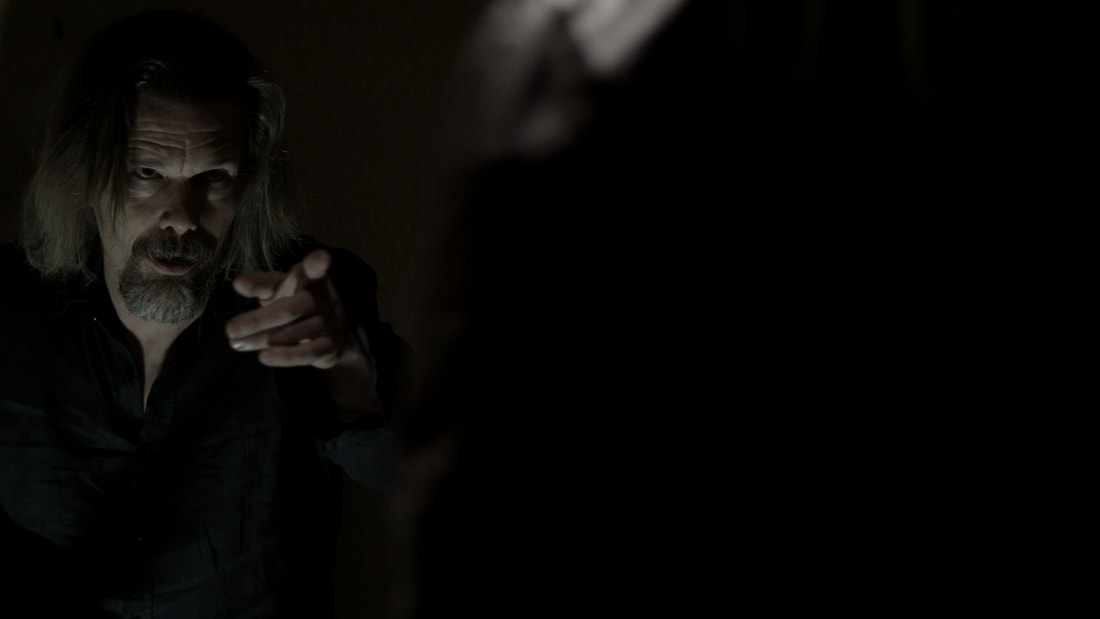
Ethan Hawke as Justin in the thriller film, ZEROS AND ONES, a Lionsgate release. Photo courtesy of Lionsgate.
Ferrara should definitely be praised for doing something unique and different with the war film. This is by no means jingoistic, which should not be surprising given the movie’s politics, nor is it the standard costs of war ethical study. Ferrara isn’t afraid to absolutely rip apart these well-established institutions.
Ethan Hawke has to play a double role in the film, and he is such a talented actor that he mostly manages to pull it off. It’s pretty clear at times that Hawke doesn’t completely understand what he’s saying — but to be fair, it’s entirely possible that Ferrara didn’t completely understand what he was writing. Ferrara’s style is definitely fit for the COVID-19 pandemic, as the trance-like state in which so many of his narratives exist is only compounded by empty streets and forcibly awkward blocking. That said, some of the more technically-savvy portions of the narrative aren’t executed as well and have some issues with cheapness. Zeros and Ones is closer to the type of movie that should play in art-houses, not be released straight-to-VOD like a B-movie actioner. It’s weird and not always satisfying, but very much the work of Abel Ferrara. Zeros and Ones hits theaters and VOD on November 19. Rating: 3/5 Reviewed by Adam Donato 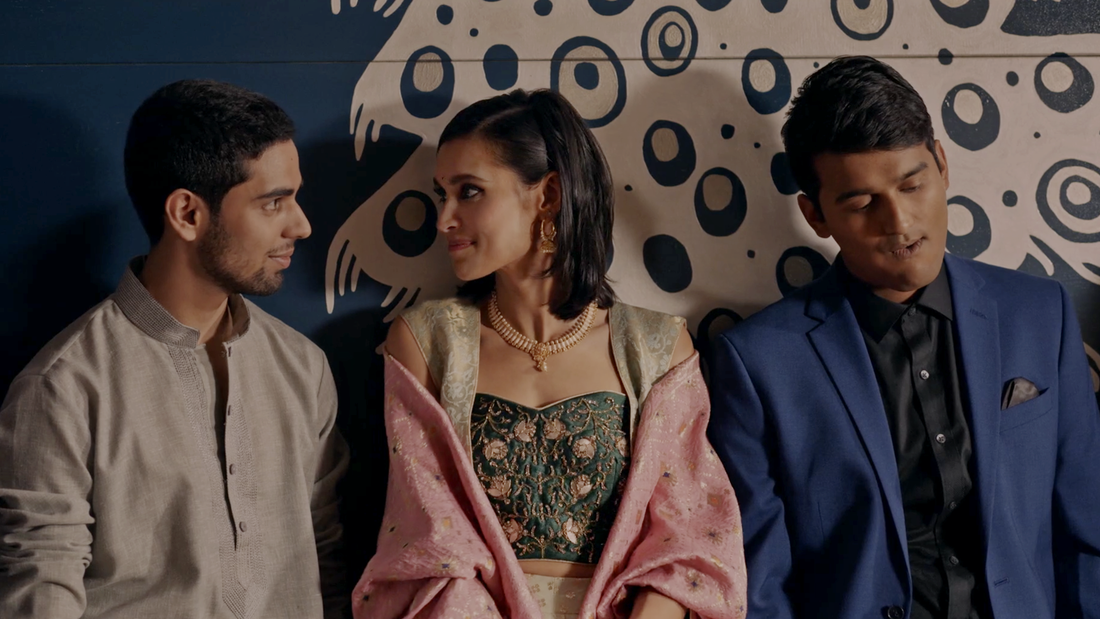 Sophia Ali “Alia” (middle) has the attention of both Rish Shah “Varun” (left) and Ved Sapru “Rahul” (right) at a party in her suburban New Jersey home in a scene from INDIA SWEETS AND SPICES. Photo courtesy of SK Global Entertainment. India Sweets and Spices is about an ambitious young woman, Ali Kapur (played by Sophia Ali), who comes home for the summer from college. When she comes back, she has to deal with tons of family drama at their seemingly endless amount of dinner parties. The film is written and directed by Geeta Malik, whose only other feature is Troublemaker, which came out a decade ago. With an official selection at the 2021 Tribeca Festival, is this movie going to lead to more opportunities for Malik and Ali? This movie is delightful. Big credit goes to Ali for showing that she can lead a movie. Her most notable credits are from television shows and a side character in Blumhouse’s Truth or Dare. She’s got personality and can handle even the heaviest of scenes in this movie and it will be exciting to see her going forward, even if her next movie is Uncharted. All of the family friends at the dinner party are completely pretentious and full of gossip. Her character is so admirable in this movie as she is constantly surrounded by such toxic energy and she persists throughout.  (L-R) Rish Shah “Varun” and Sophia Ali “Alia” meet in India Sweets and Spices store in suburban New Jersey in a scene from INDIA SWEETS AND SPICES. Photo credit: Eliza Morse. Courtesy of SK Global Entertainment. The core of the story is a very standard one, but how it explores Indian culture makes it feel fresh. The role of women, classism and arranged marriages are all some pretty interesting topics that are explored in this movie. All of these things are tackled head-on in the finale in the most satisfying way possible. Speaking of the culture, most of the characters in the movie are rich so it makes sense, but the wardrobe was beautiful in this movie. There are about a dozen family dinners, which provides ample opportunities to show off.
The movie is listed as a comedy on IMDb, but plays more like a drama. There are funny moments in the movie sure, especially when all of the tea comes to a head around the climax. Besides that, what really keeps this movie afloat is the drama. The script is where most of the responsibility lies as everything feels wrapped up all good at the end. The movie has plenty to say and plays as a wholesome good time. India Sweets and Spices is definitely a movie worth recommending. This would play really well as a streaming movie as it doesn’t sport any of the name or brand recognition that theatrical releases seemingly require these days. It’s also not heavy enough to expect any major awards appeal in a couple months. That being said, it’s a pleasant surprise and it will be exciting to see what Malik does next. India Sweets and Spices hits theaters on November 19. Rating: 4/5 |