
|
Review by Sean Boelman

Ronin (voiced by Masaki Terasoma in Japanese and Brian Tee in the English Dub) in a scene from "STAR WARS: VISIONS” short, “THE DUEL”, exclusively on Disney+. © 2021 Lucasfilm Ltd. & TM. All Rights Reserved.
The Star Wars fandom is unique in that, for every deep dive into unofficial lore, there can also be a near-revolt when someone even thinks about messing with canon (see the polarizing response to The Last Jedi). As such, one would be within reason to approach Star Wars: Visions, a set of nine distinctly-crafted anime shorts set in the universe, with caution, when in actuality, it’s just a pleasant, largely inconsequential watch.
The series is comprised of nine shorts from seven anime studios (two studios made two contributions) bringing their own unique styles to the table, telling stories that could fit within the greater Star Wars universe. It’s an interesting experiment, making it one of the more ambitious projects of Disney+ so far from an artistic standpoint, but the result is predictably uneven. Each episode clocks in anywhere from thirteen to twenty-two minutes and consists of an action sequence with enough characterization to meet the bare minimum requirement. Sometimes that action takes an unorthodox form (a musical performance) and in other entries, it’s a lovingly-animated lightsaber battle. The best of the shorts in the series are those which stick more to the saga’s roots, with samurai-inspired battles. The anime style of the series obviously lends itself to this type of action sequence, although the limitations put on it by a family-friendly rating are obvious, as it’s entirely bloodless. 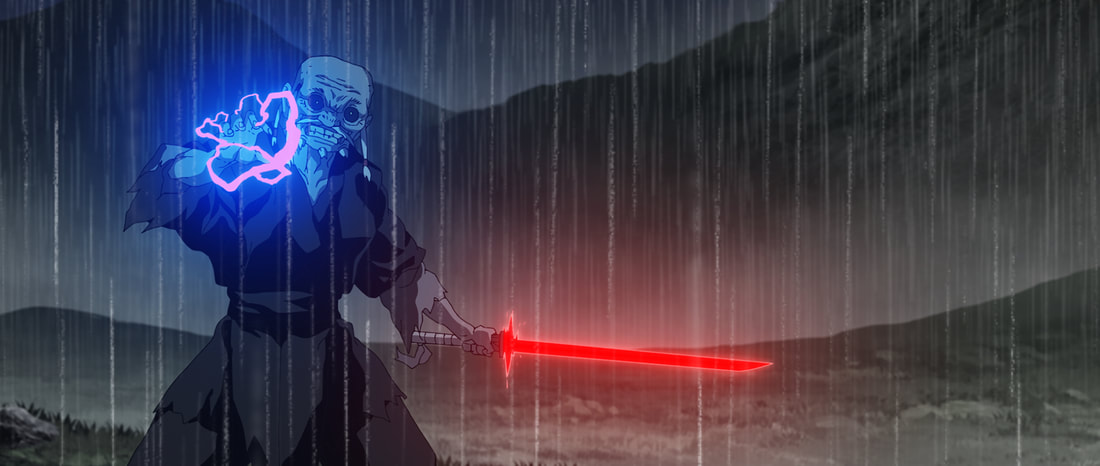
The Elder (voiced by Kenichi Ogata in Japanese and James Hong in the English Dub) in a scene from "STAR WARS: VISIONS” short, “THE ELDER”, exclusively on Disney+. © 2021 Lucasfilm Ltd. & TM. All Rights Reserved.
Other episodes see the worst tendencies of both anime and the Star Wars universe come together. There are always cutesy elements to the Star Wars movies and shows (Ewoks, R2-D2, BB-8) but one episode sees a merchandise-ready cyborg character take charge in what feels like a clear attempt at appealing to younger audiences and their consumerist minds.
That said, the series is consistently pleasing artistically. These are some of the best animation studios working today, and seeing the way they get to play with this world is awe-inspiring. As the series implies, the filmmakers were seemingly given a great deal of freedom and room to explore what they chose, so each short feels individual. Still, this is Disney, so if one thinks that this daring work will have any real impact on the greater property, they are mistaken. Although the shorts are set during the war between the Resistance and the Empire, no canon characters are featured. That isn’t to say that these characters couldn’t be introduced if embraced by audiences (Ashoka Tano was brought into the fold via The Mandalorian), but for now, expect these to be mostly stand-alone. Star Wars: Visions is a genuinely good time, and while it may not be essential viewing like the streamer’s other Lucasfilm shows, it’s still worth watching. At the very least, it’s a nice return to a galaxy far, far away to hold fans over until The Book of Boba Fett. Star Wars: Visions streams on Disney+ beginning September 23. All nine episodes reviewed. Rating: 3.5/5
0 Comments
Review by Dan Skip Allen
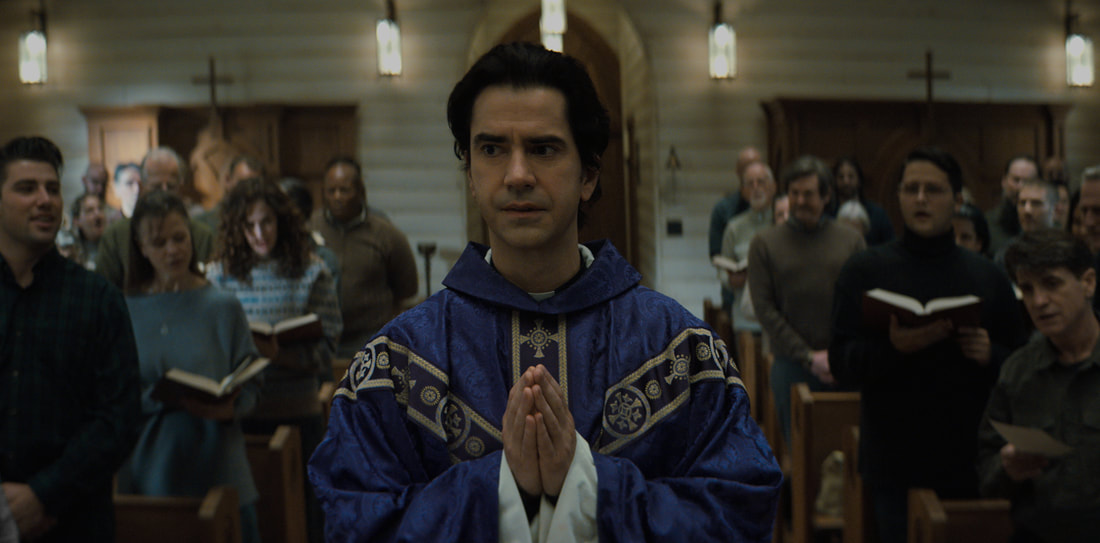
MIDNIGHT MASS (L to R) HAMISH LINKLATER as FATHER PAUL in episode 103 of MIDNIGHT MASS. COURTESY OF NETFLIX © 2021.
Netflix has doubled down on director Mike Flanagan (The Haunting of Hill House, The Haunting of Bly Manor, Doctor Sleep, Gerald's Game). He has quite the resume of shows and movies in his young career. Midnight Mass is the latest show from him, right on time, about a month away from Halloween. People are looking for new and interesting material to watch around Halloween. This is that. It'll get all of those horror juices flowing for sure.
The series takes place on a sleepy island called Crockett Island, known as the Crock-Pot, a place where all different kinds of people from different walks of life and religious background live and worship together. The show focuses on a new young priest (Hamish Linklater) that comes to town. He brings miracles in the form of healing the old and crippled. This causes the small community to enamor him, looking for some salvation in a hard time. This series pulls on popular horror and fantasy tropes we all love and admire. Religion has played a part in a lot of movies and shows in the past. It's something that's not always understood as far as the mythical and supernatural. God is misused to create a feeling of belonging yet ends up being a vessel for evil and wrongdoing. The title says it all, as well as the episode names, pulled from the books of the Bible. That's only half of it though. All the mysteries involving the characters play a part in making this show entertaining and right for the masses on Netflix. Flanagan knows his audience. 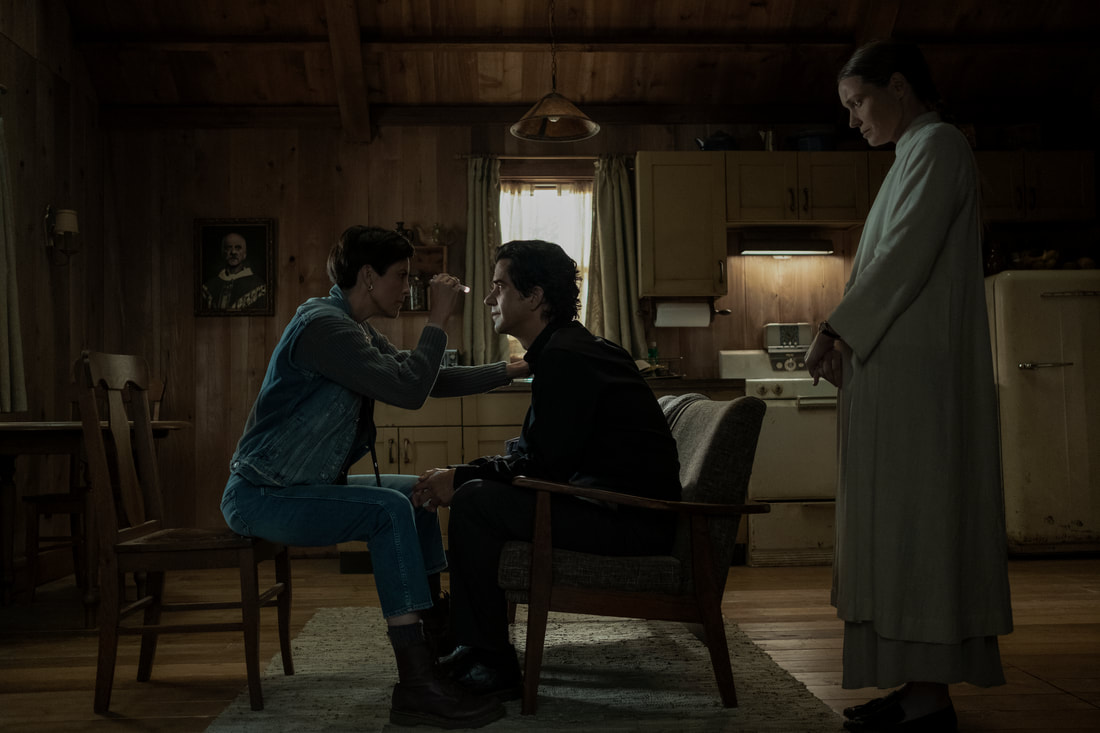
MIDNIGHT MASS (L to R) ANNABETH GISH as DR. SARAH GUNNING, HAMISH LINKLATER as FATHER PAUL, and SAMANTHA SLOYAN as BEV KEANE in episode 103 of MIDNIGHT MASS. Credit: EIKE SCHROTER/NETFLIX © 2021.
Flanagan's frequent collaborators, The Newton Brothers, once again do the score for this series as well. They make the music very haunting and atmospheric. The soundtrack kicks in with some amazing songs right when they are needed. One song in particular from Neil Diamond is spot on and perfectly placed. Many others are chosen very well for the series. A good soundtrack can transport the viewers into the world of the show or film. This one does just that.
The production value on this series was pretty good as well. There are quite a few scenes with blood spillage and fire damage toward the end of the film. The setting was cool because it was a small village on an island and suffixes for this production. The catholic church iconography was well done as well. Flanagan and company kept this story light and beautiful until it wasn't. It is definitely different from the dark and dank settings from some of his previous work on Netflix. I felt this drew me into the story quite nicely Based on Flanagan's track record, people should give Netflix and Midnight Mass a chance. This series has very good acting from its huge cast. It develops its characters very well to make us care about what happens to them. The horror tropes are well thought out using the tried and true theory of religion as its backdrop. Priests have made good villains in many movies in the past and do so here as well. Netflix has marketed this show perfectly and it's coming out at the right time. The audiences seeking new and interesting spooky fare will enjoy this show with familiar horror concepts. Midnight Mass hits Netflix on September 24. All seven episodes reviewed. Rating: 4/5
Review by Sean Boelman
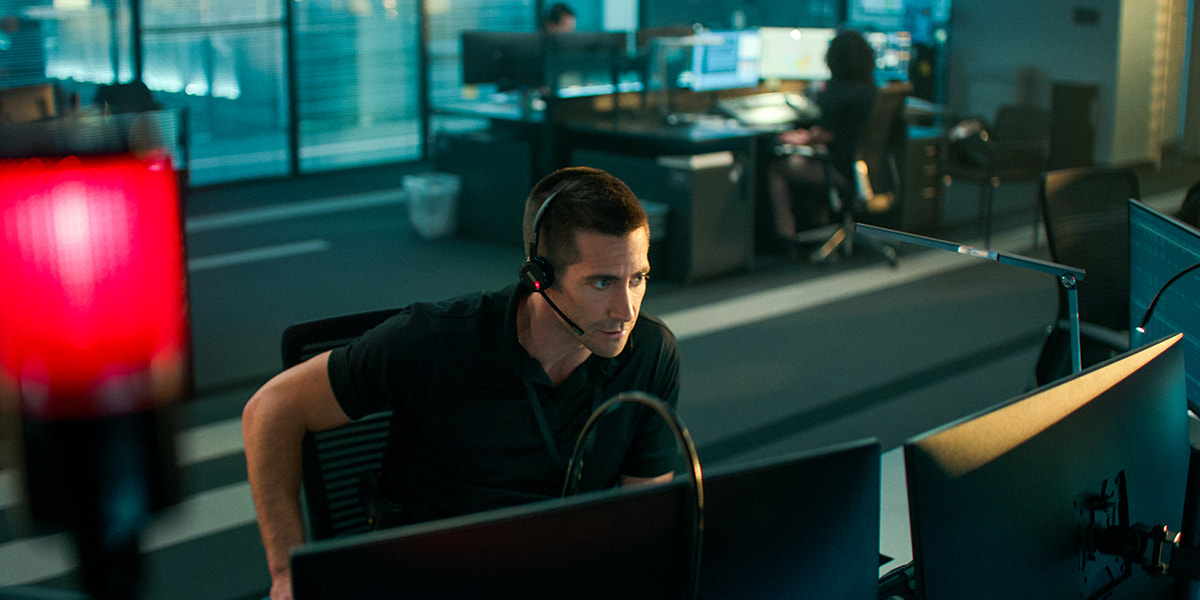
In the three years since the Danish police thriller The Guilty came out, the themes haven’t aged particularly well at all. While Antoine Fuqua’s American remake of the same name is still a suspenseful thriller, and Jake Gyllenhaal gives a great performance, the poor timing doesn’t do it any favors.
The film follows a police officer who has been demoted to manning the dispatch desk as he receives a high-stakes kidnapping call on the last day before he is due to be restored to duty. It’s a simple premise, but that is a big part of what makes it so effective. Admittedly, it loses a lot of its impact if you’ve seen the previous version, but it still creates a lot of tension. Fuqua does a great job of directing the movie in a way that maximizes suspense. After about fifteen minutes of introduction, it hops right into the action and doesn’t let up until the very end. Admittedly, as was the case with the original film, the script reveals its cards a bit too early, but it will shock those who don’t know what to expect. That said, writer Nic Pizzolatto absolutely misses the mark when it comes to addressing some of the themes in the script. There are some underlying ideas in the script about corruption within the police force, but they are underdeveloped at best. The result is that the movie ends up feeling apologetic, which is not a good look. The character development of the film is a bit of a mixed bag. Interestingly enough, the protagonist is far more underdeveloped than some of the unseen characters. The character mostly sticks to his archetype, especially when his arc becomes clear. On the other hand, those characters which we only hear via the phone have more layers, even if they aren’t exactly nuanced. Gyllenhaal’s leading performance is the single biggest asset on display here. Since the movie is largely a showcase for him, he has to carry the entire thing on his shoulders, and he pulls it off. For support, he does have some solid voice acting turns from Peter Sarsgaard and Riley Keough that go well with his work. Given the fact that the film is set entirely in the dispatch call center, Fuqua had to do some interesting things with the execution to build suspense. We are staring at Gyllenhaal’s face for a majority of the runtime, but the editing and use of sound in the movie keep the viewer invested and in a heightened state of anxiety. The Guilty will undoubtedly work much better for those who haven't seen the film which it is remaking, but it’s still a solid thriller even for those who have. Regardless, one will be left wishing that Nic Pizzolatto had adapted the script a bit less directly. The Guilty screened at the 2021 Toronto International Film Festival, which runs September 9-18. Rating: 3/5
Review by Sean Boelman

Image Courtesy of TIFF.
Mahamat-Saleh Haroun’s film Lingui, The Sacred Bonds might be set in the African country of Chad, but its themes resonate across the world, especially given recent events in America. Tackling its important themes in a way that will leave viewers absolutely shaken, this is one of the most hidden gems of the Fall festival circuit.
The movie follows a practicing Muslim woman who discovers that her teenage daughter is pregnant and wants to have an abortion, causing them to gain the scorn of their community. Although it has a premise that has been done before, and quite effectively, Haroun’s film manages to still feel essential thanks to its combination of empathy and honesty. One of the most impressive things about this movie is how refreshingly minimalistic it is. With a runtime of under an hour and a half, the film does just enough to get its point across without going overboard. It’s a slow-burn of watching these people’s world crashing down around them until the final act ties everything together in a truly heartbreaking way. Of course, in a direct sense, the movie speaks out against the anti-abortion laws in Africa. But this is also indicative of greater issues there are with the patriarchy. The political statements that the film makes are obvious but don’t feel like they are beating the audience over the head, instead showing the trauma this inflicts on people to leave audiences feeling disturbed. 
Image Courtesy of TIFF.
The character development in the movie is also extremely strong. Telling the film from the perspective of the mother rather than the pregnant teenager seemed like a problematic decision at first, but Haroun’s script writes them both in a fully-rounded way. It’s a movie about internal struggles, and the arcs are truly compelling.
Both of the lead actresses here are amazing. Achouackh Abakar’s turn is brilliant, commanding the screen in a way that is quiet but filled with emotion. Rihane Khalil Alio is also very strong in her role, her first-ever performance, having exceptional chemistry with Abakar who plays her mother. From a technical standpoint, the film is very reserved but it is fitting given its low-key nature. Nothing about the movie’s execution is flashy, from its cinematography to the score, but it works very well. Haroun rightfully focuses on the performances as the main source of the film’s power, and it pays off in droves. Lingui, The Sacred Bonds effectively makes the audience feel the heartbreak of the characters without ever feeling emotionally manipulative. It is one of the best movies about the issue to have come out, and it is particularly timely at the moment. Lingui, The Sacred Bonds screened at the 2021 Toronto International Film Festival, which runs September 9-18. Rating: 5/5
Review by Dan Skip Allen
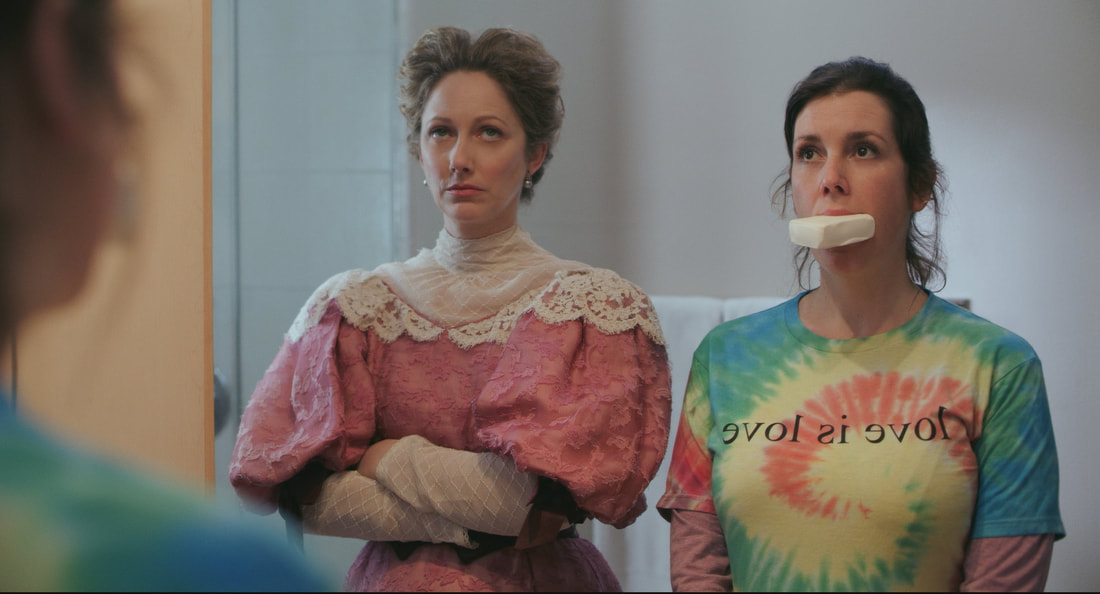
It's hard to say what's funny and not funny because every person has their own standards. Lady of the Manor was meant to be a funny take on southern life and history. The problem is these characters in the film aren't in the least funny, let alone entertaining.
Melanie Lynskey plays a lazy woman who doesn't have anything going for her in life. Sure she's got a job but shortly loses it due to her incompetence. She has a fluke encounter with a well-to-do young man played by Ryan Phillipe. He offers her a job at his family's historical manor as a host of a tour. He has some ulterior sexual motives though. She starts to see the real scam behind the man with a little help from a local history professor played by Justin Long and the ghost of the woman she's portraying as the tour host. Long also directed the film with his brother Christian and enlisted help from some friends of his in various roles, including Judy Greer as the ghost and Louis Guzmán as an empathetic wise-cracking bartender. Long tries to make this a funny historically-driven story, but most of the jokes fall short. This film just has a bunch of contrivances in the script. It asks the viewers to have quite the suspension of disbelief in the events that occur. 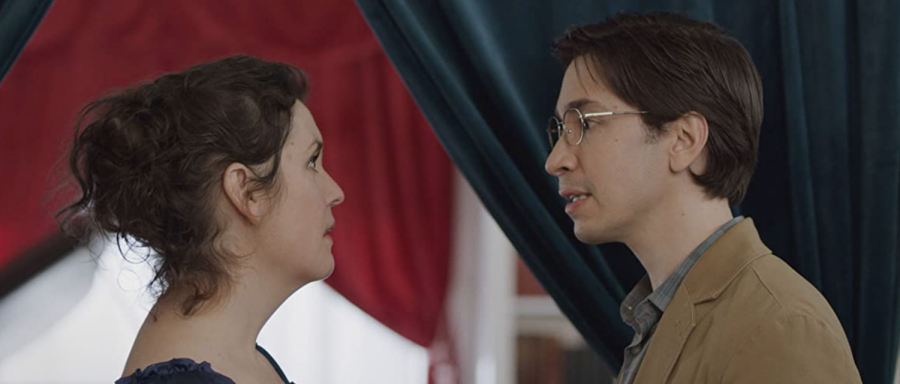
Filmed locally where I'm from in Florida, Lady in the Manor has some nice sights. It's got the feeling of a southern story. The accents and locations are on point. That's some good production value. The costumes and hair and makeup are strong as well. Other than the contrivances in the script, the historical aspects are quite interesting.
Like a lot of comedies these days, this film relies on cheap laughs from toilet humor. Two, in particular, are when Lynskey's character asks to go into another room so she can fart in private, but there is a man in the room. And the other is when she's barring her sole to Guzman's bartender and he says he had other customers and the camera pans around and there is nobody in the bar. Cheap laughs that don't work in the overall context of the story. Lady of the Manor is a film that didn't need to be made. It's not funny other than two cheap laughs it got from toilet humor. The story is full of contrivances and the acting isn't very good from Long's friends he enlisted to be in this bad history lesson. If Long wants to direct another film, he should find better material than this. Lady of the Manor is now in theaters and on VOD. Rating: 2/5
Review by Sean Boelman
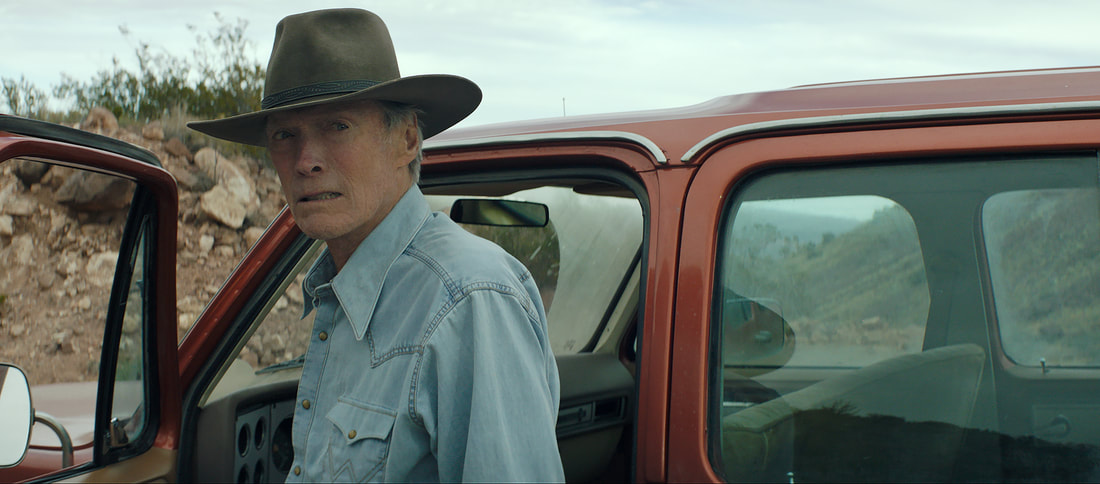
CLINT EASTWOOD as Mike Milo in the uplifting and poignant drama from Warner Bros. Pictures, “CRY MACHO,” a Warner Bros. Pictures release. Photo Credit: Claire Folger.
Eastwood gets the audience into the world he's creating right off of the bat with a little country music, an old Chevy truck driving down a dirt road, and horses running around in their pasture. We're instantly put into the world he created for Cry Macho. It's right out of his playbook.
In the world of cinema, some names define various genres such as Scorsese and Coppola are synonymous with gangster pictures, Steven Spielberg is known for fantasy/sci-fi films, and Hitchcock is the master of thrillers. In that same discussion, Clint Eastwood is associated with the Western genre. He is known for films such as The "Man with No Name Trilogy", Unforgiven, Pale Rider, and The Outlaw Josey Wales. When he does a Western, it's kind of a big deal. Cry Macho is considered a neo-Western set in the modern day and adopting themes from today, even though it does have feelings of the past from the little towns in Mexico to old cars and so forth. Even though it's set in the modern day, the lone wolf trope still works. Also the rescuer theme as well. Clint's character fits into all of these categories. That's what makes him appealing to mass audiences. People can relate to him on that level. Eastwood's character is a ranch hand, but he was an old rodeo star in his younger days. His backer (Dwight Yoakam) decides to strong-arm him into going to Mexico because he owes him a favor for the past where he bankrolled him and his career. He says his son is in Mexico and his crazy wife won't let him go. He needs him to go down there and get the kid and bring him back. He has ulterior motives, though. And the old cowboy is having more problems than he thought getting the kid and getting him back into the States. 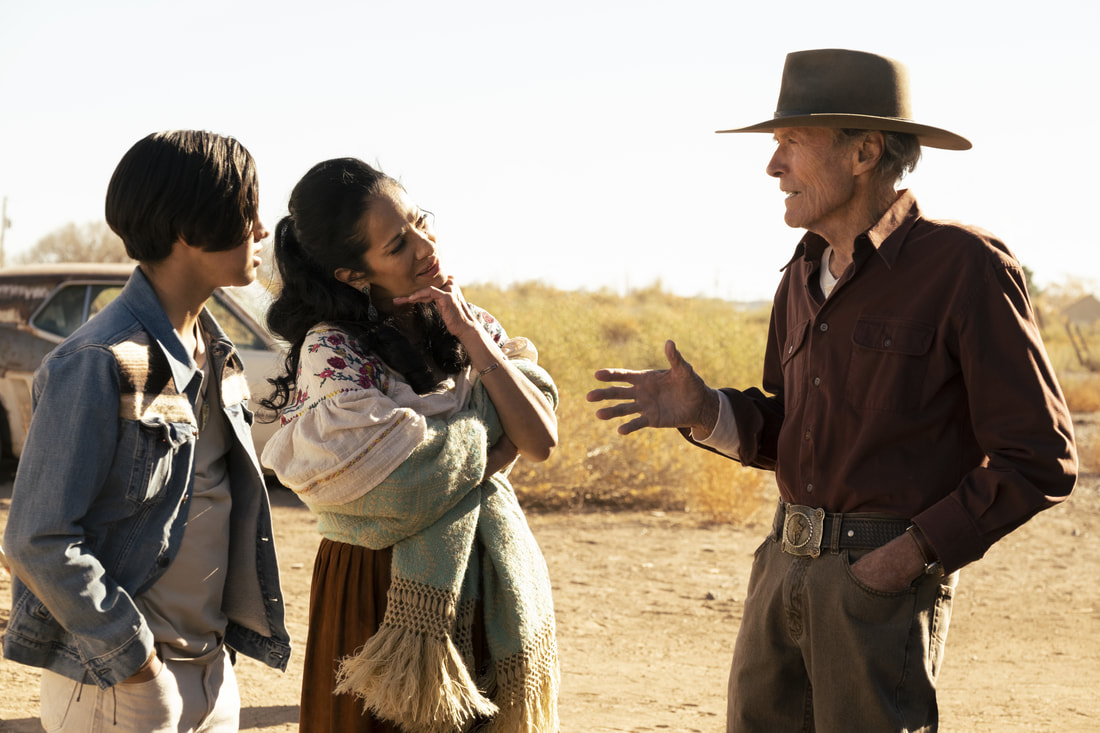
(L-r) EDUARDO MINETT as Rafo, NATALIA TRAVEN as Marta and CLINT EASTWOOD as Mike Milo and in the uplifting and poignant drama from Warner Bros. Pictures, “CRY MACHO,” a Warner Bros. Pictures release. hoto Credit: Claire Folger.
Eastwood adapts the book of the same name with a script from Nick Schenk and N. Richard Nash. They are pretty straightforward with the themes in the book. Eastwood plays on his persona perfectly. The lone wolf routine is right up his alley. Even though he came out on record as saying he wasn't going to act again, he couldn't resist getting back in the saddle again for this sweet story of an old man who rescues a young teen from a tough life in Mexico. Along the way, they both make friends they'll never forget and create an amazing friendship themselves.
Eastwood's directorial style is one of a very distinct nature. Whatever he's been doing since directing Play Misty For Me back in the 1970s, it's been working. He's won a few Oscars for his work in the last few decades. One last movie on his resume couldn't hurt his impeccable reputation with viewers or his compatriots. This makes him one of the best directors ever. Acting is just a bonus for him, but he still can make people go out and see his films. In the case of Cry Macho, it's also on HBO Max, so they can watch it in the comfort of their own homes. Cry Macho reinforces the legacy Eastwood has created for himself, whether it be acting or directing. He is a living legend. He rarely makes a bad film. The heart and sweetness he imbues into Cry Macho reminded me of Gran Torino to some extent. This is right out of Eastwood's playbook from where I was sitting watching it. It's another solid outing for him. Cry Macho hits theaters and HBO Max on September 17. Rating: 4/5
Review by Sean Boelman
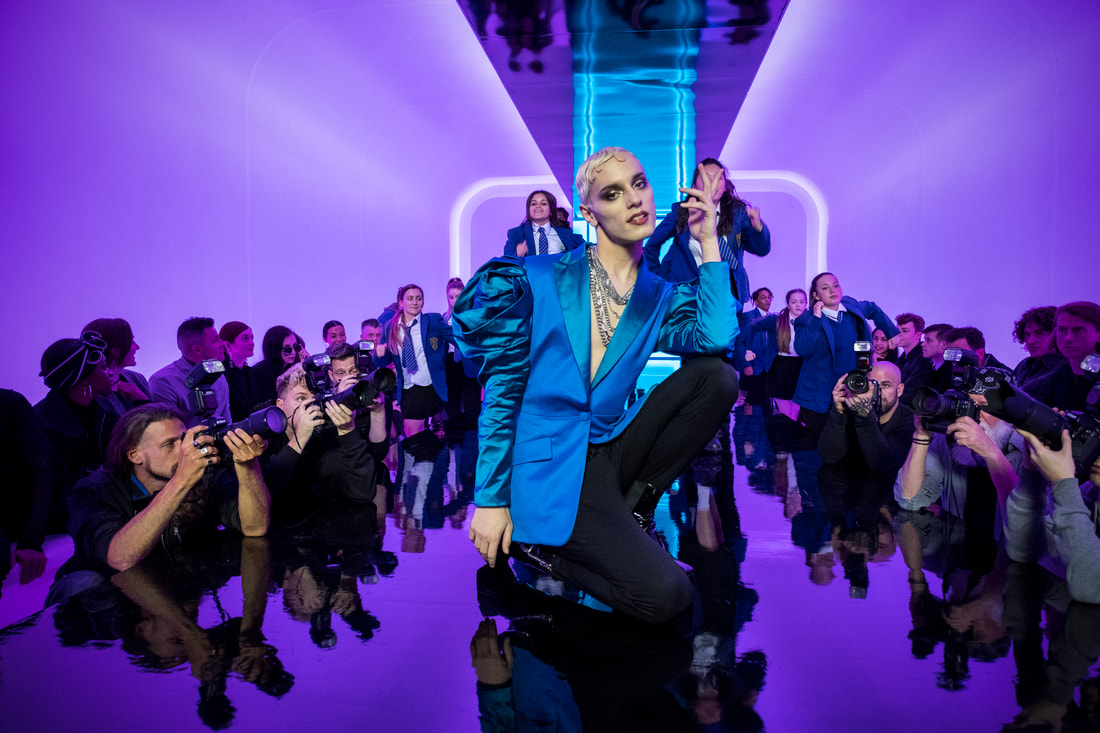
Photo Credit: John Rogers.
Based on the musical that became a hit on the West End, Everybody’s Talking About Jamie is the latest in the line of LGBTQ-centric movie musicals. And while the film largely plays it safe, its undeniably joyous and crowd-pleasing nature are infectious, making this an absolutely wonderful movie to watch.
The film follows a high school student from England who dreams of becoming a drag queen. The story is pretty much exactly what one would expect, with the protagonist embracing his own sexuality while dealing with homophobic bullies at the same time, but this tale of standing out is so earnest that it doesn’t really matter. For the most part, the songs in the movie are catchy and sweet, if not particularly memorable. All of the numbers are fun to watch, although it is unlikely to be a soundtrack that lends itself to repeat listening on car rides. There is also a bit of an over-rehearsed feel to these scenes, more so than other movie musicals, but the strength of the central performers allows it to work. That said, there is one musical number that is an absolute show-stopper, and that is Richard E. Grant’s solo number “This Was Me”. In a heartbreaking ode to those who lived through the height of the AIDS crisis, Grant gives one of the best supporting turns of the year by infusing his role with an insane amount of emotion. 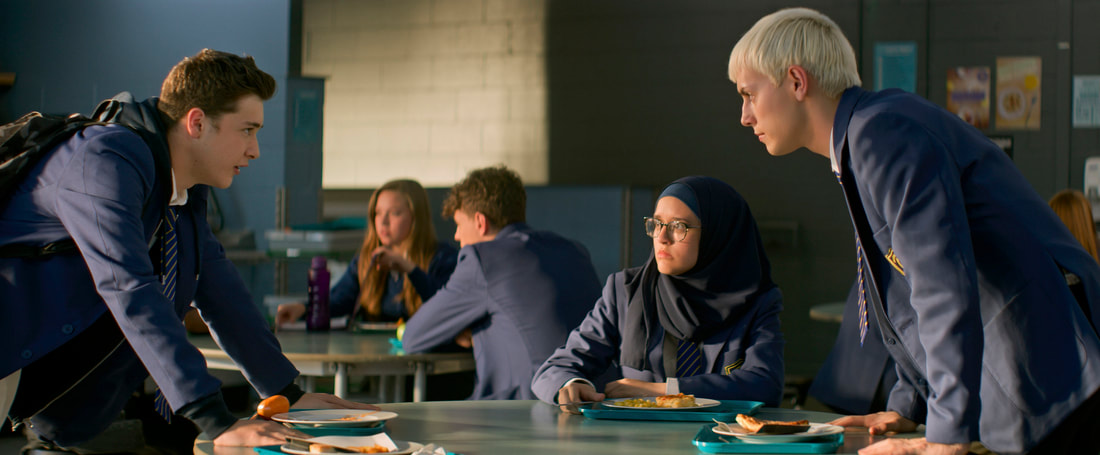
Photo Credit: © 2021 Amazon Content Services LLC.
In addition to Grant, there are some really strong performances in the cast. Making his film debut, Max Harwood is great as the eponymous lead. He sings his heart out in every song and is thoroughly charming. Sarah Lancashire, Sharon Hogan, and Ralph Ineson all have supporting roles and are quite good.
Jamie’s arc follows the predictable path, but has a lot of really resonant beats. Unlike a lot of movies about gay youth, this isn’t a coming out story. Jamie already embraces who he is, he’s just trying to make the world recognize it, and that is an equally important story to be told. On the other hand, there is very little complexity to the supporting characters, who all fill their designated archetype. Director Jonathan Butterell (who also directed the stage production of the show) doesn’t do a whole lot to make the movie feel all that cinematic, but the power of the source material still shines through. A few scenes attempt to do something ambitious, although the film doesn’t quite have the budget it would take to pull it off entirely. Everybody’s Talking About Jamie is going to hit a lot of familiar beats, but it will still win viewers over. It’s one of the most uplifting movies of the year thanks to its wonderful story and brilliant performances. Everybody’s Talking About Jamie hits Amazon Prime on September 17. Rating: 4.5/5
Review by Sean Boelman
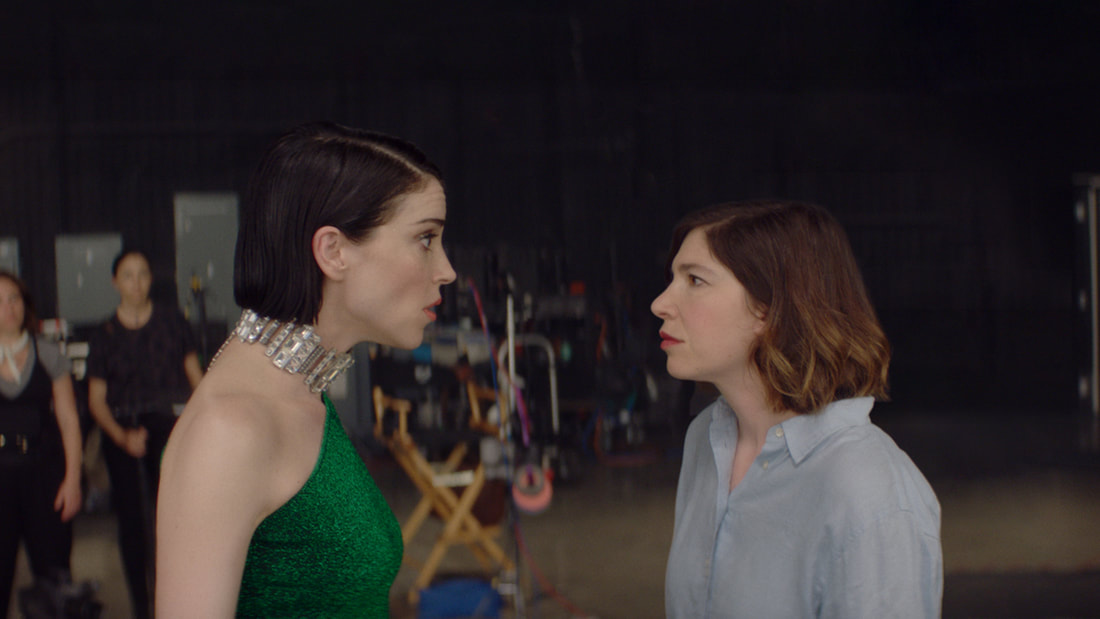
St. Vincent as herself and Carrie Brownstein as herself in Bill Benz’s ‘THE NOWHERE INN.’ Courtesy of IFC Films. An IFC Films release.
Those who are familiar with the work of musician St. Vincent know that she has a very distinctive persona. The mockumentary The Nowhere Inn riffs on her on-stage presence, creating what is arguably one of the most fascinating explorations of fame and the spotlight in recent years.
The film is positioned as a documentary that St. Vincent has commissioned about herself as she is touring, which begins to blur the lines between fiction and reality as she becomes cognizant of the disparity between her on-stage and real-life personalities. But those expecting this to be a run-of-the-mill mockumentary comedy will be surprised by the fact that this is an existential, occasionally even cerebral movie that embraces its weirder elements. This is definitely a film that gets crazier and crazier as it progresses. It starts out as a slightly wacky satire, gets to a point of absurdity in the second act, and then devolves into utter madness for the finale. The unabashed weirdness of the movie may put off average viewers, but being that the target is largely St. Vincent fans, it will be on brand. Clearly the most impressive thing about the film, though, is what it has to say. It’s almost ironic to call something “honest” when it fundamentally dissects the idea of so-called “authenticity”, but the movie is less full of itself than a majority of other films that are about being famous. And the fact that St. Vincent is so self-aware makes everything work much better. 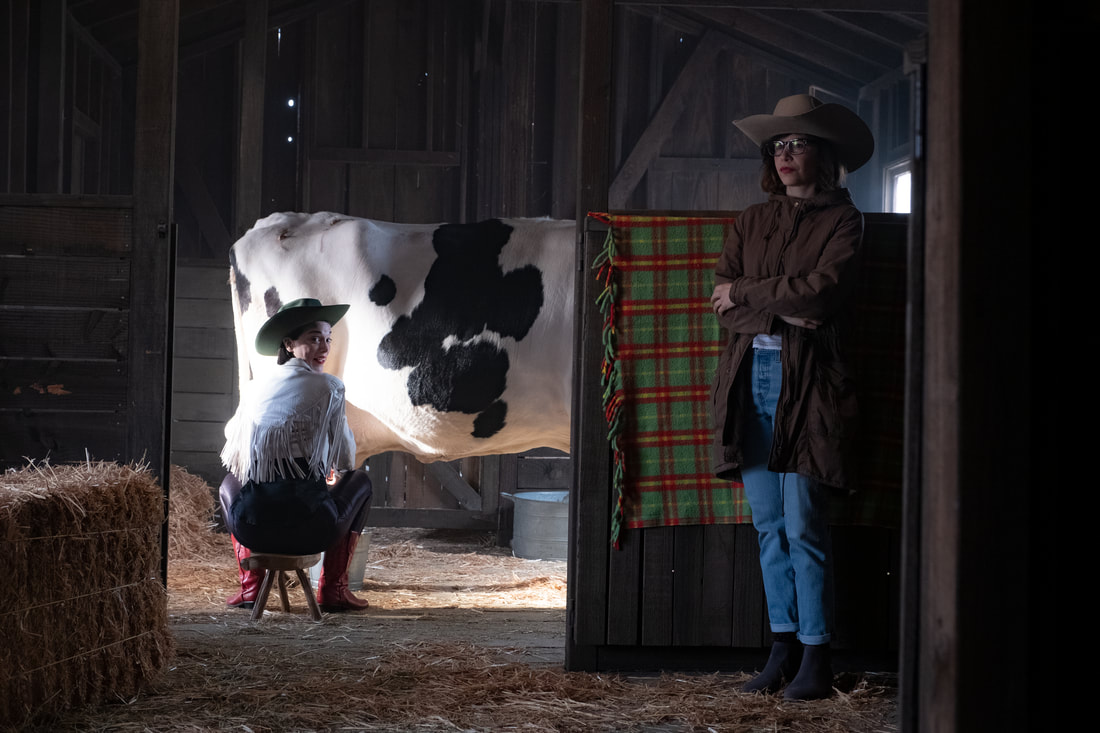
St. Vincent as herself and Carrie Brownstein as herself in Bill Benz’s ‘THE NOWHERE INN.’ Courtesy of IFC Films. An IFC Films release.
Something else that is interesting about the movie is that it doesn’t hinge entirely on St. Vincent. Actress Carrie Brownstein (who also co-wrote the screenplay) is an important player here as well. The dynamic between the two ladies serves as the emotional core of the film, which is especially important in grounding the movie when it (purposefully) gets colder in the back half.
St. Vincent obviously does a great job of playing herself in the film, which shouldn’t be surprising to anyone. Also playing herself, Brownstein’s performance is much more low-key, but no less effective, especially when she is going back-and-forth with St. Vincent. There is also a hilarious cameo from Dakota Johnson that will likely leave viewers scratching their heads, but in a good way. On a technical level, the movie is mostly very effective. The use of surreal imagery, particularly in the second half of the film, is excellent. Unlike a lot of movies about musicians, it doesn’t feel like a music video, but has a distinctive style of its own. That said, St. Vincent’s music does play a large role in the film, and that obviously results in a great soundtrack. The Nowhere Inn is a very impressive movie, delivering on every bit of its promise. Those who aren’t fans of St. Vincent should probably stay away, as it’s characteristically weird, but those for whom the film is intended will undeniably dig it. The Nowhere Inn hits theaters and VOD on September 17. Rating: 5/5
Review by Dan Skip Allen

Universal Pictures has had its fair share of movie franchises over the years. The Fast and the Furious and Jurassic Park series are two of the most popular franchises in their history. But decades before these franchises came out, Universal was famous for its classic monsters such as Dracula, the Mummy, the Invisible Man, and Gil-Man (The Creature From the Black Lagoon). But Frankenstein is considered their most popular monster, and one of the reasons why is Boris Karloff's performance.
Karloff's career is that of a varied actor with many ups and downs in it. The ups of course are the Frankenstein films and a few of the other horror films he's famous for such as The Black Cat and the narration of the animated classic The Grinch Who Stole Christmas. That said, he also did a lot of television work and a bunch of other campy low-rent horror films he had various smaller roles in. Karloff had a very long career and many people in the business were inspired by him and his career as well as some of the weird and off-the-wall characters he portrayed. The film has some notable people such as Guillermo Del Toro (Pan's Labyrinth), film critic Leonard Maltin, Joe Dante (The Howling), and John Landis (An American Werewolf in London). They were all waxing poetic about Karloff and his career. Karloff had an interesting relationship with Bela Lugosi (Dracula) They were always going for the same types of roles. This made people believe they had a rivalry with one another. The thing is they worked together a few times and we're actually friends off-camera. This is one of those things that gets blown out of proportion over the years. The real feud Karloff had was with his Frankenstein director James Whale. 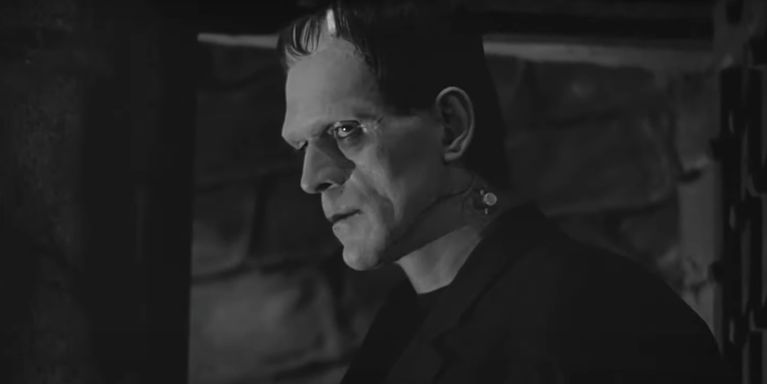
Some of their feud was depicted in the 1998 film Gods and Monsters, but this film really goes into more of the problems the two had with one another. Whale put Karloff through the wringer on Frankenstein films because of some comments he made about how Whale was on set. In one instance, Whale forced Karloff to carry a real man up a flight of steps many times, resulting in the beginning of Karloff's chronic back problems.
His back issues would lead to the end of his career. He had to start wearing a brace on his leg as well. This hampered his career near the end. He was a constant professional, though. His personal life was a bit different, though having married five times, he could hardly make a woman happy because of his constant work ethic. He did have one daughter though, Sara Karloff, who takes care of her father's legacy. Great docs have to bring the viewer into the life or subject they are depicting on screen. This one does just that. It talks about Karloff's career in-depth and the talking heads go into much more detail about this legendary actor. The filmmakers effectively depict this man and his storied career and all its ups and downs. I was very enthralled by so much of the detail the film goes into. This was a very fascinating look into this man's long life. Boris Karloff: The Man Behind the Monster hits theaters on September 17. Rating: 4/5
Review by Camden Ferrell
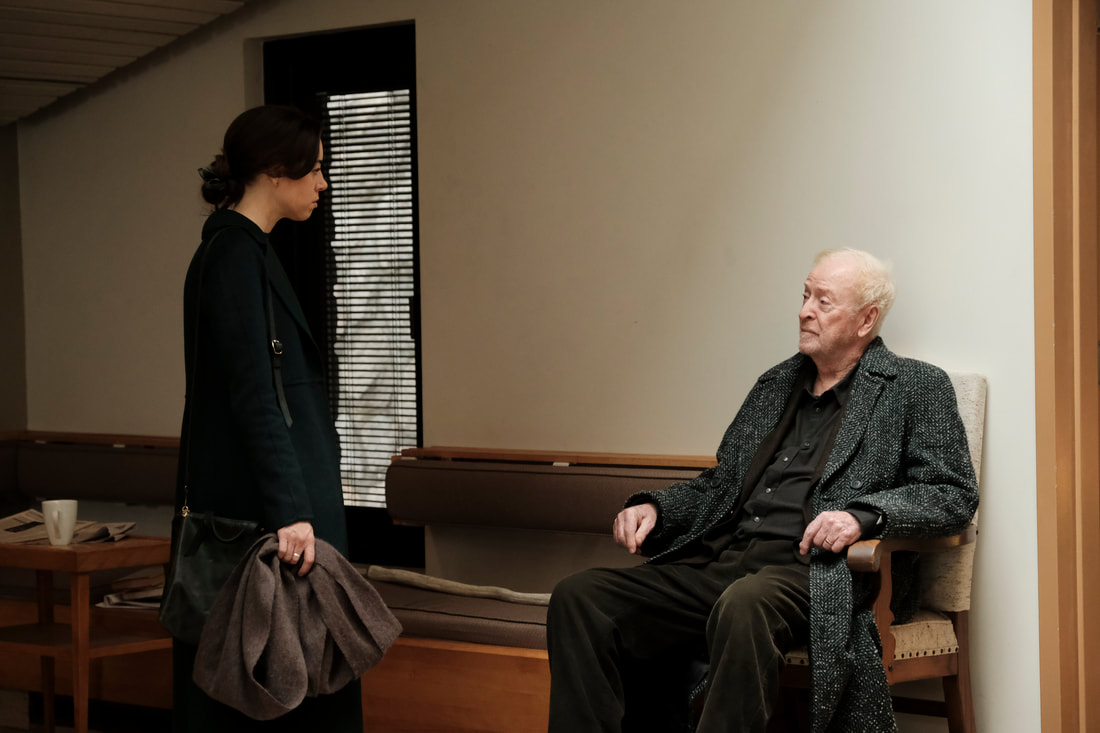
Best Sellers is a new comedy-drama film that is also the feature directorial debut of Lina Roessler. It was an official selection of the Berlin International Film Festival in 2020 before its cancellation. The movie is also the writing debut of Anthony Grieco. This is a harmlessly safe movie that is equal parts formulaic, predictable, and charming.
Lucy Stanbridge is struggling to maintain the legacy of her father’s publishing company due to declining sales and subpar novels. In order to try and elevate the status of her company, she enlists Harris Shaw, an aging and cranky writer, to go on a book tour for his newest novel. This story is simple, sweet, and enjoyable, but it’s one that relies heavily on the chemistry of its lead actors. Grieco’s script makes it very clear early on that it’s not trying to do anything new. He adopts the tried and tested storytelling formula that has been done countless times before. This is not saying it’s bad. It has its charm, but it does seem content to be unambitious in telling these characters’ stories. The movie is led by the always reliable Aubrey Plaza and acting legend Michael Caine. They both have strong chemistry together, but there are sometimes where their bond seems nonexistent. Both Plaza and Caine seem to be putting in minimal effort into their roles. Neither feels particularly inspired, yet the movie doesn’t suffer too much as a result. 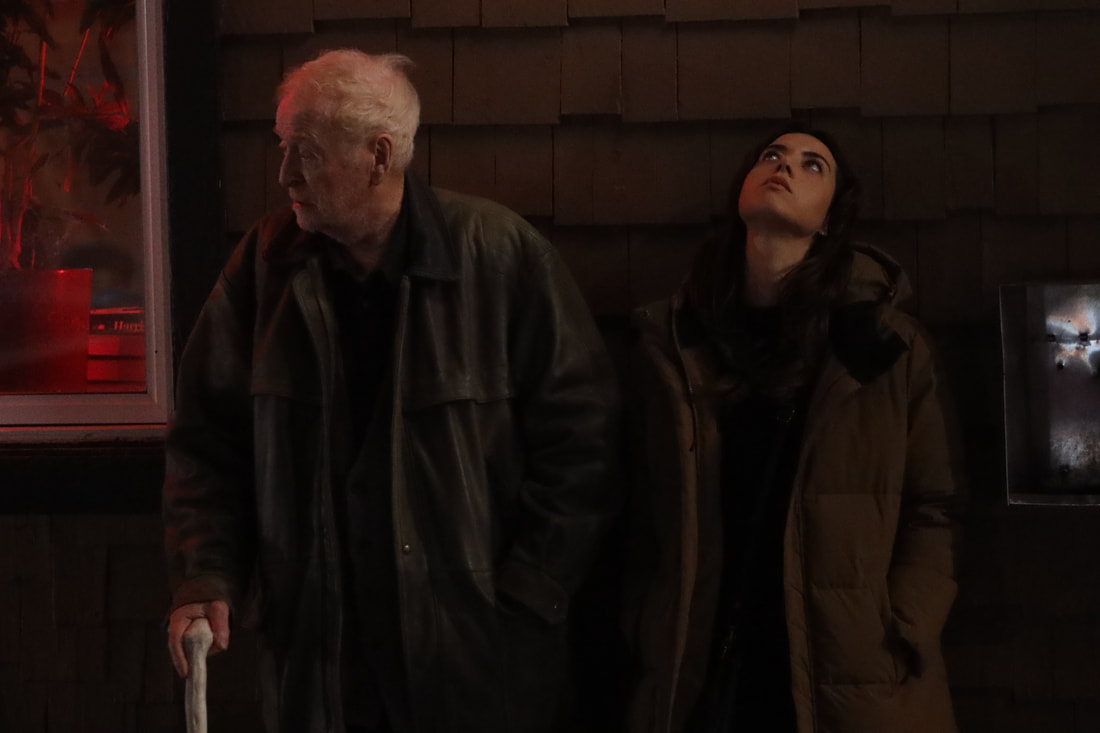
Caine’s Harris Shaw is an often-unlikeable author as intended, but he can also be quite infuriating which makes it hard to really get behind his character which is a major flaw in a movie like this. Plaza also doesn’t give us much reason to care for her character, and the script doesn’t fully flesh out these characters and develop them as people.
Roessler’s direction is one of the stronger aspects of the film. She has an honest vision that humanizes the characters in ways that the script and actors simply can’t do properly. She balances the comic aspects of the film with the more serious moments, and she does it gracefully for a first-time director. Like many things in this movie, it’s far from perfect, but it shows genuine promise for her future. The movie luckily doesn’t lose any steam with its fairly short runtime. It’s a simple story that has a satisfying conclusion that ties everything up nicely. Again, it’s not great, but it’s mostly carried by its charm and confident direction. While it’s a shame to see such talented actors taking on such safe and formulaic roles, it’s hard to deny that Best Sellers has its enjoyable moments. It’s a decent calling card for Roessler as a director, and it’s a light-hearted movie for people to watch this weekend. Best Sellers is in theaters and on demand September 17. Rating: 3/5 |